
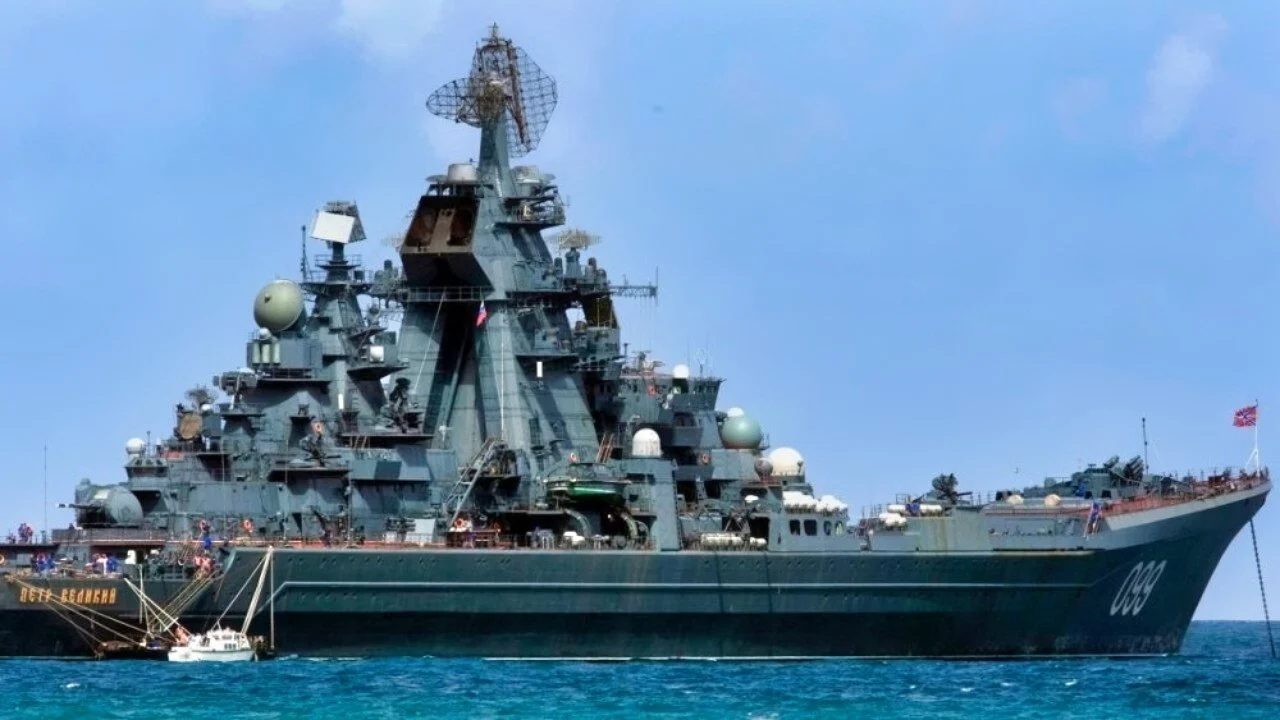
On June 1st 2026, the Project 1144.2 Orlan (NATO designation: Kirov-class) nuclear battlecruiser Admiral Nakhimov returned to her home port in Severomorsk for the first time in almost three decades, marking the final phase of her refurbishment. After starting her sea trials in July 2025, the ship is finally set to return to service following a long, frequently delayed modernization period. The newly modernized battlecruiser is now fitted with improved radar systems and is compatible with Russia’s most capable naval missiles, such as the Kalibr cruise missile and the Zircon hypersonic missile. The ship is set to take its place as the flagship of the Russian Navy and serve in the Northern Fleet.
The Advantages of a Nuclear Battlecruiser
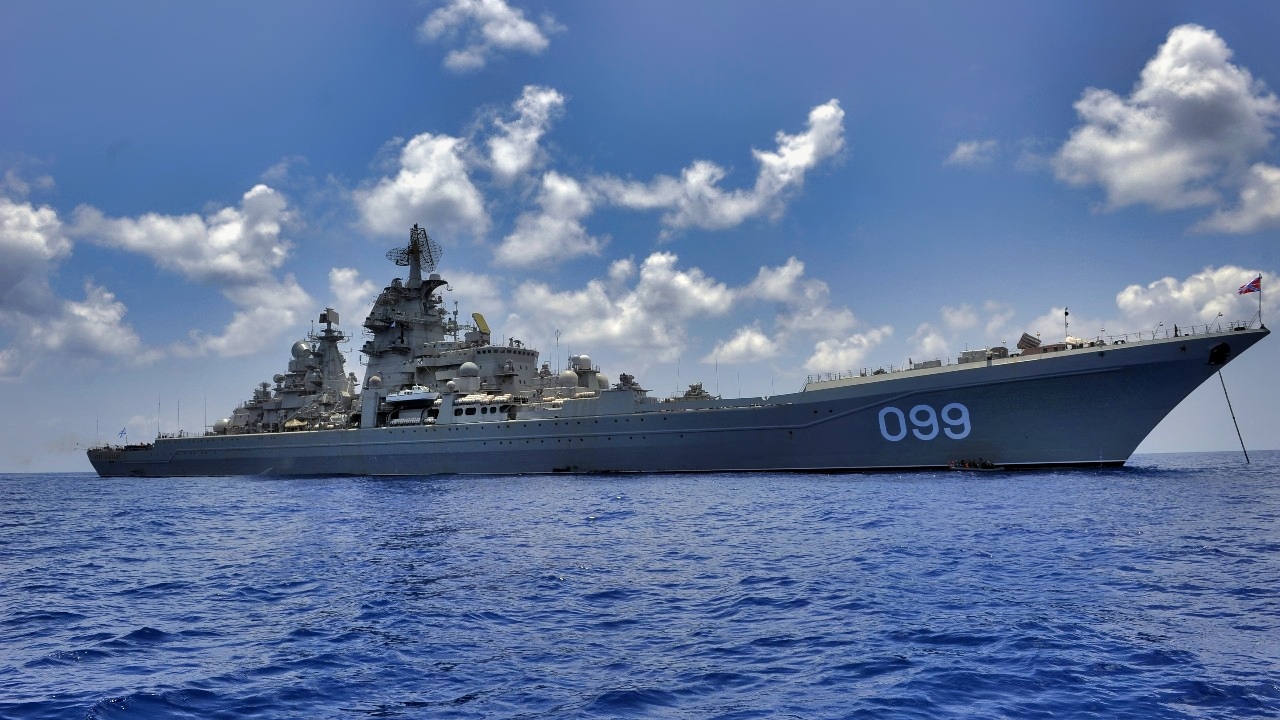
Kirov-Class Russian Navy. Image Credit: Creative Commons.
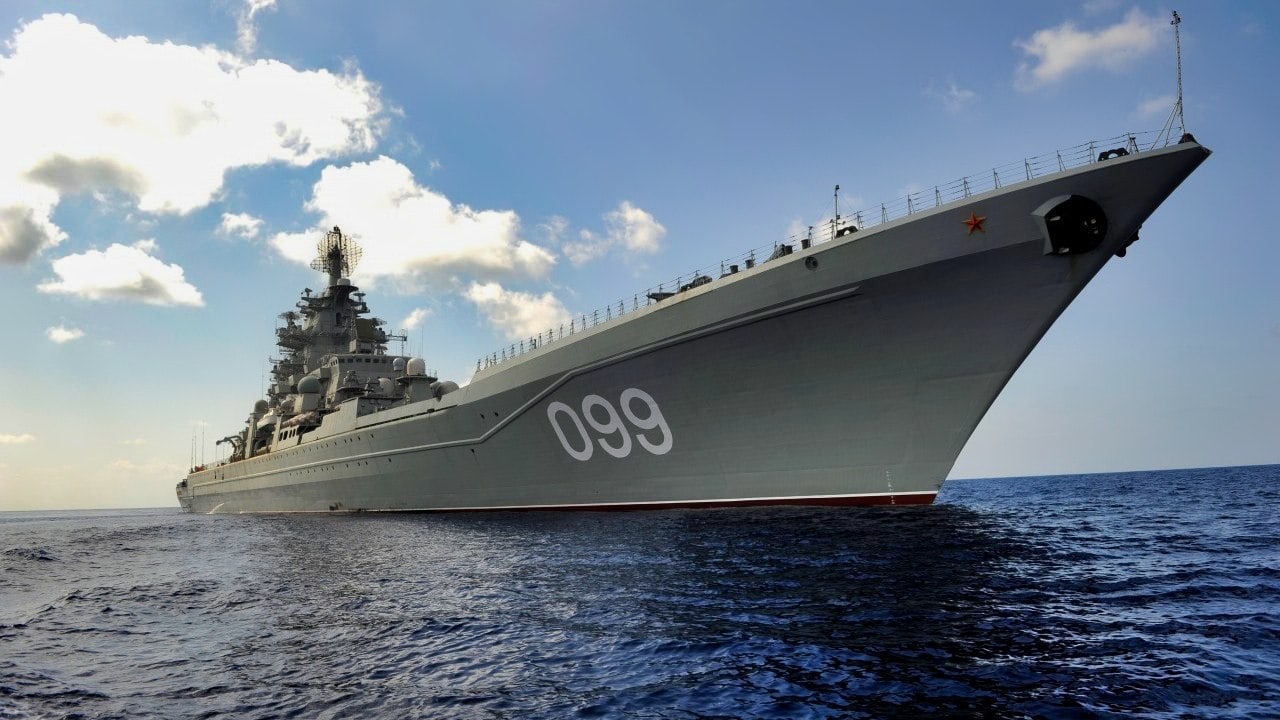
Kirov-Class Battlecruiser Russian Navy
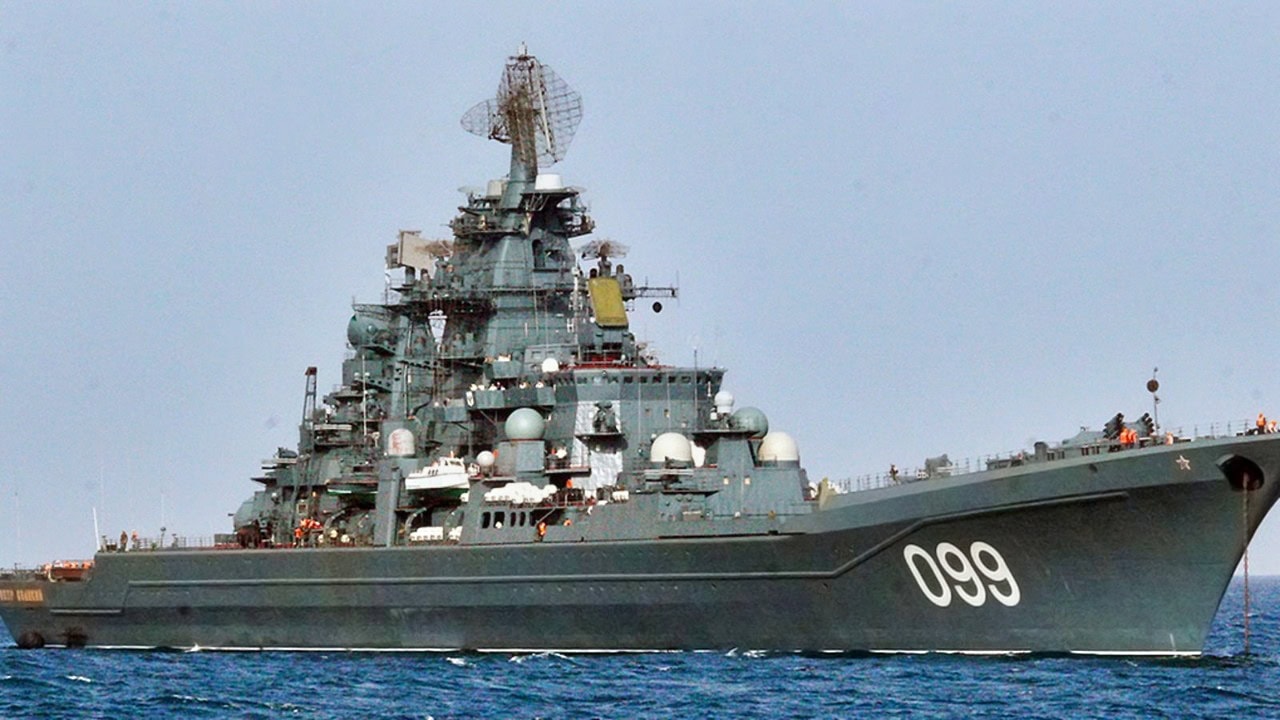
Kirov-Class Battlecruiser Russian Navy. Image Credit: Creative Commons.
Nuclear surface ships, aside from aircraft carriers, are incredibly rare.
Building and maintaining nuclear reactors is incredibly costly and usually unnecessary, except for larger vessels such as icebreakers or aircraft carriers.
One of the largest benefits of nuclear power, however, is its range.
Conventional surface ships rely on refuelers for longer missions, or are forced to return to port. Powered by two KN-3 nuclear reactors, the Kirov-class has practically unlimited range, constrained only by crew endurance and onboard food supplies. This allows the massive ships to travel at full speed (about 30 knots) for extended periods without worrying about fuel supplies.
Nuclear reactors also produce insane amounts of electricity. This enables the installation of advanced systems that require significant power and leaves room for future upgrades.
The U.S. Navy made similar arguments for the BBG(X), stating that nuclear power would enable the deployment of systems such as directed-energy weapons (DEWs) or railguns. The Kirov-class does not use any DEWs; however, the ship utilizes a vast and comprehensive network of radars and guidance systems that require power outputs that only nuclear energy can provide.
Unlike carrier strike groups, the Kirov-class was designed to operate independently without escort ships.
Impressive Capabilities… For a Price on Kir0v-Class
The main drawback to the Kirov-class is that they are incredibly expensive to build and maintain. According to some estimates, the cost of refurbishing and refitting Admiral Nakhimov was between $2 and $5 billion.
Even in Russia, some experts are concerned that these behemoths are too expensive to deliver any real value to the cash-strapped Russian Navy. At the height of its power, the USSR could afford to construct and maintain four of these vessels (there was technically a fifth ship under construction, but it was scrapped after the Cold War). Once the Soviet Union collapsed, much of the infrastructure, expertise, and most importantly, the budget that had built the Kirovs disappeared.
Now, the Russian Navy operates one Kirov-class: Piotr Veliky. However, once Admiral Nakhimov completes her modernization, it remains to be seen what will become of Piotr Veliky, as some experts speculate that the ship may finally be facing retirement.
Even the United States Navy, the wealthiest and most powerful navy in the world, is hesitant to build battlecruisers like the Kirov-class.
In 2025, President Trump unveiled plans for the “Trump-class” BBG(X) nuclear-powered battleship, which received strong pushback from experts and analysts (granted, anything Trump proposes will receive strong pushback).
The biggest argument against the new “battleship” is its cost. According to some estimates, the class would cost around $12.2 to $13.1 billion per ship, nearly double the cost of refurbishing Admiral Nakhimov. As of now, it is unknown whether the U.S. Navy intends to proceed with the BBG(X). The point is that even a naval powerhouse like the United States struggles with the very idea of producing a ship similar in size to the Kirov-class, and the USN is much better off than the Russian Navy.
The Russians are Keeping the Kirov-class: Industrial Questions
Regardless of the Kirov-class’s perceived downsides, Admiral Nakhimov is set to return to service soon. The Russian Navy has not set out an exact timetable for when the nuclear battlecruiser will complete her sea trials, but she is expected to be delivered back to the fleet sometime within the year.
The decision to modernize Admiral Nakhimov was made back in 2006, with initial plans to return the ship to service by 2012. Needless to say, these plans did not work out. Construction was delayed multiple times due to a lack of funding, with the entire project going on pause from 2012 to 2014. Finally, in 2020, the massive battlecruiser began her sea trials, marking the tail end of her refurbishment period.
The new and improved Admiral Nakhimov has had her entire sensor suite refitted to accommodate modern search-and-track radars, electronic warfare suites, communications systems, and more. However, it is the cruiser’s armaments that have drawn the most attention.
The ship is armed with P-800 Onyx anti-ship missiles, Kalibr cruise missiles, and Zircon hypersonic missiles. Other defensive armaments include anti-submarine missiles, S-400 air defense missiles, and Pantsir-M CIWS. These armaments make the ship quite versatile, enabling it to engage surface vessels, ground targets, submarines, and aircraft simultaneously.
About the Author: Isaac Seitz
Isaac Seitz, a Defense Columnist, graduated from Patrick Henry College’s Strategic Intelligence and National Security program. He has also studied Russian at Middlebury Language Schools and has worked as an intelligence Analyst in the private sector.