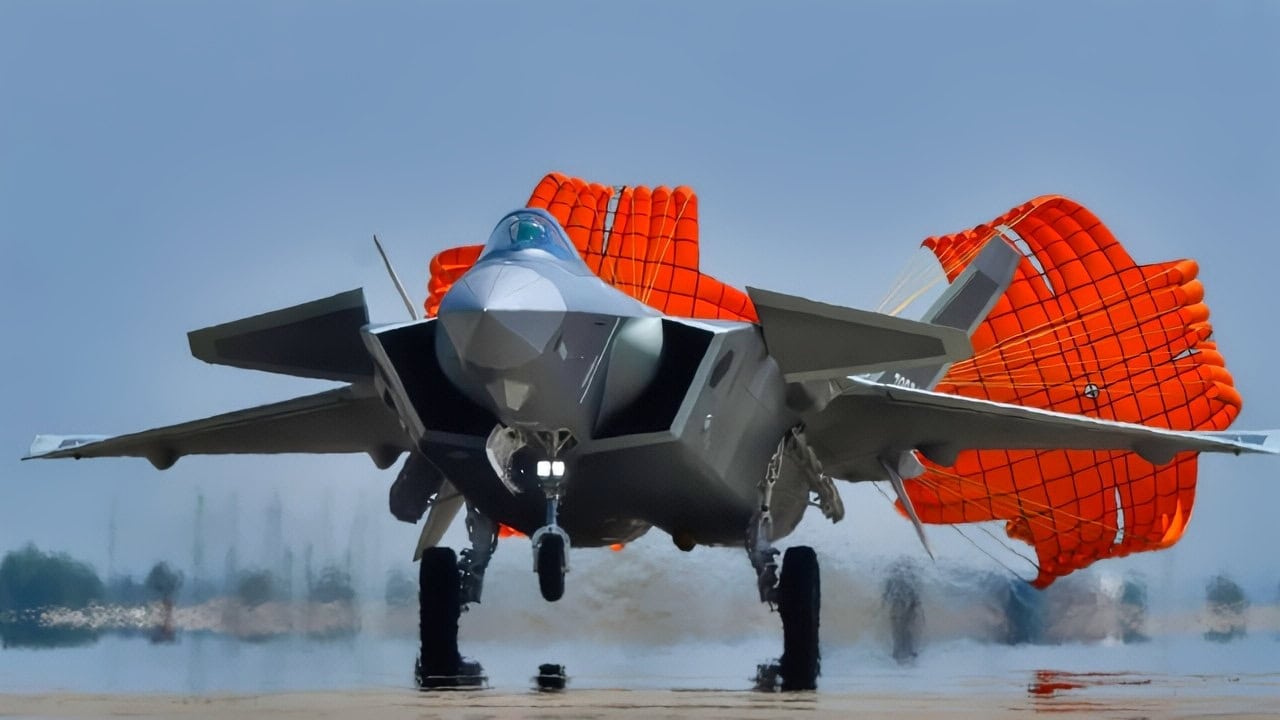
China’s aerospace industry has accomplished something that would have seemed impossible only 20 years ago. The People’s Liberation Army Air Force (PLAAF) now fields one of the world’s largest fleets of fifth-generation stealth fighters. The Chengdu J-20 “Mighty Dragon” has evolved from an experimental curiosity into the centerpiece of China’s strategy for achieving air superiority over the Western Pacific.
The aircraft itself is becoming increasingly formidable, too.
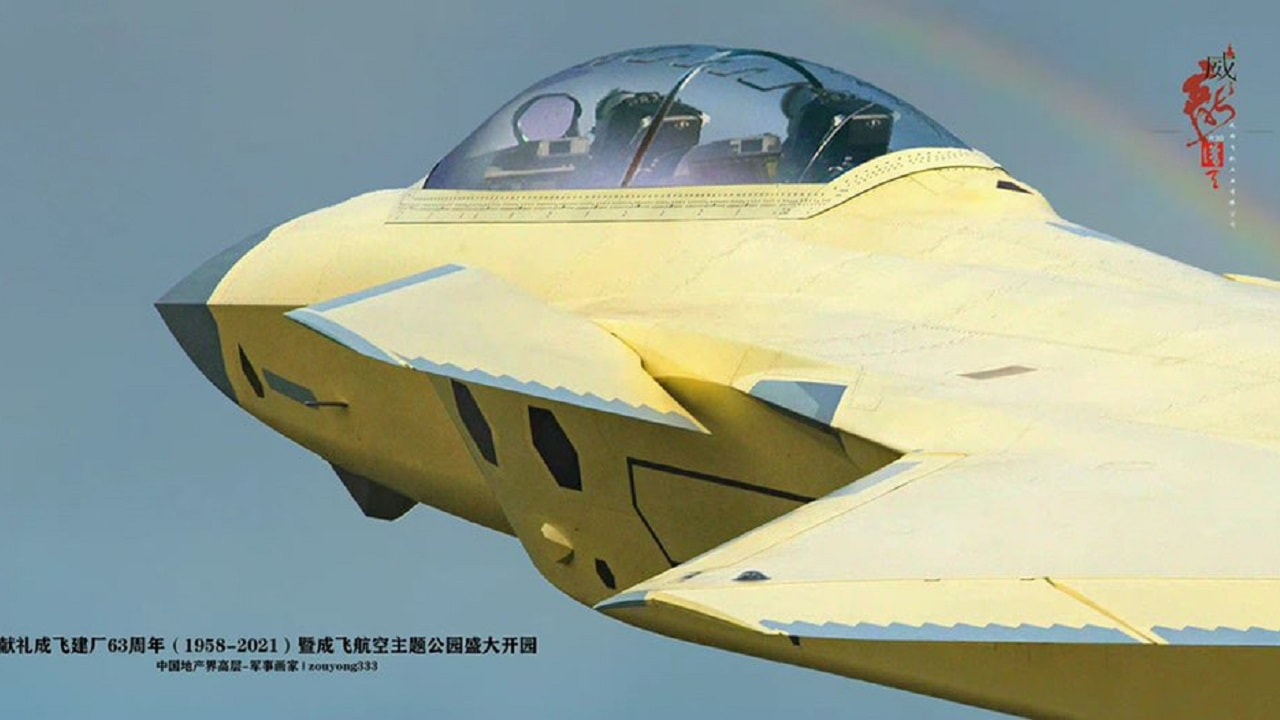
Chinese J-20 stealth fighter. Image Credit: Chinese Internet.
Successive production blocks have incorporated improved sensors, avionics, engines, and networking capabilities. Production continues at an impressive pace, enabling China to field hundreds of stealth aircraft while the United States struggles to replace aging fleets.
Yet the J-20’s greatest weakness is not found in its radar or its engines. Its weakness has nothing to do with the bird’s design or overall engineering. Instead, the weakness may be sitting in the cockpit.
J-20 Lesson: Building an Air Force Is Easier Than Building Aviators
Modern fighter aircraft are engineering marvels. No matter what model or nation they belong to, these systems are among the most complex platforms ever created. Given enough money, industrial capacity, and time, almost any great power can eventually build a capable airplane.
Creating elite pilots, however, is another matter entirely.
A fifth-generation pilot is not simply someone who can take off, fly, and land an advanced aircraft. He must simultaneously manage enormous amounts of information while piloting the advanced plane in potentially intense aerial combat conditions. These skills cannot be easily mass-produced (at least not as easily as China can mass-produce these complex planes).
Mastering piloting fifth-generation warplanes requires years of flying experience. These planes need pilots with thousands of hours of experience, rigorous instruction, and a training culture that rewards initiative rather than rigid adherence to doctrine. That’s where China continues to face its greatest challenge.
My Personal Experience: What the F-35 Pilots Told Me
About a year ago, I traveled to Luke Air Force Base in Phoenix, Ariz., to give a strategic talk to the base’s senior leadership. The team there was kind enough to let me get a look at their F-35 Lightning II complement. They even allowed me to pilot an F-16 in the base’s flight simulator. While there, I met with several F-16 pilots who were transitioning to the F-35 program. These were pilots with years–even decades–of experience in the F-16. All the pilots I spoke to who were making the transition indicated that flying the F-35 was very different from flying their F-16s.
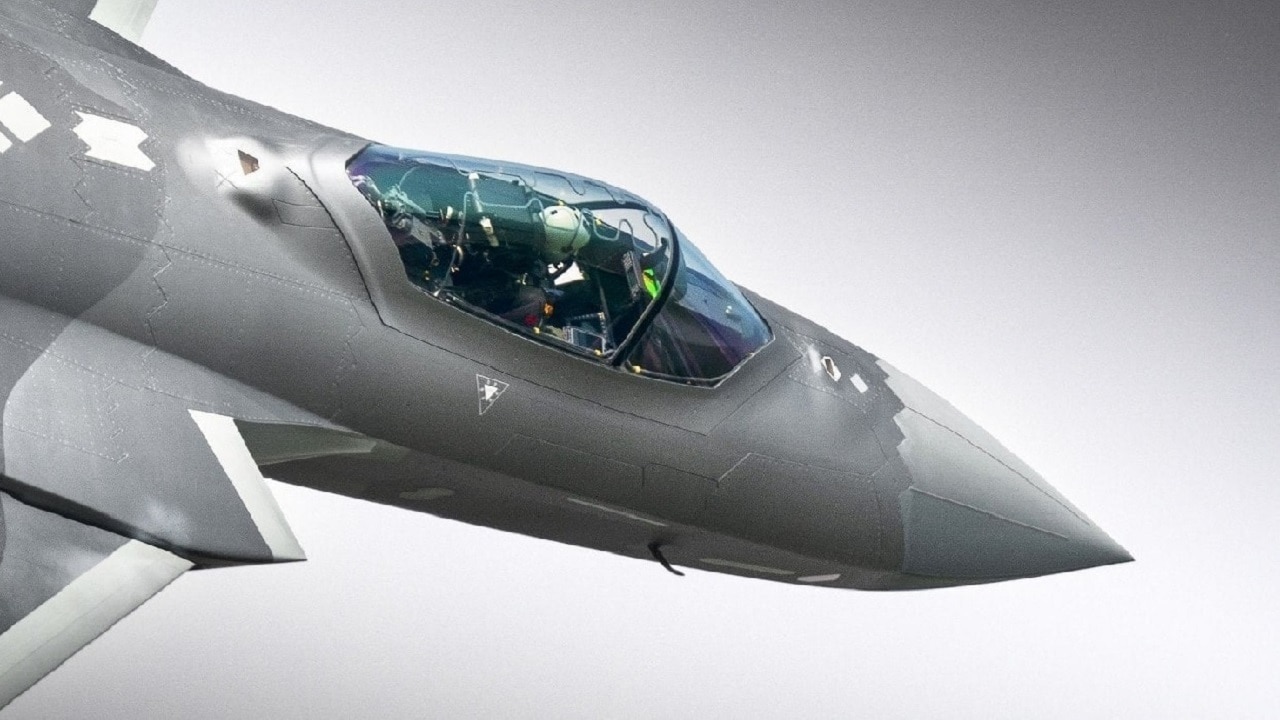
J-20 Stealth Fighter. Image Credit: Creative Commons.
In China, the PLAAF is transitioning many of its J-10 fourth-generation fighter pilots to the growing fifth-generation fleet. If the American pilots, who have far more experience handling advanced warplanes, are having to take their time reacclimating to the new planes, Chinese aviators, who have no real combat experience, should anticipate a longer lead time for adapting to China’s J-20 fleet.
Experience Cannot Be Manufactured
For decades, American pilots have accumulated combat experience over Iraq, Afghanistan, Syria, Kosovo, Libya, Iran, and countless other continuous operations globally (ones the public will never know about—even pilots who have never personally fired a missile benefit from instructors who have.
That institutional memory becomes part of every new generation.
For now, China lacks this one aspect of an advanced fighter program. The PLAAF has not fought a modern air war. Its pilots routinely conduct sophisticated exercises and increasingly realistic training, but simulations–even excellent ones–cannot fully replicate the confusion, uncertainty, and psychological stress of actual combat.
Exercises teach procedures. Combat imbues judgment. There can be no shortcut between the two.
The J-20 Is Easy to Fly–But Difficult to Fight
According to one PLAAF pilot interviewed in Chinese state media, transitioning from the fourth-generation J-10 to the fifth-generation J-20 is, in some respects, easier because of the stealth fighter’s advanced avionics and automated systems. Modern computers reduce pilot workload. Displays fuse information that previously had to be interpreted manually.
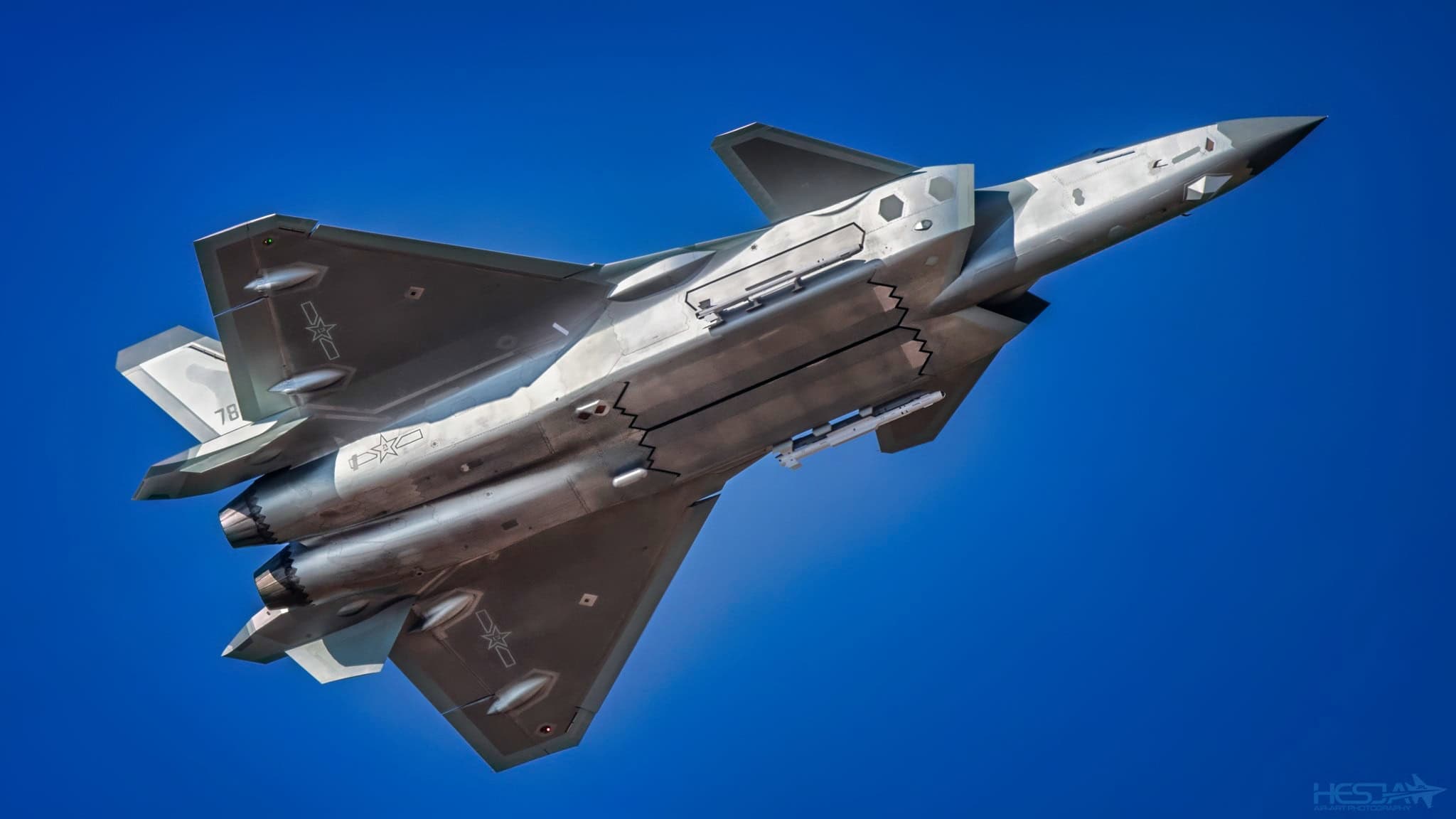
J-20 Fighter from China. Image Credit: Creative Commons.
These improvements, however, create new challenges for Chinese pilots.
Instead of wrestling with the flying mechanics of piloting a warplane, the Chinese pilot must now master the flow of battle information. If it all works out, that pilot dominates. But there is a chasm between that outcome and the complexities involved. Right now, that chasm is a lack of experience.
Why China Is Looking Beyond Traditional Pilot Training
Chinese military publications have described experiments using traditional qigong breathing and conditioning techniques for elite aviators. The stated objective is to improve concentration, endurance, stress tolerance, and resistance to the intense physical demands experienced during high-performance flight.
While helpful for pilots (and Western air forces employ similar training techniques for their elite aviators), none of these methods substitute for operational experience. No breathing exercise can teach a pilot how to react when multiple beyond-visual-range (BVR) missiles suddenly appear on his radar display. At the same time, electronic jamming degrades communications, and friendly aircraft begin disappearing from the tactical picture.
Those lessons are learned the hard way.
Buying Experience Instead
Beijing recognizes this weakness and is seeking experienced fighter pilots from the West–even the United States–to backfill this experiential deficit. In fact, the United States Department of Justice (DOJ) has charged former American military pilots with illegally providing defense services to the Chinese military. Investigators allege that experienced retired US military aviators were recruited to help train Chinese pilots, offering insights into Western tactics, decision-making, and operational procedures.
These cases are significant not because one retired pilot can suddenly transform an air force. They matter because they reveal what China believes it lacks regarding the efficacy of its fifth-generation warplane program.
If Beijing already possessed a mature cadre of experienced fifth-generation instructors, it would have little reason to seek expertise abroad. Instead, China appears willing to acquire decades of institutional knowledge wherever it can find it. And since China and the United States will likely find themselves at war soon, what could be better than learning from retired American military aviators about the tactics and technology of the advanced US warplanes they will soon be fighting?
The Five Eyes intelligence alliance (consisting of the United States, United Kingdom, Canada, Australia, and New Zealand) has repeatedly warned that China is actively recruiting former Western military personnel with wanton abandon.
The Real Bottleneck
China’s aerospace industry can manufacture aircraft at an astonishing rate. But pilots cannot be manufactured the way planes can. Elite instructor pilots themselves take decades to develop. Squadron culture evolves over generations. Tactical excellence emerges through countless mistakes, rigorous debriefings, and, in some cases, real combat.
This is one area where industrial capacity offers only limited help. China can build another hundred J-20s far more quickly than its American rivals can build F-22 Raptors or F-35 Lightning II fifth-generation warplanes. But it cannot yet train another truly elite group of J-20 instructors and pilots.
A Temporary Aerospace Advantage–Not a Permanent One
None of this should encourage complacency. The PLAAF is improving rapidly. Its exercises grow more sophisticated each year. Its pilots earn more cockpit hours. The PLAAF’s command structure is modernizing at an impressive rate, too. New training methods are replacing older Soviet-style approaches, all while each successive generation of new pilots benefits from a more capable educational system than the previous one.
So, time is working in China’s favor.
And with input from well-paid Western military pilots with combat experience, China’s training is closing the gap (which is one reason the DOJ is coming down so hard on retired US military aviators it discovers have been training Chinese military pilots). The United States cannot, therefore, assume that China’s current pilot-quality challenges will remain indefinitely.
The Clock Is Ticking
The J-20 is no longer China’s primary burden in competing with the West in fifth-generation warplane technology. The aircraft is becoming increasingly capable, and Beijing’s industrial base continues producing them at a pace few countries can match. The limiting factor is now the human element.
China can build another stealth fighter in months–far more and much faster than the Americans can build their fifth-generation planes–but creating pilots with commensurate experience to pilot these increased numbers of J-20s is another matter entirely. It takes much longer to do that than for China to build new fleets of advanced warplanes.
That is the real weakness of the J-20. Over time, though, China will surmount this challenge. As Beijing has overcome all other challenges in its quest to rapidly catch up with–and surpass–the United States.
Western military leaders are banking on the Chinese being permanently stymied by this human capital deficit. They’re making strategies assuming this condition will last. It’s as ridiculous as American leaders assuming that China’s system is going to collapse soon.
They’ve been waiting on that for more than 20 years. Beijing just gets stronger. This isn’t strategic thinking at all. It’s pure cope because, in every way, the Chinese have caught up to the Americans.
And if the situation persists, then Beijing will overwhelm the US even in the fifth-generation training area.
About the Author: Brandon J. Weichert
Brandon J. Weichert is the Senior National Security Editor at 19FortyFive.com. He also manages The Weichert Brief on Substack. Weichert also hosts “National Security Talk” on Rumble. He is the author of four bestselling national security books, the most recent of which is A Disaster of Our Own Making: How the West Lost Ukraine (Encounter Books). Follow him via Twitter/X @WeTheBrandon.