

Summary and Key Points: The Hughes AIM-54 Phoenix entered US Navy service as the longest-range air-to-air missile in the American arsenal, a 1,000-pound weapon paired with the AN/AWG-9 radar on the F-14 Tomcat to defend carrier groups against Soviet bomber formations at ranges beyond 100 miles. In a 1973 test, a single F-14 launched six Phoenix missiles at six separate drone targets in 38 seconds. The US Navy retired the missile in 2004 and the Tomcat in 2006 and in 2024 fielded the AIM-174, its first dedicated long-range air-to-air weapon since. The Phoenix’s only confirmed aerial victories were scored by its sole export customer during the 1980s.
Introduction
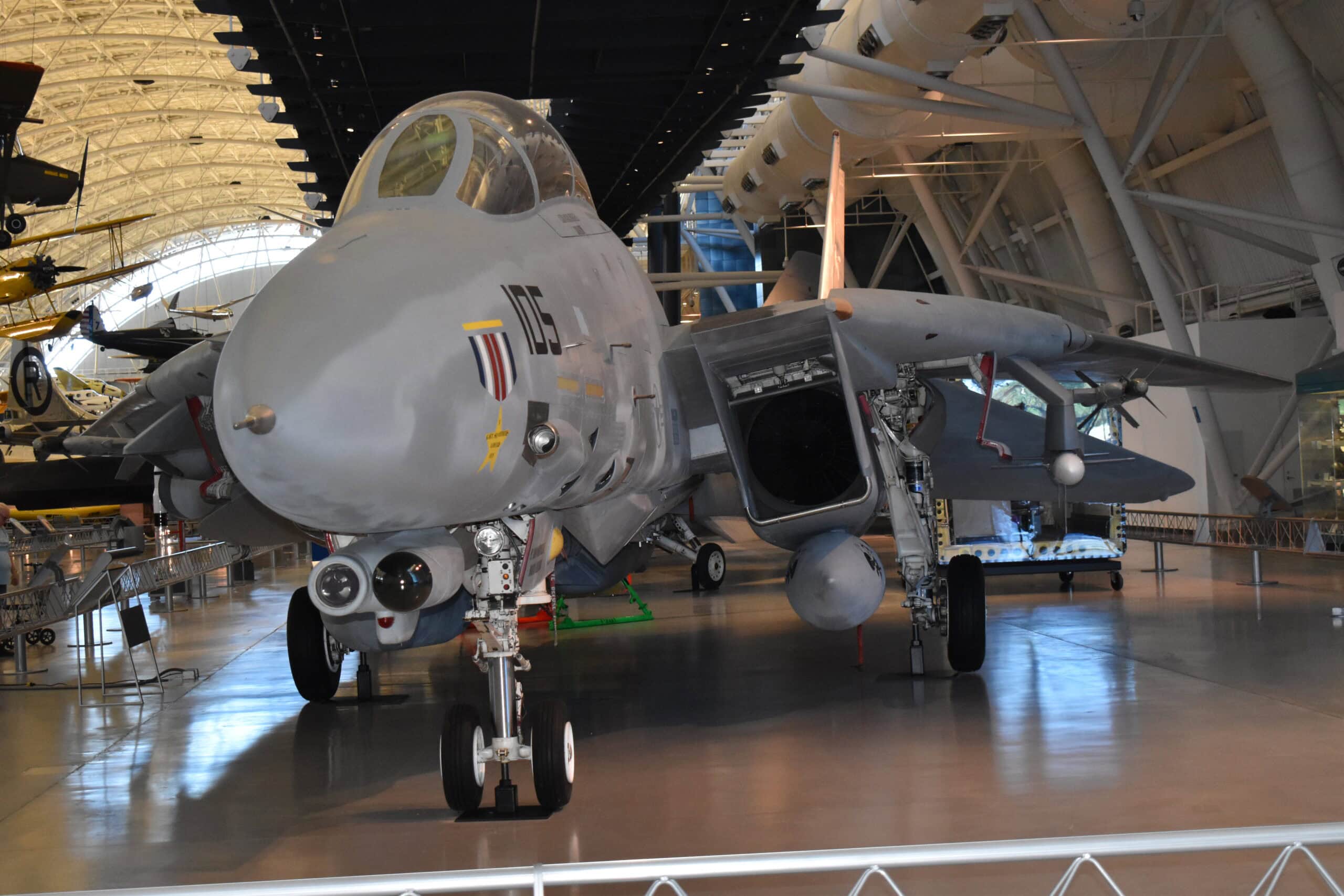
F-14 Tomcat at the Smithsonian. 19FortyFive.com original photo.
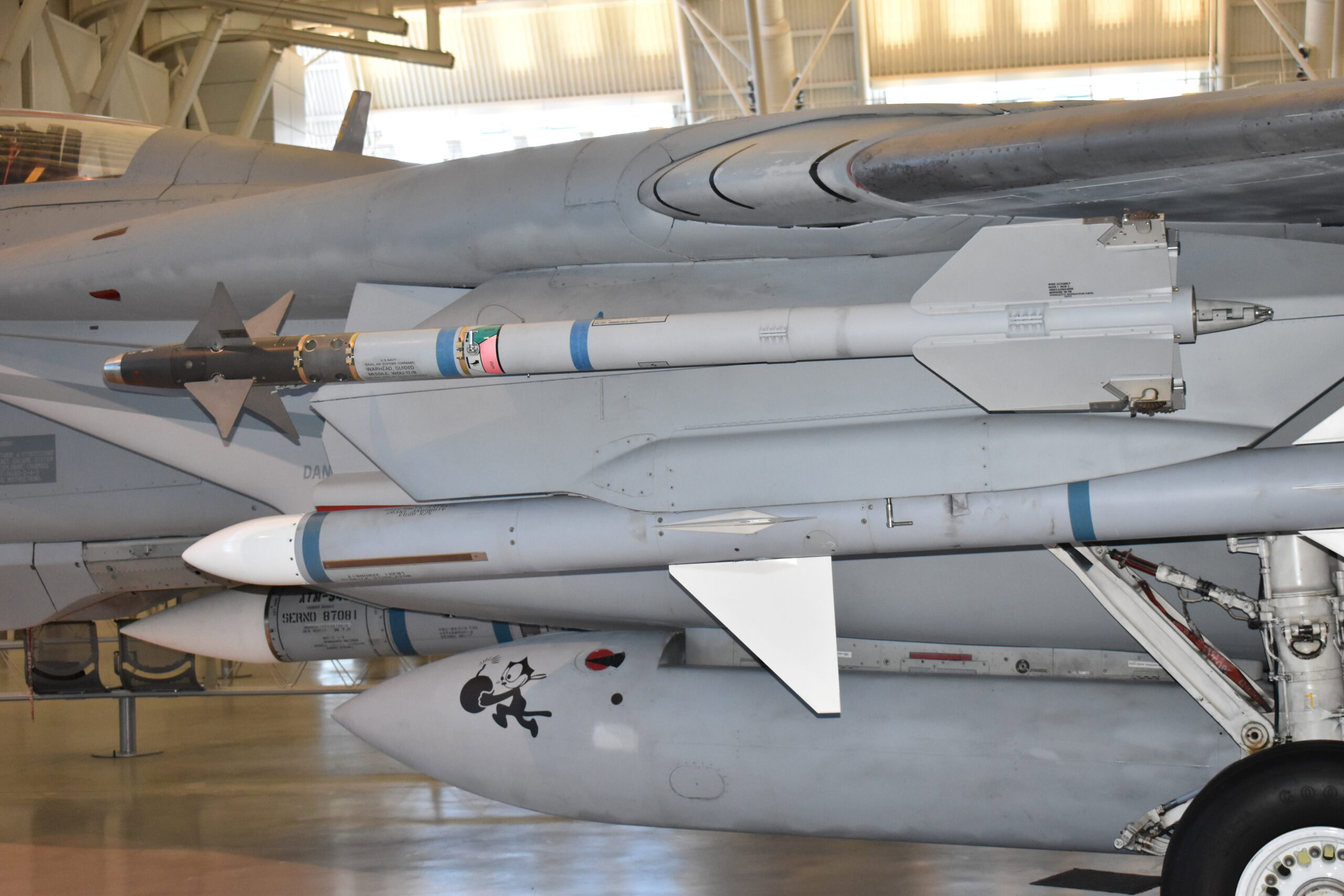
F-14 Tomcat at the Smithsonian. 19FortyFive.com original photo.
For three decades, the AIM-54 Phoenix was the longest-range air-to-air missile in the American arsenal, a 1,000-pound weapon built for a single nightmare: waves of Soviet bombers bearing down on the Navy’s carriers.
That attack never came. In all its years of US service, American crews fired the Phoenix in combat perhaps three times, and every shot missed.
The missile’s entire record of aerial kills belongs to the one operator the United States never intended to keep, Iran.
The AIM-54 Phoenix Was Built to Stop a Soviet Onslaught That Never Came. Its Only Combat Kills Were Scored by Iran.
Ask an aviation enthusiast to name the weapon that defined the F-14 Tomcat, and the answer is immediate: the AIM-54 Phoenix, the long-range, radar-guided missile that let the Tomcat kill at distances no other fighter of its era could reach.
It was the most advanced air-to-air missile in the world when it entered service, and it remained the longest-ranged weapon in the US inventory for thirty years.
It is also one of the strangest stories in the history of American airpower, because the missile built to be the ultimate fleet defender essentially never fought the war it was designed for, and never scored a single confirmed kill in American hands.
Understanding why is a lesson in how weapons are shaped by the wars we expect rather than the wars we get.
Built for the Backfire
The Phoenix was an answer to a very specific fear. In the 1960s and 1970s, US Navy planners looked at the Soviet Union’s growing fleet of long-range bombers, the Tu-16 Badger, the Tu-95 Bear, and later the fast, swing-wing Tu-22M Backfire, and saw an existential threat to the aircraft carrier.

Tu-22M Bomber from Russia
Those bombers could carry heavy, long-range anti-ship cruise missiles and launch them in saturating salvos from far outside the range of a carrier’s short-legged defenders. The Navy needed a way to shoot the bombers, and ideally their missiles, down before they ever got close.
The solution was a weapon system, not just a missile. The Phoenix and its AN/AWG-9 radar, carried on the big new F-14, gave the fleet a fighter that could track two dozen targets at once and fire on six of them simultaneously, each Phoenix guided to a different aircraft, at ranges beyond 100 miles. Drawn from two earlier programs, the Navy’s Bendix Eagle and an Air Force Hughes missile effort, the Phoenix was designed to climb to nearly 100,000 feet and cruise at close to Mach 5, using its height to stretch its reach before dropping onto its target and switching on its own radar for the kill.
For years, Soviet bomber crews genuinely feared it. On paper, the Phoenix was the answer to the Soviet bomber problem, and the numbers were staggering for the era.
Six Shots in Thirty-Eight Seconds
The most famous demonstration of what the system could do took place on November 21, 1973, over the Pacific Missile Test Range off the coast of California. A single F-14 crewed by pilot Ken Wilson and radar intercept officer Jack Hawver went up carrying a full load of six Phoenix missiles against six drones simulating a Backfire bomber raid on the fleet.

F-14 Tomcat Fighter in USS Intrepid Deck. Image taken late on 2025 by Jack Buckby for 19FortyFive. All Rights Reserved.
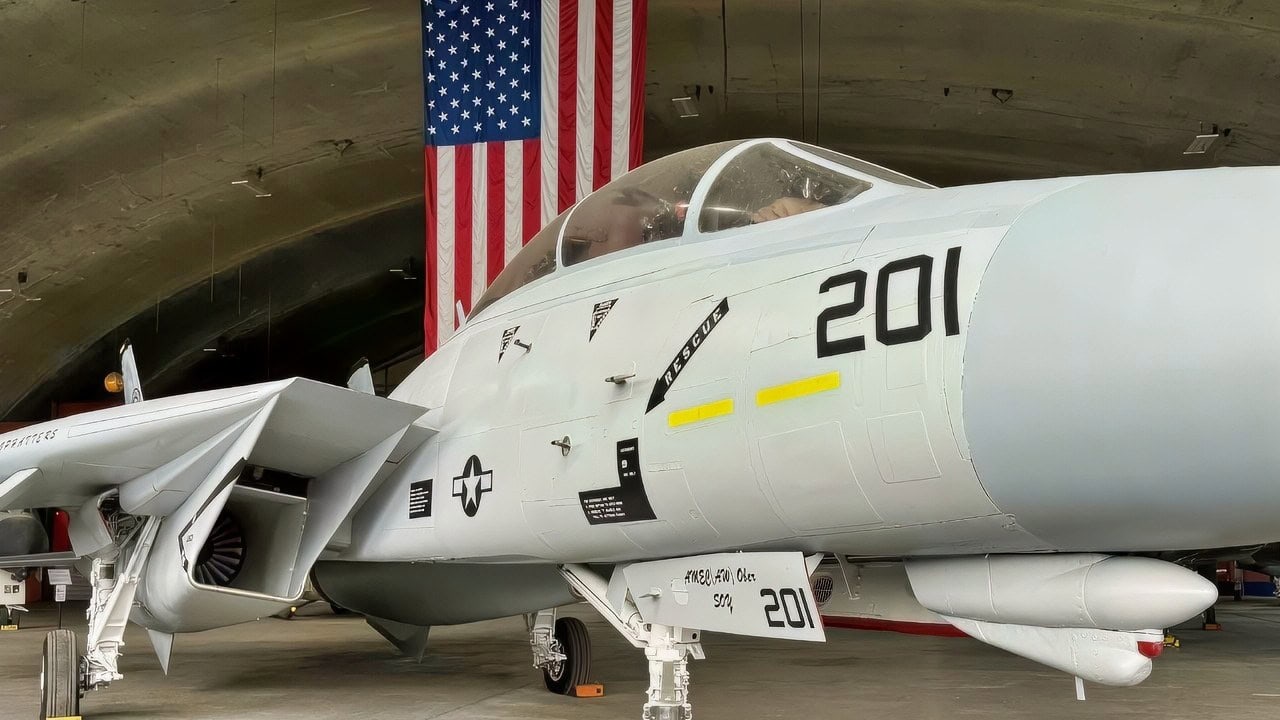
F-14 Tomcat Fighter U.S. Navy. 19FortyFive Field Research Image.

F-14 Tomcat in Museum. Image was taken by Jack Buckby for 19FortyFive.com. All rights reserved.
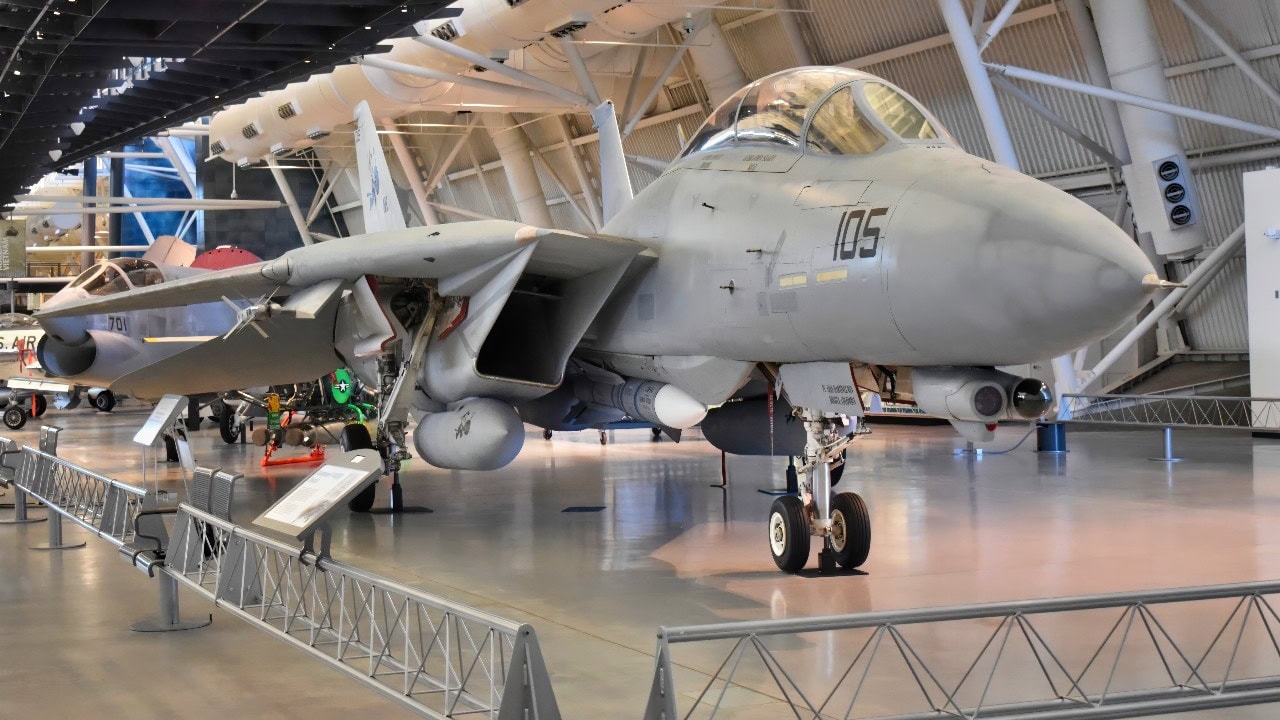
F-14 Tomcat. Image by 19FortyFive.com
Within 38 seconds, the Tomcat launched all six missiles, guiding each to a separate target spread across 15 miles of sky. Four scored direct hits. Of the two that did not, one target suffered an unrelated equipment failure and was ruled a no-test, and the other miss was traced to a failed antenna on the missile itself, leaving the demonstration with an 80 percent success rate.
It was a genuinely impressive feat, cementing the Phoenix’s reputation as the biggest, longest-range, most lethal air-to-air missile in the world. In earlier trials, the missile had knocked a drone out of the sky at more than 120 miles.
Nothing else came close. This was the image the Phoenix carried for the rest of its life, the missile that could swat six Soviet bombers out of the air in a single pass. What almost no one noticed at the time was that the demonstration would remain, for all practical purposes, the high point of the Phoenix’s American career.
The War That Never Came
The Soviet bomber onslaught that the Phoenix was built to stop never happened. Throughout the Cold War, no massed formation of Backfires ever bore down on an American carrier group, so the weapon system built for that exact scenario spent decades waiting for a fight that never came. T
he six-missile salvo that made the Phoenix famous was never once fired in combat. In fact, for most of its service life, the missile was so expensive, so heavy, and so specialized that Tomcats routinely flew with only a couple aboard, leaning on their shorter-range Sparrow and Sidewinder missiles for everything else.
When American Tomcats finally did fire the Phoenix in anger, the results were humbling. Every US combat launch came in 1999, over Iraq, against aircraft challenging the no-fly zones. In January of that year, a pair of F-14s fired two Phoenixes at Iraqi MiGs; both missiles’ rocket motors failed after launch, and the targets flew on untouched.
Months later, a third launch, analyzed afterward by the crew that fired it, was launched at extreme range at a fleeing MiG-23 that simply turned and outran it. That was the sum of it.
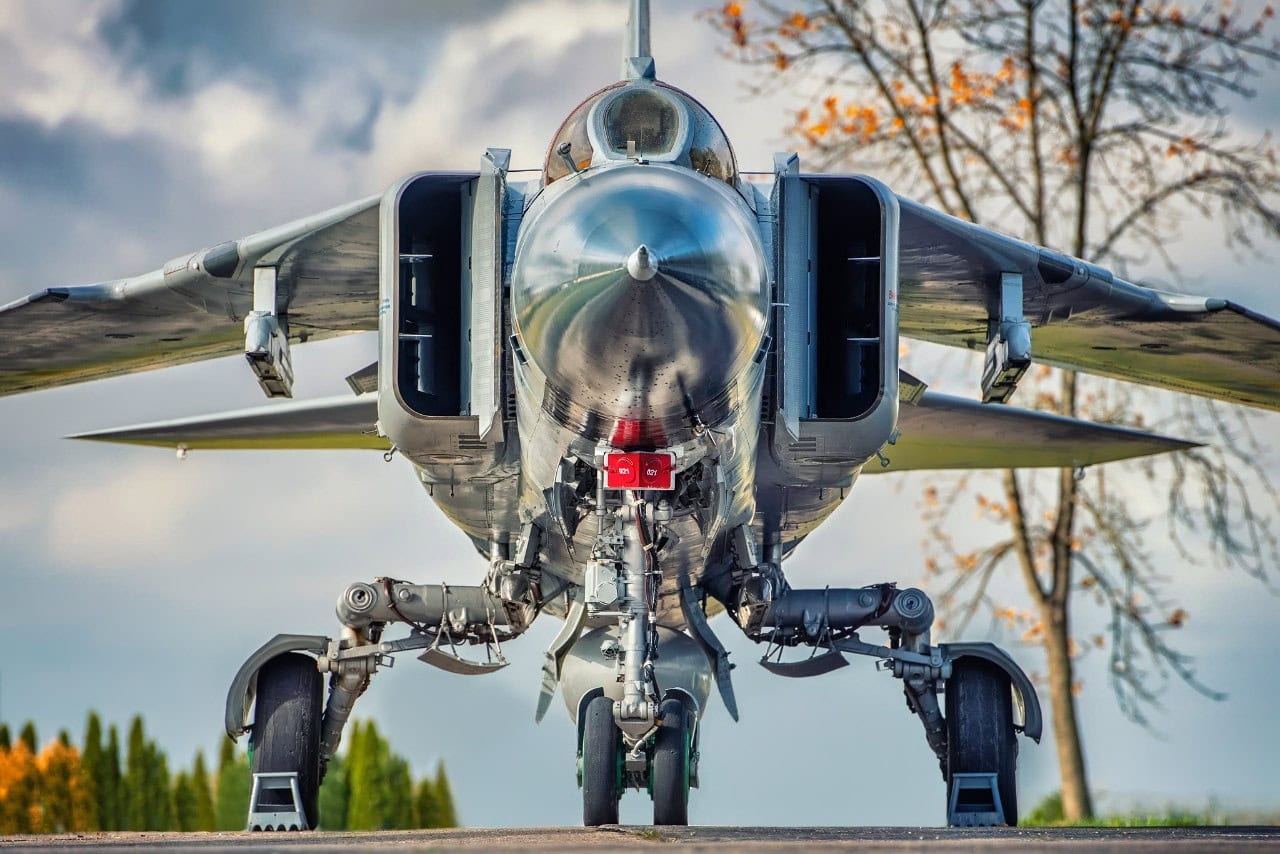
MiG-23. Image Credit: Creative Commons.
In roughly three decades of frontline US service, the most feared air-to-air missile of the Cold War was fired in combat two or three times and killed nothing. Part of the reason was bad luck with the missiles; part was that the Phoenix, optimized for large, non-maneuvering bombers, was poorly suited to chasing nimble fighters; and part was that strict rules of engagement over Iraq rarely allowed the long-range shots the weapon was built to take.
The Only Pilots Who Made It Work
The Phoenix’s real combat history was written somewhere else entirely, by the one country the United States had never planned to leave holding it. Before the 1979 revolution, the Shah’s Iran had been a favored American ally, and Washington sold it the F-14 and hundreds of Phoenix missiles, the only export customer the weapon ever had. When the Shah fell and the two countries became enemies, Iran kept its Tomcats and its Phoenixes and within a year found itself in a brutal eight-year war with Iraq.
That war became the Phoenix’s proving ground. Cut off from American support, Iranian crews used the missile exactly as it was meant to be used, at long range against enemy aircraft, and they made it work. The definitive account comes from aviation historian Tom Cooper, who spent years interviewing Iranian veterans and cross-checking Iraqi records; he credits Iranian F-14s with well over a hundred claimed kills, of which independent analysts confirm roughly 55, against only a handful of Tomcat losses in air combat.
Cooper is careful to caution that a precise tally is impossible because Iranian air force records were repeatedly altered during and after the war for political and personal reasons. But even the conservative, confirmed number dwarfs the American combat record, which is zero.
Some of the individual engagements border on the surreal. In January 1981, an Iranian crew responding to intruders near Kharg Island in the Persian Gulf fired a single Phoenix into a tight formation of three Iraqi MiG-23s; the missile’s large warhead detonated among them and brought down all three at once.
The war also produced the highest-scoring F-14 pilot in the aircraft’s history, an Iranian named Jalil Zandi, credited with roughly 11 victories, more than any American Tomcat crew ever achieved. Iraqi pilots came to dread the distinctive signature of the AWG-9 radar on their warning receivers, because it often meant a missile was already on its way from an aircraft they could not even see. For eight years, an American missile flown by Iranian crews was the most feared weapon in the skies over the Persian Gulf.
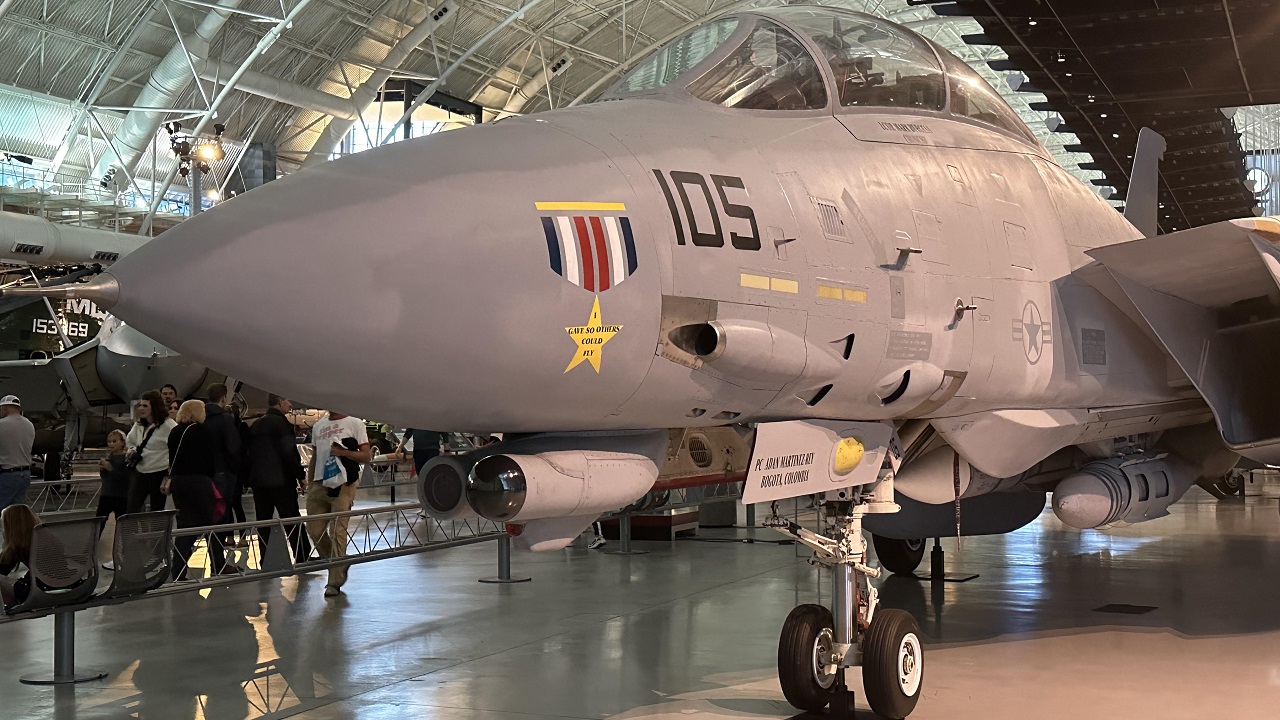
F-14 Tomcat. Image taken at National Air and Space Museum on October 1, 2022. Image by 19FortyFive.
The Missile Outlived Everyone
The story did not end when the Tomcat retired. The US Navy pulled the Phoenix from service in 2004 and the F-14 in 2006, replacing them with the F/A-18 Super Hornet and the shorter-range AIM-120 AMRAAM, a more agile missile that for years could not reach nearly as far as the old Phoenix. In effect, the Navy retired its longest-range punch and accepted a gap in reach, betting that it would not need to shoot anything at extreme distance.
Iran, meanwhile, refused to let the weapon die. Barred from buying replacements, Iranian engineers reverse-engineered the aging Phoenix, blending it with technology from the American MIM-23 Hawk surface-to-air missile they also operated, and produced a domestic copy called the Fakour-90, unveiled in 2013 and reportedly in mass production by 2018.
Tehran claims it improves on the original, though those figures come from a government with every incentive to exaggerate and little independent verification. Still, the symbolism is hard to miss: half a century after the United States built the Phoenix, its only combat operator was manufacturing its own version to keep the line alive.
And in the final twist, the Americans came full circle. In 2024, the US Navy fielded the AIM-174, an air-launched version of its SM-6 missile and the first dedicated long-range air-to-air weapon it has carried since the Phoenix was retired, a tacit admission that abandoning that reach had been a mistake. The new missile’s job, tellingly, is much the same as the old one’s: reaching out hundreds of miles to kill the enemy’s high-value support aircraft, the radar planes and command aircraft that make a modern bomber or missile strike possible, before they can do their work.
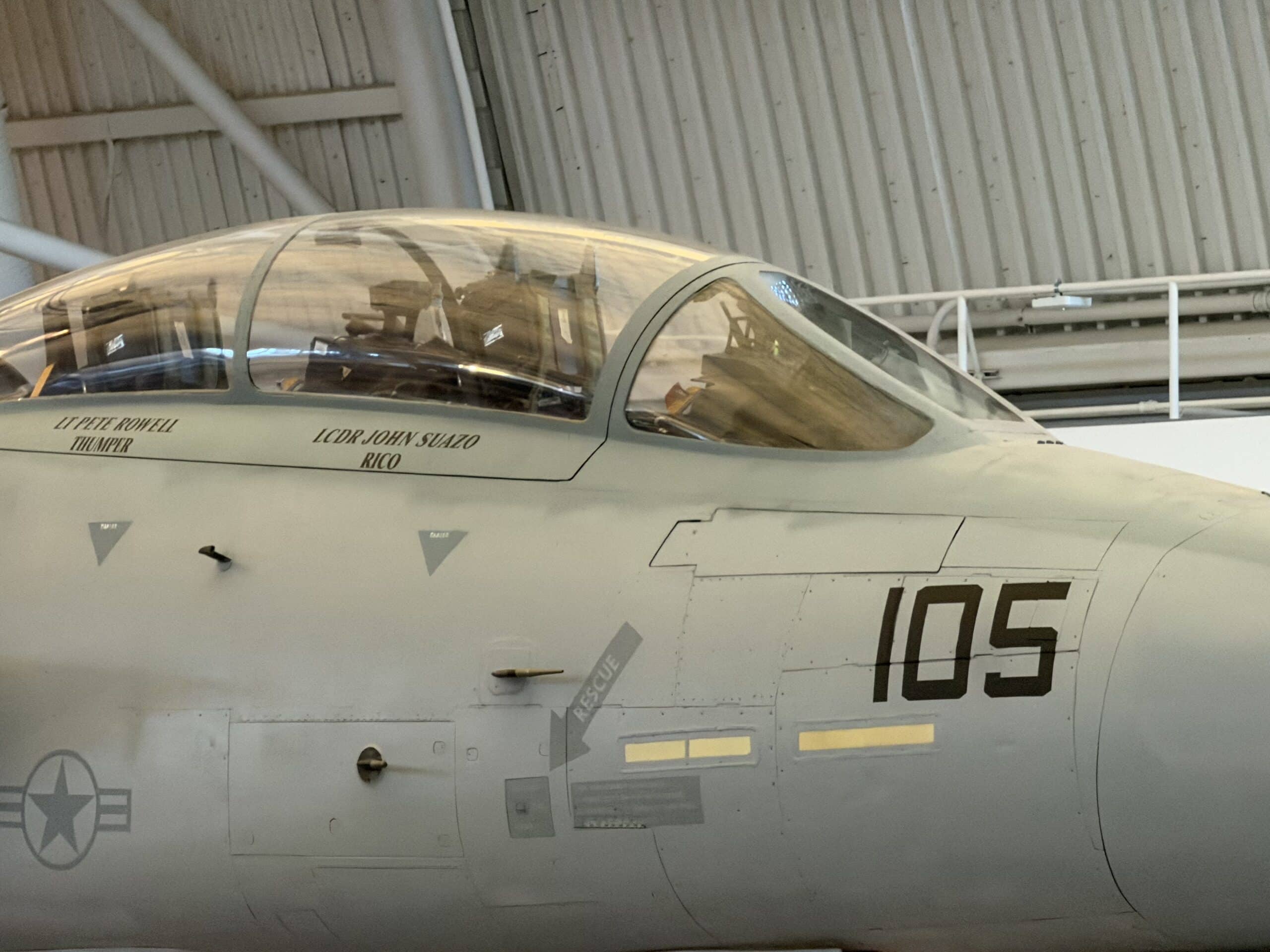
F-14D image taken by Christian D. Orr at the Smithsonian. 19FortyFive.com Image.
Twenty years after the Navy decided it no longer needed a Phoenix, it built one again. The weapon designed for a Soviet war that never came turned out to have been right about the problem all along, just early by a generation, and pointed at the wrong enemy.
Its only kills, fittingly, were scored by the one air force that flew it the way it was always meant to be flown.
About the Author: Harry J. Kazianis
Harry J. Kazianis (@Grecianformula) was the former Senior Director of National Security Affairs at the Center for the National Interest (CFTNI), a foreign policy think tank founded by Richard Nixon based in Washington, DC. Harry has over a decade of experience in think tanks and national security publishing. His ideas have been published in the NY Times, The Washington Post, The Wall Street Journal, CNN, and many other outlets worldwide. He has held positions at CSIS, the Heritage Foundation, the University of Nottingham, and several other institutions related to national security research and studies. He is the former Executive Editor of the National Interest and the Diplomat. He holds a Master’s degree focusing on international affairs from Harvard University.

