
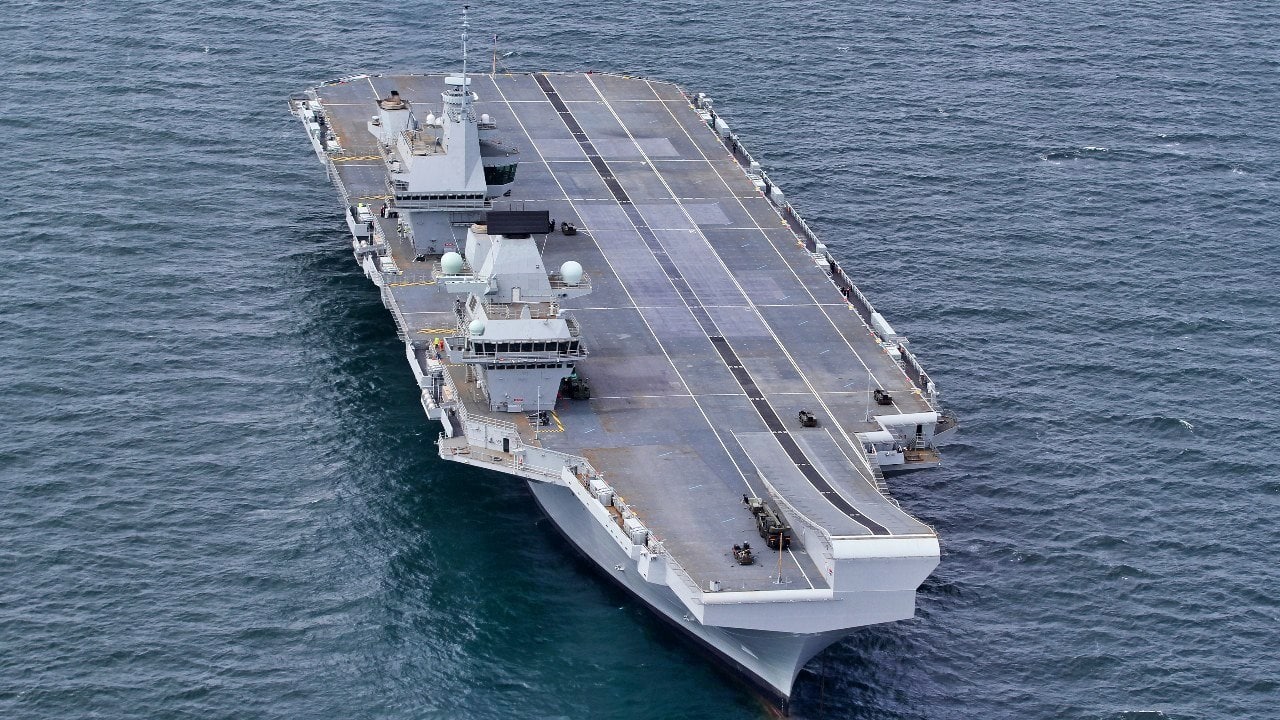
Summary and Key Points: The Royal Navy, one of NATO’s leading naval forces, entered 2026 in its worst readiness crisis in a generation. Both aircraft carriers, HMS Queen Elizabeth and HMS Prince of Wales, spent much of early 2026 unavailable, and none of the five Astute-class attack submarines was at sea, several held alongside for years of maintenance. The six Type 45 destroyers and the aging Type 23 frigate fleet have been thinned by breakdowns and delayed replacements, leaving Britain with roughly 14 destroyers and frigates in total and, by one measure, fewer ships than the United States Coast Guard. A 2025 defence review and a June 2026 investment plan promise reform, but the funding triggered the defence secretary’s resignation.
The Royal Navy Is in Bad Shape:
In early 2026, Britain’s two aircraft carriers were both tied up in port, none of the Royal Navy’s attack submarines could put to sea, only about half its warships were available for duty, and its Defence Secretary resigned over what he judged to be inadequate funding. Former admirals have called the state of the fleet “a disgrace.” This is a world-class navy, with carriers, submarines, and global reach, as it proved as recently as last year, hollowed out by three decades of neglect and now racing to reform on money it insists is not enough.
For one of NATO’s leading naval powers, it is an alarming place to be.
It Took Years to Get To This Point:
For years, the slow shrinking of the Royal Navy happened quietly, on the margins of British political debate.
In 2026, it stopped being quiet. A run of readiness failures across almost every class of warship, colliding with rising tension from the Middle East to the North Atlantic, has forced a blunt national conversation about whether Britain still has a navy equal to its commitments. The picture that has emerged is grim, and it is worth walking through class by class, because the problem is not one ship or one program. It is the whole fleet.
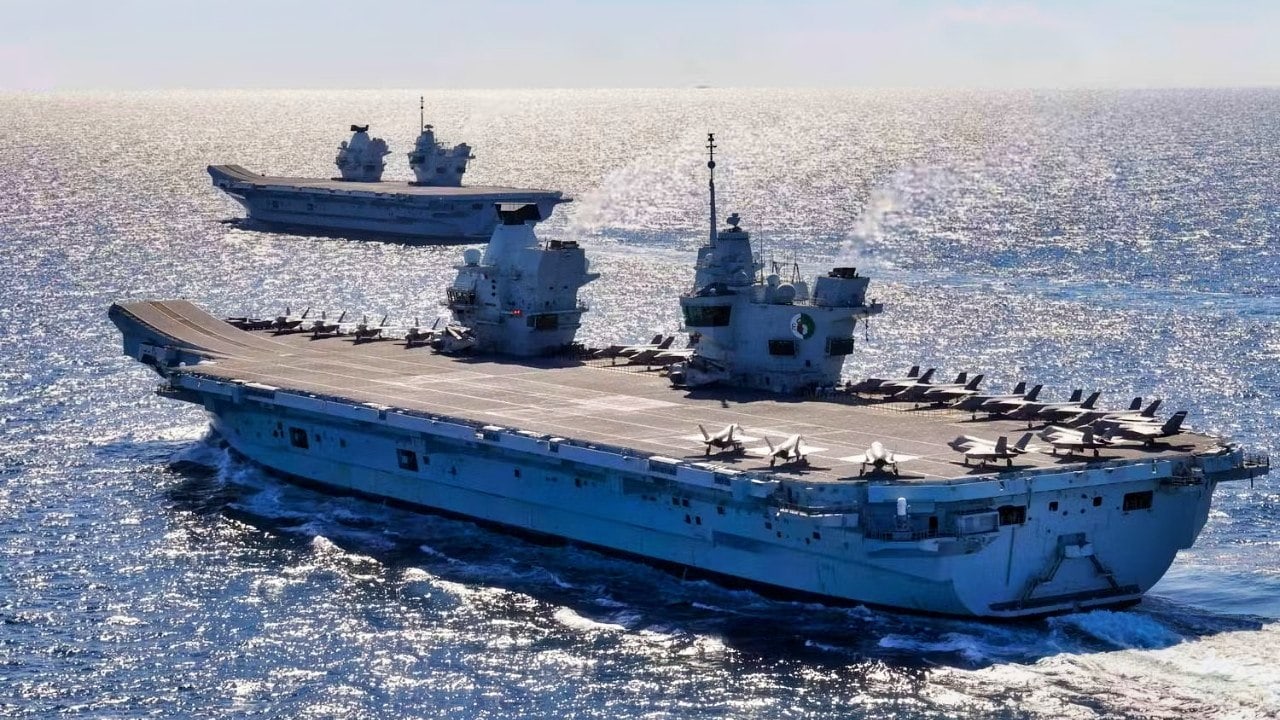
Queen Elizabeth-Class. Image Credit: Royal Navy.
The Submarines That Cannot Sail
Start with the most alarming failure, because it is the one that touches Britain’s nuclear deterrent. As of mid-2026, none of the Royal Navy’s five commissioned Astute-class nuclear attack submarines were at sea. All of them were alongside for maintenance, some for years: HMS Ambush had not put to sea since August 2022, nearly four years, and had been partly stripped for spare parts to keep other boats going, while HMS Artful last sailed in 2023.
This is not a minor embarrassment. An attack submarine is normally needed to screen the Vanguard-class ballistic-missile boats that carry Britain’s Trident deterrent as they leave and return to Faslane, and to track a resurgent Russian submarine force in the Atlantic.
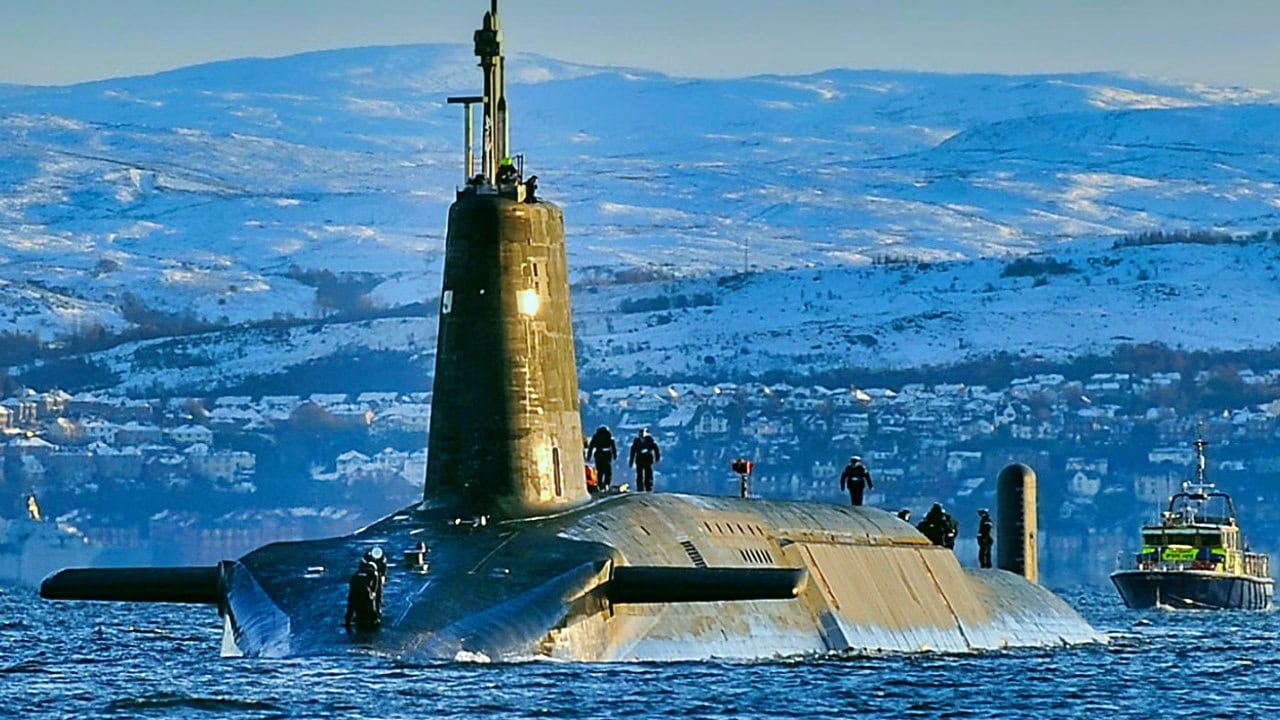
Vanguard-Class SSBN. Image Credit: Creative Commons.
The First Sea Lord has publicly warned that Britain’s traditional advantage in the North Atlantic is now “in jeopardy,” and Navy Lookout, the most authoritative independent tracker of the fleet, bluntly describes the submarine situation as “a disaster.” A recovery plan launched in early 2026 aims to fix the maintenance backlog, but its results are years away.
The Aircraft Carriers Without Enough Jets
Britain spent roughly £7.6 billion on two aircraft carriers, HMS Queen Elizabeth and HMS Prince of Wales, meant to anchor the fleet for a generation. For much of early 2026, neither was available. Queen Elizabeth spent about nine months in a Rosyth dry dock before returning to Portsmouth in April, while Prince of Wales was alongside recovering from its 2025 Indo-Pacific deployment.
That deployment is the genuine bright spot, and it deserves acknowledgment: Prince of Wales led a carrier strike group from the Mediterranean to the Pacific and sustained months of fast-jet operations, proving Britain can still project power globally. But it also exposed the hollowness behind the capability. The carriers are crippled by a shortage of F-35B stealth jets so severe that they typically deploy with about the same number of aircraft as Italy’s much smaller carrier Cavour, and the strike group could be escorted by only a single frigate and destroyer, half the number the Navy managed on a comparable deployment in 2021.
The Destroyers Are Still Being Repaired
The Royal Navy’s six Type 45 destroyers are its primary air-defense warships, and for most of the past decade, they have been plagued by a propulsion design fault that left them breaking down in warm waters.
A long-running Power Improvement Project is fixing the problem one ship at a time, but the cost has been availability; through early 2026, only about three of the six were available for service. HMS Daring, the oldest, had not been to sea in more than 3,300 days, over nine years. Former First Sea Lord Admiral Lord West called the overall situation “a disgrace,” warning that the fleet had become dangerously weak. The upgrade should begin restoring availability starting in 2026, but the margin in the meantime is razor-thin.
A Frigate Fleet at Its Smallest in Generations
The frigate force, the workhorses of anti-submarine warfare and maritime security, is in the middle of a painful gap. The aging Type 23 fleet, with most ships around 30 years old, has been retiring faster than replacements arrive, falling to just five operational hulls.
The replacements are real and under construction, eight advanced Type 26 anti-submarine frigates on the Clyde and five cheaper Type 31 general-purpose frigates at Rosyth, but the first Type 31 does not enter service until 2027 and the first Type 26 until 2028. Until then, the escort fleet runs on fumes.
Fewer Ships Than the U.S. Coast Guard
Add it all up, and the raw numbers are startling for a country that once ruled the seas. Britain now fields roughly 14 destroyers and frigates combined, and of a total fleet of around 63 vessels, the Ministry of Defense has conceded only about half are available for operations at any time. By one widely-cited measure, the Royal Navy has fewer ships than America’s Coast Guard.
Britain now has about 134 admirals and senior flag officers, more than it has major warships. And former Chief of the Defence Staff Admiral Sir Tony Radakin has acknowledged that the UK sits “second from bottom” in a NATO league table ranking members against the alliance’s capability requirements.
The thinning goes beyond the front line. The two amphibious assault ships, HMS Albion and Bulwark, have been mothballed and lined up for possible sale to Brazil despite their relative youth, and the support fleet that keeps warships fed and fueled at sea has shrunk under a manpower crisis, with the Navy missing recruitment targets and running a persistent shortfall of sailors.
The Reform, and the Money That Wasn’t There
Britain’s leadership is not ignoring this. The 2025 Strategic Defence Review called for a shift to “warfighting readiness,” an ambition to grow the attack-submarine fleet to up to 12 next-generation SSN-AUKUS boats, and a “high-low” mix that pairs a smaller number of expensive warships with cheaper crewed and uncrewed vessels.
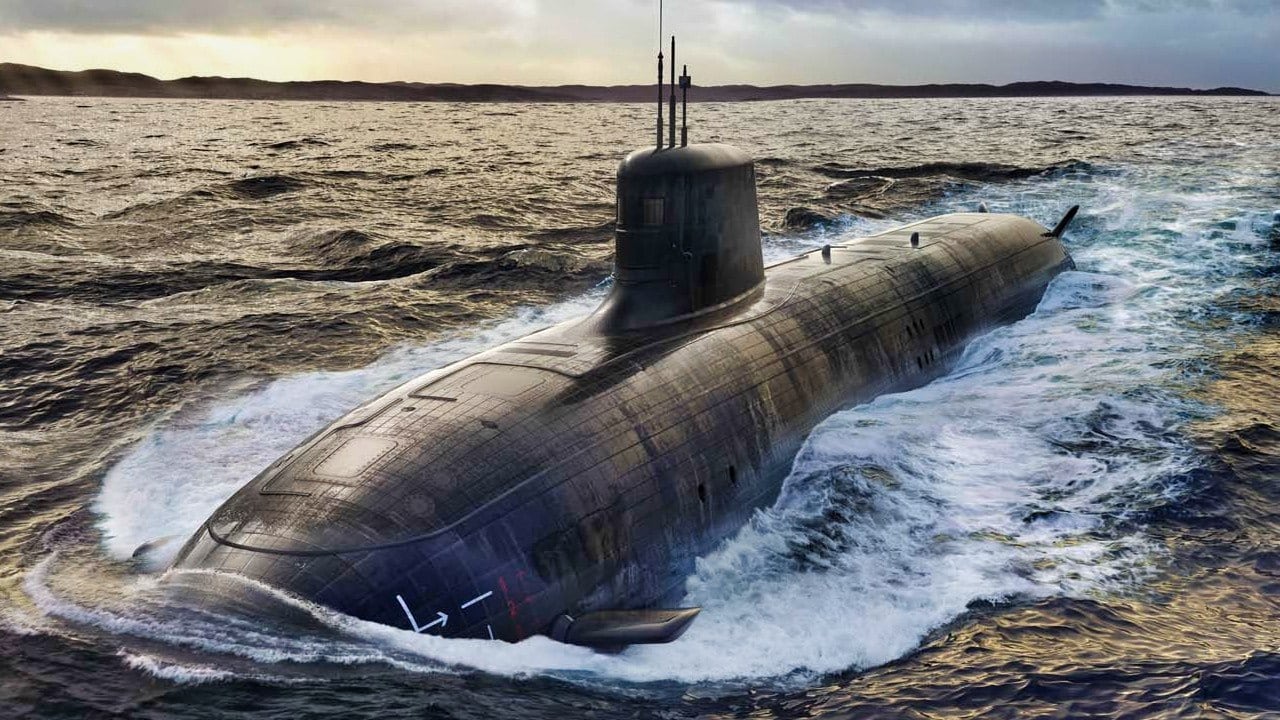
SSN-AUKUS Submarine. Image is Creative Commons Artist Rendering.
The new First Sea Lord has set what one analysis called a four-year “warfighting clock,” and the Defence Investment Plan published in June 2026 pours money into the fleet’s foundations.
But the money came with a political explosion. Defence Secretary John Healey resigned in June 2026 in protest, telling the Prime Minister that the roughly £15 billion on offer over four years fell “well short of what is required,” barely half the £28 billion the military said was the bare minimum. The plan that followed devotes an enormous £63 billion, a quarter of the entire defense budget, to the nuclear enterprise of submarines and warheads, while critics note the money allocated to the new hybrid fleet may cover only a fraction of what it will actually cost. The planned Type 83 destroyer and a further frigate class were cut or deferred in favor of cheaper future vessels.
And the reform rests on a genuine gamble. As Navy Lookout observes, the Royal Navy is pinning its future surface fleet on five new classe of vessels, four of them uncrewed, “none of them yet designed, built or proven.” It is a bet that autonomy and technology can substitute for the hulls and sailors Britain no longer has, and no one yet knows if it will pay off.
The Royal Navy: Terminal Decline?
It would be wrong to call the Royal Navy a spent force, and the evidence does not support the most apocalyptic headlines.
Britain still operates two of the largest carriers outside the United States, some of the quietest submarines in the world, a continuously maintained nuclear deterrent, and a professional force that proved last year it can still send a carrier group to the far side of the planet.
In high-end quality, it remains a top-tier navy.
But quality cannot be in two places at once, and that is the heart of the crisis.
Three decades of shrinking hull numbers, delayed shipbuilding, and, arguably, the over-ambition of buying two enormous carriers on a tight budget have left Britain with a fleet too small and too worn to meet the commitments its politicians keep making.
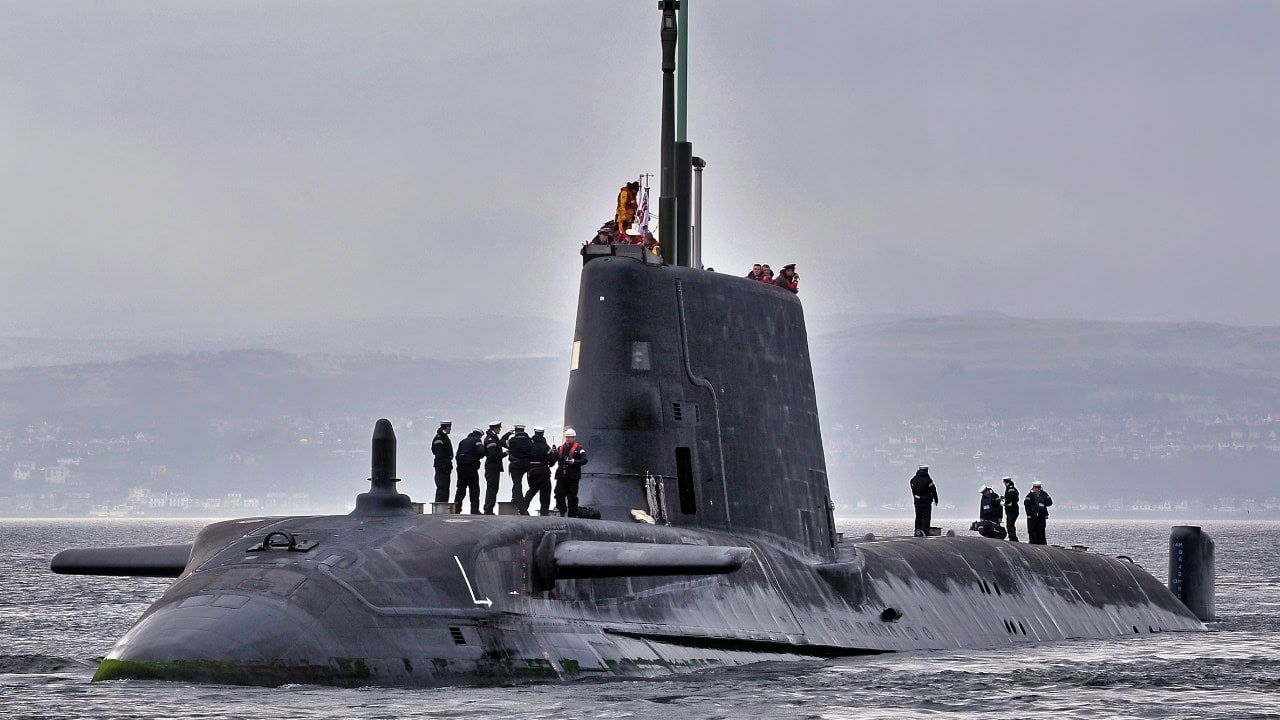
Astute-Class Submarine. Image Credit. Creative Commons.
The country has finally admitted the problem, out loud and at the top, and has a plan to fix it. Whether that plan is funded and delivered, or becomes another decade of promises that outrun the budget, will determine whether the Royal Navy recovers or continues its slow slide. For now, one of NATO’s most important navies is a formidable force running dangerously low on ships to be formidable with.
MORE – The B-2 Spirit Stealth Bomber Has a Message for China’s Navy
About the Author: Harry J. Kazianis
Harry J. Kazianis (@Grecianformula) was the former Senior Director of National Security Affairs at the Center for the National Interest (CFTNI), a foreign policy think tank founded by Richard Nixon based in Washington, DC. Harry has over a decade of experience in think tanks and national security publishing. His ideas have been published in the NY Times, The Washington Post, The Wall Street Journal, CNN, and many other outlets worldwide. He has held positions at CSIS, the Heritage Foundation, the University of Nottingham, and several other institutions related to national security research and studies. He is the former Executive Editor of the National Interest and the Diplomat. He holds a Master’s degree focusing on international affairs from Harvard University.

