
Is Iran in Trump’s Rearview Mirror?: While everyone focuses on the fight over the Strait of Hormuz, the administration faces far bigger challenges—stemming from the successes of U.S. and allied combat operations in the region. Arguably, the tasks the White House takes on next are far more important than the details of how the sparring with Iran ends.
A Humbled Behemoth
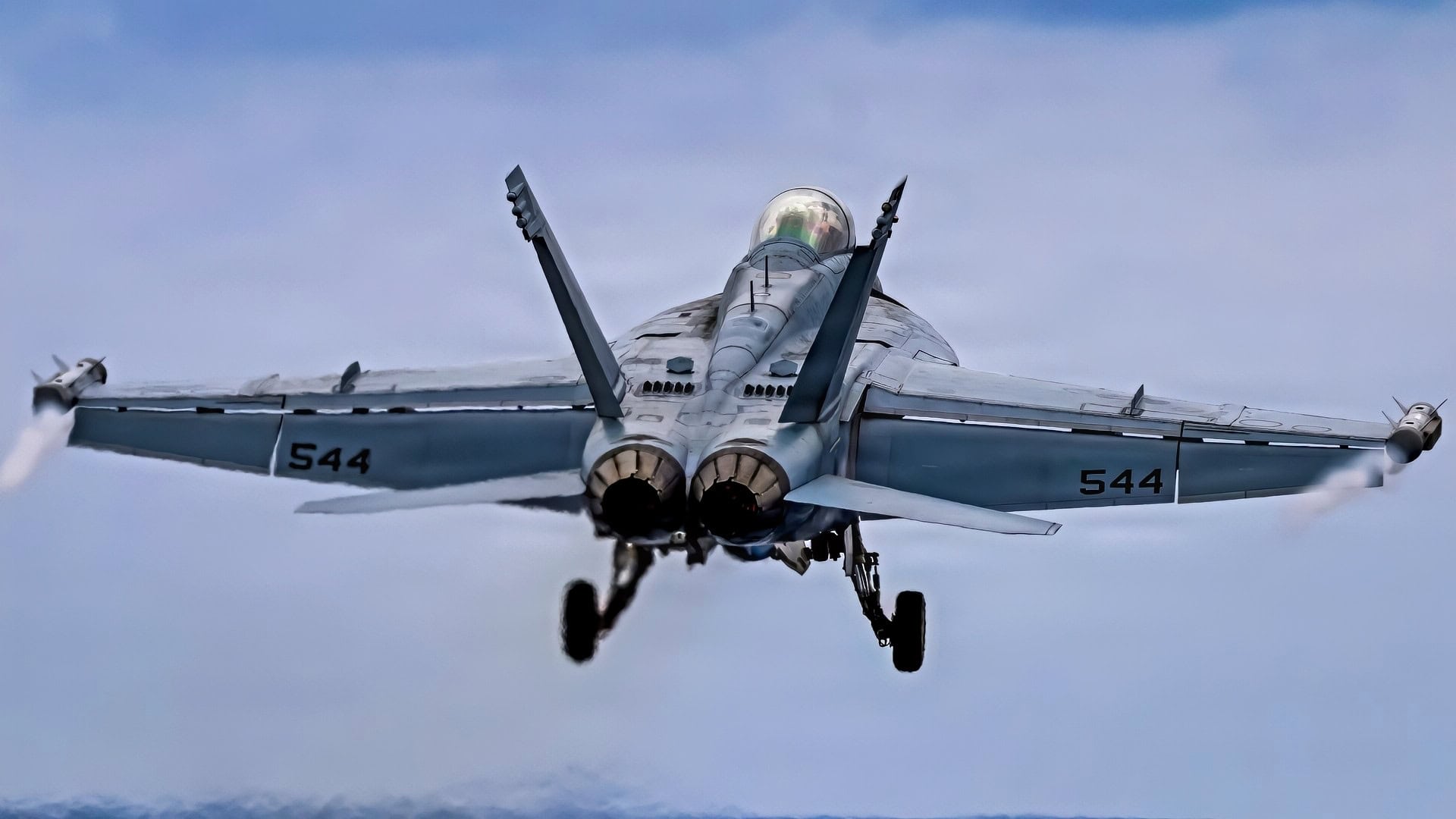
PACIFIC OCEAN (March 31, 2026) –U.S. Navy Capt. William Mathis, commanding officer of the Nimitz-class aircraft carrier USS Theodore Roosevelt (CVN 71), pilots a E/A-18G Growler assigned to Electronic Attack Squadron (VAQ) 129, March 31, 2026. Theodore Roosevelt, flagship of Carrier Strike Group (CSG) 9, is underway conducting exercises to bolster strike group readiness and capability in the U.S. 3rd Fleet area of operations. (U.S. Navy Photo by Mass Communication Specialist 2nd Class Ryan Holloway)
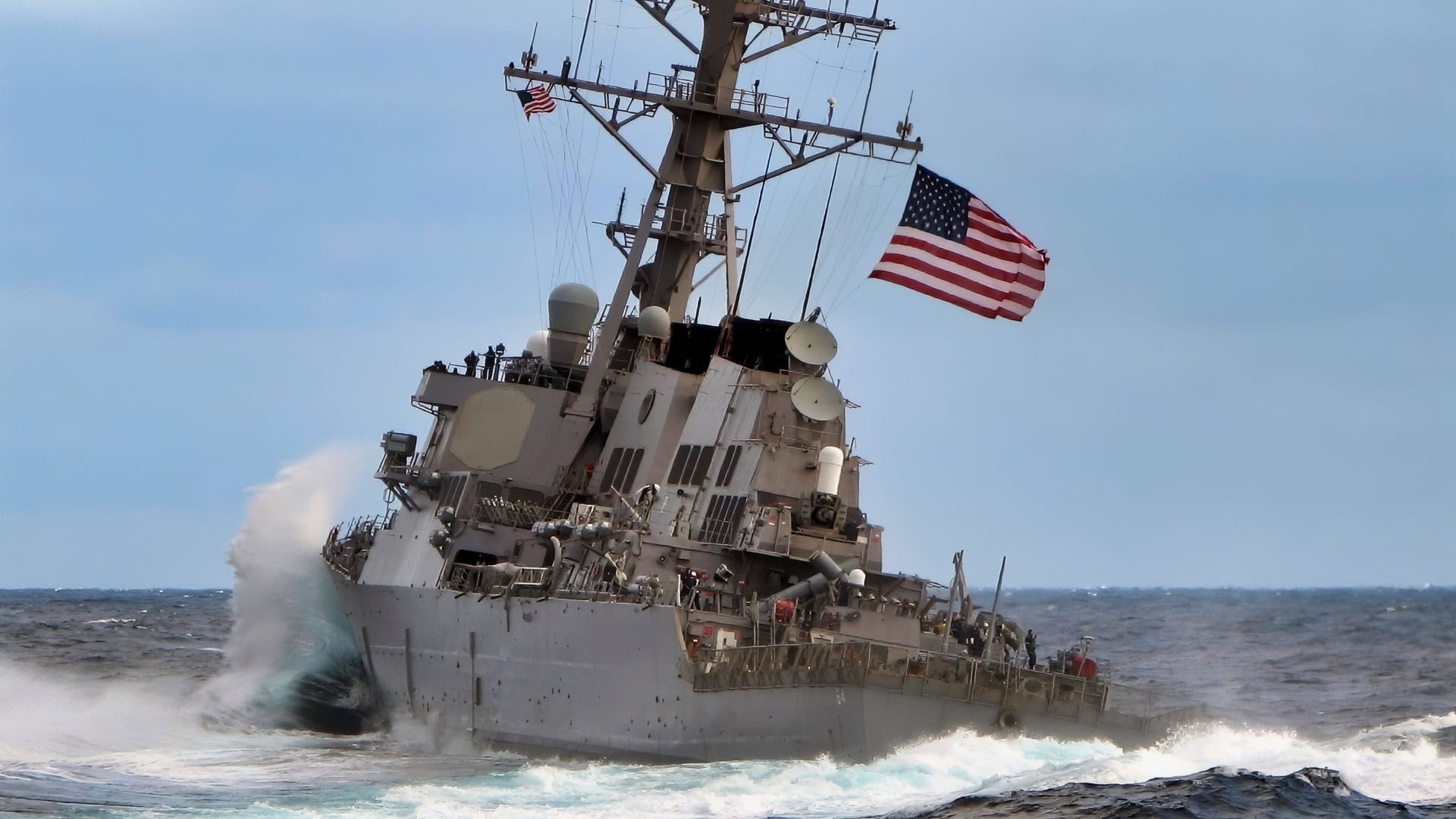
(Jan. 16, 2010) Waves crash over the bow of the guided-missile destroyer USS Carney (DDG 64). Carney is part of the Eisenhower Carrier Strike Group and is deployed as part of an on-going rotation of forward-deployed forces to support maritime security operations in the U.S. 5th and 6th Fleet areas of responsibility. (U.S. Navy photo by Master at Arms Chief Chief Anthony J. Sganga/Released)
For decades, the destabilizing actions of the regime in Tehran have been the chief threat to U.S. interests in the region. In the last few months, Trump’s war has taken all the key instruments of fear off the geostrategic table. Even if the U.S, never fired one more Tomahawk, while some military capabilities might be reconstituted in months, it would take Tehran years to reach the level of threat to the country’s neighbors that it was just a year ago.
The list of what Iran has lost is stunning.
Nuclear Nightmare
The danger of Iran becoming a declared nuclear power and the potential for cascading nuclear proliferation in the region are often cited as one of the most significant dangers to world peace. Today, the regime physically cannot build a nuclear weapon.
Missile Armageddon
The regime assembled mass arsenals of ballistic missiles and drones, threatening a rain of fire on the neighbor that annoyed Tehran. In June 2025, for example, Iran “fired 530 ballistic missiles and more than 1,000 drones against Israel.” Today, while the Iranian military still has the capacity to fire an occasional weapon, most of the arsenals and launchers, and the capacity to defend them, are in ashes. The military’s command and control is in tatters. Iran cannot execute mass air attack campaigns on anyone.
Surrogates from Hell
Perhaps the most persistent and present danger posed by the regime was a network of surrogates that did everything from harassing to launching all-out war on nations across the Greater Middle East. In large part, Iran’s well-earned reputation as the world’s “greatest sponsor of terrorism” was based on the regime’s use of proxies against its enemies. Today, none of them, not the Houthis, Hamas, Hezbollah, Iraqi militias, or pro-Iranian elements in Syria, have the capacity or the financial, political, and military backing of Tehran that made them the serious dangers they were a year ago.
Oil Crisis 2.0
At the start of the war, about 20 percent of the world’s oil transited the strait. As a result of increasing global production, alternative means to get regional oil to market, and the degradation of Iranian military capabilities, Iran will never be able to hold 20 percent of the global oil deliveries hostage again. At best, today the regime has a very limited capacity to interdict traffic in the strait, and those capabilities decline with every U.S. strike and the sustained presence of American forces in the region.
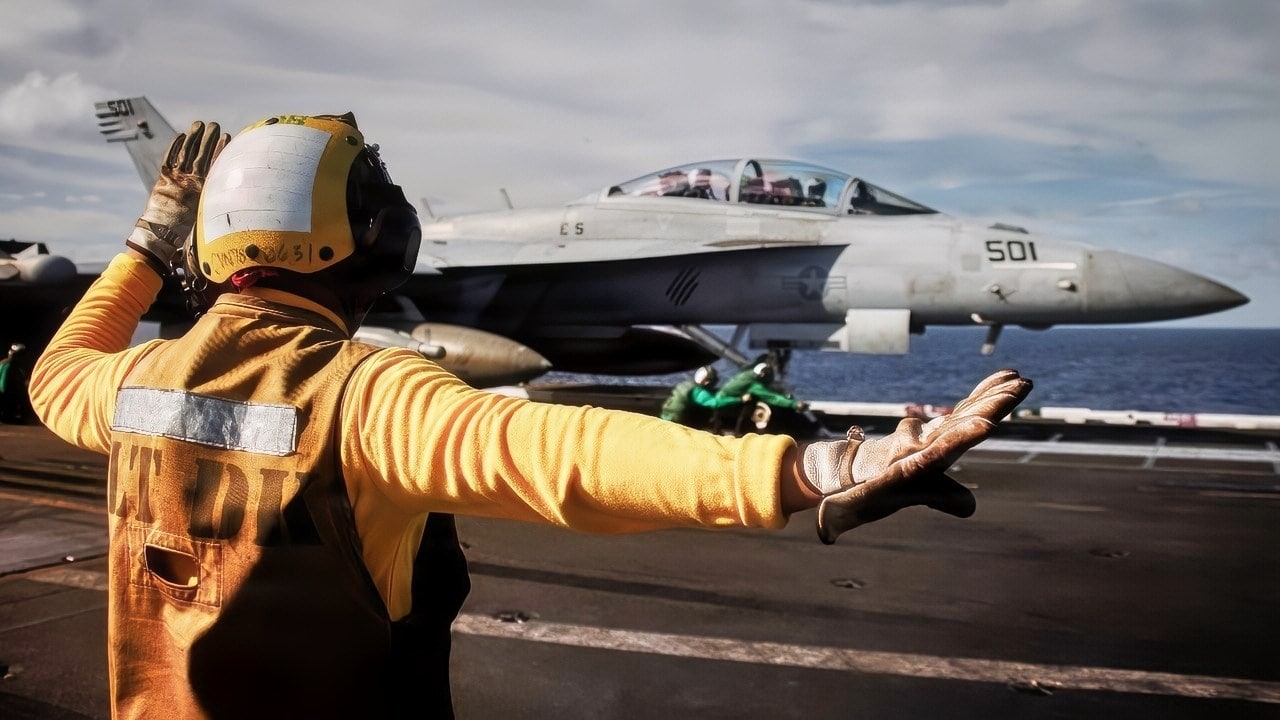
A U.S. Sailor signals to send the aircraft catapult shuttle forward on the flight deck of the world’s largest aircraft carrier, Ford-class aircraft carrier USS Gerald R. Ford (CVN 78), while underway in the Caribbean Sea, Jan. 11, 2026. U.S. military forces are deployed to the Caribbean in support of the U.S. Southern Command mission, Department of War-directed operations, and the president’s priorities to disrupt illicit drug trafficking and protect the homeland. (U.S. Navy photo)
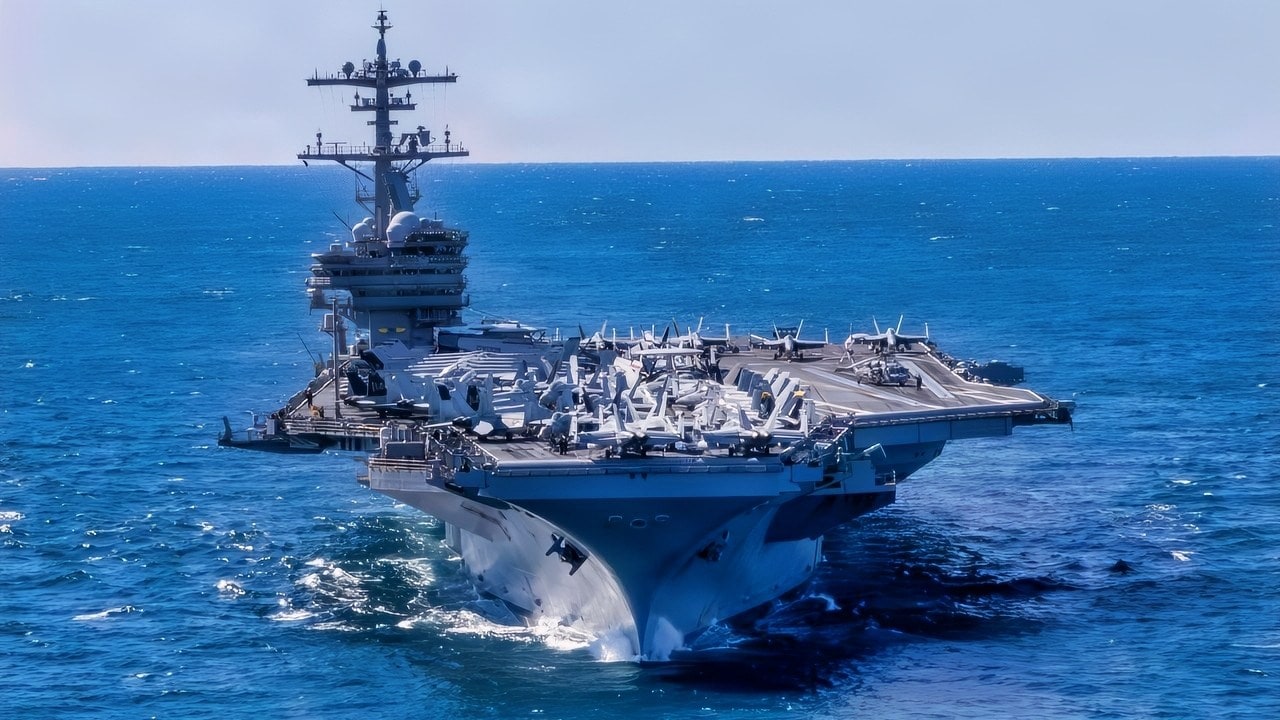
The Nimitz-class aircraft carrier USS George H.W. Bush transits the Atlantic Ocean, Feb. 8, 2026. The George H.W. Bush Carrier Strike Group is at sea training as an integrated warfighting team. Composite Training Unit Exercise (COMPTUEX) is the Joint Force’s most complex integrated training event and prepares naval task forces for sustained high-end Joint and combined combat. Integrated naval training provides combatant commanders and America’s civilian leaders highly capable forces that deter adversaries, underpin American security and economic prosperity, and reassure Allies and partners. (U.S. Navy photo by Mass Communication Specialist 2nd Class Jayden Brown)
In short, Trump has ticked off every threat to the U.S. that has kept American presidents since Jimmy Carter up at night.
Opportunity Ahead
For Washington, what happens next is way more important than what is happening now. Many fretted about how World War II in Europe ended, seeing the Yalta pact with the Soviet Union as a strategic setback from which the West would never recover. That might have been a reasonable assessment absent all the U.S. commitment to making the transatlantic community a success after the conflict. Likewise, the final judgment on Trump will be less about how the war ends than about what the U.S. does after. As with America’s position in Western Europe after World War II, the U.S. has an unprecedented opportunity to reset the strategic table in the Greater Middle East and has willing partners to work with.
Trump’s to-do list is longer, more demanding, but also more decisive than just hammering the Iranian military, though flattening the regime (just like defeating Germany in World War II) is what makes a brave new world in the Middle East feasible.
Reconstruction
Transforming Gaza, Lebanon, and Syria from open wounds to regions of growth and stability will impact the future of the entire Greater Middle East, not only removing zones of influence for Iran and its surrogates, but also sources of irritation and conflict between countries in the region for decades. Here, the U.S. president has bold new plans. Washington has already ended its longstanding support for UNRWA (the UN Relief and Works Agency for Palestine Refugees in the Near East). Meanwhile, the White House is brokering a deal between Lebanon and Israel, lifting restrictions and sanctions on Syria, and working with the Iraqi government to marginalize Iran-backed militias. All efforts to set the stage for a massive regional reconstruction effort.
Trump has placed a lot of faith in the Board of Peace as an instrument to lead the reconstruction effort. This initiative, or other like-minded efforts, will have to succeed to ensure the success of the American effort to remake the region.
Coalition of the Willing
There has to be a framework of collective security, economic might, and political surety to guard against the resurgence of a recalcitrant Iran or another major disruptor in the region, or the destructive meddling influence of outsiders like Russia or China. Trump expects that a coalition of the willing will be formed by the Abraham Accords. Whether the achievement of regional cooperation comes through accords or other instruments, the U.S. will never be able to lighten its load in ensuring a stable and secure Middle East without it.
Free and Open Spaces
Another key to the region’s future success is strengthening its role as a critical global node for transport, finance, resilient and redundant supply chains, and digital connectivity. A number of ongoing initiatives in and around the region, from the Three Seas Initiative to the Middle Corridor and the India-Middle East-Europe Economic Corridor (IMEC), offer the opportunity to drive investments and infrastructure to make the Middle East an even more important global node. The administration has been an active advocate for these efforts. If Trump is successful, he will significantly increase the number of stakeholders providing both security and investment to expand the free and open spaces that connect the world.
These are projects made infinitely more doable after Trump’s efforts to degrade Iran’s destabilizing influence in the Middle East. In turn, these initiatives are the ones likely to have the most transformative impact on the region.
Power and Politics
Not only are these efforts far more likely to take off than they were a year ago, but Trump likely has the political capital to see these projects through. The President has already discounted the impact of the war on the U.S. mid-term elections, political opposition in his own party, and concerns from Congress, and is focusing his efforts on getting an outcome in Iran that serves U.S. interests and his strategic goals for the region. He feels no real internal pressure to change course and has a solid relationship with regional allies. In short, he has the political conditions necessary to drive geopolitical change with some confidence, as well as enough time in office to deliver on the change he wants.
Whether Trump can create the Middle East he envisions is an open question. There is no question, however, that he will try, and the outcome of the conflict with Iran will be to fuel his fire rather than limit his ambitions.
About the Author: Dr. James Jay Carafano
James Jay Carafano is a national security expert and a 25-year Army veteran. His most recent books are Cold Combat: Mountain Warfare in Italy and the Battle of San Pietro, 1943, and Digital Dominance: Winning in a Socially Networked World. He is a 19FortyFive Contributing Editor.