
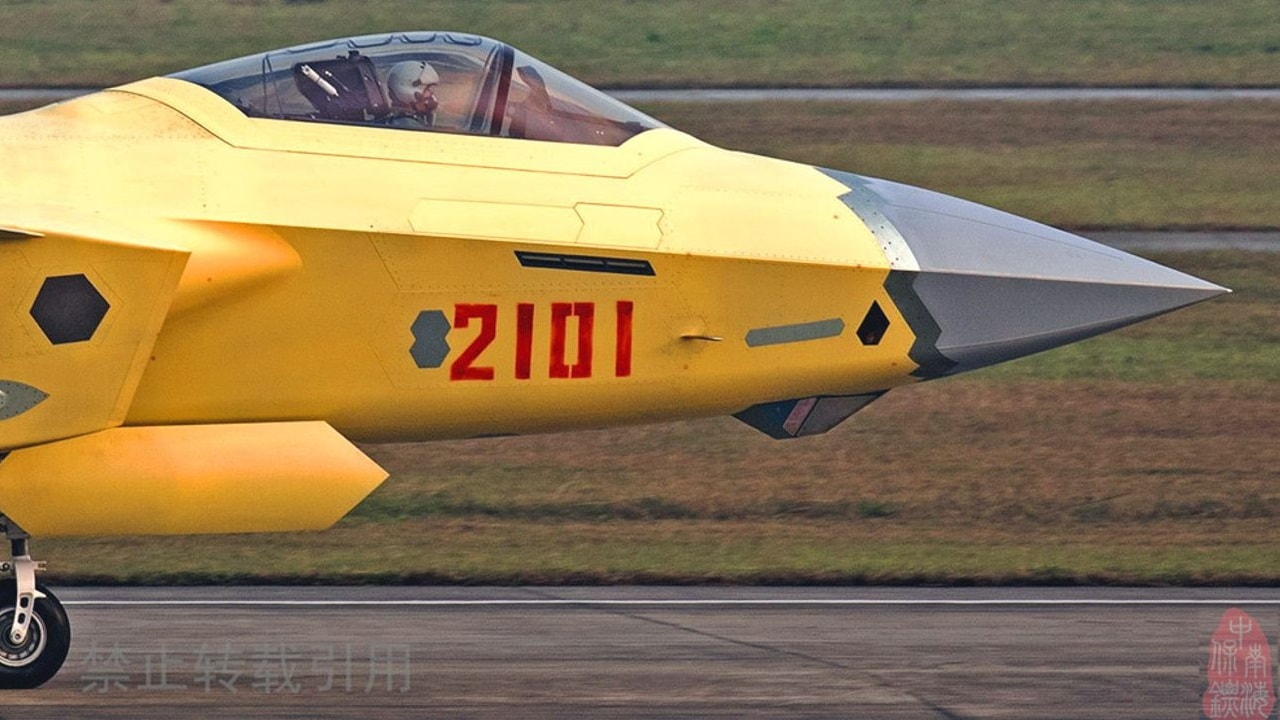
China Is Building Up to 120 J-20 Stealth Fighters a Year to Challenge U.S. Air Power in the Pacific: China is producing its J-20 stealth fighter at a rate that places it among the world’s largest advanced-fighter programs. Commercial-satellite analysis published in 2026 identified five active production lines at Chengdu and estimated output at 100 to 120 aircraft per year. RUSI assessed that the fleet grew from roughly 50 J-20s in 2020 to about 300 in service by mid-2025.
The current total remains uncertain because Beijing does not publish an audited inventory. A July 2026 assessment by longtime Chinese aviation analyst Andreas Rupprecht placed cumulative deliveries near 500. Even the lower estimates show that the J-20 has moved from limited production into a large, sustained manufacturing program.
The pace reflects two jobs being performed at once. China is replacing J-7s, J-8s, older J-11s and Russian-built Su-27s while increasing the share of advanced heavy fighters in the force. Janes found J-20s in all five Chinese theater commands by 2024, requiring aircraft for frontline units, training bases, testing, maintenance rotations and operational reserves.
The force structure also supports operations from Taiwan and the East China Sea to the South China Sea and western Pacific. China’s 2026 aerospace-force primer describes joint, all-domain preparations spanning Taiwan, the western Pacific and Indian Ocean. A small elite fleet would offer prestige and limited wartime capacity. Hundreds of aircraft support repeated patrols, dispersed deployments and simultaneous missions across several regions.
China Is Replacing Old Fighters and Expanding at the Same Time
Production of the improved J-20A and two-seat J-20S reportedly reached roughly 120 aircraft annually by late 2025. If that rate continues, outside analysts project around 1,000 J-20 variants in service by 2030. That is not a publicly announced Chinese procurement target, but it shows what Chengdu’s current capacity supports and why production volume has become part of the strategy.
The force is becoming heavier as well as stealthier. J-20s and J-16s are replacing lighter and older aircraft in units that once flew J-7s, J-8s and early Flankers. The transformation gives China more range, larger sensors, greater fuel capacity and access to long-range missiles. The J-20 surge therefore sits inside a broader Chinese stealth-fighter expansion rather than a single prestige program.
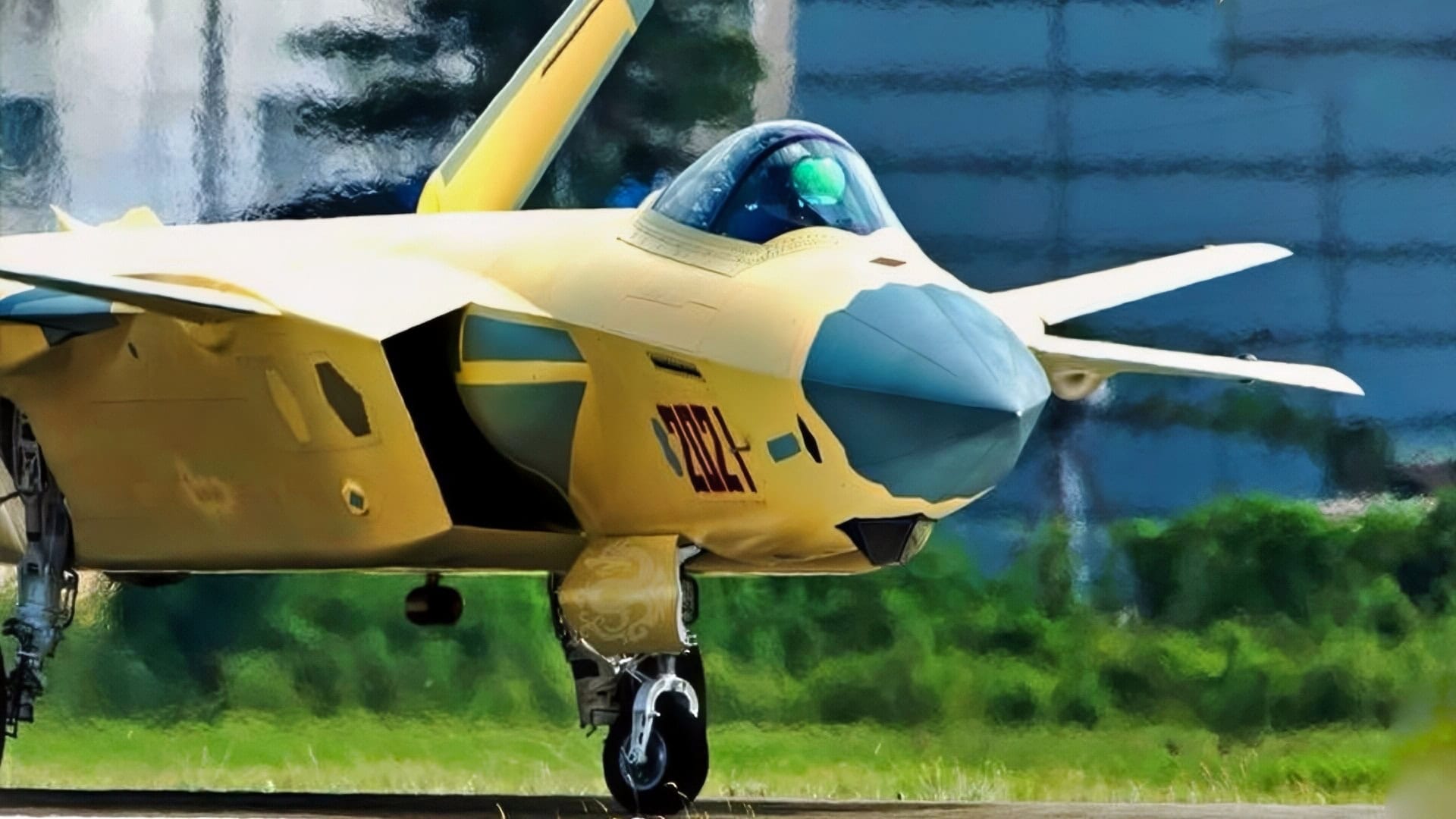
China’s J-20 Mighty Dragon in Yellow. Image Credit: Screenshot.
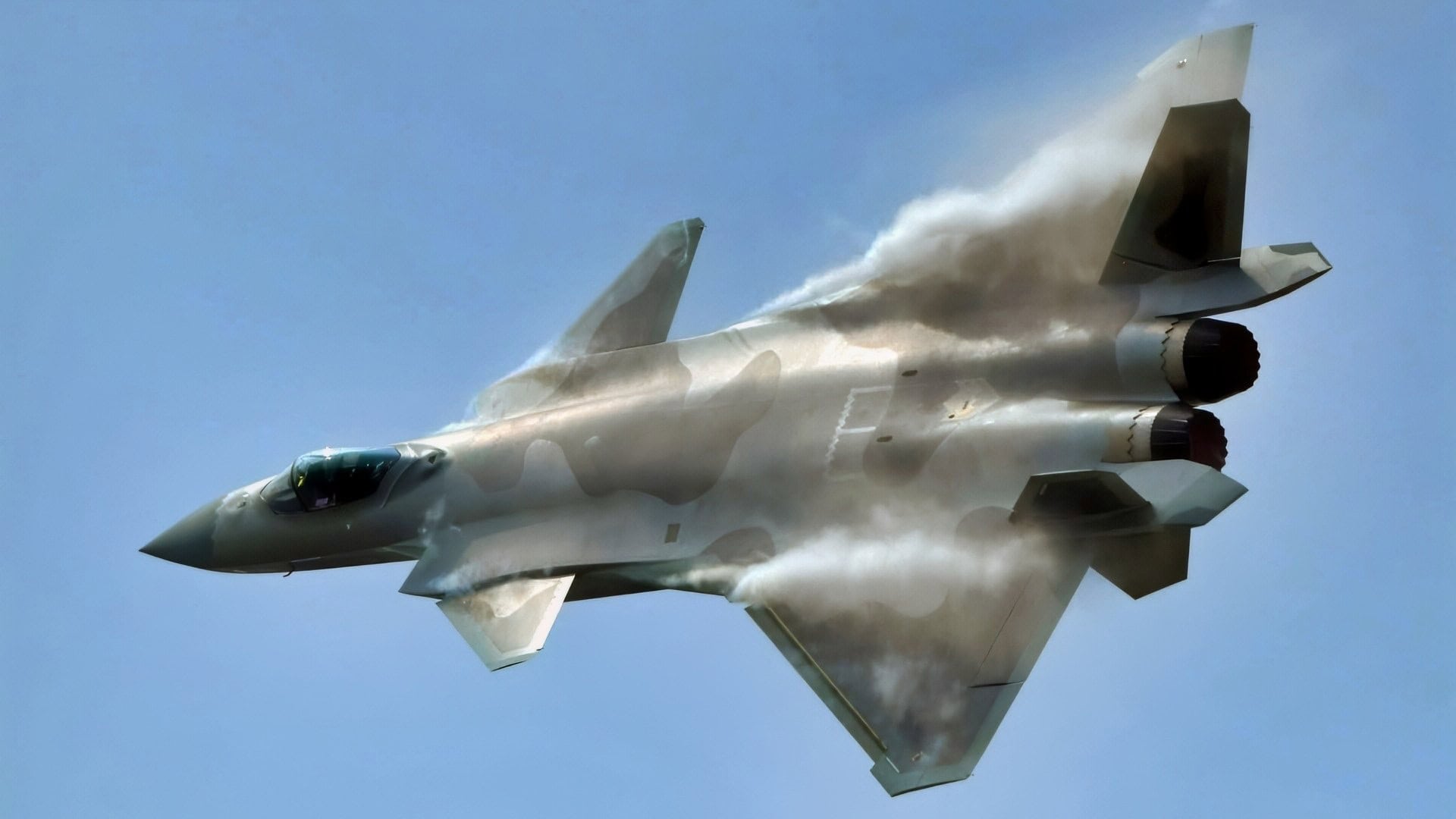
China J-20A Fighter. Image Credit: PLAAF.
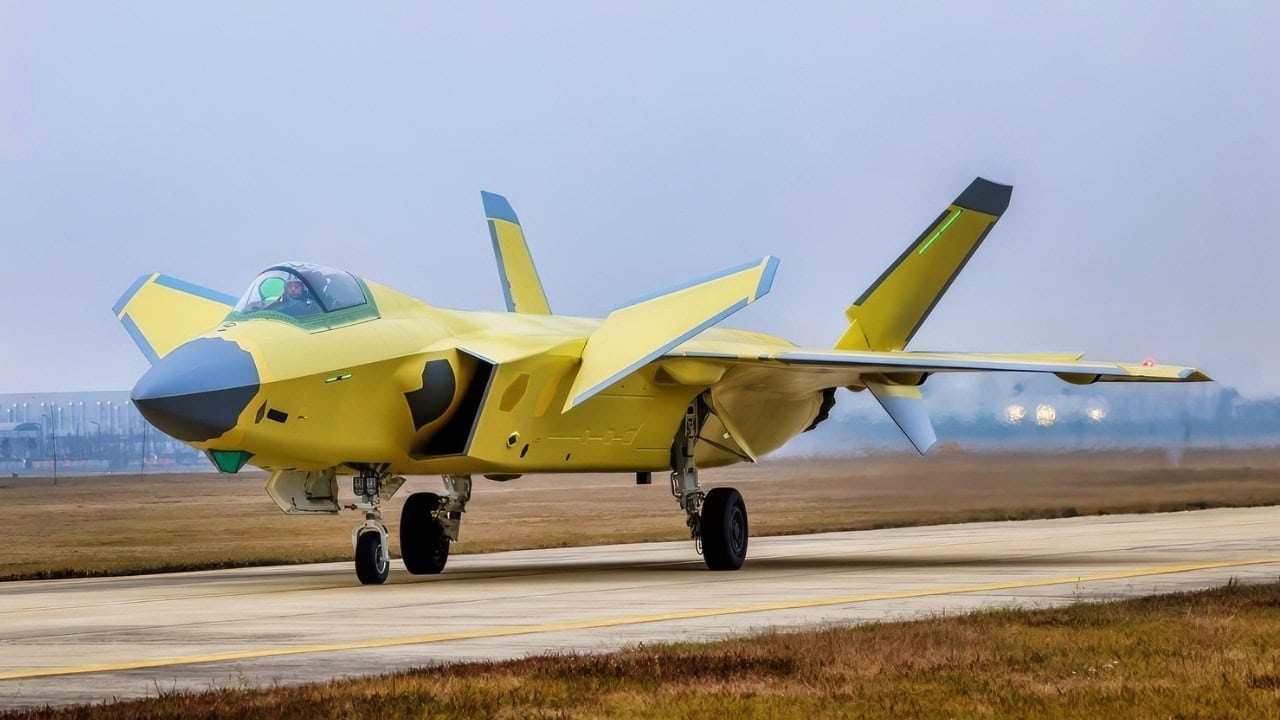
J-20 Fighter from China X Screenshot. Image Credit: Creative Commons.
The J-20 Fits the Geography of a Pacific War
The J-20’s size and internal fuel capacity suit the distances of the western Pacific. Chinese fighters operating east of the mainland must cover water, protect bombers, screen naval forces and threaten support aircraft that keep American fighters in the fight. Stealth and long-range air-to-air weapons give the J-20 a role against tankers, airborne-warning aircraft and other high-value targets behind the forward battle.
China is also building the network around the fighter. RUSI reported more capable KJ-500 airborne-warning aircraft, J-16D electronic-warfare jets, long-range PL-15 and PL-17 missiles, and increasingly complex training involving fighters, bombers, tankers and naval forces. The value comes from placing large numbers of J-20s inside that wider sensor and weapons system, rather than treating the aircraft as an isolated answer to the F-22.
Domestic Engines Removed a Production Constraint
Early J-20s relied on Russian AL-31 engines before China shifted to the domestic WS-10C. Newer J-20A aircraft are associated with the more powerful WS-15, though its reliability and service life at fleet scale remain less proven than American fighter engines. The Pentagon said China had expanded J-20 production capacity while moving toward domestically produced powerplants.
That change matters for manufacturing. A fighter program dependent on imported engines remains exposed to delivery schedules, political disputes and foreign production limits. Domestic engines let Chengdu standardize assembly, order larger batches and keep the line moving without Moscow’s approval.
Large orders also keep specialized suppliers employed and spread development, tooling and factory costs across more aircraft. China now controls the propulsion supply chain behind its premier fighter.
Mass Provides Readiness and Wartime Depth
An inventory total never equals the number of aircraft ready for combat. Fighters spend time in scheduled maintenance, upgrades, testing and training. Frontline units also need spare airframes to sustain deployments.
China therefore requires a much larger fleet than the number it expects to launch during the opening days of a conflict.
High production also changes the attrition calculation.
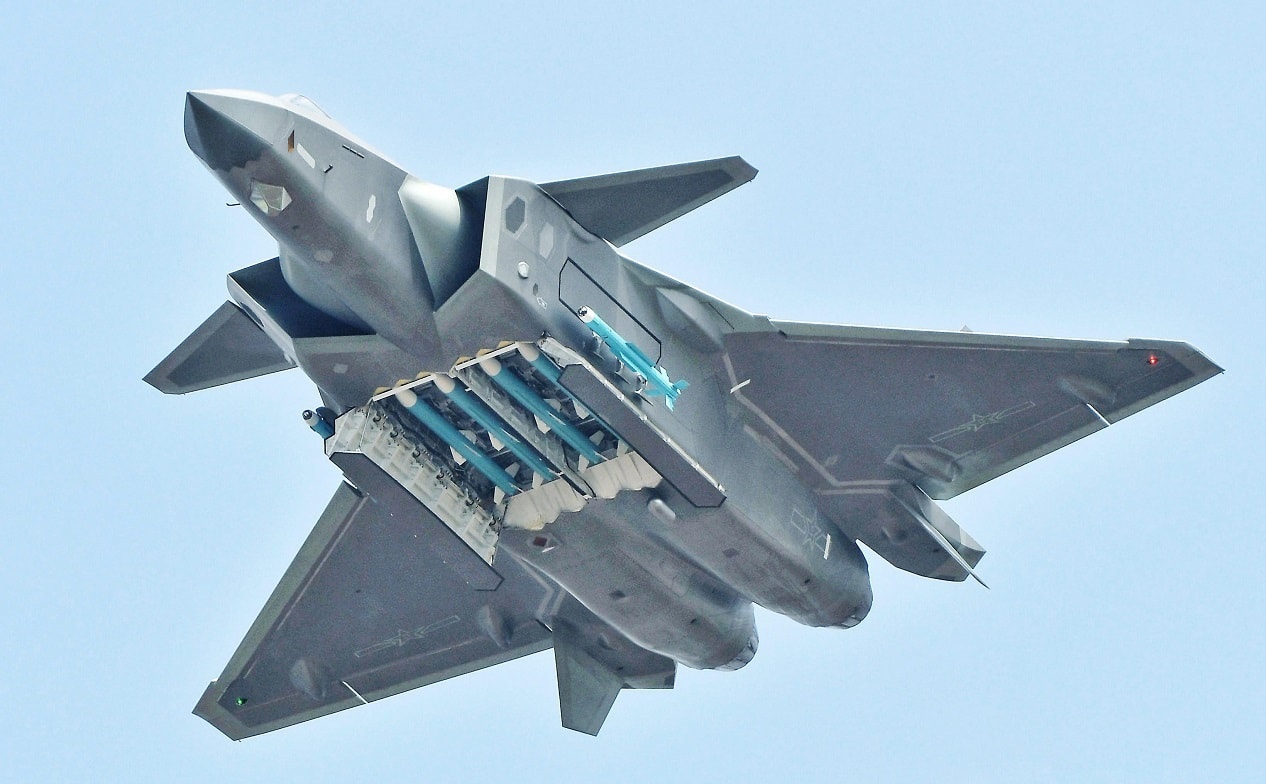
J-20 Stealth Fighter.
A war around Taiwan would threaten aircraft on the ground, maintenance facilities, runways and fuel systems alongside fighters in the air. Chengdu’s output would not replace losses immediately, but an established line preserves repair capacity, trained labor and a continuing flow of aircraft during a prolonged confrontation.
The J-36 Does Not Make the J-20 Obsolete
China is flight-testing advanced aircraft commonly called the J-36 and J-50, yet both remain developmental designs. The J-20A and J-20S are mature enough for serial production now, and their factories, suppliers and training system already exist.
Beijing has no reason to pause a useful fighter while waiting for an experimental next-generation aircraft.
The same production base also prepares China for what follows. Workers, suppliers and engineers learn how to build stealth aircraft in volume, integrate new engines and move improved variants through frontline units.
As of publication, China had announced no final J-20 procurement ceiling, while satellite imagery showed another 50 acres cleared beside the Chengdu complex for possible expansion.
MORE – The US Navy Doesn’t Have Enough Nuclear Attack Submarines
About the Author: Harry J. Kazianis
Harry J. Kazianis (@Grecianformula) was the former Senior Director of National Security Affairs at the Center for the National Interest (CFTNI), a foreign policy think tank founded by Richard Nixon based in Washington, DC. Harry has over a decade of experience in think tanks and national security publishing. His ideas have been published in the NY Times, The Washington Post, The Wall Street Journal, CNN, and many other outlets worldwide. He has held positions at CSIS, the Heritage Foundation, the University of Nottingham, and several other institutions related to national security research and studies. He is the former Executive Editor of the National Interest and the Diplomat. He holds a Master’s degree focusing on international affairs from Harvard University.

