
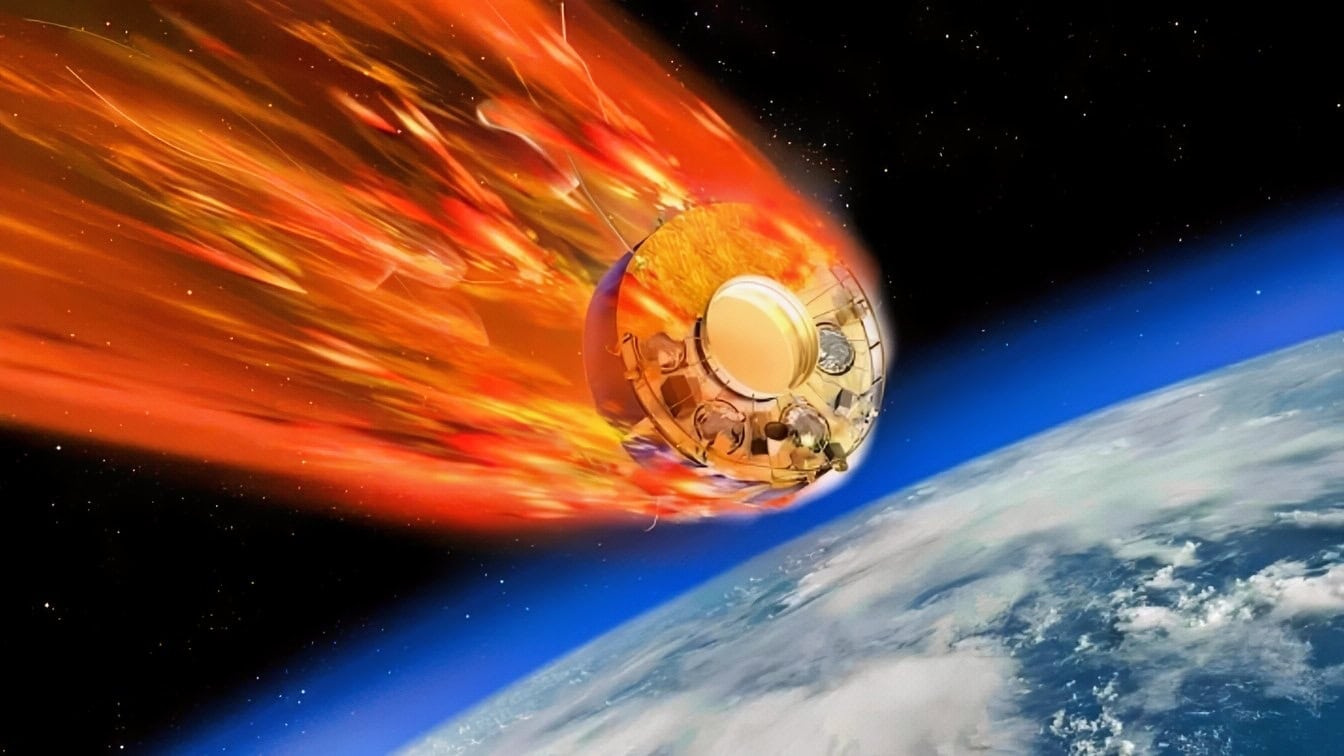
Kosmos 482 represents one of the more fascinating failures in space age exploration. Whereas so many failed spacecraft either burn up in Earth’s atmosphere or disappear into deep space, Kosmos 482 did neither.
After being launched by the Soviet Union in 1972 as part of the ambitious Venera program, the Kosmos 482 probe never reached Venus as planned.
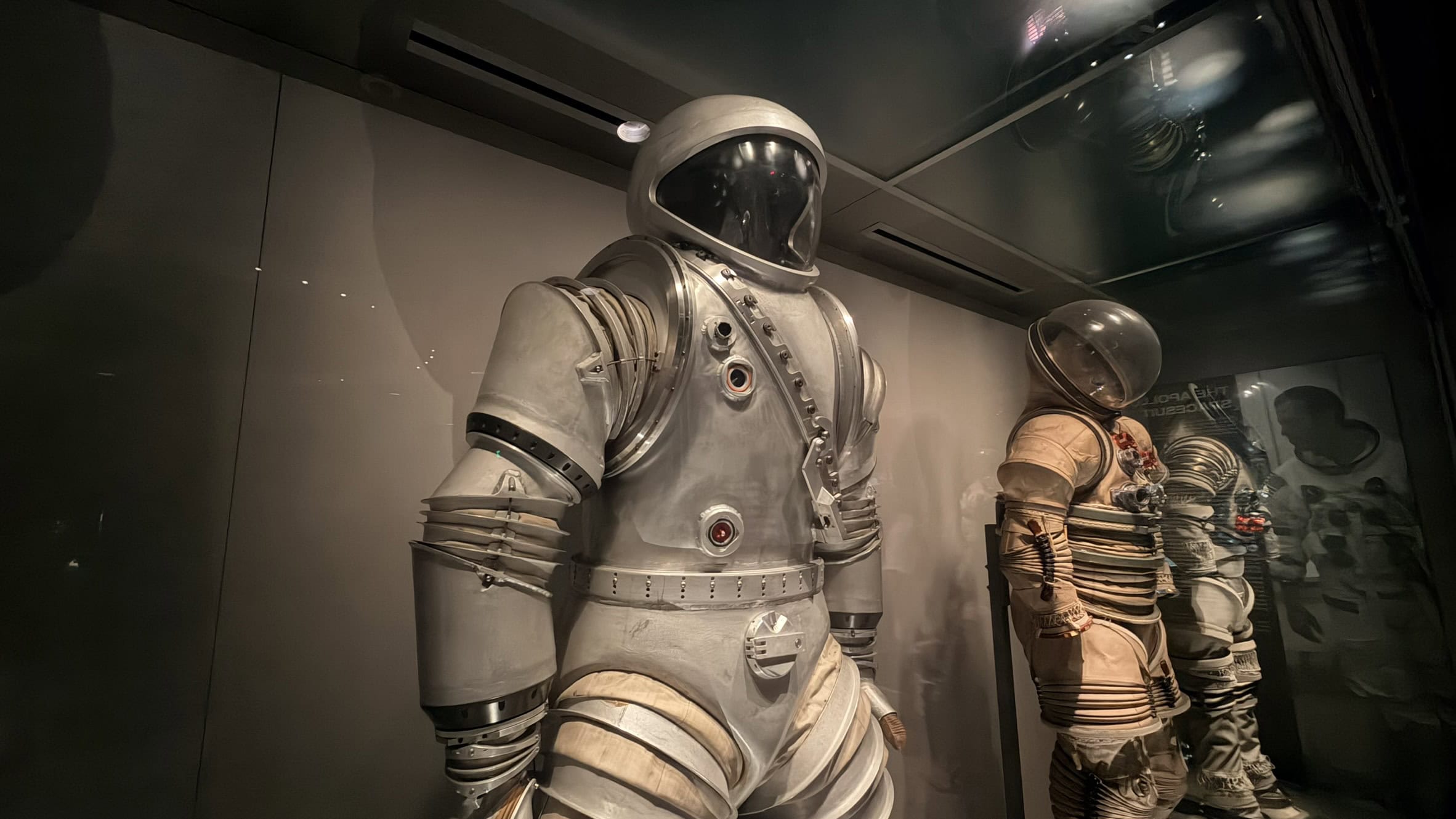
Soviet Space Suit. Taken at NASA Kennedy Space Center on 6/28/2026.
Instead, the probe malfunctioned and was left stranded in Earth’s orbit. Remarkably, the probe remained in Earth’s orbit for 53 years before finally reentering Earth’s atmosphere in May 2025.
The Soviet Quest for Venus
During the late 1960s and early 1970s, the Soviet Union dominated planetary exploration of Venus.
The Venera program achieved numerous milestones; it was the first spacecraft to enter another planet’s atmosphere, execute a successful landing on Venus, and return images from another planet’s surface.
Kosmos 482 was intended to continue that remarkable run, operating as the sister spacecraft to Venera 8, which successfully landed on Venus in July 1972.
But the mission didn’t go as planned.

Venus. NASA Image.
Immediate Disaster
Launched March 31, 1972, from Baikonur Cosmodrome, the Kosmos 482 spacecraft successfully reached Earth parking orbit.
The next step from there was the ignition of the upper-stage rocket for the transfer toward Venus. However, a malfunction reportedly caused the upper-stage burn to terminate prematurely.
So instead of escaping Earth’s gravity, the spacecraft remained trapped in a highly elliptical orbit.
Soviet authorities classified the failed planetary mission as Kosmos 482, which was consistent with the common practice of masking unsuccessful deep-space launches.
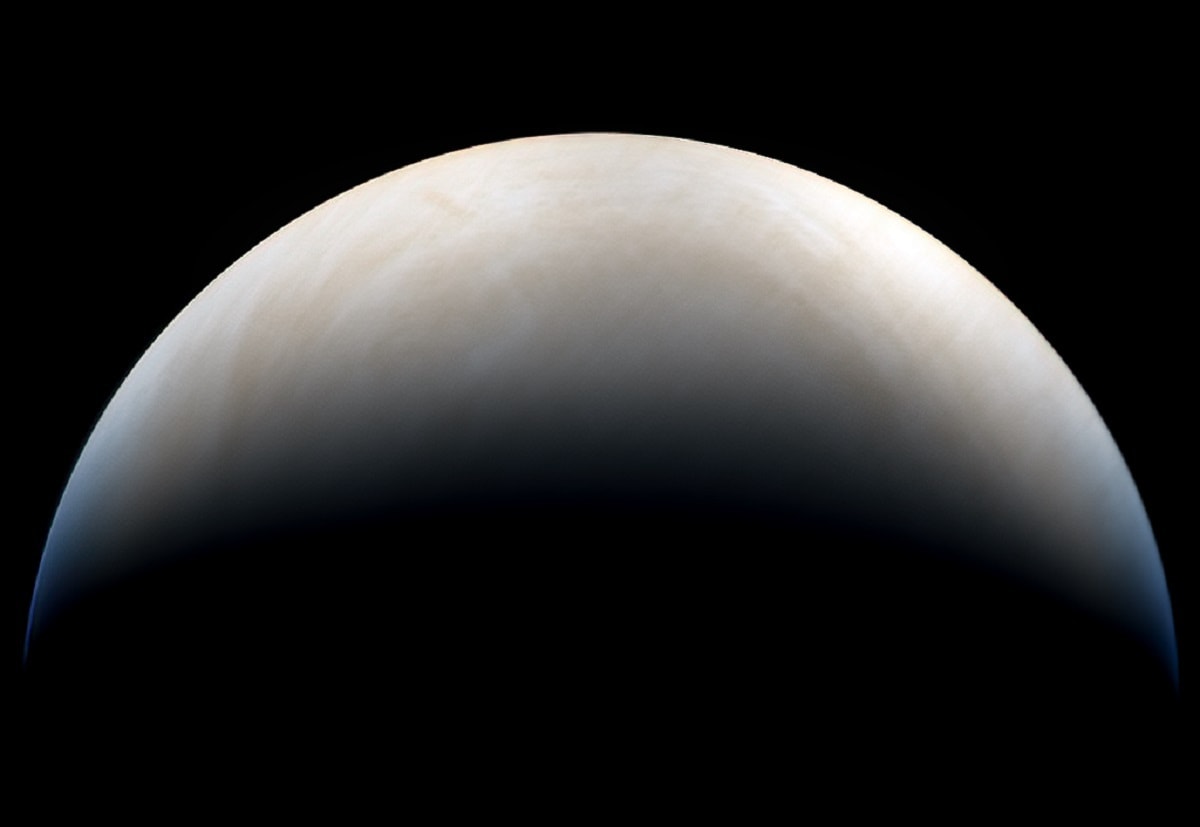
Venus. Image: Creative Commons.

Venus vs. Earth. Image: Creative Commons
The spacecraft separated into multiple pieces after the launch anomaly. Some of the debris quickly reentered Earth’s atmosphere. The most important surviving object was the Venus descent capsule, which became one of the strangest pieces of long-lived space debris ever created.
Extreme Engineering
The descent capsule was built to survive a hellish environment.
Venus presents what is arguably the harshest environment of any rocky planet, with temperatures around 900 degrees Fahrenheit, atmospheric pressure roughly 90 times Earth’s, and a corrosive atmosphere.
Engineers built the descent capsule accordingly so it would have a shot at surviving such extremes; it featured a thick titanium pressure vessel, heavy thermal shielding, and a reinforced structure.
Unlike ordinary satellites, it was specifically engineered to survive an incredibly violent atmospheric entry.
Of course, the probe never made it to Venus. Instead, it stayed in orbit for more than five decades. Most low-Earth satellites gradually lose altitude because of atmospheric drag.
But Kosmos 482 occupied a much higher elliptical orbit, only briefly encountering Earth’s thin upper atmosphere during each orbit.
Over time, tiny amounts of drag slowly robbed the spacecraft of velocity—but the process took more than half a century. Orbital decay accelerated only as the orbit gradually shrank.
By early 2025, analysts realized that reentry was approaching.
Amateur satellite observers joined professional agencies in monitoring the spacecraft. And because the descent capsule was so exceptionally robust—built to survive Venus—experts believed it was likely to survive atmospheric reentry.
The Dramatic Return
On May 10, 2025, European tracking networks monitored final orbits. Germany’s TIRA radar obtained one of the last confirmed observations. Shortly afterward, the object disappeared from tracking.
Reentry ultimately happened over the Indian Ocean.
No injuries or property damage were reported, and most assessments concluded that the capsule likely reached the ocean largely intact due to its unusually rugged construction.
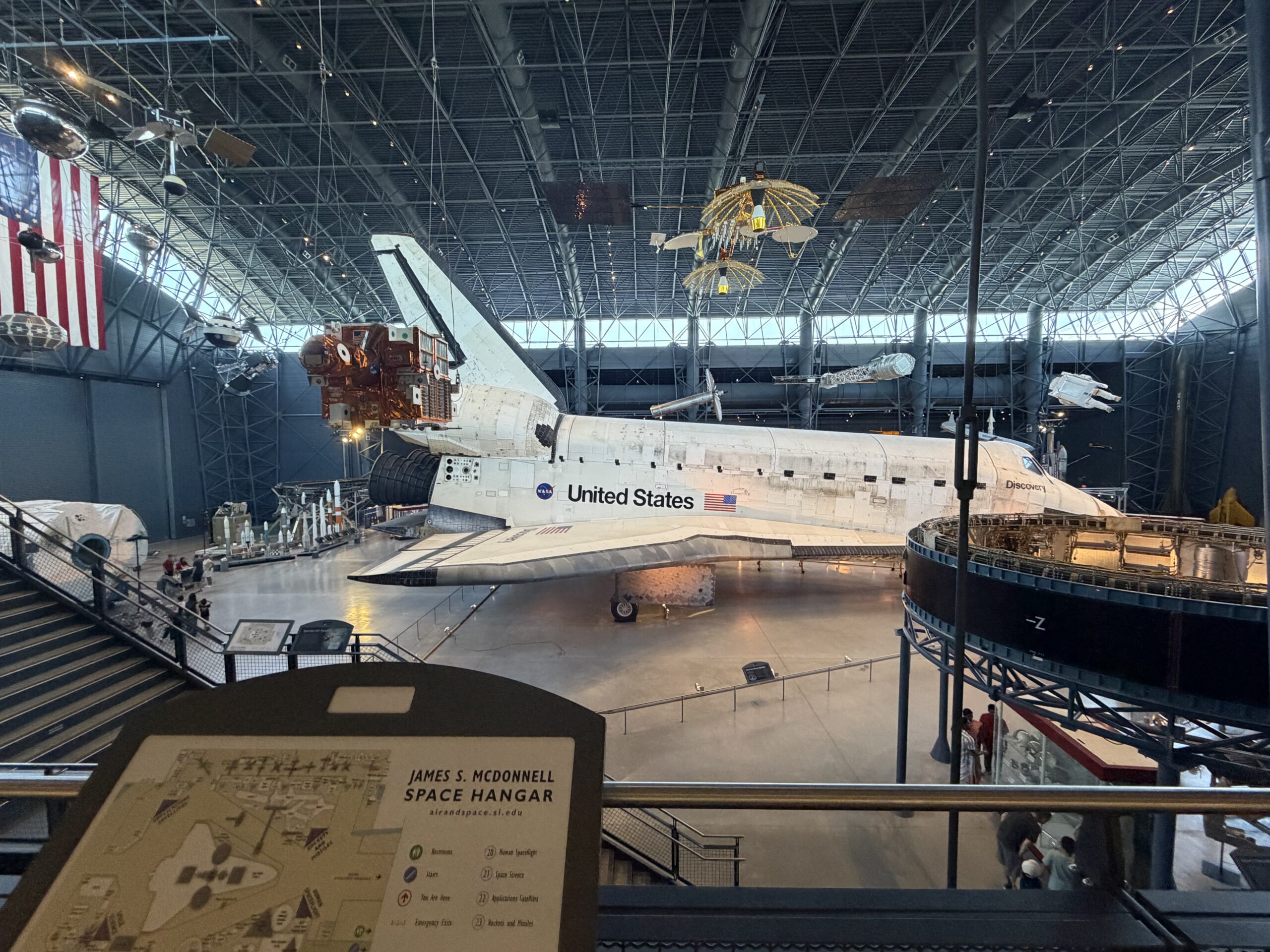
Space Shuttle Discover. 19FortyFive Image Taken at the Smithsonian.
The story caught the public’s attention as it drew on several fascinating threads, including the Cold War, planetary exploration, engineering excellence, orbital mechanics, and space debris—and because it was so unique: few spacecraft have remained in orbit for half a century before suddenly returning.
Legacy of Venera
The Soviet Union remains the only nation to have successfully landed spacecraft on Venus and returned data from its surface. The Venera missions transformed our scientific understanding of Earth’s sister planet.
And although Kosmos 482 never reached its intended destination, its accidental five-decade journey is one of the strangest stories in the entire Space Race, an example of how advanced Cold War engineering could be.
About the Author: Harrison Kass
Harrison Kass is a writer and attorney focused on national security, technology, and political culture. His work has appeared in Tablet, City Journal, The Hill, The Spectator, and The Cipher Brief. He holds a JD from the University of Oregon and a master’s in Global & Joint Program Studies from NYU. More at harrisonkass.com.