
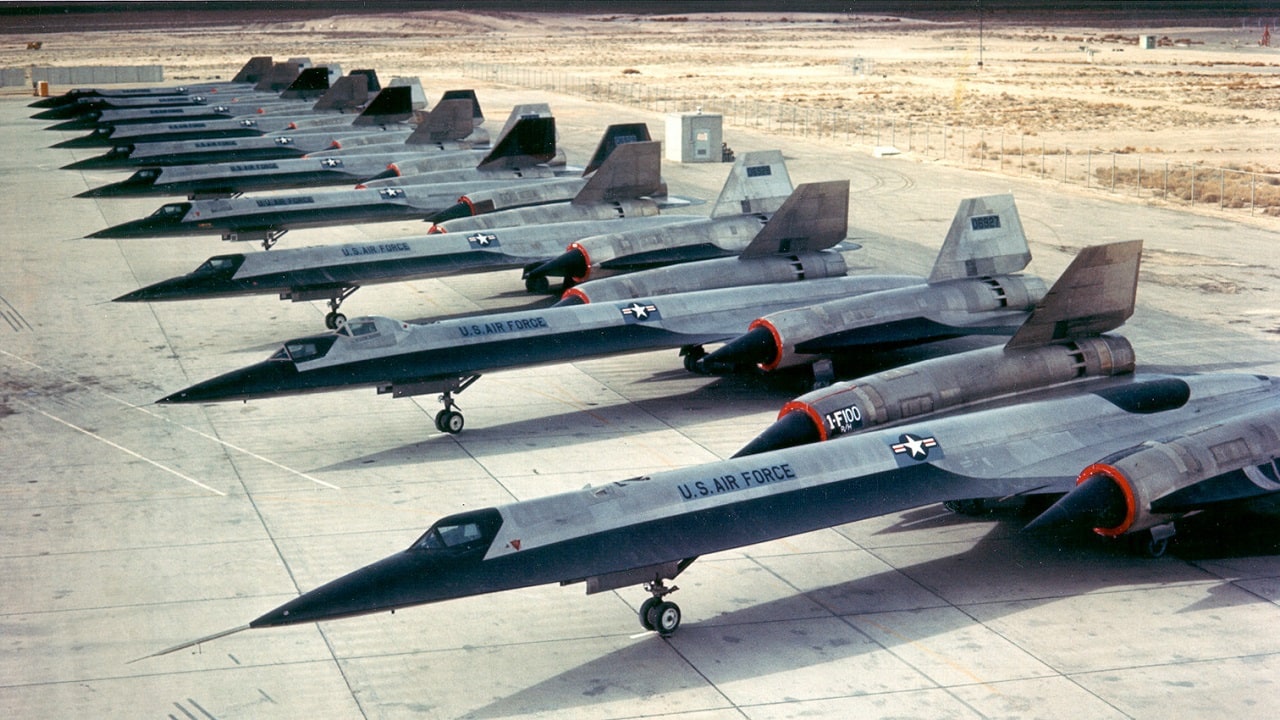
In the early 1960s, engineers at Lockheed’s Skunk Works division in Burbank, California, were racing to build the most advanced aircraft the world had ever seen: the SR-71 Blackbird.
From the Aviation Geek Club, the SR-71 remained the world’s fastest and highest-flying operational aircraft.
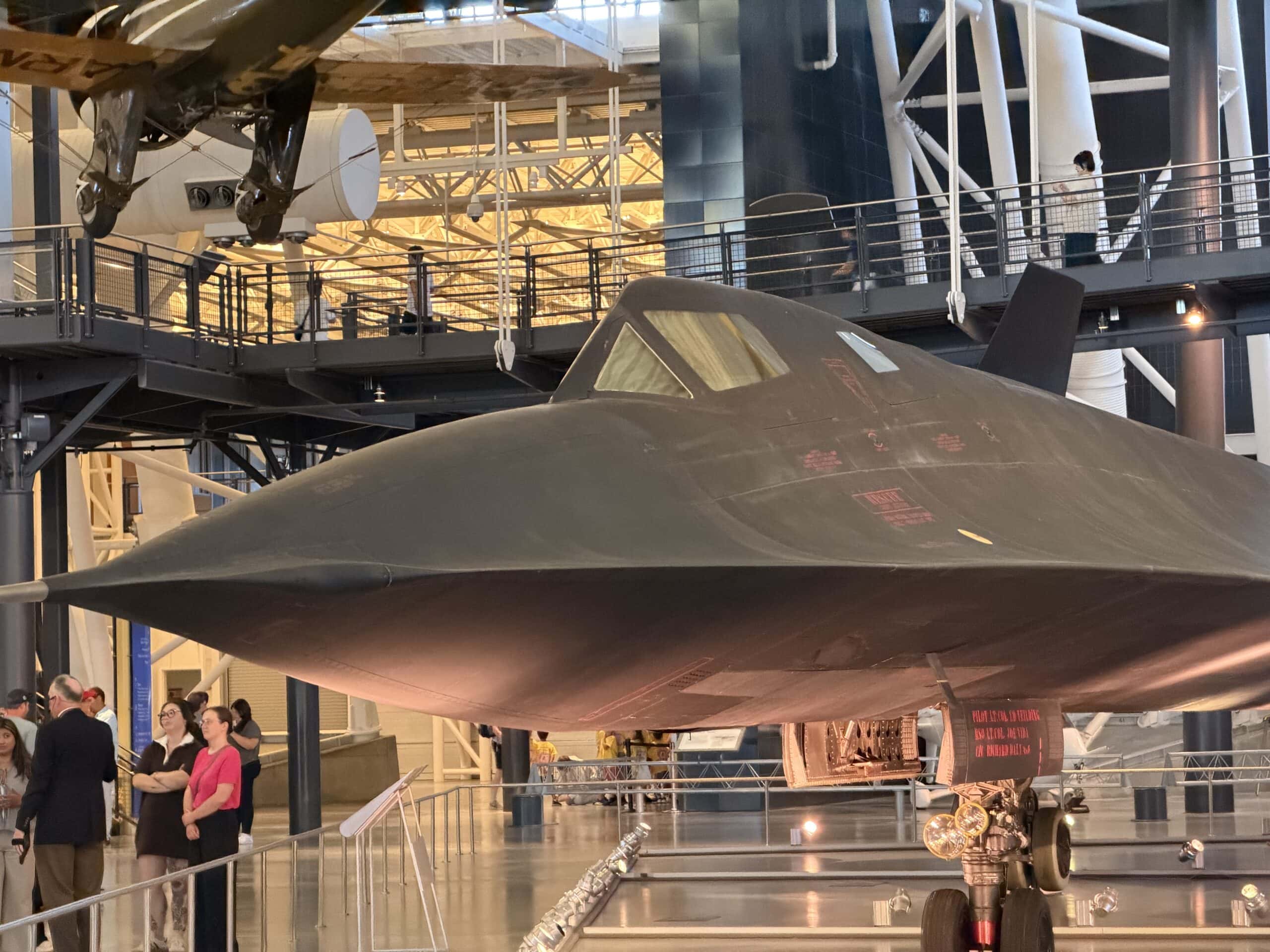
SR-71 Blackbird. Image taken at the Smithsonian on 6/30/2026 by 19FortyFive
From 80,000 feet, it could survey 100,000 square miles of Earth’s surface per hour.
Linda Sheffield Miller is the go-to source for all things SR-71.
She wrote, “On Jul. 28, 1976, an SR-71 set two world records for its class, an absolute speed record of 2,193.167 mph and an absolute altitude record of 85,068.997 feet.”
The aircraft’s Pratt and Whitney J58 engines were designed to cruise at more than three times the speed of sound for over an hour at a time; the jet would generate skin temperatures exceeding 300°C from air friction alone.
Aluminum, the standard aerospace metal of the era, would have softened and failed at those temperatures.
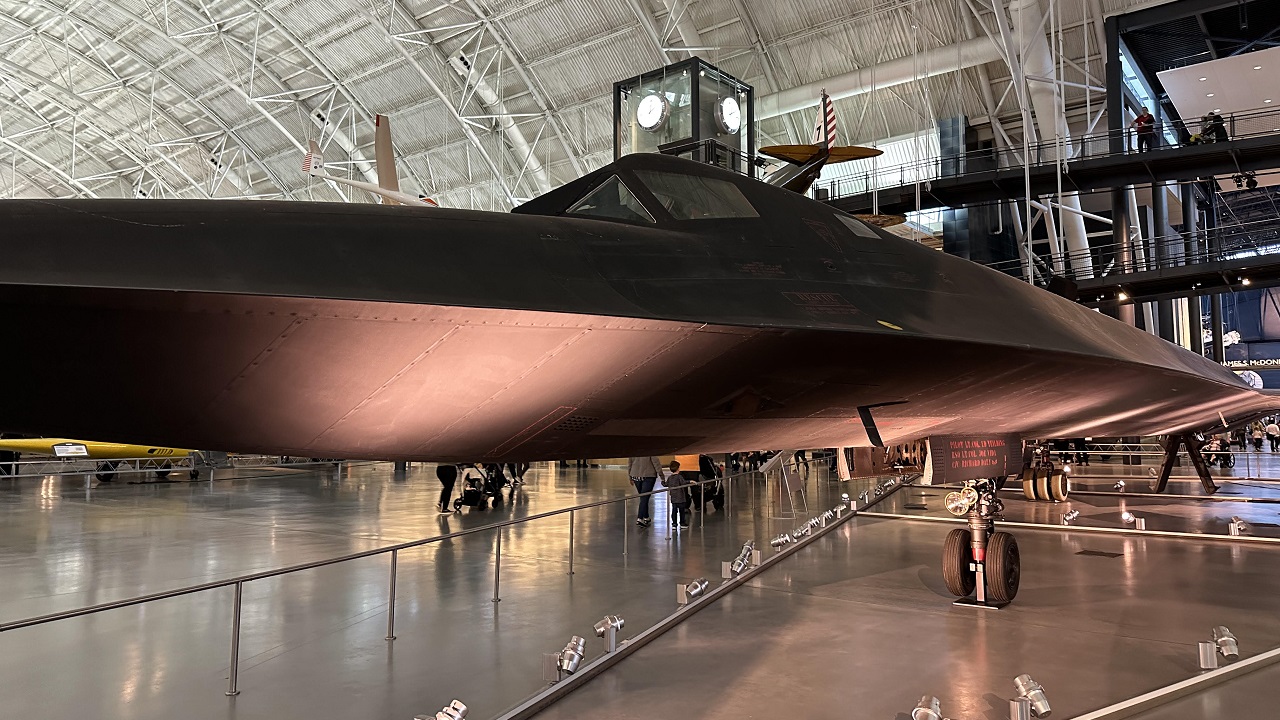
SR-71. SR-71 photo taken at the National Air and Space Museum. Taken by 19FortyFive on 10/1/2022.
The only practical solution was titanium, a metal that was light, strong, and heat-resistant, but also notoriously difficult to machine, weld, and work with reliably.
Roughly 85 percent of the SR-71’s structure was titanium alloy, making it the first aircraft built almost entirely from the metal.
Luke Diaz wrote, “The SR-71 Blackbird’s titanium skin was a masterpiece of thermal engineering. Its high-strength beta alloy was known as Ti-13V-11Cr-3Al because it contained 13 percent vanadium, 11 percent chromium, and 3 percent aluminum. This specific blend allowed the metal to retain its structural integrity. In some areas, such as near the engines, the outside temperatures could reach 1000 degrees.”
The structure solved the heat problem, but it opened the door to a stranger one: some of the finished titanium parts failed outright, cracking or corroding within weeks of manufacture, while other seemingly identical parts held up without issue.
A Failure Pattern Nobody Expected on the SR-71 Blackbird
What made the problem so vexing wasn’t just that parts were failing; it was the pattern in which they failed.
Engineers discovered that spot-welded parts made in the summer were failing very early in their service life, while parts welded during the winter were fine.
No obvious difference existed in the titanium stock, the welding technique, or the workers doing the assembly. The only variable that seemed to line up with the failures was the calendar.
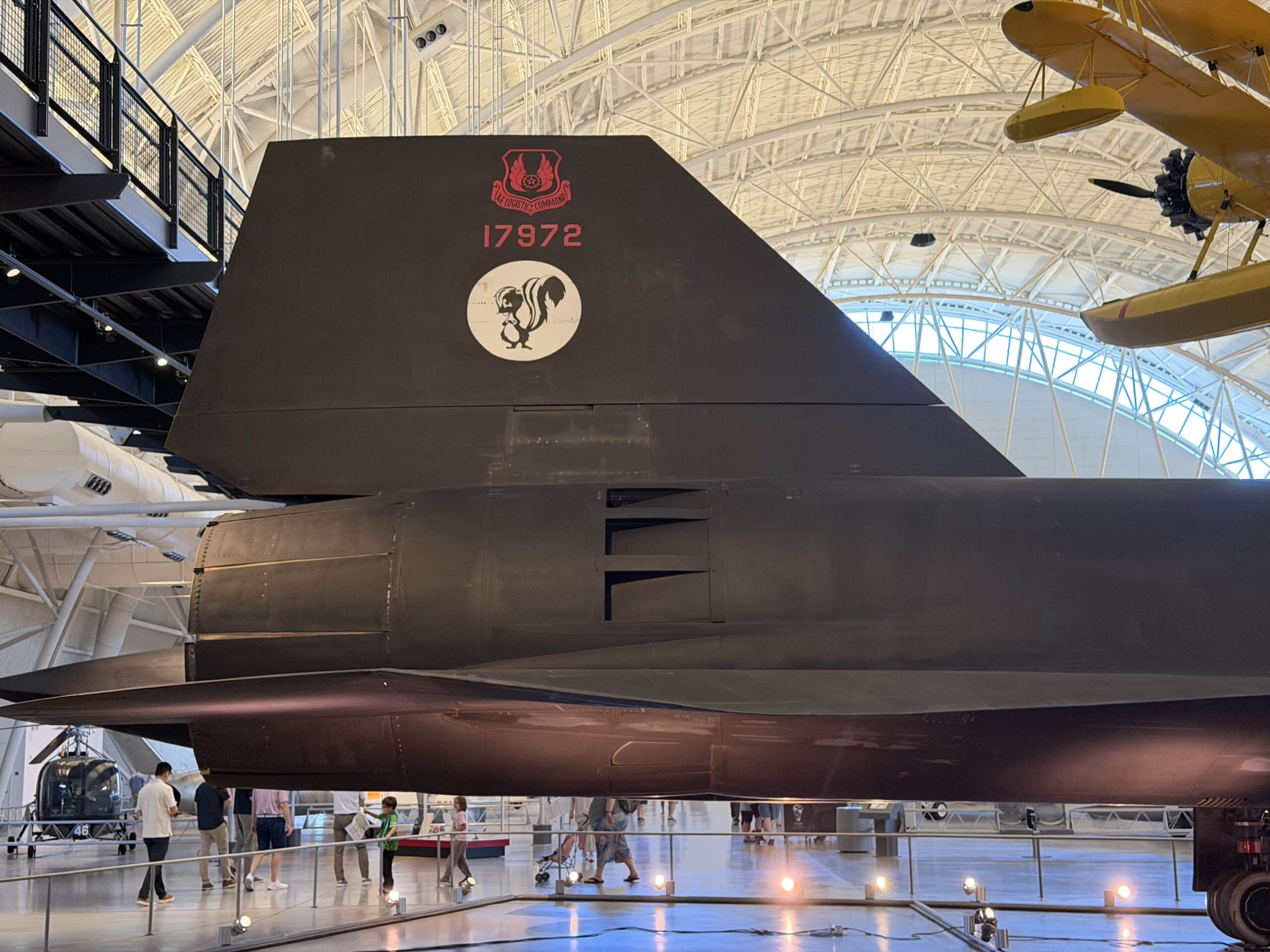
SR-71 Blackbird at the Smithsonian. 19FortyFive Image taken by Christian D. Orr.
For a program built on precision and secrecy, the SR-71’s existence and mission were classified for years; an unpredictable structural failure mode in the airframe’s primary material was more than an inconvenience.
It threatened the integrity of an aircraft meant to fly reconnaissance missions at the edge of the atmosphere, where there was no margin for a cracked wing panel or a failed spot weld.
Tracing the Problem to the Water Supply
Lockheed’s engineers and technicians kept meticulous production records, which ultimately proved key to solving the mystery.
By cross-referencing the timing of failures with every step of the manufacturing process, they traced the problem back to something almost no one would have suspected: the water used to rinse titanium panels after an acid-cleaning treatment.
Titanium is highly sensitive to certain contaminants, and the wing panels needed to be welded together after being washed following an acid treatment, a step where the water itself turned out to be the source of the summer failures.
The city of Burbank added extra chlorine to its municipal water supply during the summer months to prevent algal blooms, and trace amounts of that chlorine reacted with the titanium during cleaning.
In winter, colder temperatures naturally suppressed algae growth, so the water treatment plant scaled back or eliminated chlorine dosing, meaning winter-built parts never picked up the contaminant in the first place.
Chlorine and titanium are a famously bad combination. Even at low concentrations, chlorine can induce stress corrosion in titanium alloys, weakening the metal at the microscopic level long before any damage becomes visible to the naked eye.
A part could be welded, inspected, and installed looking completely sound, only to develop cracks or corrosion weeks later as the chlorine’s chemical effects worked their way through the material, exactly the delayed-failure pattern Lockheed’s engineers were seeing.
The Fix And A Second, Related Discovery
Once the cause was identified, the fix was straightforward in principle, if inconvenient in practice: stop using municipal tap water entirely.
From then on, every titanium part on the SR-71 program was washed exclusively with distilled water, removing the variable chlorine dosing from the equation for good.
The chlorine investigation also led engineers to scrutinize other materials that came into contact with the titanium during fabrication, and they found a second, unrelated problem hiding in plain sight.
Standard shop tools in use at the time were plated with cadmium, leaving trace amounts of cadmium residue on titanium bolts and fittings. That cadmium triggered galvanic corrosion, a reaction between dissimilar metals in contact, causing some bolts to fail.
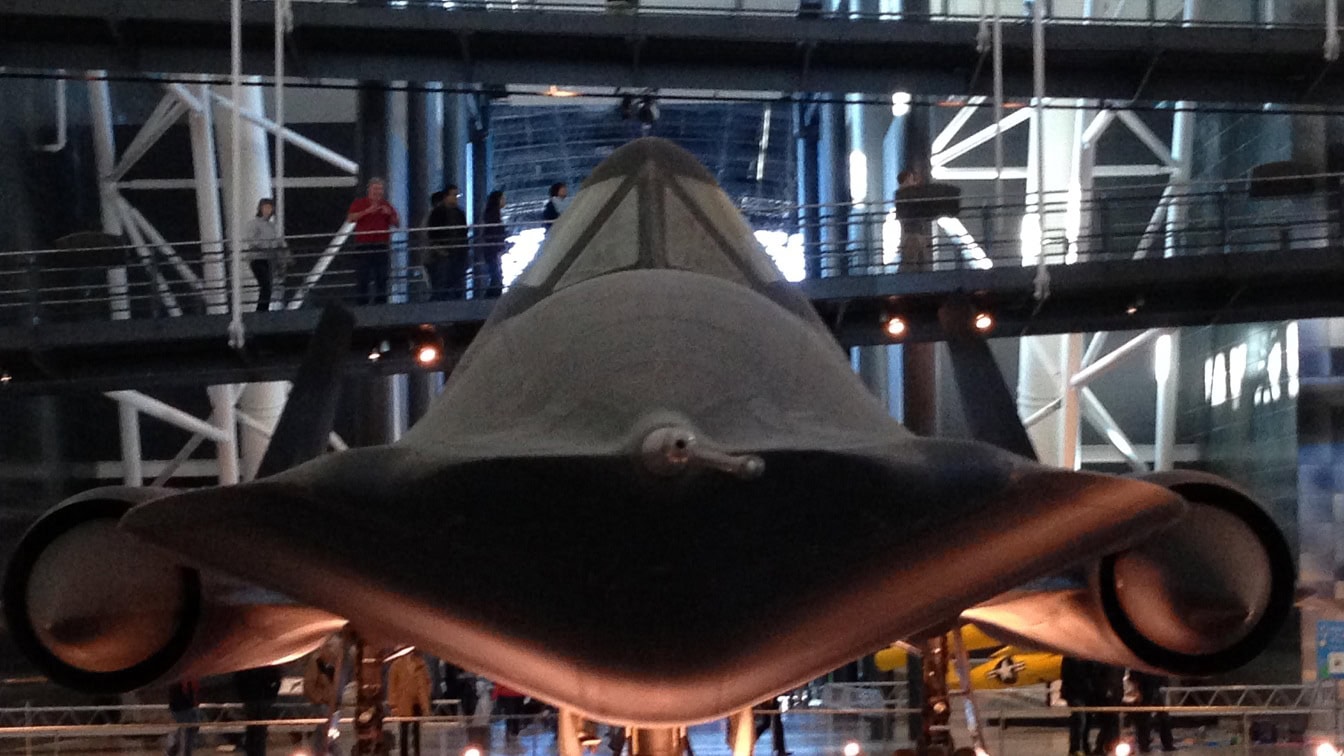
SR-71 Blackbird sitting in a Smithsonian Museum outside of Washington, DC back in 2013. Image Credit: 19FortyFive.
As a result, Lockheed removed all cadmium-plated tools from the shop floor and replaced them with tooling compatible with titanium’s chemical sensitivities.
Together, these two discoveries reshaped how the entire program approached materials handling. Titanium wasn’t just difficult to shape and weld; it was chemically finicky in ways that had never mattered for earlier aircraft built primarily from aluminum and steel.
The SR-71 program effectively had to invent titanium-specific manufacturing discipline from scratch, including specialized coolants, slower cutting speeds, and strict control over anything that touched the metal’s surface.
Why It Mattered
The chlorine-and-cadmium episode is often retold as a curiosity, an amusing footnote about a Cold War super-jet undone, temporarily, by pool chemistry.
But it reflects something more significant about the SR-71 program as a whole:
Skunk Works engineers, led by figures like Kelly Johnson and later Ben Rich, were pushing metallurgy and manufacturing into territory with no established playbook.
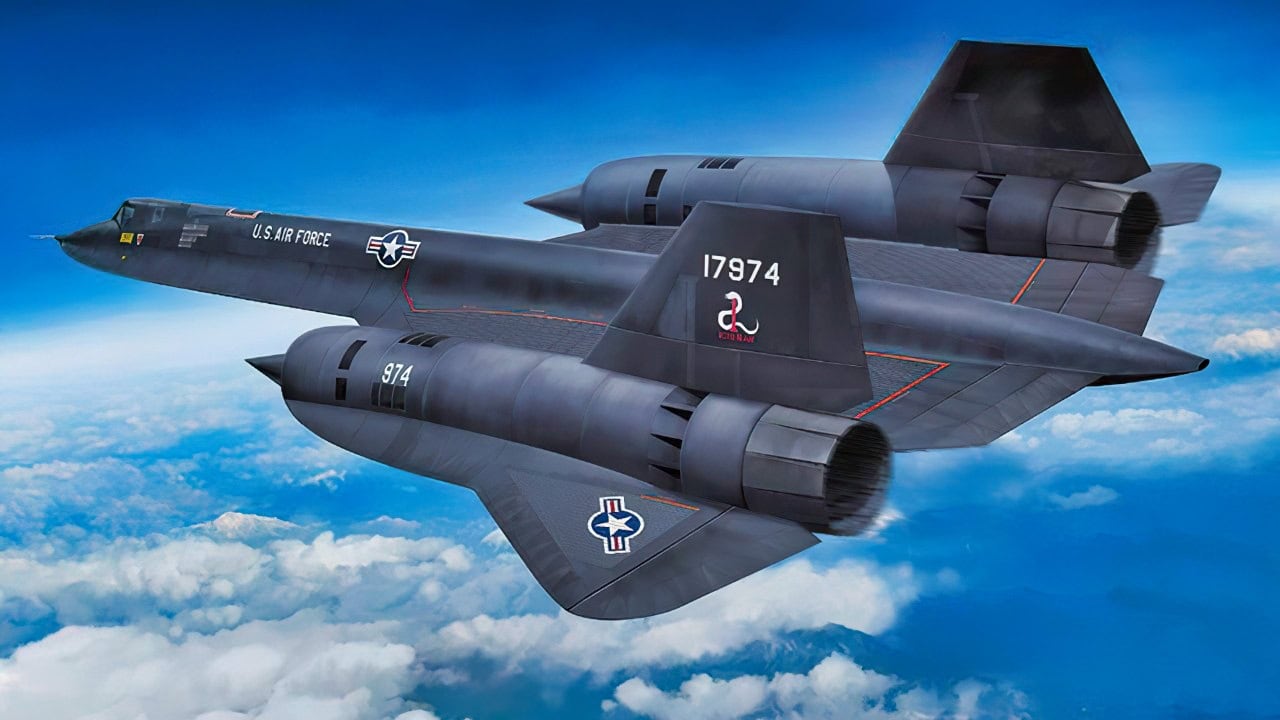
SR-71 Blackbird. Image Credit: Creative Commons.
Titanium in the quantities and configurations the SR-71 required had never been attempted before, and problems like seasonal water chemistry simply hadn’t been anticipated because no one had needed to think about them.
The eventual solution — distilled water, cadmium-free tooling, and rigorous process control — became part of the institutional knowledge that made not just the SR-71 but also later titanium-intensive aerospace programs more reliable.
It’s a reminder that at the frontier of engineering, failure modes can come from the most unexpected places, and that solving them often requires the same forensic patience that made the SR-71 itself possible: careful records, careful but brilliant people, and a willingness to keep asking “why” until the real answer surfaces.
About the Author: Steve Balestrieri
Steve Balestrieri is a National Security Columnist. He served as a US Army Special Forces NCO and Warrant Officer. In addition to writing on defense, he covers the NFL for PatsFans.com and is a member of the Pro Football Writers of America (PFWA). His work was regularly featured in many military publications.