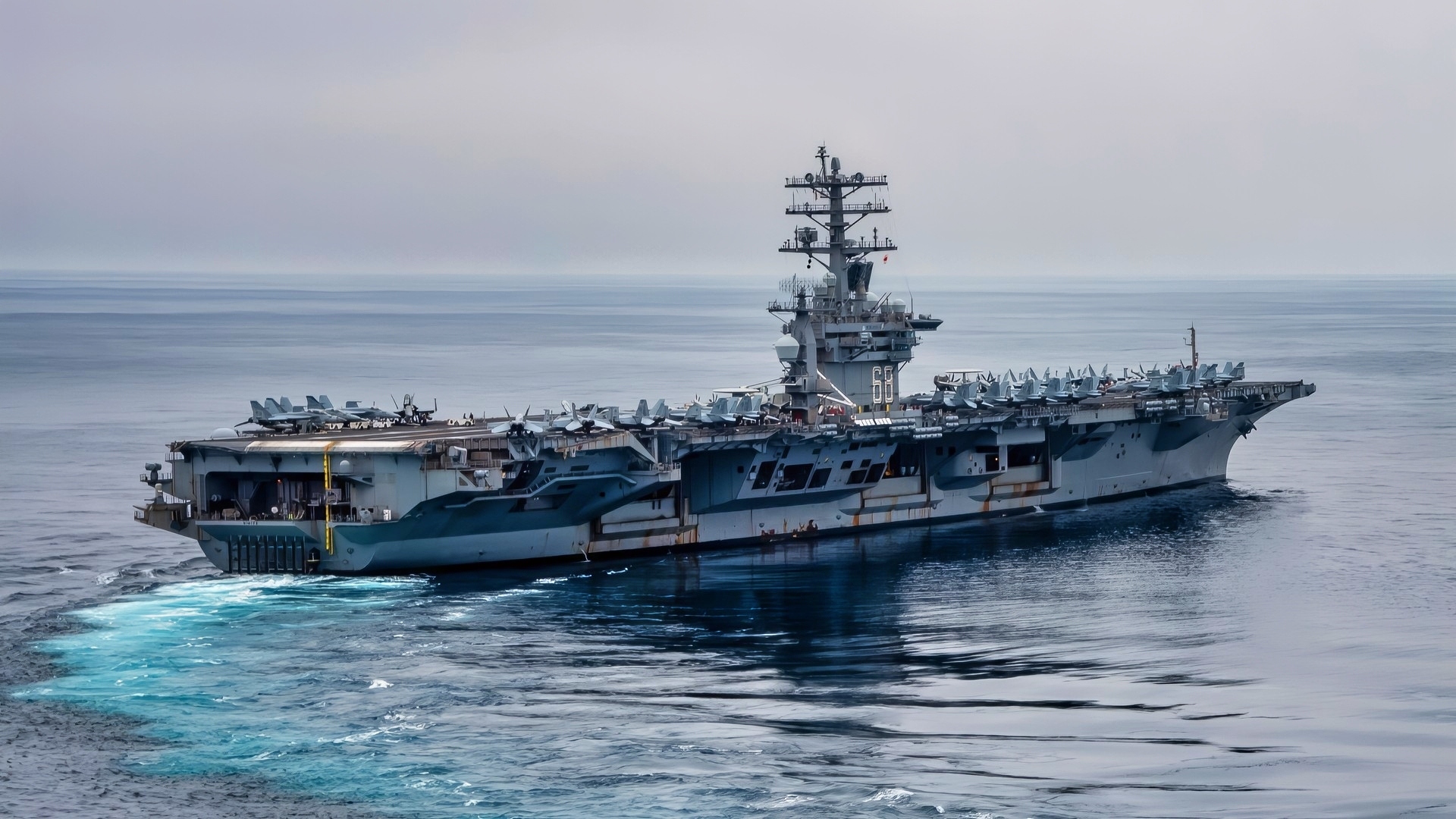
Summary and Key Points: To refuel a conventionally powered aircraft carrier, you pull alongside an oiler and pump. It takes a few hours. To refuel a Nimitz-class carrier, you put it in a drydock at Newport News, pump out a million gallons of seawater, shut down and cool both reactors, and then cut large holes through the decks to reach reactor compartments that the ship was physically built around. Crews working under radiation containment pull the spent cores, install fresh enriched uranium, replace the primary piping, and then work their way back out and weld the ship closed again. That process takes three to five years.
Why Does It Take So Long to Overhaul a Nuclear Nimitz- or Ford-Class Aircraft Carrier?
The nuclear-powered aircraft carrier USS John Stennis (CVN-74) is scheduled to come out of its Refueling and Complex Overhaul in October of this year and return to the fleet. It will arrive 14 months later than expected.
The US Navy’s nuclear-powered aircraft carriers are among the largest and most complex machines ever built by man.
Over one thousand feet long and exceeding one hundred thousand tons in displacement, this machine of war is operated by more than five thousand Sailors and Marines who work, eat, and sleep inside it for months on end.
At the heart of the nuclear-powered aircraft carrier are nuclear reactors, providing electricity to power hundreds of miles of electrical wires, pumping water through more than 100 miles of plumbing, and steam (now electrical power as well) for the catapults that launch its aircraft.
The US Navy moved to nuclear carriers in part because of the logistical and strategic problems of running them on oil-fired steam boilers.
Oil-fueled ships require large oil tankers to supply them at sea.
The farther the carrier is from its home port, the longer it takes to refuel.
Operating far from home, the carrier may need several tankers, either heading out full or returning empty, to keep its oil bunkers full for months at a time.
This creates the strategic liability. An enemy doesn’t have to sink the aircraft carrier to defeat it; instead, it can go after the slow, defenseless tankers that supply its oil.
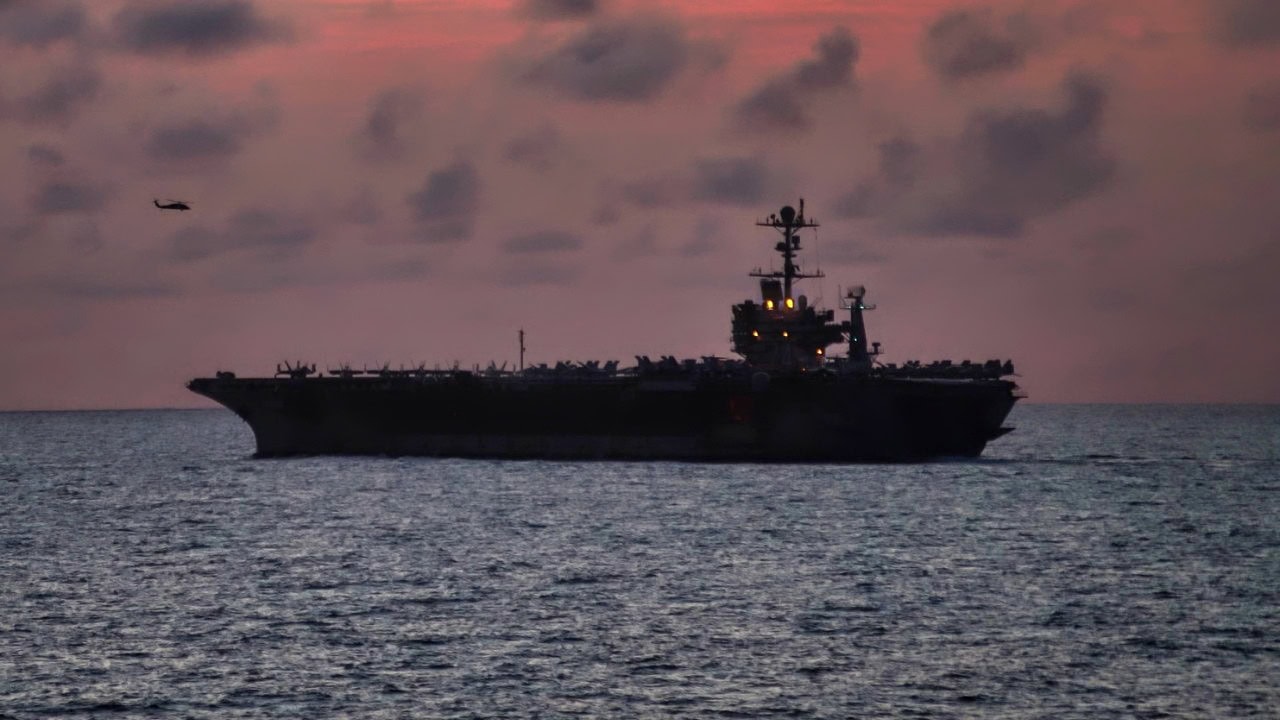
USS John C. Stennis Aircraft Carrier. Image Credit: Creative Commons.
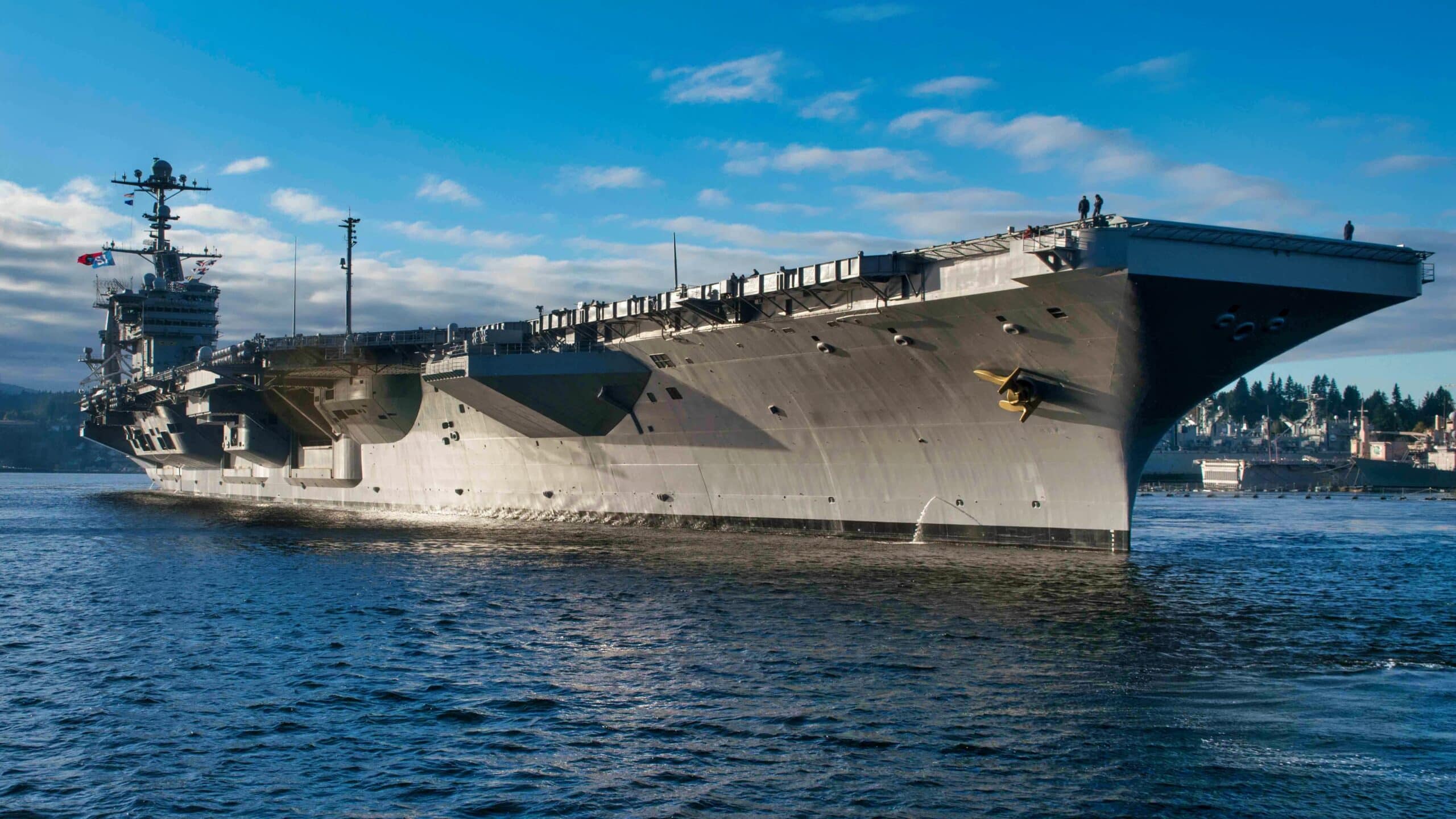
USS John C. Stennis Aircraft Carrier. Image Credit: Creative Commons.
This requires destroyers to protect the refueling tankers from air or submarine attacks. All of that adds tremendous time and expense to operating aircraft carriers.
The US Navy turned to nuclear power in the 1960s with the world’s first nuclear-powered aircraft carrier, the USS Enterprise(CVN-65).
The US went on to build ten additional nuclear-powered aircraft carriers of the Nimitz Class and has completed the first of the new Gerald R. Ford-Class carriers that will eventually replace the ten in the Nimitz Class.
While nuclear propulsion has greatly reduced the Navy’s dependence on oil tankers to keep them on deployment, those nuclear reactors come with pretty steep “Price at the pump” too.
A conventionally powered carrier can refuel in a few hours; a Nimitz-class carrier can take years to refuel.
A Long Time Between Pitstops
That process takes two forms, both carefully planned well in advance of the carrier’s return for a lengthy stay in drydock: Refueling and Overhaul (ROH) and Refueling and Complex Overhaul (RHOH).
During its expected 50-year service life, a Nimitz-class carrier will need to be refueled every 20-25 years, depending on how much time it has spent underway and how much fuel it has consumed.
These overhauls can take 3-5 years.
This means that a Nimitz-Class Carrier with a 50-year lifespan could spend 6-10 years of its service life in drydock being refueled, repaired, and upgraded. The cost runs into the billions.
This requirement, perhaps more than any other, explains why a single nuclear-powered carrier is rare in foreign navies. It’s not enough to just build one; you have to maintain, refuel, and upgrade over an extended period.
The Standard Refuel and Overhaul (ROH) is often the least time-consuming and is performed mainly on nuclear-powered submarines every 5 years or so.
Aircraft carriers with 20 years of steaming behind them receive the full treatment: the Refueling and Complex Overhaul (RCOH).
The Navy spends years planning these for the Nimitz-class and then several years executing them properly, since they include a heavy modernization process as well.
The RCOH: Gutting The Ship
Newport News Shipbuilding in Virginia handles all RCOH work for US carriers, and the process starts with the ship entering a drydock and pumping out a million gallons of seawater.
The two nuclear reactors are slowly and methodically powered down and cooled.
With the reactors buried deep inside the ship, hundreds of workers begin a partial disassembly, cutting large holes in her decks to reach the reactor compartments.
Because of the intense radiation in the spent fuel, this is a slow, careful process with strict safety protocols.
A release of radiation at this stage could contaminate the entire vessel, making it unusable in the future and putting the shipyard out of commission as well.
Once at the reactor level, workers remove the radioactive coolant water and replace the still-radioactive but spent cores with fresh enriched uranium.
The reactor’s pipes and plumbing are also replaced.
All of this is done under tight radioactive containment procedures.
Then the work crews work their way back out of the ship again, closing the gaping holes in the decks they made to access the reactor compartment.
Miles and Miles of Pipes, Plumbing and Electrical Wiring
The RCOH process also includes structural repairs and improvements that cannot be done at sea or in port.
A Nimitz-Class Carrier has 100 miles of plumbing and sewage pipes and another 150 miles of piping for steam, aviation gas, fire mains, and fresh water distillation.
It also has some 1,800 miles of electrical wiring and cables running throughout the ship.
All of that is inspected for wear and replaced as needed.
This overhaul includes replacing old machinery and electronics with new systems developed over the past two decades since she was first put to sea or since her last overhaul.
The Nimitz-Class faces a particular challenge here.
Electronic upgrades are so current-hungry that her wiring and electric power-generating equipment struggle to keep up.
Beyond the expected corrosion control and bottom painting one imagines in an overhaul, the RHOH essentially guts the ship and replaces her innards.
What comes out at the end is not just maintained but a carrier very much improved over when it came into drydock.
Still, the problem remains: how to reduce the time required for a complex overhaul of these nuclear-powered carriers.
Having a carrier spend 10-20% of its service life in drydock is not a great return on the investment made in these ships.
The new Ford-Class carriers promise to reduce this drydock time with an A1B nuclear reactor that will be refueled only once during its 50-year service life.
This class also includes 2,600 miles of electric and fiber-optic cable to accommodate future upgrades that require more power.
The Future Is The Ford-Class
The Ford-Class will still come into drydock for the standard Refuel and Overhaul process, which does not involve partially dismantling the ship to access her two reactors.
This marks a significant improvement in the design and long-term operation of the US Navy’s nuclear-powered aircraft carriers.
About the Author: Sean Spoonts
Sean Spoonts is the former Editor-In-Chief of SOFREP.com. He is a military analyst, writer, and commentator whose work has appeared in Newsweek, CNS News, Ukrinform, and various military/veteran media networks and professional publications, including the Military Intelligence Professional Bulletin. He is a U.S. Navy veteran, having served as an Aviation Anti-Submarine Warfare Operator and Search and Rescue Helicopter Aircrewman.