
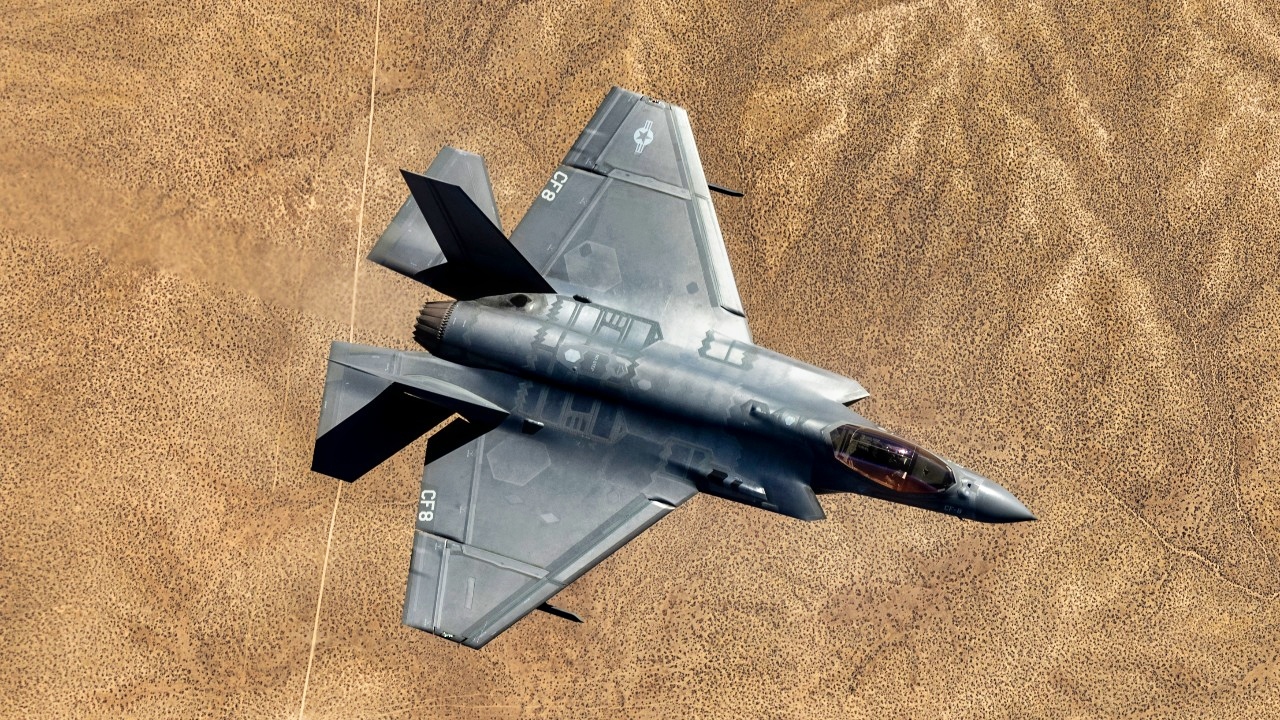
Key Points and Summary – The “best fighter jet” argument is no longer just about speed or dogfighting—it’s about who detects first, fuses data faster, and shoots before the other side knows a fight has started.
-This piece ranks the top five fighters in 2026 by blending performance, stealth, sensors, and versatility: the Su-57 and Rafale make the list for capability and combat utility, China’s J-20 for scale and momentum, and America’s F-22 and F-35 as the benchmark duo.
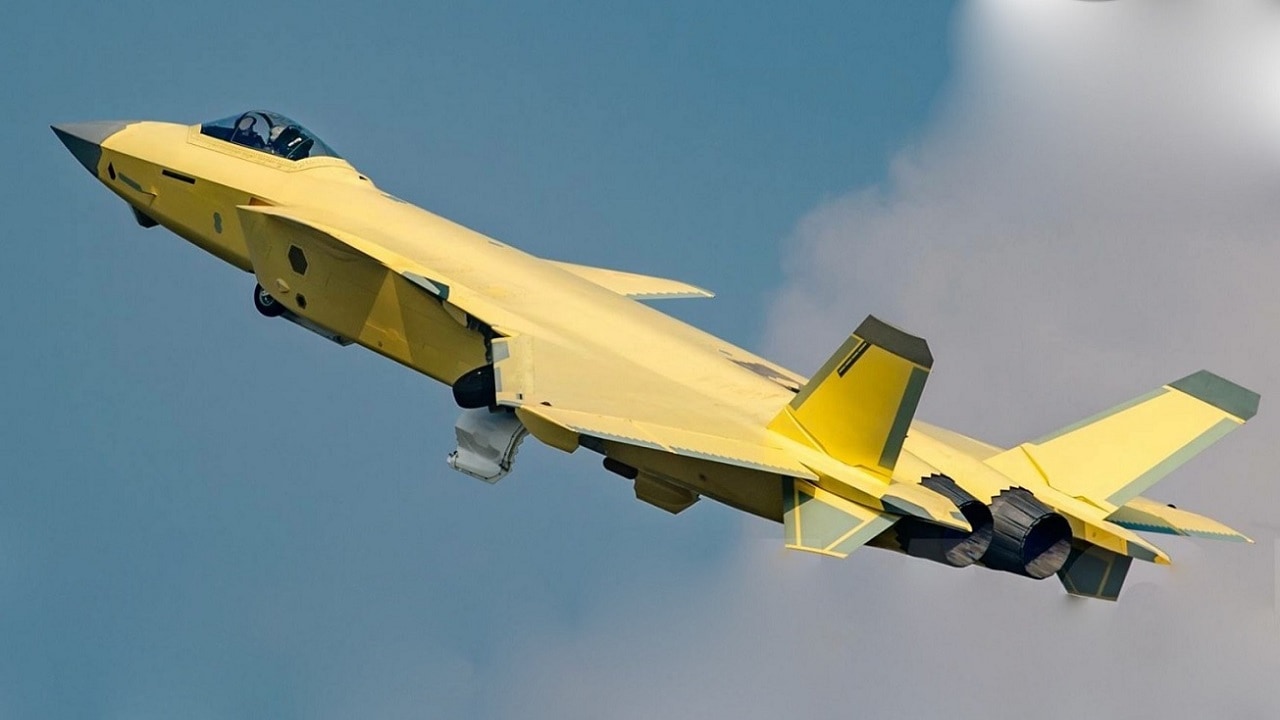
J-20 Mighty Dragon Stealth Fighter. Image Credit: Chinese Internet.
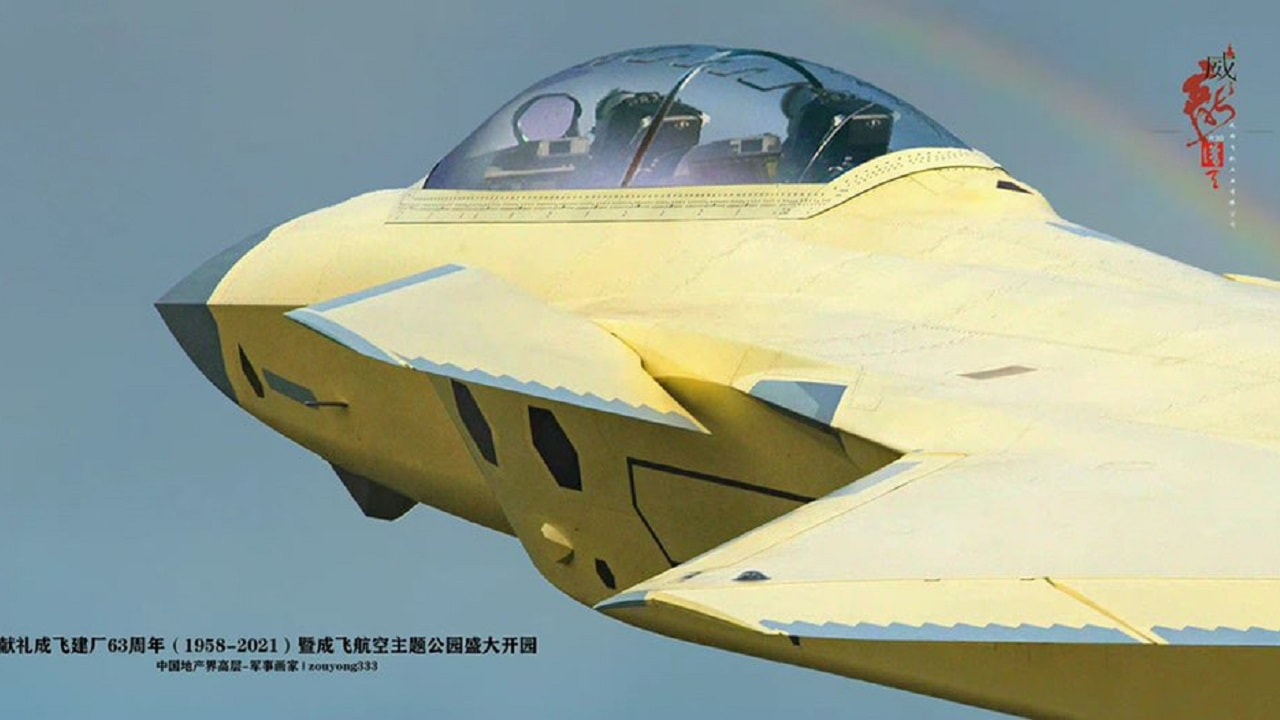
Chinese J-20 stealth fighter. Image Credit: Chinese Internet.
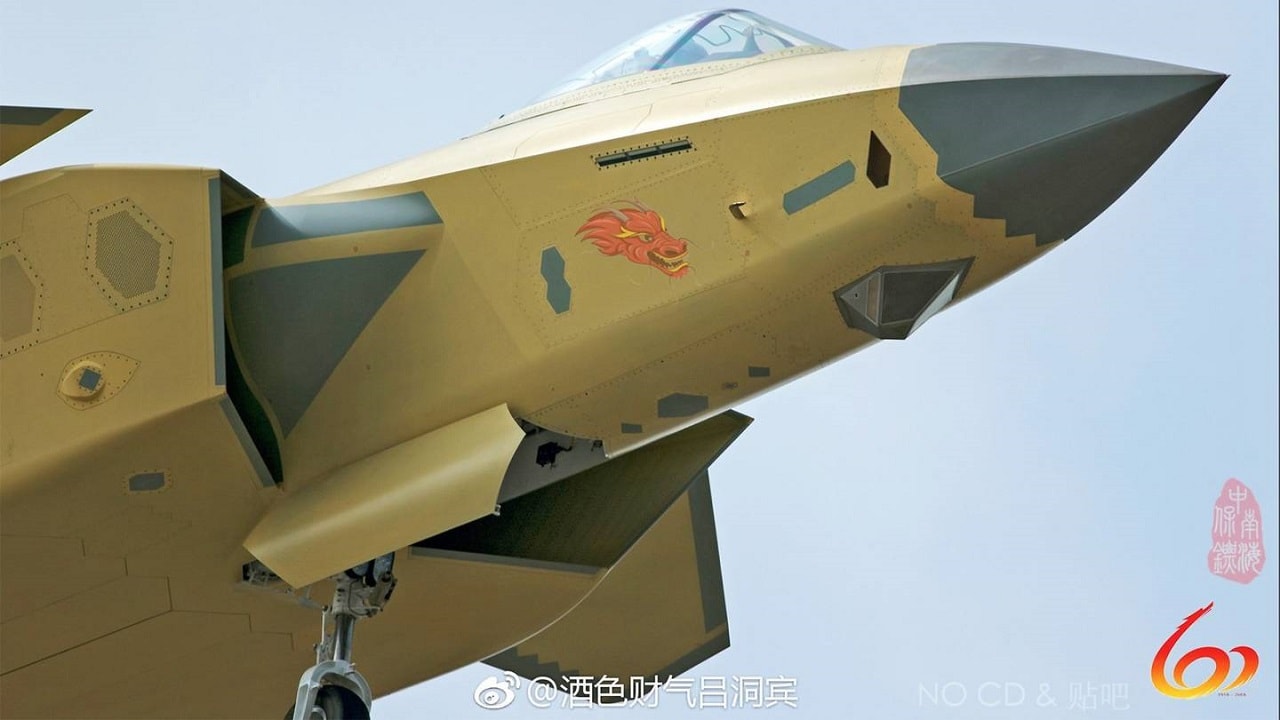
Chinese J-20 Stealth Fighter. Image Credit: Chinese Internet.
-The core claim is simple: the F-35’s sensor-and-network advantage is redefining air combat, even as the F-22 remains the pure air-superiority icon.
Rafale, Su-57, J-20: The 2026 Fighter Jet Ranking That Will Start Arguments
When discussing the best, most powerful fighter aircraft in the world, many top aviation analysts will say the biggest factor in determining the best of the best is the pilot in the cockpit.
However, advancements in fighter technology have been growing by leaps and bounds over the past 20 years.
Fighter jets can fly at high supersonic speeds, avoid radar detection, and carry advanced weapons. Modern jets use stealth technology, smart sensors, and, in some cases, even artificial intelligence. These features enable pilots to identify enemies first and strike quickly.
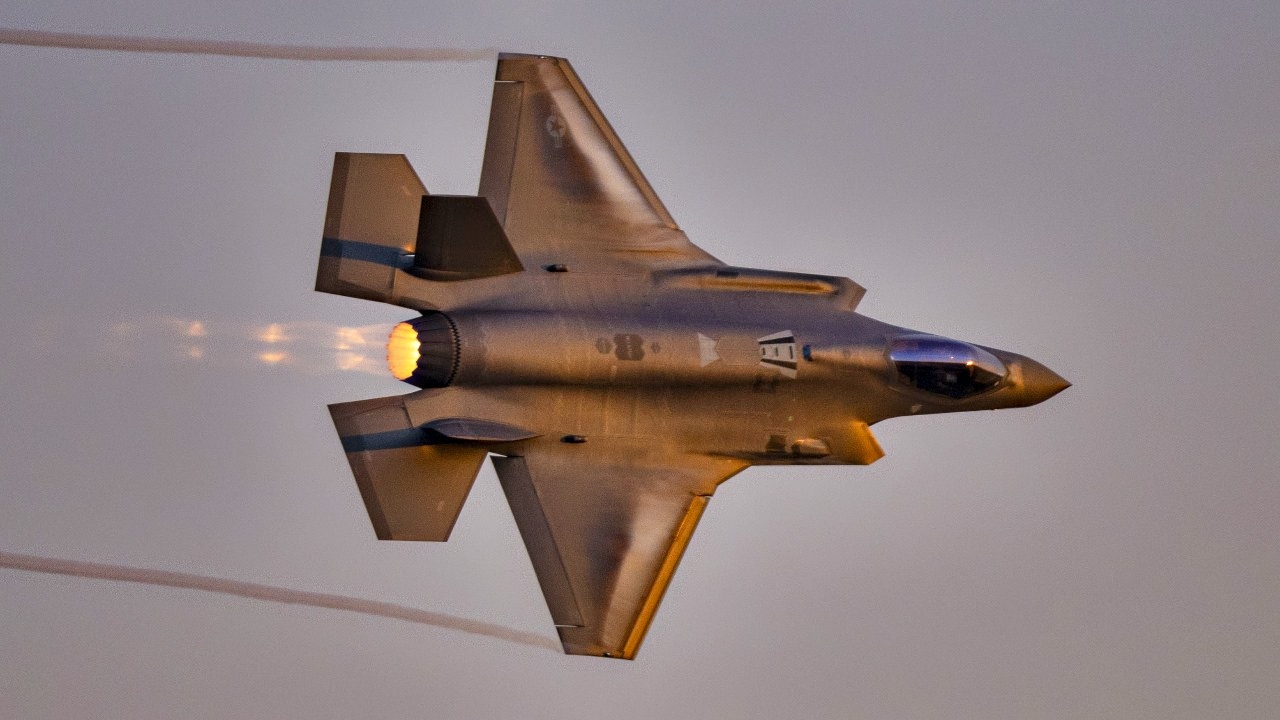
A U.S. Air Force F-35A Lightning II assigned to the F-35A Lightning II Demonstration Team performs at the Capitol Air Show over Sacramento, California, July 15, 2024. Innovations such as the F135 Smart Stacking Tooling Enhancement developed by the OC-ALC mechanics and engineers have significantly improved the rotor assembly process, increasing precision and enhancing the depot’s ability to produce the engine that powers the F-35 Lightning II. (U.S. Air Force photo by Staff Sgt. Zachary Rufus)
The United States leads the world in fighter jet technology. Its F-22 Raptor and F-35 Lightning II are the most technologically advanced fighters today. China is catching up fast with its new J-35A, the mysterious J-36, which features a unique stealth design, and the J-20. The fifth-best fighter from Russia also ranks high with the Su-57, known for its speed and agility.
The top 5 fighter jets in 2025, according to multiple aviation sources evaluating performance, stealth, and versatility, include the Lockheed Martin F-22 Raptor, Lockheed Martin F-35 Lightning II, Dassault Rafale, Chengdu J-20 Mighty Dragon, and the Su-57 Felon.
#5 The Su-57 Felon
The Sukhoi Su-57 is widely considered by many experts to be the worst-performing stealth fighter, particularly compared to its American and Chinese counterparts, such as the F-22 Raptor and J-20, due to significantly inferior stealth capabilities, limited production, and issues with technology and workmanship.
However, it is still considered a stealth aircraft (albeit limited). And for the purposes here, it edges out (just barely) the outstanding Swedish JAS-39E Gripen, which is a non-stealth, fourth-generation fighter.
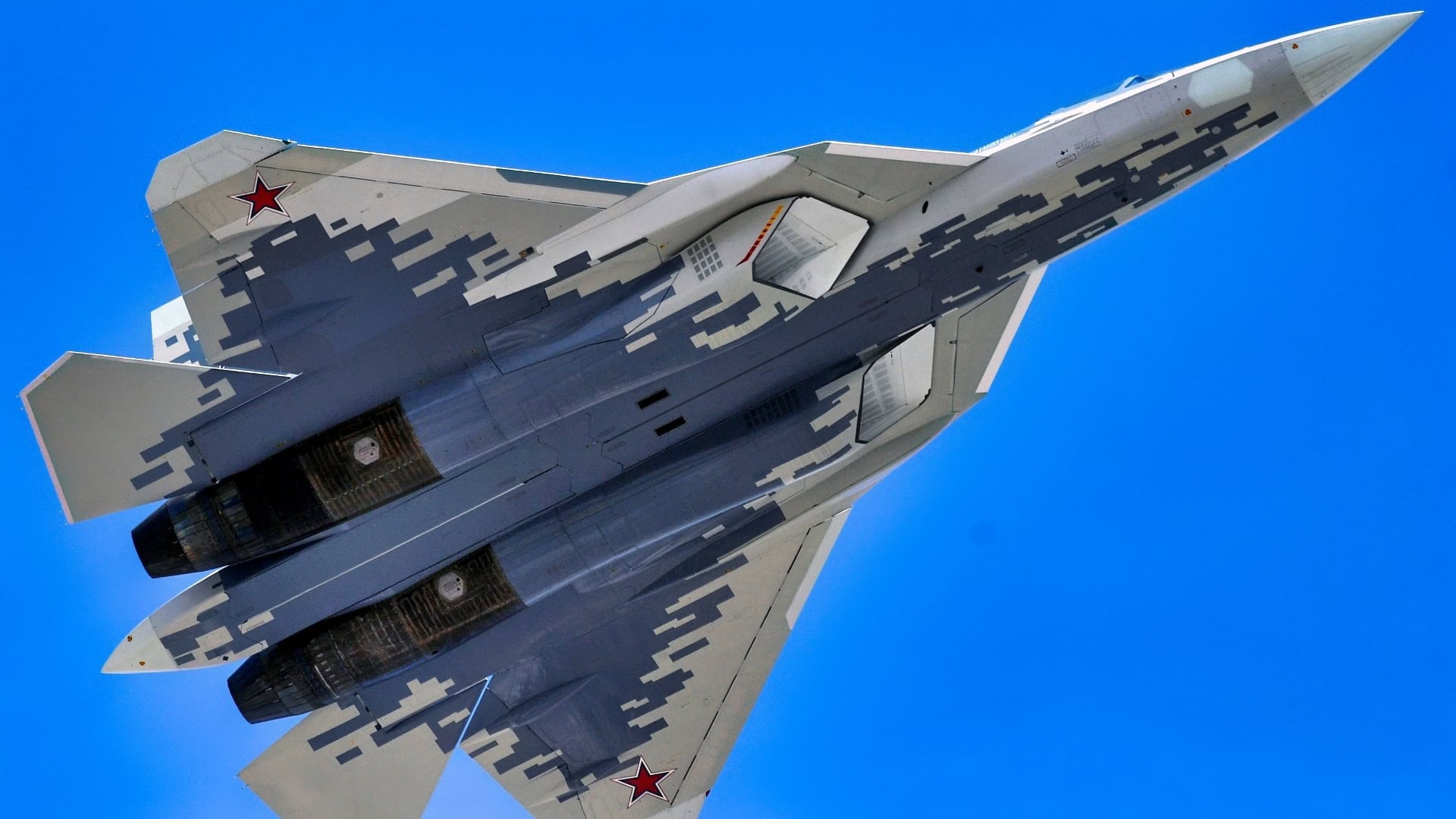
Su-57 Felon from Russia. Image Credit: Creative Commons.
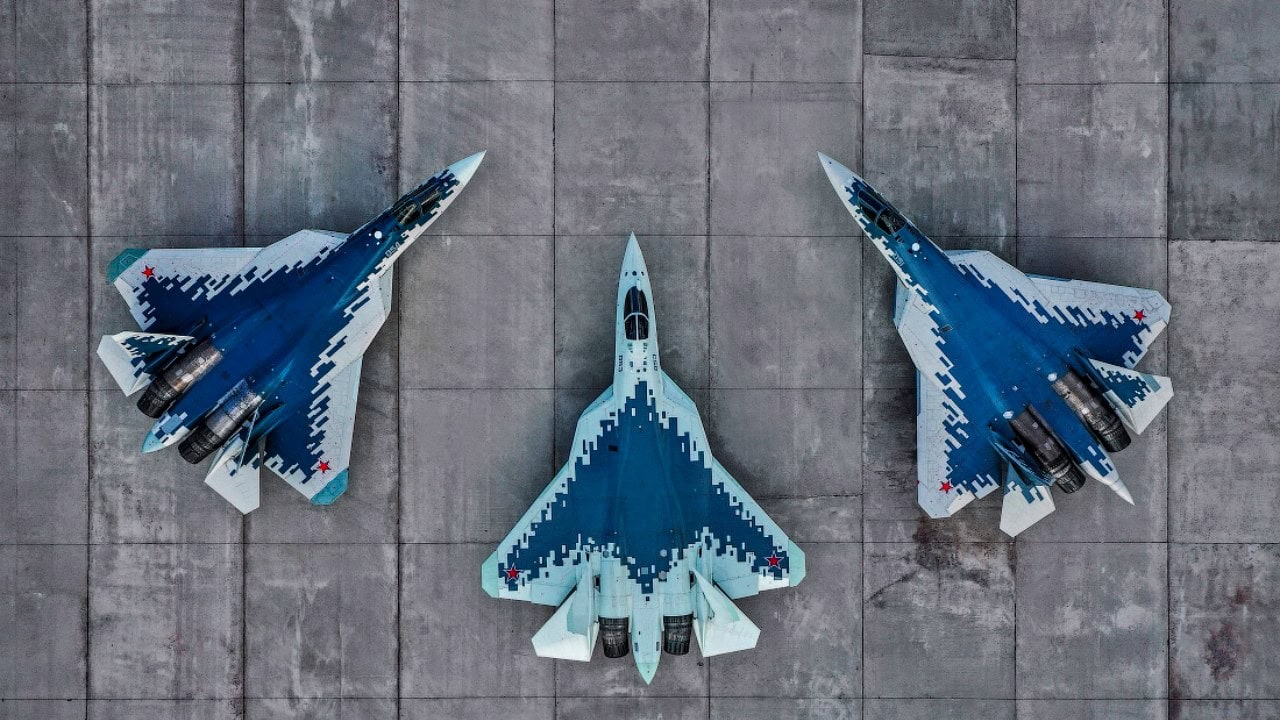
Su-57 Felon. Image Credit: Screengrab from X.
The Su-57 is powered by two Saturn AL-41F1 afterburning turbofan engines, which enable it to reach Mach 2.45. A new engine has been in the works for a decade, but has not materialized.
The aircraft’s armament includes a 30 mm autocannon under the nose and various anti-ship, anti-aircraft, and anti-armor missile configurations, with eight hard points in the storage bays.
According to Air Force Technology, the Russian aircraft is also equipped with 3D thrust vectoring jets, enabling higher maneuverability and the ability to achieve supersonic cruise speed.
Tass, the government-controlled news service, reported that an upgraded, even more advanced model of the Su-57 could be in development and that it would be the world’s first in-service “sixth-generation” aircraft.
Tass quoted Russian Aerospace Force ex-commander and Chairman of the Federation Council Defense and Security Committee Viktor Bondarev, who made an outlandish claim.
“This is actually a splendid plane, and it can embrace both fifth-and sixth-generation features. It has huge modernization potential. Importantly, it is the best among the existing versions of its stealth characteristics. It incorporates all the best that is available in modern aviation science, both in Russia and in the world.”
Is the Su-57 a good fighter jet? Yes absolutely. While it may barely be a 5th-generation stealth fighter, it is more than a match for the F-16s and F-15s in the US inventory.
However, the F-35’s stealth capability, sensing, high-speed AI-enabled computing, and other capabilities are far superior. And the Felon would be detected and targeted long before it could ever see its opposition.
And numbers-wise? Even if Russia builds its 76 Felons as planned, that would leave no production for Algeria, and it would be matched against over 1,000 US and allied F-35s and 187 F-22s.
#4 The Dassault Rafale
The Dassault Rafale is a twin-engine fighter aircraft capable of operating as a maritime fighter from aircraft carriers and as a land-based fighter.
The versatile Rafale is capable of carrying out a wide range of combat aviation missions, including air superiority and air defense, close air support, in-depth strikes, reconnaissance, anti-ship strikes, and nuclear deterrence.
The Rafale entered service with the French Navy in 2004 and with the French Air Force in 2006. Rafale is one of the most experienced fighter aircraft in the world. It has been combat-proven since 2007. Daussault’s export success with the fighter is well documented, as the company now has more export orders than Domestic orders.
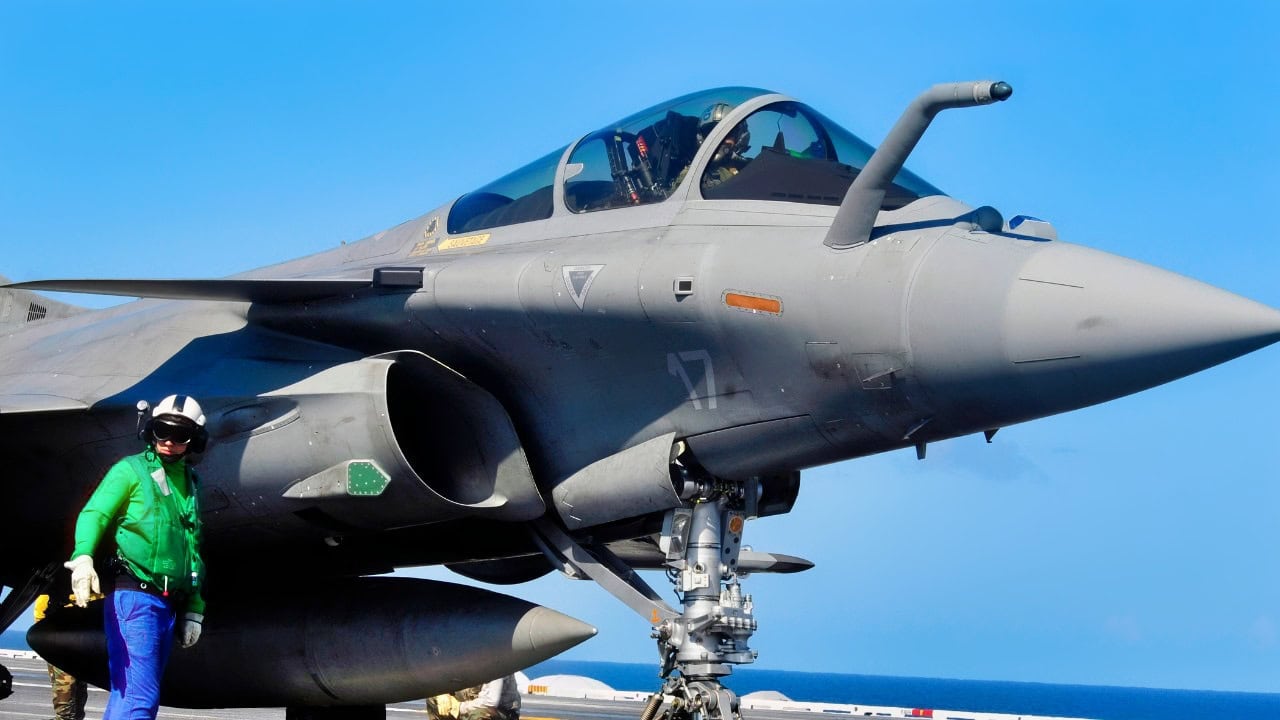
080719-N-3218H-011
ATLANTIC OCEAN (July 19, 2008) A French F-2 Rafale fighter prepares to launch during combined French and American carrier qualifications aboard the aircraft carrier USS Theodore Roosevelt (CVN 71). This event marks the first integrated U.S. and French carrier qualifications aboard a U.S. aircraft carrier. The Theodore Roosevelt Carrier Strike Group is participating in Joint Task Force Exercise “Operation Brimstone” off the Atlantic coast until the end of July. (U.S. Navy photo by Mass Communication Specialist 3rd Class Christopher Hall/Released)
The fourth-generation Rafale is a multirole (Dassault calls it an omnirole) aircraft. Dassault launched the Rafale program in the 1980s, as the French Navy and Air Force combined their requirements to develop a multirole aircraft that would replace seven different aircraft.
The Rafale can carry powerful weapon systems across its 14 external hard points. These include the Meteor beyond visual range air-to-air missile, the Mica heat-seeking and radar-seeking air-to-air missile, the AIM-9 Sidewinder heat-seeking air-to-air missile, and the AIM-120 AMRAAM radar-guided missile for air-to-air missions.
It carries the AGM-84 Harpoon anti-ship missiles, the SCALP-EG standoff cruise missile, the Hammer air-to-ground munition, the AM39 Exocet anti-ship missile, as well as conventional and smart bombs for air-to-surface missions.
The aircraft has an external load capacity of over 20,000 pounds. The Rafale also packs a powerful Nexter 30M791 30mm cannon with 2,500 rounds.
The Dassault Rafale is a very good fighter jet. It’s a highly versatile, multirole aircraft with advanced avionics, a strong electronic warfare suite, and impressive maneuverability.
The Rafale features a powerful radar, an infrared search-and-track system, and a sophisticated electronic warfare suite called SPECTRA, which enables it to detect and counter threats.
SPECTRA operates across the electromagnetic, laser, and infrared domains, utilizing intelligent data fusion from multi-spectral sensors to provide identification, location, jamming, and decoying capabilities against a wide range of threats.
The fighter jet is equipped with an Active Electronically Scanned Array (AESA) RBE2 radar that can simultaneously track up to 40 targets and engage up to 4 targets.
The Rafale’s delta wing and canard configuration, combined with fly-by-wire controls, give it exceptional agility. It can fly deep-strike missions over 1,000 km without refueling and cruise at Mach 1.8 (1,381 mph) with afterburners.
#3 The Chengdu J-20 Mighty Dragon
China didn’t have a stealth aircraft program before 2007. The Chengdu J-20 Mighty Dragon was built in no small part thanks to documents stolen by Chinese espionage from the US on the F-22, F-35, and the Russian MiG-1.44.
The Chinese J-20 fighter was designed and built by the Chengdu Aircraft Industry Group. The J-20 “Mighty Dragon” is a fifth-generation fighter with the NATO designation FAGIN.
The J-20 is a large aircraft with a wingspan of 44 feet, a length of 67 feet, and a maximum take-off weight (MTOW) of 81,660 pounds.
While early models of the J-20 used twin Russian AL-31FM2 engines, based on those that powered the Russian Sukhoi Su-27, later models switched to Chinese WS-10B powerplants as part of a broader transition of China’s fighter fleet to domestically produced engines.

J-20 Stealth Fighter. Image Credit: Creative Commons.
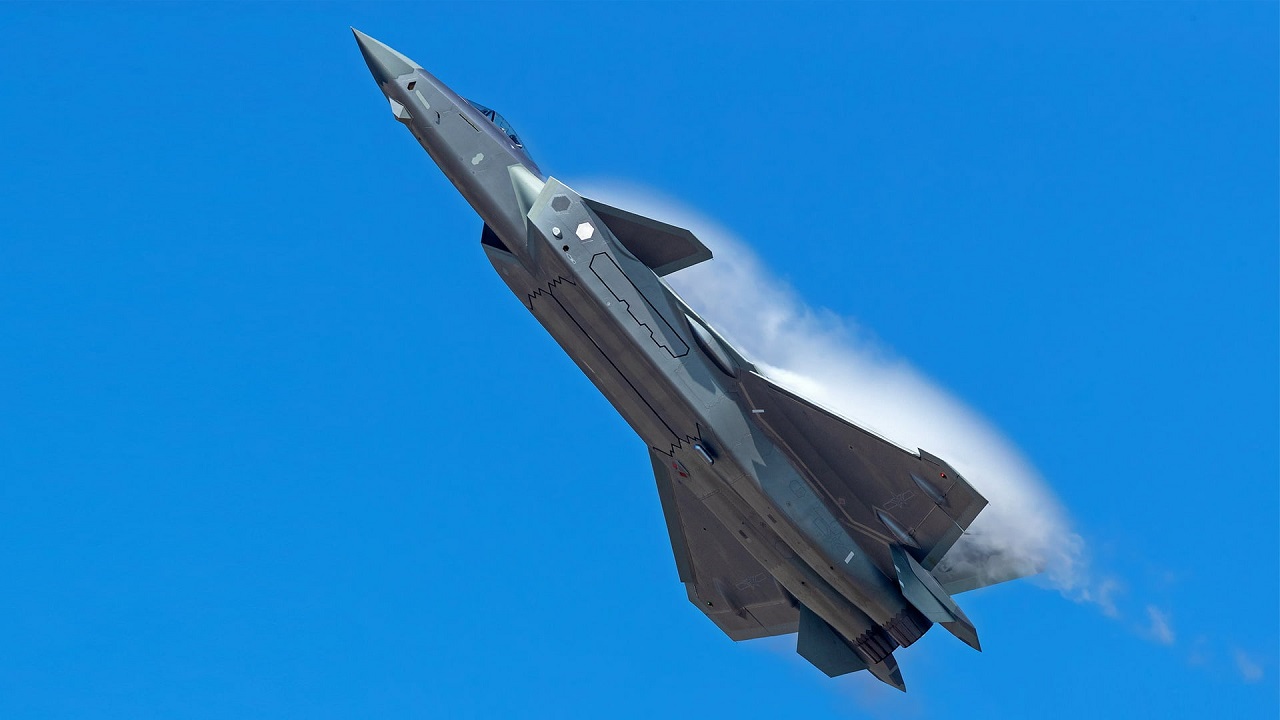
J-20 Stealth Fighter. Image Credit: Creative Commons.
The J-20 has also been seen testing a new and more powerful WS-15 engine. With WS-10 engines, the J-20 has a maximum speed of Mach 2.
The jet is capable of carrying various weapons systems, including the very long-range PL-15 missile, PL-21 long-range missile, and the LS-6 precision-guided bomb.
First seen in November 2024, the J-20S is a two-seat variant under development. It is a long-range, multirole, stealthy fighter jet that can also team up with unmanned drones and aircraft. The “loyal wingman” concept that the US is also testing. Currently, China has between 270 and 300 J-20 aircraft.
While the J-20 can carry an enormous payload, most of it must be carried on external pylons, which will reduce its stealth capability. Due to the size of its long-range missiles, it can have only four internally.
And stealth is already a factor that the J-20 is behind the Raptor. The J-20’s radar cross-section is about 35 meters, or about 100 times more than the F-22 Raptor, not counting the additional weapons on pylons.
The J-20 lacks a cannon, which could mean the designers didn’t intend it as a dogfighter. The Chinese may view the J-20 in a more interceptor-like role, utilizing its long-range missiles to penetrate opposing air defenses by engaging and destroying enemy fighter patrols, early warning aircraft, and refueling tankers.
Chinese computer programmers ran simulations that revealed a single J-20 equipped with eight medium-range air-to-air missiles had a less than 10 percent chance of defeating an F-22 equipped with six AIM-120C missiles, according to the simulations.
#2 The US Air Force F-22 Raptor
The US F-22 Raptor has been the standard against which all fighter aircraft have been measured for more than 20 years. Yet it still sits at the top of the mountain in terms of dogfighting ability, stealth, supercruise ability, maneuverability, and integrated avionics.
The F-22 Raptor remains the world’s best pure fighter aircraft, but its service window is closing. The Air Force plans to replace the Raptor in 2030 with the F-35 and the Pentagon’s Next Generation Air Dominance (NGAD) fighter, the F-47.
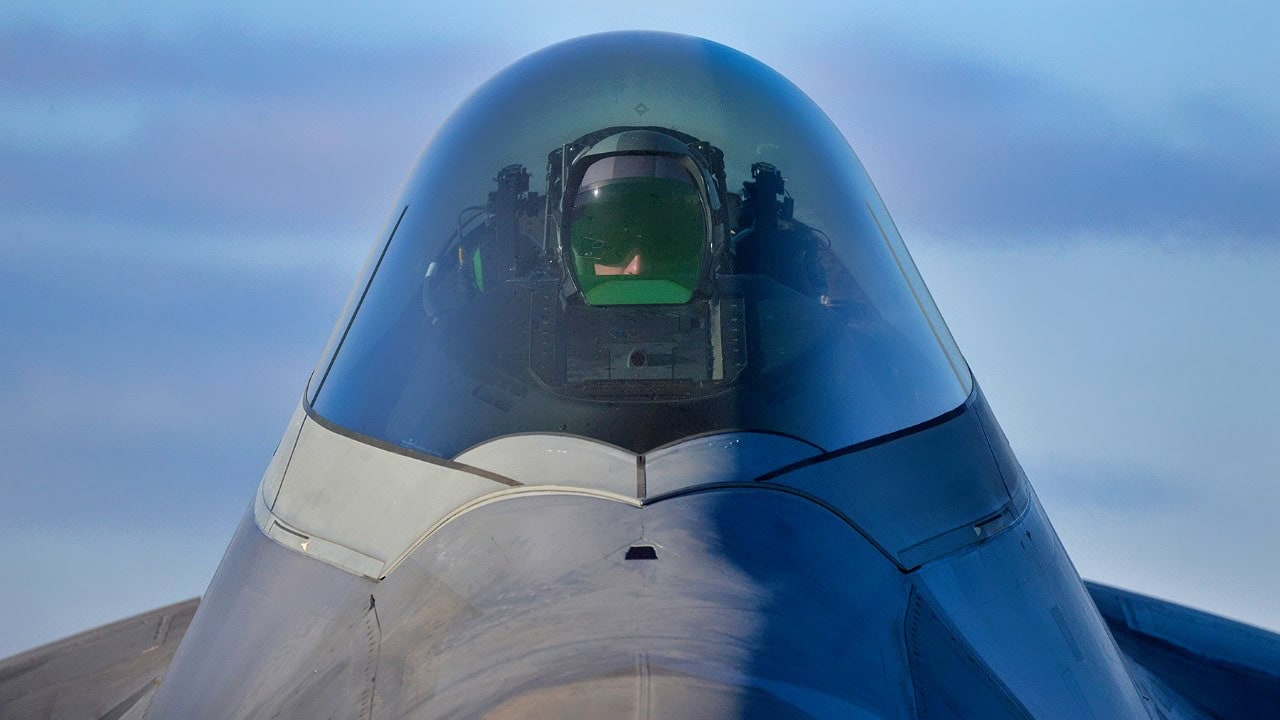
Maj. Philip “Stonewall” Johnson, 514th Flight Test Squadron F-22 test pilot, sits in the last F-22 Raptor to complete the F-22 Structural Repair Program Nov. 24, 2020, prior to performing a functional check flight with the aircraft at Hill Air Force Base, Utah. The 574th Aircraft Maintenance Squadron processed 135 F-22s through the program by performing structural modifications to increase total flying hour serviceability on each aircraft by 8,000 hours. (U.S. Air Force photo by Alex R. Lloyd)
“We’ve already built and flown a full-scale [sixth generation] flight demonstrator in the real world, and we broke records in doing it,” Will Roper, Director of the Pentagon’s Strategic Capabilities Office, told Defense News in 2020. “We are ready to go and build the next-generation aircraft in a way that has never happened before.”
However, the US Air Force’s decision to prematurely halt F-22 Raptor production at just 186 aircraft was a “strategic blunder” that has created a dangerous “air superiority gap.”
What makes the F-22 great in a dogfight is the aircraft’s thrust vectoring capabilities.
Its two engines have specially designed nozzles at their ends that can move on a vertical plane to vector the aircraft’s 70,000 pounds of thrust in one direction even if the aircraft is heading in another, thus allowing the F-22 to do some impressive acrobatics, as well as leverage a highly high angle of attack during a within-visual-range engagement.
The speed of the Raptor is about 1,500 mph. The Collaborative Combat Aircraft (CCA) program is a US Air Force initiative to develop a new type of uncrewed, jet-powered aircraft that will operate alongside and collaborate with crewed fighter jets. These are already flying and being tested.
The F-22 and the F-35 will each be capable of quarterbacking up to five drones.
#1 The F-35 Lightning II
The F-35’s stealth and advanced sensor capabilities give it a significant advantage in beyond-visual-range engagements.
The Lockheed Martin F-35 is not a pure dogfighter. However, its ability to avoid detection and targeting allows it to bring weapons to bear against threats that can’t see it. The F-35 is agile enough to hold its own against many enemy fighters, but not on par with the Eurofighter.
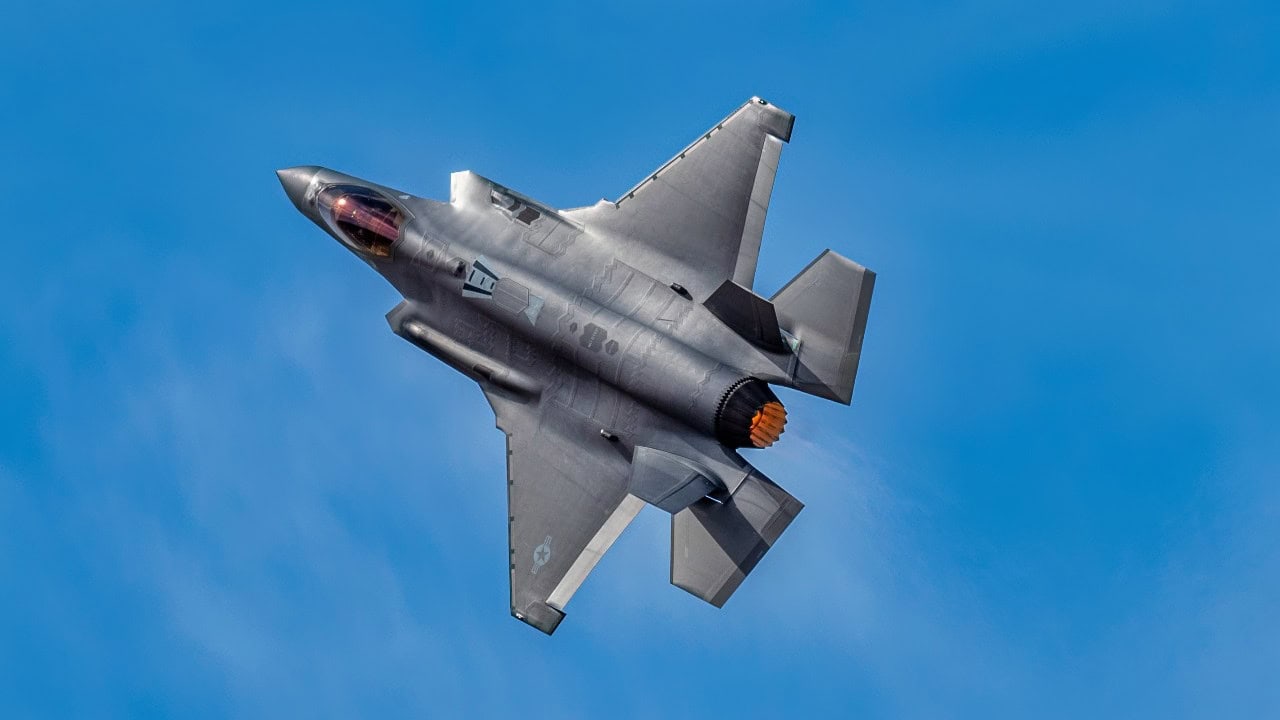
A U.S. Air Force F-35A Lightning II aircraft flies during the Heritage Flight Training Course at Davis-Monthan Air Force Base, Arizona, Feb. 28, 2025. The F-35 is designed to provide the pilot with unsurpassed situational awareness, positive target identification and precision strike in all weather conditions. (U.S. Air Force photo by Senior Airman Jasmyne Bridgers-Matos)
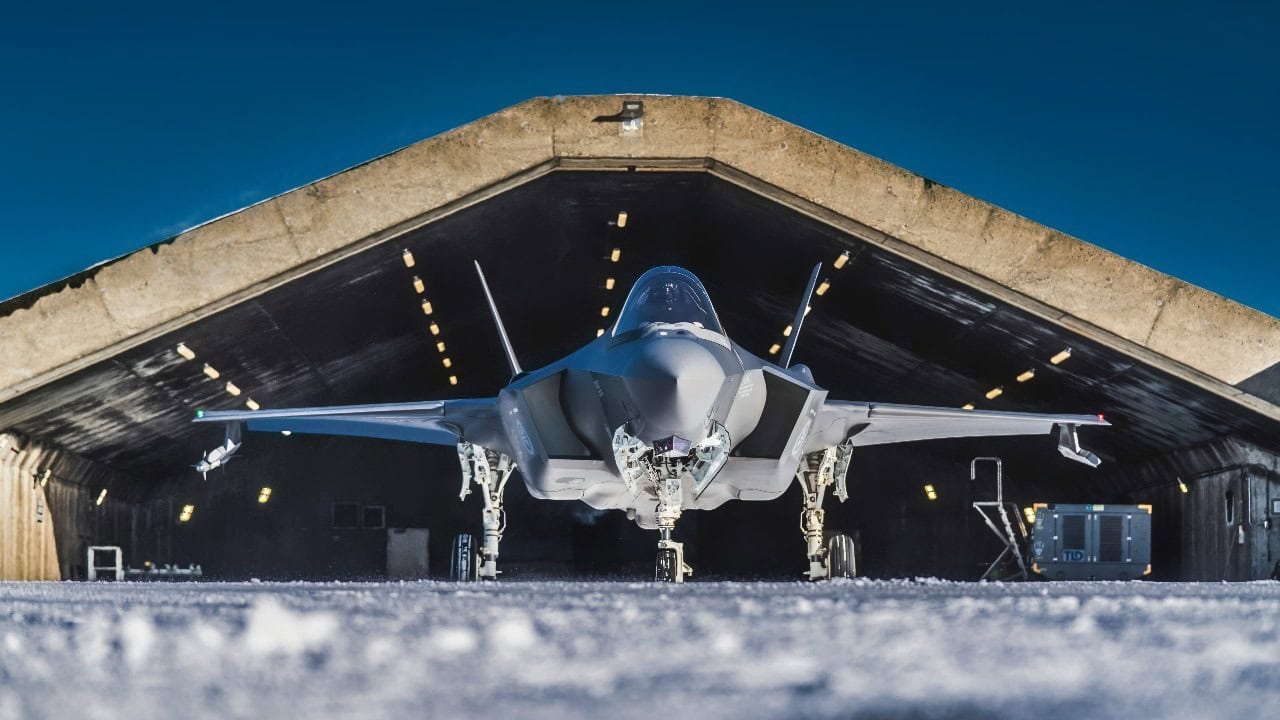
A Royal Norwegian Air Force F-35 Lighting II fighter leaves its shelter at Keflavík Air Base in Iceland. Norway sent the fighters to Iceland, which doesn’t have its own air force, in February 2020.
The F-35 Lightning II fighter jet is powered by a single, powerful Pratt & Whitney F135 engine. This engine is a crucial component, providing the thrust and performance needed for the F-35’s advanced capabilities. The F135 is a turbofan engine and the most powerful fighter jet engine currently in service. It pushes the F-35 to Mach 1.6 (1,200 mph).
The F-35 Lightning II’s calling card is being a mobile sensor platform that can assess the effectiveness of an entire fleet — a whole military front — by sharing data and coordinating information, thereby exponentially increasing every warfighter’s situational awareness.
Advanced sensor fusion automatically analyzes data from sensors embedded throughout the aircraft and merges it into relevant information for pilots. This gives F-35 pilots an integrated, intuitive view of their surroundings, greatly enhancing survivability, effectiveness, and interoperability.
The F-35’s advanced AN/APG-81 AESA radar is the most capable in the world. Long-range active and passive air-to-air and air-to-ground modes support a full range of missions.
The F-35 Lightning II carries weapons in internal weapons bays. Air-to-air: Up to 4 AIM-120 AMRAAM missiles. An upgrade to 6 missiles is planned.
Air-to-ground: Can carry GBU-31 JDAMs, GBU-32 JDAMs, GBU-12 Paveway II bombs, and GBU-54/B Laser JDAMs.
Other: GBU-39 Small Diameter Bombs (SDBs), and AGM-154 Joint Standoff Weapons (JSOWs). The F-35A weapons include an internally mounted 25mm GAU-22/A cannon with 182 rounds.
When operating in “Beast Mode,” the F-35’s external pylons allow a significantly larger weapons load, including bombs, missiles, and fuel tanks.
The F-35 can carry up to 22,000 pounds of ordnance externally, including GBU-49 small glide munitions, AIM-9X Sidewinder missiles, and various other bombs. In “beast mode,” the F-35 can carry a mix of air-to-air and air-to-ground weapons, such as 2 AMRAAMs, 2 Sidewinders, and 6 2,000-pound JDAMs.
The F-35’s stealth, combined with the most advanced sensor suite of any fighter in history, redefines interoperability and allied deterrence, giving the global F-35 fleet a considerable advantage over anyone.
Honorable Mention: JAS-39E Gripen, the Shenyang FC-31 Gyrfalcon, the F-15EX Eagle II, the Eurofighter Typhoon, and the French Rafale.
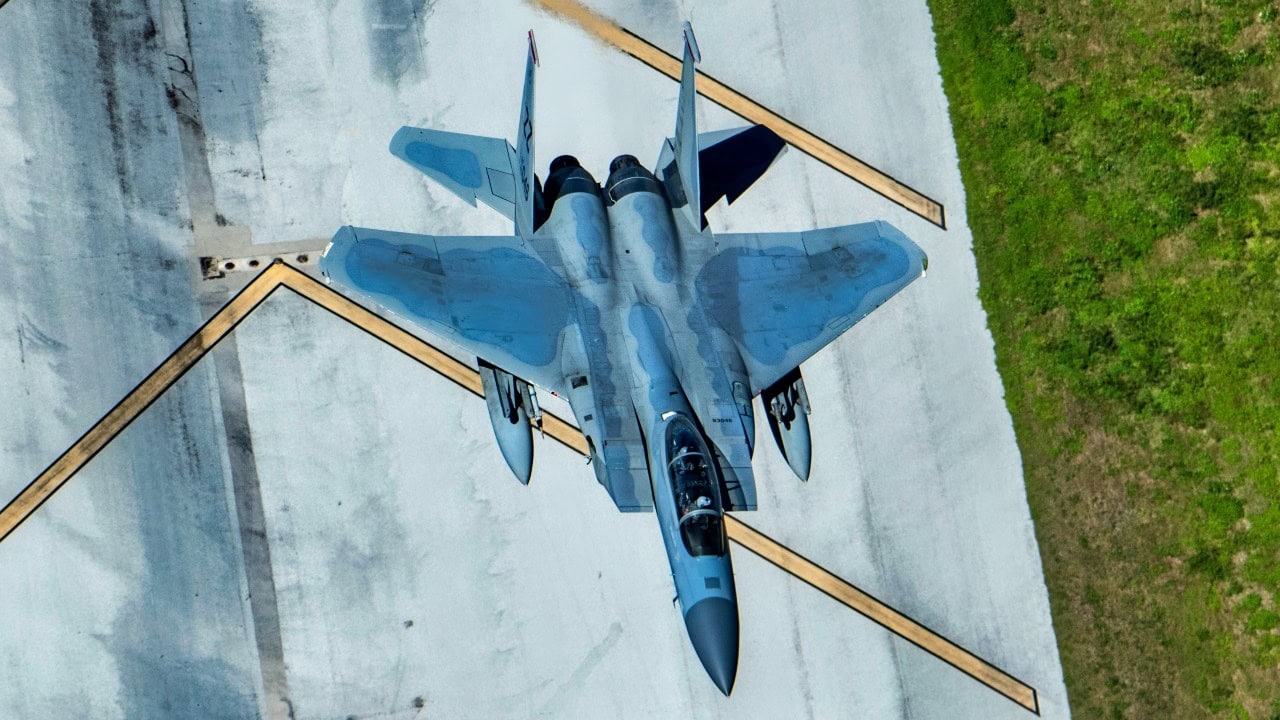
A U.S. Air Force F-15 Eagle II flies during a large show-of-force formation over Andersen Air Force Base, Guam, Mar. 6, 2019. CN19 is a long-standing exercise designed to enhance multilateral air operations amongst partner nations and includes humanitarian assistance and disaster relief airlift operations as well as large-force employment. Approximately 2,000 U.S. Airmen, Marines, and Sailors participated alongside approximately 800 RAAF and JASDF members during the exercise. (U.S. Air Force Photo by Senior Airman Xavier Navarro)
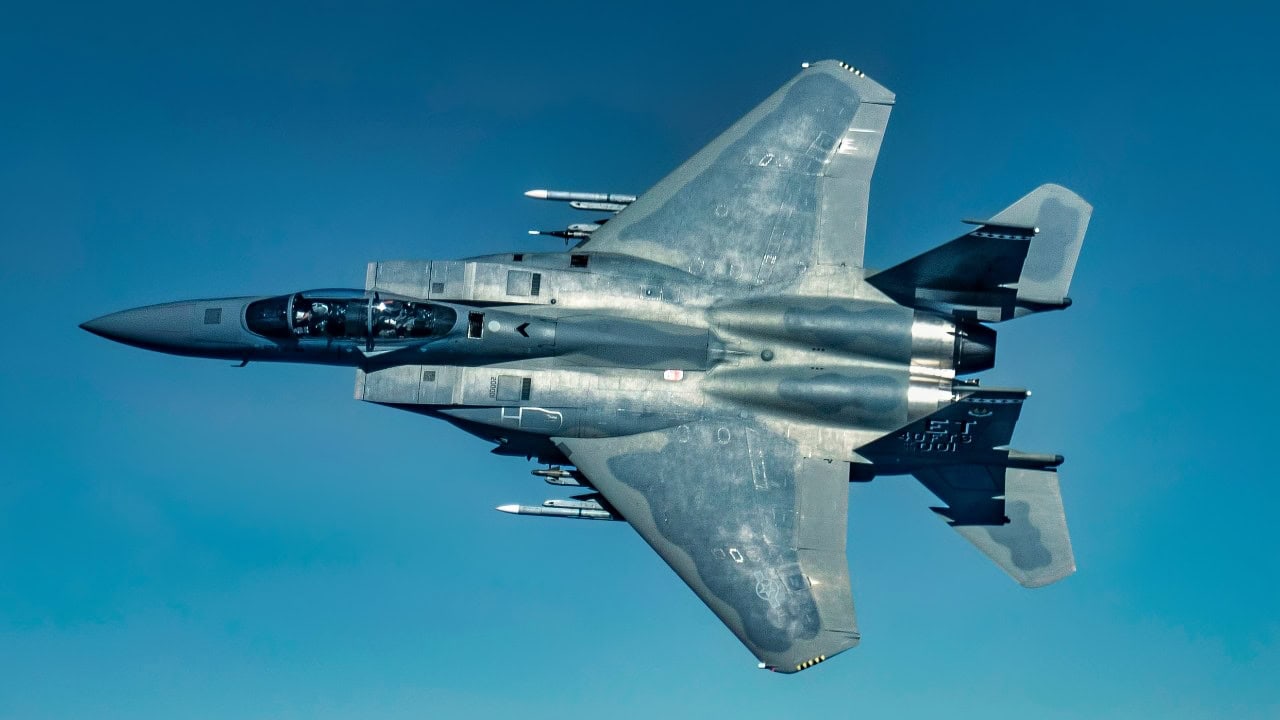
U.S. Air Force Lt. Col. Richard Turner, 40th Flight Test Squadron commander flies 40 FLTS Senior Enlisted Leader, MSgt Tristan McIntire during a test sortie in the F-15EX Eagle II over the Gulf of Mexico on Jun. 14, 2022. Assigned to the 96th Test Wing at Eglin Air Force Base, Fla., the F-15EX Eagle II is the Air Force’s newest 4th generation fighter being tested at the 40 FLTS. (U.S. Air Force photo by Tech. Sgt. John McRell)
About the Author: Steve Balestrieri
Steve Balestrieri is a National Security Columnist. He served as a US Army Special Forces NCO and Warrant Officer. In addition to writing on defense, he covers the NFL for PatsFans.com and is a member of the Pro Football Writers of America (PFWA). His work was regularly featured in many military publications.