
Key Points and Summary – Dr. Andrew Latham argues that President Trump’s proposed $1.5 trillion defense budget, announced via social media, is “political theater” rather than a serious policy proposal.
-Lacking critical details like service breakdowns or funding sources, the astronomical figure serves as a rhetorical signal of resolve intended to dominate the news cycle rather than navigate the complex congressional budgeting process.
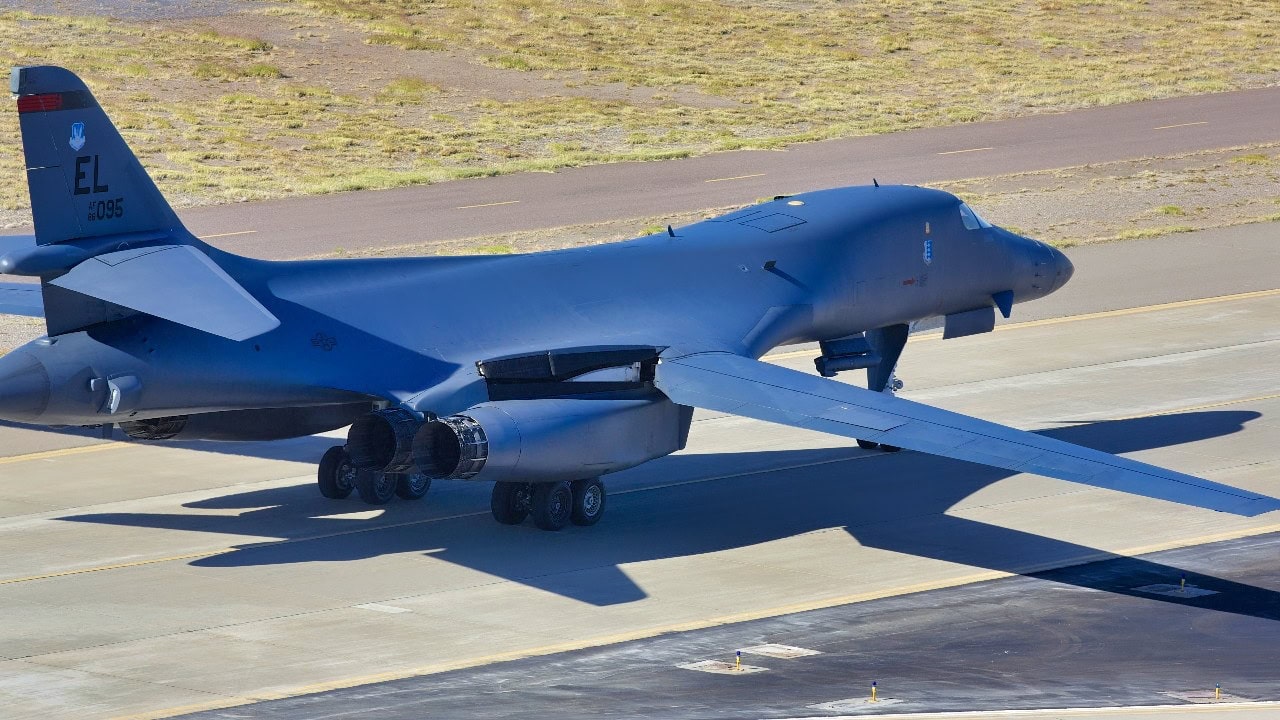
B-1B Lancer Bomber. Image Credit: Creative Commons.

B-1B Lancer. Image Credit: Creative Commons.
-Latham warns analysts against treating this “performance” as a viable blueprint, asserting that it prioritizes symbolic strength over the administrative realities of defense planning.
Why Trump’s $1.5 Trillion Defense Budget Figure Is a ‘Signal’ Rather Than a Plan
When U.S. President Donald Trump floated a proposed $1.5 trillion defense budget on social media, the figure itself did most of the work. It dominated coverage, projected resolve through magnitude, and distracted from the post’s lack of detail.
The number became the story almost instantly, and that was the point: posturing stood in for policy. What appeared to be a serious statement about defense spending was, on closer inspection, a performance aimed at signaling seriousness without actually saying anything serious.
This move is familiar. Trump has long relied on declarative acts that announce strength while remaining detached from the processes required to translate words into outcomes. The $1.5 trillion figure fits that pattern precisely. It should not be read as an element of the defense budgeting process in any operational sense. It is a political pronouncement, designed to land rhetorically rather than function administratively. Viewed that way, it becomes intelligible.
What the Post Actually Says
The president’s post features one headline number backed by a small collection of familiar assertions. Trump presents the $1.5 trillion figure as necessary to “rebuild” American military might, deterrence, and to “end years of military decline.”
The president gestures toward increases in the speed of weapon acquisition and in military presence and capability, while loosely suggesting that the astronomical top-line figure could be sustained through a combination of economic growth, efficiency, and “other sources.”
Beyond those generalities, the plan contained no breakout by service, mission, or capability. There was no timeframe, programmatic specificity, or any suggestion of how the number would mesh with current budget caps, appropriations law, or congressional authorizations.

U.S. Soldiers, assigned to the 1st Battalion, 64th Armor Regiment, 1st Armored Brigade Combat Team, 3rd Infantry Division, conduct gunnery with M1A2 Abrams tanks during exercise Combined Resolve V at 7th Army Joint Multinational Training Command in Grafenwoehr, Germany, Oct. 8, 2015. Combined Resolve is designed to exercise the U.S. Army’s regionally aligned force to the U.S. European Command area of responsibility with multinational training at all echelons. Approximately 4,600 participants from 13 NATO and European partner nations will participate. The exercise involves around 2,000 U.S. troops and 2,600 NATO and Partner for Peace nations. Combined Resolve is a preplanned exercise that does not fall under Operation Atlantic Resolve. This exercise will train participants to function together in a joint, multinational and integrated environment and train U.S. rotational forces to be more flexible, agile and to better operate alongside our NATO Allies. (U.S. Army photo by Visual Information Specialist Gertrud Zach/released)

A U.S. Army M1 Abrams, assigned to 4th Battalion, 6th Infantry Regiment, 3rd Armored Brigade Combat Team, 1st Armored Division, fully emerges from the tank firing point to engage the simulated enemy at Novo Selo Training Area, Bulgaria, March 5, 2025. 1st Armored Division, a rotational force supporting V Corps, conducts training with engineers and tank operators in the European Theatre to maintain readiness and instill fundamental Soldier skills that are vital in maintaining lethality. (U.S. Army photo by Spc. Kyle Kimble)
hat is provided, in other words, was a “big, beautiful” number and an expression of will designed to trumpet ambition that may or may not ever move through the institutional process.
What the Post Actually Is
Defense budgets in the United States are built through sequencing, tradeoffs, and institutional negotiation. They emerge from a process that binds executive intent to congressional authority, service planning, and appropriations law. A number released on social media without that context is not an early draft. It is, again, just a political gesture.
What can be inferred from the announcement is therefore limited. References to increased production or alternative funding sources serve to reinforce the impression of momentum, but nothing in the pronouncement clarifies how American military posture would change, what problems would be addressed, or what capabilities would be prioritized. Nothing really justifies the $1.5 trillion price tag.
Why Size Is the Message
Large numbers allow leaders to signal resolve without committing to choices that might invite scrutiny.
This instinct runs through Trump’s approach to governance. Problems are framed as matters of scale rather than design. If something appears inadequate, it is enlarged rhetorically. If it appears stalled, it is overwhelmed symbolically. The announcement is treated as the decisive act.
In this context, the $1.5 trillion figure is doing rhetorical and maybe even theatrical work, not administrative work. It reassures supporters, unsettles critics, and dominates the news cycle. It is meant to be noticed, repeated, and defended as evidence of seriousness and vision. It is not meant to be implemented in the form presented.
The Category Error Analysts Keep Committing
The mistake many observers make is to treat the pronouncement as the DNA of an ultimately full-blown budget, even though the gesture is untethered from the budgetary process. That misreading leads analysts to search for priorities, tradeoffs, and implications that were never meant to be supplied.
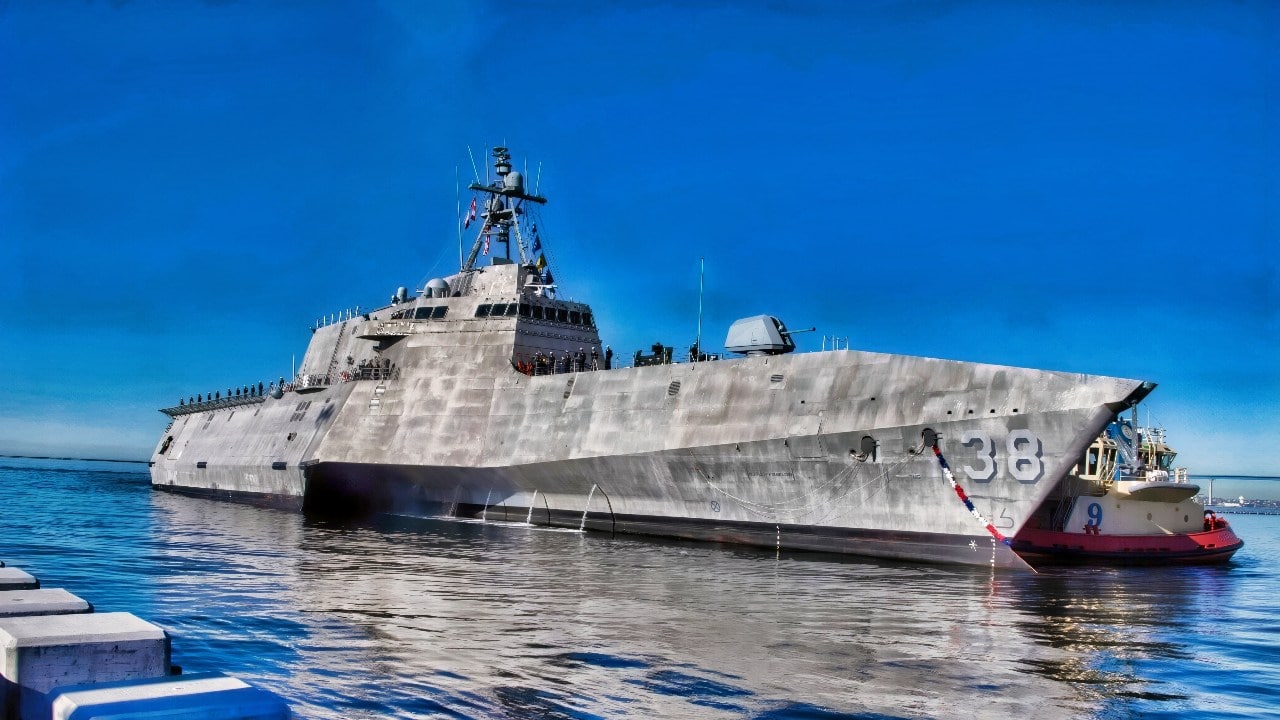
The Independence-Variant littoral combat ship USS Pierre (LCS 38) prepares to moor pier side during its arrival to its homeport of San Diego for the first time, Dec. 5, 2025. Pierre, the second U.S. Navy ship to bear this name, commissioned in Panama City, Fla. Nov. 15 as the final independence-variant LCS. Littoral combat ships are fast, optimally-manned, mission-tailored surface combatants that operate in near-shore and open-ocean environments, winning against 21st-century coastal threats.
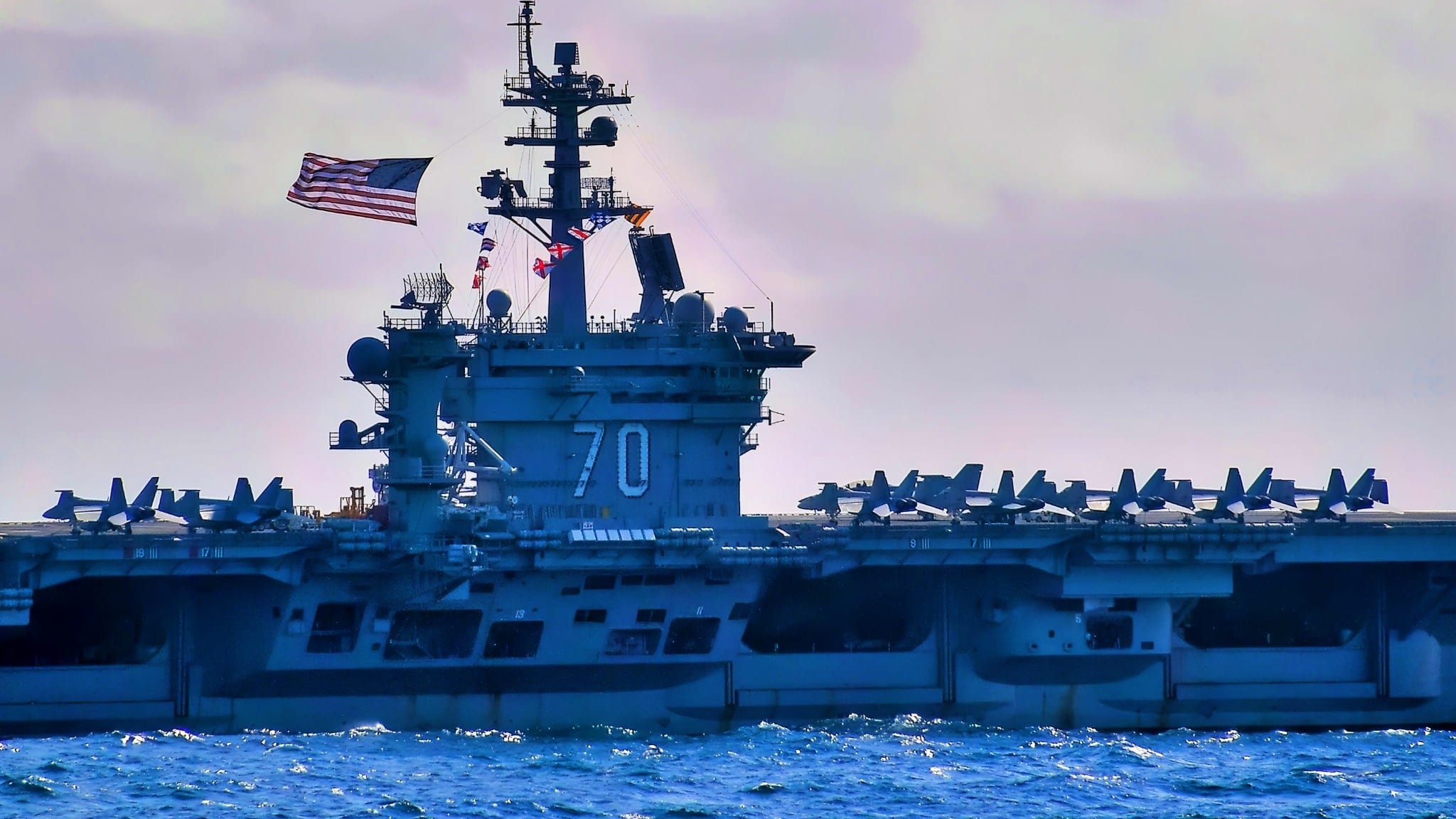
The Battle Ensign is flown aboard the Nimitz-class aircraft carrier USS Carl Vinson during an exercise with the Peru navy. Carl Vinson is supporting Southern Seas 2010, a U.S. Southern Command-directed operation that provides U.S. and international forces the opportunity to operate in a multi-national environment.
Defense budgets are negotiated documents shaped by service proposals, congressional committees, statutory caps, and appropriations cycles. A real defense budget constrains as much as it enables, and it reveals priorities by exclusion as much as inclusion.
The $1.5 trillion figure circulated on social media does none of this. It neither constrains nor allocates. It does not bind agencies or commit Congress. It does not even sketch a hierarchy of objectives. Treating it as the first step in a budgeting sequence misunderstands both the process and the intent behind the announcement.
Why This Is Not About Spending
Critiques that focus on what such a budget would do if enacted miss the point. The pronouncement is not a blueprint for expenditure. It is a statement designed to project strength.
Whether the money is ever requested in this form, let alone authorized or appropriated, is secondary. The political utility of the figure lies in its immediacy. It allows Trump to claim seriousness about defense without entering the institutional thicket where that seriousness would be tested.
Arguments about long-term effects, downstream consequences, or institutional outcomes presume a commitment that does not exist.
How the Pronouncement Should Be Read
Read properly, the $1.5 trillion figure is a signal aimed outward, not a document aimed inward. It speaks to voters and commentators, not to budget officers or service planners. Its function is to shape perception, not to organize action.
For defense-literate readers, the appropriate response is not to ask how the money would be spent, but why the number was chosen and why it was released in this form. The answer lies in Trump’s preference for symbolic strength over procedural process. The figure allows him to appear muscular and decisive without having to deal with the nitty-gritty of the budgetary system.

Lance Cpl. Alex Rowan, a combat engineer with 4th Combat Engineer Battalion, 4th Marine Division, stationed out of Bessemer, Ala., runs to take cover before the Anti-Personnel Obstacle Breaching System detonates during the SAPPER Leaders Course aboard Camp Lejeune, N.C., June 26, 2015. During the course, the Marines used assault and breaching techniques to clear a wire obstacle using line charges that utilized C4 explosives and their APOBS. (U.S. Marine Corps photo by Cpl. Krista James/Released)

U.S. Marines with Bravo Company, 2d Assault Amphibious Battalion, 2d Marine Division approach the USS Wasp (LHD 1) in assault amphibious vehicles off of Onslow Beach during a three-day ship-to-shore exercise on Camp Lejeune, N.C., June 27, 2020. During the exercise, the Marines conducted amphibious maneuvers and dynamic ship-to-shore operations with the USS Wasp (LHD 1). (U.S. Marine Corps photo by Lance Cpl. Jacqueline Parsons)
The Right Way to Understand It
The danger of the $1.5 trillion pronouncement lies not in what it would do if it actually came to pass, but in how it is misread. Treating it as kicking off a serious budget process confers on it a credibility it does not claim and does not deserve.
This is not the first step in a serious budget process. It is merely another act in the ongoing melodrama that is the Trump presidency. Analysts who attempt to extract priorities or next steps from it are not uncovering hidden meaning.
They are playing the role of the chorus in what might yet turn out to be nothing more than a classical tragedy updated for modern times.
The number was meant to be seen, not worked through. It signals seriousness without accepting constraint, ambition without commitment, and strength without design. Taken on those terms, it makes sense. Taken on any other, it does not.
About the Author: Dr. Andrew Latham
Andrew Latham is a non-resident fellow at Defense Priorities and a professor of international relations and political theory at Macalester College in Saint Paul, MN. You can follow him on X: @aakatham.