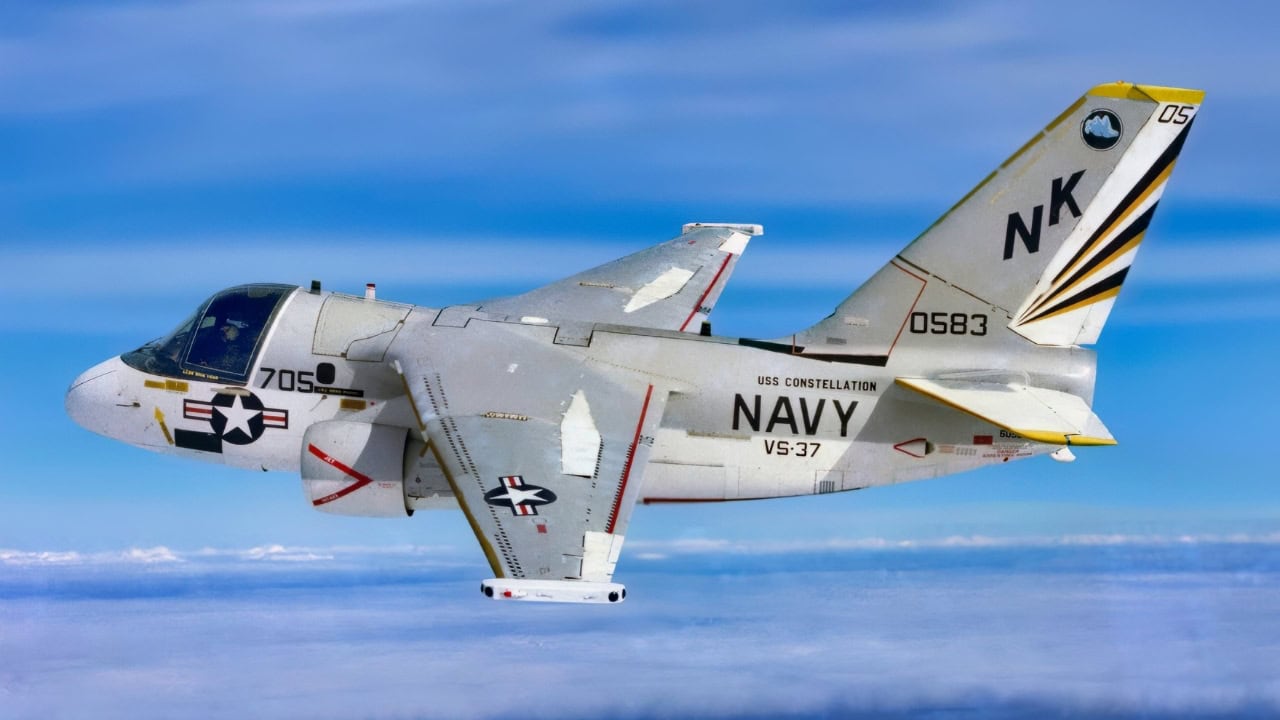
Summary and Key Points: The S-3 Viking was a capable Cold War-era carrier-based submarine hunter, but it was ultimately retired because its survivability and upgrade margin couldn’t keep pace with evolving threats.
-The aircraft’s early configuration lacked key defensive systems, and its speed and self-protection limits left it vulnerable against modern missiles and faster fighters.
-While the Viking gained new weapons over time, it couldn’t be economically redesigned to carry the sensor suite, sonobuoy capacity, and networked surveillance tools that define the P-8 Poseidon.
-The Navy shifted the ASW mission to newer platforms better suited for long-range detection and strike, even as the S-3 left a strong combat record, including operations during Iraq.
The S-3 Viking’s Fatal Flaw: Too Slow, Too Exposed, And Too Hard To Upgrade
The famous Cold-War era S-3 Viking submarine-hunting aircraft had many positive attributes. But it was retired in the early 2000s because of flaws that compromised the jet’s survivability against faster, more advanced rivals.
The S-3 sub-hunter flew at speeds of more than 500 miles per hour and operated with a crew of four. The S-3A model lacked a radar warning receiver, and it had no flares or decoys to protect against missile attacks. It was also much too slow to out-fly rival fighter jets. All of these factors made it vulnerable in combat.
The Viking was removed from its front-line status aboard U.S. Navy carriers in 2009. Its submarine-hunting role was overtaken by the P-3C Orion and F-8 Poseidon. The reason is clear enough: Rival submarine, surface, and air threats had evolved enough to decrease the S-3’s ability to perform its missions.
Upgrade Limits?
Legacy platforms are regularly upgraded to address emerging threats, but upgrades were no longer enough to keep the S-3 flying. It was not feasible to equip the S-3 with the kinds of sonobuoys, sensors, weapons, and radar that were later built into the P-8. The S-3 Vikings were upgraded with AGM-84 Harpoon missiles, but could not be configured to integrate the kinds of sensors and torpedoes now arming the P-8.
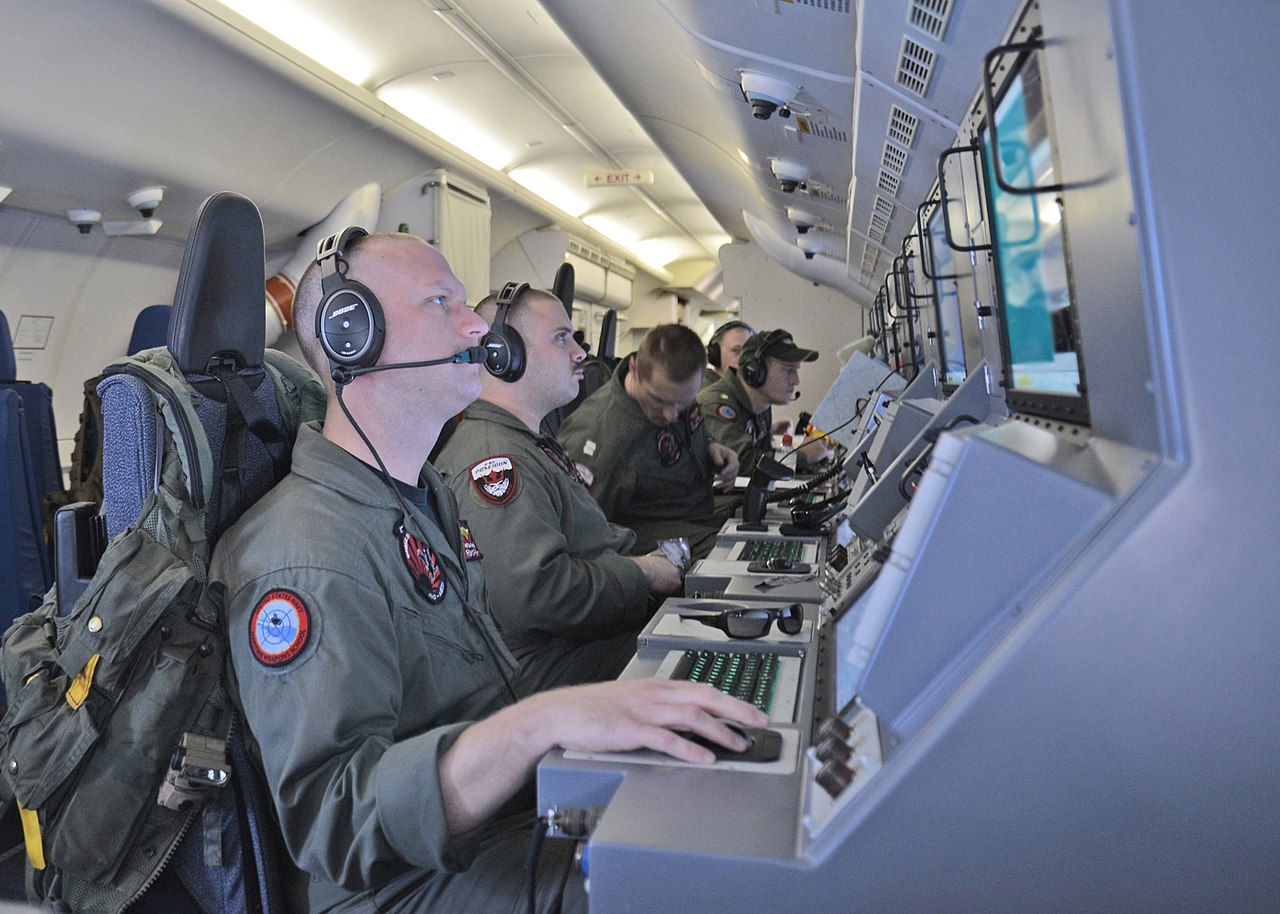
(March 16, 2014) Crew members on board a P-8A Poseidon assigned to Patrol Squadron (VP) 16 man their workstations while assisting in search and rescue operations for Malaysia Airlines flight MH370. VP-16 is deployed in the U.S. 7th Fleet area of responsibility supporting security and stability in the Indo-Asia-Pacific. (U.S. Navy photo by Mass Communication Specialist 2nd Class Eric A. Pastor/Released.
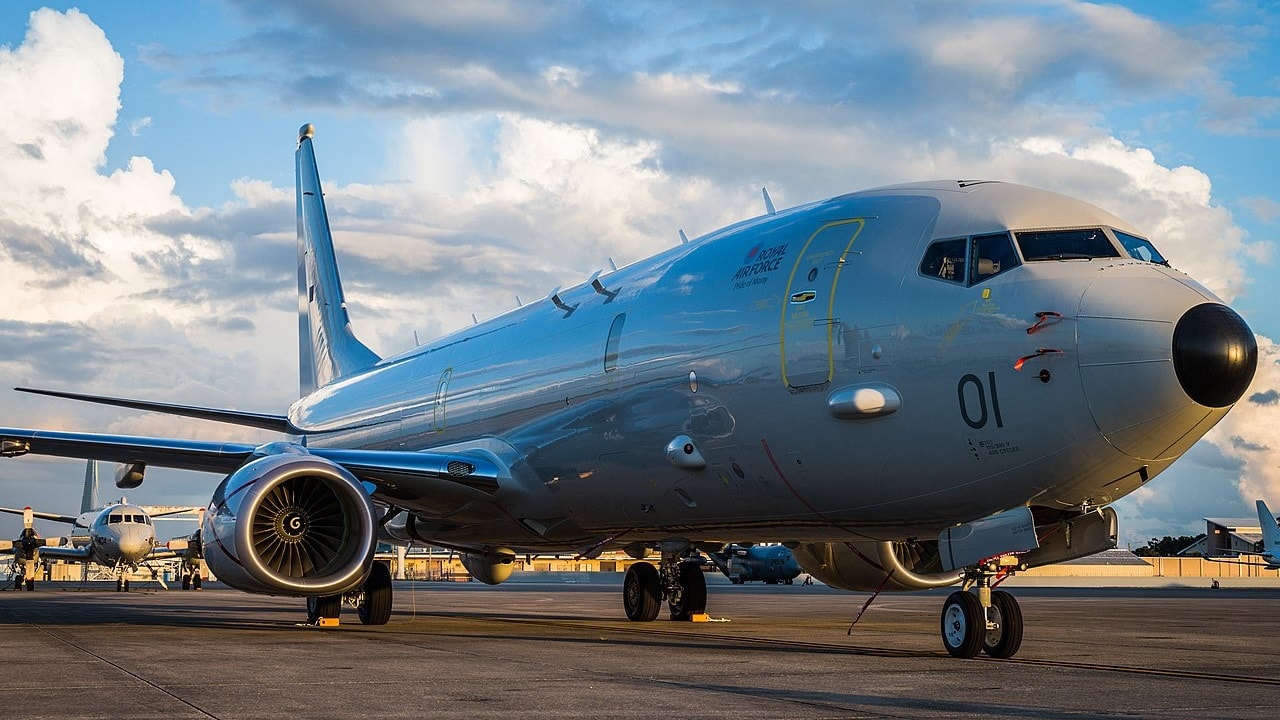
P-8 Poseidon. Image Credit: Royal Navy.

A US Navy P-8 Poseidon, tail number 431, on approach at Tinker AFB in Oklahoma City, Oklahoma on April 15, 2015.
S-3 Deficits vs P-8
The S-3’s eventual inability to keep up with changing threats can perhaps best be understood by looking at the advanced technologies woven into the P-8 Poseidon. The P-8A, a militarized variant of Boeing’s 737-800, includes torpedo and Harpoon weapon stations, 129 sonobuoys, and an in-flight refueling station.
It can fly over longer ranges, has greater depth penetration for detecting enemy submarines, and offers various attack options.
Given that a P-8 can conduct sonobuoy sub-hunting missions at altitudes higher than those of surface ships, helicopters, or other lower-flying aircraft, it can operate with reduced risk of enemy surface fire and swarming small-boat attacks.
Unlike many drones and other intelligence, surveillance, and reconnaissance assets, a Poseidon can not only find and track enemy submarines—it can attack and destroy them as well.
P-8 Sensors
Alongside its AN/APY-10 surveillance radar and MX-series electro-optical/infrared cameras optimized to scan the ocean surface, the Poseidon’s air-parachuted sonobuoys can find submarines at various depths beneath the surface.
The surveillance aircraft can operate as one node within a broader sub-hunting network including surface ships, unmanned surface vessels, aerial drone-mounted maritime sensors, and submarines. As part of its contribution to these interconnected sub-hunting missions, the Poseidon can use active electronically scanned array radar, synthetic aperture radar, and a ground moving target indicator.

A Lockheed S-3A Viking aircraft of anti-submarine squadron VS-31 in flight with an ASQ-81 Magnetic Anomaly Detection (MAD) boom extending from the tail section. The aircraft was assigned to Carrier Air Wing Seven (CVW-7) aboard the USS Dwight D. Eisenhower (CVN-69) in 1983.
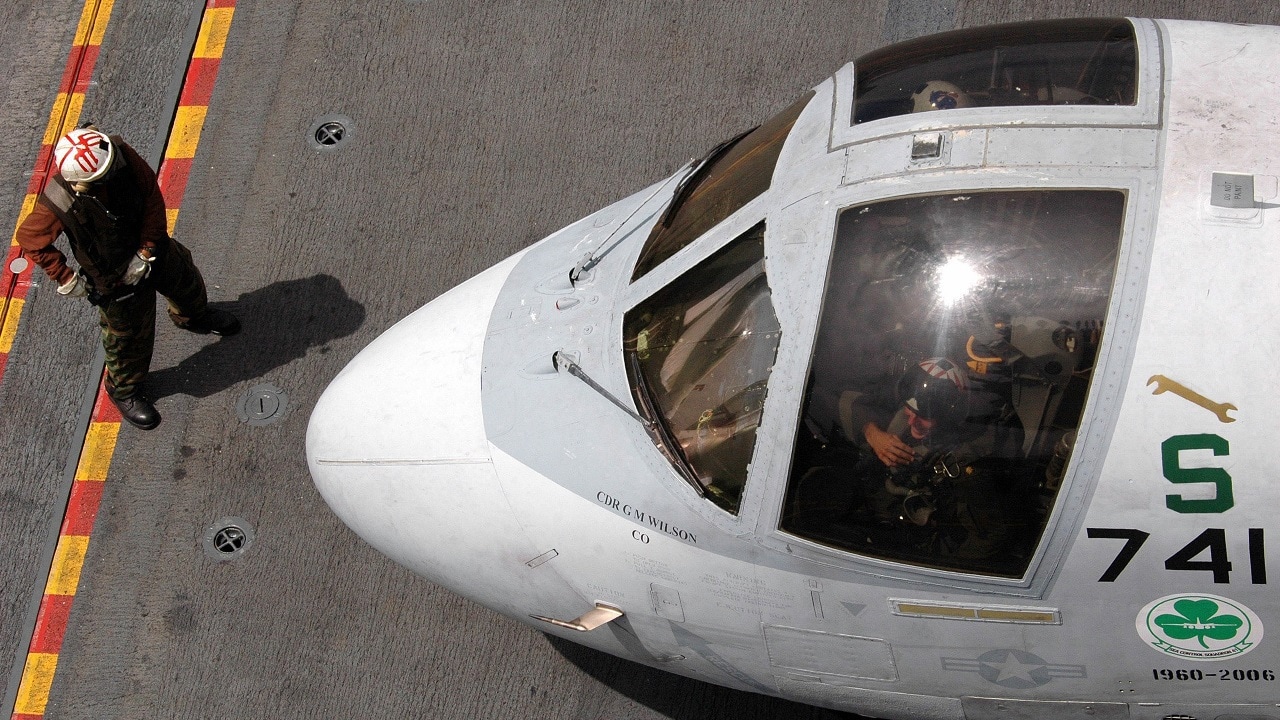
A U.S. Navy S-3B Viking aircraft assigned to the”Shamrocks”of Sea Control Squadron 41 prepares for launch from the U.S. Navy Aircraft Carrier USS NIMITZ (CVN 68).
Given the Poseidon’s fundamental role as a high-tech surveillance aircraft—it earned renown for capturing video of artificial islands being built by the Chinese in the South China Sea in the 2010s—it is easy to understand how its advanced sensors, sonobuoys and weapons could anchor containment strategy against Chinese expansion, and even operate as a deterrent against China’s growing fleet of nuclear-armed ballistic-missile submarines.
S-3 Viking Iraq War
The limitations of the S-3 Viking, and its ultimate replacement with much more high-tech, capable sub-hunting technology, does nothing to erase its combat successes and commendable performance record.
During the early phases of Operation Iraqi Freedom, the S-3 Viking destroyed several Iraqi Navy assets in Basra, Iraq, by firing a Maverick air-to-surface missile.
Former President George W. Bush flew in the co-pilot seat of an S-3 Viking to the USS Abraham Lincoln in 2003 to deliver his famous “Mission Accomplished” speech onboard the carrier.
Summary and Key Points:
Kris Osborn is the President of Warrior Maven – Center for Military Modernization. Osborn previously served at the Pentagon as a highly qualified expert in the Office of the Assistant Secretary of the Army—Acquisition, Logistics & Technology. Osborn has also worked as an anchor and on-air military specialist at national TV networks. He has appeared as a guest military expert on Fox News, MSNBC, The Military Channel, and The HistoryChannel. He also has a Master’s Degree in Comparative Literature from Columbia.