
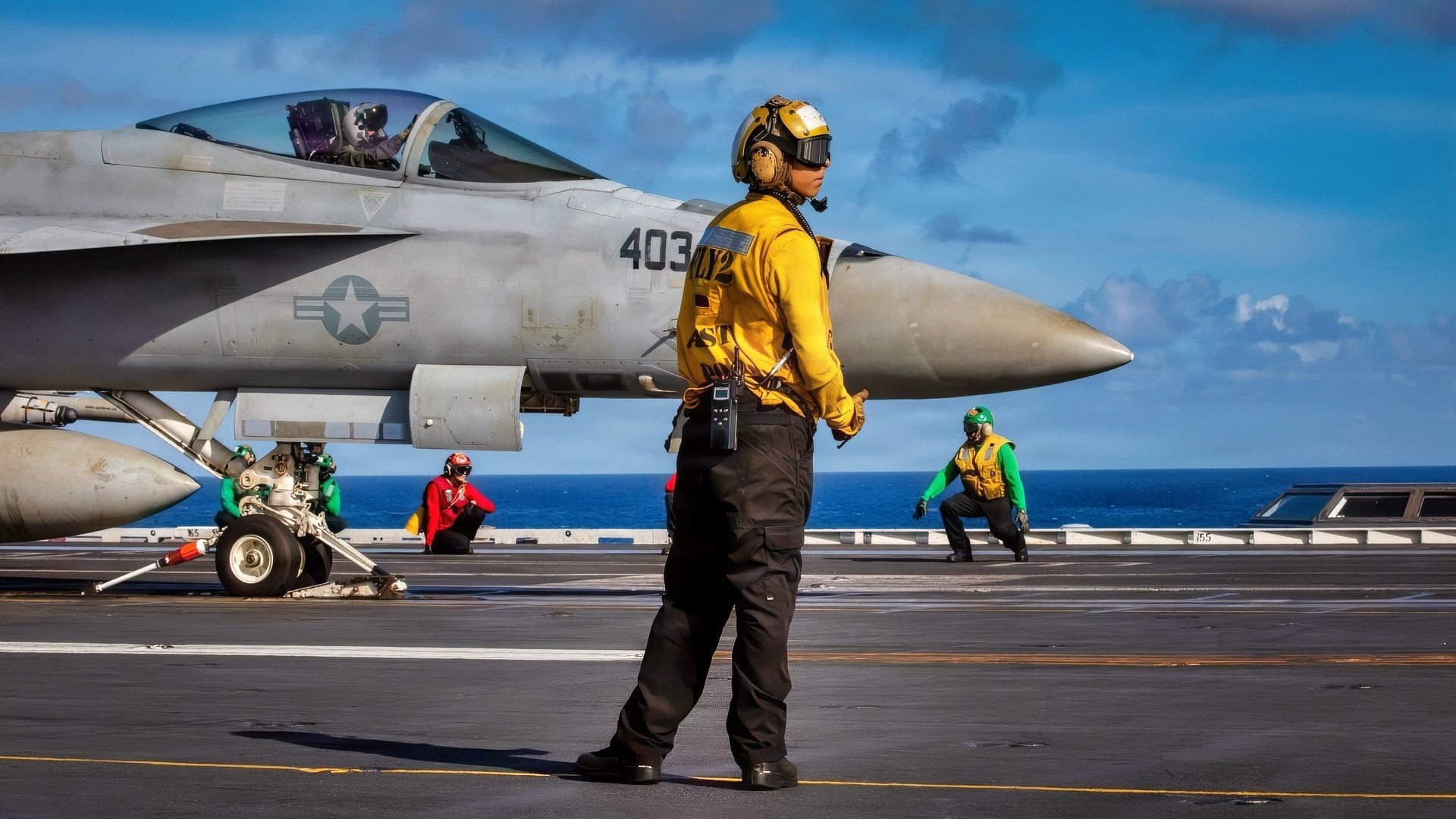
Summary and Key Points: Boeing’s F/A-18E/F Super Hornet is edging toward the end of the production road after Northrop Grumman completed the final aft/center fuselage sections and vertical tails for the last new-build jets.
-A United States Navy buy of 17 additional airframes extended the line’s runout to 2027, but the countdown is now tangible.
-The EA-18G Growler variant has stopped new production, yet modernization work continues, including Block III upgrades and new electronic-attack capabilities.
-With the Super Hornet set to serve on for years, the Navy’s longer-term air wing future hinges on scaling the F-35C and pushing the sixth-generation F/A-XX through budget and industrial constraints.
The Last F/A-18 Super Hornet Is Being Built: The 2027 Shutdown Clock Is Now Ticking
“And now, the end is near/And so I face the final curtain/My friend, I’ll make it clear/I’ll state my case, of which I am certain/I’ve lived a life that’s full/I’ve traveled each and every highway/And more, much more/I did it, I did it my way”
Thus goes the opening verse of the classic song “My Way,” penned by Paul Anka and popularized by Frank Sinatra. It is a fitting tune to commemorate the metaphorical swan song of one of the U.S. Navy’s most battle-proven warbirds, the F/A-18E/F Super Hornet.
The pending retirement of the Super Hornet isn’t exactly earth-shattering news. After all, this writer discussed the subject back in November. But the F/A-18’s pending departure is starting to feel more real now that the fighter’s final fuselages are being built.
Bottom Line Up Front (BLUF)
The big news comes to us from Joseph Trevithick of The War Zone: “Boeing’s F/A-18E/F Super Hornet production line is one major step closer to shuttering with the completion of the last batch of fuselage sections and vertical tails for those jets by subcontractor Northrop Grumman.
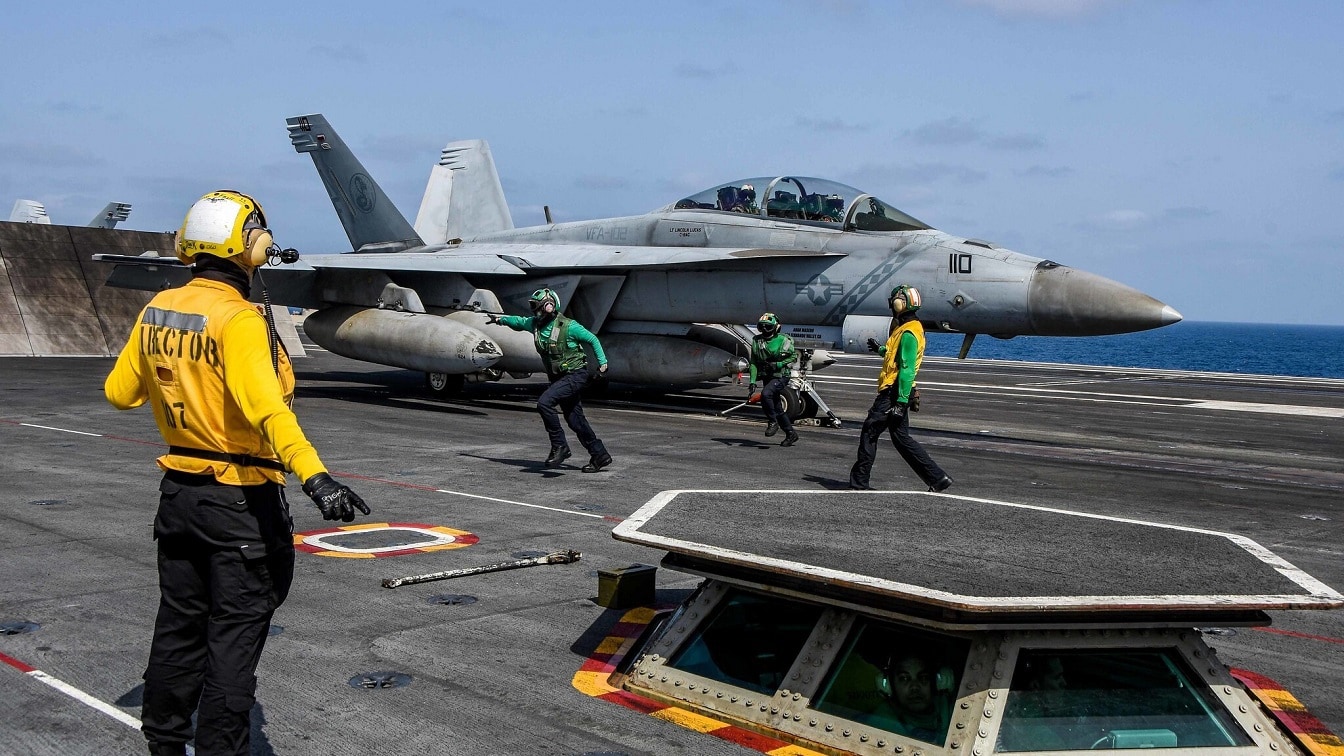
ARABIAN SEA (June 28, 2021) Sailors prepare an F/A-18F Super Hornet attached to the “Diamondbacks” of Strike Fighter Squadron (VFA) 102 for launch on the flight deck of the aircraft carrier USS Ronald Reagan (CVN 76) during flight operations in the Arabian Sea, June 28, 2021. Ronald Reagan is deployed to the U.S. 5th Fleet area of operations in support of naval operations to ensure maritime stability and security in the Central Region, connecting the Mediterranean and Pacific through the western Indian Ocean and three strategic choke points. (U.S. Navy photo by Mass Communication Specialist Seaman Oswald Felix Jr.) 210628-N-BR419-1062
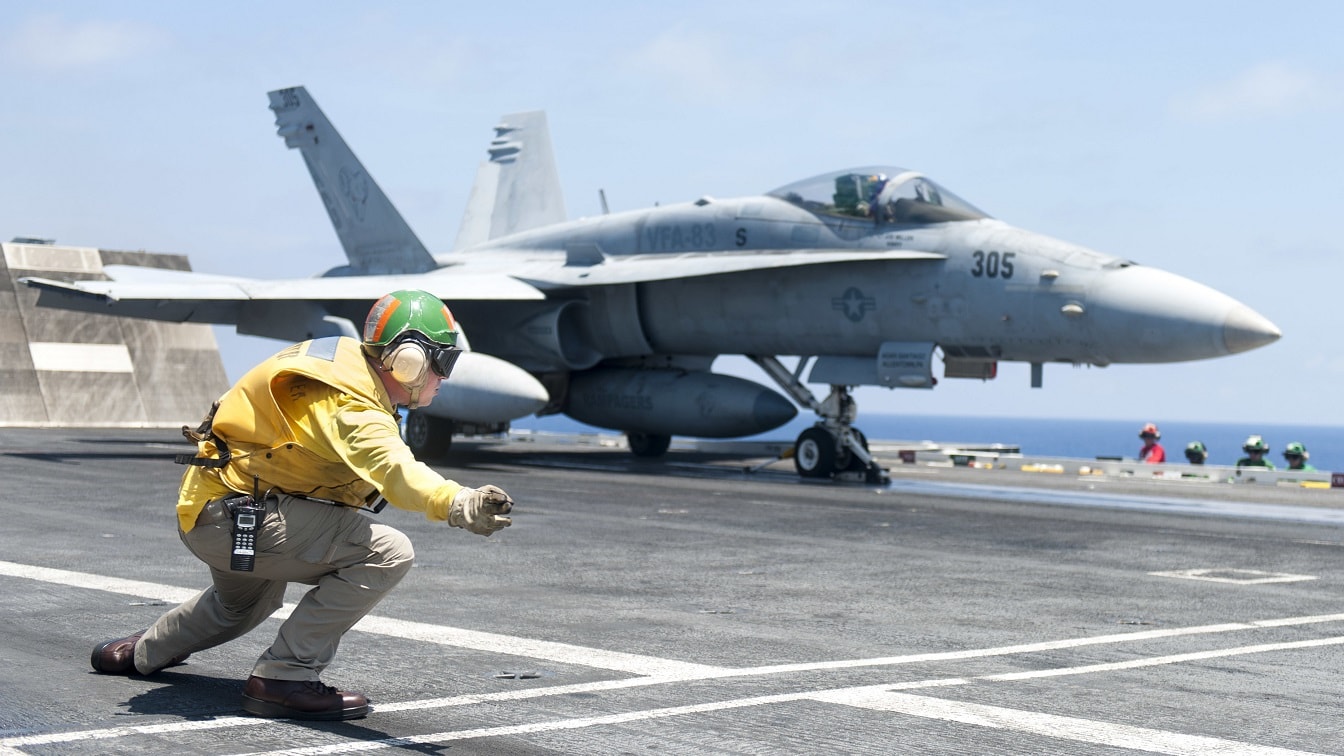
(June 15, 2015) Lt. B. J. Burnham signals to launch an F/A-18C Hornet, assigned to the “Rampagers” of Strike Fighter Squadron (VFA) 83, on the flight deck of aircraft carrier USS Harry S. Truman (CVN 75). Truman is underway conducting Tailored Ship’s Training Availability (TSTA) off the east coast of the United States. TSTA is the first combined training event of a ship’s inter-deployment training cycle that tests and evaluates shipboard drills, including general quarters, damage control, medical and firefighting. Upon successful completion of TSTA, Truman will be considered proficient in all mission areas. (U.S. Navy photo by Mass Communication Specialist 2nd Class K. H. Anderson/Released)
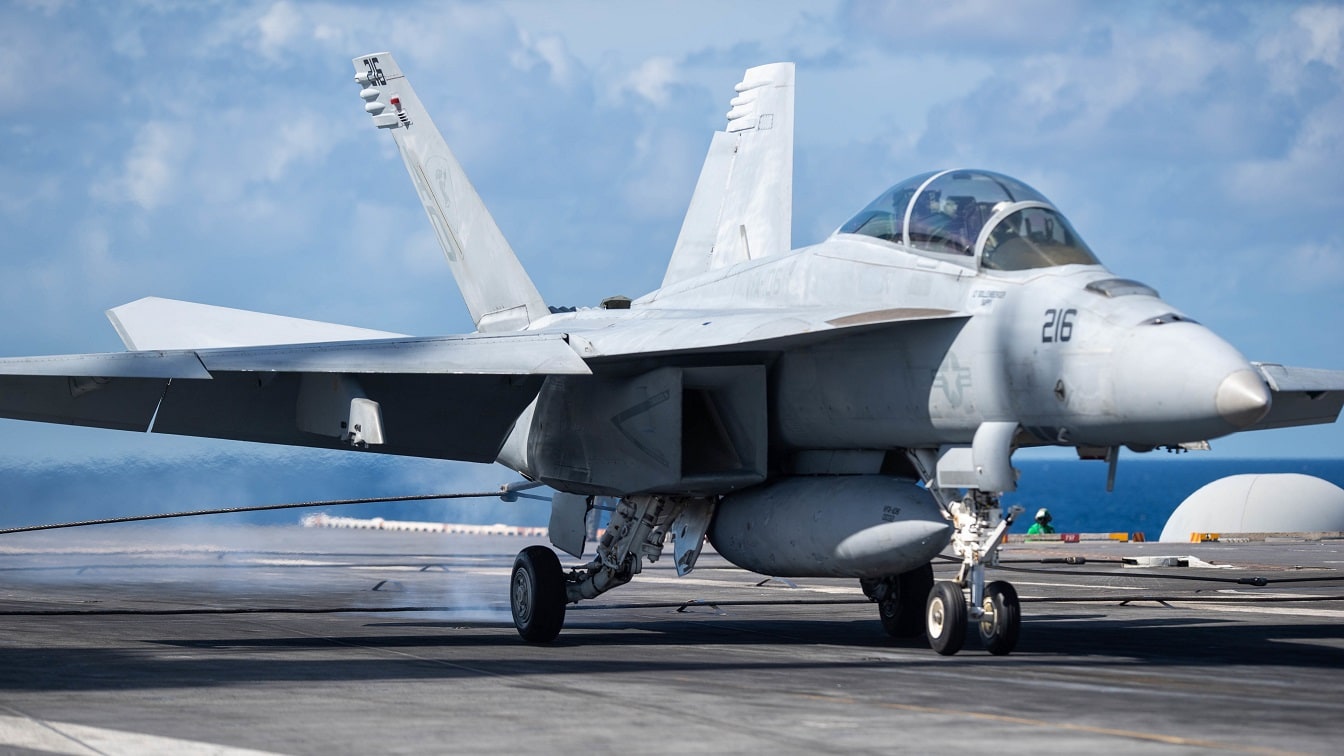
An F/A-18F Super Hornet, assigned to Strike Fighter Squadron (VFA) 106, catches an arresting gear wire while landing on the flight deck of the aircraft carrier USS John C. Stennis (CVN 74) in the Atlantic Ocean, Nov. 4, 2019. The John C. Stennis is underway conducting routine operations in support of Commander, Naval Air Force Atlantic. (U.S. Navy photo by Mass Communication Specialist 2nd Class Grant G. Grady)
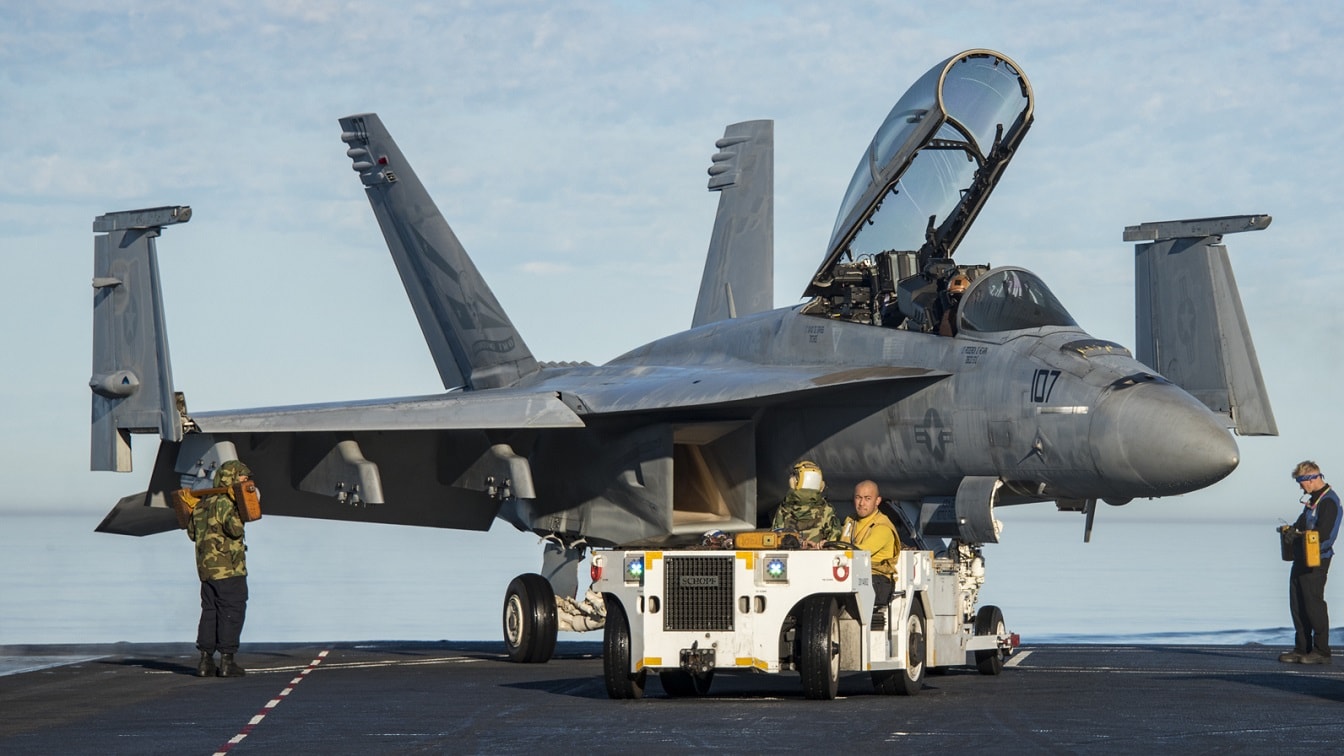
(Jan. 8, 2017) Sailors assigned to the aircraft carrier USS Carl Vinson (CVN 70) transport an F/A-18F Super Hornet from the “Bounty Hunters” of Strike Fighter Squadron (VFA) 2 across the flight deck. The Carl Vinson Carrier Strike Group (CSG) will report to U.S. 3rd Fleet, headquartered in San Diego, while deployed to the western Pacific as part of the U.S. Pacific Fleet-led initiative to extend the command and control functions of 3rd Fleet into the region. (U.S. Navy photo by Mass Communication Specialist 2nd Class Sean M. Castellano/Released)
“A Boeing spokesperson told TWZ ‘NG has now completed the final aft/center fuselage section for the final new-build F/A-18 Super Hornet fighter aircraft.’”
Boeing had plans in 2023 to shut down the F/A-18 production line in 2025. However, thanks to a U.S. Navy order for 17 more airframes in 2024, the timeline was pushed back to 2027.
Even Movie Magic Can’t Save the Super Hornet
So, in other words, the F/A-18E/F is being put out to pasture a mere five years after being cinematically immortalized in the 2022 box office blockbuster Top Gun: Maverick.
Movie magic only goes so far.
But What About the Growler?
Trevithick also mentions the EA-18G Growler, the electronic warfare (EW) version of the Super Hornet, noting that the manufacturer “has already stopped building EA-18G Growlers,” but also quoting the Boeing spokesperson as adding, “’However, we continue to develop advanced capabilities and upgrades for the global F/A-18 Super Hornet and EA-18G Growler fleet. Throughout the next decade, all Block II Super Hornets in Service Life Modification will receive the Block III capability suite. Boeing will also continue to add advanced electronic attack capability as part of ongoing Growler modifications.’”
There are no current plans in place to retire the Growler that this writer is aware of. In fact, back in March 2025, the Navy refused to even move its Growlers from Washington State’s Naval Air Station Whidbey Island to Naval Air Facility El Centro in the Southern California desert—let alone retire them.
And who could blame Navy leaders for being reluctant to retire the Growler? The warbird just proved its worth once again in Operation Absolute Resolve, the mission to capture Venezuelan dictator President Nicolás Maduro.
However, upgrades to the Growler’s EW pods are lagging behind, with former Secretary of the Air Force Frank Kendall III being quoted in the Wall Street Journal as saying, “Progress in the program has been painfully slow.”
F/A-18-E/F Super Hornet Backstory in Brief…and Where To From Here?
It was after the cancellation of the A-12 Avenger II in 1991 that the U.S. Navy purchased the F/A-18E/F Super Hornet. The jet ended up replacing not only the F-14 Tomcat, but also the venerable A-6 Intruder ground-attack plane.
However, thanks to that A-12 cancellation, the Navy would go without a stealth warbird for about three more decades—until February 28, 2019, when the F-35C finally attained Initial Operational Capability.
Now, with the Super Hornet program coming to a close, the urgency increases for Navy leaders to fund, build, and deploy the sixth-generation F/A-XX project as a supplement and complement to the F-35C. Time will tell if the F/A-XX survives the budgetary turf wars.
Meanwhile, like the U.S. Air Force’s A-10 Warthog before it, the F/A-18E/F is not going away overnight. The famous poem by Welshman Dylan Thomas comes to mind here:
“Do not go gentle into that good night/Old age should burn and rave at close of day/Rage, rage against the dying of the light…Wild men who caught and sang the sun in flight/And learn, too late, they grieved it on its way/Do not go gentle into that good night…Grave men, near death, who see with blinding sight/Blind eyes could blaze like meteors and be gay/Rage, rage against the dying of the light.”
The Super Hornet’s crew members live up to theThomas’s exhortations as they continue to put their beloved planes through their paces in combat, notably in air strikes against Houthis in Yemen.
According to the World Directory of Modern Military Aircraft, the U.S. Navy currently has 421 F/A-18E/Fs in the frontline combat role, 128 more airframes in the trainer role, and 76 units currently on order. They also have 153 EA-18Gs in the fleet.
About the Author: Christian D. Orr, Defense Expert
Christian D. Orr is a Senior Defense Editor. He is a former Air Force Security Forces officer, Federal law enforcement officer, and private military contractor (with assignments worked in Iraq, the United Arab Emirates, Kosovo, Japan, Germany, and the Pentagon). Chris holds a B.A. in International Relations from the University of Southern California (USC) and an M.A. in Intelligence Studies (concentration in Terrorism Studies) from American Military University (AMU). He is also the author of the newly published book “Five Decades of a Fabulous Firearm: Celebrating the 50th Anniversary of the Beretta 92 Pistol Series.”