
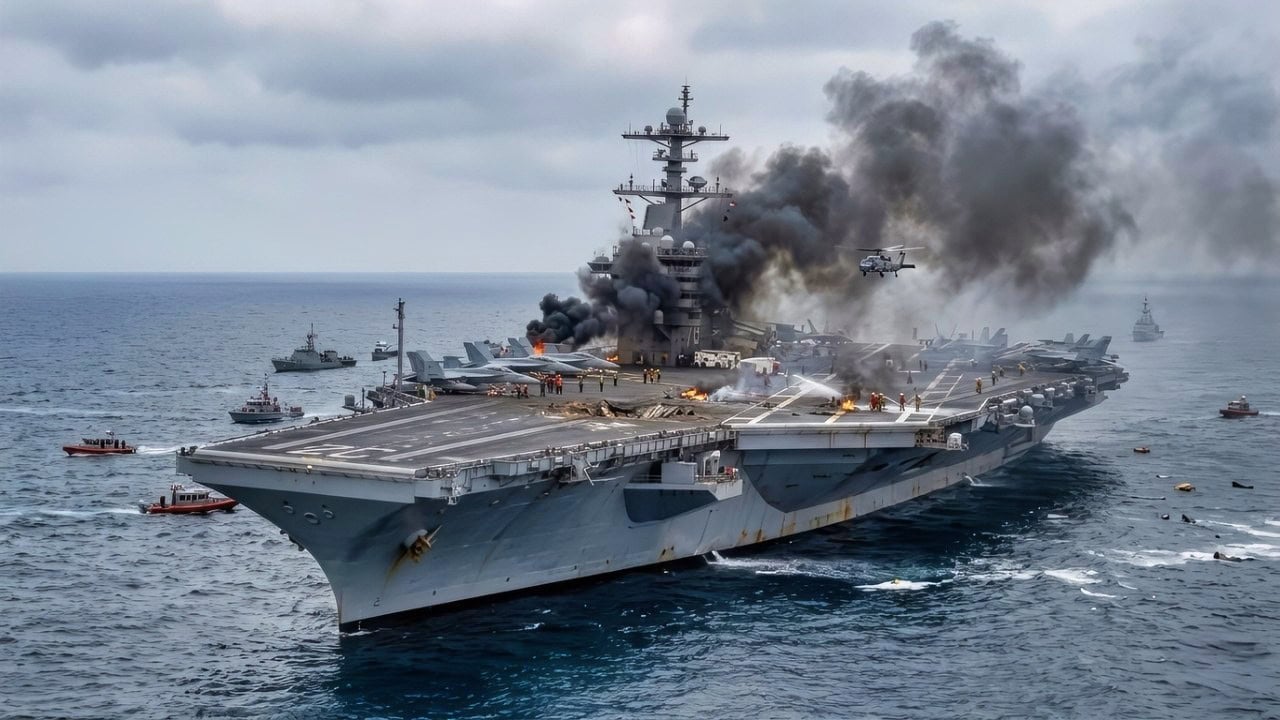
Summary and Key Points: Dr. Andrew Latham, a non-resident fellow at Defense Priorities, analyzes a high-stakes 2026 scenario: a kinetic Iranian missile strike on a U.S. Carrier Strike Group.
-While such an event would disable flight operations on a Gerald R. Ford-class or Nimitz-class carrier, the analysis details how the U.S. would maintain sortie pressure through submarines, long-range bombers, and land-based aircraft.
-This 19FortyFive report explores why Washington would maintain bounded objectives—focusing on nuclear infrastructure and ballistic missile degradation—rather than escalating to regime change, reinforcing the doctrine of strategic continuity over symbolic retaliation.
Why a Damaged Aircraft Carrier Won’t Stop the Campaign to Degrade Iran’s Nuclear Sites
Assume the United States is already well into a robust air and maritime campaign against Iran. Two carrier strike groups are operating in the theater alongside submarines and long-range bombers. Cruise missiles are already being launched from below the surface while carrier and land-based aircraft sustain steady sortie pressure.
The target list is wide but defined, running from nuclear facilities to ballistic missile infrastructure, air defenses, and the networks that support them. The campaign is forceful but bound. Regime change is not the mission. The objective is degradation and coercion.
Now, assume Iran lands a missile on one of those carriers. The ship survives, but flight operations stop. It withdraws from the fight.
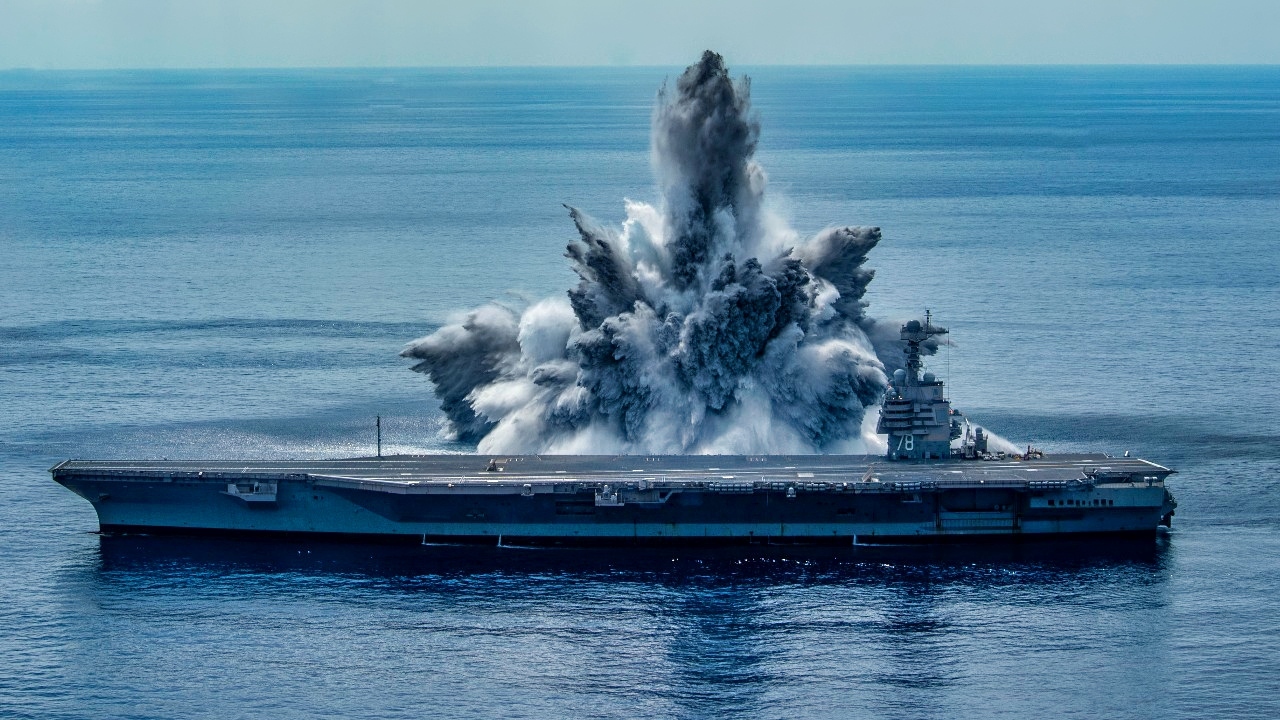
The aircraft carrier USS Gerald R. Ford (CVN 78) successfully completes the third and final scheduled explosive event of Full Ship Shock Trials while underway in the Atlantic Ocean, Aug. 8, 2021. The U.S. Navy conducts shock trials of new ship designs using live explosives to confirm that our warships can continue to meet demanding mission requirements under harsh conditions they might encounter in battle. (U.S. Navy photo by Mass Communication Specialist 3rd Class Novalee Manzella)
The immediate images would be dramatic. A U.S. carrier taking a hit during active operations is not a routine battlefield event. It would trigger anger in Washington and demands for retaliation that go well beyond the existing campaign. But the real reaction would unfold along more disciplined lines.
Sustaining the Campaign Under Fire
The first response would be operational.
A carrier knocked out of action reduces sortie generation at sea. That gap would not remain open for long.
The second carrier strike group would increase flight cycles. Land-based aircraft already engaged in the campaign would expand their tempo. Submarines positioned in the theater would sustain cruise missile launches against preexisting targets. If necessary, additional bomber assets could be introduced to maintain pressure.
The objective would not be symbolic revenge. It would be an even more aggressive suppression of the systems that enabled the strike. Coastal missile batteries, targeting radars, and command-and-control networks tied to maritime strike operations would move to the top of the targeting queue.
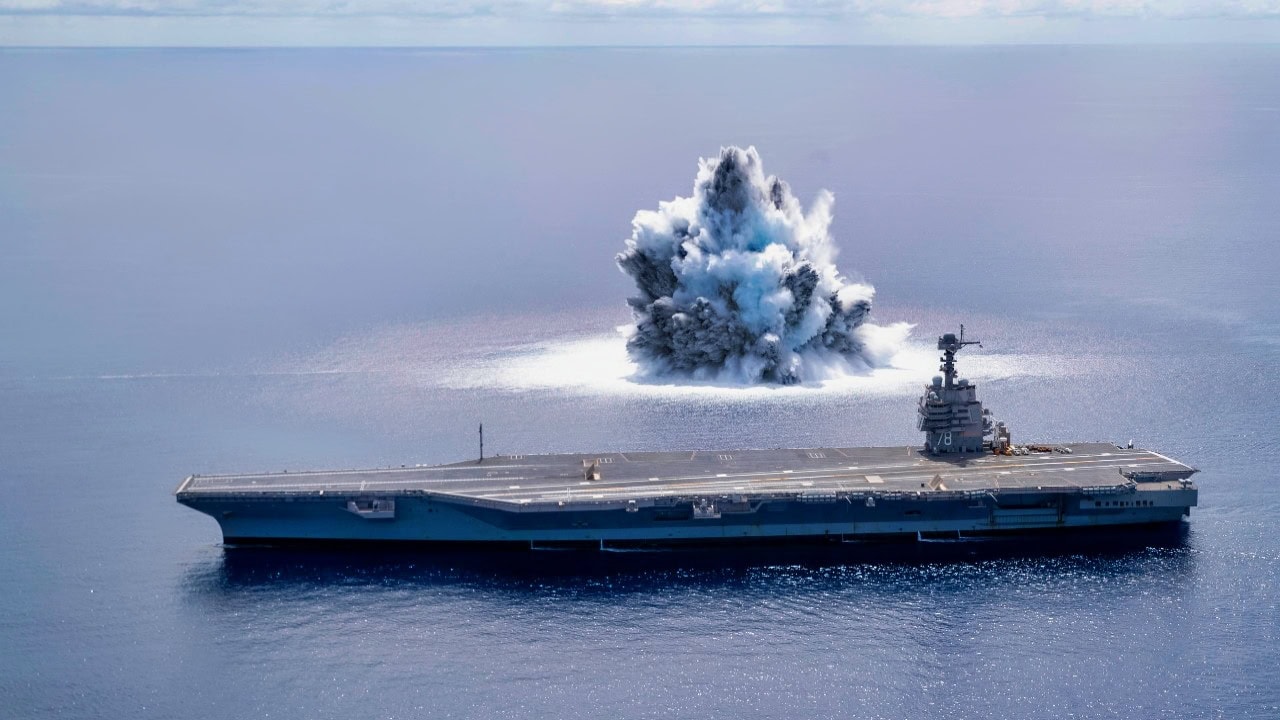
The aircraft carrier USS Gerald R. Ford (CVN 78) completes the first scheduled explosive event of Full Ship Shock Trials while underway in the Atlantic Ocean, June 18, 2021. The U.S. Navy conducts shock trials of new ship designs using live explosives to confirm that our warships can continue to meet demanding mission requirements under harsh conditions they might encounter in battle. (U.S. Navy photo by Mass Communication Specialist 3rd Class Riley B. McDowell)
Those categories were already part of the campaign’s logic. The aircraft carrier hit would simply elevate their priority.
Naval posture would adjust as well. Remaining high-value units would operate with greater attention to distance and geometry. Escort formations would tighten around assets engaged in sustained strike operations. Commanders would assume further anti-ship attempts and adapt accordingly. The campaign would continue under harsher conditions, but it would continue.
Why the War Would Not Widen
The more consequential question is whether the strike would widen the war.
It is easy to imagine political pressure pushing in that direction. A carrier is not just another platform. It is a visible expression of American power at sea. Members of Congress would call for expanded target sets. Some would argue that the strike proves that limited objectives are insufficient.
There would be calls to move beyond degrading missile capacity and begin threatening the regime itself.
Yet expanding the war’s political aims would remain strategically incoherent.
The United States entered the campaign with bounded objectives. It sought to degrade nuclear infrastructure and blunt ballistic missile capacity to coerce changes in regional behavior. A strike on an American carrier does not invalidate those aims. If anything, it reinforces the logic behind them. Iran’s ability to contest maritime operations underscores the importance of reducing that capability, not replacing the mission with one that requires a different kind of war.
Regime removal would introduce costs and commitments disconnected from the campaign’s design. It would require sustained strikes against leadership nodes and internal security forces, followed by consequences Washington has consistently avoided assuming. A damaged carrier does not make that pathway more attractive. It makes discipline more necessary.
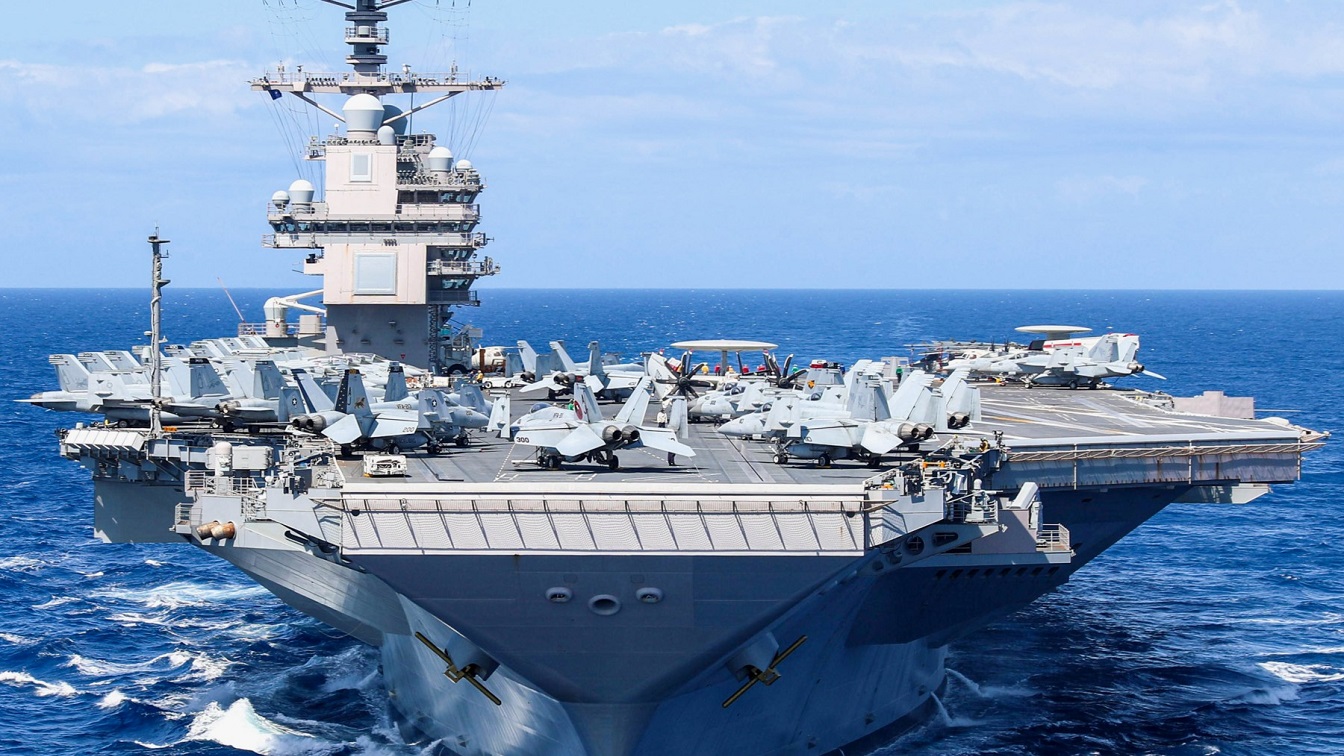
Ford-Class. Ford-Class Aircraft Carrier USS Ford.
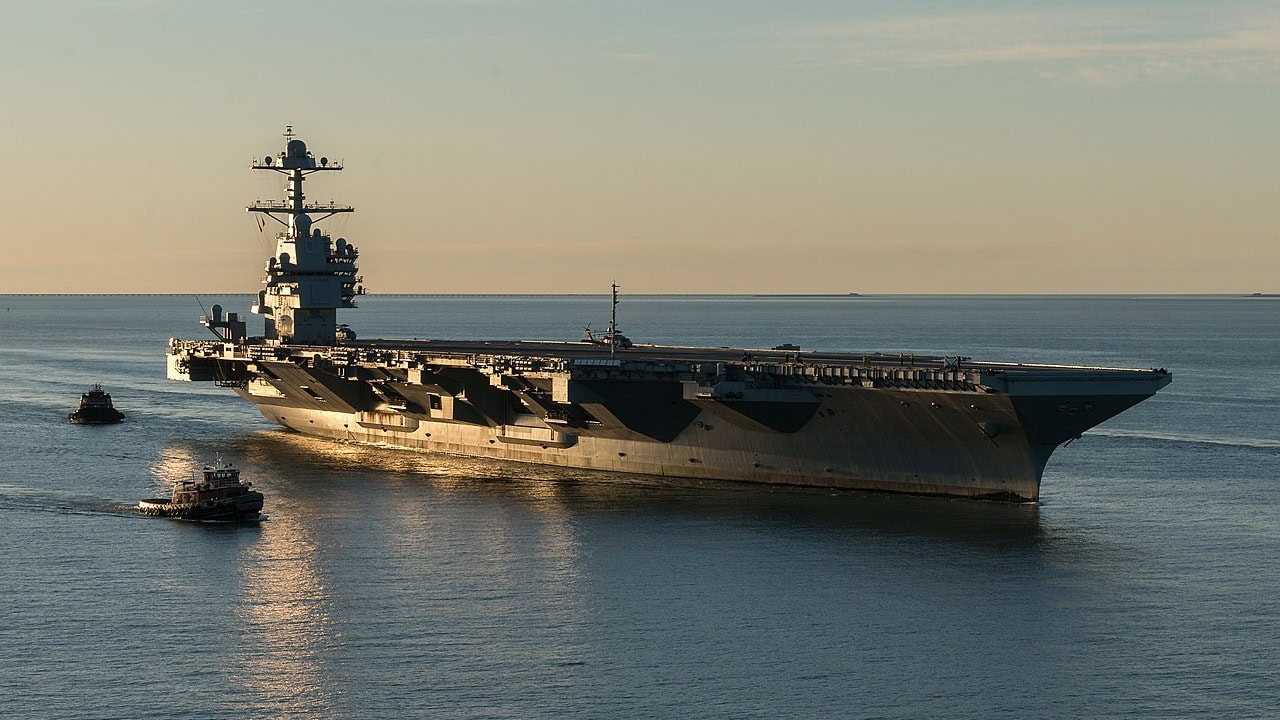
From 2017 – The aircraft carrier Pre-Commissioning Unit (PCU) Gerald R. Ford (CVN 78) pulls into Naval Station Norfolk for the first time. The first-of-class ship – the first new U.S. aircraft carrier design in 40 years – spent several days conducting builder’s sea trails, a comprehensive test of many of the ship’s key systems and technologies. (U.S. Navy photo by Matt Hildreth courtesy of Huntington Ingalls Industries/Released)
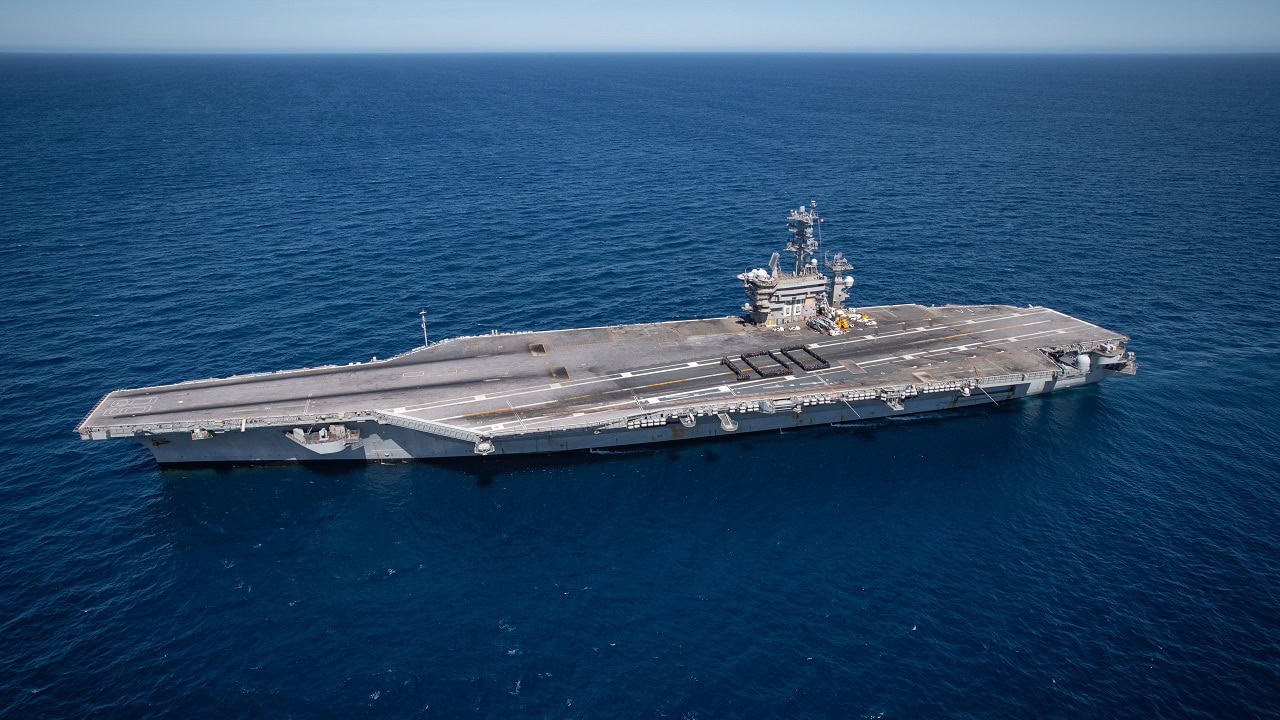
(Mar. 12, 2022) Sailors aboard USS Nimitz (CVN 68) assemble on the flight deck and form a human ‘100’ to commemorate the centennial of the aircraft carrier. On March 20, 1922 the former USS Jupiter (Collier #3) recommissioned as the USS Langley (CV 1), the U. S. Navy’s first aircraft carrier. One hundred years later, Nimitz and Ford-class aircraft carriers are the cornerstone of the Navy’s ability to maintain sea control and project power ashore. Nimitz is the first in its class and the oldest commissioned aircraft carrier afloat., carrying with it a legacy of innovation, evolution and dominance. Nimitz is underway in the 3rd Fleet Area of Operations. (U.S. Navy photo by Mass Communication Specialist 3rd Class Elliot Schaudt)
Credibility Measured Through Continuity
The broader geopolitical reaction would hinge less on the damage itself than on what followed. Allies would look for signs that American operations were slowing or contracting. Continued pressure on nuclear and missile targets would signal that tactical loss had not translated into strategic hesitation.
The message would not be invulnerability. It would be continuity.
Adversaries would draw their own conclusions. The question they would ask is not whether carriers can be hit. That has never been in doubt. The question is whether a hit constrains U.S. decision-making. If strike operations persist and naval presence remains visible, the signal is clear. American maritime power under fire is still American maritime power.
The Aircraft Carrier Debate Reignites
Inside Washington, the strike would reopen an argument that has never fully gone away. Critics of large-deck carriers would seize on the damage as confirmation that concentrated platforms face mounting risk in an environment defined by precision strike and persistent surveillance. They argue that the vulnerability exposed in combat is structural, not incidental.
The criticism would sharpen. It would not end the debate.
Carriers remain central to American warfighting because they generate sustained airpower from the sea and anchor maritime strike operations in ways no other platform fully replicates. Even in this scenario, the damaged ship would have helped set the tempo of the campaign and delivered a substantial share of its early strike volume.
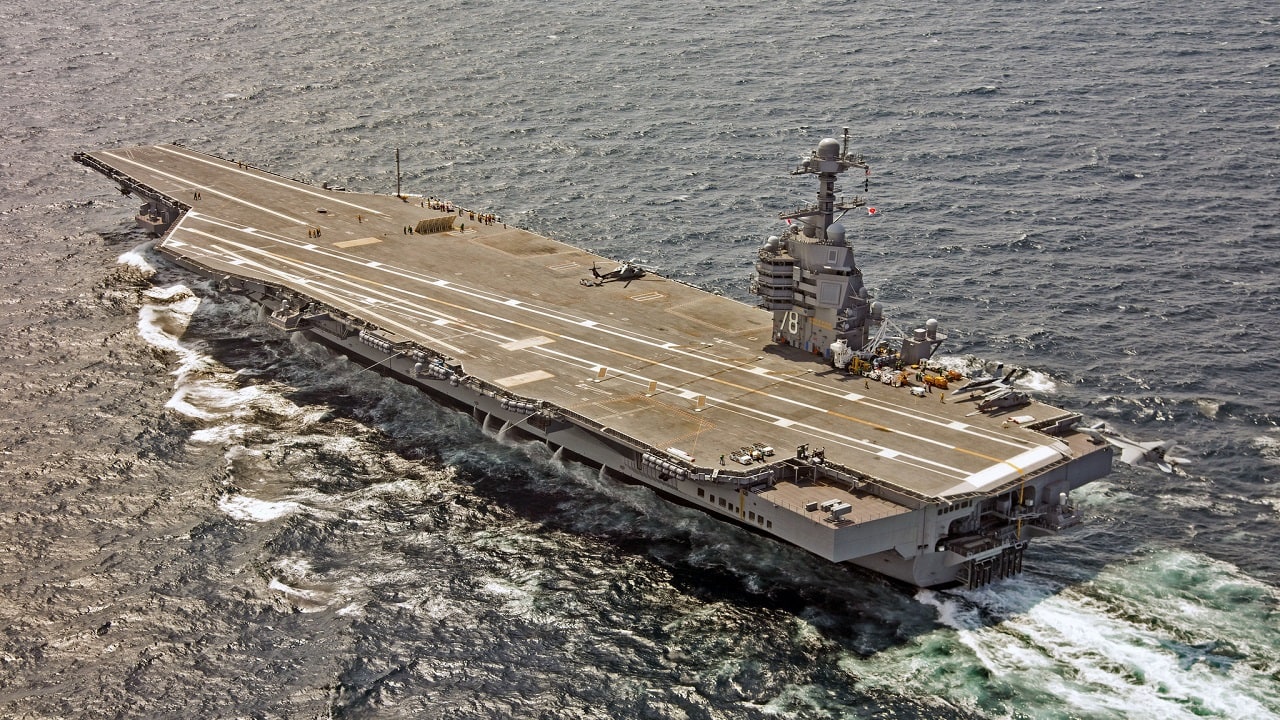
Ford-Class Aircraft Carrier Artist Rendering. Image Credit: Creative Commons.
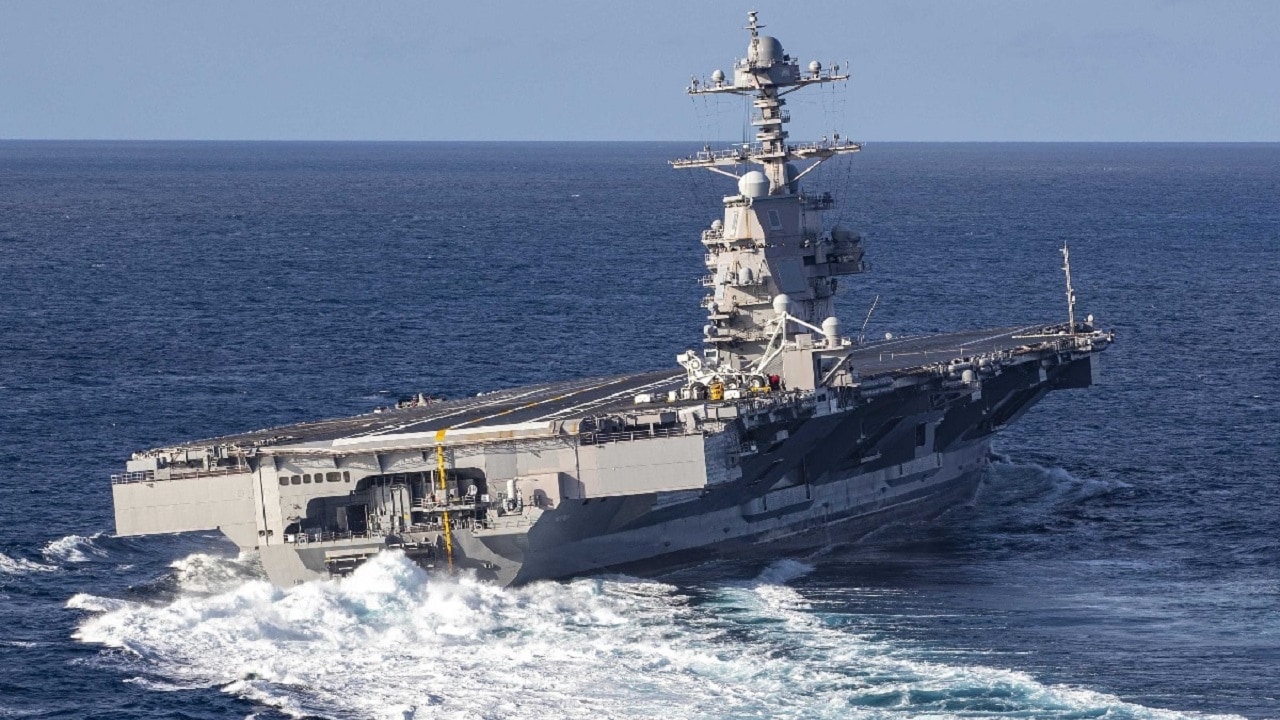
Ford-class Aircraft Carrier. Image Credit: US Navy.
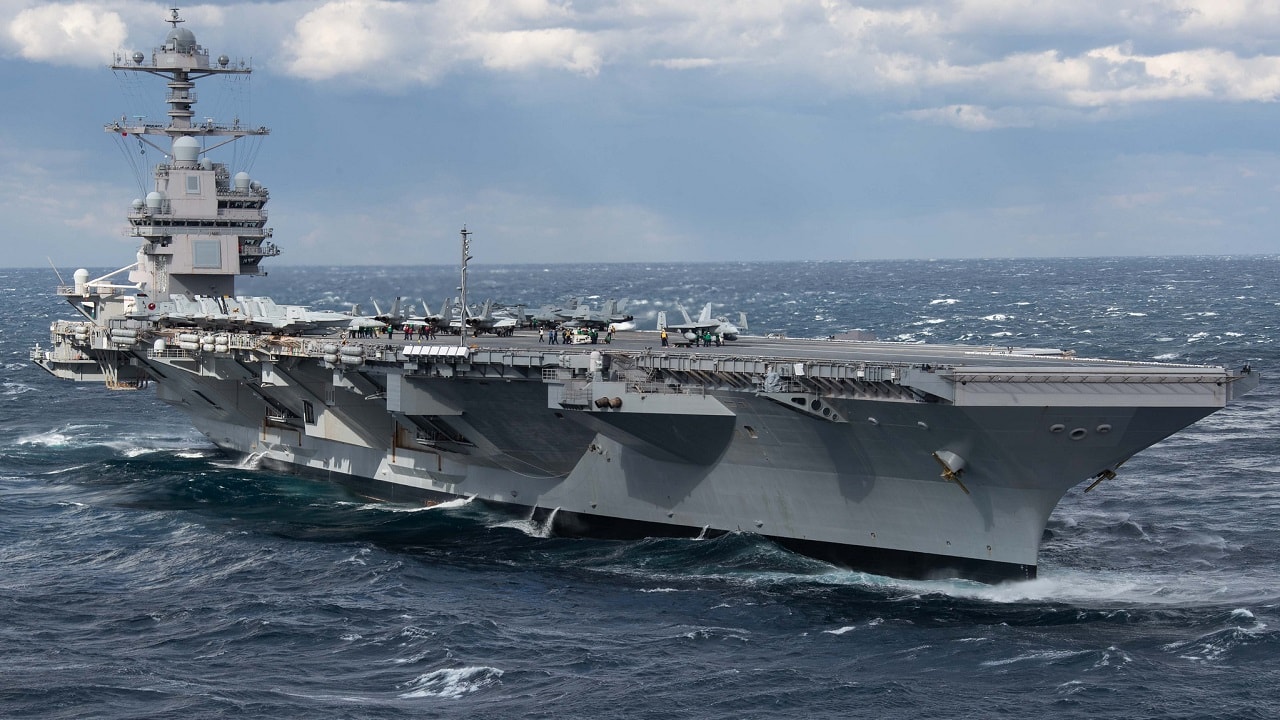
The aircraft carrier USS Gerald R. Ford (CVN 78) transits the Atlantic Ocean, March 26, 2022. Gerald R. Ford is underway in the Atlantic Ocean conducting flight deck certification and air wing carrier qualifications during the ship’s tailored basic phase before operational deployment.
That contribution does not disappear because the ship takes a hit. It forces closer examination of how carriers operate once the battlespace becomes fully contested.
Carrier employment has already been shifting under pressure from a more transparent battlespace. The flight deck still organizes the strike group, but it no longer operates as a self-contained source of decisive weight. Submarines, surface combatants, and land-based aircraft now feed directly into strike planning, tying the air wing to a wider mesh of sensors and shooters. Combat power is generated across a broader set of platforms than in earlier operating models and applied with closer attention to exposure and timing.
Uncrewed systems widen that mesh at the margins, extending awareness and assuming missions that once required manned persistence. The carrier’s effectiveness increasingly rests on how well it functions within this distributed architecture rather than on how much mass it can generate on its own.
A successful Iranian strike would accelerate that evolution. Programs aimed at extending reach and improving survivability would take on greater urgency. The argument in Washington would shift away from whether carriers belong in contested waters and toward how they are employed inside them.
Fighting Through the Shock
A disabled carrier in the midst of a robust U.S. offensive would intensify the campaign and test political discipline in Washington. It would not redefine the war’s objectives. The effort to degrade Iran’s nuclear and missile capacity would continue under pressure.
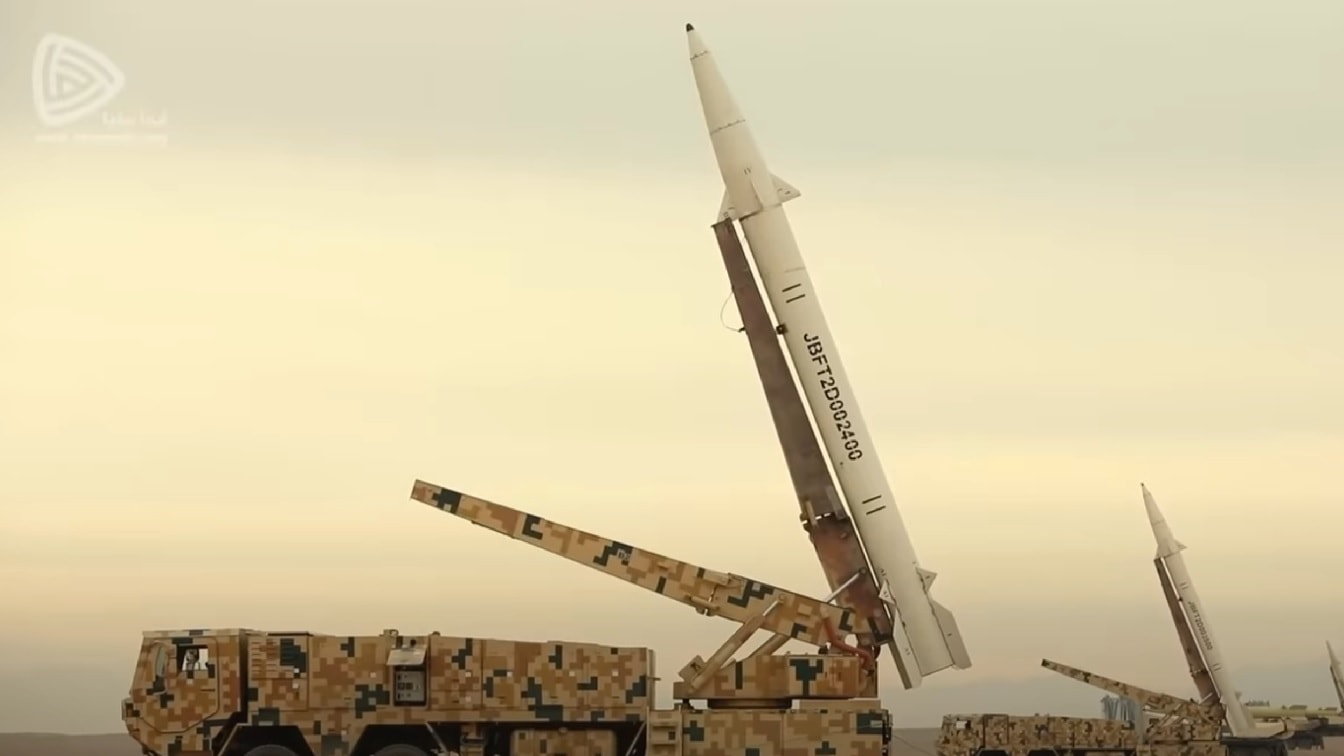
Iran Missiles from Video. Image Credit: YouTube Screenshot.
The more lasting consequence would lie in how the Navy absorbs the experience and adjusts its employment model. The ship would return to service. The assumptions governing its use would not.
About the Author: Dr. Andrew Latham
Andrew Latham is a non-resident fellow at Defense Priorities and a professor of international relations and political theory at Macalester College in Saint Paul, MN. You can follow him on X: @aakatham. Dr. Latham writes a daily column for 19FortyFive