
Beyond the Deep U.S. Navy Freeze: Inside the USS Zumwalt’s High-Tech Winter Survival
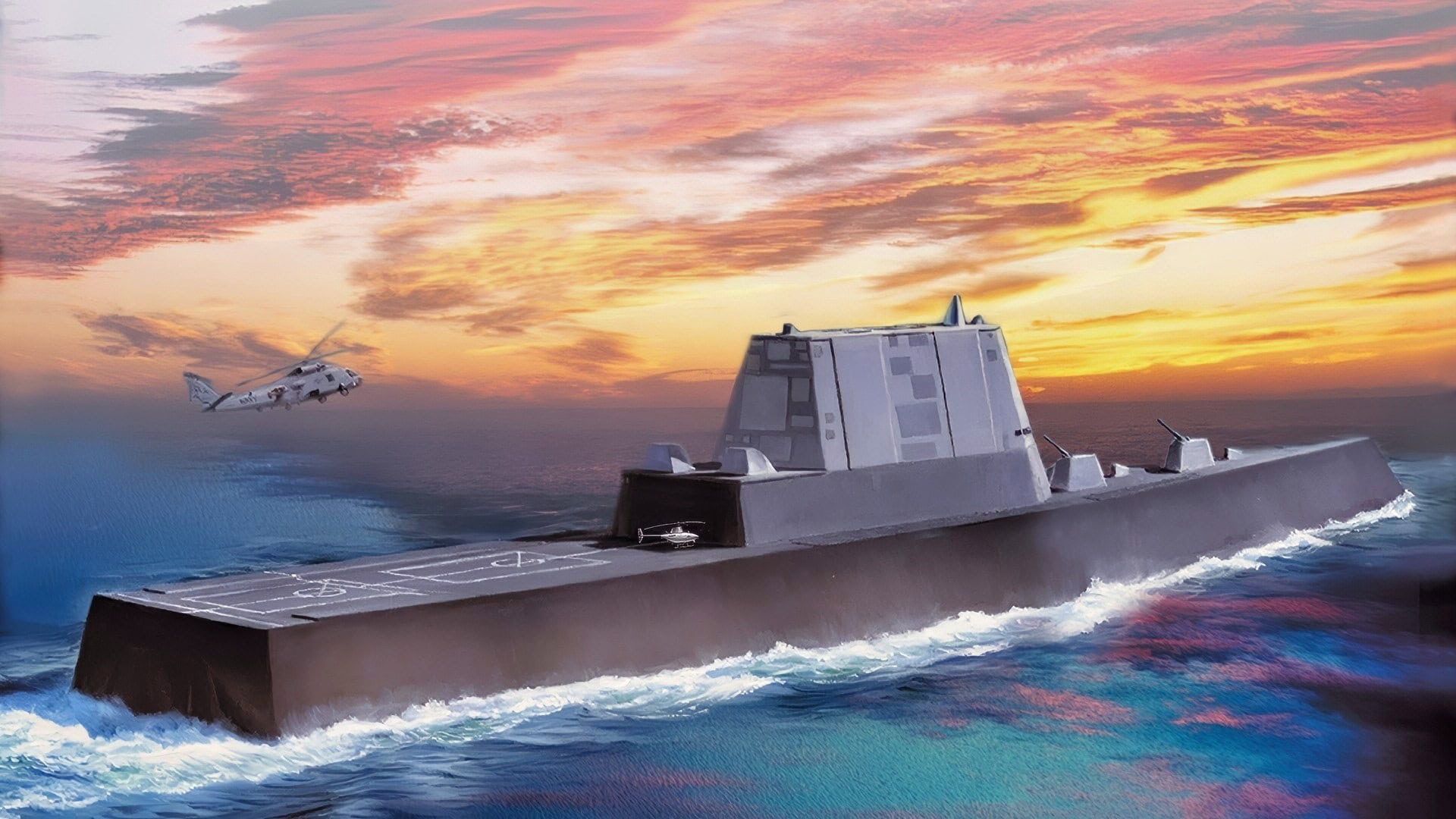
Summary and Key Points: As a massive 2026 “bomb cyclone” and polar vortex bring white-out conditions and record snow to the East Coast, what many are calling Winter Storm Hernando, the U.S. Navy continues operations unabated. From the frigid waters off Maine to Operation Deep Freeze in Antarctica, American warships are engineered to endure the “Deep Freeze.” The USS Zumwalt (DDG 1000), recently reborn with Conventional Prompt Strike (CPS) hypersonic tubes, serves as a prime example of maritime resilience.
-Armed with Mach 5+ weapons and hardened against Arctic icing, the Navy’s 2026 posture proves that even extreme winter weather won’t stop the “stealth bomber of the seas.”
The U.S. Navy Never Gets a Snow Day
You may have never heard of a “bomb cyclone,” but this polar vortex storm is wreaking havoc in the northeast United States. It is dumping snow and ice on cities like New York, Philadelphia, and Boston, resulting in power outages for thousands.
These are serious white-out conditions. The winds are blowing powerfully like a hurricane. 40 million people are under a blizzard warning.
Many locations are getting two feet of snow. Seven states have at least a foot of snow. Ten thousand flights have been cancelled. Cities are enforcing travel bans as more snow and ice shut down transit. Even the mild mid-Atlantic region was hit by snow and ice, forcing schools to shut down in the Washington, DC, metro area.
The U.S. Navy Won’t Take a Snow Day: USS Zumwalt Proves That
What does this storm mean for the U.S. Navy? You’d be surprised to know that American warships are tough customers in winter weather. The crews are prepared more for tropical storms in the Pacific, but in the Atlantic, there are rough seas from winter storms too. No winter weather event will make the Navy completely shut down operations.
USS Zumwalt Was Baptized with Frigid Conditions
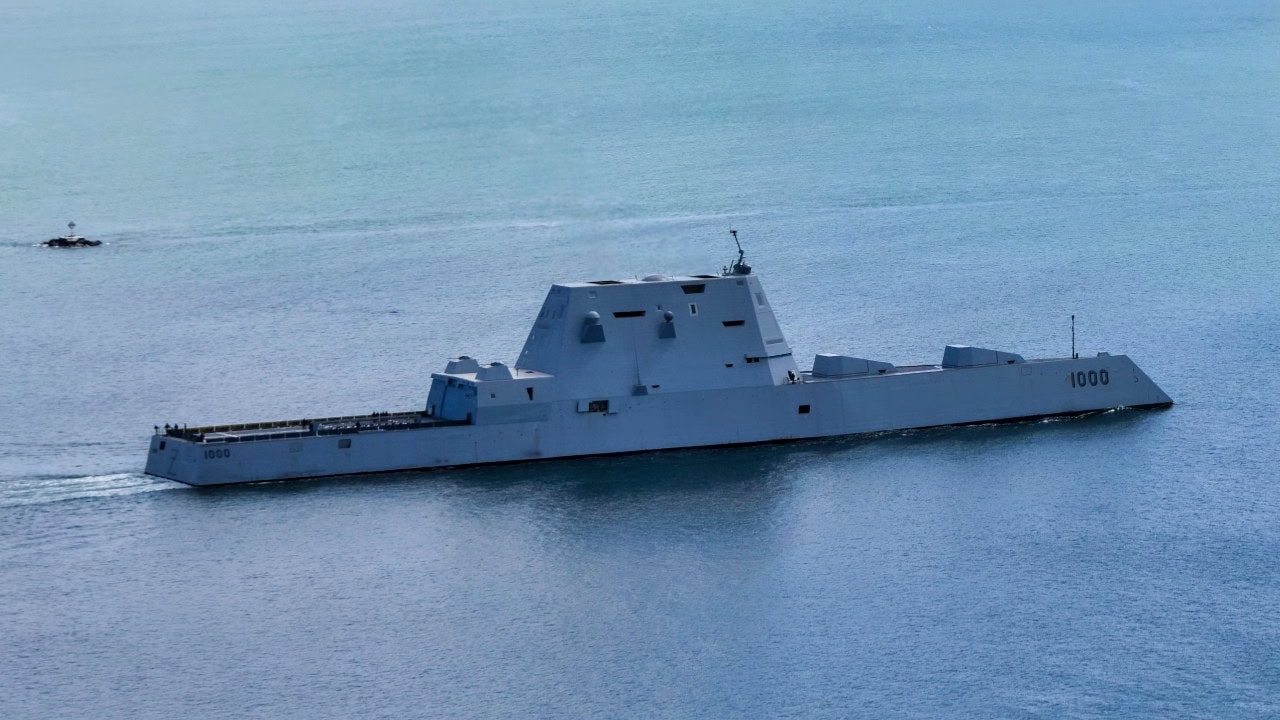
The Guided-missile destroyer USS Zumwalt (DDG 1000) departs San Diego as part of an operational underway. The milestone demonstrates the U.S. Navy’s commitment to advancing the lethality of its surface combatants by integrating cutting-edge technologies in Zumwalt’s combat systems, weapons, and engineering plants. (U.S. Navy photo by Mass Communication Specialist 2nd Class Natalie M. Byers)
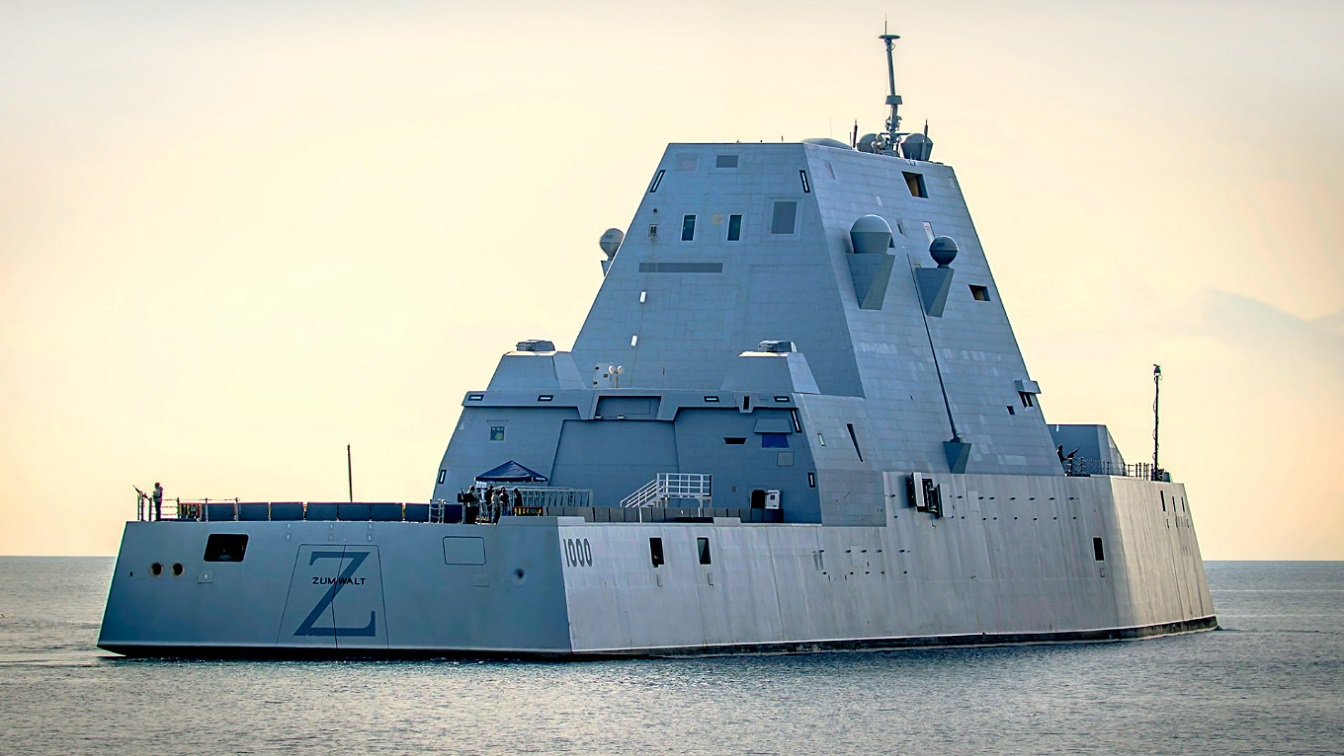
Zumwalt-Class, the largest destroyer on Earth today.
Take the USS Zumwalt (DDG 1000). The guided-missile destroyer once sailed in terrible winter conditions during its early days of service. In 2016, the Zumwalt conducted two rounds of sea trials off the coast of Maine. You can see the following photos, that looked like the ship was transiting the Arctic. Snow is clearly on the ship as it meanders around the Atlantic Ocean off Maine.
The Zumwalt arrived at the mouth of the Kennebec River near Portland. The Zumwalt was built at the Bath Iron Works shipyard in Bath, Maine, but the destroyer needed some time to get acquainted with the waves in the frigid waters. Systems that were considered state-of-the-art 10 years ago needed to be tested and evaluated.
New Hypersonic Weapons for the Zumwalt-class
DDG 1000 is the lead ship of the Zumwalt-class. It has been in the news recently after being out of action for three years for a refit. The ship now has tubes that can fire hypersonic weapons. This time it is in a much warmer climate at HII Ingalls Shipbuilding in Pascagoula, Mississippi.
The guided missile destroyer has been in port for the additions since 2023. The Zumwalt will now be able to fire the Conventional Prompt Strike weapon system. This will make it relevant for years to come. The original twin 155mm Advanced Gun Systems have been replaced with new missile tubes. The Zumwalt will also test the Common Hypersonic Glide Body (C-HGB) missile. Two other Zumwalt-class destroyers will receive the hypersonic weapons upgrade.
It’s Not Easy to Operate in the Deep Freeze for the U.S. Navy
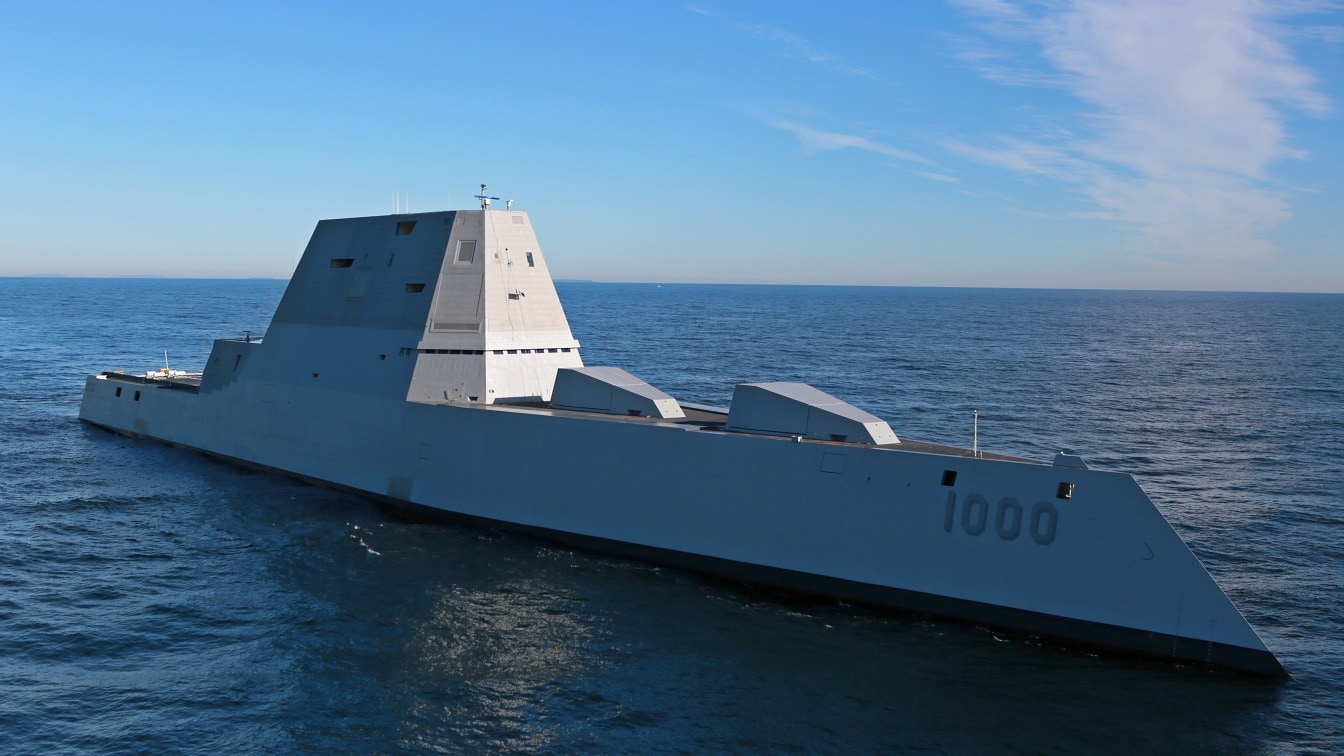
(Dec. 7, 2015) The future USS Zumwalt (DDG 1000) is underway for the first time conducting at-sea tests and trials in the Atlantic Ocean Dec. 7, 2015. The multimission ship will provide independent forward presence and deterrence, support special operations forces, and operate as an integral part of joint and combined expeditionary forces. (U.S. Navy photo courtesy of General Dynamics Bath Iron Works/Released). Zumwalt-Class
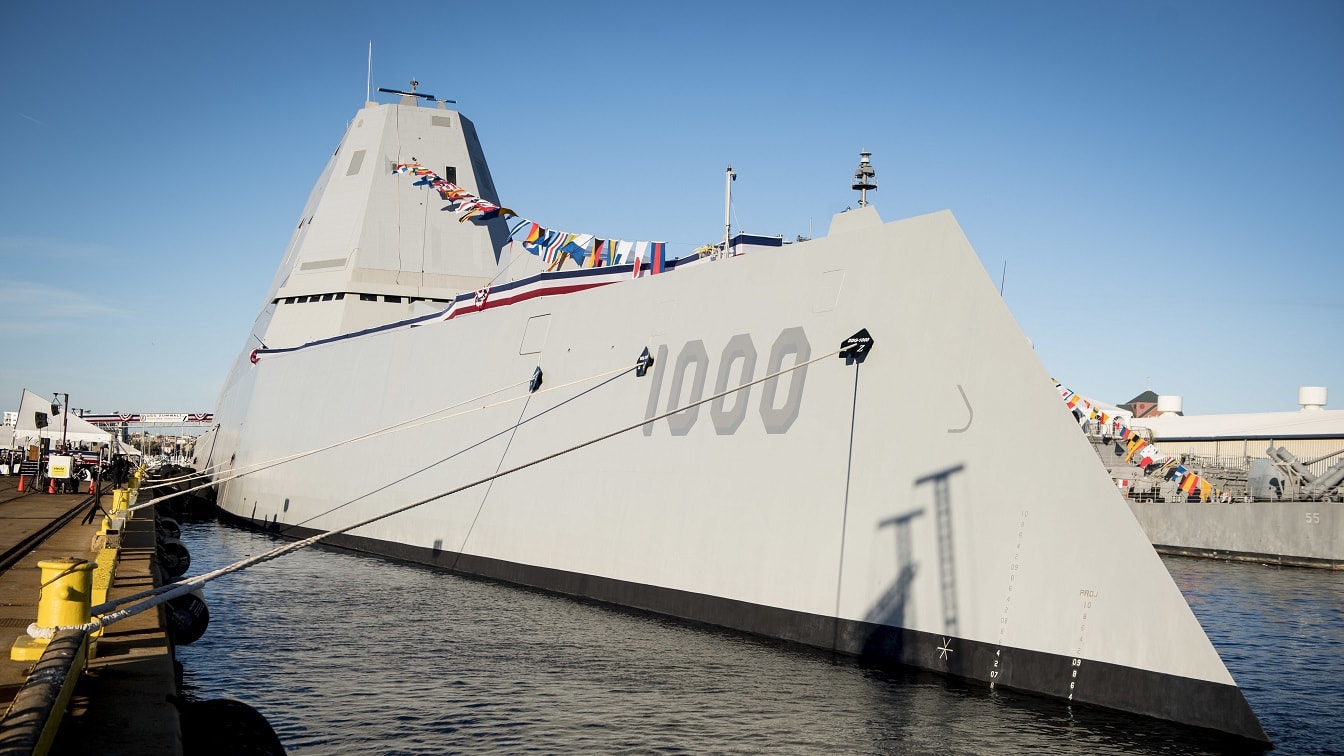
(Oct. 15, 2016) The Navy’s newest and most technologically advanced warship, USS Zumwalt (DDG 1000), is moored to the pier during a commissioning ceremony at North Locust Point in Baltimore. (U.S. Navy photo by Petty Officer 1st Class Nathan Laird/Released)
During its earlier sea trials in the cold conditions off the coast of Maine in 2016, the USS Zumwalt had a crew prepared for the weather. Sailors are trained for this contingency. There is a greater risk of breakdowns and technical problems in the snow and ice. Hulls, rudders, and propulsion systems are in danger of damage. Systems can go on the fritz, and if something can break, it will.
Extra Effort and Care Must Be Maintained
“Winter conditions also affect the safety of those on board. The outer decks are vulnerable to icing, so clothing and footwear should be suitable for cold weather and slippery decks.
Navies that do not often operate in extremely cold environments are likely to overlook the importance of properly equipping and clothing their sailors,” according to the U.S. Naval Institute. “Meanwhile, extra effort should be made to ensure mission-essential equipment and systems will operate at full capacity in cold weather conditions.
This means, for instance, that heating or deicing must be started and maintained while in a cold environment. And weapon systems should be protected by structural solutions that have been engineered during the design of the ship.”
You Can’t Keep the Navy Down and Out
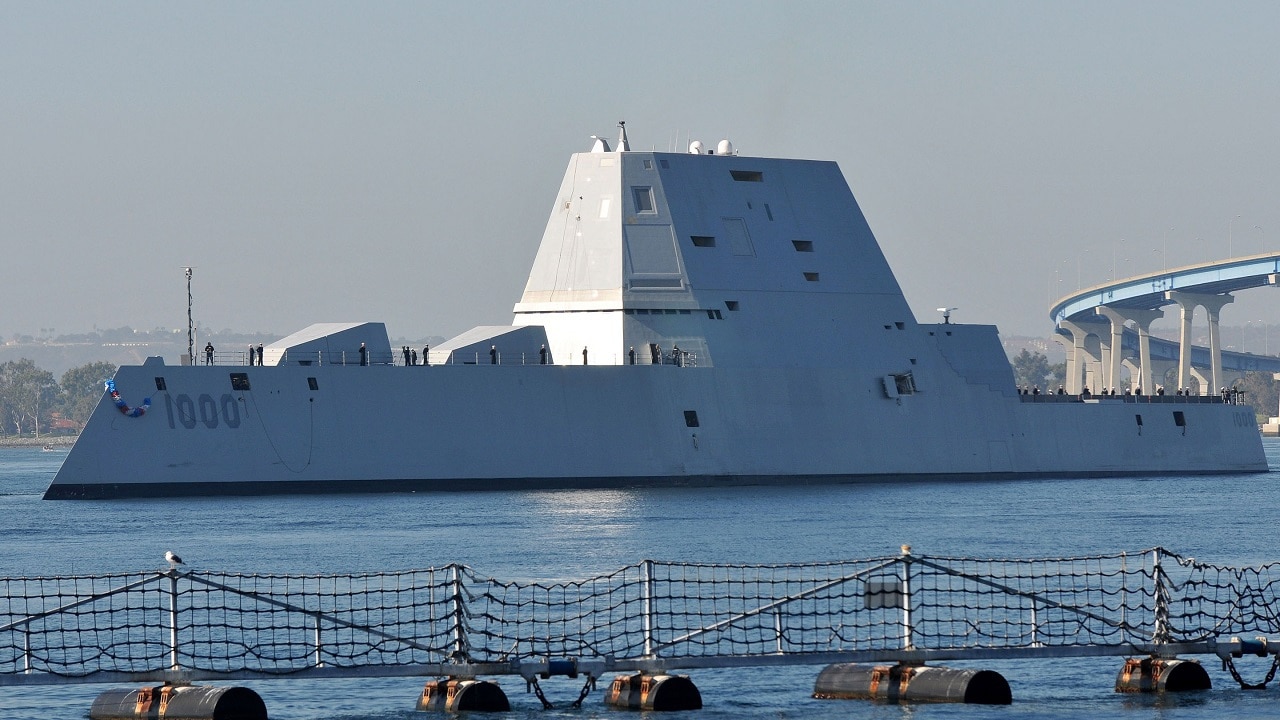
161208-N-ZF498-130 .SAN DIEGO (Dec. 8, 2016) The U.S. Navy’s newest warship, USS Zumwalt (DDG 1000) passes Coronado bridge on its way to Naval Base San Diego. Zumwalt is the lead ship of a class of next-generation multi-mission destroyers, now homeported in San Diego. (U.S. Navy photo by Petty Officer 3rd Class Anthony N. Hilkowski/Released)
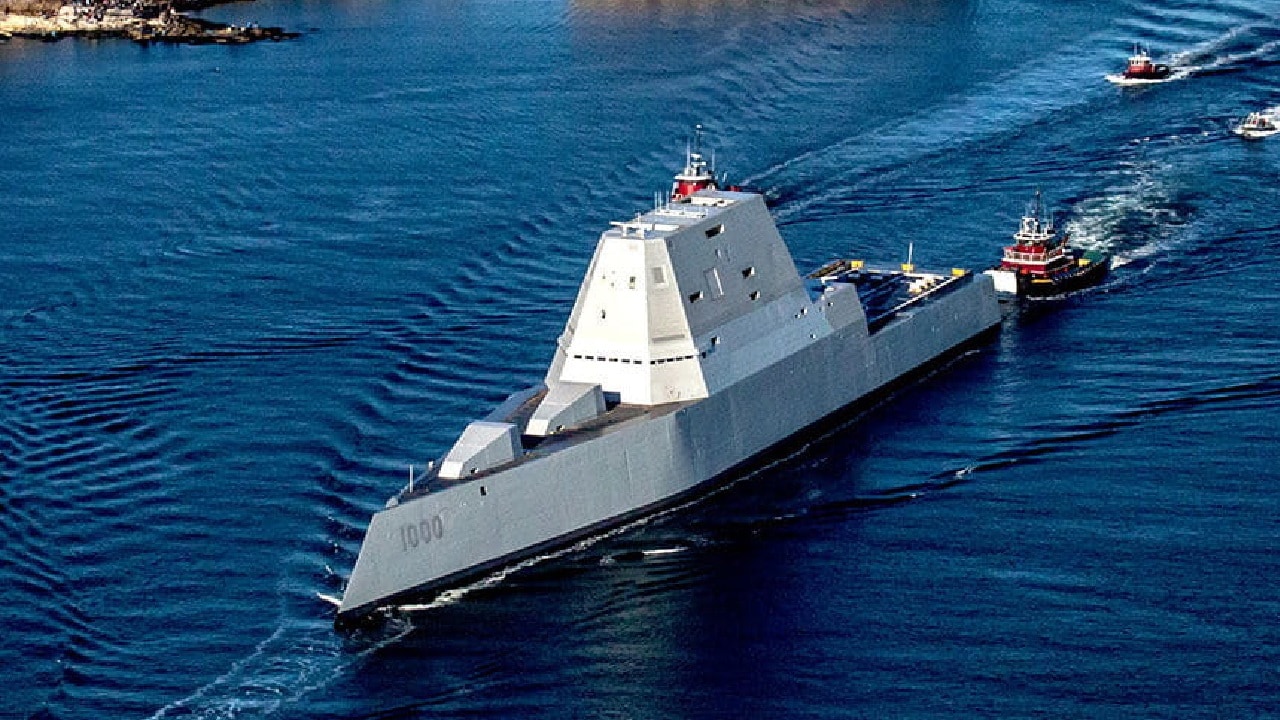
Zumwalt-class destroyer. Image Credit: Raytheon.
The U.S. Navy is prepared for all weather, so don’t think that a bomb cyclone can put American ships out of service for long.
They will be prepared for all contingencies. Sailors on board the USS Zumwalt off the coast of Maine ten years ago navigated some bad winter weather, and the Navy is not intimidated by cold and snowy conditions.
Let’s just hope those new hypersonic weapons can operate in Arctic conditions if they’re ever deployed there.
About the Author: Dr. Brent M. Eastwood
Author of now over 3,000 articles on defense issues, Brent M. Eastwood, PhD is the author of Don’t Turn Your Back On the World: a Conservative Foreign Policy and Humans, Machines, and Data: Future Trends in Warfare plus two other books. Brent was the founder and CEO of a tech firm that predicted world events using artificial intelligence. He served as a legislative fellow for US Senator Tim Scott and advised the senator on defense and foreign policy issues. He has taught at American University, George Washington University, and George Mason University. Brent is a former US Army Infantry officer. He can be followed on X @BMEastwood.