
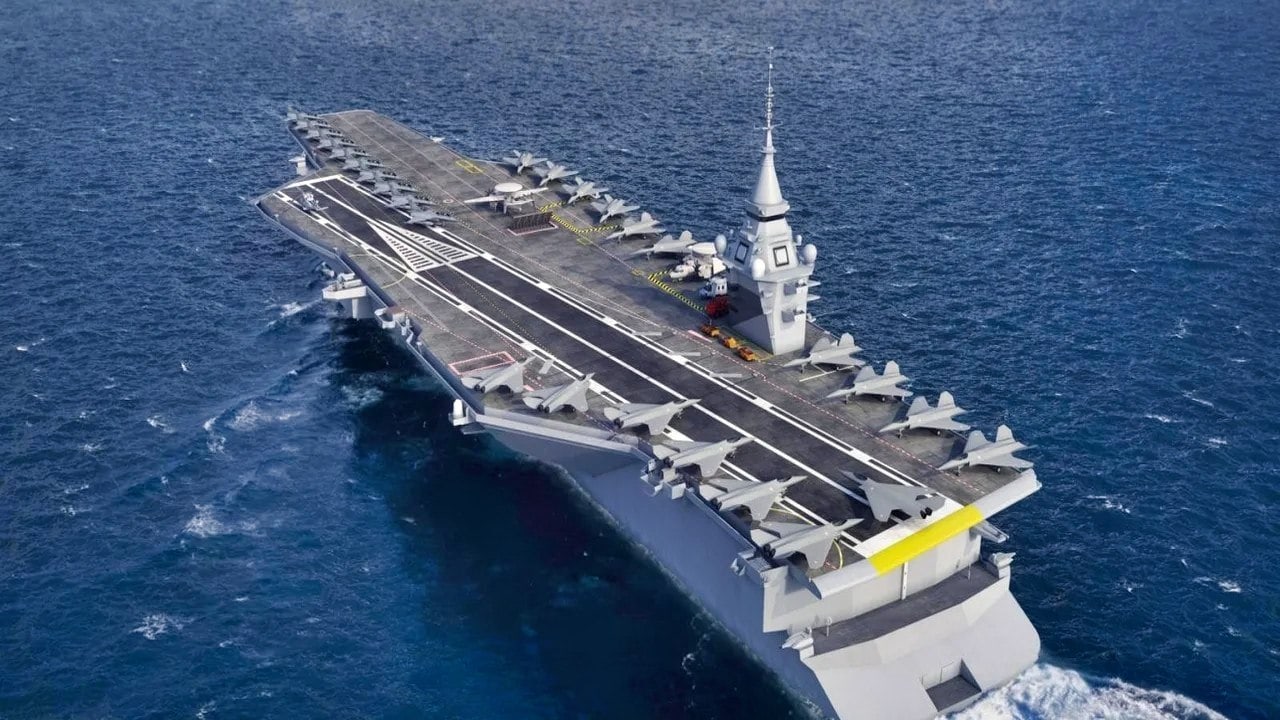
Summary and Key Points: Dr. Andrew Latham, a non-resident fellow at Defense Priorities, analyzes the strategic transition from the Charles de Gaulle to the future PANG (Porte-Avions de Nouvelle Génération).
-While nuclear propulsion and catapult launch systems provide France with operational independence, the “One-Deck Constraint” leaves the Marine Nationale vulnerable during maintenance cycles.
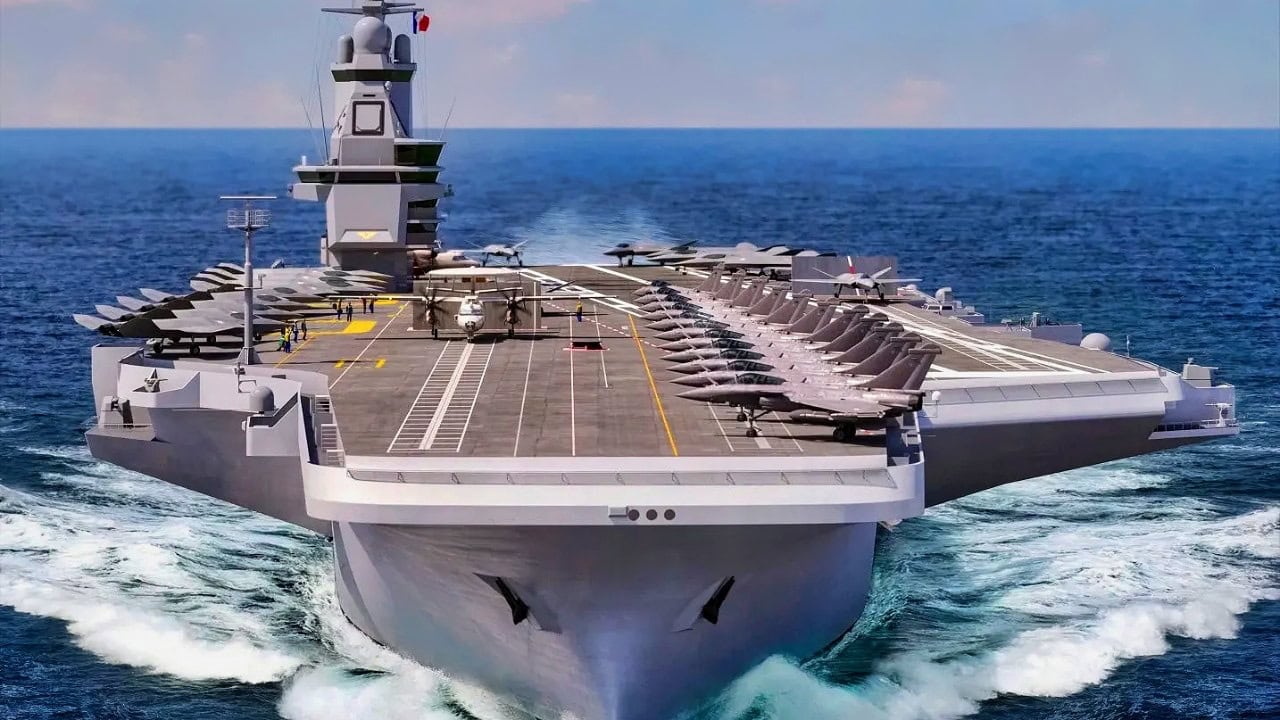
PANG Aircraft Carrier from France. Image Credit: Industry Handout.
-This 19FortyFive report explores how advancements in A2/AD strike networks and persistent satellite surveillance erode the sanctuary of the supercarrier, evaluating whether France can fund the necessary escorts and submarines to protect this generational investment in contested waters.
The PANG Wager: Why France’s Next Supercarrier is a Concentrated Risk in the A2/AD Era
France does not build aircraft carriers casually. It builds them when Paris decides that freedom of action at sea justifies a generational commitment of money and strategy. The aircraft carrier Charles de Gaulle has embodied that wager for more than two decades. Nuclear propulsion and catapult launch gave France a mobile airbase that did not depend on foreign permission. When leaders in Paris chose to act, they could move airpower without negotiating access or accepting political limits. The ship made autonomy operational.
France now plans to replace that vessel with the future PANG carrier, a much larger nuclear-powered platform expected to enter service late in the next decade.
Paris does not want to lose sea-based aviation. The difficulty is that the maritime battlespace PANG will enter punishes concentrated platforms unless they are backed by a deep and resilient system. France may need a carrier, but whether it can sustain the architecture required to keep a supercarrier active in war is not certain.
Aircraft Carriers’ Operational Success
The record of the Charles de Gaulle gives confidence to the French defense establishment. The carrier supported operations linked to Afghanistan, flew missions during the Libya campaign, and later struck ISIS targets in Iraq and Syria. Those deployments showed that France could generate sustained airpower from the sea.
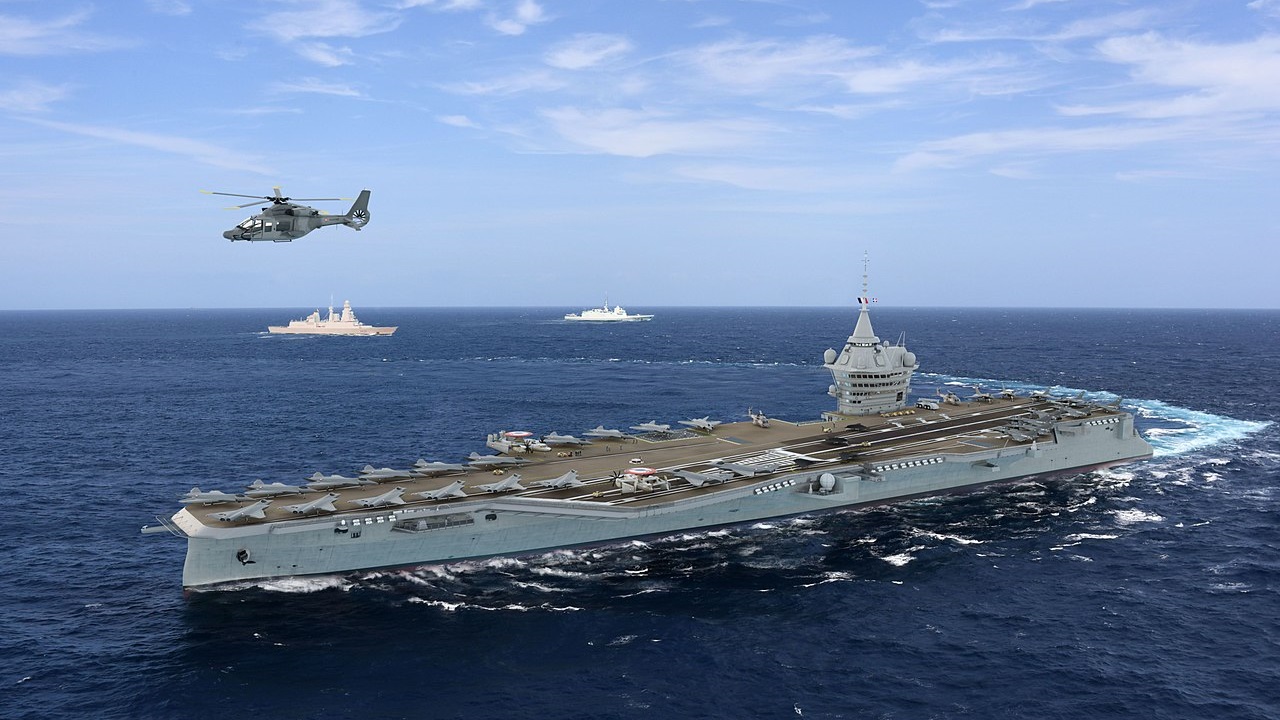
PANG Aircraft Carrier. Image Credit: Creative Commons.
Yet those campaigns unfolded in conditions where maritime threats remained limited. Opponents lacked the surveillance reach and strike depth now spreading across several regions. Coalition frameworks diluted risk further. The carrier performed well in part because the operational context allowed it to. That experience should not be treated as proof that a much larger supercarrier will enjoy similar freedom once confronted by modern strike networks.
The System That Keeps a Carrier Alive
A carrier’s survival rests on the protective structure built around it. Surface escorts provide the primary shield against incoming threats, while submarines operate forward to monitor underwater approaches that cannot be seen from above. Surveillance systems extend the group’s awareness beyond the horizon and allow the carrier to respond under pressure. All these systems are sustained by logistics that keep the force operational once combat begins.
The United States deploys carriers inside a defensive structure dense enough to absorb sustained pressure. France operates capable escorts and modern submarines, yet it does not possess comparable scale. That’s an important structural gap, because a supercarrier requires persistent protection, not intermittent shielding. As detection becomes easier and strike systems travel farther, survivability rests on the endurance of the system rather than the size of the hull.
The One-Deck Constraint
France operates a single carrier. That fact shapes its strategic posture regardless of ambition.
Extended maintenance cycles periodically remove sea-based aviation from France’s available options, leaving no substitute deck while refit work is underway. The resulting gap carries operational consequences even in routine conditions and becomes more pronounced when tensions rise.
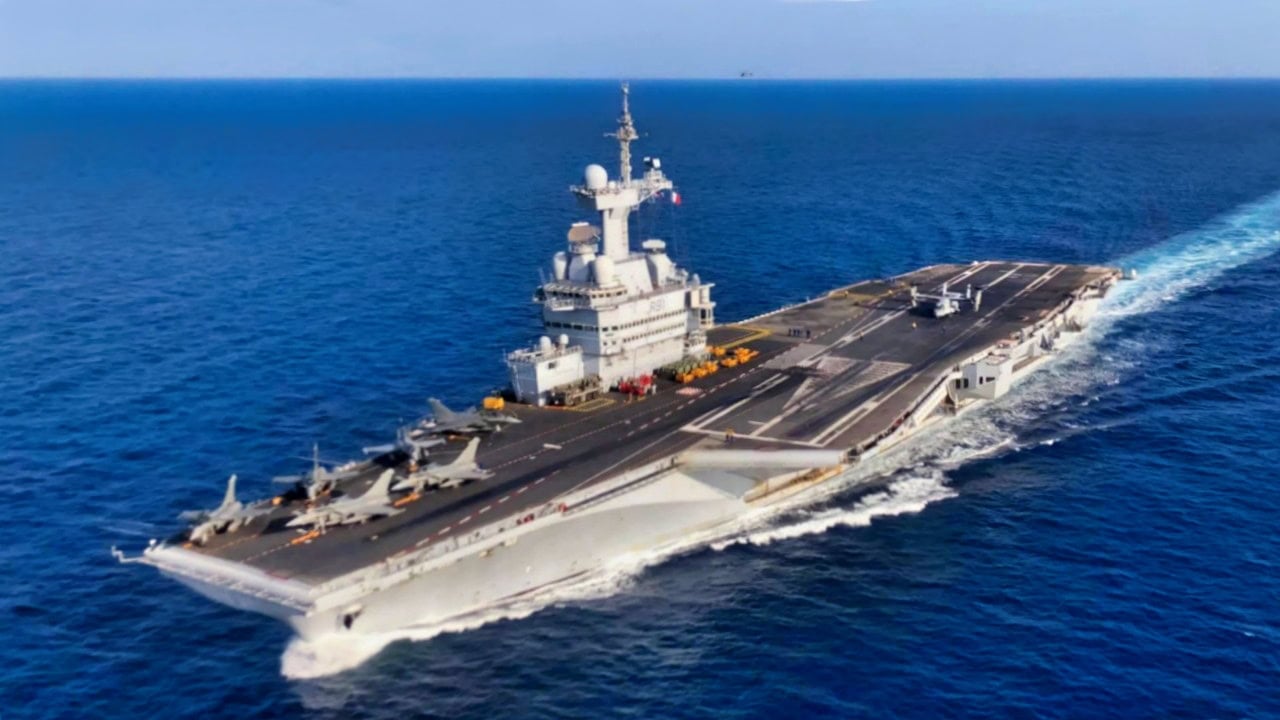
U.S. 5TH FLEET AREA OF OPERATIONS (April 24, 2019) A U.S. Marine MV-22 Osprey assigned to the 22nd Marine Expeditionary Unit sits on the flight deck of France’s Marine Nationale aircraft carrier FS Charles De Gaulle (R 91). This was the second time that Ospreys have landed aboard the French vessel. Marines and Sailors assigned to the 22nd MEU and Kearsarge Amphibious Ready Group are currently deployed to the U.S. 5th Fleet area of operations in support of naval operations to ensure maritime stability and security in the Central region, connecting the Mediterranean and the Pacific through the western Indian Ocean and three strategic choke points. (U.S. Marine Corps photo by Maj. Joshua Smith/Released)
Exposure in wartime would be far more acute. A carrier need not be sunk to lose combat utility; damage that interrupts flight operations can remove it from the fight. Fleets operating more than one deck can redistribute operational strain and sustain tempo. France cannot, and PANG will enter service carrying the same structural vulnerability.
Operating While Threats to Carriers Grow
Future deployments will likely place a French carrier within reach of dense surveillance and layered strike capability. The eastern Mediterranean illustrates how coastal missile coverage and aerial reconnaissance can compress maneuver space. The Red Sea has shown how drones and anti-ship weapons can alter naval calculations without the presence of a major fleet.
Detecting Carriers Is Easier
Carriers once relied on the vastness of the ocean to complicate detection, using distance and maneuver to remain difficult to track. That margin has steadily eroded as satellite coverage has grown more persistent and long-endurance drones have widened the scope of maritime search. Advances in data fusion now compress the time between detection and targeting, reducing the operational sanctuary carriers once enjoyed.
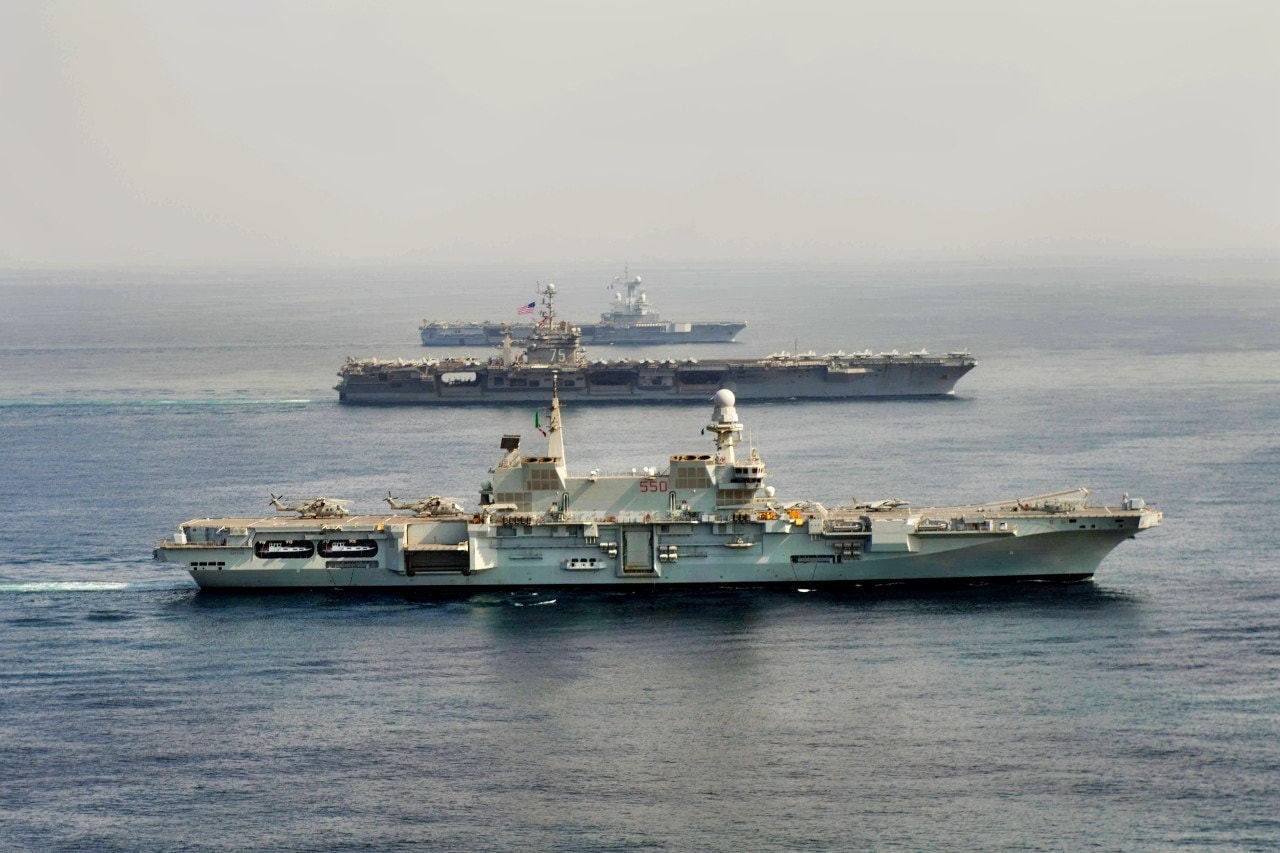
(Jan. 3, 2014) The Italian navy aircraft carrier ITS Cavour (CVH 550), front, the aircraft carrier USS Harry S. Truman (CVN 75) and the French navy aircraft carrier Charles de Gaulle (R 91), conduct operations in the Gulf of Oman. Harry S. Truman, flagship for the Harry S. Truman Carrier Strike Group, is conducting operations with Task Force 473 to enhance levels of cooperation and interoperability, enhance mutual maritime capabilities and promote long-term regional stability in the U.S. 5th Fleet area of responsibility. (U.S. Navy photo by Mass Communication Specialist 3rd Class Ethan M. Schumacher/Released)
These developments do not render carriers obsolete. They do erode the sanctuary that once protected them. A supercarrier now operates under intermittent observation rather than presumed concealment. That shift increases reliance on escorts and defensive systems that must perform under continuous strain.
Procurement
PANG represents a generational investment. It will preserve nuclear propulsion expertise and sustain advanced shipbuilding capacity. It will also shape French force structure for decades.
Resources directed toward a supercarrier narrow room elsewhere. Additional attack submarines would expand denial capacity in contested waters. Greater interceptor inventories would extend defensive endurance. Expanded surveillance would improve warning time. Procurement decisions determine strategic risk long before the first aircraft launches.
The Strategic Test for France’s PANG Aircraft Carrier
France requires sea-based airpower if it intends to preserve operational independence beyond Europe. A carrier offers mobility and political leverage that fixed infrastructure cannot replicate.
The harder question lies beyond the flight deck. France must decide whether it will fund the escorts, interceptor depth, and surveillance resilience needed to keep a supercarrier credible once adversaries can track it and strike at range. Without sufficient strength in that supporting structure, even the most advanced carrier becomes exposed in contested waters.
080719-N-3218H-011
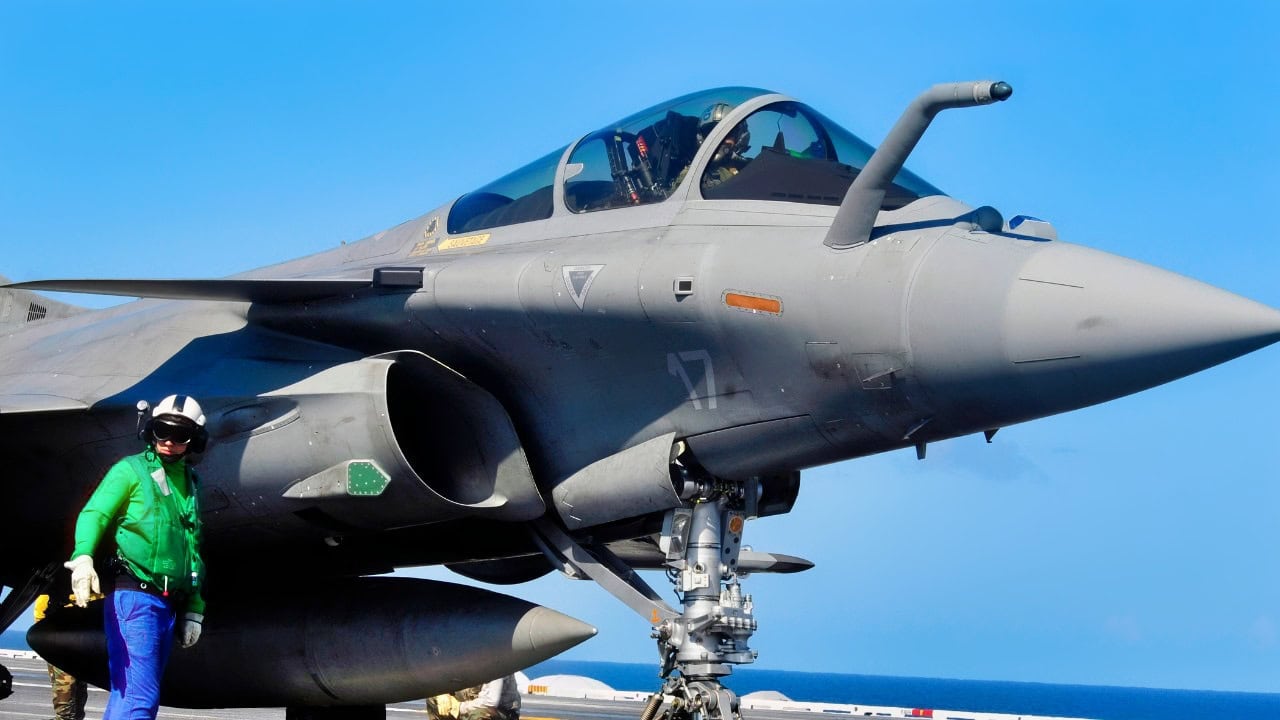
ATLANTIC OCEAN (July 19, 2008) A French F-2 Rafale fighter prepares to launch during combined French and American carrier qualifications aboard the aircraft carrier USS Theodore Roosevelt (CVN 71). This event marks the first integrated U.S. and French carrier qualifications aboard a U.S. aircraft carrier. The Theodore Roosevelt Carrier Strike Group is participating in Joint Task Force Exercise “Operation Brimstone” off the Atlantic coast until the end of July. (U.S. Navy photo by Mass Communication Specialist 3rd Class Christopher Hall/Released)
The Charles de Gaulle proved that France could project autonomous airpower from the sea. PANG will reveal whether France can protect that power against modern detection and missile reach. If the surrounding system remains thin, the carrier will not secure autonomy. It will concentrate risk. That risk will not be confined to the ship itself. It will shape how adversaries calculate escalation and how allies judge France’s ability to sustain independent operations under fire.
About the Author: Dr. Andrew Latham
Andrew Latham is a non-resident fellow at Defense Priorities and a professor of international relations and political theory at Macalester College in Saint Paul, MN. You can follow him on X: @aakatham. Dr. Latham write a daily column for 19FortyFive.