
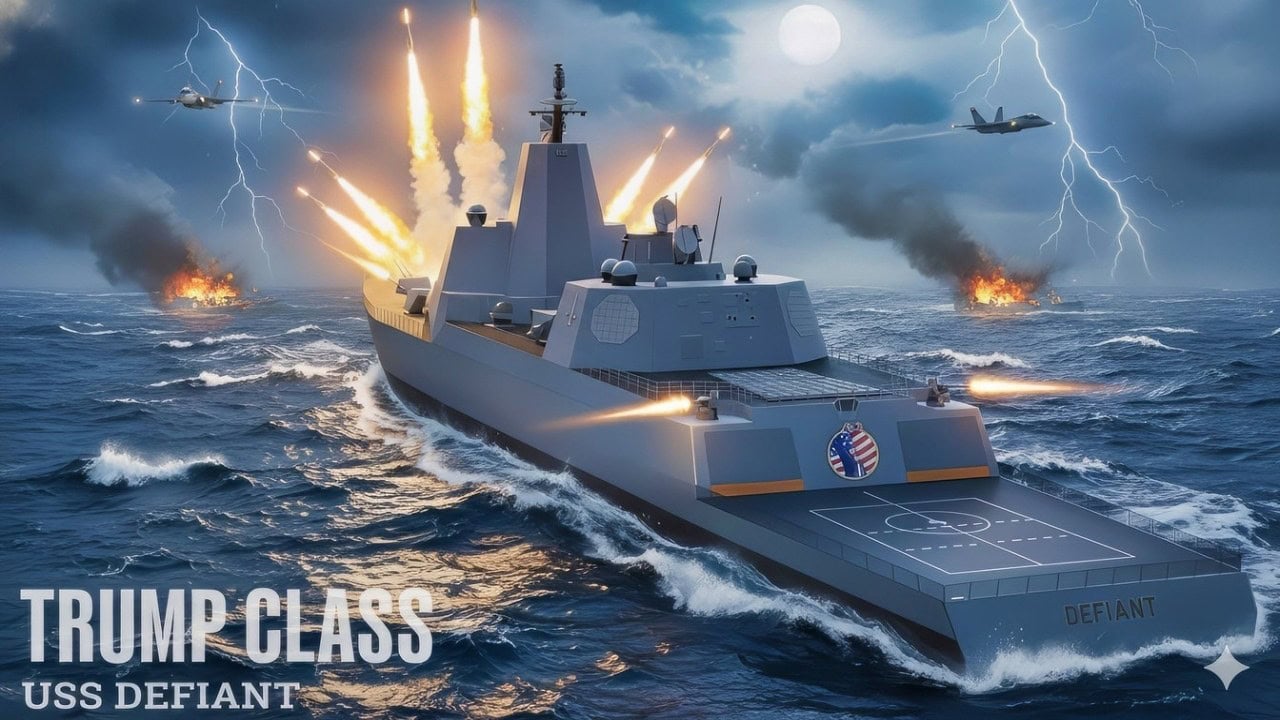
Summary and Key Points: Donald Trump’s proposed Golden Fleet centers on a new Trump-class guided-missile battleship envisioned as a massive magazine ship for hypersonic strike, missile defense, and distributed command-and-control—potentially with directed-energy weapons.
-Critics argue the real problem isn’t the concept’s firepower but the opportunity cost: shipyards and budgets already strained by submarine builds, munitions, and maintenance backlogs.
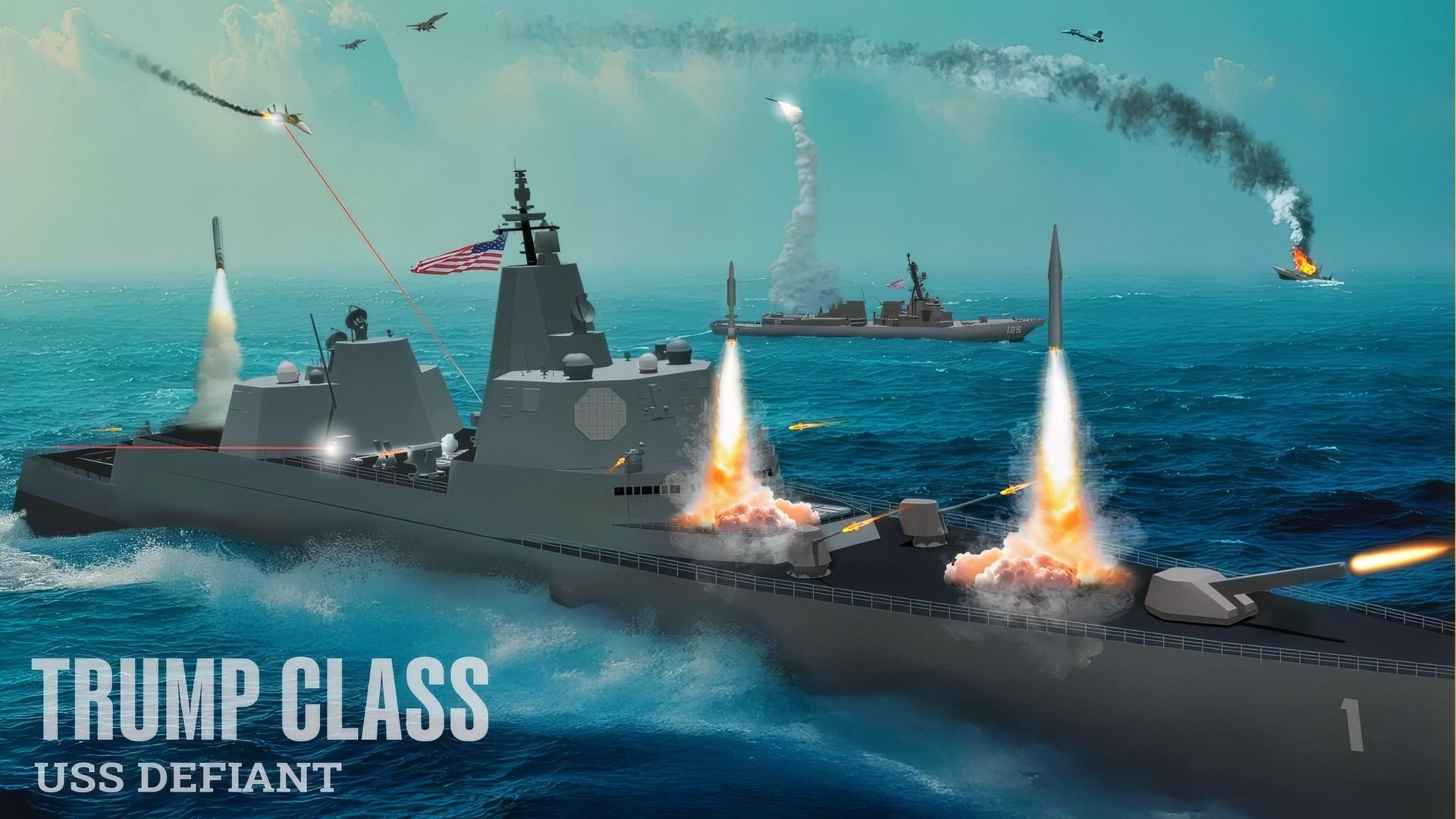
Trump-Class Battleship USS Defiant. Image Credit: Creative Commons.
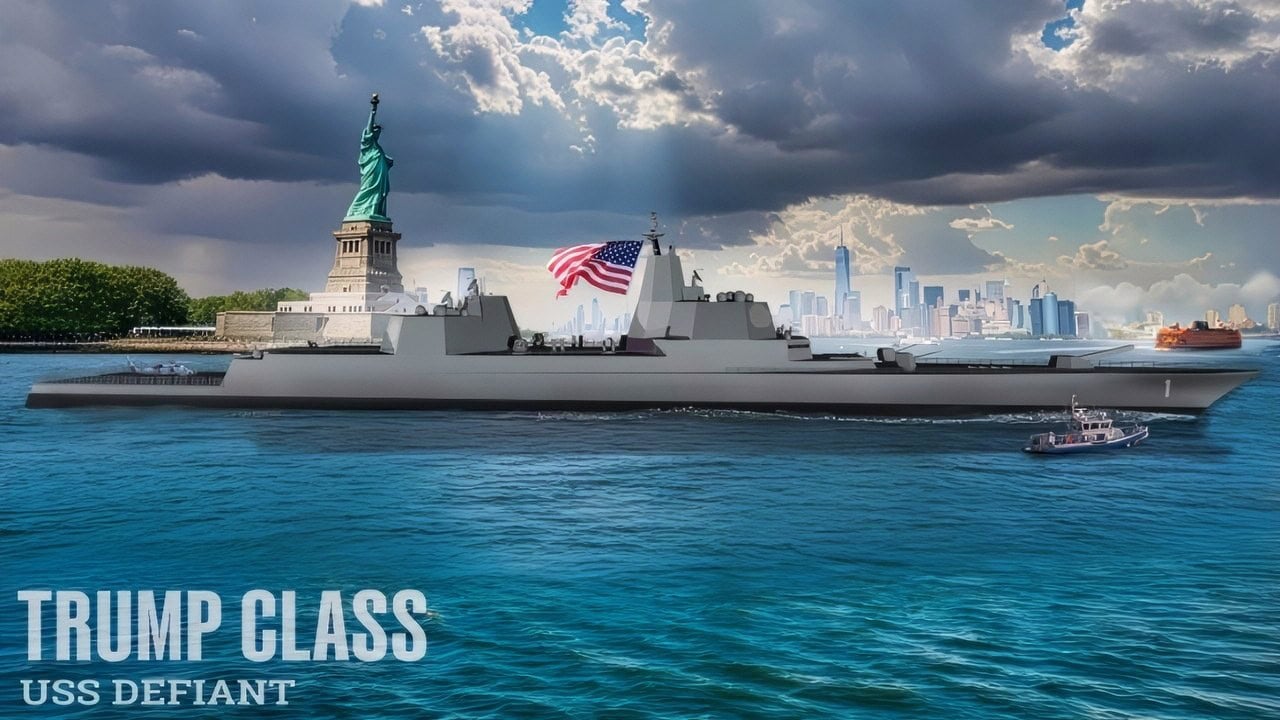
Trump-Class Battleship. Image Credit: Creative Commons/White House.
-United States Navy leaders counter that concentrating payload, sensors, and C2 in one heavily protected node complicates an adversary’s targeting problem.
-The biggest risk may be political: years of development could be lost if a future administration cancels the program, leaving capabilities unfielded elsewhere.
Trump-Class “Battleship” or Budget Trap? The Golden Fleet Debate Explained
As with virtually anything U.S. President Donald Trump does or says, his proposal for a new fleet of Trump-class battleships has proven controversial, with some arguing it is little more than a vanity project and others even suggesting it could pose a national security threat.
Others – including officials within the Navy – have, however, argued it is an essential program to counter emerging naval threats.
Trump’s proposed Trump-class (BBG(X)) guided-missile battleship program has ignited a new debate about how the U.S. should structure its firepower and deterrence for a new era of warfare, and how it should manage industrial capacity responsibly.
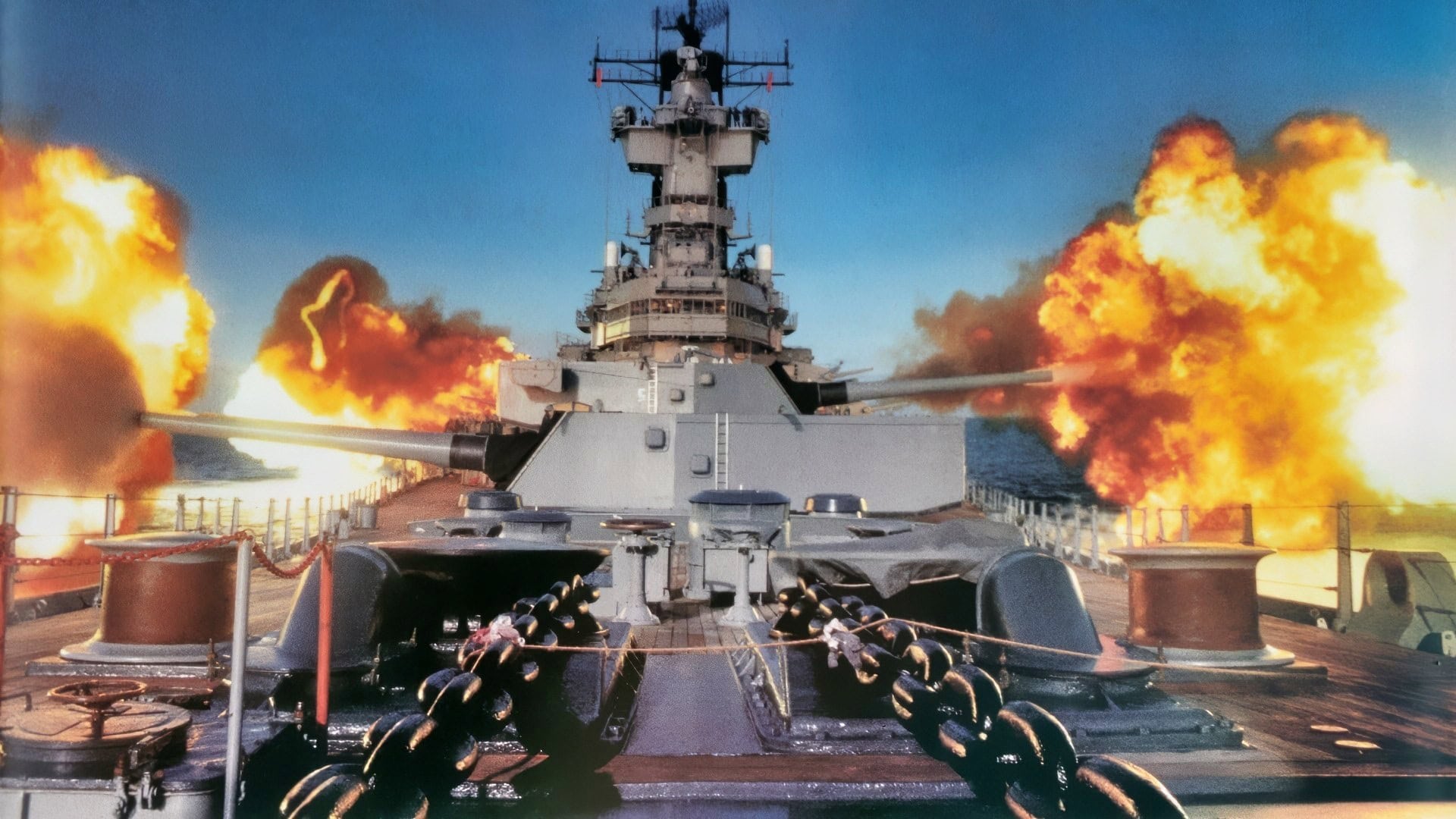
Copy negative of the US Navy (USN) Iowa Class (as built) Battleship USS NEW JERSEY (BB 62) firing a 21-gun broadside. Exact date shot unknown. Image Credit: Creative Commons.
At issue here is whether building an extremely large surface combatant is the right move, and whether it will strengthen U.S. deterrence or weaken it by diverting resources from submarines, munitions, and shipyard throughput that are already under strain. But who’s right?
What the Trump-Class Is Supposed to Be
President Trump announced his administration’s plans to build what it calls the “Golden Fleet,” a major U.S. Navy expansion centered on a new class of guided missile warships known as “Trump-class” battleships, at his Mar-a-Lago estate in December 2025.
The initiative would be the first new U.S. battleship program since the Iowa-class was retired in the early 1990s and is intended to restore American maritime industrial capacity (by expanding existing infrastructure) and strategic surface combat power amid rising competition from China and others.
Trump said the Golden Fleet will begin with two large surface combatants – the lead USS Defiant (BBG-1) and a second hull – and could expand to as many as 20-25 ships, each designed to support advanced weapons, and include upgraded command-and-control systems.
According to the Navy’s announcement, the lead ship, USS Defiant, is envisioned as a large guided-missile battleship capable of carrying larger missile magazines than existing surface combatants, including Conventional Prompt Strike (CPS) hypersonic weapons and a proposed Surface Launch Cruise Missile-Nuclear (SLCM-N) capability.
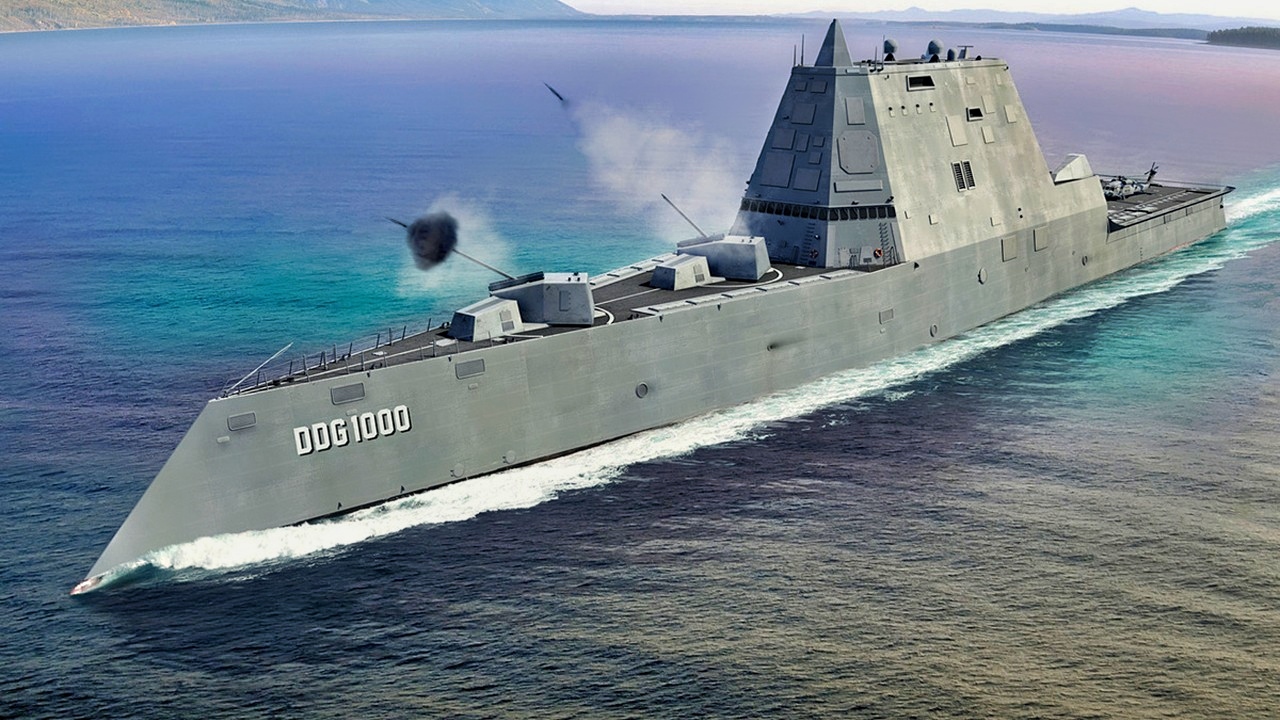
Zumwalt-Class U.S. Navy Destroyer. Image Credit: Creative Commons.
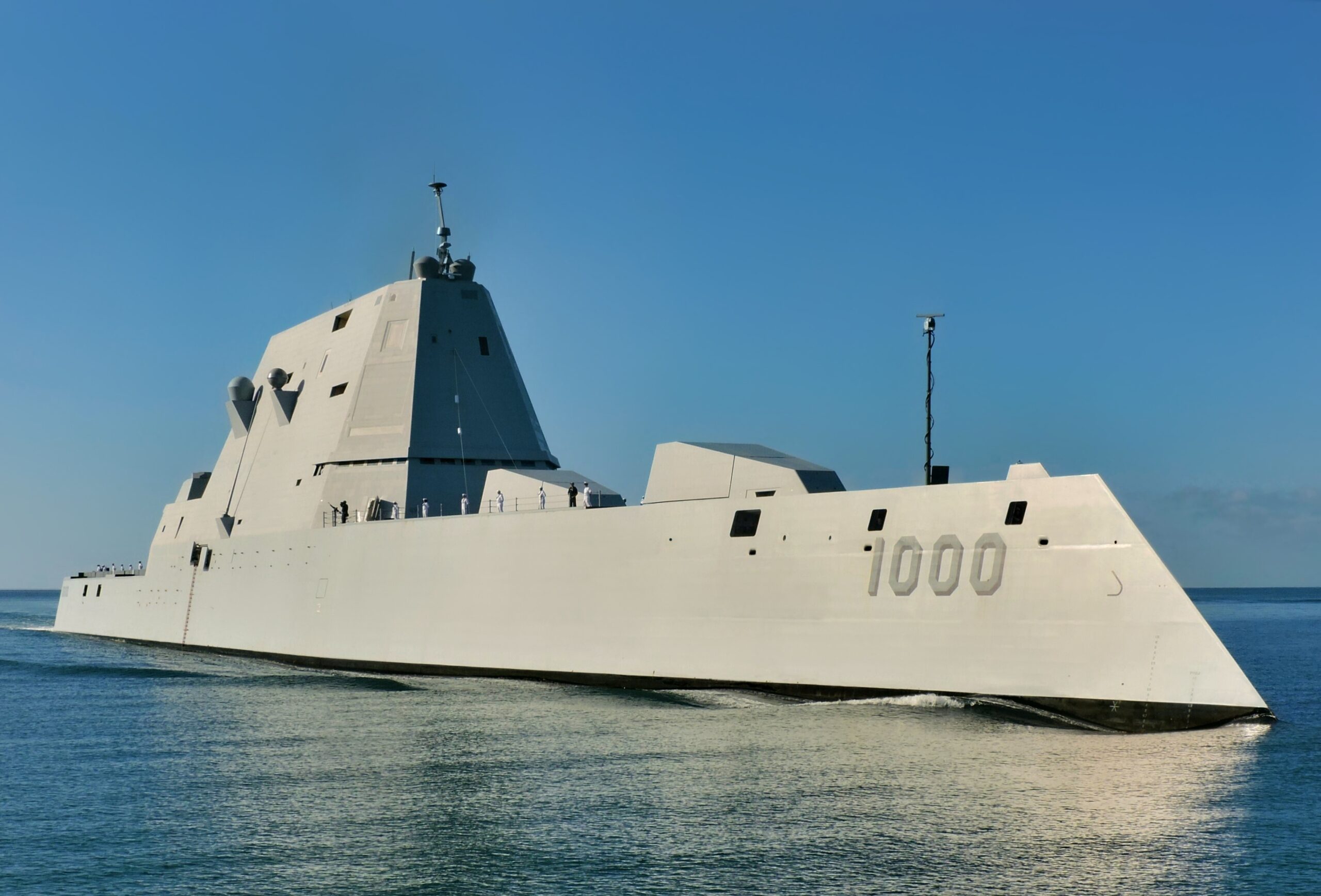
Zumwalt-Class Destroyer U.S. Navy. Image Credit: Creative Commons.
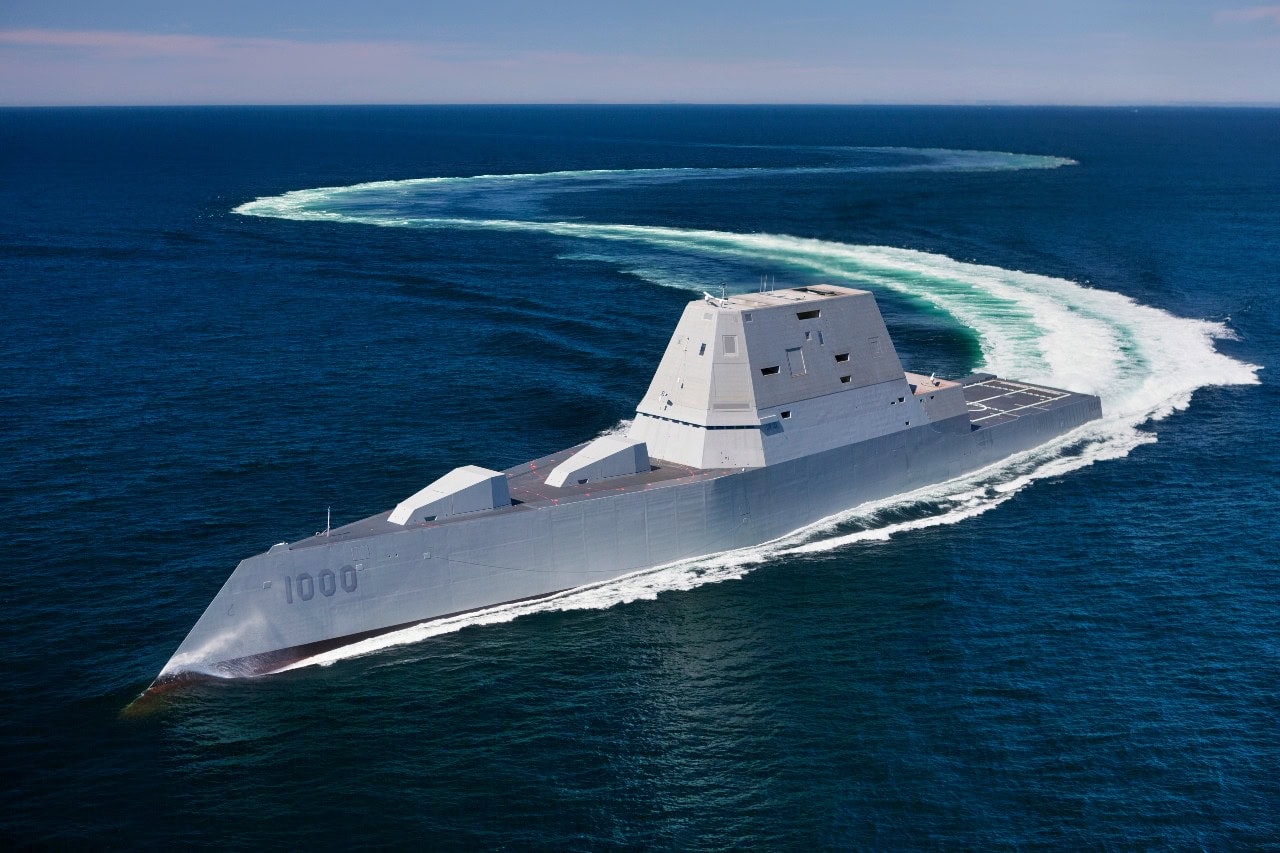
Zumwalt-Class Destroyer U.S. Navy.
The Navy says the ship would be more than just a missile platform, too. It is described as capable of operating in an Integrated Air and Missile Defense (IAMD) role with carrier strike groups, commanding its own Surface Action Group (SAG), performing anti-submarine roles, and acting as a central command-and-control node for distributed maritime operations.
That’s a lot of responsibilities for one vessel, but it’s part of what makes the program so attractive to the Navy – and leadership is already talking about the possibility of introducing directed-energy weapons into the platform. Adm Daryl Caudle, the chief of naval operations, has argued that directed-energy weapons should be the “first solution” for the new ships when taking on targets within line of sight.
Why Critics Call It A National Security Risk
Critics of the program say that the problem is not necessarily about the capability of the proposed vessels, but the opportunity cost.
U.S. shipyards are already under pressure building Columbia-class ballistic missile submarines and Virginia-class attack submarines, both of which are central to nuclear deterrence and undersea competition. Adding a new mega-surface-combatant program, they argue, does not expand capacity but competes for it.
The industrial base is already struggling. It’s no secret, either: Navy officials and government watchdogs continue to warn of the threat of labor shortages, schedule slips, munitions production constraints, and delays. In that context, a new ship class that costs tens of billions of dollars per hull risks slowing the delivery of submarines and other priority systems, with critics arguing that those undersea vessels are more survivable and strategically important in a possible future conflict with China or Russia. Those arguments come as military planners look beneath the waves for ideas about how to fight future maritime battles.
Very large surface ships, after all, operate in an environment that is now saturated with long-range precision missiles and drones – not to mention adversaries’ submarines. Critics contend that concentrating so much power in surface vessels at a time when they are becoming more technologically vulnerable than ever could turn them into high-value targets and diminish their deterrence advantage.
Why Navy Leaders Disagree
Not everyone agrees with that assessment, however, and the Navy has been supportive of the president’s plans so far.
Adm. Caudle has argued that the battleship provides a large payload volume, multi-mission capability, and the ability to command and control operations at sea, making it a highly valuable asset when properly defended against modern and emerging threats.
Caudle made the argument simple, noting, “If I want to shoot 100 things from 100 things, or I want to shoot 100 things from one thing, which is harder?”
Secretary of the Navy John Phelan has similarly suggested that the ship would serve as a symbol of the Navy’s central presence.
In an official statement published on December 22, 2025, Phelan argued that the new battleships will “stand as the centerpiece of the Navy’s Golden Fleet initiative” and that it will be the “first of its kind providing dominant firepower and a decisive advantage over adversaries by integrating the most advanced deep-strike weapons of today with hte revolutionary systems of the years ahead.”
Industrial capacity aside, the Navy’s leadership recognizes that surface vessels face greater risks today, but notes that the advantages of fielding a heavily equipped, well-defended, and technologically capable vessel remain greater than focusing all resources on new undersea vessels.
The Real Risk? Politics
Both sides of the debate make fair points, but there is an even greater risk here that may be getting overlooked. The biggest threat to the U.S. may not be fielding the wrong asset, but wasting time on a project that could ultimately be canceled by a future Democratic administration.
If the next Democrat in the White House cancels the Trump-class program for political reasons – just as President Joe Biden deliberately canceled Trump-era executive actions on his first day on the job in 2021 – then years of development work will have been wasted.
A reminder: the program is looking to integrate a CPS hypersonic launch capability on a large surface combatant, build an expanded missile magazine architecture and high-power directed energy systems, and make surface vessels more survivable in a new maritime environment saturated with cheap drones and medium- to long-range missiles.
All of that work could be undone with the stroke of a pen, nd it’s not hard to imagine that happening.
Should that occur, it would mean not only sunk cost, but lost time – time during which those capabilities were not fielded on other platforms.
With competition from Russia and China proving more credible by the year, the U.S. doesn’t have time to play political ping pong with monumentally consequential programs like the proposed Golden Fleet.
But that’s probably what’s going to happen.
About the Author: Jack Buckby
Jack Buckby is a British researcher and analyst specialising in defence and national security, based in New York. His work focuses on military capability, procurement, and strategic competition, producing and editing analysis for policy and defence audiences. He brings extensive editorial experience, with a career output spanning over 1,000 articles at 19FortyFive and National Security Journal, and has previously authored books and papers on extremism and deradicalisation.