
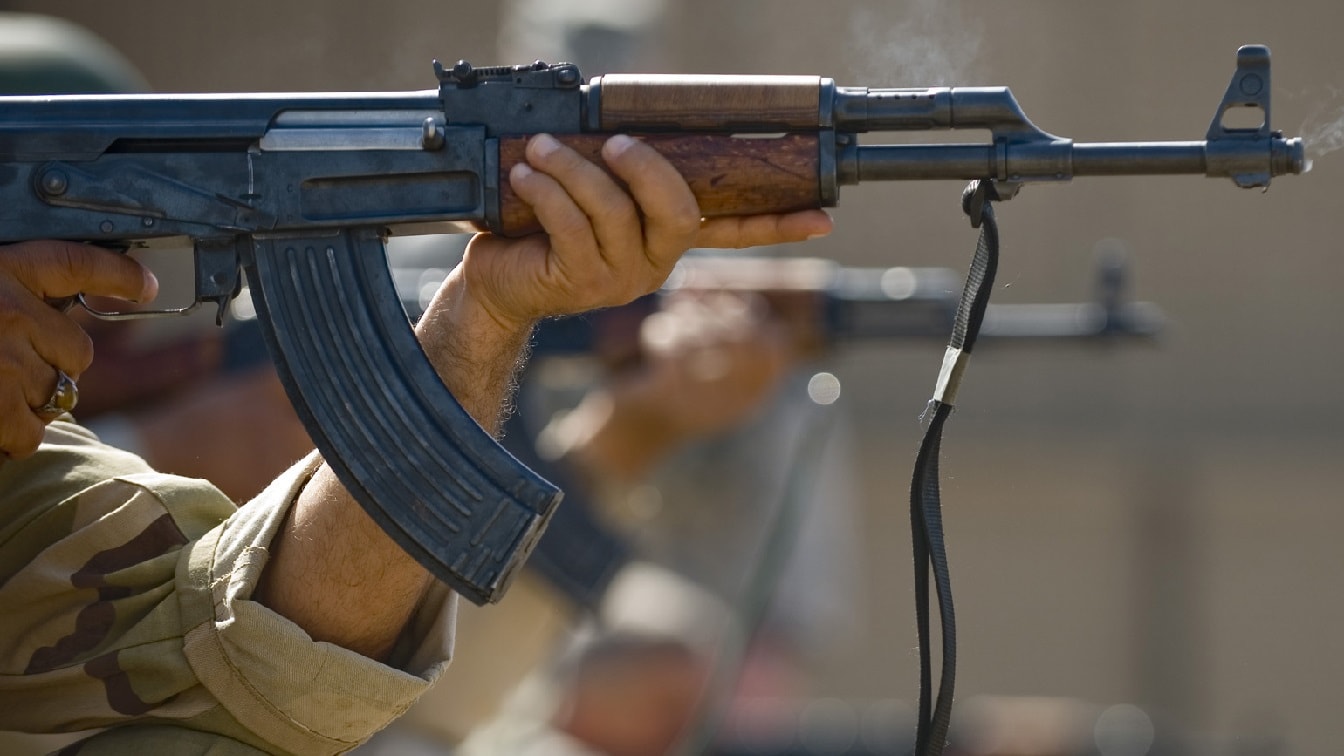
Summary and Key Points: Defense analyst Dr. Michael Rubin evaluates the Trump administration’s plan to utilize Kurdish insurgents against the Islamic Republic during the 2026 air war.
-Drawing on historical precedents like Saddam Hussein’s 1980 invasion, Rubin argues that an ethnic-led insurgency often allows despots to rally the populace around a nationalist banner.
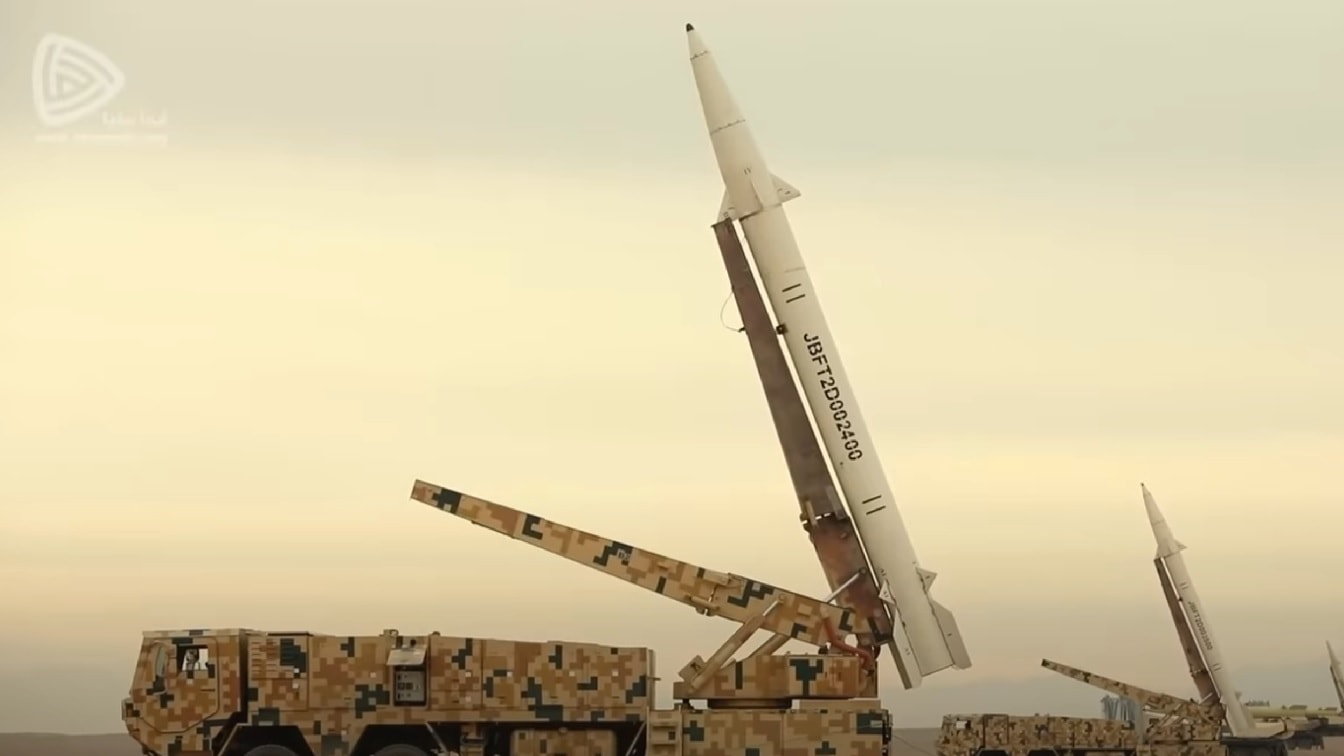
Iran Missiles from Video. Image Credit: YouTube Screenshot.
-This report analyzes the risks of betrayal by Turkey’s Erdogan and the economic conflicts of the Iraqi KDP and PUK.
-Rubin concludes that Kurds must demand the delisting of the PKK and a federalist end-goal to avoid being sacrificed for a “moderate” Tehran.
The “Saddam Precedent”: How External Aggression Historically Strengthens Iran’s Nationalist Grip
President Donald Trump’s idea to use Kurds to spark an insurgency in Iran, reportedly at the urging of the Central Intelligence Agency, will be a huge mistake for both any goal of regime change in Iran and for the Kurds themselves.
While Iran—or Persia as Westerners called it before 1935—has a near contiguous history throughout the centuries, across dynasties and despite fragile frontiers, Iranians remain paranoid about attempts to dismantle the country. Often, external powers establish temporary partnerships with local notables.
In the late 19th century, British authorities considered using Zill as-Sultan (r. 1874-1907), the Isfahan governor and the eldest son of Nasir al-Din Shah (r. 1848-1896) to carve out a separate state as they sought to outmaneuver Russia and defend India. In the end, the British and Russian Empires divided Persia into spheres of influence, a humiliation that fell short of former colonialization.

Shortly after World War I, Sheikh Khazal, an Arab tribal leader in today’s Khorramshahr, sought to carve out his own emirate, initially with British support. Ultimately, when Reza Khan, the father of the shah ousted in 1979, consolidated control over Persia’s periphery, the British shifted their support back to Tehran.
This is a lesson that the Kurds should internalize, especially as Rexa Pahlavi, the current crown prince, promises centralization and has criticized and condemned Iranian Kurds.
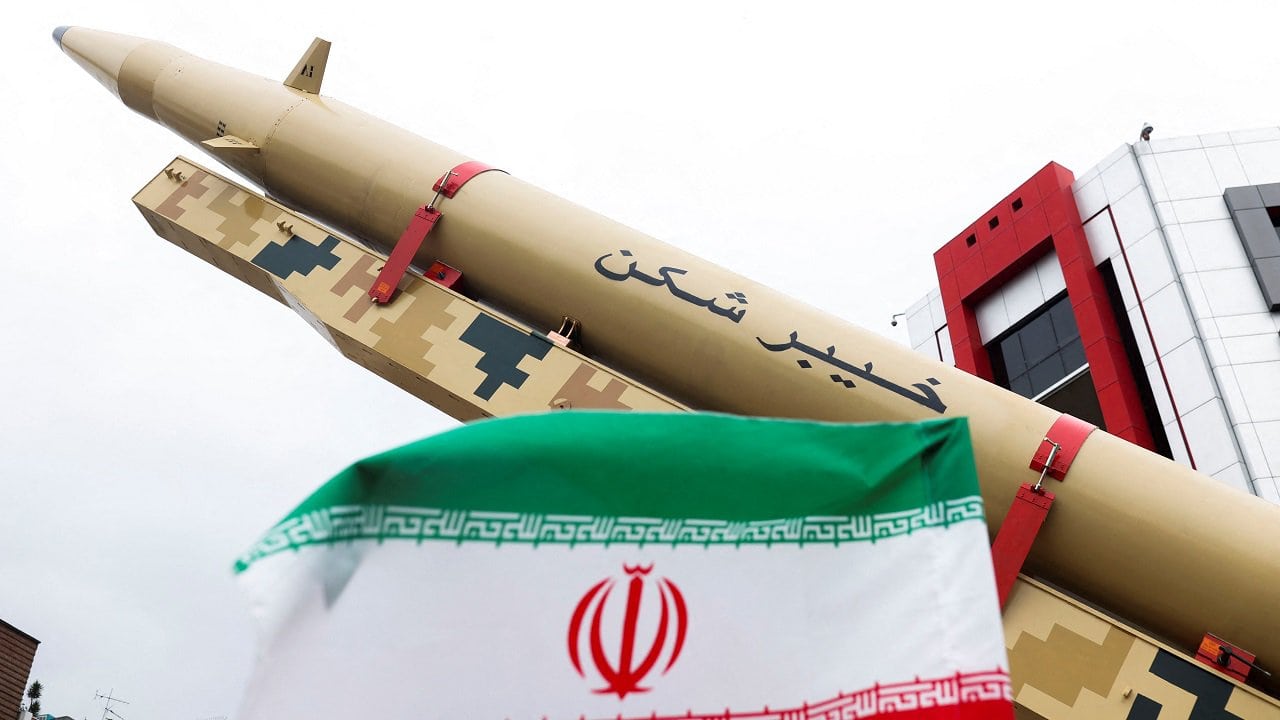
An Iranian missile is displayed during a rally marking the annual Quds Day, or Jerusalem Day, on the last Friday of the holy month of Ramadan in Tehran, Iran April 29, 2022. Majid Asgaripour/WANA (West Asia News Agency) via REUTERS
After World War II, the Soviet Union supported Azerbaijani separatism in Iran, initially refusing to withdraw their forces, sparking the first crisis of the Cold War.
The Soviets, too, supported the Mahabad Republic, a separatist state in which the current Kurdistan Democratic Party leader Masoud Barzani’s father, Mulla Mustafa, was heavily involved.
When Iraqi President Saddam Hussein invaded Iran in 1980, his war aim was to annex the oil-rich province of Khuzestan, where Khorramshahr sits, to “free the Arabs.”
Rather than destroy the Islamic Republic, Saddam’s invasion saved it by allowing Revolutionary leader Ayatollah Ruhollah Khomeini to rally Iranians around the flag and by depicting himself not as a religious despot but rather as a nationalist hero able to defend the country in its hour of need.
A Kurdish-centered invasion and insurgency would affirm all late Supreme Leader Ali Khamenei’s rhetoric about the desire of the United States and Israel not to change the regime but rather to destroy Iran.
Of course, this is not Washington’s goal, which is why the Kurds must be extra-careful. The Iranian regime traditionally deploys Islamic Revolutionary Guard Corps units comprised of ethnic Azeris into Iranian Kurdistan because the Azeris view killing Kurds not only as a business but also as a pleasure. While the U.S. partnership with Iraqi Kurds after the 1991 Operation Desert Storm was successful, Turkey’s willingness to support a no-fly zone made it possible.
Today, however, President Recep Tayyip Erdoğan seeks to crush Kurds, not empower them, and reject the idea not only of a safe-haven, but also of even allowing U.S. overflights. If the Kurds enter Iran, they do so at their own peril.
If the Kurds succeed in ending the regime and a new, more moderate Iran arises, the United States will be at the front of the line to betray the Kurds.
After all, if forced to choose between all of Iran and just ten million Iranian Kurds, Washington will choose all of Iran and betray the very Kurds Trump now supports.
The Iranian Kurds need look no further than Syria, where Trump and his envoy Tom Barrack gleefully betrayed Rojava, the most democratic, moderate, and functional region in Syria, to appease Erdoğan.
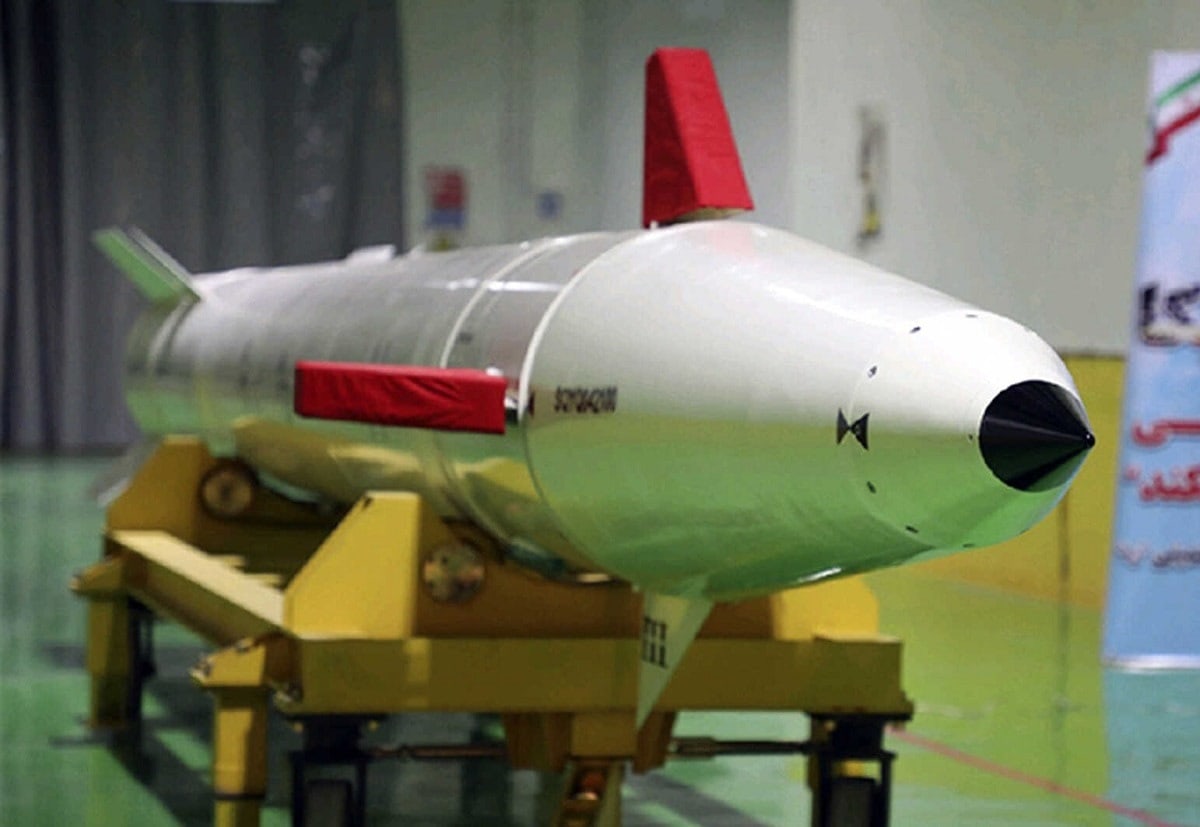
Iranian ballistic missiles. Image: Creative Commons.
Nor should Trump necessarily trust the Iraqi Kurds. Both Bafel Talabani’s Patriotic Union of Kurdistan and Masoud Barzani’s Kurdistan Democratic Party make billions of dollars for themselves by helping the Islamic Republic smuggle oil and other material across their border and to a wider market.
If the Iranian regime falls, that money disappears.
If the Iranian Kurds proceed, they should make certain demands to avoid a repeat of the Rojava disaster. First, the United States should delist the Kurdistan Workers Party (PKK) from its terrorist list. The PKK never attacked the United States.
President Bill Clinton’s administration designated the PKK more than a decade after its insurgency started and even after the Turks began negotiating with it to conclude a helicopter sale.
The U.S. worked side-by-side with PKK affiliates to defeat the Islamic State, but then used Turkey’s claim that the PKK was a terrorist group to justify Washington’s betrayal. If Secretary of State Marco Rubio wished to end the terror designation, he could do so today. The Kurds should also demand Abdullah Öcalan’s release from prison. He is the Kurdish Nelson Mandela; Erdoğan fears him because Kurds will rally around him.
Absent a no-fly zone operating from Incirlik and Diyarbakir in Turkey and Turkish Kurdistan, the United States should establish one operating from Erbil. Barzani might resist, but the Kurdish movement was never about his tribe only; this should be his way to “pay it forward.”
While Kurds might want independence, this is unlikely to be possible in Iran. Kurdish leaders should voice their end goal: federalism and meaningful local governance to assuage other Iranians who wrongly believe Kurdish rights and Iranian freedom are mutually exclusive.
Trump likes to raise the ante before he strikes a deal. Rather than repeat their mistakes of the past, the Kurds should recognize that their opportunity to bargain is now; they should trust no one.
About the Author: Dr. Michael Rubin
Michael Rubin is a senior fellow at the American Enterprise Institute and director of policy analysis at the Middle East Forum. The opinions and views expressed are his own. A former Pentagon official, Dr. Rubin has lived in post-revolution Iran, Yemen, and both pre- and postwar Iraq. He also spent time with the Taliban before 9/11. For more than a decade, he taught classes at sea on the Horn of Africa and the Middle East, covering conflicts, culture, and terrorism to deployed US Navy and Marine units. The views expressed are the author’s own.