

Summary and Key Points: Defense expert Christian D. Orr evaluates the strategic endurance of George Washington and the Continental Army during the 1777–1778 Valley Forge encampment using a famous quote to understand the situation.
-Located 20 miles from British-occupied Philadelphia, the plateau served as a defensible training ground.
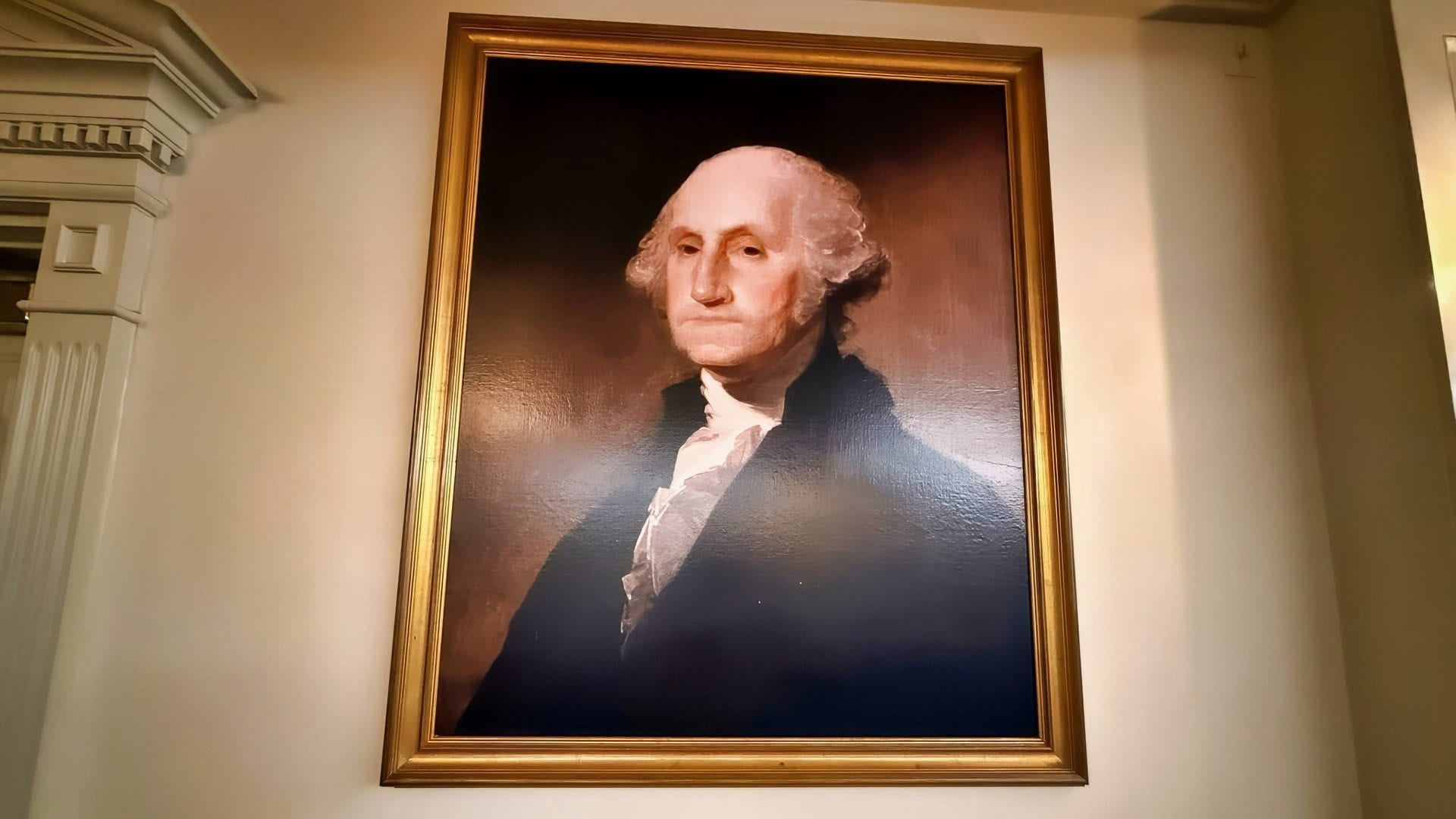
George Washington At Hall of Presidents at Walt Disney World. Image Taken by Harry J. Kazianis for 19FortyFive.com
-This report analyzes the role of Baron von Steuben in standardizing drill and discipline among 12,000 soldiers.
-Orr explores the diversity of the camp, including Indigenous people and enslaved African Americans, while debunking myths of helpless despair.
-He concludes that the winter ordeal “reforged” the army into a professional force capable of defeating the British Crown at Monmouth.
George Washington Valley Forge Myth: Why the Continental Army was Confident, Not Downtrodden, in 1777
“The turning points of lives are not the great moments. The real crises are often concealed in occurrences so trivial in appearance that they pass unobserved.”—This quote belongs to George Washington, and there’s certainly a lot of truth to that saying. After all, the little things go a long way.
However, the ordeal of George Washington and his Continental Army at Valley Forge during the American Revolution was certainly no trivial matter.
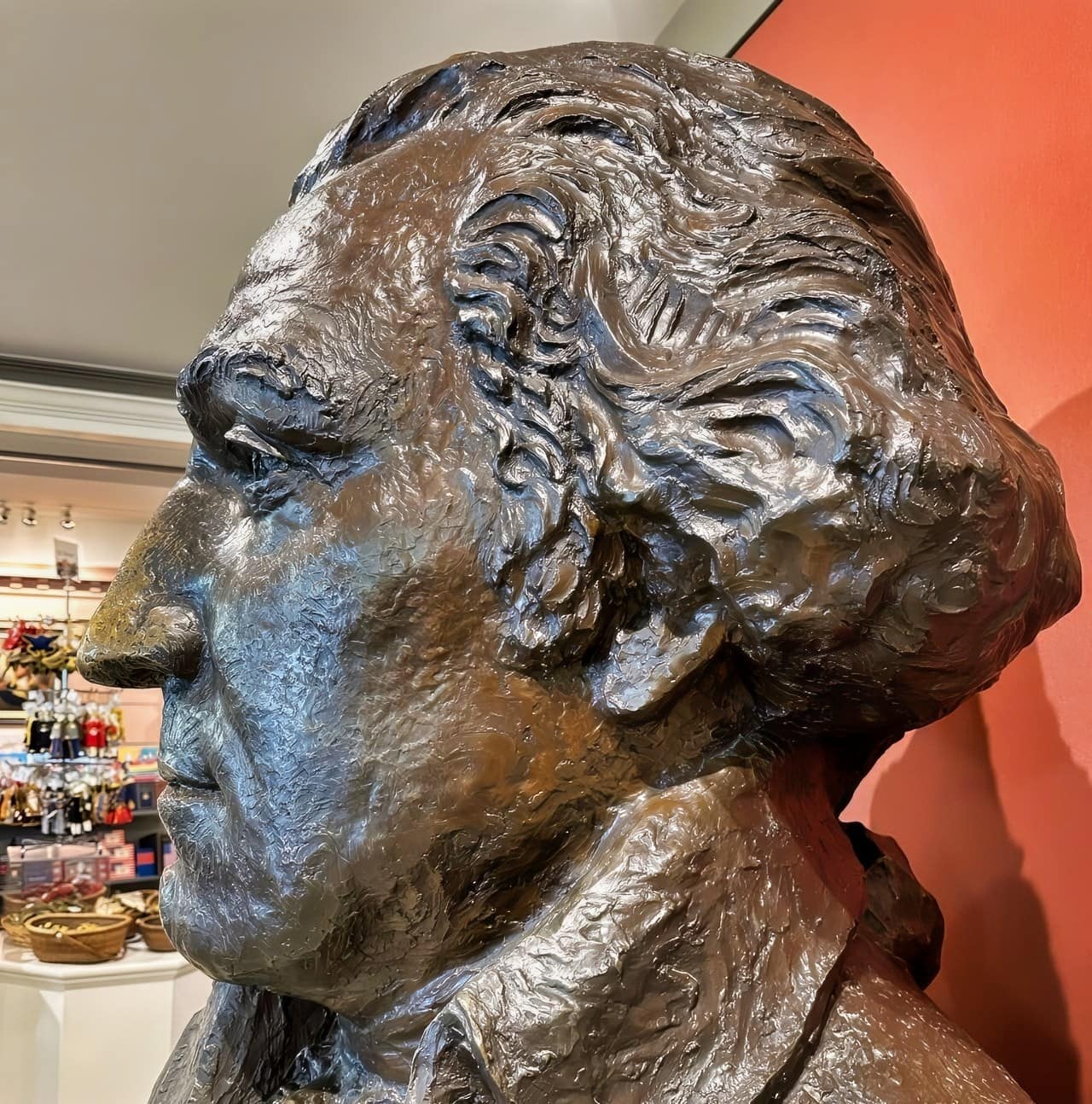
George Washington Bust at Mount Vernon. Image taken by Harry J. Kazianis for 19FortyFive back in 2022.
The affair could’ve broken the Continental Army and General Washington’s military career alike.
Still, thanks to Washington’s steadfast and courageous leadership, it instead proved to be a testament to the endurance of both the individual man and the institution that he commanded en route to the eventual triumph over the British Crown.
The Why and the Wherefore of Valley Forge
Valley Forge—which is now a 3,500-acre National Historical Park—is located in eastern Pennsylvania along the banks of the Schuylkill River, some 20 miles northwest of Philadelphia.
The “City of Brotherly Love” was the American capital during the Revolution (Washington, DC, didn’t become the nation’s capital until 1790, 14 years after the Declaration of Independence).
Still, it was under British occupation from the autumn of 1777, following the Battle of Brandywine (about a year-and-a-half after the Declaration of Independence).
Philadelphia was only a day’s march from Valley Forge.
Moreover, it was a naturally defensible plateau where the army could train and recoup from the year’s battles—a string of humiliating defeats which had some members of the Continental Congress calling Washington’s replacement, believing him incompetent—and the wet and cold winter weather, muddy and impassable roads, and scant supplies made surprise attacks by the Redcoats less likely, which are the major reasons why General Washington chose it as the site for his encampment beginning on December 19, 1877.
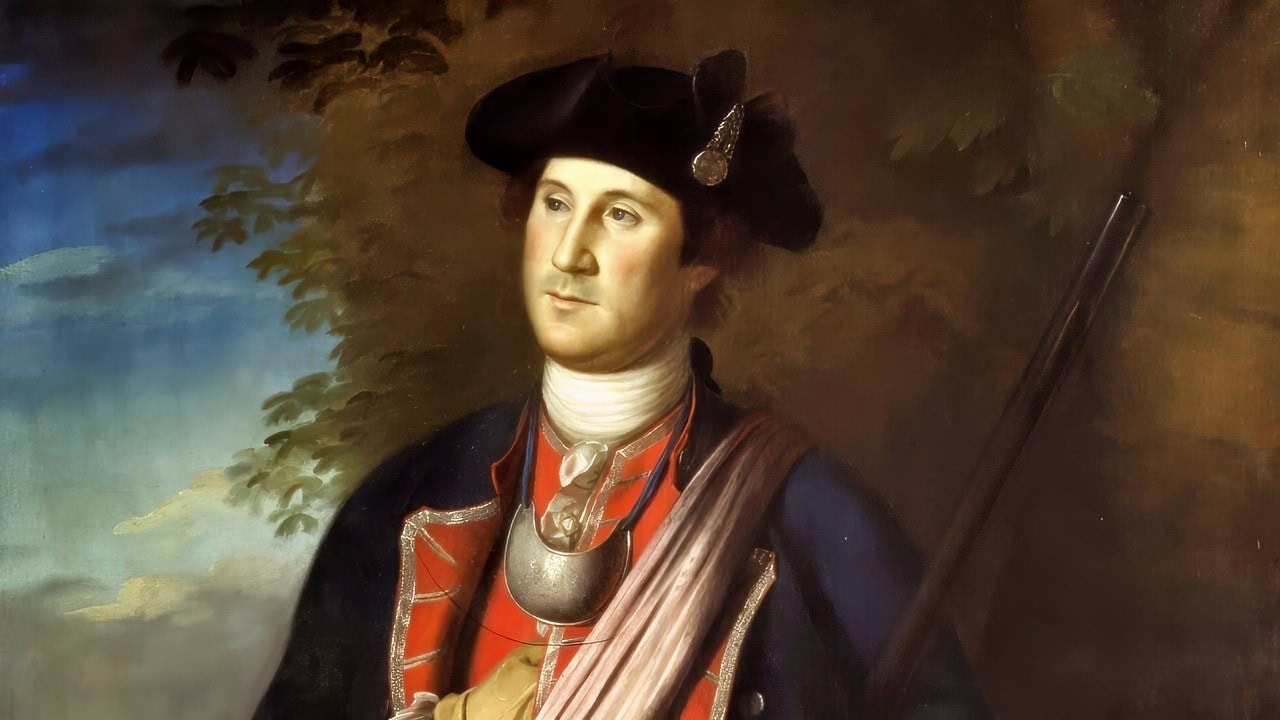
General George Washington Portrait. Image Credit: Creative Commons.
General George Washington. Image Credit: Creative Commons.
Within days of arrival at the encampment, the Continental troops constructed 1,500 to 2,000 log huts in parallel lines that would house 12,000 soldiers and 400 women and children throughout the winter.
Gen. Washington directed that each hut measure approximately 14 feet by 16 feet. Sometimes the soldiers’ families joined them in the space as well (a perk that’s almost unheard of in wartime, even for troops fighting on their own homeland).
One officer remarked that the camp “had the appearance of a little city” when viewed from a distance, and most rank-and-file troops agreed that their log accommodations were “tolerably comfortable.”
Indeed, Valley Forge was as diverse as any city, composed of free and enslaved African American soldiers and civilians, Indigenous people, wealthy commissioned officers, impoverished enlisted men, European immigrants, speakers of several languages, and adherents of multiple religions.
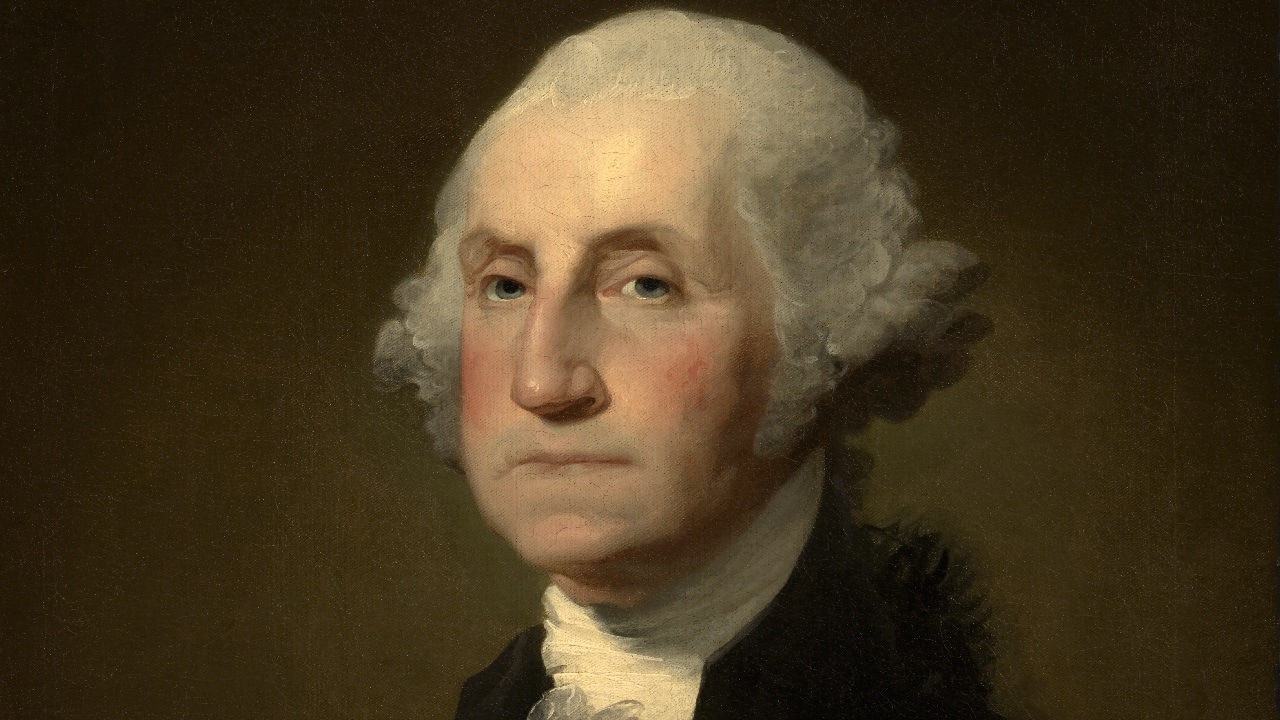
George Washington. Image Credit: Creative Commons.
As for the general (and future first American president) himself, he and his closest aides lived in a two-story stone house near Valley Forge Creek. (Like the one acronym in the military goes, “RHIP [Rank Has Its Privileges”]).
Dispelling Popular Myths About Valley Forge
“You learn something new every day,” as the saying goes, and the National Park Service (NPS) official info page offers this fascinating perspective that was certainly an eye-opener for Yous Truly whilst conducting the research for this article:
“Contrary to popular myth, the Continental soldiers marching into Valley Forge were not downtrodden — just exhausted and ill-supplied. They exuded the confidence of people who knew that they had come close to beating the British in battle. They were cautiously optimistic about the future and resigned themselves to establishing their winter camp … The romantic image that depicts the troops at Valley Forge as helpless and at the mercy of winter’s fury, wearing nothing but rags and leaving bloody footprints in the snow, is **not necessarily accurate**, and ultimately renders the soldiers and camp followers of the Continental Army, and their commander, a disservice … The winter of 1777-78 was neither the coldest nor the snowiest of the war, but conditions were extremely difficult for many reasons. Regular freezing and thawing, plus intermittent snowfall and rain, along with shortages of provisions, clothing, and shoes, made living conditions extremely difficult.” [emphasis added]
That said, diseases like influenza and typhoid did spread through the camp, claiming the lives of nearly 2,000 people during the six-month-long encampment.
However, it was also here that the Continental Army, still largely composed of disparate colonial militias, supported by hundreds of camp followers and allies, emerged under Washington’s leadership as a cohesive and disciplined fighting force.
Of course, a big chunk of credit for the hardened reforging (bad pun intended) of the Continentals belongs to the Prussian Inspector General, Baron Friedrich Wilhelm August Heinrich Ferdinand Freiherr von Steuben, whose masterful drilling whipped the ragtag troops into shape, mentally and physically.
On June 19, 1778, George Washington—having successfully staved off efforts to remove him from command—and his now-hardened Continental Army finally bid adieu to Valley Forge.
As noted by Mary Stockwell, Ph.D., writing for the Mount Vernon website, “Together they headed for New Jersey where they would make a stand against the British army, on its way from Philadelphia to New York, at Monmouth Courthouse.”
Valley Forge’s Lasting Legacy
Valley Forge’s lasting legacy has been commemorated in more ways than you can shake a stick at.
Among other things, even though it was strictly a Continental Army affair and not a naval one, the United States Navy saw fit to put interservice rivalries aside and name three different warships the USS Valley Forge, including not one but indeed two Essex-class aircraft carriers during World War II:
-CV-37 was an Essex-class carrier originally slated to be named USS Valley Forge, but was renamed USS Princeton before launch
–CV-45, on the other hand, was the Essex-class carrier that *did* retain the Valley Forge moniker, commissioned in 1946, converted to an amphibious assault ship (LPH-8), and decommissioned in 1970
–CG-50 was a Ticonderoga-class guided missile cruiser commissioned in 1986 and decommissioned in 2004
About the Author: Christian D. Orr, Defense Expert
Christian D. Orr is a Senior Defense Editor. He is a former Air Force Security Forces officer, Federal law enforcement officer, and private military contractor (with assignments worked in Iraq, the United Arab Emirates, Kosovo, Japan, Germany, and the Pentagon). Chris holds a B.A. in International Relations from the University of Southern California (USC) and an M.A. in Intelligence Studies (concentration in Terrorism Studies) from American Military University (AMU). He is also the author of the newly published book “Five Decades of a Fabulous Firearm: Celebrating the 50th Anniversary of the Beretta 92 Pistol Series.”