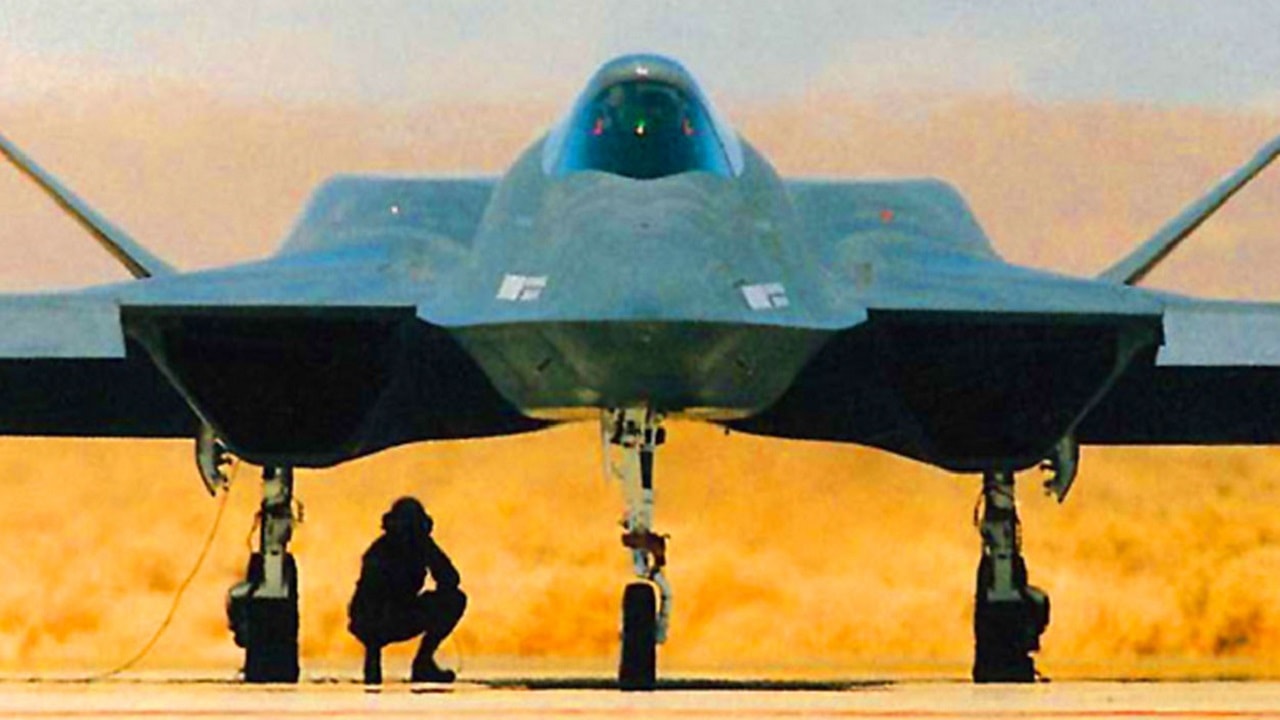
The YF-23 Black Widow II was an experimental demonstrator aircraft that competed in the Advanced Tactical Fighter Program (ATF) for the U.S. Air Force’s next-generation air superiority fighter.
19FortyFive staff actually visited the only two airframes built of this amazing stealth fighter, and the pictures in this article are from that visit. We were very impressed, to say the least.
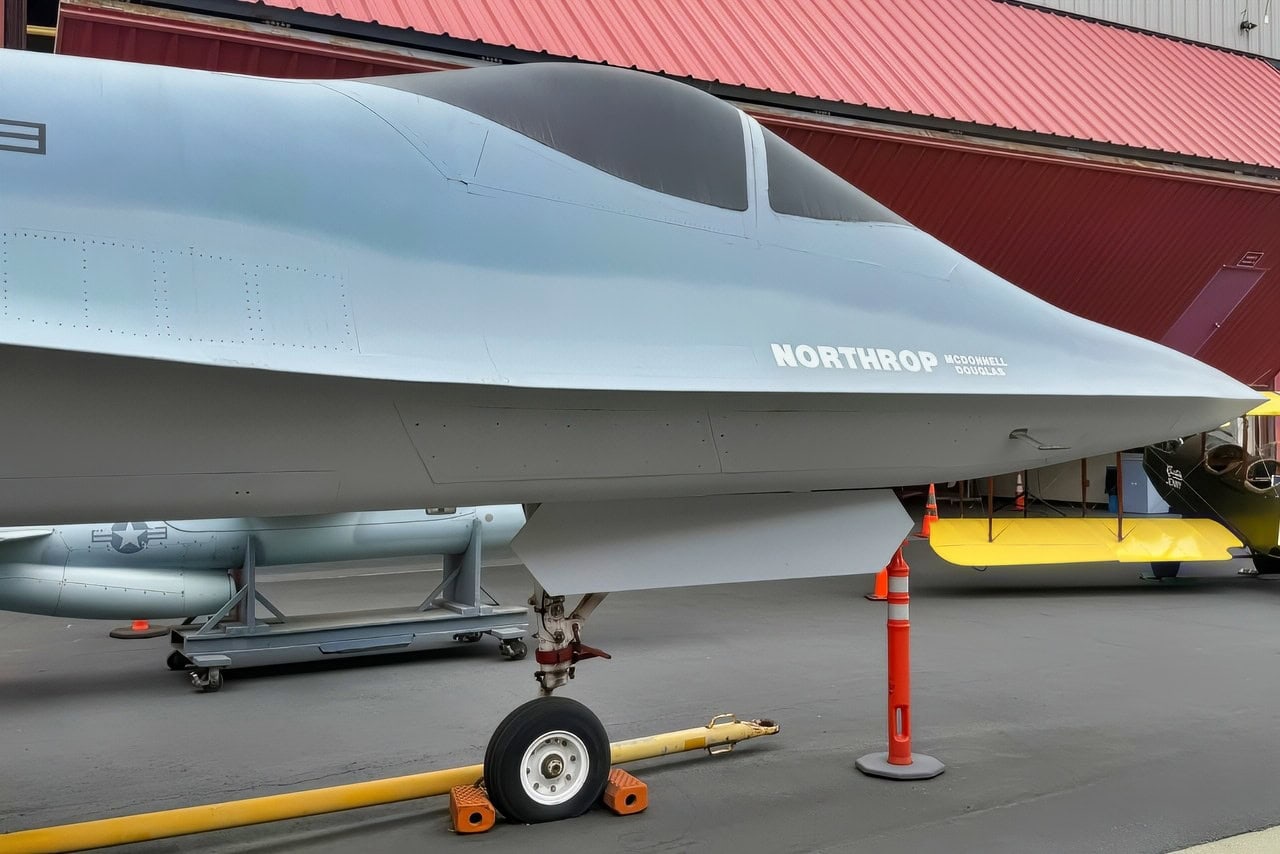
YF-23 Stealth Fighter. Image taken by Harry J. Kazianis for 19FortyFive.
The aircraft has since gained a loyal and dedicated fanbase. Ever since it lost the ATF, aviation enthusiasts have been locked in an eternal debate as to whether the Air Force made the right decision.
Many argue that the YF-23 was unfairly snubbed and that the U.S. would have been better off if it had chosen it over the YF-22.
Development of YF-23
In the early 1980s, the Air Force began searching for a replacement for the F-15 Eagle. Although it was not yet obsolete at the time, the Air Force recognized the need for a new fighter jet to combat increasingly sophisticated Soviet fighters like the Su-27.
The USSR had also been developing increasingly sophisticated air defense systems, which were being integrated into its already heavily saturated airspace.
The ATF program was intended to stay ahead of these developments by producing a new generation of fighter capable of penetrating heavily defended airspace, flying at supersonic speeds without afterburners, and defeating enemy aircraft before being detected.
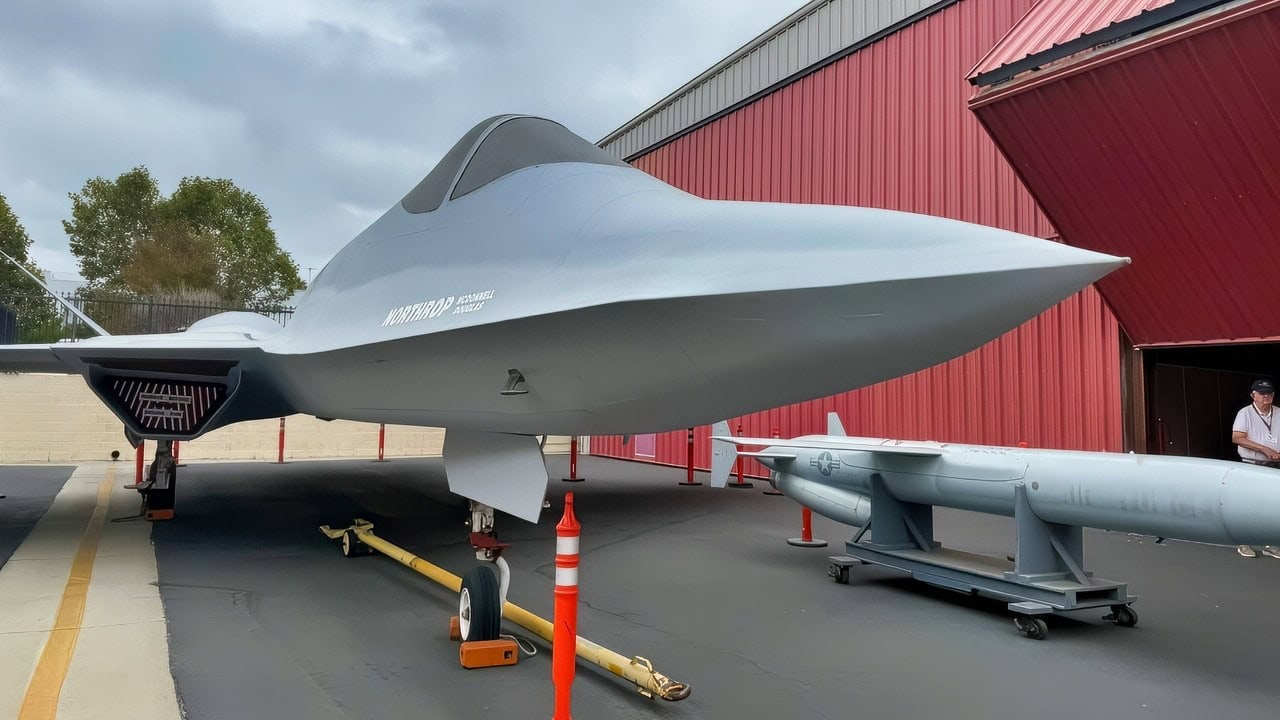
Northrop, in partnership with McDonnell Douglas, approached the challenge with a philosophy that differed subtly but significantly from Lockheed’s. Rather than focusing heavily on extreme agility and post‑stall maneuvering, Northrop prioritized low observability and maximizing sustained supersonic performance.
The result was the YF‑23, an aircraft whose appearance immediately set it apart from its competitor. It was long, flat, and arrow‑like, with smooth, blended surfaces and no traditional vertical stabilizers. Everything about its form suggested speed and discretion rather than brute force.
Design Optimized for Stealth
The aircraft’s distinct shape was a direct consequence of its stealth‑first philosophy.
Radar cross‑section reduction was built into every aspect of the design.
The fuselage and wings blended seamlessly, reducing abrupt angles that could reflect radar energy.
The platform alignment ensured that radar returns were deflected away from their source rather than straight back to enemy sensors.
Even compared to other emerging stealth aircraft of the era, the YF‑23 was a sophisticated evolution away from faceted geometry and toward smoother, more aerodynamically efficient surfaces.
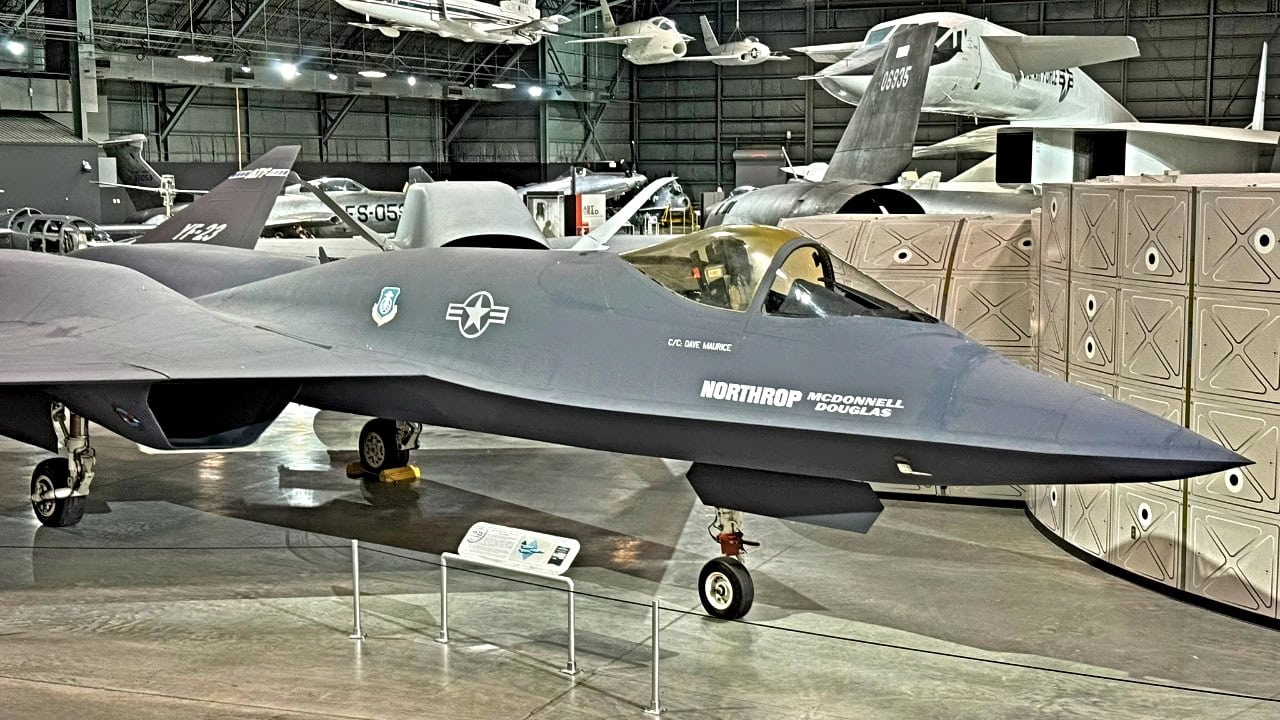
YF-23 Stealth Fighter. Image taken by Harry J. Kazianis for 19FortyFive.
The attention to stealth extended to the engine installation as well.
The intakes were deeply buried within the fuselage, shielding the engine fan faces from radar exposure.
This was a crucial consideration, as exposed fan blades are among the strongest radar reflectors on any jet aircraft. At the rear, the engines exhausted through long, shallow rectangular troughs rather than circular nozzles.
These exhausts helped mask the engines’ infrared signature by spreading heat over a wider area, making the aircraft harder to detect with heat‑seeking sensors and infrared search and track systems.
The ATF Competition
Two YF‑23 prototypes were constructed, respectively named “Grey Ghost” and “Spider,” each intended to test a different engine for the ATF program.
One aircraft flew with the Pratt & Whitney YF119 engine, while the other used the General Electric YF120. Both engines were capable of producing immense thrust while enabling sustained supersonic flight without engaging afterburners. The YF‑23 airframe proved highly compatible with both designs, demonstrating excellent performance and stability during testing.
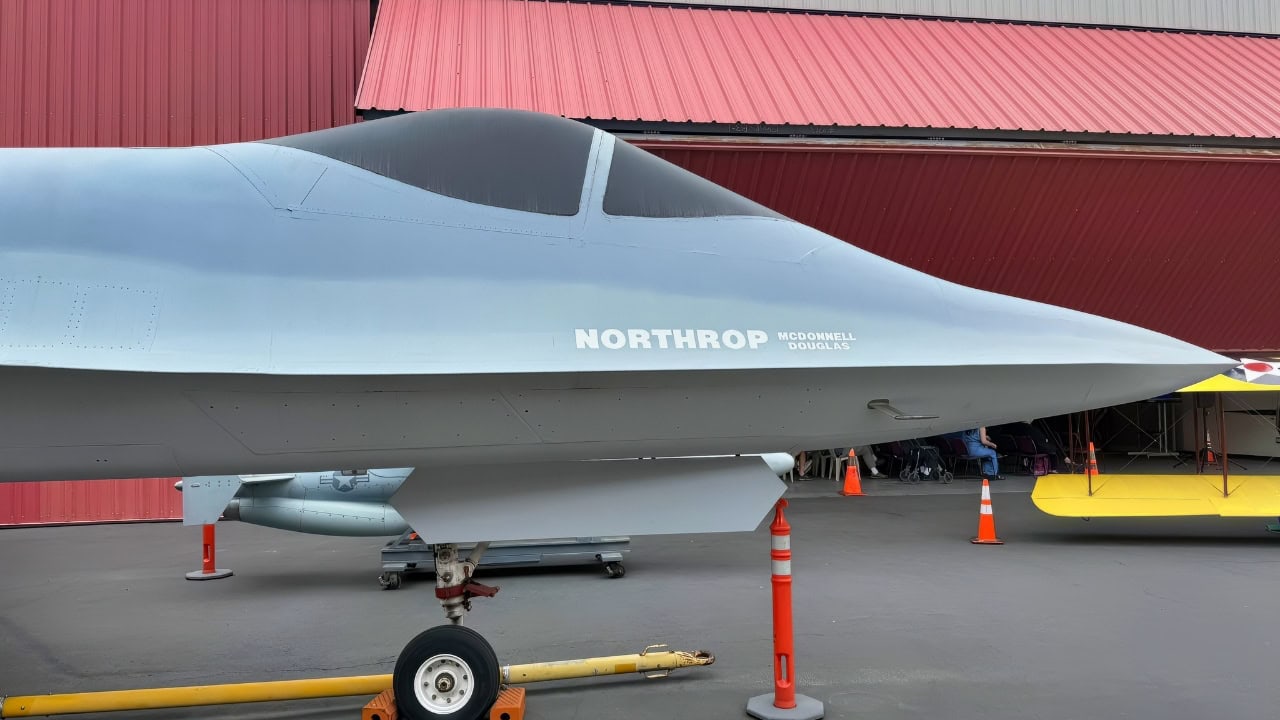
YF-23 Black Widow II 19FortyFive Image Taken By Harry J. Kazianis.
Although much of the aircraft’s exact performance remains classified, it was widely acknowledged that the YF‑23 was exceptionally fast.
Test results suggested that it could cruise at higher supersonic speeds than its rival, maintaining that pace efficiently and quietly. In many ways, the aircraft behaved less like a traditional dogfighter and more like a stealth interceptor, designed to enter hostile airspace unseen, eliminate threats at long range, and exit before the enemy could react.
The Air Face Makes a Decision
The YF‑23 made its first flight in August 1990, and subsequent testing quickly demonstrated that the aircraft met or exceeded the Air Force’s performance requirements.
According to the aircraft’s test pilots, it was stable, smooth, and surprisingly easy to fly despite its radical appearance. Unlike many experimental aircraft, it did not suffer from severe handling issues or major mechanical failures during its evaluation period. In purely technical terms, the YF‑23 was widely regarded as a success.
When the Air Force announced its decision in April 1991, the YF‑22 was declared the winner, and since then, there has been an endless debate among aviation enthusiasts about whether this decision was justified.
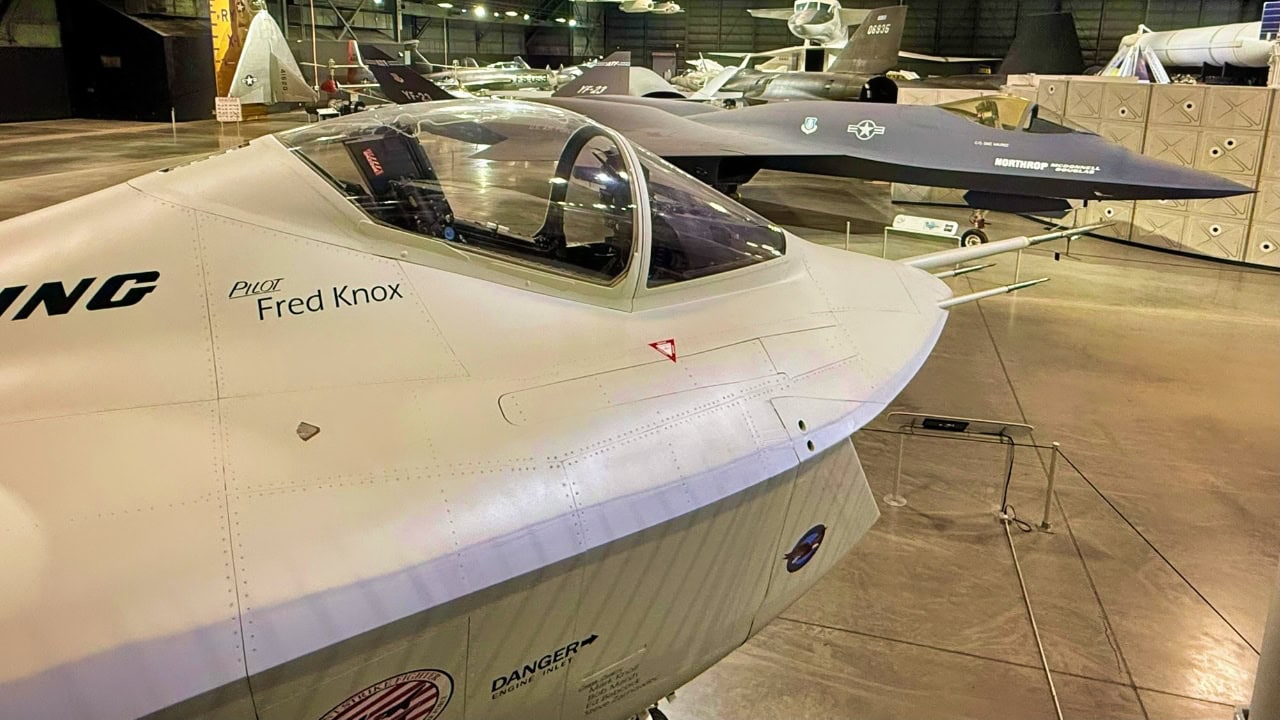
X-32 and YF-23 Together at U.S. Air Force Museum. 19FortyFive.com Image.
The Air Force considered many factors beyond the aircraft’s flight performance, such as confidence in the contractor’s ability to deliver a complex system on time and at scale, as well as long term logistic and potential risks. Lockheed’s recent experience with operational stealth aircraft also weighed in its favor. While the YF‑23 may have offered advantages in speed and stealth, the YF‑22 was viewed as a more balanced and lower‑risk option.
Why the YF-23 Lost the Competition
The YF-23 may have had better overall stealth characteristics than the YF-22, but only by a matter of degrees.
The production F-22 is still considered one of the world’s stealthiest fighter jets, despite being designed in the 1980s. Additionally, the aircraft’s excellent maneuverability and tight turn radius enabled it to perform exceptionally well in both close-range and BVR combat, making it more versatile than the YF-23. In Northrop’s defense, however, the requirements for the ATF program demanded speed and stealth and said nothing about maneuverability.
There was also a political aspect to the decision as well. While Northrop was working on the B-2 Spirit program, Lockheed had no projects at the time and needed a new fighter jet to keep the company afloat.
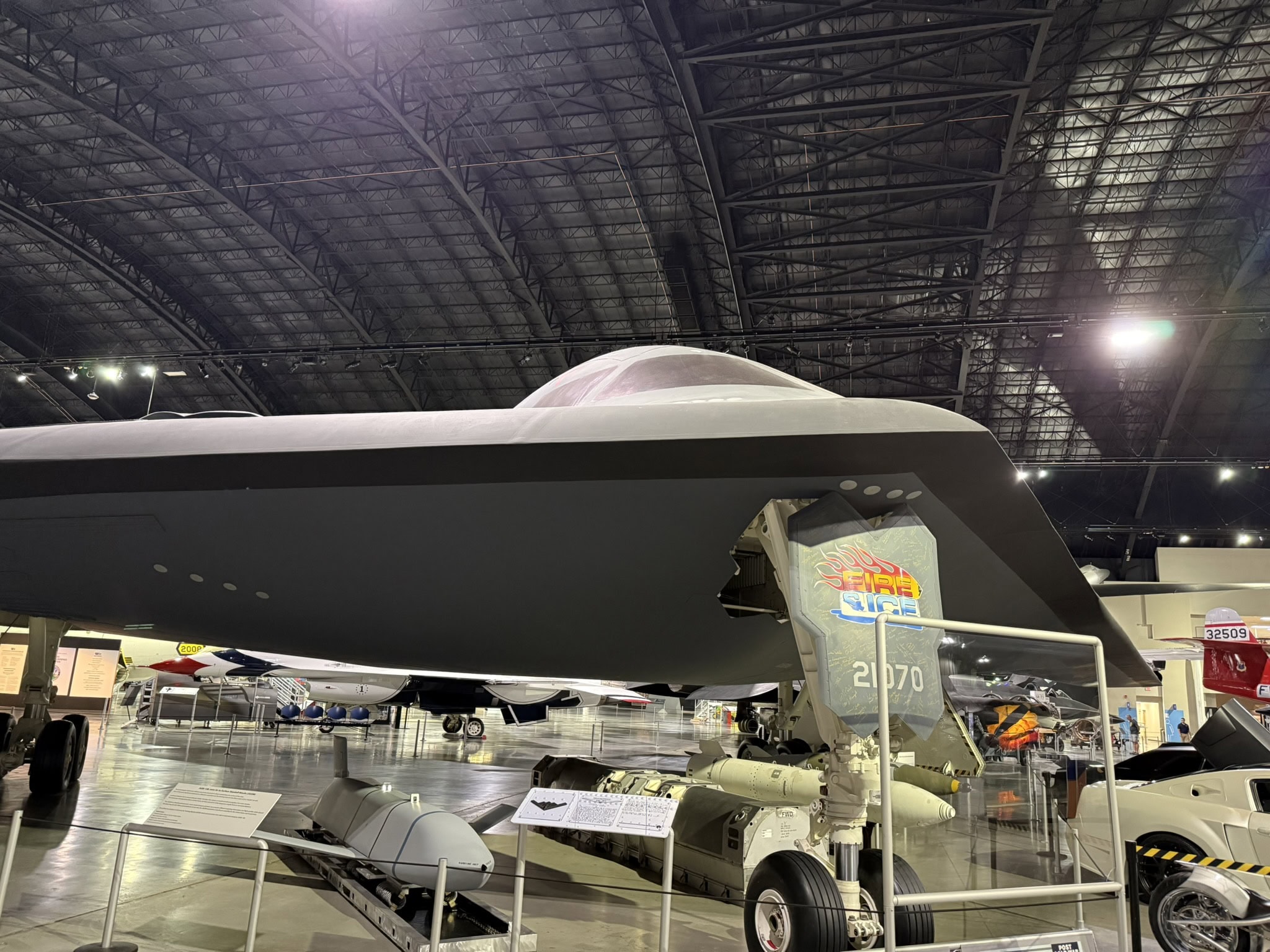
B-2 Spirit Stealth Bomber. 19FortyFive.com Photo from National Museum of the U.S. Air Force Visit in 2025.
The Air Force viewed Lockheed as vital to national security and awarded it the ATF contract to keep the company alive. Lockheed was also better at marketing. They knew how to impress Air Force officials and showed off the YF-22’s capabilities better than the engineers at Northrop did.
This, combined with the YF-22’s more conventional design, made it appear a safer and more appealing option than the YF-23’s riskier design.
MORE – There Is Only 1 Way to Solve the Strait of Hormuz Crisis
About the Author: Isaac Seitz
Isaac Seitz, a Defense Columnist, graduated from Patrick Henry College’s Strategic Intelligence and National Security program. He has also studied Russian at Middlebury Language Schools and has worked as an intelligence Analyst in the private sector.