
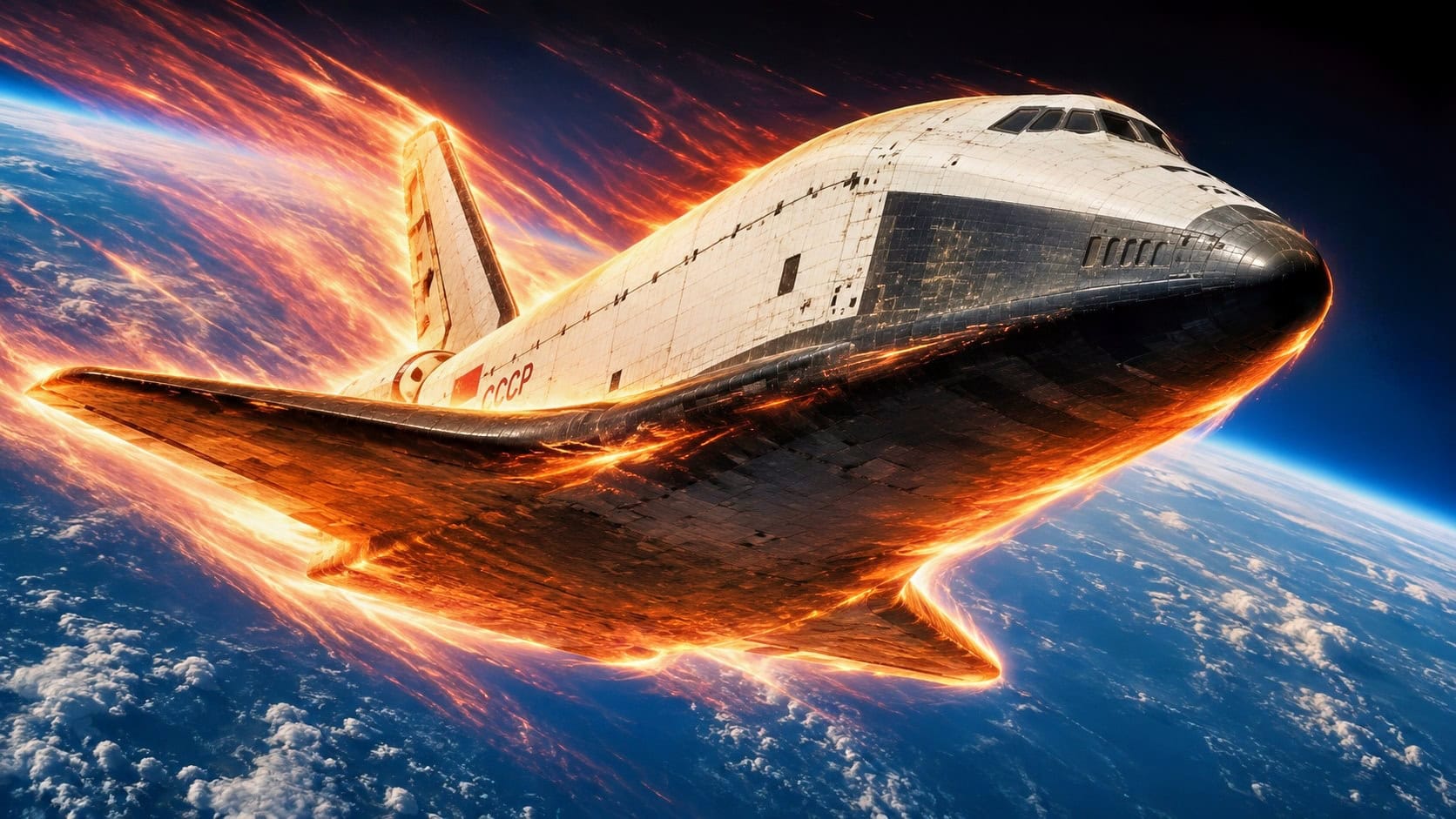
One aspect of NASA’s space shuttle program that is not widely known is that it once had potential military uses.
The Cold War was entering a new, more technologically sophisticated phase in the late 1970s and early 1980s. The United States was always looking for an edge in the contest with the Soviet Union, and space was one area the Russians focused on to achieve dominance.

Space Shuttle Buran at the Technik Museum Speyer.
The U.S. space shuttle could someday perhaps carry a payload of military satellites and other high-tech weapons.
This made the Soviets take notice. The Americans were acting as if the NASA space shuttle was just for civilian research and development.
The Kremlin knew that the United States was onto an important innovation – a reusable spacecraft that could take an immense payload into space and then return to earth safely, and repeat the process.
Give Peace a Chance? No Thanks, Said the Soviets
But the Soviets were not convinced this was for peaceful purposes.
If the U.S. shuttle could place a military satellite into orbit, Soviet planners reasoned, it might eventually carry weapons there too, anything from directed-energy systems to, in their worst-case thinking, nuclear arms.
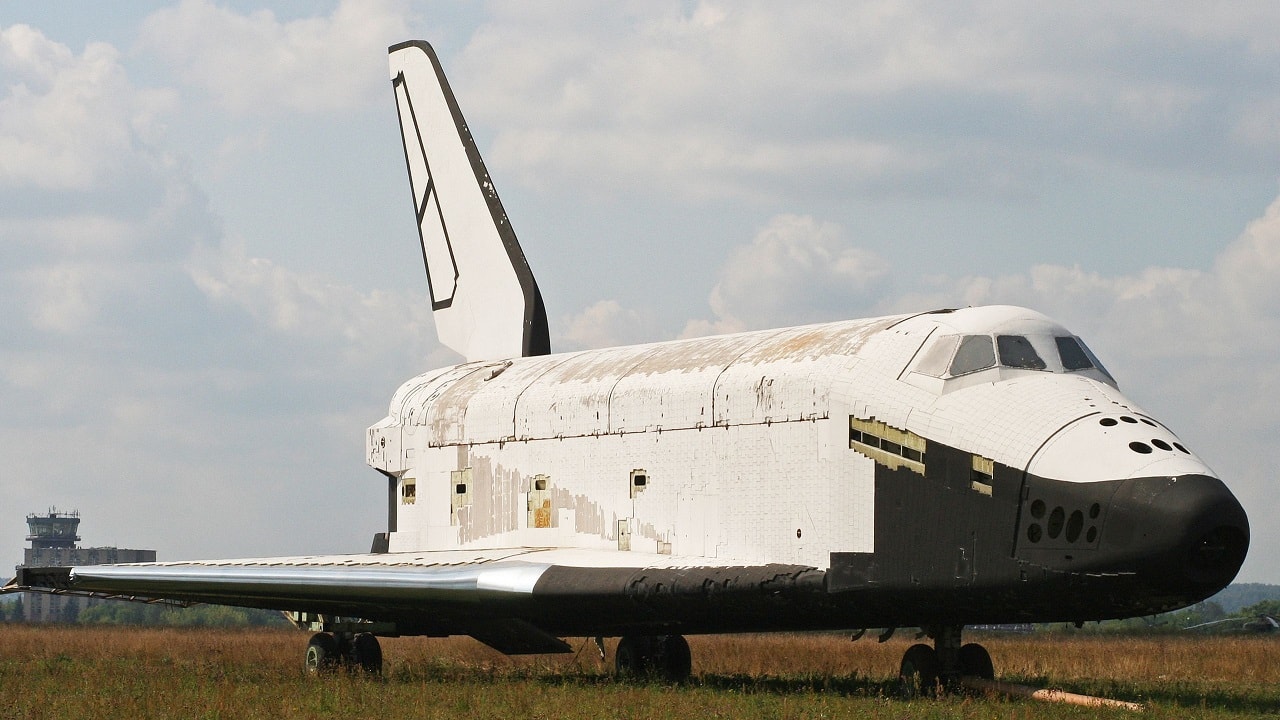
This was the third ‘Buran’ space shuttle built but was the first of the second generation shuttle, with several modifications over the initial two aircraft. While ‘Buran’ was the name of the programme and also the first shuttle built, the fleet were all to have different names and this would have been the ‘Baikal’. c/n 11F35 K3. It was only 50% completed when the programme ended and remained stored at the Tushino factory for many years. It moved to Zhukovsky on a barge in 2011. It is assumed that it will become part of some kind of museum. Stored on a grass area next to part of the crowdline and seen during the Russian Air Force 100th Anniversary Airshow. Zhukovsky, Russia.
Project Snowstorm Started Auspiciously
The Russian engineers got to work and developed their own space shuttle called the Buran, which translates to “snowstorm.” This pushed the Soviet designers, engineers, and technicians into overdrive. The Russians had many excellent ideas to make their effort a reality.
The Americans Leaped In Front
Also, the “shuttle threat” was real. The U.S. military was going to teach the Russians a lesson on space prowess. The Americans could foresee an era in which the Soviets would be left in the dust.
The NASA space shuttle was venturing into unexplored territory. Satellites and space weapons would give the Americans a huge advantage in the Cold War.
Space weapons would surely be part of the program, the Soviets believed, and it was time to step up and create a Russian version.
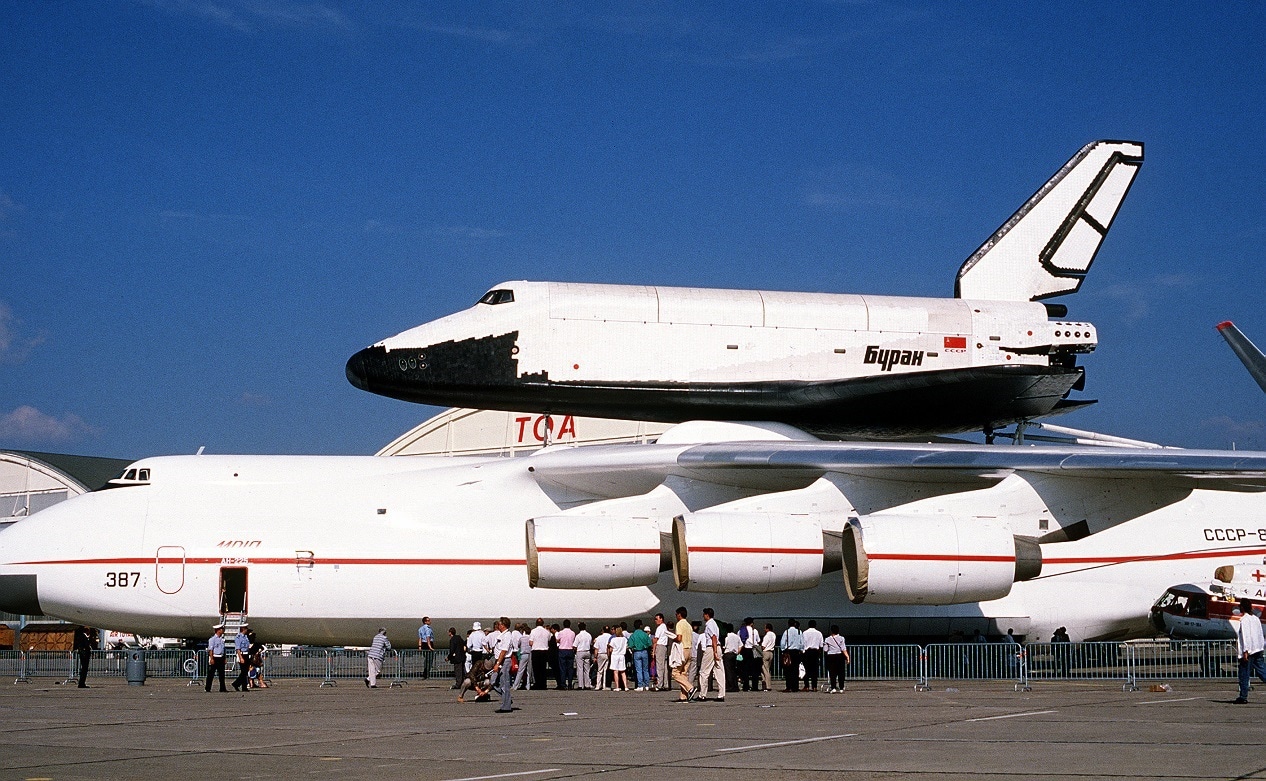
Visitors at the 38th Paris International Air and Space Shown at Le Bourget Airfield line up to tour a Soviet An-225 Mechta aircraft with the Space Shuttle Buran on its back.
Best in Soviet Brainpower
The Russian designers and engineers at the Molniya Research Industrial Corporation were some of the best in the world.
The Soviets knew the STEM fields well and graduated many PhDs who worked in the space program and had a firm grip on mathematics and astrophysics. Molniya technicians toiled quickly on the Buran’s body. “The goal was to send 30 tons to space and return 20 tons to Earth.”
Military Aspects Of the Russian Space Shuttle
Buran was designed to carry a crew of up to 10, including a flight crew of 2 to 4 plus several mission specialists. That left room for scientists to run experiments and conduct extra spacewalks.
Several people on board could also execute military missions if needed.
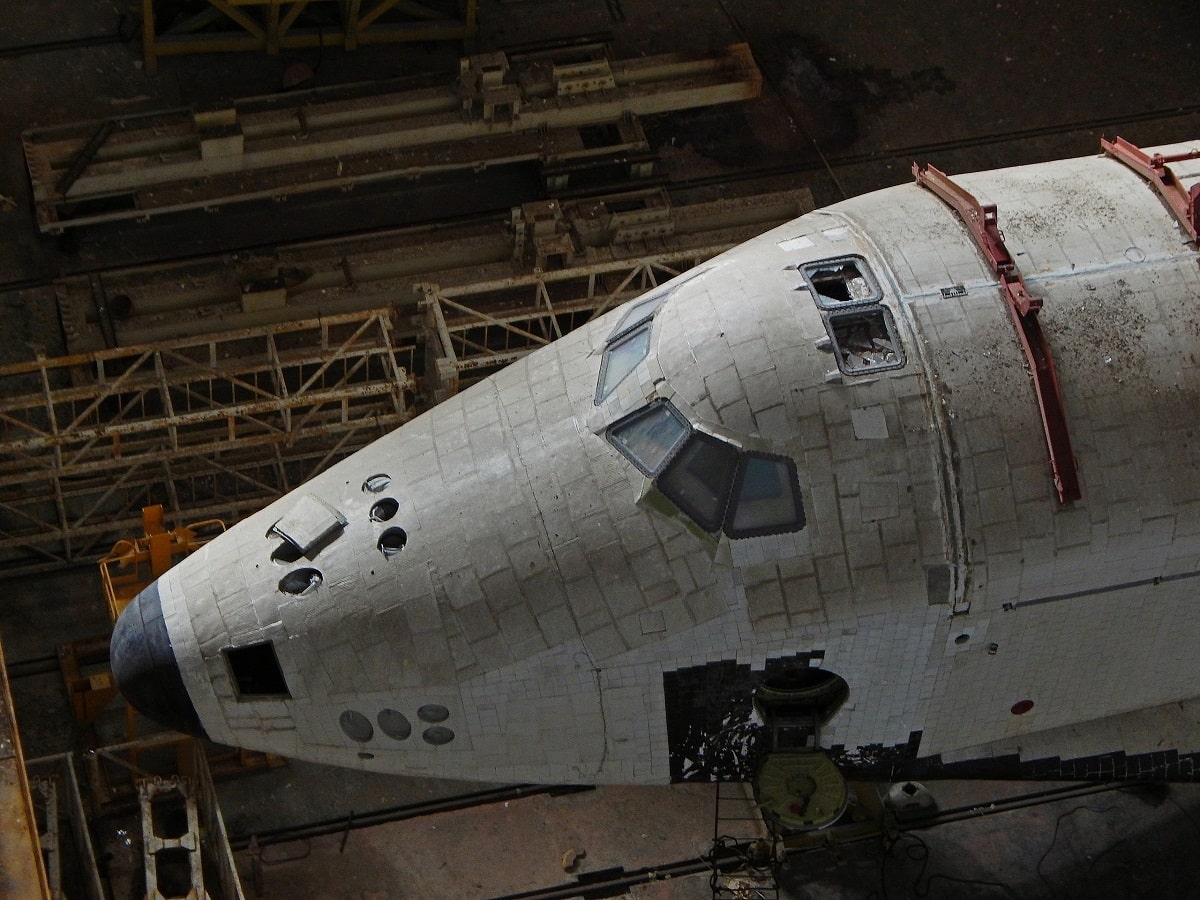
Buran Space Shuttle. Image: Creative Commons.
If the Buran was going to have defensive capabilities, shuttle engineers required backup personnel to keep the spacecraft flying well and to launch satellites and operate the lasers and nuclear weapons that could challenge the American space shuttle’s future capabilities.
New Satellites Would Give the Soviets an Advantage
The satellites onboard would be advanced and large. These orbiting craft could be 56 feet long and 15 feet in diameter. They were diverse in their mission sets and could more easily and effectively spy on the United States than older satellites of the 1970s and 1980s.
This Was a Copycat Version
The Soviets also learned from the American experience that the shuttle had to withstand enormous heat when re-entering earth’s atmosphere. Engineers working on this problem led successful rehearsal missions.
The Soviets were excited that the Buran would be a hit. The Russians were not playing around. They assigned thousands of people to work on the program.
From the outside, Buran looked strikingly like the American shuttle, partly because any reentry glider converges on a similar shape. But it differed in a crucial way: Buran carried no main engines of its own. All of its launch thrust came from the separate Energia rocket, where the American orbiter carried three main engines itself. That difference is exactly what lets Buran fly and land with no crew aboard.
The Downfall of the Soviet Shuttle Program
“Buran launched only once into space, on Nov. 15, 1988, and re-entered the atmosphere after two orbits, according to NASA. The spacecraft launched aboard a Russian Energia rocket and successfully touched down under automatic control, something NASA’s space shuttle was not designed to do,” Space.com noted.
The Soviet Empire Was No More
The main problem for the Buran program was that it was overcome by events. After that first flight in 1988, the Berlin Wall fell the next year.
The Soviet Union plunged into political chaos, and the empire broke apart two years later. This left the Buran program in dire straits. Funding dried up.
The new government had more fish to fry, and anything related to space was curtailed.
The Soviets decided to stop flying the Buran shuttle, and the “only Buran used in space was destroyed after the roof fell in at its storage facility at the Baikonur Cosmodrome in Kazakhstan,” according to Space.com.
This was disappointing to everyone who worked so hard on the program. The Soviets envisioned civilian and military uses and wanted to eclipse the Americans.
The Russian shuttle would have been a whopping success, given the kind of brainpower dedicated to developing the spacecraft. The timing was just not optimal.
Buran was a serious effort, not a crude knockoff. In theory, the Russian version could have carried reconnaissance satellites and other military payloads, and Soviet planners imagined it as a possible platform for future space-based systems. Whether it would ever have carried weapons was never tested.
This would have given the Soviets a badly-needed defense boost.
Too bad for the Soviets that this program never passed muster, and it was a disappointment that likely frustrated the many thousands of people who dedicated their careers to the Buran.
About the Author: Brent M. Eastwood, PhD
Author of now over 3,500 articles on defense issues, Brent M. Eastwood, PhD, is the author of Don’t Turn Your Back On the World: A Conservative Foreign Policy and Humans, Machines, and Data: Future Trends in Warfare, plus two other books. Brent was the founder and CEO of a tech firm that predicted world events using artificial intelligence. He served as a legislative fellow for US Senator Tim Scott and advised the senator on defense and foreign policy issues. He has taught at American University, George Washington University, and George Mason University. Brent is a former US Army Infantry officer. He can be followed on X @BMEastwood.