Howard Hughes was one of the most interesting–and bizarre–figures in modern American history. Wealthy, enterprising, and utterly eccentric, Hughes was more than just someone who liked to fly new and experimental planes.
He worked closely with the US intelligence services.
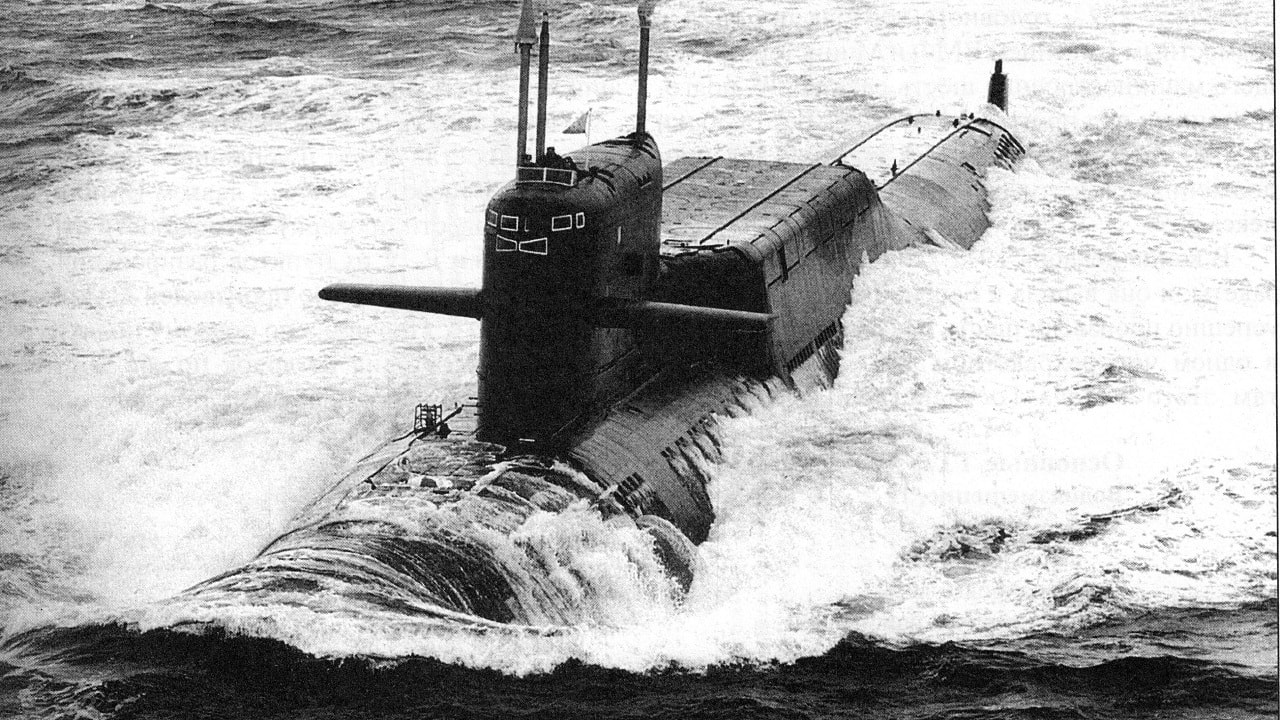
K-219. Image Credit: Creative Commons.
Interestingly, one rumor that has persisted for decades about the Watergate burglary revolves around a conspiracy theory that Nixon’s “Plumbers” were really trying to steal secret files from the Democratic National Committee (DNC) to prevent information about a purported $100,000 bribe that Hughes gave to the Nixon reelection campaign.
So, that’s how connected and deep Howard Hughes was back in the day.
The K-129
It’s no surprise, then, that his name comes up in reference to one of the wildest secret missions of the Cold War.
Back in 1974, you see, the CIA concocted a complex covert operation to recover a sunken Soviet submarine, K-129, from the Pacific floor. Sitting three miles deep, the mission cost the US taxpayer around $350 million.
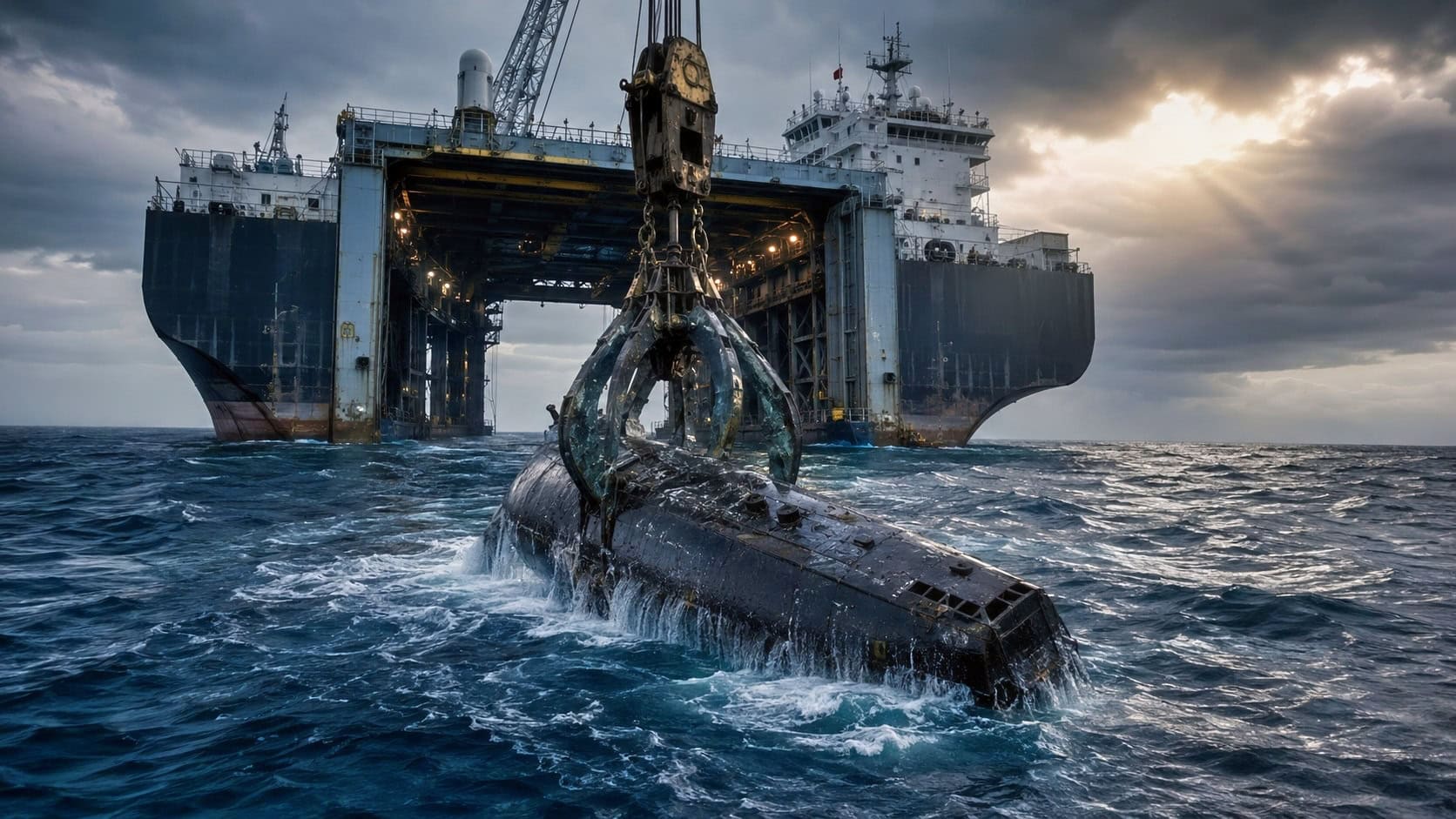
That expense stemmed from the CIA needing to use Howard Hughes’ Glomar Explorer to execute the massive lift. That ship had a massive mechanical claw capable of lifting the sunken Soviet submarine.
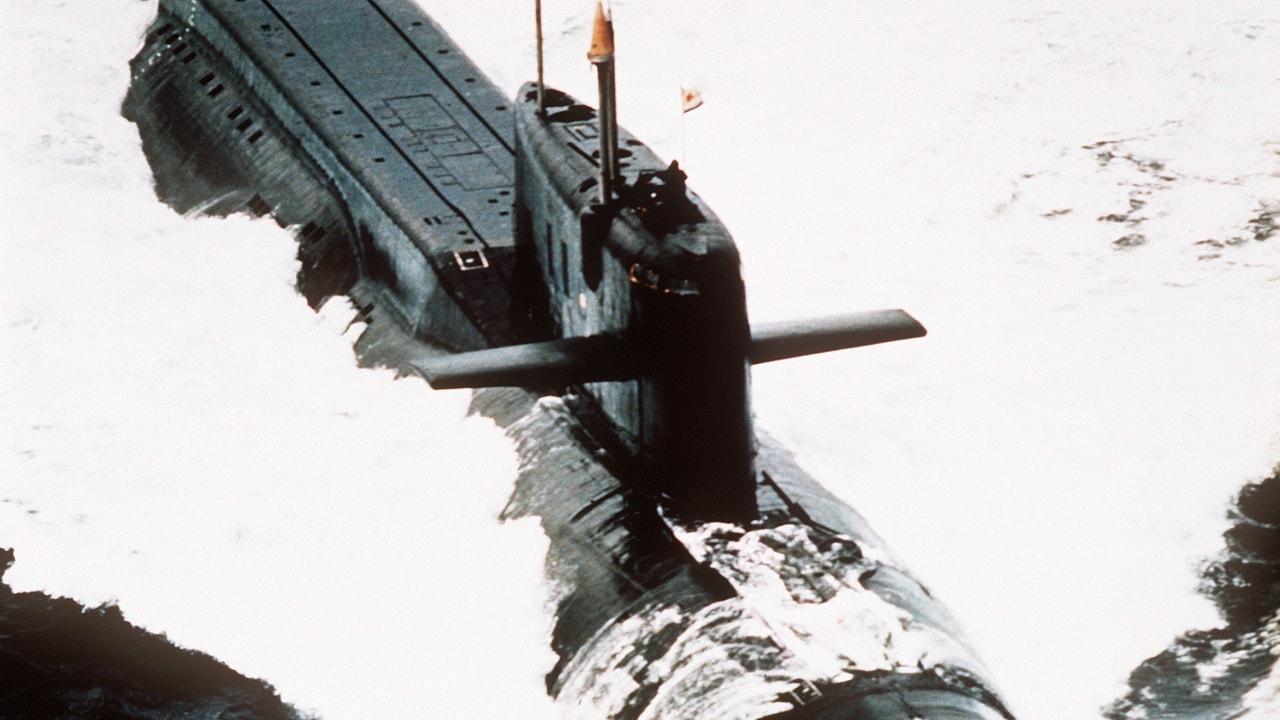
A close-up view of a Yankee Notch Class submarine underway. This is a conversion of a Yankee Class Soviet ballistic missile submarine into a strategic cruise missile platform.
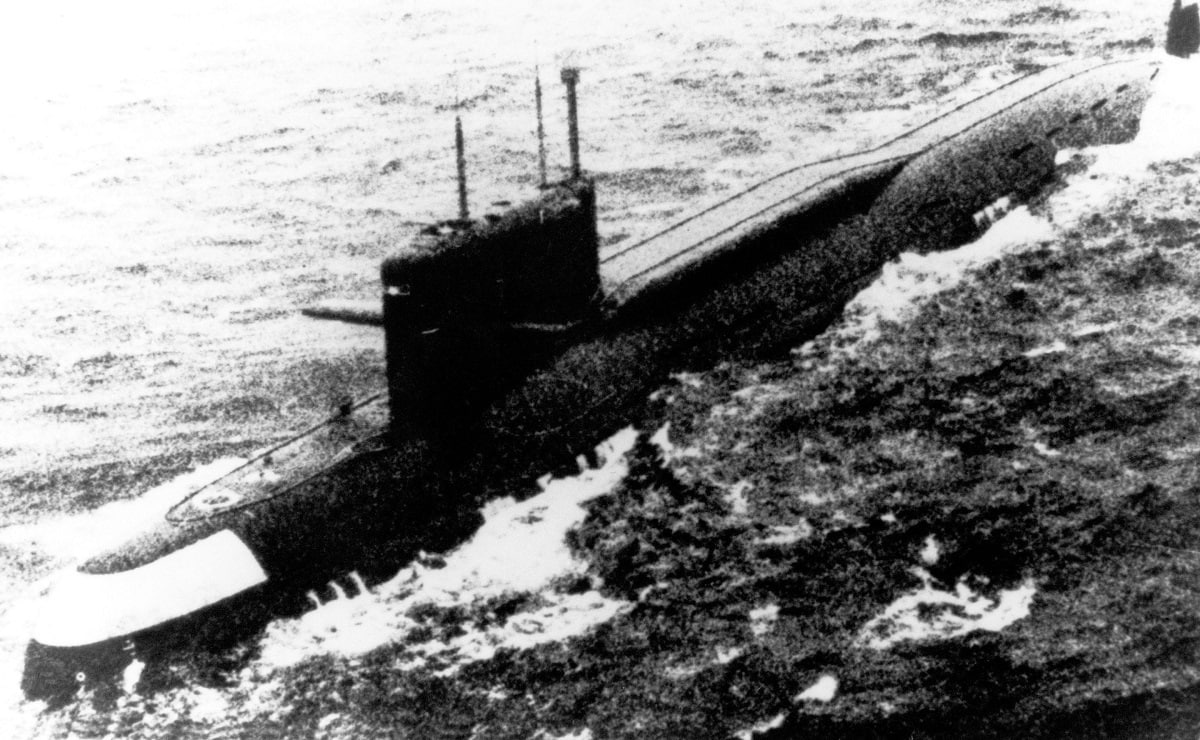
Yankee-class submarine like K-219. Image: Creative Commons.
Back in 1968, the Soviet K-129 submarine sank around 1,560 miles northwest of Hawaii following an internal explosion.
That submarine carried its full complement of nuclear missiles. K-129 also possessed advanced cryptographic gear.
No one at the time of its sinking believed that the submarine could be retrieved. Moscow thought the matter was over, so they stopped worrying about the sunken submarine.
But America’s intelligence services had a different idea.
The Secret Plan
And they knew that Howard Hughes, a private citizen who was fabulously wealthy and possessed all manner of exotic technologies, would provide both critical services (the mechanical claw) and the perfect cover for the covert retrieval mission.
So, to conceal the operation from the Soviets, the CIA came up with a cover story that Hughes was using the Glomar Explorer to mine manganese nodules on the ocean floor.
This was something that Hughes’ ship had done in the past, so the idea that he’d be doing this in the Pacific Ocean did not raise any eyebrows in Moscow.
The mission occurred in the summer of 1974. The Glomar Explorer made its way to K-129’s final resting place three miles beneath the Pacific Ocean’s cerulean blue surface.
The Glomar Explorer’s mighty claw lowered into the sea, found its target, and scooped it from the seafloor.
However, as the great claw pulled the nuclear-armed Soviet sub from the seafloor, a mechanical failure resulted in a catastrophic break.
The Mechanical Arm
Glomar Explorer’s might mechanical arm was designed by Global Marine Development, Inc., and built by Lockheed.
The heavy-lift architecture was a masterful integration of naval engineering and heavy hydraulics. They nicknamed the claw, or “Capture Vehicle,” the “Clementine.”
That claw employed a specialized hydraulic system designed for deep-sea oil drilling.
Rather than the usual oil-based hydraulic fluids, which would have frozen three miles below the Pacific Ocean, Clementine used surface-supplied seawater pressurized into hydraulic fluid.
Clementine had massive, mechanically articulated steel fingers designed to scrape under the K-129 hull and cradle it securely.
Yet, the seafloor that K-129 made its final rest at was harder than anticipated. So, the mechanical arm strained as it dug into that hardened surface.
It caused serious stress on the structural steel beams. That, in turn, caused hydraulic leaks and, naturally, a loss of pressure.
Once that occurred, the steel claw broke as it raised the K-129 from the dead.
The main body of the stricken K-129 broke away from the ascending submarine and returned to the seafloor. But the mission was not a failure.
CIA agents recovered the part of the submarine that they needed.
The portion of the submarine containing lethal Soviet nuclear-armed torpedoes, along with the much-desired cryptographic machines, was brought aboard the Glomar Explorer.
So, too, were the bodies of six Soviet sailors. They were given a burial at sea.
Right From Under Their Noses
The design of the Glomar Explorer was perfect for such a covert mission. That ship possessed an enormous moon pool, or hollow cavity, in the center of the ship’s hull with sliding bottom doors.
The part of K-129 that the CIA retrieved was pulled straight into the moon pool.
The bottom doors closed beneath the remnant of the K-129, and the water in the moon pool was drained so the CIA could examine the Soviet wreckage in dry, top-secret conditions.
Legendary investigative journalist Jack Anderson broke the story to his shocked readers in 1975.
However, the details of what was retrieved and how the CIA got it from K-129 remain deeply classified even today.
What is known, though, is that the CIA stole a powerful nuclear-armed submarine (or, at least, the most important part of it) right from under the Soviet Navy’s nose.
About the Author: Brandon J Weichert
Brandon J. Weichert is the Senior National Security Editor at 19FortyFive.com. He also manages The Weichert Brief on Substack. Weichert also hosts “National Security Talk” on Rumble. He is the author of four bestselling national security books, the most recent of which is A Disaster of Our Own Making: How the West Lost Ukraine (Encounter Books). Follow him via Twitter/X @WeTheBrandon.