
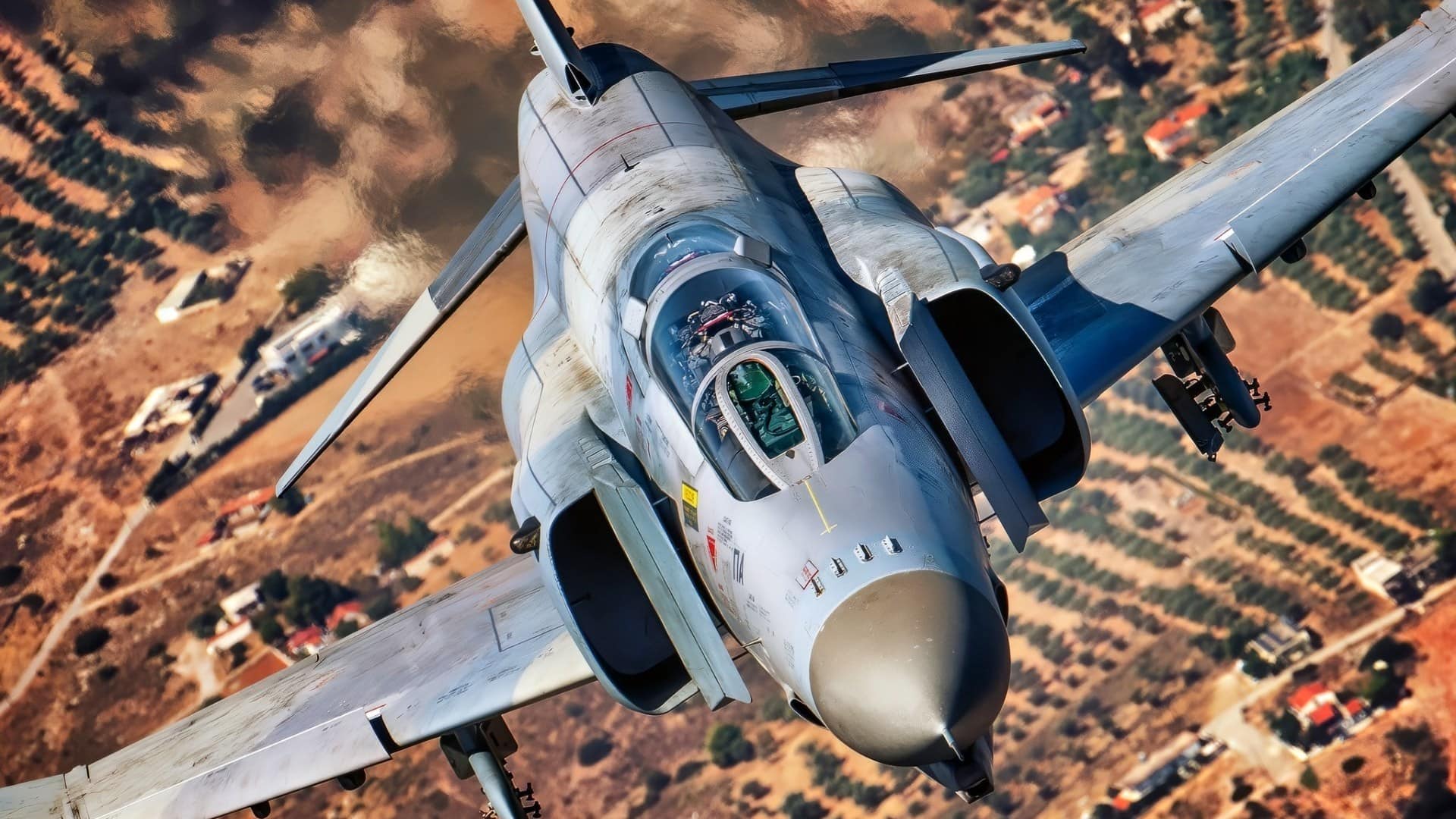
The U.S. Navy’s F-4 Phantom II Helped Create TOPGUN: The F-4 Phantom II entered U.S. Navy service as a carrier-defense interceptor built for the missile age. It had two engines, two crewmen, powerful radar, long-range missiles, and no internal cannon.
That design made sense on paper. The Navy needed an aircraft that could protect carrier battle groups from Soviet bombers before those bombers reached launch range. The Phantom was fast, large, and built around radar-guided missile combat at a time when many planners believed the future of aerial warfare would be decided beyond visual range.
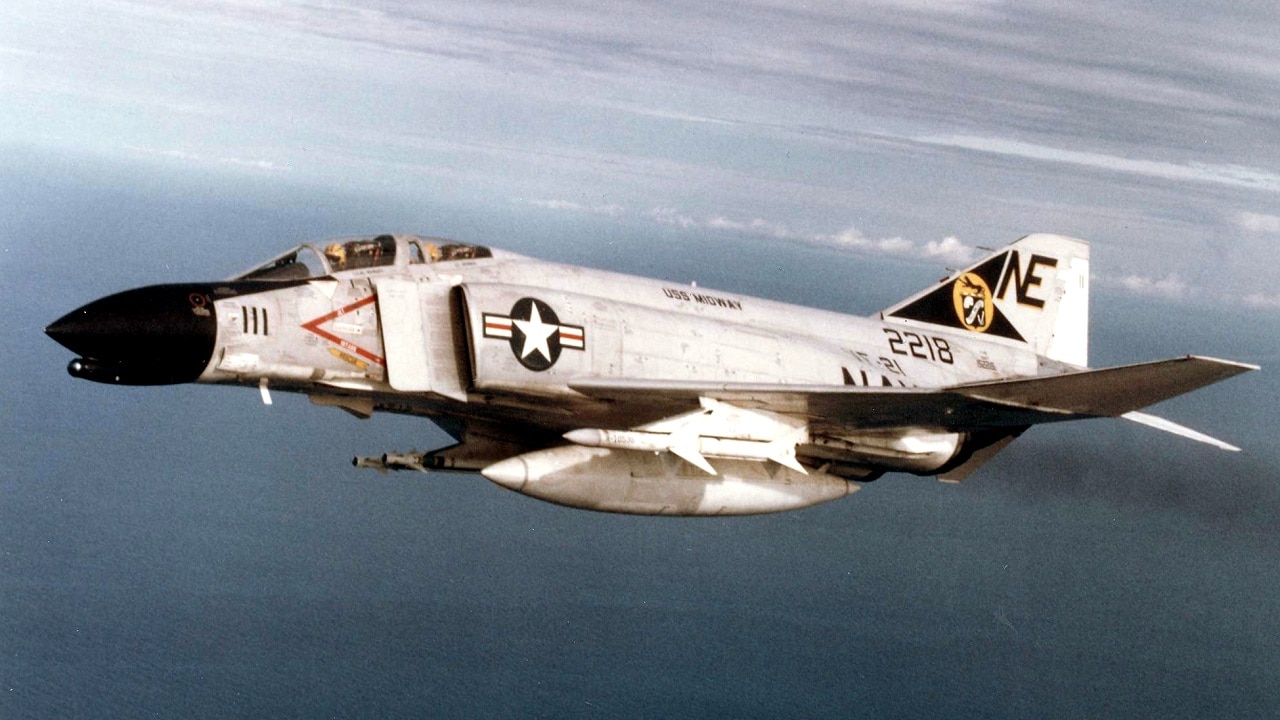
Vietnam War F-4 Phantom. Image Credit: Creative Commons.
Vietnam forced a harder test. Navy F-4 crews flew from carrier decks into an air war where missiles missed, rules of engagement often compressed distance, enemy fighters could turn inside expectations, and training mattered as much as aircraft performance. The Phantom became a Navy legend, but it also exposed a serious problem in the Navy’s preparation of fighter crews for real combat.
The result was TOPGUN.
The F-4 Phantom II Was Born As A U.S. Navy Interceptor
The F-4 began life as a Navy aircraft. The jet, then designated F4H, made its first flight on May 27, 1958, according to a museum history of the F-4N. It quickly proved that McDonnell had built something unusual. The Phantom set 12 world records in 28 months, including speed, altitude, and time-to-climb marks.
Its original mission was clear. The Navy wanted a high-altitude interceptor that could defend carriers by using long-range missiles against Soviet bombers during a Cold War confrontation at sea. That explains the aircraft’s size, speed, crew arrangement, radar focus, and missile-first design.
The Navy’s Phantom required a pilot and a Radar Intercept Officer. The RIO operated the sensors and weapons systems that made the aircraft more than a fast airframe with missiles. In fleet-defense combat, that second seat mattered because the F-4 had to detect, sort, intercept, and engage threats at speed and distance.
The aircraft also carried no internal guns. That decision has become one of the most repeated facts about the Phantom. It deserves attention, but the Navy’s Vietnam problem was broader than one missing weapon. The issue included missile reliability, rules of engagement, aircrew training, tactics, maintenance, and the challenge of forcing a carrier-defense interceptor into a close-range fighter environment.
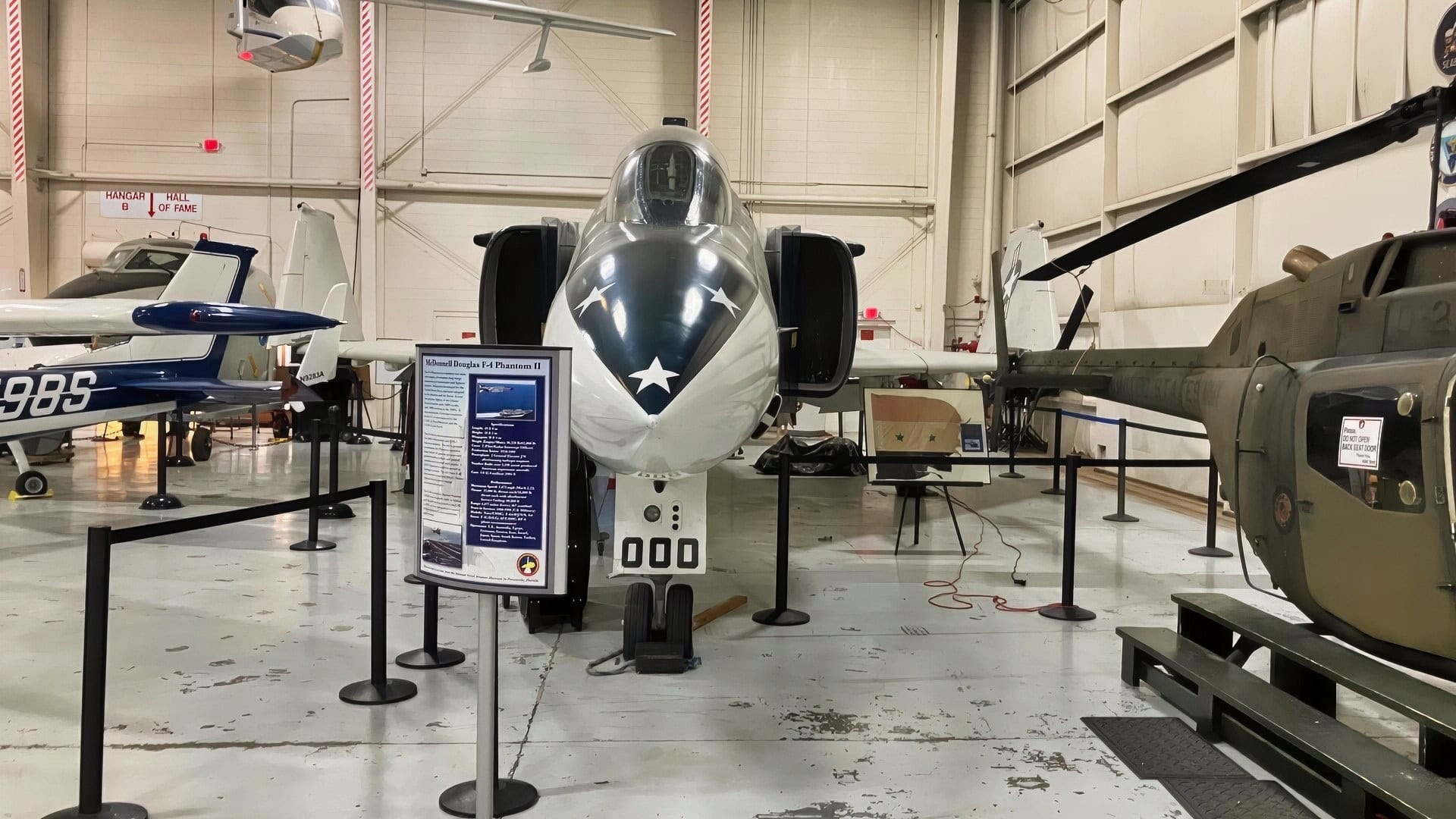
F-4 Phantom Fighter Aviation Museum of Kentucky. Taken by 19FortyFive on March 1, 2026.
Vietnam Changed The Navy’s F-4 Phantom II Mission
The Vietnam War changed the F-4’s mission almost immediately. The Phantom had been designed to intercept bombers at altitude, but Vietnam pushed it into dogfights with enemy fighters and into a wider strike role. The F-4N history notes that the war forced the aircraft into a tactical environment for which it had not originally been designed, including air-to-air dogfights and increased strike missions.
Carrier aviation made that challenge more demanding. Navy Phantom crews launched from ships, managed fuel and ordnance around carrier cycles, operated over North Vietnam, and returned to moving decks after combat missions. The aircraft served as a fighter, escort, interceptor, and strike platform as the air war expanded and changed.
USS Enterprise became one of the visible symbols of that carrier Phantom war. A Navy art collection page notes that F-4 Phantoms flew many combat missions from USS Enterprise during Vietnam, including ground attack and reconnaissance missions. That record shows how far the Phantom moved from the narrow carrier-defense mission that had shaped its design.
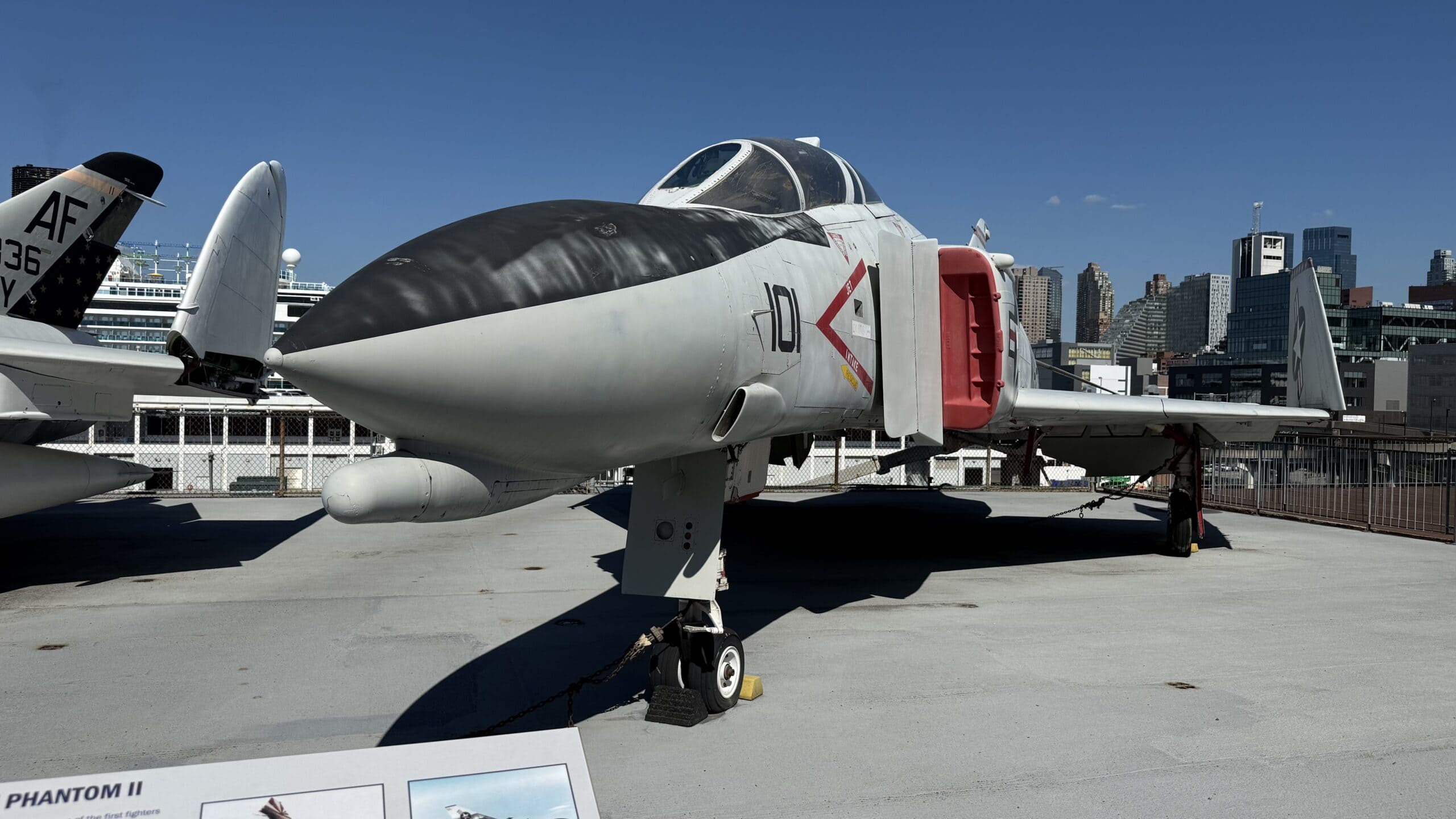
F-4 Phantom. 19FortyFive.com Photo.
The aircraft’s strengths remained obvious. It was fast, powerful, and able to carry a substantial load. Its two-man crew gave the Navy a sensor-and-weapons team in a single aircraft. However, Vietnam showed that an aircraft built for missile interception still had to survive close combat against smaller MiG fighters defending North Vietnam.
The Ault Report Exposed The Navy Fighter Problem
The Navy’s answer began with a hard look at combat performance. In 1968, Navy Capt. Frank Ault led an investigation into air-to-air missile system performance and fighter effectiveness. The resulting document, formally titled the Report of the Air-to-Air Missile System Capability Review, is preserved by the Navy as the Ault Report.
The report mattered because it pushed the Navy away from easy explanations. The problem was not confined to the Phantom’s lack of an internal gun. Navy fighter performance reflected problems across the air-to-air system: weapons, maintenance, training, tactics, test procedures, and how aircrews used missiles under combat conditions.
The Navy’s official history of the Rolling Thunder campaign reaches the same broad conclusion. It states that the long-range missile design philosophy that produced the gunless Navy F-4 degraded close-in fighting capability, and that the Navy established the Fighter Weapons School at Miramar after the Ault Report. The broader campaign history places the Phantom’s combat lessons inside the wider Navy air war over North Vietnam.
That history is important because the Navy did not abandon the Phantom. It changed how Phantom crews trained and fought. The aircraft remained central to the carrier air wing, but the Navy had to build a better fighter culture around it.
TOPGUN Was The Navy’s F-4 Phantom II Answer
The Navy Fighter Weapons School was established at Naval Air Station Miramar in 1969. The school became known as TOPGUN. Its purpose was practical: teach fighter crews how to fight better with the aircraft and weapons they had.
A Defense Department TOPGUN history states that Ault’s investigation highlighted performance deficiencies and the need for an advanced course in fighter tactics. In its early years, TOPGUN students trained on F-4 Phantom II aircraft in one-on-one aerial combat. That point matters because TOPGUN did not begin as a movie idea or a branding exercise. It began as a Navy response to losses, missed opportunities, and the need to improve combat results.
The school’s early purpose also shows what the Navy learned from the Phantom. Technology still requires disciplined employment. Missiles had envelopes. Radars had limits. Crews needed to understand enemy aircraft, energy management, intercept geometry, communications, and the practical use of weapons under pressure.
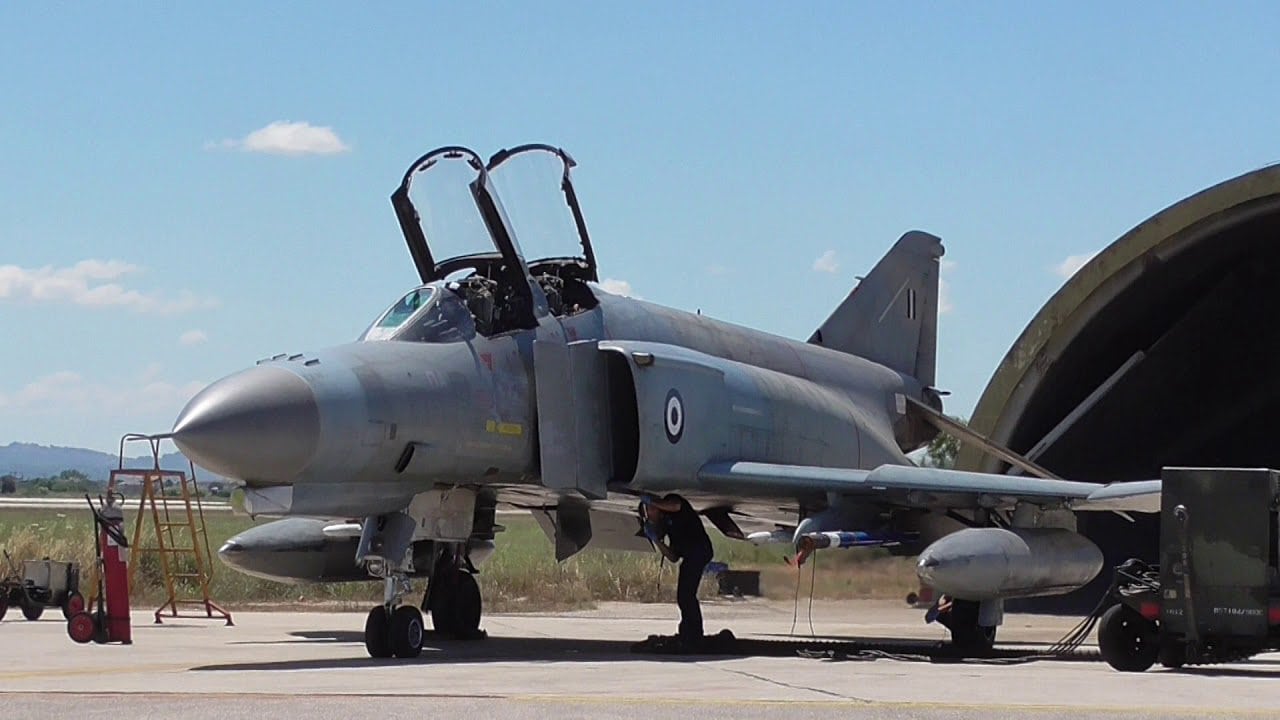
F-4E. Image Credit: Creative Commons.
The F-4 gave TOPGUN its first major fighter platform because the Phantom was the Navy’s front-line fighter in the air war. The school’s graduates returned to fleet squadrons and spread the lessons. That institutional change became one of the Phantom’s most important legacies.
Randy Cunningham And Willie Driscoll Made The F-4 Phantom II A Navy Legend
The Navy Phantom story also has a human center. Lt. Randall Cunningham and Lt. j.g. William Driscoll flew the F-4J Phantom II from USS Constellation with VF-96. Their record became central to the aircraft’s reputation in Vietnam.
A Navy image record states that Cunningham and Driscoll became the first aces of the Vietnam War after downing five enemy MiGs while flying a Phantom II from USS Constellation. The Constellation command history adds more detail, noting that Cunningham and Driscoll scored against a MiG-17 on Jan. 19, 1972, then downed three MiG-17s on May 10, 1972, becoming the first aces of the war. The ship’s official history records that sequence as part of Constellation’s Vietnam combat service.
Their achievement did not erase the Phantom’s limits. It showed what trained crews could do with the aircraft when skill, crew coordination, tactics, and weapons employment came together. The Navy’s two-seat Phantom demanded teamwork. The pilot had to fly and fight the jet. The RIO had to manage sensors, calls, weapons information, and the tactical picture. Cunningham and Driscoll became the best-known example of that Navy crew concept in combat.
Their record also made the F-4 more than an engineering story. It became a carrier aviation story about aircrew performance under combat pressure.
The F-4 Phantom II Led The Navy Toward The F-14 Tomcat
The Phantom did not end the Navy’s search for a better fleet-defense fighter. The next major step was the F-14 Tomcat. In February 1969, Naval Air Systems Command issued a contract to Grumman for the development of the F-14A fighter, according to the Navy’s aviation chronology for the 1960s.
The Tomcat carried forward the fleet-defense mission with a new design. A Navy F-14A history describes it as Grumman’s answer, equipped with long-range AIM-54 Phoenix missiles able to engage multiple hostile aircraft at more than 90 miles. That mission grew from the same Cold War requirement that had shaped the Phantom: protecting carriers from enemy aircraft before those aircraft could threaten the task force.
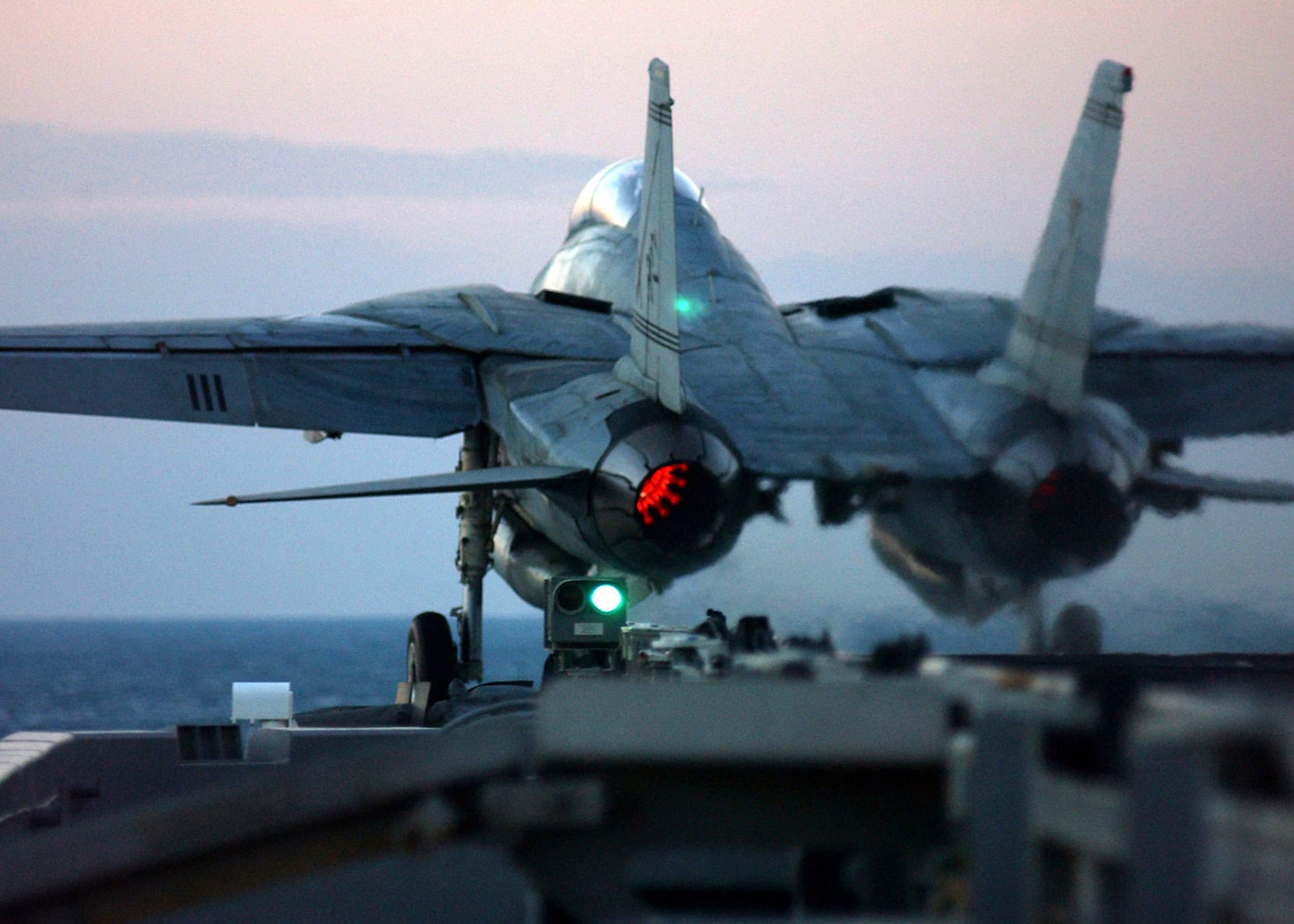
An F-14B Tomcat is catapulted from the flight deck of the aircraft carrier USS Harry S. Truman (CVN 75) during evening flight operations in the Persian Gulf on Dec. 4, 2004. Truman and its embarked Carrier Air Wing 3 are providing close air support and conducting intelligence, surveillance, and reconnaissance missions over Iraq. The Tomcat is assigned to Fighter Squadron 32.
(DoD photo by Airman Kristopher Wilson, U.S. Navy. (Released))
The F/A-18 Hornet later took over much of the Navy’s fighter and attack work. A Navy Hornet history says the service developed the aircraft to perform air-to-air and air-to-ground missions and replace the F-4 Phantom and A-7 Corsair. That later transition shows how long the Phantom’s influence remained inside Navy aviation planning.
The F-4’s Navy career closed in stages, but the lessons it forced on the service lasted. The Navy learned that missiles, sensors, speed, and carrier reach needed a training system equal to the technology. TOPGUN became that system.
The Phantom began as the Navy’s missile-age fighter. Vietnam made it the aircraft that forced the Navy to rebuild fighter training around combat reality.
About the Author: Harry J. Kazianis
Harry J. Kazianis (@Grecianformula) was the former Senior Director of National Security Affairs at the Center for the National Interest (CFTNI), a foreign policy think tank founded by Richard Nixon based in Washington, DC. Harry has over a decade of experience in think tanks and national security publishing. His ideas have been published in the NY Times, The Washington Post, The Wall Street Journal, CNN, and many other outlets worldwide. He has held positions at CSIS, the Heritage Foundation, the University of Nottingham, and several other institutions related to national security research and studies. He is the former Executive Editor of the National Interest and the Diplomat. He holds a Master’s degree focusing on international affairs from Harvard University.