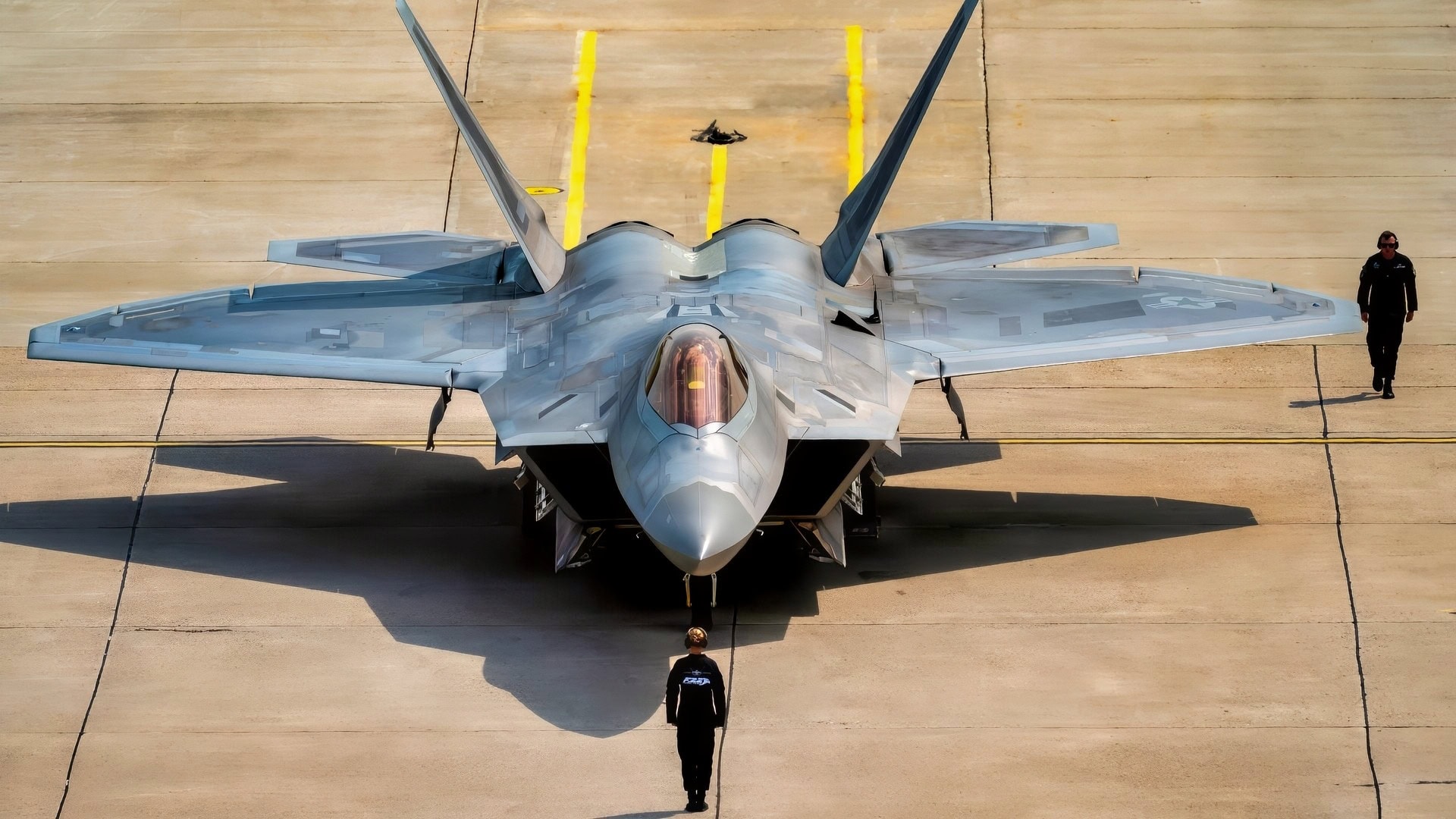
An article on The Atlantic site this week delves into a deeply distressing topic for Western military planners. It is referred to by military experts in Washington, most European capitals, and the executive offices of most Asian allies as a “nightmare scenario.” It is the subject that no one wants to talk about, receive a briefing on, or even begin to plan for.
This evil of which no one dares speak is how these nations would react to “a coordinated, near-simultaneous attack on opposite sides of the planet, in which Russia targets a NATO member in Eastern Europe while China makes its move against Taiwan. The US military would need to react on two fronts at once—three if it remains at war in the Middle East,” says staff writer Simon Shuster.
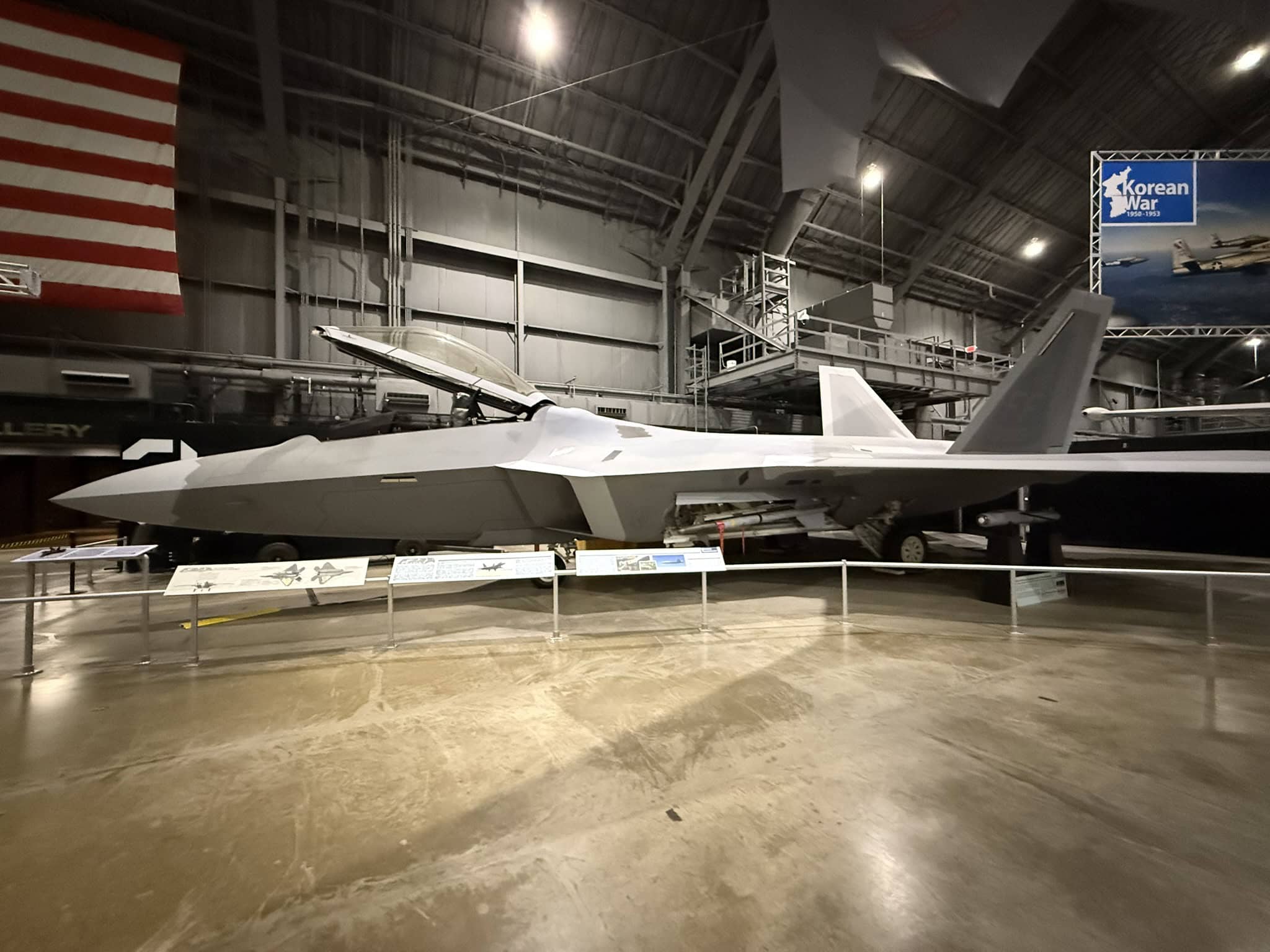
F-22 Raptor. Photo Taken for 19FortyFive.com by Harry J. Kazianis on July 19, 2025.
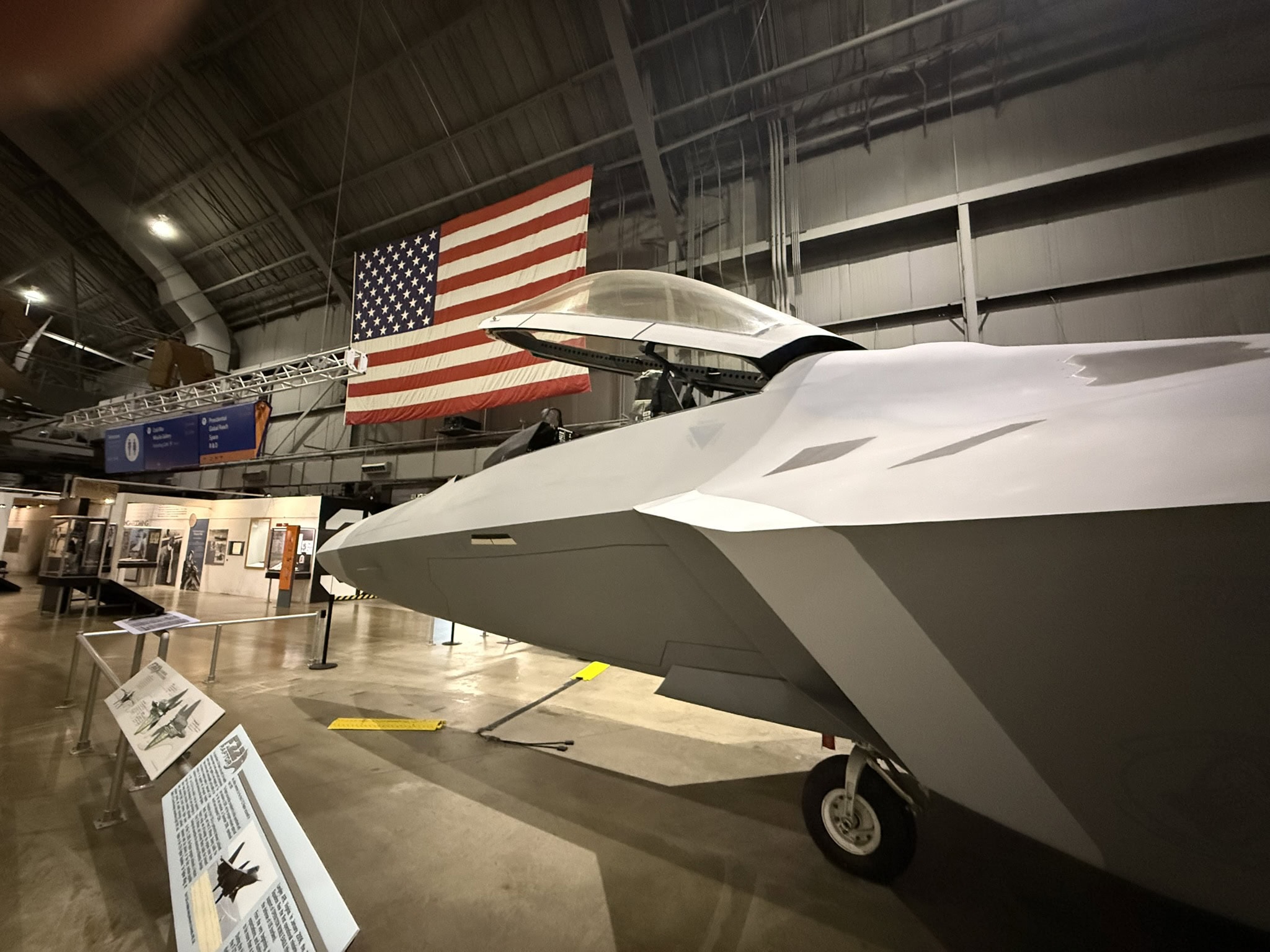
F-22 Raptor Photo Take At the National Museum of the U.S. Air Force. 19FortyFive.com Photo. Taken on July 20, 2025.
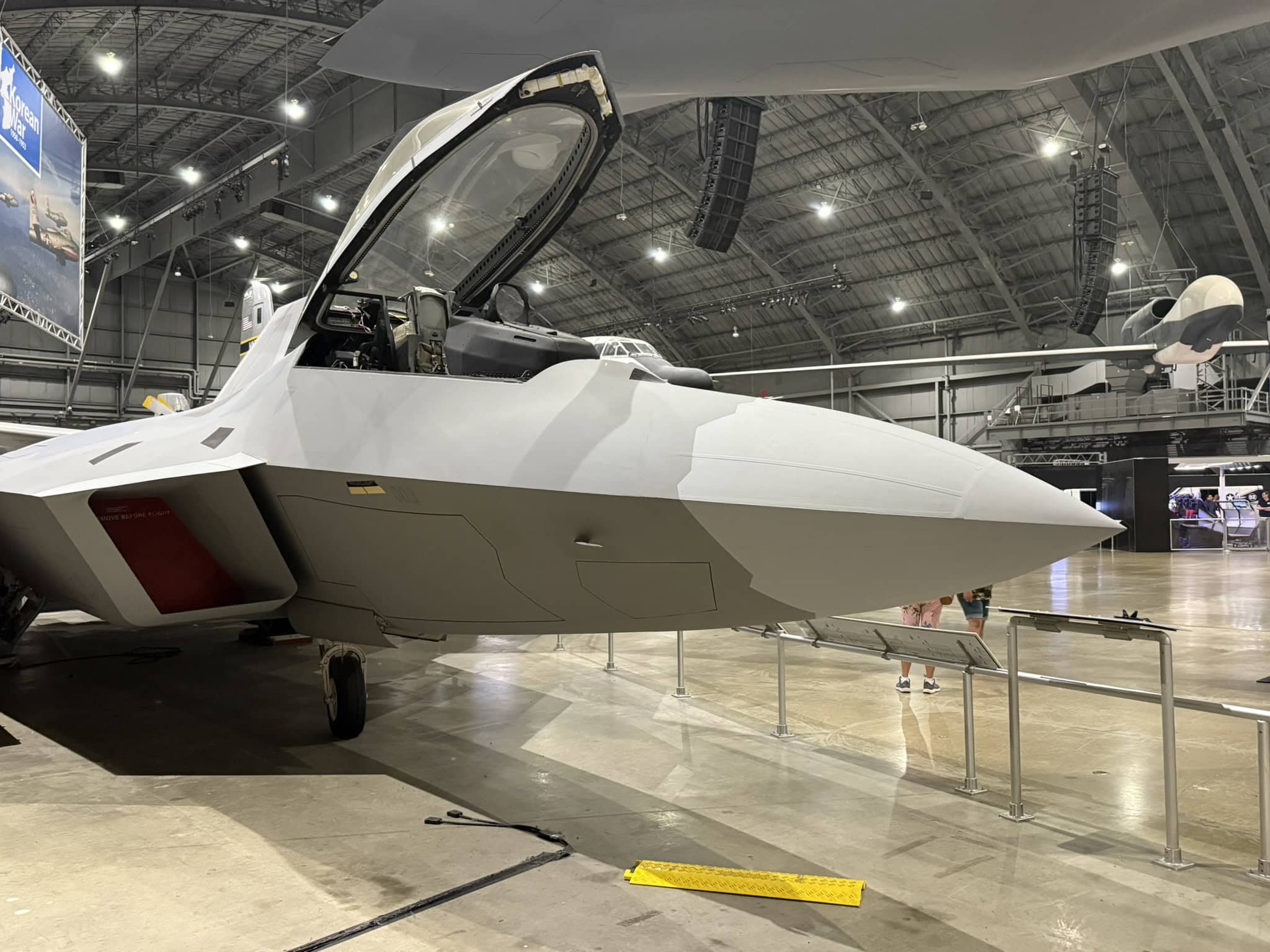
F-22 Raptor Photo Take At the National Museum of the U.S. Air Force. 19FortyFive.com Photo.
The two giants of the People’s Republic of China (PRC) and Russia were once considered incapable of carrying out a synchronized operation of such complexity – well above the “walk and chew gum at the same time” level of complications.
However, in the last 12 months, US Air Force General Alexus Grynkewich, the Supreme Allied Commander Europe (SACEUR), warned about the dangers inherent in a two-front war against both nations simultaneously.
He also asked Washington’s NATO European allies for help with the necessary preparations.
Don’t Know Because Don’t Want to Know
But in his survey of the experts paid to study, the author proposed solutions, assembled plans, etc.; there seems to have been not only no enthusiasm but little to no interest in delving into this subject.
One of the individuals Shuster spoke with was Florence Gaub, who runs the research division at the NATO Defense College.
“Let’s just say this is the scenario we’re currently not ready for,” she explained. The facility in Rome that houses this academy for officers is full of NATO experts who are “keenly aware” of this gap in their planning, but according to Gaub, no steps have been taken to fill it.
Another expert interviewed was retired U.S. Navy Admiral Mark Montgomery, who is a frequent participant in war games and high-level planning exercises.
He also recently co-authored a book entitled “The Axis of Aggressors”. It documents the degree to which Moscow and Beijing – along with their allies in Pyongyang and Tehran – are increasingly coordinating their war plans against the Western alliance.
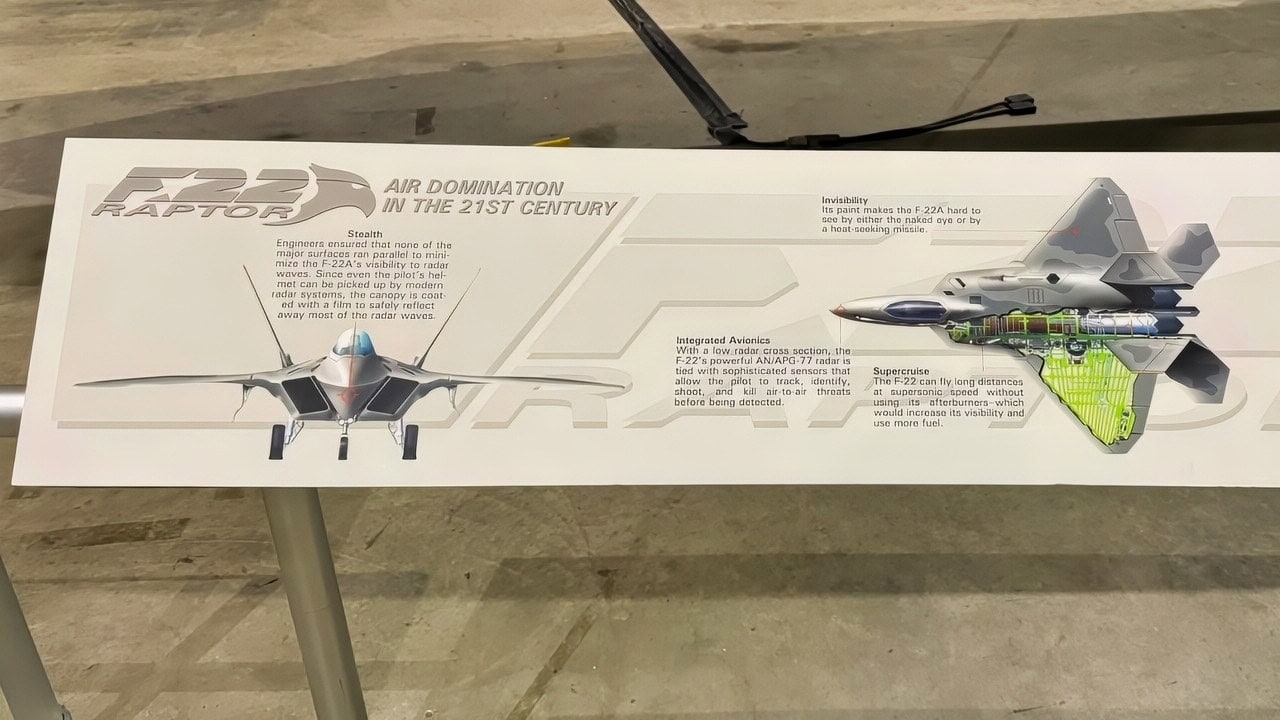
F-22 Raptor Diagram from National Museum of the U.S. Air Force. Image Credit: Harry J. Kazianis.
He recounted a study he participated in 15 years ago that specifically analyzed a two-front war against Russia and the PRC. Recounting the less-than-encouraging outcome, he commented briefly, “It didn’t go well.”
Even then, the war gaming highlighted that the US lacked the weapons stockpiles or industrial capacity to sustain a prolonged, parallel set of major conflicts.
This has now become painfully evident as the US and its allies are in the 5th year of providing military assistance to Ukraine and are close to the 6-month mark in a war with Iran.
The exercise Montgomery participated in proved not only that operations on multiple fronts would deplete US stockpiles, but also that European allies and others could not make up for Washington’s shortfalls.
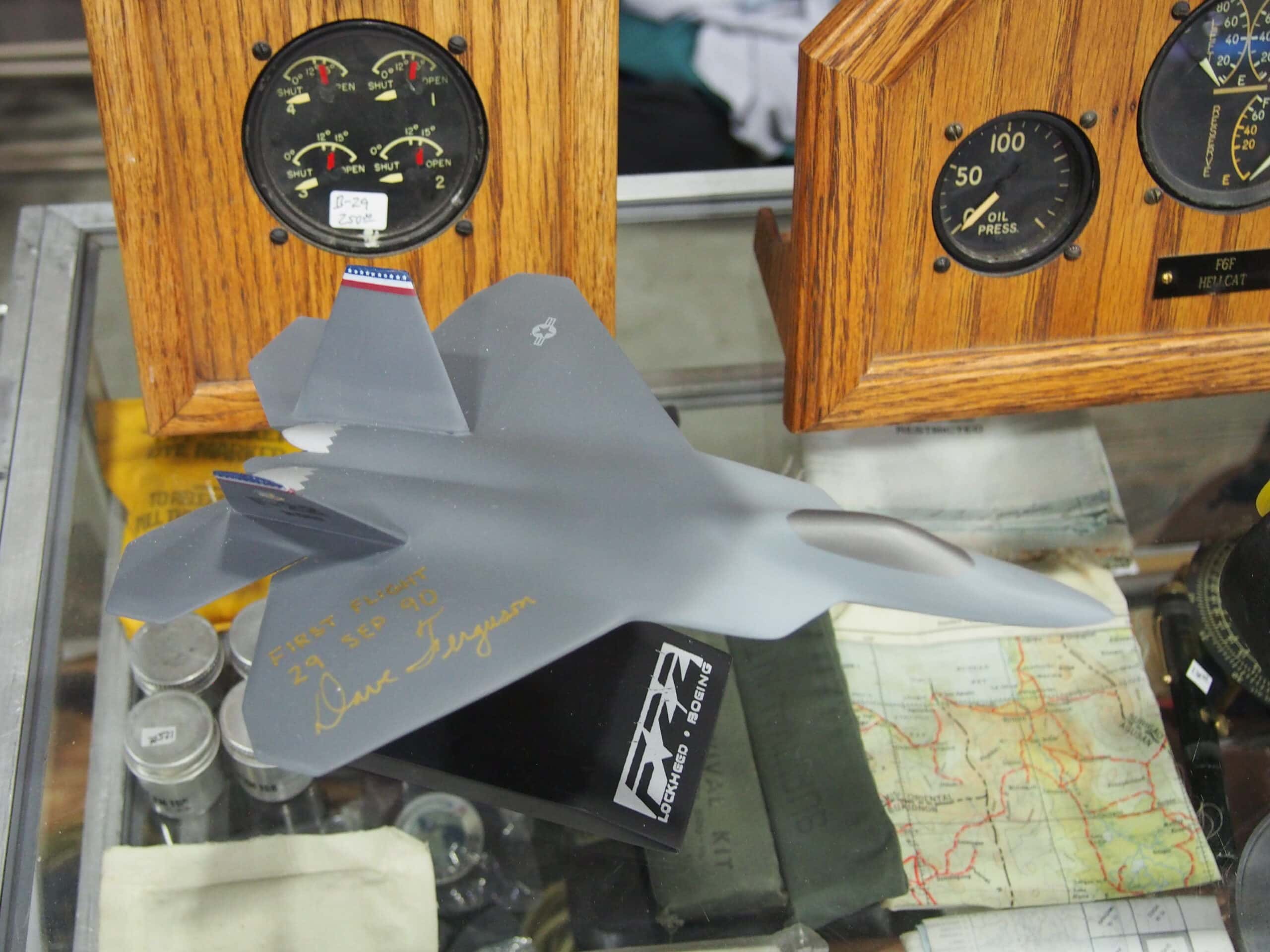
F-22 Model. Image Credit: 19FortyFive.com
The Ukraine War Points the Way
In the intervening years, said Montgomery, “Every one of those metrics has gone down. None of them has gotten better.” The Trump administration has spent considerable effort encouraging US allies to augment their defense spending, which many have pledged to do. “But their forces have not yet shown improvement,” said the Admiral.
The war in Ukraine has pointed out the weapon systems that are the worst cases of munitions not available in nearly the numbers required, and that demand years of effort to surge production to necessary levels.
Unfortunately, this causes numerous policy-makers to then finger Ukraine as the party to be blamed for these shortfalls – compounding the fiction that without this long war with Russia everything would be OK.
However, an analysis released last week by the Washington, DC-based Center for Strategic and International Studies (CSIS) shows a far different reality.
Only one in four of the weapon systems the US has provided to Ukraine and that are also used in the Iran theatre shows that supplying them to Kyiv is the central factor in their low inventory levels.
The other three operations in Iran were the culprits.
This is true even for weapon systems provided to Ukraine in inordinately high numbers.
The four weapon systems in question were: the Missile Segment Enhancement (MSE) interceptor for the Patriot air and missile defense system, the Stinger Man-Portable Air Defense System (MANPADS), the ATACMS surface-to-surface tactical missile, and the HARM/AARGM anti-radar missiles used to suppress enemy air defense systems.
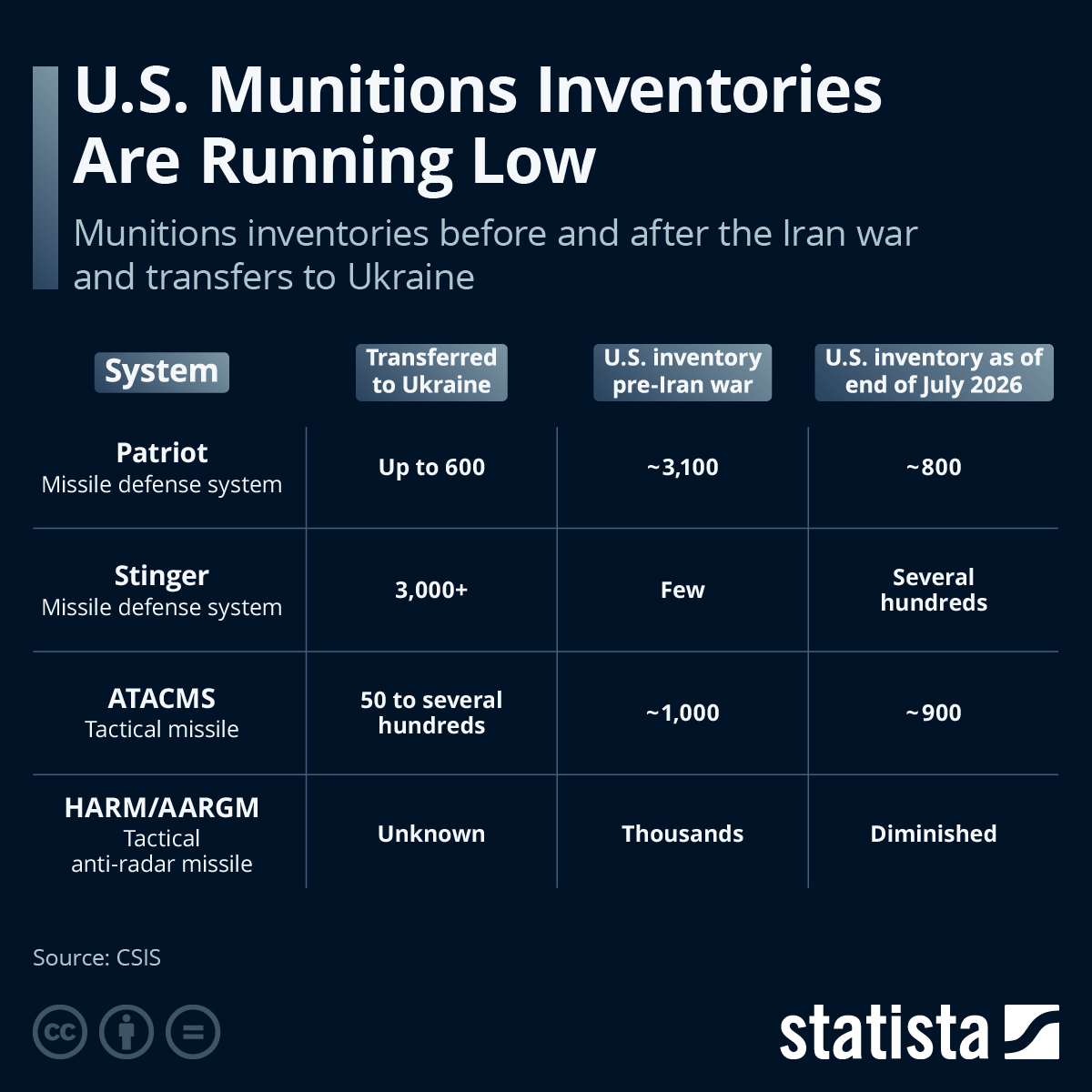
The intensity of the Iran campaign has also since surpassed that of Ukraine as the greater drain on the shared inventory of munitions. It is estimated that two-thirds of the air-defense missiles still on the shelf in US stockpiles have been depleted since February. Meanwhile, Washington keeps castigating its European NATO allies for “not doing enough.”
The US clearly needs a new concept for its cooperative efforts with its allies.
As Shuster concludes:
“If Russia and China act in unison while the US bickers with its allies, the chances of a Western victory in a two-front war begin to look bleak. The side that comes out on top, in other words, tends to be the one that moves with common purpose and remains united over time.”
About the Author: Reuben F. Johnson
Reuben F. Johnson has thirty-six years of experience analyzing and reporting on foreign weapons systems, defense technologies, and international arms export policy. Johnson is the Director of Research at the Casimir Pulaski Foundation. He is also a survivor of the Russian invasion of Ukraine in February 2022. He worked for years in the American defense industry as a foreign technology analyst and later as a consultant for the U.S. Department of Defense, the Departments of the Navy and Air Force, and the governments of the United Kingdom and Australia. In 2022-2023, he won two awards in a row for his defense reporting. He holds a bachelor’s degree from DePauw University and a master’s degree from Miami University in Ohio, specializing in Soviet and Russian studies. He lives in Warsaw.