When the Navy and DARPA wanted to test the feasibility of a stealth ship, they turned to the subject-matter experts. Who better than the people from the Skunk Works who designed and built the F-117 Nighthawk, the world’s first stealth aircraft?
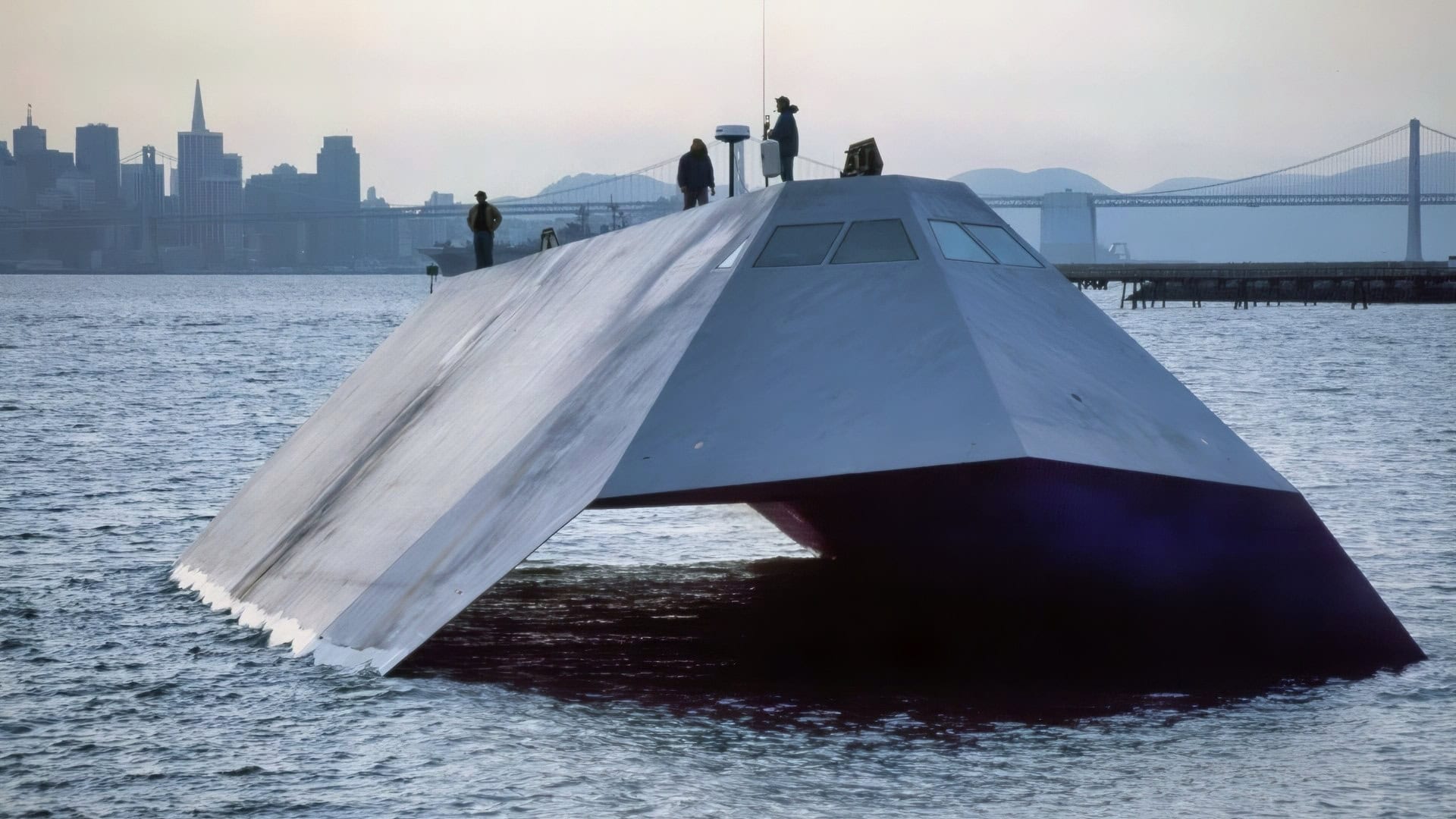
The experimental stealth ship Sea Shadow (IX-529) was a $200 million “black program” and was built between 1984 and 1985 by Lockheed Martin for the Defense Advanced Research Projects Agency (DARPA) and the U.S. Navy in Redwood City, California.
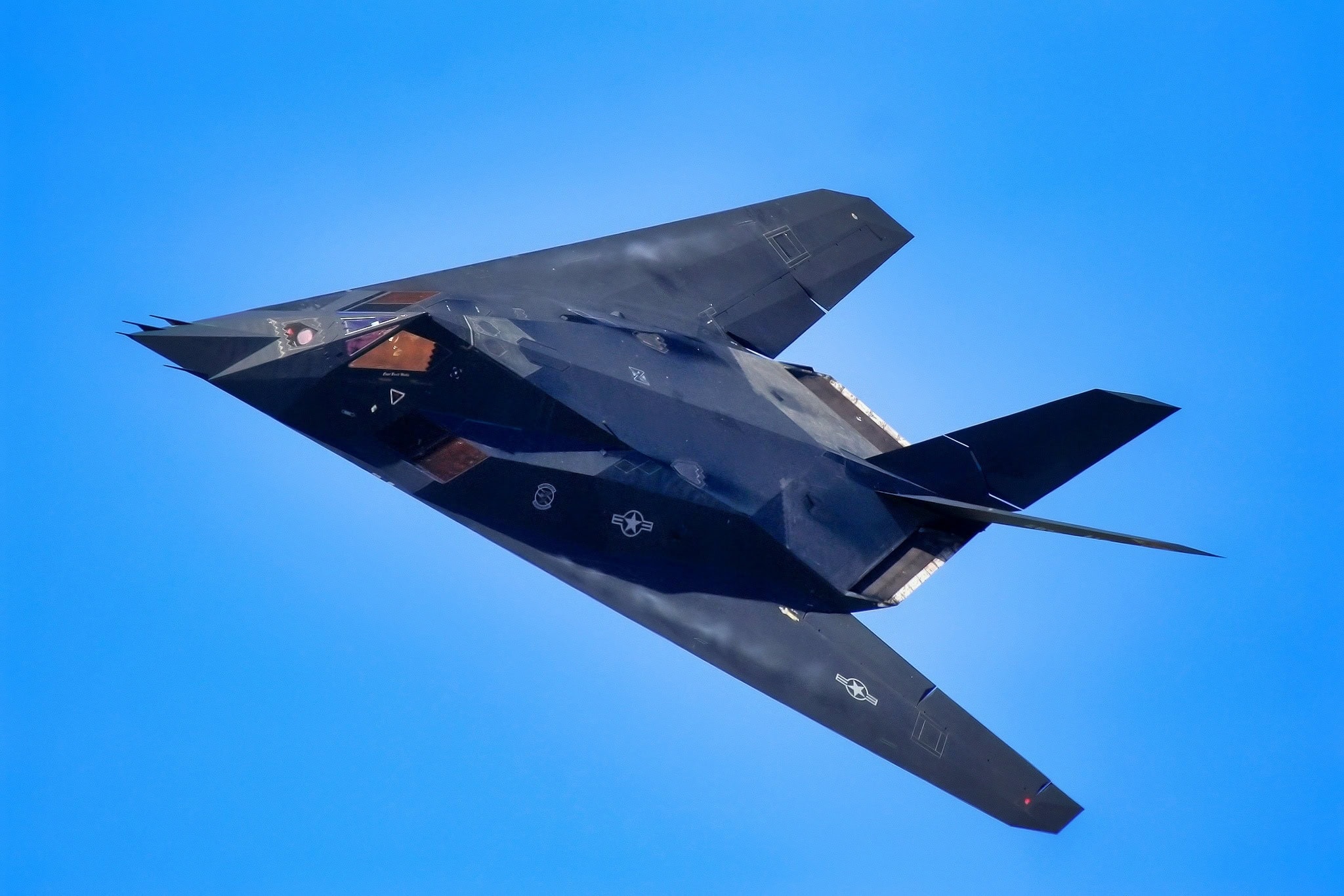
F-117. Image Credit: Creative Commons.
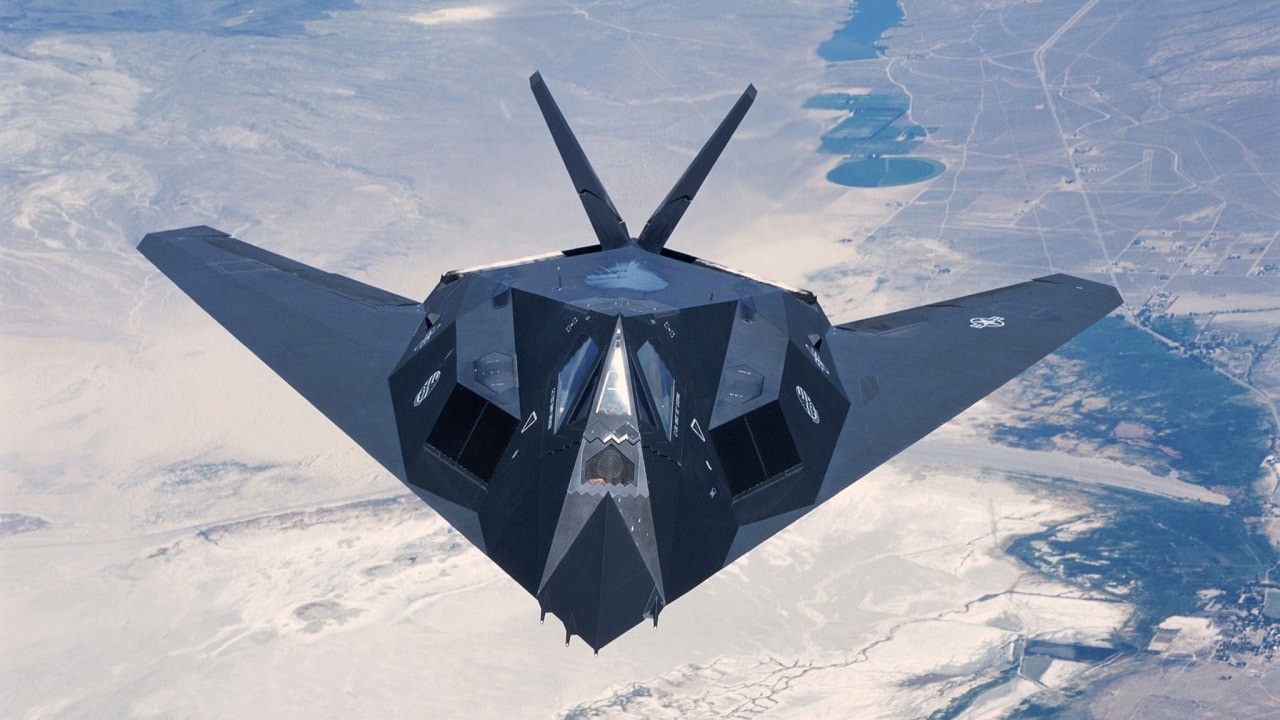
F-117. Image Credit: Creative Commons
The design of the Sea Shadow was designed to test the application of stealth technology on naval vessels and remained secret until its public debut in 1993.
The Sea Shadow was also designed to test automation to reduce crew size. The Defense Advanced Research Projects Agency (DARPA), the U.S. Navy, and Lockheed created the ship.
Lockheed developed and built Sea Shadow at its facility inside the Hughes Mining Barge (HMB-1), which served as a floating dry dock during construction and testing.
Background On The Sea Shadow Concept
Back in 1978, Ben Rich was the leader of Lockheed Martin’s Skunk Works. He believed the angled surfaces and coatings on the F-117 could be applied to a submarine to make it undetectable to sonar systems. But that theory didn’t really go anywhere; the Navy just wasn’t interested, until fate intervened.
Rich met with a Skunk Works engineer who had just returned from Pearl Harbor and said to Rich that he’d seen the Small Water Area Twin Hull (SWATH), a prototype catamaran-style Naval ship.
The SWATH ship was said to be quicker than a conventional ship and amazingly stable in heavy seas; Rich decided the SWATH was the perfect model for a stealthy ship.
Rich went to Washington and was awarded a contract with DARPA for the Skunk Works to test the effects of stealth shaping and coatings on surface vessels and the effects of seawater on radar-absorbing iron ferrite coatings.
The ship was 160 feet long, with a width of 70 feet, a draft of 14 feet, and a displacement of 560 tons. It had a crew of four.
Rich’s idea was as brilliant as it was ambitious. He wanted to make the ship invisible not only to surface radars used by enemy ships but also to radar satellites, such as the Soviet RORS satellite operating in the X-band, which tracked US ships.
Rich and his engineers constructed the Sea Shadow inside the Hughes Mining Barge, keeping the entire project out of prying eyes.
Testing For The Sea Shadow Was Done In Death Valley
In another effort to keep a lid on any leaks of information, Lockheed Martin wrote on its website about testing the ship’s stealth capabilities.
“The engineering team, led by Ugo Cody, tested their concept by taking the ship to an ancient lake bed deep within Death Valley, California. There, they filled a 100-by-80-foot plastic swimming pool and rigged a radar system that duplicated the Soviet radar satellite. Testing proved successful, resulting in additional funding from the Navy to develop the Sea Shadow prototype.”
The Sea Shadow Fell Victim To The End Of The Cold War Budget Cuts
Sea Shadow started trials in 1985.
It was unarmed, serving only as a demonstrator and test platform, but proposals suggested fitting a large radar. This would have been added in the payload bay, viewed through a large door.
Work on the modification started, but the project was cut short. Another proposal was to equip similar ships with Patriot air-defense missiles. These would operate in advance of the fleets and provide screening in the event of an attack.
Rich wrote, “We could arm it with 64 Patriot-type missiles and send it out 300 miles ahead of the carrier task force as an invisible, amphibious SAM missile site. We’d shoot down the Soviet attack aircraft before they got within missile range of the fleet.
“And because they couldn’t see the stealth ship electronically, they’d literally never know what hit them. We analyzed the threat and determined that the entire US Navy carrier fleet could be protected by just 18 of our stealth defenders armed with SAMs.
“Since our ship would knock out most of the incoming air armada trying to attack our carriers, we would make the Aegis more effective by dramatically decreasing the number of incoming missiles it would be called upon to try to destroy at one time.”
The technology behind Sea Shadow had potential, and the vessel was used in tests for many years.
After the collapse of the Soviet Union and the end of the Cold War, the Navy cut the contract. Skunk Works founder Kelly Johnson who had 14 formally written management principles, but his unofficial 15th rule was blunt: “Starve before doing business with the damned Navy.”
The ship was sold for scrap in 2012 after there were no takers
About the Author: Steve Balestrieri
Steve Balestrieri is a National Security Columnist. He served as a US Army Special Forces NCO and Warrant Officer. In addition to writing on defense, he covers the NFL for PatsFans.com and is a member of the Pro Football Writers of America (PFWA). His work was regularly featured in many military publications.