

Quote of the Day: George C. Marshall’s “Only Way to Win a War” Line Still Lands
“The only way human beings can win a war is to prevent it.” – George C. Marshall
That quote belongs to Gen. George C. Marshall, which may seem surprising considering he played a major role in America’s World War II victory..
But Marshall’s words are a pertinent reminder of General Douglas MacArthur’s truism that “The soldier above all others prays for peace.” Indeed, George Marshall’s most enduring achievement was one he accomplished in peacetime, albeit during the Cold War.
Early Life
George Catlett Marshall Jr. was born on December 31, 1880, in Uniontown, Pennsylvania. He was the youngest of the three children of George Catlett Marshall and Laura Emily (née Bradford) Marshall. He was a first cousin, three times removed, of former Supreme Court Chief Justice John Marshall.
George Jr. decided early in life that he wanted to be a career soldier, but he couldn’t obtain an appointment to West Point because of his decidedly average high school grades. Undeterred, he instead gained admission to the Virginia Military Institute (VMI), despite active discouragement from his own brother, himself a VMI alumnus.
VMI Student
George enrolled at VMI in 1897 at the tender age of 16. Soon enough, he was subjected to a particularly brutal act of hazing by the upperclassmen. Some of the first-year students stuck an unsheathed bayonet tip-up in wooden planks on the floor.
Author Greg Behrman picks up the story from there in his book The Most Noble Adventure: The Marshall Plan and the Time When America Helped Save Europe:
“They had Marshall squat over the weapon. He held his lanky frame above the tip, praying that they would relent. They did not, and after twenty minutes he fainted…Marshall woke up with a deep gash in his ****ocks. Had the angle of his fall been an inch or two in another direction, he would have died.”
He didn’t rat on the rats, and, “awed by his courage,” the upperclassmen didn’t bother him further.
Marshall played left tackle on the Keydets football team. He ranked first in military discipline, attaining the status of senior first captain of the Corps of Cadets and graduating 15th out of 34 in the Class of 1901.
Initial Military Career in Brief
After serving in posts stateside and in the Philippines, Marshall graduated with honors from the Infantry-Cavalry School at Fort Leavenworth in 1907, and from the Army Staff College in 1908. During World War I, he distinguished himself as one of the chief planners of the Meuse-Argonne Offensive, successfully transferring almost 600,000 men to the front without provoking the German army into deploying additional troops.
On October 15, 1930, he married Katherine Boyce Marshall (née Tupper), who bore his three children.
By October 1, 1936, he was a Brigadier General.
WWII: Army Chief of Staff
Marshall earned both his fourth star and his appointment as Army Chief of Staff on September 1, 1939, coinciding with the start of World War II. By 1941, he had transformed the Army from one of 174,000 men to an army of 1.25 million men.
On December 16, 1944, Marshall became the first ever General of the Army (5-star), the equivalent of a Field Marshal in foreign armies. (He didn’t relish the thought of being called “Marshal Marshall”).
Marshall resigned his position as Chief of Staff on November 18, 1945. His public life was far from over, though—President Harry S. Truman appointed Marshall as Secretary of State the following month.
Crowning Achievement: The Marshall Plan
Presumably mindful of the dire economic conditions in Germany during the interwar years (described in eye-opening detail in Albert Speer’s bestseller Inside the Third Reich) that enabled the rise of Adolf Hitler, Secretary of State Marshall, during a June 5, 1947 speech to the graduating class at Harvard University, called for a comprehensive program to rebuild Europe.
Motivated by the fear of Communist expansion and the rapid deterioration of European economies in the winter of 1946–47, Congress heeded Secretary Marshall’s call by passing the Economic Cooperation Act in March 1948, approving funding that would eventually rise to more than $12 billion for the rebuilding of Western Europe.
As noted by the U.S. State Department’s Office of the Historian, “Economic historians have debated the precise impact of the Marshall Plan on Western Europe, but these differing opinions do not detract from the fact that the Marshall Plan has been recognized as a great humanitarian effort. Secretary of State Marshall became the only general ever to receive a Nobel Prize for peace.” He was also named “Man of the Year” by Time Magazine (his second time so honored) in 1948.
Later Life
In September 1950, Truman named Marshall to another Cabinet post, this time as Secretary of Defense. A provision in the National Security Act of 1947 prohibited a uniformed military officer from serving in the post, so Marshall needed a congressional waiver before he could be confirmed. As Secretary, he played a role in Truman’s firing of General MacArthur.
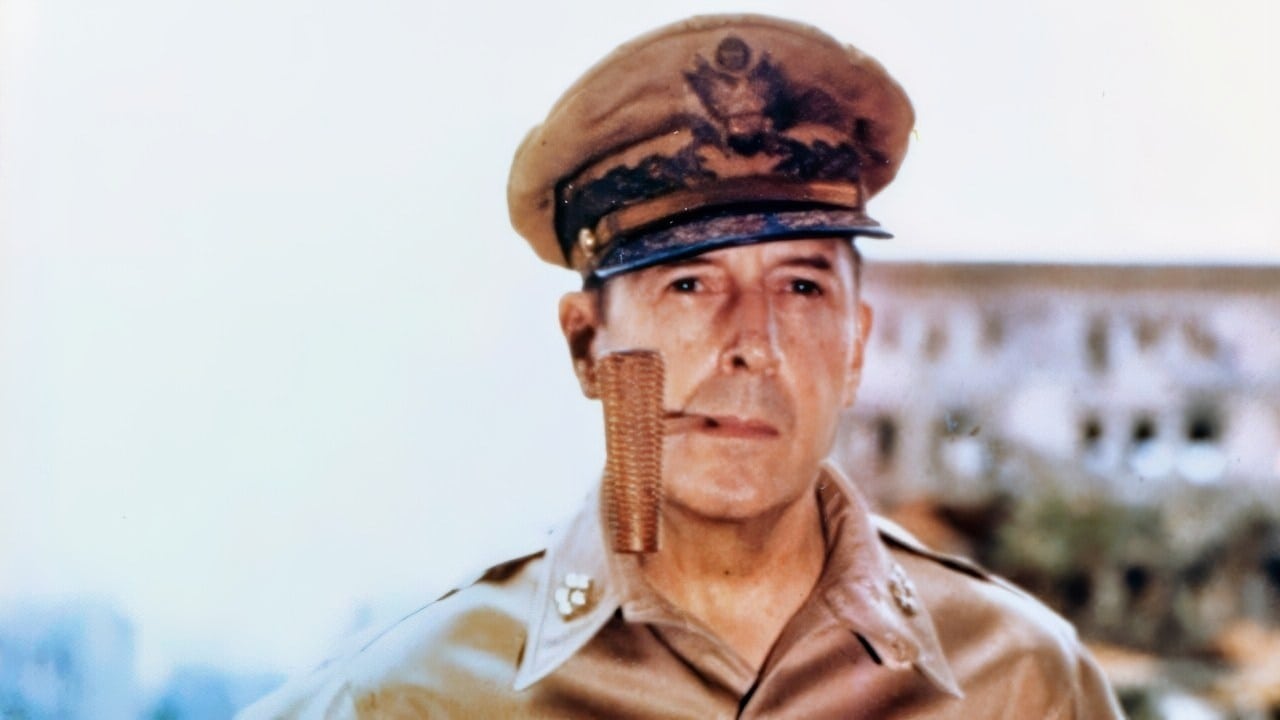
General Douglas MacArthur. Image Credit: Creative Commons.
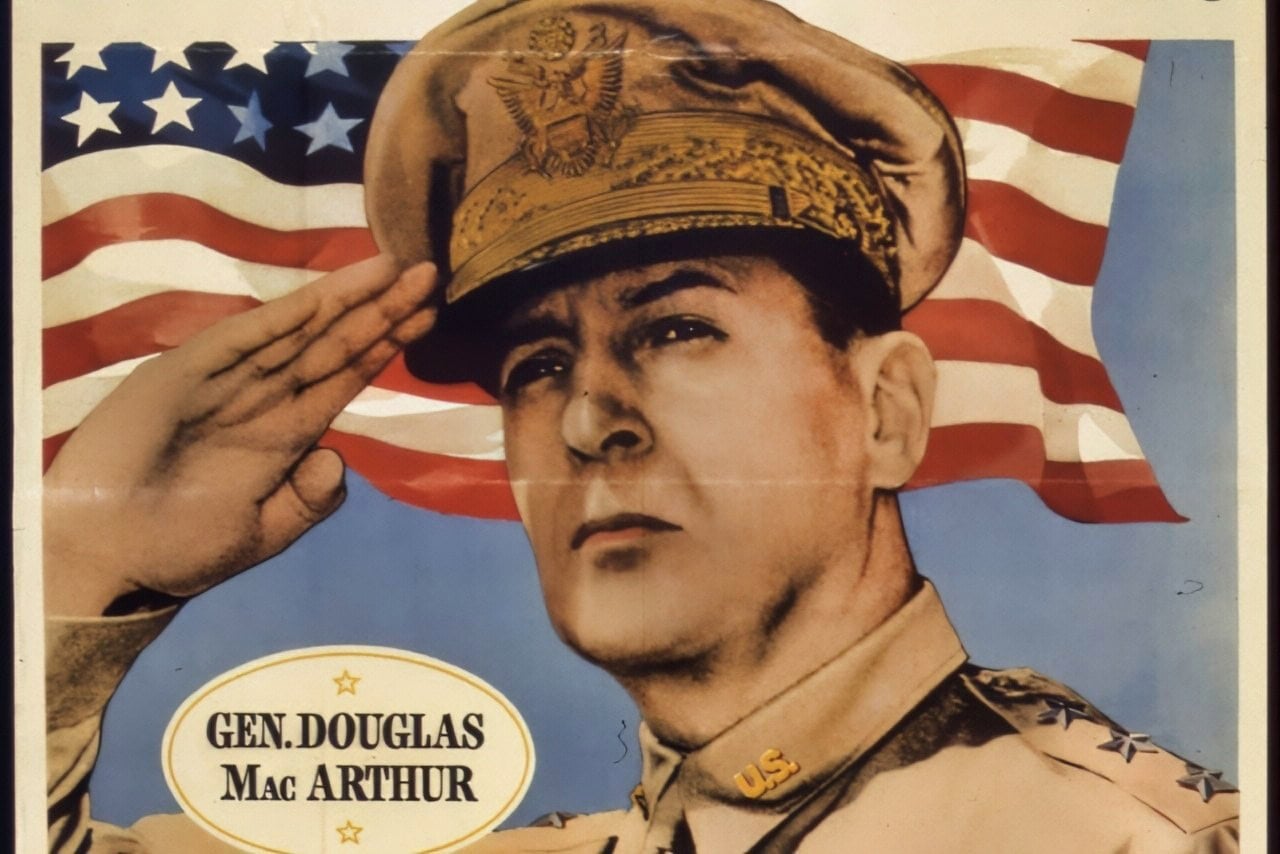
Douglas MacArthur. Image Credit: Creative Commons.
He finally retired from public service in September 1951.
George C. Marshall died aged 78 on October 16, 1959, at Walter Reed Army Medical Center, after suffering a series of strokes. He was laid to rest at Arlington National Cemetery, Section 7, Grave 8198.
Lasting Legacy
Dodona Manor, Marshall’s former home in Leesburg, Virginia, is on the National Register of Historic Places. Meanwhile, institutions named in his honor include: George C. Marshall High School in Fairfax, Virginia; the now-defunct George C. Marshall Institute think tank in Arlington, Virginia; and the George C. Marshall European Center for Security Studies in Garmisch-Partenkirchen, Germany.
In the Best Picture Oscar-winning film Saving Private Ryan, he was memorably portrayed by Harve Presnell.
About the Author: Christian D. Orr, Defense Expert
Christian D. Orr is a Senior Defense Editor. He is a former Air Force Security Forces officer, Federal law enforcement officer, and private military contractor (with assignments worked in Iraq, the United Arab Emirates, Kosovo, Japan, Germany, and the Pentagon). Chris holds a B.A. in International Relations from the University of Southern California (USC) and an M.A. in Intelligence Studies (concentration in Terrorism Studies) from American Military University (AMU). He is also the author of the newly published book “Five Decades of a Fabulous Firearm: Celebrating the 50th Anniversary of the Beretta 92 Pistol Series.”