
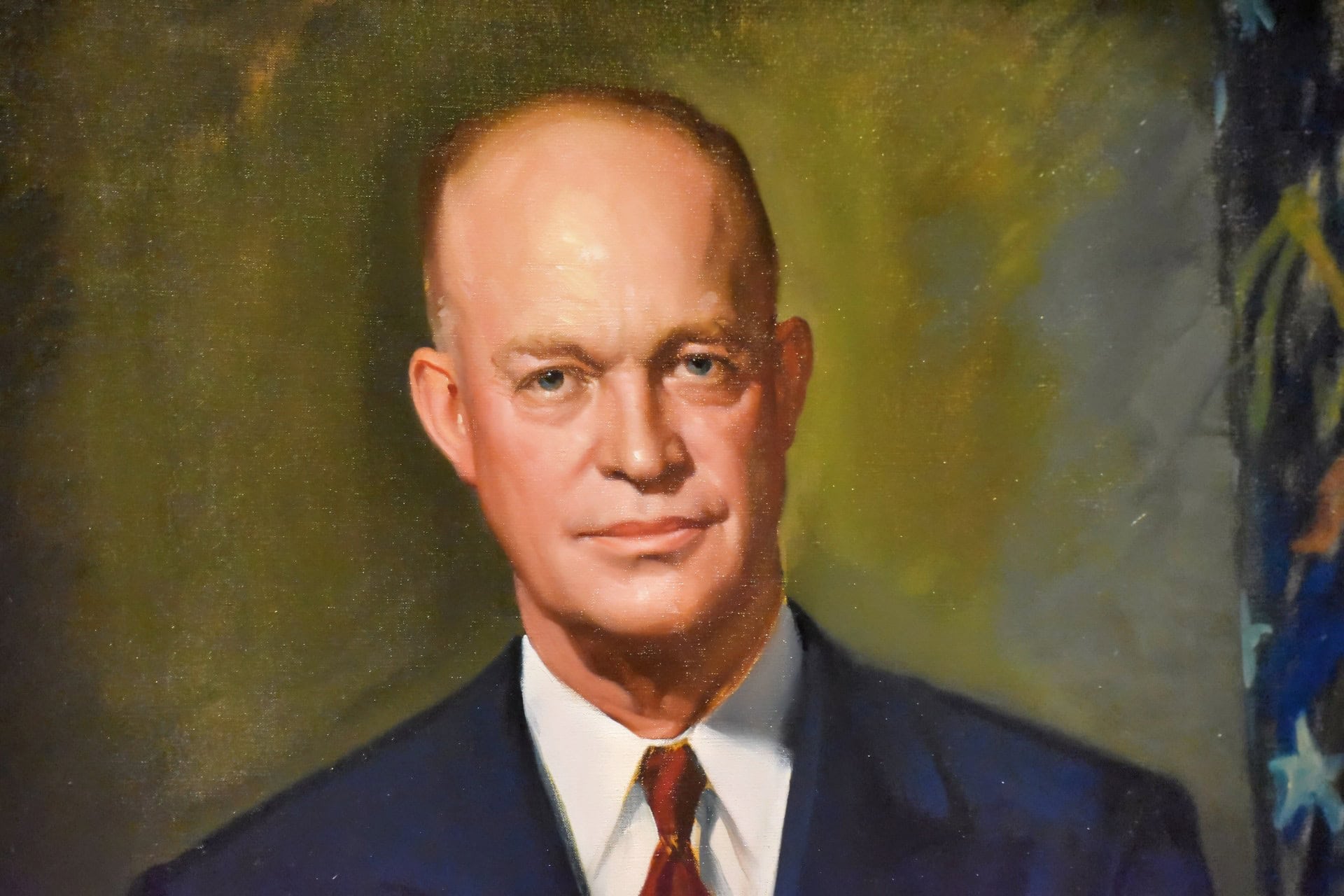
Summary and Key Points: General Dwight D. Eisenhower is remembered for his calm “I Like Ike” persona and leadership integrity, but his childhood reveals a different story.
-Born during a thunderstorm to a devout, pacifist mother, young “Little Ike” struggled with a violent temper, once even throwing a brick at his brother in a rage.
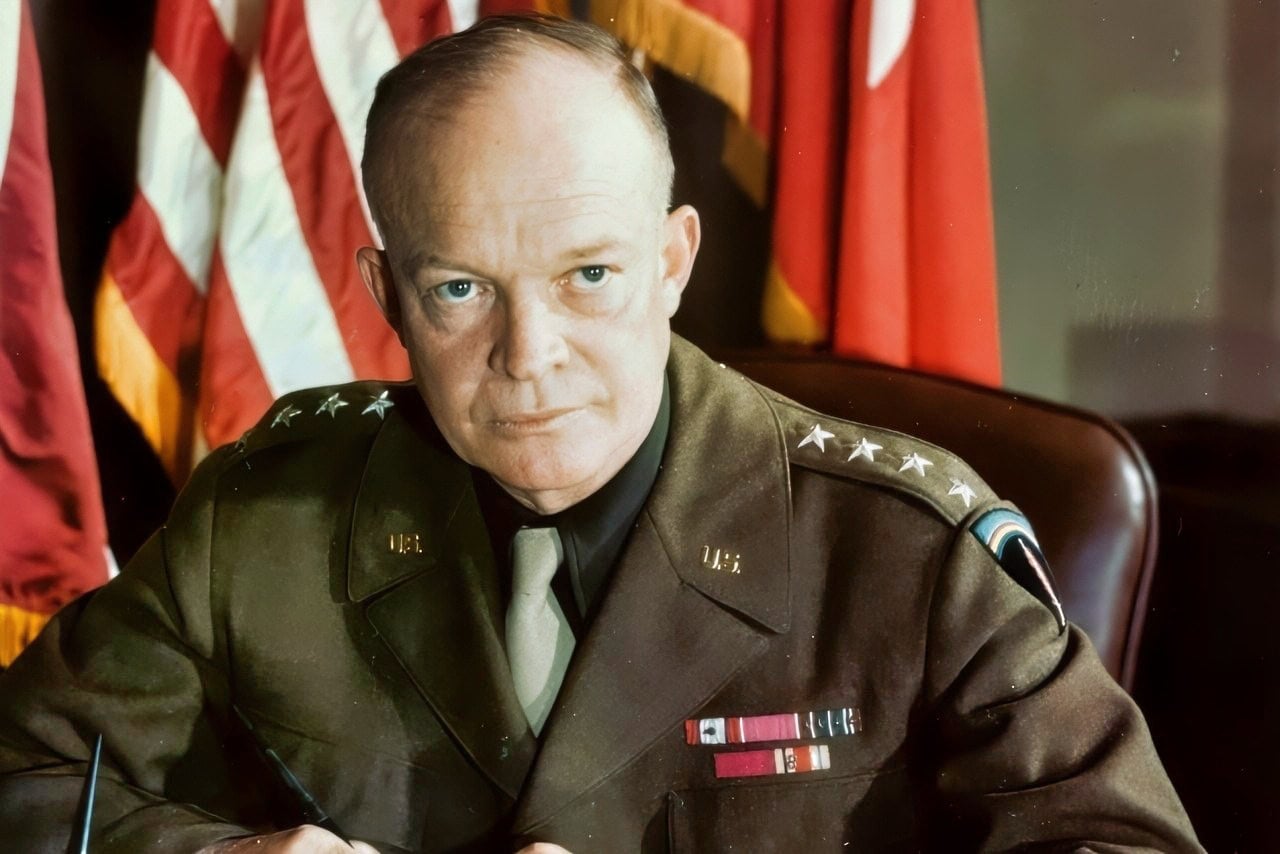
Dwight D. Eisenhower. Image Credit: Creative Commons.
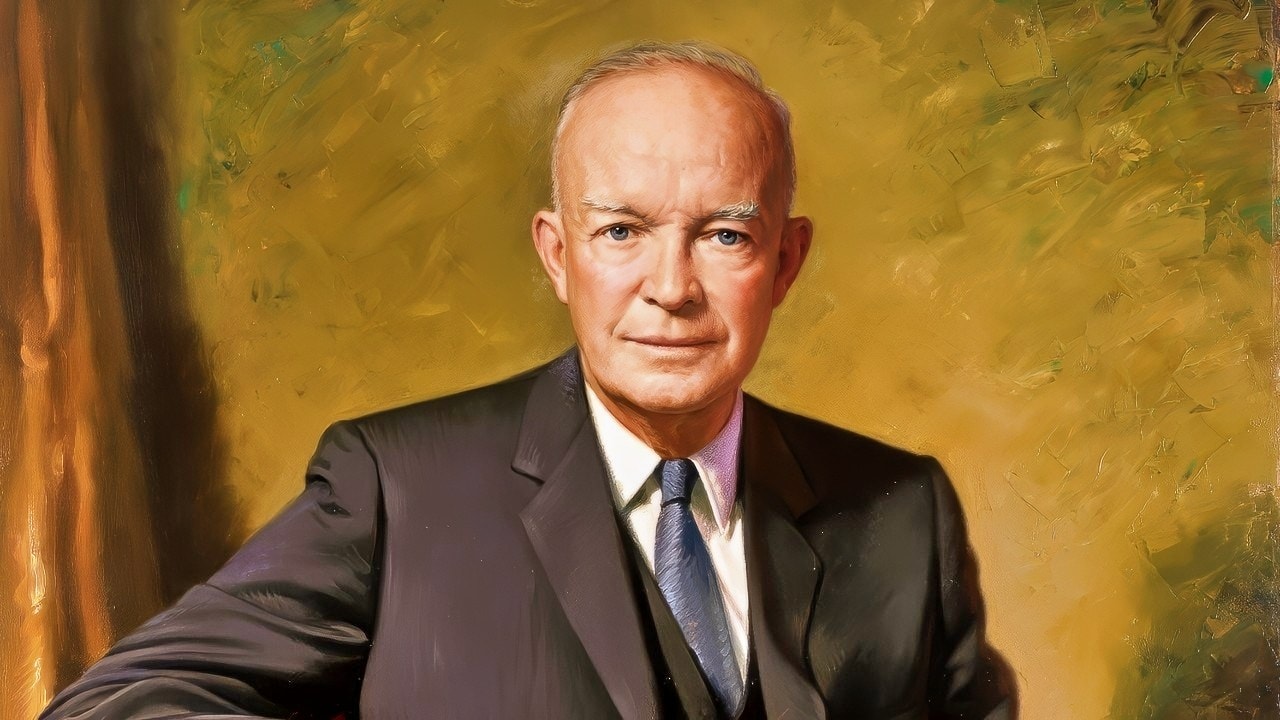
Former General Dwight D. Eisenhower. Image Credit: Creative Commons.
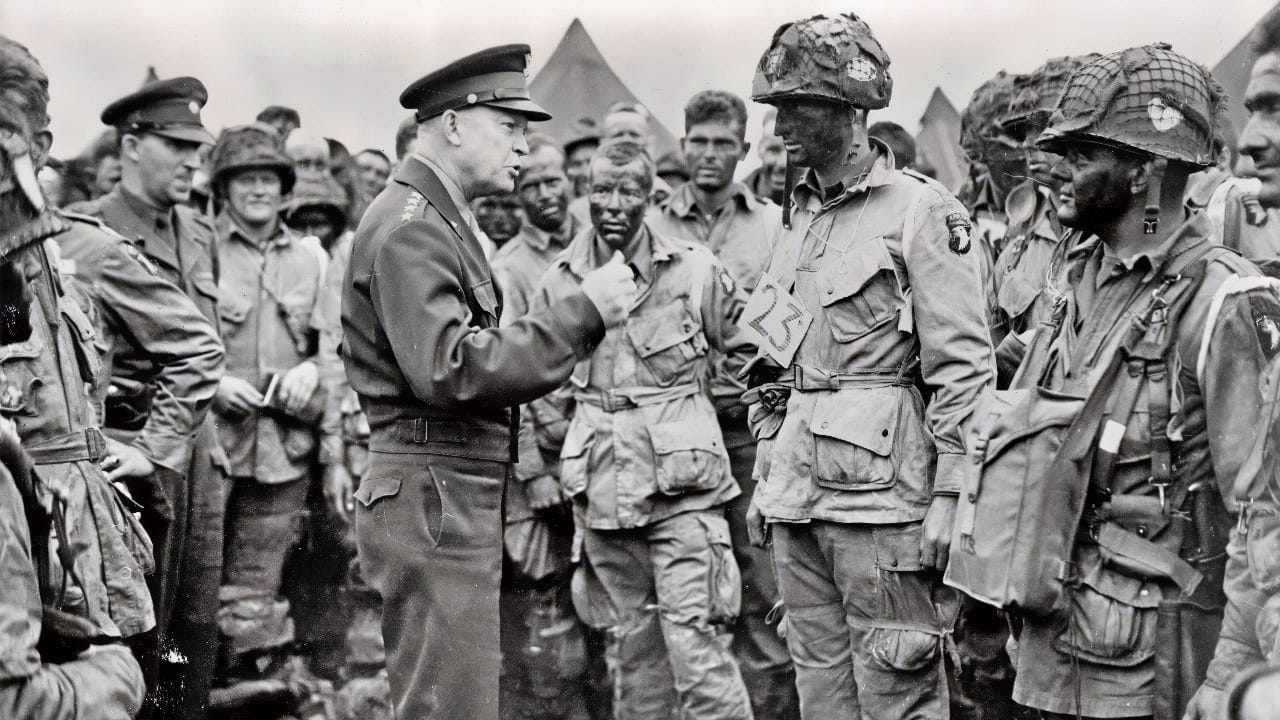
Dwight D. Eisenhower D-Day 1944. Image Credit: Creative Commons.
-Despite his mother’s anti-war beliefs, her collection of history books sparked his military interest.
-Defense expert Christian Orr explores how Eisenhower overcame his “roughneck” origins and life-threatening injuries to attend West Point—a decision that caused his pacifist mother to weep, yet set him on the path to the presidency.
Throwing Bricks and Beating Trees: The Rage Behind Eisenhower’s ‘Nice Guy’ Image
“The supreme quality for leadership is unquestionably integrity. Without it, no real success is possible.” – General Dwight D. Eisenhower
That quote belongs to Dwight David “Ike” Eisenhower, and—setting aside for a moment interservice rivalries between the U.S. Army and Air Force—it is certainly embodied in the most important of the Air Force Core Values: “Integrity First.”
Having previously covered both the military and political career of the legendary General and President Eisenhower, we take a step deeper into his past, and recall his childhood.
A Note on Sources
A key source of information for this article is the 1986 book Ike: His Life & Times by British historian Piers Brendon.
Brendon, by his own admission, went from childhood admiration of Ike the soldier to a student radical who became disillusioned with Ike the president. Indeed, the author’s lingering leftist biases still show through in the book’s introduction, and the book as a whole comes across as polemical at times.
Nonetheless, Chapter 1, “President of the Roughnecks,” is a treasure trove of information about Ike’s childhood and family heritage.
Ike’s Parentage: Steeped in Religion
Dwight David Eisenhower was born in Denison, Texas, during a fierce thunderstorm on October 14, 1880. He was the third of seven sons. All of them were nicknamed “Ike”, such as “Big Ike” (Edgar] and “Little Ike” (Dwight), as an abbreviation of their surname. His parents were David Jacob Eisenhower and Ida Elizabeth (Stover) Eisenhower.
Eisenhower was raised in Abilene, Kansas. His legal name at birth was David Dwight Eisenhower (in honor of evangelist Dwight Lyman Moody), but Mrs. Eisenhower reversed the names shortly thereafter to avoid the confusion of having two Davids in the family.
Ike’s parents were steeped in religiosity. They were members of the River Brethren sect, one of many Puritan or Mennonite splinter groups flourishing among the Pennsylvania Dutch. Regarding the boy’s being born during a thunderstorm, Brendon writes his father “was prone to read occult significance into worldly events, and perhaps wondered if the elements had contributed to his third son’s tempestuous nature.”
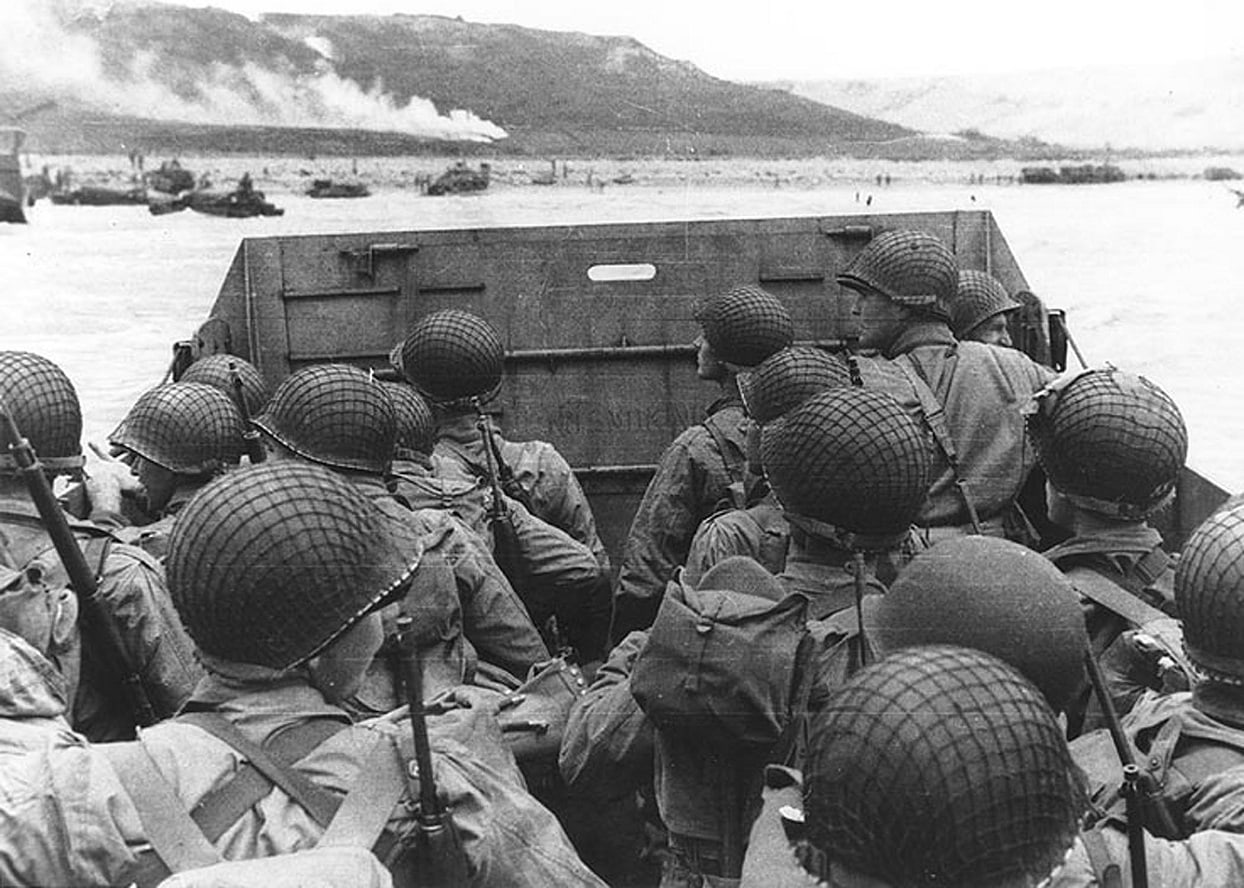
Troops in an LCVP landing craft approach Omaha Beach on D-Day, June 6, 1944.
Note the helmet netting, faint “No Smoking” sign on the LCVP’s ramp, the M1903 rifles and M1 carbines carried by some of these men.
From there, the author points out that, “His parents imposed severe discipline, his father with a maple switch, his mother by means of oft-repeated religious and moral precepts.”
It’s also worth noting that Ida Eisenhower was a pacifist.
Pugilistic Lad (Prelude to a Temperamental Adult?)
The successful “I Like Ike” presidential campaign ads of 1952 and 1956 projected a public image of Ike as an easygoing, affable fellow—but you would never know that from his childhood. Per Brendon: “His rages were so violent that he once threw a brick at the head of his eldest brother, and when frustrated he was capable of beating his fists to a bloody pulp against the trunk of a tree.”
It took Ida’s idealistic pacifism to calm town young Dwight at least a little bit. Ike eventually learned a measure of self-control, which he always attributed to the excellence of his mother’s instruction.
Dwight graduated from Abilene High School in the spring of 1909 without any evident disciplinary issues. However, he did have to repeat his freshman year due to a knee injury that developed into a life-threatening leg infection that extended to his groin.
After graduation, Ike spent the summer working at a series of jobs to help fund Edgar’s college education, and then took a job the following autumn at the Belle Springs Creamery, where he remained for nearly two years.
Parting with a Pacifist Parent for the Point
On October 28, 1910, Kansas Senator Joseph L. Bristow nominated Dwight for an appointment at the United States Military Academy at West Point. Ironically enough, despite Ida’s antiwar sentiments, it was her collection of history books that first sparked her third son’s interest in military history.
As Brendan notes in the closing two sentences of Chapter 1, “But she was saddened both as a pacifist and as a mother when Dwight departed for West Point in June 1911. After he had left the house she went to her room and—for the first time in her younger son Milton’s experience—she wept.”
One cannot help but wonder if it was more than a coincidence that presidential candidate Eisenhower would eventually choose as his running mate one Richard Milhous “Dick” Nixon, who himself was raised with anti-war religious parentage (Quakerism in Nixon’s case). Nixon became a naval officer in World War II, retiring with the rank of Commander before eventually entering politics.
About the Author: Christian D. Orr, Defense Expert
Christian D. Orr is a Senior Defense Editor. He is a former Air Force Security Forces officer, Federal law enforcement officer, and private military contractor (with assignments worked in Iraq, the United Arab Emirates, Kosovo, Japan, Germany, and the Pentagon). Chris holds a B.A. in International Relations from the University of Southern California (USC) and an M.A. in Intelligence Studies (concentration in Terrorism Studies) from American Military University (AMU). He is also the author of the newly published book “Five Decades of a Fabulous Firearm: Celebrating the 50th Anniversary of the Beretta 92 Pistol Series.”