
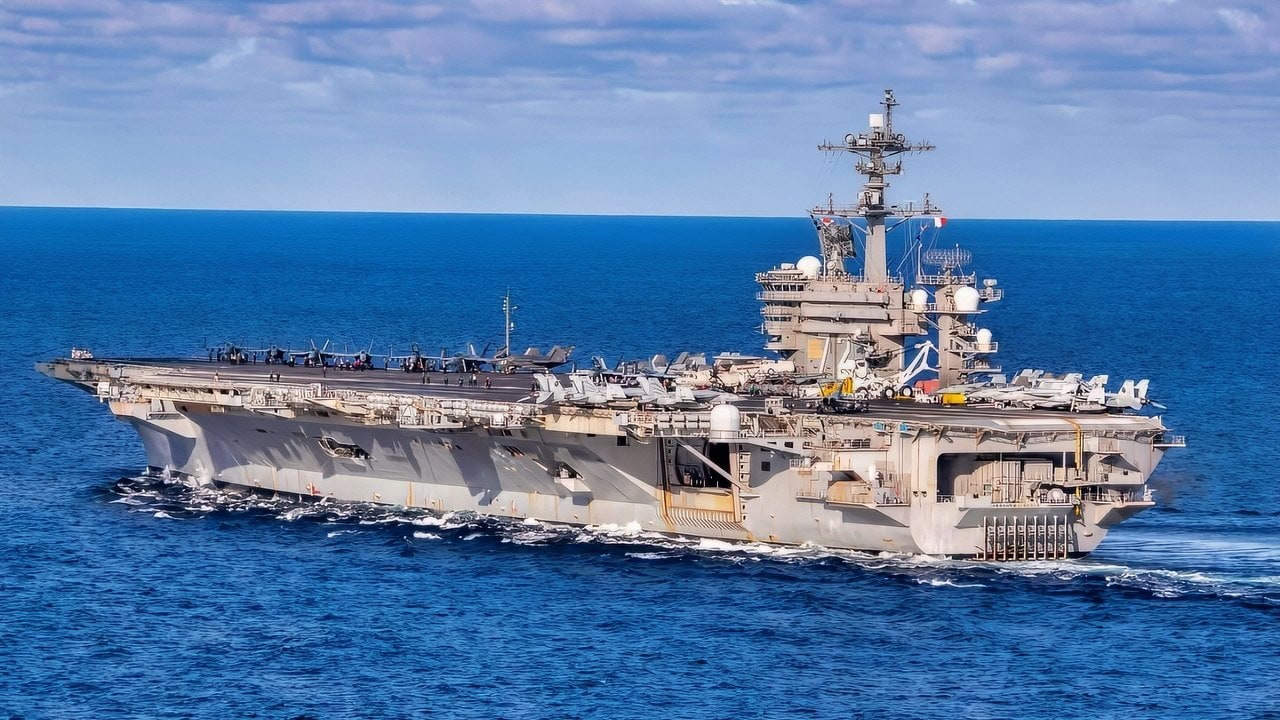
Summary and Key Points: U.S. Navy aircraft carriers remain the most flexible tool for global power projection, but their dominance is being tested by missile salvos, drones, and stealthy submarines—especially in a China fight.
-Air defenses like Aegis and SM-series interceptors can blunt attacks, yet magazine depth and reload speed raise hard questions in a mass-saturation scenario.
-The next layer is changing fast: lasers and other directed-energy systems promise cheap, repeatable “shots,” while tanking drones like MQ-25 extend the carrier air wing’s reach so strike aircraft can operate farther from the threat.
-Supercarriers are still survivable and strategically decisive—but future success depends on staying outside the kill zone, thinning attacks early, and preserving interceptors for the shots that matter.
Can U.S. Navy Aircraft Carriers Continue to Dominate?
With threats from China, Russia, North Korea, and Iran, the U.S. Navy needs enormous combat power and global reach to face down these rogue nations.
The answer for decades has been the aircraft carrier strike group. With long-range and the ability to deploy a floating air base into a multi-threat environment without boots on the ground, their deployments have been seen as the best way to show force and bring strike aircraft to bear against a motivated enemy.
But the aircraft carrier now faces a multitude of threats. Even a ragtag bunch of low-tech terrorists like the Iranian-backed Houthis threatened two carrier strike groups with multitudes of anti-ship missiles and drones. The American ships have the effective Aegis Combat System shield, which was working overtime, and interceptor missiles like the SM-2, SM-3, and SM-6. There are also RIM-162 Evolved Sea Sparrow Missiles (ESSM). A total of 100 to 125 interceptor missiles are on board each ship.
Would the U.S.Navy Run Out of Interceptors in a Mass Attack Scenario?
But these are expensive and run out fast with all the incoming bogeys that were launched by the Houthis. The SM family of interceptors takes significant time to produce and be replenished.
That’s why the Navy is considering deploying carrier-escort ships equipped with lasers to dazzle and fry incoming missiles and drones. There would be unlimited “shots” from these directed energy systems, and the efficacy of lasers is already being tested on destroyers.
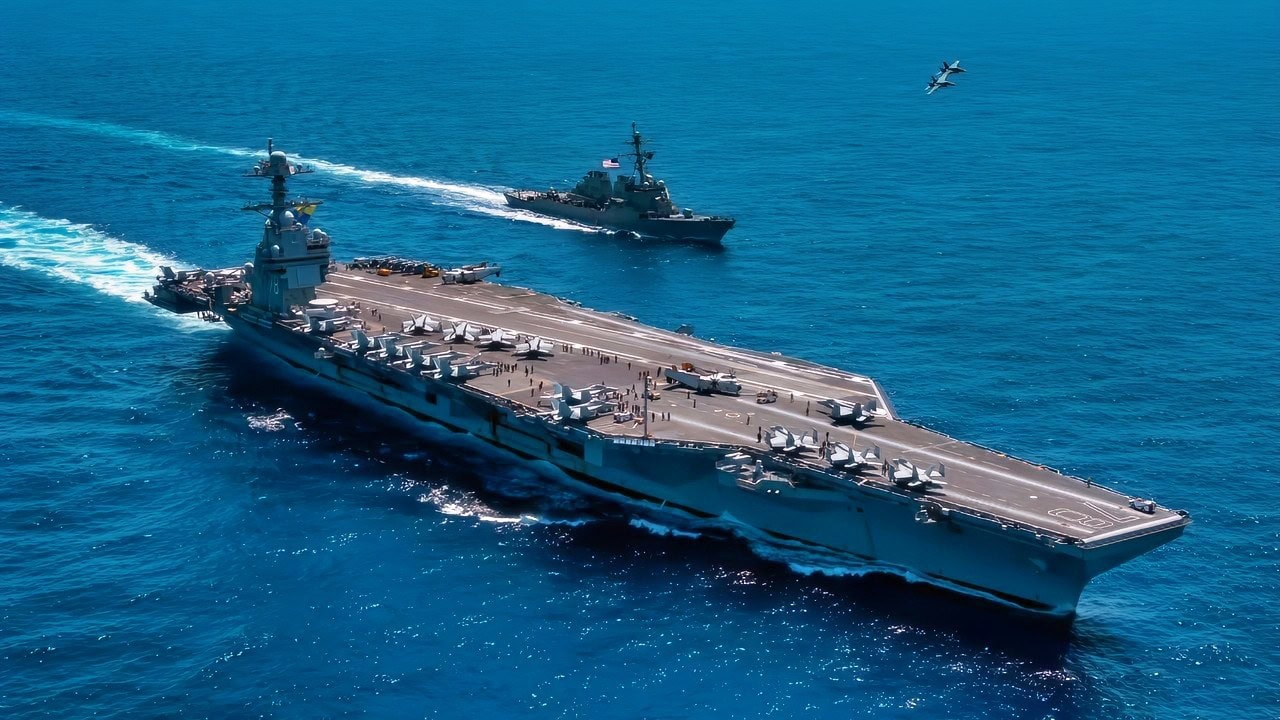
An F/A-18F Super Hornet, attached to the “Blacklions” of Strike Fighter Squadron (VFA) 213 and a F/A-18E Super Hornet, attached to the “Golden Warriors” of Strike Fighter Squadron (VFA) 87 fly over the world’s largest aircraft carrier, USS Gerald R. Ford (CVN 78), the Arleigh Burke-class guided-missile destroyer USS Mahan (DDG 72), April 11, 2025. The Gerald R. Ford Carrier Strike Group is underway in the Atlantic Ocean completing integrated naval warfighting training. Composite Training Unit Exercise. Image Credit: Creative Commons.
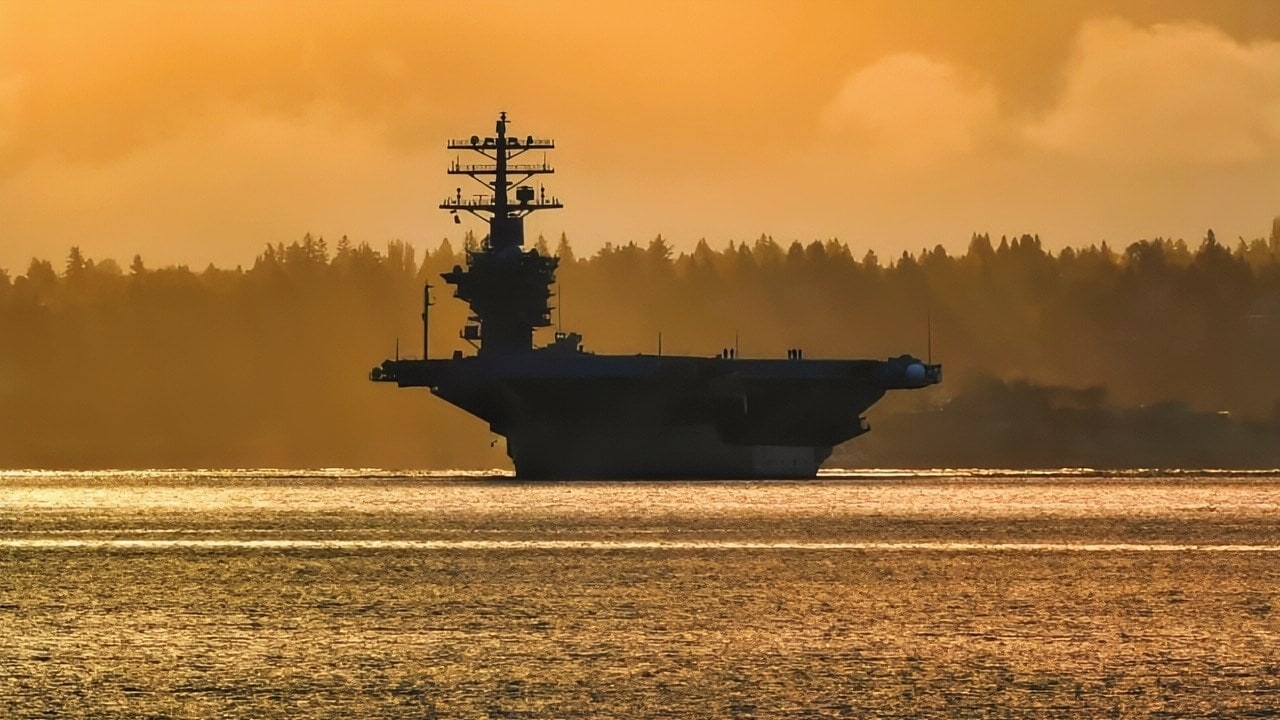
MANCHESTER, Wash. (April 28, 2017) USS Nimitz (CVN 68) transits Puget Sound, past the Seattle skyline enroute to its homeport, Naval Base Kitsap-Bremerton. The return to homeport marks the end of an underway along with its Carrier Strike Group 11, having successfully completed its final pre-deployment assessment, Composite Training Unit Exercise, April 21, and is now fully certified to deploy later this year. (U.S. Navy photo by Mass Communication Specialist 2nd Class Vaughan Dill/Released
Escort ships like the Ticonderoga-class guided missile cruisers or the Arleigh Burke-class guided missile destroyers are modernized and effective, and can protect carriers well, too.
Iranian Drones Are Pesky for Navy Supercarriers
Sometimes, the Navy depends on fighter jets to protect its carriers. An F-35C Lightning II stealth fighter recently shot down an Iranian Shahed-129 unmanned aerial vehicle. That was the good news.
The bad news is that China will be even more effective at sending overwhelming flights of drones and missiles at aircraft carriers. Their carrier-killing missiles and loitering munitions are considered superior to anything the Navy will encounter in the Middle East.
The other problem is always submarines. The Russians and Chinese have these in numbers, and they could sneak inside a carrier strike group and sink a carrier.
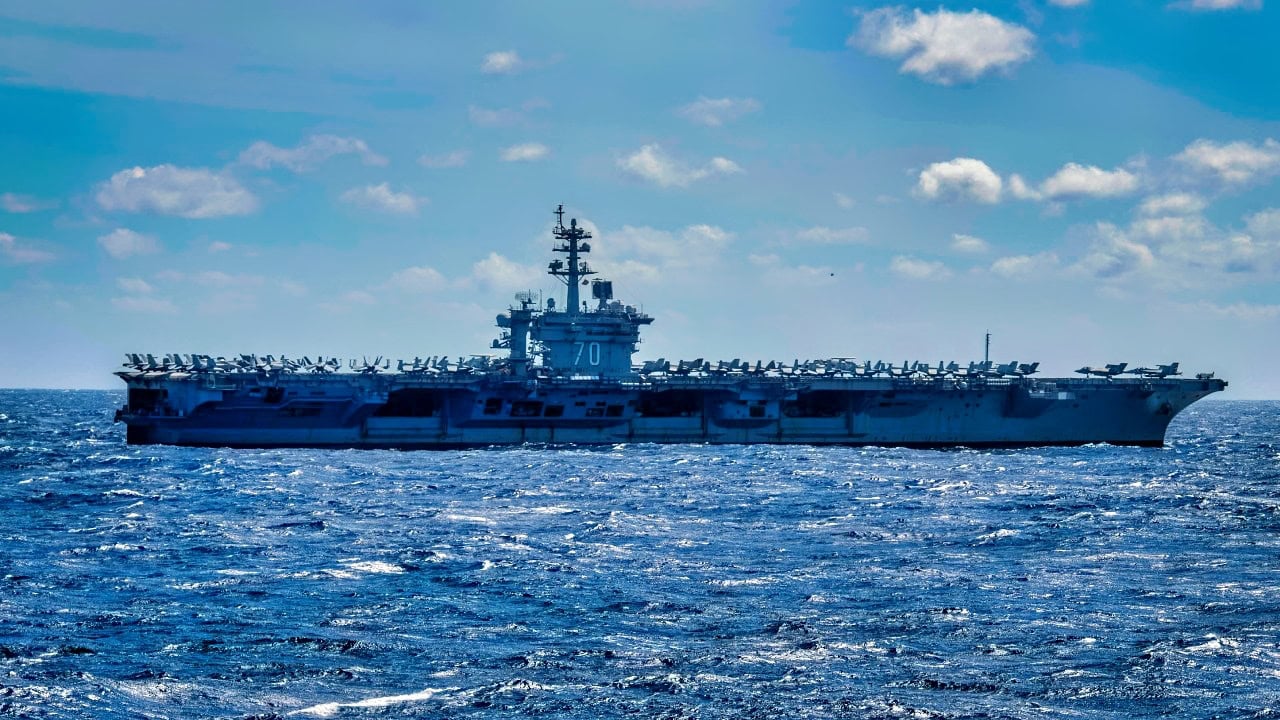
SOUTH CHINA SEA (Jan. 17, 2025) – The Nimitz-class aircraft carrier USS Carl Vinson (CVN 70) transits the South China Sea during a Maritime Cooperative Activity with the Philippine Navy, Jan. 17, 2025. The U.S. and Philippines work together as allies, enhancing the interoperability of maritime forces and supporting their shared goal of a free and open Indo-Pacific. Carrier Strike Group ONE, is underway conducting routine operations in the U.S. 7th Fleet area of operations. (U.S. Navy photo by Mass Communication Specialist 3rd Class Brianna Walker)
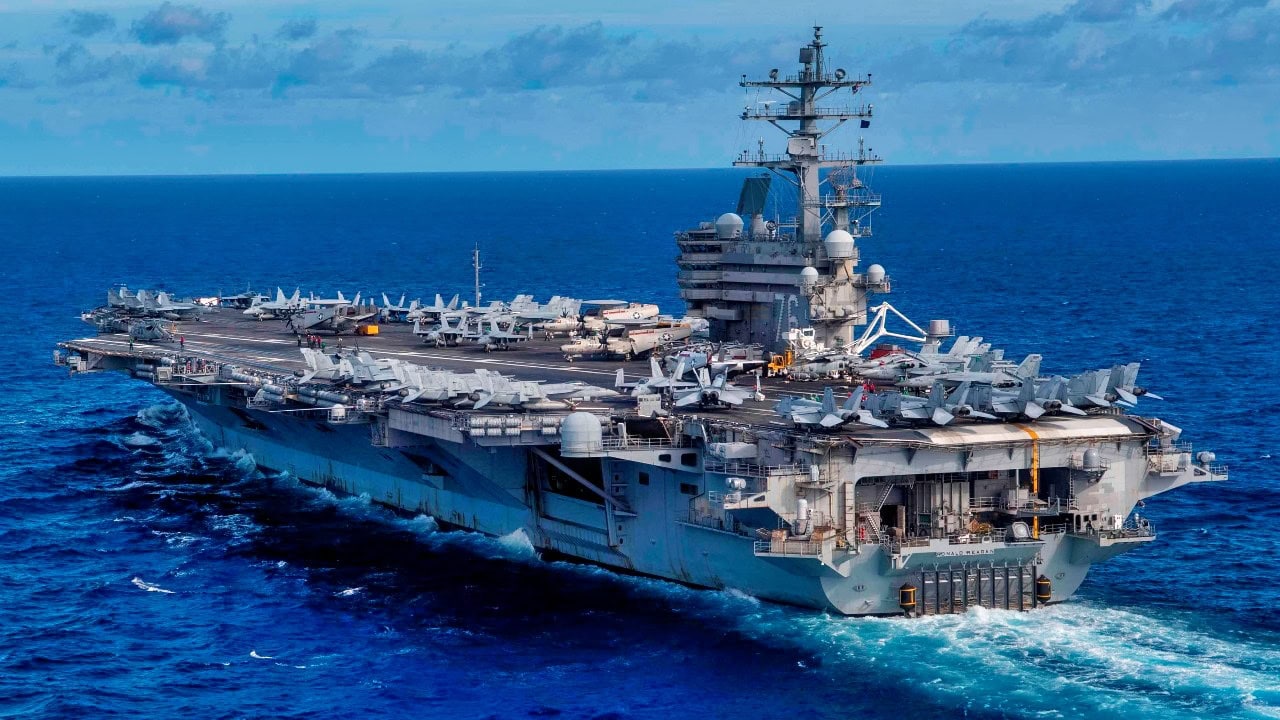
SOUTH CHINA SEA (June 16, 2021) The Navy’s only forward-deployed aircraft carrier USS Ronald Reagan (CVN 76) transits the South China Sea. Reagan is part of Task Force 70/Carrier Strike Group 5, conducting underway operations in support of a free and open Indo-Pacific. (U.S. Navy Photo by Mass Communication Specialist 1st Class Rawad Madanat)
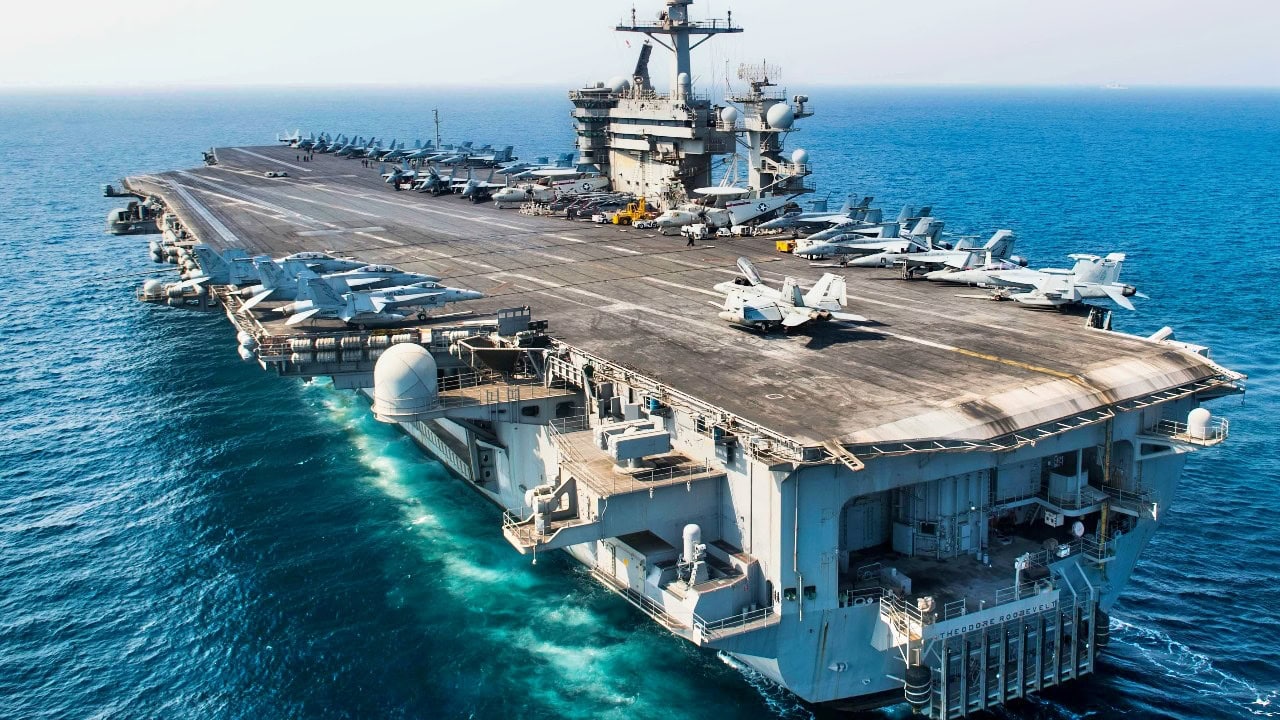
(Oct. 10, 2015) The aircraft carrier USS Theodore Roosevelt (CVN 71) transits the Arabian Gulf. Theodore Roosevelt is deployed in the U.S. 5th Fleet area of operations supporting Operation Inherent Resolve, strike operations in Iraq and Syria as directed, maritime security operations and theater security cooperation efforts in the region.
Aircraft Carriers Are More Survivable
However, there is reason for optimism. The Navy is quite aware of all of these threats. American sailors are combat-tested, and they know how to do their jobs expertly. Plus, an aircraft carrier can endure multiple strikes against it and still stay afloat. A sinking exercise against the USS America flat-top in 2005 involved multiple explosions and left the ship on top of the waves before it finally succumbed to a topside explosion and sank.
But this process took four weeks.
Sending the USS Gerald R. Ford into Harm’s Way
Meanwhile, the enemy knows that carriers are part of the U.S. international security strategy. These have always been presidential-level assets. The White House often answers geopolitical events with a carrier strike group deployment.
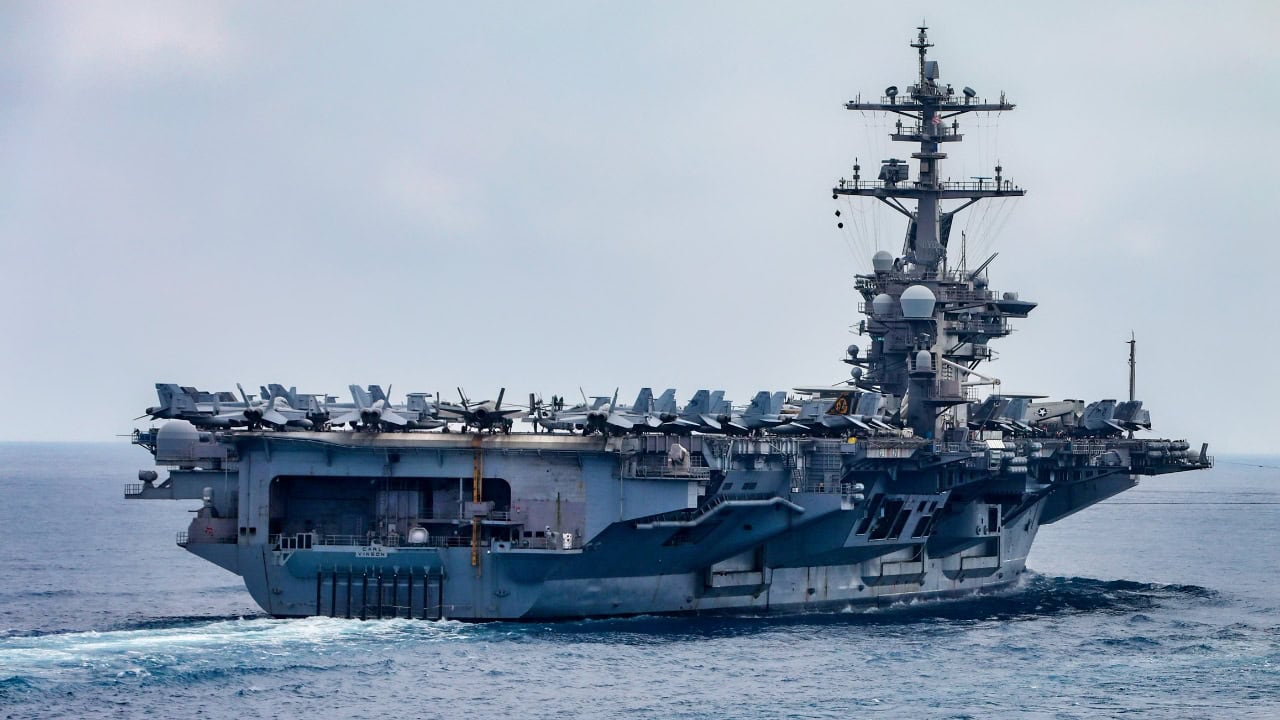
SOUTH CHINA SEA (Feb. 2, 2025) The Nimitz-class aircraft carrier USS Carl Vinson (CVN 70) conducts a replenishment-at-sea with the dry cargo and ammunition ship USNS Carl Brashear (T-AKE 7) Feb. 2, 2025. The Carl Vinson Carrier Strike Group is underway conducting routine operations in the U.S. 7th Fleet area of operations. (U.S. Navy photo by Mass Communication Specialist 1st Class Jacob I. Allison)
Just take a look at the latest naval development. The USS Gerald R. Ford, the Navy’s newest and best carrier, has been sent to the Central Command area of operations to intimidate Iran and prepare for strikes against the regime. Crew and pilots on the Ford may even be fatigued after executing the U.S. strategy in the Caribbean for the fight against narco-terrorism in the Western Hemisphere, but they have no choice.
China’s Three Aircraft Carriers
China is part of the carrier equation, too, and they have a vote in the fight. The People’s Liberation Army Navy has three aircraft carriers of its own: the Type 001 Liaoning, the Type 002 Shandong, and the Type 003 Fujian. There may be a fourth on the way that is nuclear-powered.
These carriers feature the J-15 Flying Shark and the J-35 naval stealth fighter. This could pose problems for a U.S. carrier. China could carry out its strategy of anti-access/ area denial that aims to keep the Americans down and out in East Asia and hinders freedom of navigation exercises in the First Island Chain.

Dec. 4, 2017) Sailors man the rails as the Navy’s forward-deployed aircraft carrier, USS Ronald Reagan (CVN 76), arrives at Commander, Fleet Activities Yokosuka after a scheduled patrol. The Ronald Reagan Carrier Strike Group conducted 87 days of strike group operations in the Western Pacific, including the waters south of Japan, the Philippine Sea and the South China Sea. Ronald Reagan provides a combat-ready force, which protects and defends the collective maritime interests of the U.S. and its allies and partners in the Indo-Asia-Pacific region. (U.S. Navy photo by Mass Communication Specialist 2nd Class Janweb B. Lagazo/Released)
The Assassin’s Mace Is Powerful
China is also planning to conduct asymmetric warfare with its DF-family and YJ-series of anti-ship missiles. Some of these are hypersonic. They are attempting to focus on this Assassin’s Mace strategy to take out American carriers and keep them from intervening if China decides to attack or blockade Taiwan.
The Era of the Kinetic Missile Fight for Aircraft Carriers
This all adds up to what I call the “Kinetic Missile Fight.” China can sink a carrier, and the Americans must be up to the challenge. We are likely to see combat full of rapidly flying missiles aimed at carriers, while the escort ships fire their own interceptors until they run out.
Many Other Military Options
Militarily, the United States still has options. The Navy can remain out of range with the MQ-25 Stingray stealth tanker drone, which extends fighter range by more than 500 nautical miles. The Air Force can also fight back, and more combat jets and bombers can be deployed from U.S. bases in Okinawa and Guam. The Americans can also focus on electronic warfare, cyber offense, and space operations.
The carrier’s survival is not assured, but the Americans are likely to rehearse and counteract the threats to its strike groups. This boils down to how well shipmates do their jobs and how they prepare for the worst against adversaries.
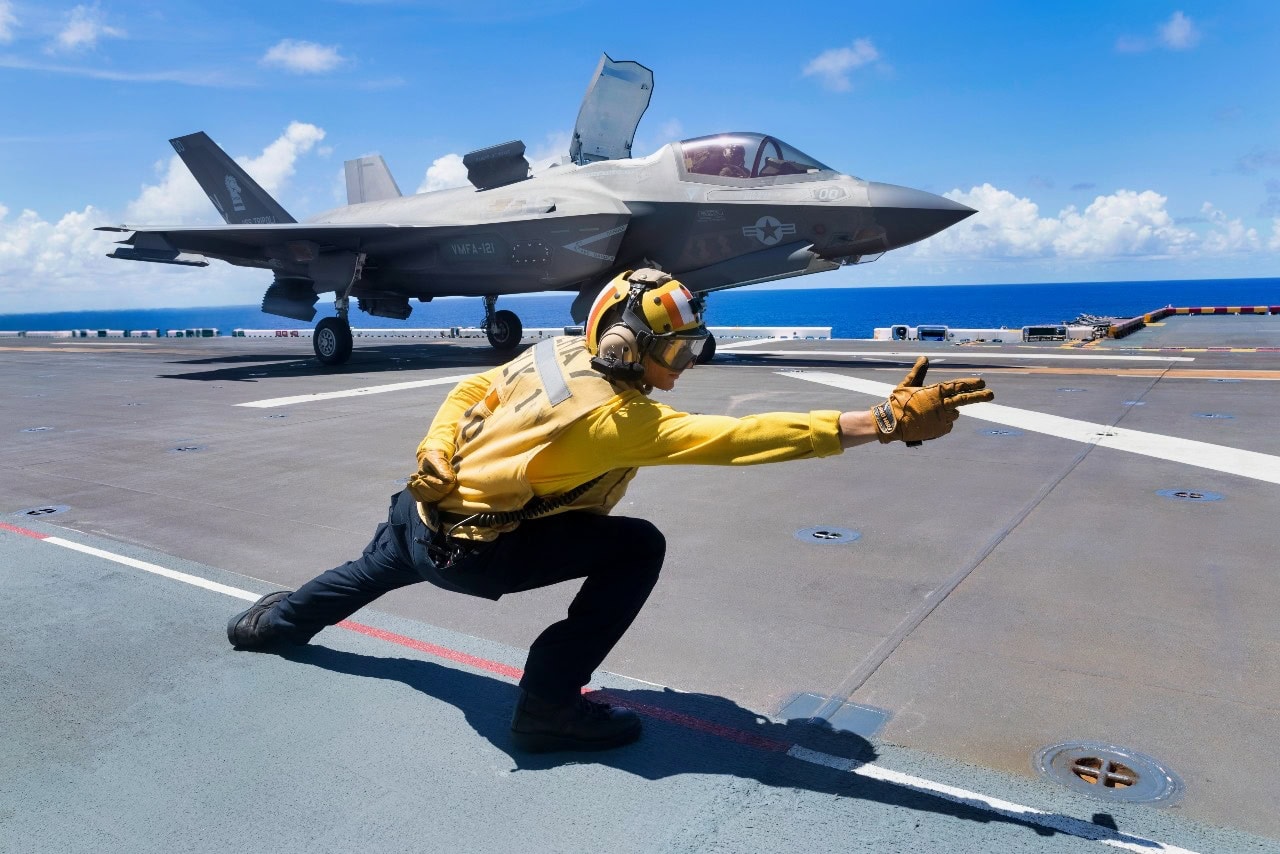
U.S. Navy Aviation Boatswain’s Mate (Handling) 3rd Class Nicolas Fareri launches a U.S. Marine Corps F-35B Lightning II aircraft with Marine Fighter Attack Squadron 121 off the amphibious assault carrier USS Tripoli (LHA 7) during Valiant Shield 2022 (VS22), June 13, 2022. Exercises such as Valiant Shield allows the Indo-Pacific Command Joint Task Force the opportunity to integrate forces from all branches of service to conduct long-range, precise, lethal, and overwhelming multi-axis, multi-domain effects that demonstrate the strength and versatility of the Joint Task Force and our commitment to a free and open Indo-Pacific. (U.S. Marine Corps photo by Sgt. Jackson Ricker)
The Department of Defense should be aware that a U.S. carrier could be sunk and must be prepared for this contingency. If that happened, there would be a full-fledged war against any adversary that could destroy such a large ship.
The Navy is still ready for the Kinetic Missile Fight. China has no prior combat experience. The Iranians have drones and ballistic missiles, but they do not have the same expertise. Russia’s navy has seen better days, and North Korea has yet to prove it can sustain naval operations for extended periods. But as time goes by, all of these militaries will improve, and the U.S. Navy will have its hands full protecting its carriers. Let’s hope the American way of war will be effective during the Kinetic Missile Fight, which is sure to make peace through strength a more difficult proposition.
About the Author: Dr. Brent M. Eastwood
Author of now over 3,000 articles on defense issues, Brent M. Eastwood, PhD is the author of Don’t Turn Your Back On the World: a Conservative Foreign Policy and Humans, Machines, and Data: Future Trends in Warfare plus two other books. Brent was the founder and CEO of a tech firm that predicted world events using artificial intelligence. He served as a legislative fellow for US Senator Tim Scott and advised the senator on defense and foreign policy issues. He has taught at American University, George Washington University, and George Mason University. Brent is a former US Army Infantry officer. He can be followed on X @BMEastwood.