
Summary and Key Points: Dr. Robert E. Kelly, an international relations expert, evaluates the emergent Trump Doctrine of “Rogue-State Elite Replacement” during the 2026 Iran air war.
-Following the successful “decapitation” of Venezuela in January and the 2024 collapse of the Assad regime in Syria, this strategy prioritizes the elimination of anti-American elites over total regime change.
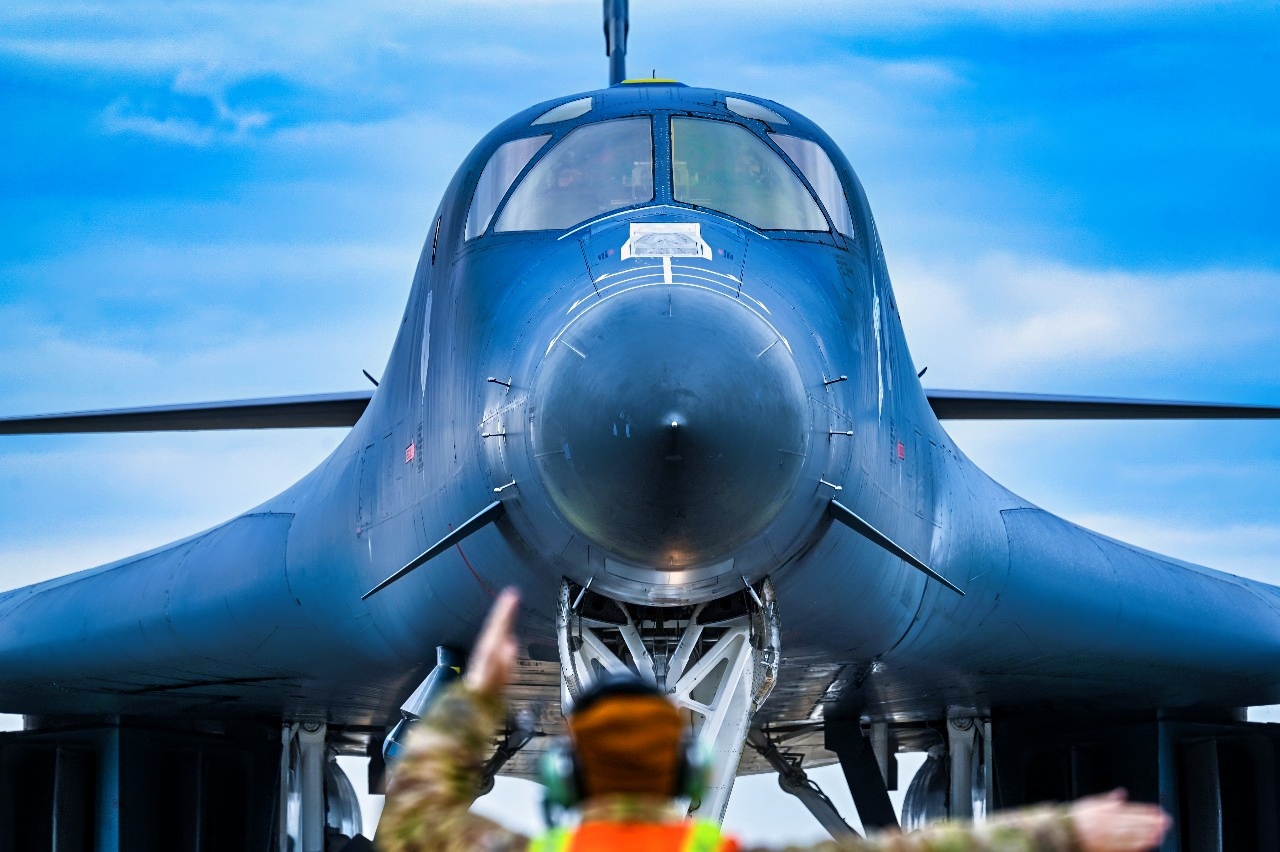
An Airman assigned to the 9th Expeditionary Bomb Squadron marshals a B-1B Lancer, preparing for take off during Bomber Task Force 25-2 at Misawa Air Base, Japan, May 3, 2025. BTF 25-2 is a demonstration of Allied strength, unity, and commitment to global security. By projecting force, reinforcing strong partnerships, and showing our unwavering resolve, it aims to deter aggression and uphold peace and stability in the Indo-Pacific region and beyond. (U.S. Air Force photo by Airman 1st Class Mattison Cole)
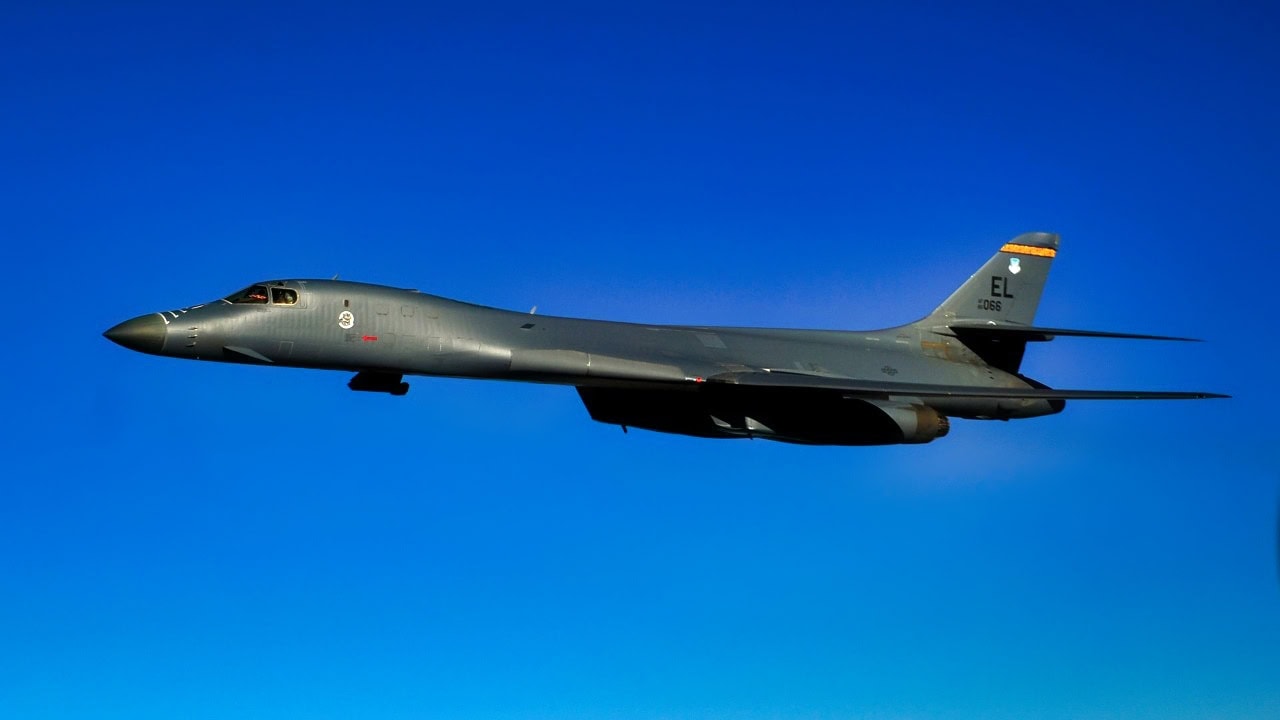
B-1B Lancer Bomber. Image Credit: Creative Commons.
-This report analyzes how the administration avoids the costs of democratization by installing pro-American despots who sever ties with Moscow and Beijing.
-Kelly concludes that while this worked in Caracas, Operation Epic Fury represents the doctrine’s most dangerous and complex test.
The Elite Replacement Trump Doctrine: Why the 2026 Iran Campaign Rejects the “Nation-Building” Failures of Iraq
Trying to force a president’s foreign policy actions into a coherent framework—a “Doctrine”—is a time-honored tradition in foreign policy analysis. Over the years, we have found an Eisenhower Doctrine, a Carter Doctrine, a Bush Doctrine, and so on.
All these can be disputed, and presidents often act against their stated predilections.
George W. Bush entered office focused on great power competition and rejecting nation-building. After the 9/11 strikes, he engaged in the riskiest nation-building U.S. foreign policy since the Vietnam War.
Efforts to pin down a Trump Doctrine have been even trickier. U.S. President Donald Trump is mercurial by nature. He often changes his mind. He has few foreign policy beliefs beyond a commitment to tariffs and dislike of U.S. alliances, which he frames as scams at America’s expense.
But in the last few months, as Trump has suddenly embraced the aggressive use of U.S. force, a pattern is emerging.
If the doctrine of Trump’s first-term was some mix of isolationism and retrenchment, analysts need a new concept for Trump’s dramatic second-term willingness to use force.
Call it rogue-state elite replacement.
Targeting the Rogues
The United States has long resented the anti-systemic, rejectionist behavior of a small group of states who rejected the U.S.-led, post-Cold War unipolar order. The term “rogue state” emerged in the 1990s to describe countries such as North Korea, Iran, Cuba, and Saddam Hussein’s Iraq.
U.S. administrations struggled with how to deal with such countries, alternating among options including airstrikes, sanctions, or attack.
Like his predecessors, Trump has targeted these states.
But his approach is new. He will not launch light missile strikes and then walk away, or attack them to democratize them. Instead, he will decapitate them and replace the eliminated elites with pro-American elites. Rather than regime change, Trump is pursuing elite replacement, leaving the regime below the leadership level intact.
During the Cold War, the United States was often willing to look the other way on authoritarian allies’ abuses so long as they were pro-American. Various presidents deferred to the expression “He is a son of b*tch, but our son of a b*tch” to capture this idea.
Trump seems to be moving in that direction.
Pro-American Decapitations in Venezuela and Iran…Next Cuba?
The fall of Bashar al-Assad of Syria in 2024 illuminated this approach to rogue states. Assad was pushed out by a local coalition with much Western sympathy. But unlike in Iraq and Afghanistan, the United States and the West played no role in what came next.
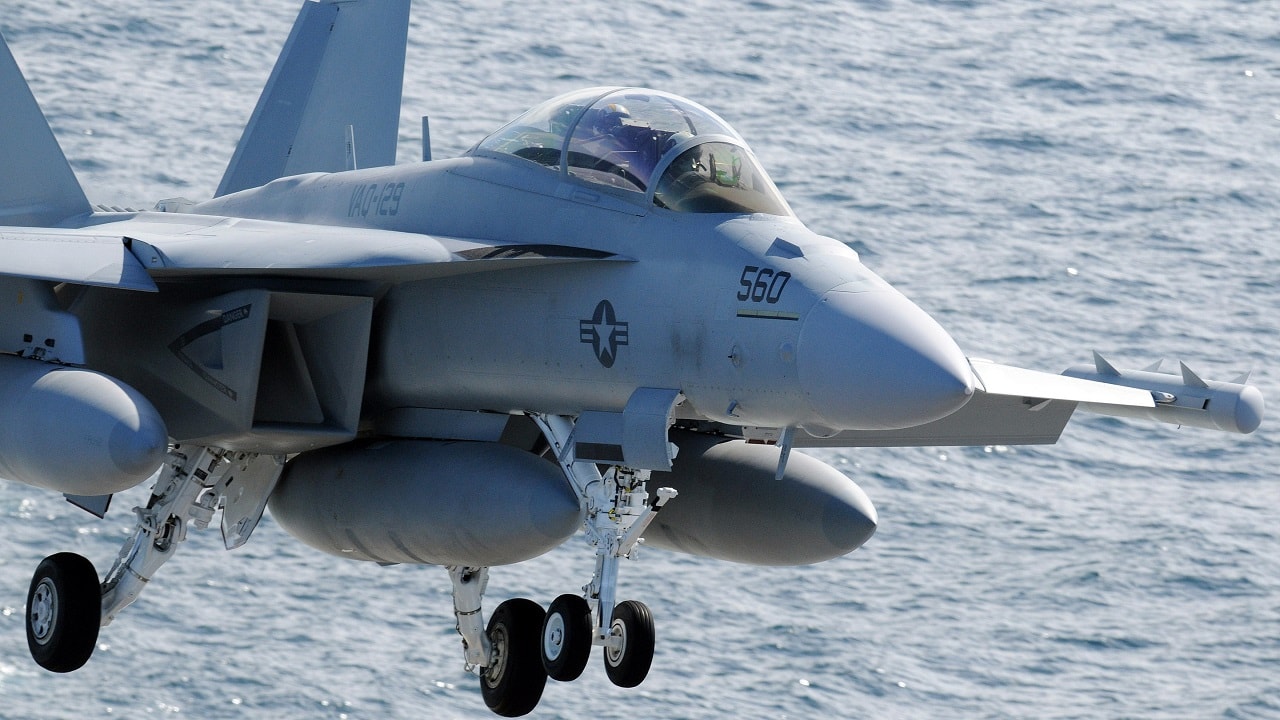
(Feb. 17, 2009) An EA-18G Growler assigned to the “Vikings” of Tactical Electronic Warfare Squadron (VAQ) 129 aligns itself for an at sea landing aboard the Nimitz-class aircraft carrier USS Ronald Reagan (CVN 76). The Growler is the replacement for the EA-6B Prowler, which will be replaced in the 2010 timeframe. Ronald Reagan is underway performing Fleet Replacement Squadron Carrier Qualifications in the Pacific. (U.S. Navy photo by Mass Communication Specialist 3rd Class Torrey W. Lee/Released).
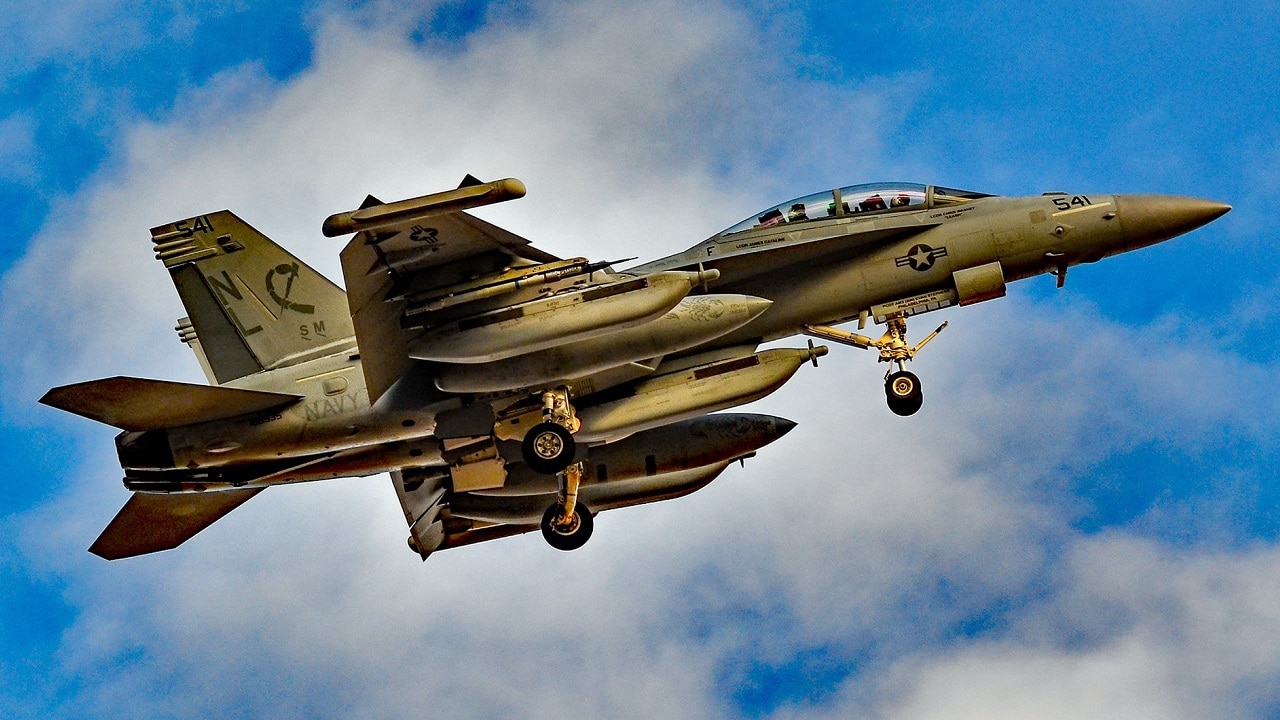
EA-18G Growler. Image Credit: Creative Commons.
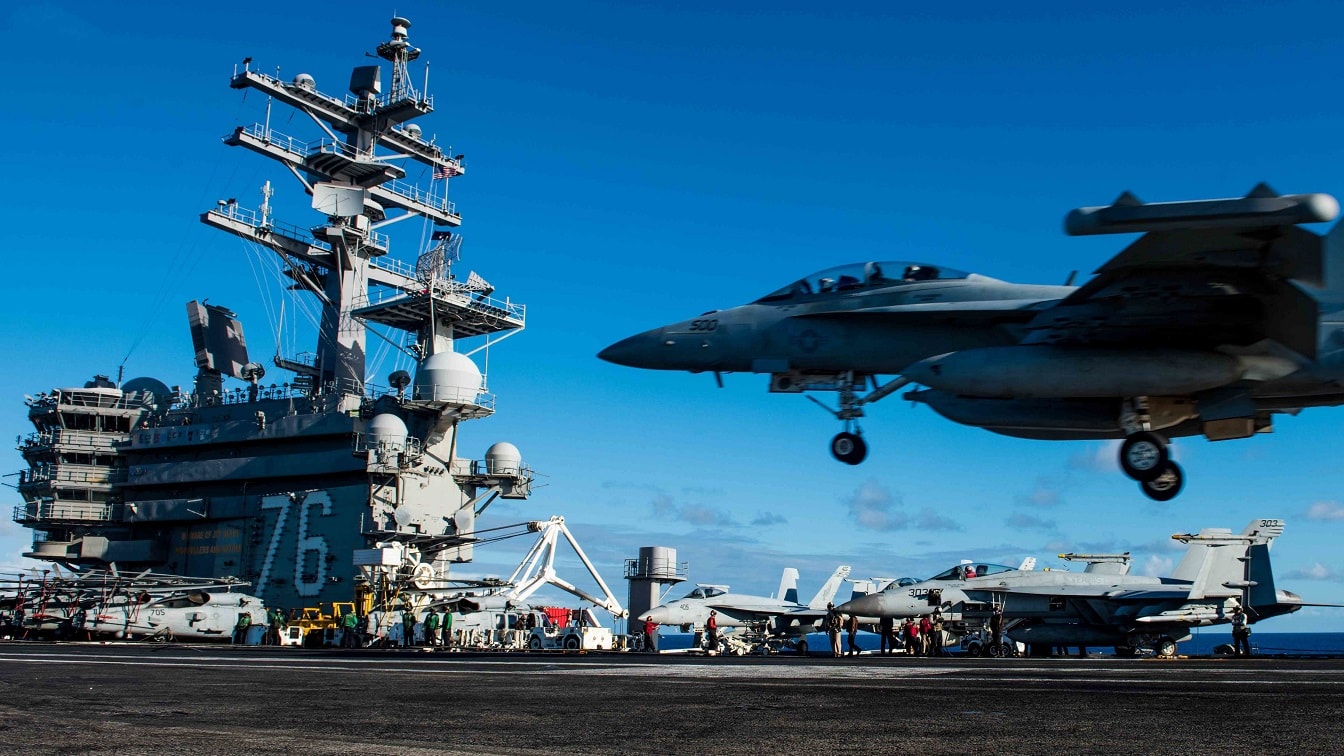
(June 20, 2018) An EA-18G Growler assigned to Electronic Attack Squadron (VFA) 141 lands on the flight deck of the Navy’s forward-deployed aircraft carrier, USS Ronald Reagan (CVN 76). Ronald Reagan, the flagship of Carrier Strike Group 5, provides a combat-ready force that protects and defends the collective maritime interests of its allies and partners in the Indo-Pacific region. (U.S. Navy photo by Mass Communication Specialist 2nd Class Kenneth Abbate/Released)
The decapitation of an anti-American leader was sufficient. Regime change and democratization were rejected as too difficult and exhausting. This worked better than expected, at least for outsiders. The new Syria has not turned into a terror-exporting rogue state.
Trump clearly learned from Syria in his decapitation of Venezuela this January. Trump did not bother with regime change, democratization, or reconstruction. He brushed off the leader of the democratic resistance in Venezuela. Instead, he removed the local anti-American despot and installed a pro-American one, otherwise leaving the regime in place.
Trump’s Iran operation is moving in the same direction.
It is clear that the Iranian clerical regime will not fall without a ground intervention. The Iranian dissident movement might have provided the needed ground force, but they were slaughtered by the regime last month during a quashed rebellion. Trump will probably not send in U.S. troops. He must know how difficult and unpopular a U.S. invasion of Iran would be.
So his administration is already hinting a finding a pro-American stooge who will replace the now-decapitated anti-American leadership.
If this works, the White House can wind down the conflict rather quickly and achieve at least the basic strategic goal of reducing Iran’s anti-Americanism and its partial alignment with Russia and China.
The next obvious target for this approach is Cuba, which the administration has already hinted at.
Conclusion: Trump Doctrine Now Clear?
Trump has no particularly clear grand strategic goals for the United States. Indeed, it is not even clear what the plan for Iran is.
But Trump does have a method, now that he has turned to using force overseas: Knock off the anti-American elite clique of a rogue state; leave the rest of the regime intact; install a pro-American despot who will sever ties with Russia and China; go home and avoid all the costs of nation-building.
To Trump’s credit, this worked surprisingly well in Venezuela, which is likely why he pivoted to Iran so fast. But Iran is a far tougher test of this emergent Trump Doctrine.
Author: Dr. Robert Kelly, Pusan National University
Dr. Robert E. Kelly is a professor of international relations in the Department of Political Science and Diplomacy at Pusan National University in South Korea. His research interests focus on Security in Northeast Asia, U.S. foreign policy, and international financial institutions. He has written for outlets including Foreign Affairs, the European Journal of International Relations, and the Economist, and he has spoken on television news services such as the BBC and CCTV. His personal website/blog is here; his Twitter page is here.