
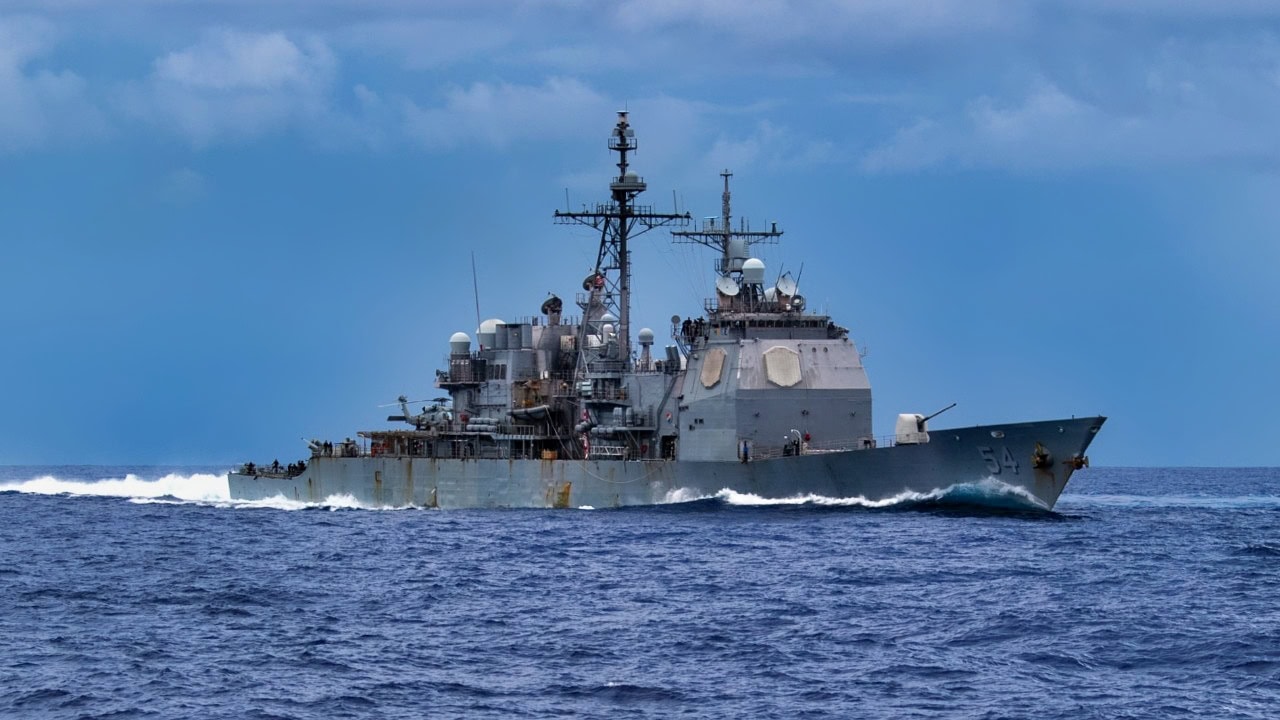
Summary and Key Points: National security writer Harrison Kass evaluates the “firepower gap” created by the retirement of the Ticonderoga-class cruiser.
-Each 9,800-ton vessel features 122 VLS cells, serving as a critical “missile truck” for Tomahawks and SM-6 interceptors.
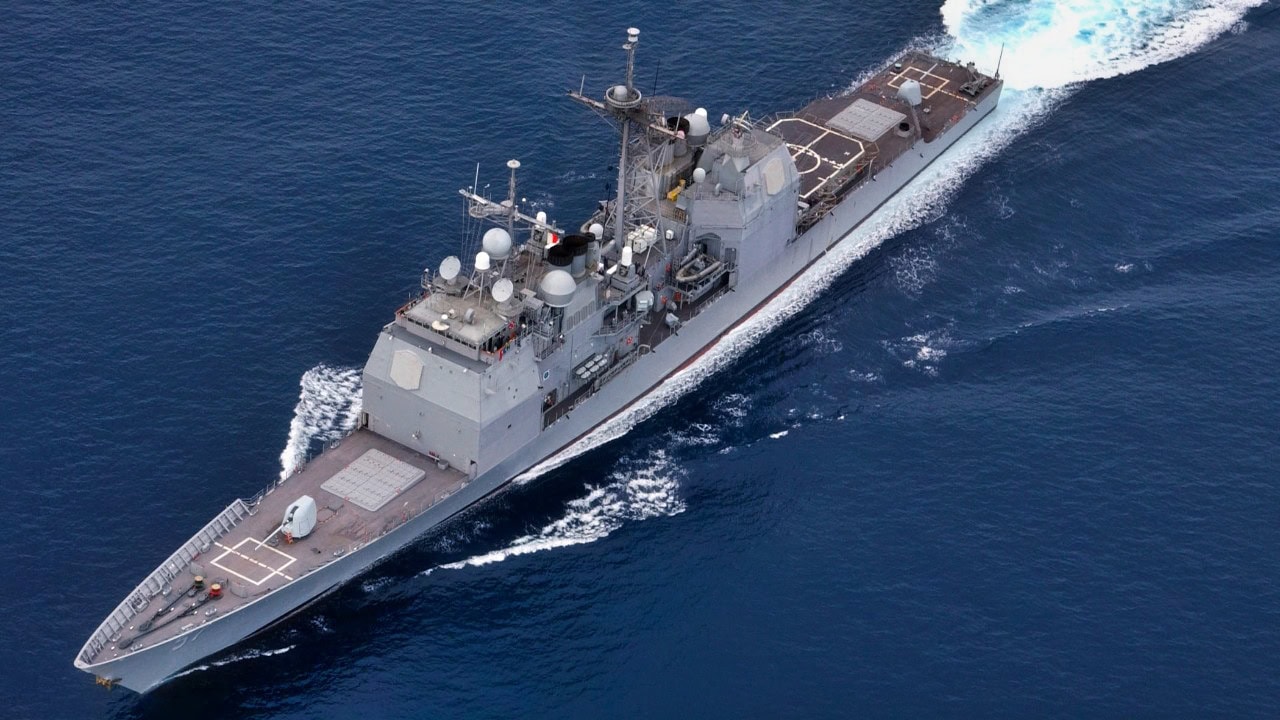
Ticonderoga-Class.
-This report analyzes the 2026 transition to Flight III Arleigh Burke destroyers, which carry only 96 VLS cells, and the simultaneous retirement of Ohio-class SSGNs.
-Kass explores the 72-hour expenditure of 400 Tomahawks during Operation Epic Fury, concluding that the two-year production lead time and shipyard bottlenecks threaten to leave the Navy under-gunned in a potential Indo-Pacific conflict.
26-Cell Deficit: Why the Arleigh Burke Flight III Can’t Match the Ticonderoga-class Tomahawk Missile Mass
The Ticonderoga-class guided-missile cruiser has long served as one of the most heavily armed surface vessels in the US Navy. Designed during the Cold War, the Ticonderoga combined powerful radar systems with enormous missile capacity, making the vessel a foundation of American naval strike groups.
But by the late 2020s, the Ticonderoga is slated for widespread retirement, which threatens to exacerbate a shortage in long-range missile firepower. As the Ticonderoga leaves service, the Navy may face a firepower gap, a problem for Pacific planning.
Introducing the Ticonderoga-class
The Ticonderoga-class cruiser first entered service in the 1980s, serving as the centerpiece of the US carrier strike group’s air defense.
In total, 27 ships were built, measuring roughly 576 feet with a 9,800-ton displacement and a crew of 330 sailors.
The most important feature: missile capacity; each cruiser carries 122 Vertical Launch System (VLS) cells, among the highest of any surface combatant in the world.
These launch cells can carry a wide variety of missiles, including Tomahawk land-attack missiles, SM-2 and SM-6 air defense missiles, Standard Missile interceptors, and ASROC anti-submarine rockets. This enormous missile magazine earned the Ticonderoga a reputation as a “missile truck.”
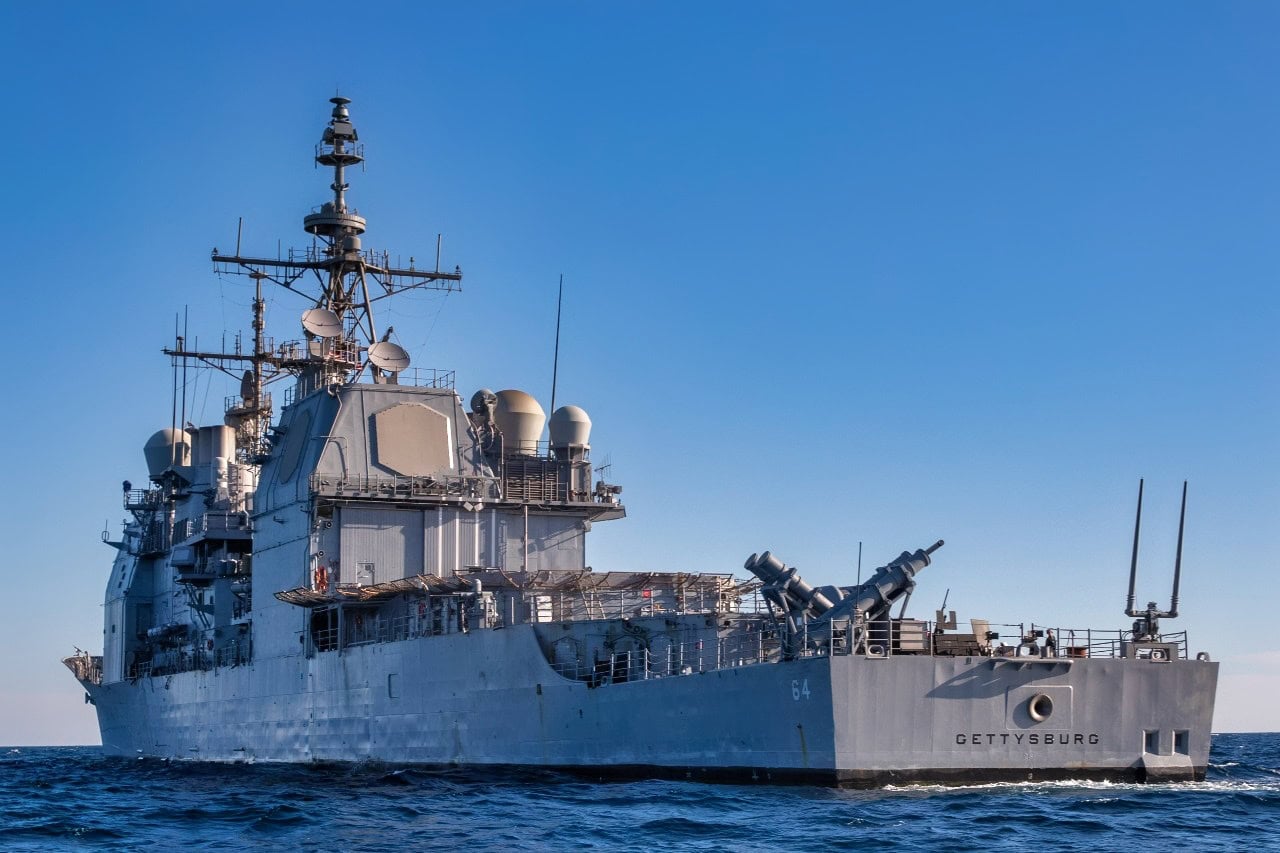
(Feb. 18, 2025) The Ticonderoga-class guided-missile cruiser USS Gettysburg (CG 64) sails in the U.S. Central Command area of responsibility. (Official U.S. Navy photo)
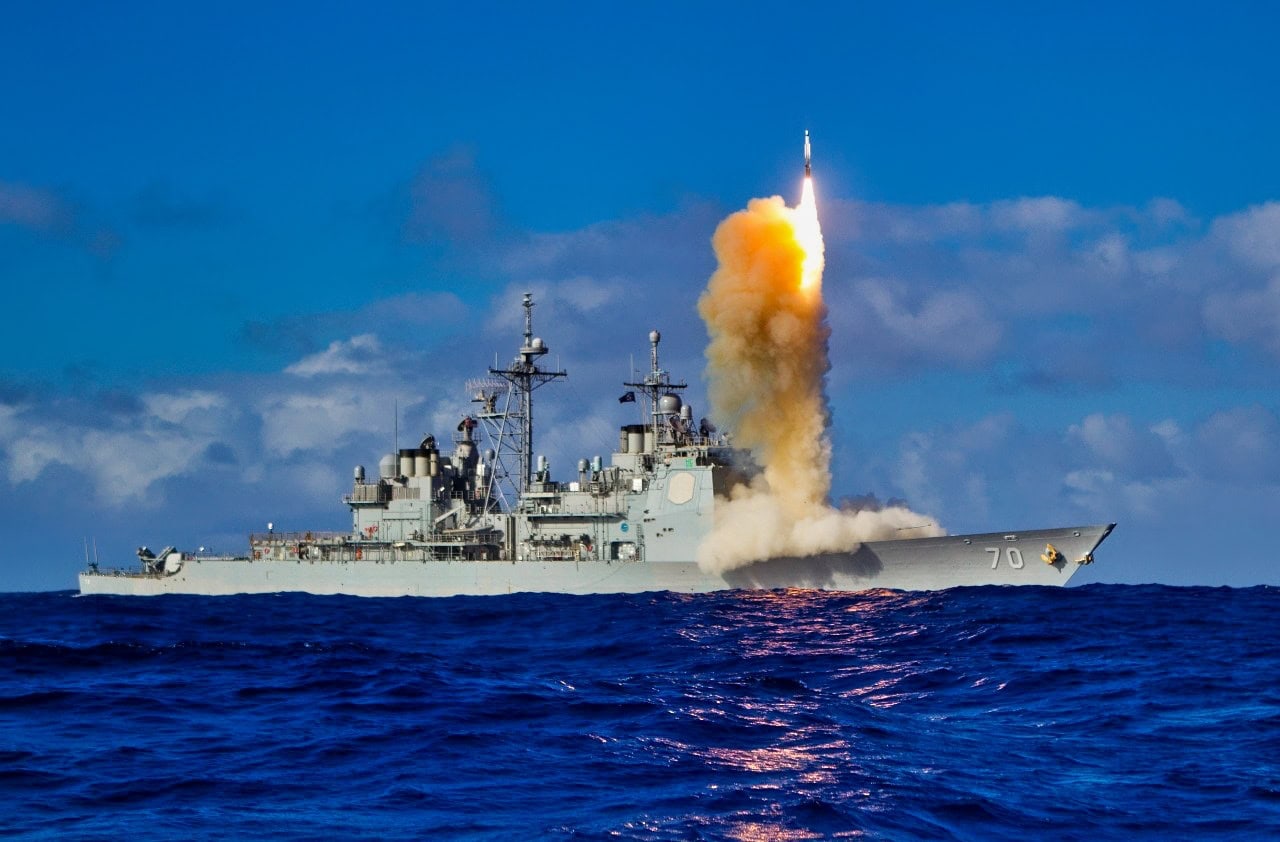
Ticonderoga-Class US Navy. Image Credit: Creative Commons.
Tactical Deployment
Within carrier strike groups, the Ticonderoga often served as the air defense commander, its Aegis combat systems enabling coordination of missile defense across the entire fleet. Typical tasks for the Ticonderoga included protecting the aircraft carrier from enemy aircraft and missiles, coordinating long-range radar tracking, and launching precision strike missiles against land targets.
Because of the Ticonderoga’s missile capacity, the vessel could also serve as a major Tomahawk launch platform during strike operations, i.e., Operation Epic Fury.
Retirement Forthcoming
The primary reason the Navy is retiring the Ticonderoga, despite its effectiveness in deploying missiles, is age and maintenance costs. Most Ticonderoga-class ships are now over 35 years old, and years of high operational tempo have caused structural issues throughout the fleet.
Common problems amongst the fleet include hull fatigue, outdated power systems, and increasingly expensive maintenance requirements. The Navy has concluded that continuing to operate the class indefinitely would cost more than just replacing them outright with newer vessels.
Rapid Phase Out
The Navy is rapidly phasing out the Ticonderoga class; only seven or so remain in service, with most scheduled to be out of service by 2027. However, the Navy has recently extended the service of three ships—the USS Gettysburg, USS Chosen, and USS Cape St. George—which may remain operational until 2029.
But unlike many previous naval platforms, the Ticonderoga cruisers do not have a direct successor planned. Instead, the Navy will shift the Ticonderoga’s mission burden onto the Flight III Arleigh Burke-class destroyer.
These newer destroyers feature improved radar systems and sensors relative to the Ticonderoga—yet they also feature a limitation: only 96 VLS launch cells per ship compared with the Ticonderoga’s 122. That means each Burke-class destroyer carries 26 fewer missile launch cells than the outgoing Ticonderoga.
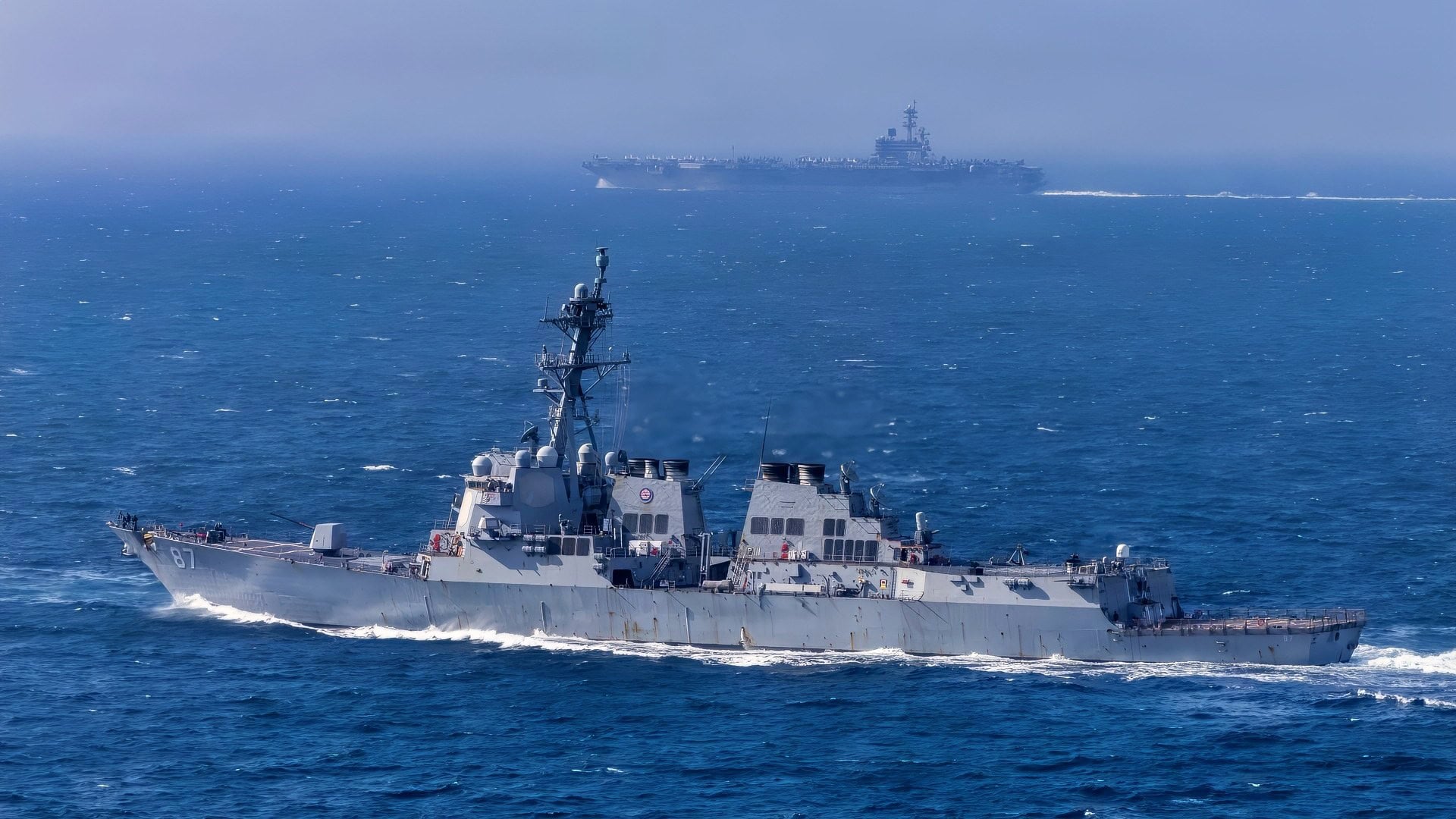
The Arleigh Burke-class guided-missile destroyer USS Mason (DDG 87) transits alongside the Nimitz-class aircraft carrier USS George H.W. Bush in the Atlantic Ocean, Feb. 21, 2026. The George H.W. Bush Carrier Strike Group is at sea training as an integrated warfighting team. Composite Training Unit Exercise (COMPTUEX) is the Joint Force’s most complex integrated training event and prepares naval task forces for sustained high-end Joint and combined combat. Integrated naval training provides combatant commanders and America’s civilian leaders highly capable forces that deter adversaries, underpin American security and economic prosperity, and reassure Allies and partners. (U.S. Navy photo by Mass Communication Specialist 2nd Class Jayden Brown)
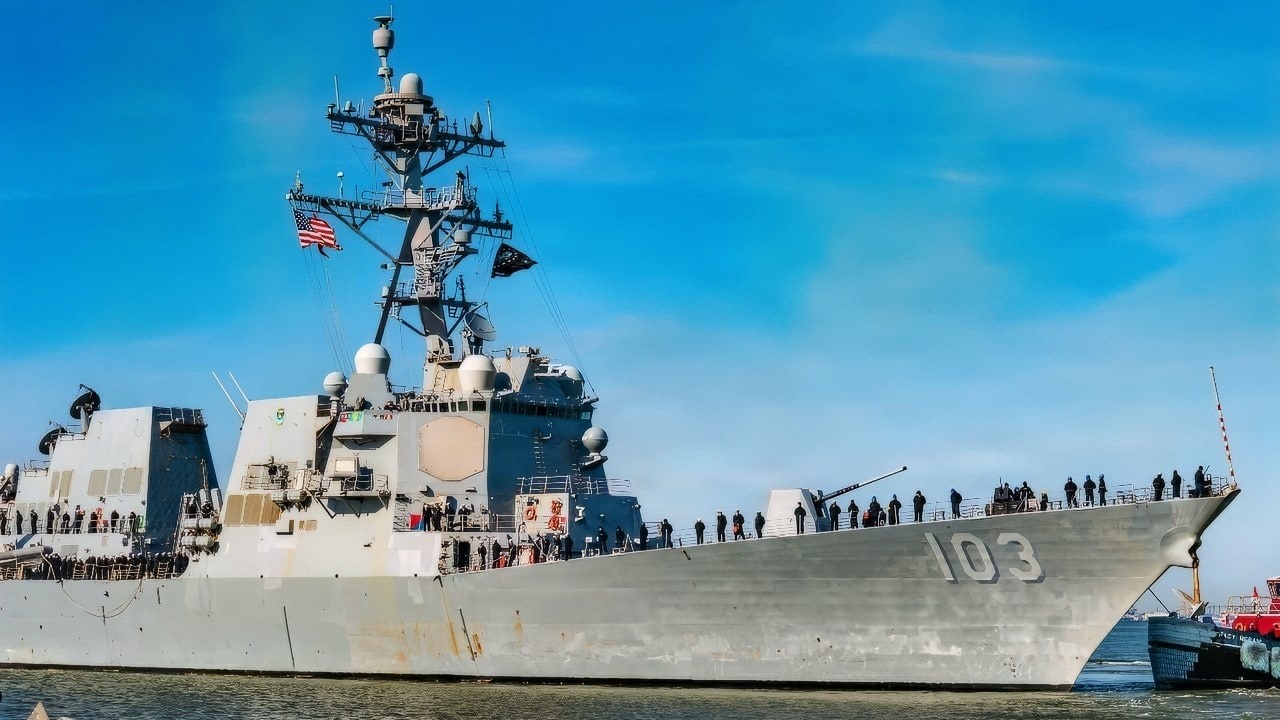
(Feb. 3, 2026) – The Arleigh Burke-class guided missile destroyer USS Truxtun (DDG 103) departed Naval Station Norfolk for a scheduled deployment on Feb. 3, 2026. The ship’s company includes approximately 300 Sailors, with an additional 26 embarked air wing personnel assigned to the “Valkyries” of Helicopter Maritime Strike Squadron 50. U.S. 2nd Fleet, reestablished in 2018 in response to the changing global security environment, develops and employs maritime ready forces to fight across multiple domains in the Atlantic and Arctic in order to ensure access, deter aggression and defend U.S., allied, and partner interests. (U.S. Navy photo by Mass Communication Specialist 2nd Class Derek Cole)
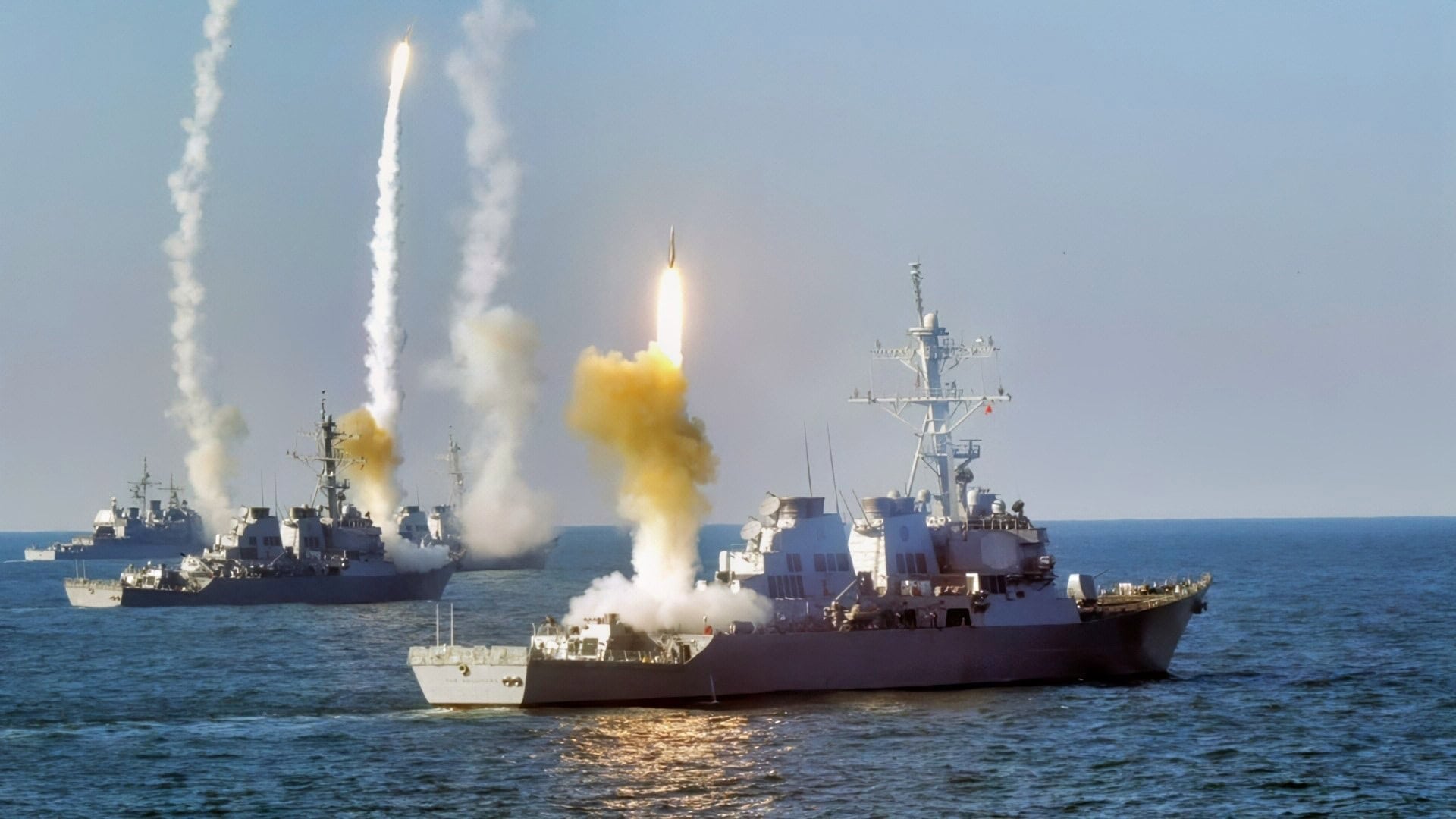
Arleigh Burke Class Destroyer US Navy. Image Credit: Creative Commons.
Missile Shortage
The Ticonderoga’s retirement creates a mathematical challenge for the Navy in fielding sufficient missiles. VLS cells determine how many missiles a ship can carry, and the Ticonderoga retirement means that hundreds of VLS cells will effectively disappear from service.
The station becomes even more dramatic when combined with other retirements, such as the Ohio-class SSGN submarine, which is capable of carrying 154 Tomahawk missiles and is slated for retirement late in the 2020s.
The loss of missile capacity comes at the same time the Navy is experiencing a Tomahawk missile shortage. During Operation Epic Fury, roughly 400 Tomahawks were fired in the first 72 hours (about ten percent of the US ready-to-fire inventory).
Given that each Tomahawk takes about two years to build, and the US currently produces 90 Tomahawks per year, replacing the Epic Fury 72-hour expenditure could take four or five years. To address the shortage, the Pentagon is pushing industry to dramatically increase production, aiming to produce over 1,000 Tomahawks annually by 2026.
However, production expansion faces several bottlenecks, making it difficult to reach the Pentagon’s stated goal.
Strategic Fallout
The combined loss of ships and missile inventories creates a difficult strategic equation. Even if the Navy maintains a large stockpile of missiles, it still needs enough ships to carry and fire them.
With fewer launch platforms available, strike capacity diminishes, and navy planners may be limited on their ability to deploy missile salvos like the one that commenced Operation Epic Fury.
This becomes especially important in a potential conflict in the Indo-Pacific, where long-range missile strikes would be critical.
The retirement of the Ticonderoga is consequentia, leaving a gap in US naval missile power that the Navy may need to address—either through expanding missile capacity on destroyers or developing new unmanned launch platforms.
Age has forced the Navy’s hand in retiring the Ticonderoga; no ship can sail indefinitely. But the ship’s retirement may leave the Navy without sufficient missile firepower at sea.
About the Author: Harrison Kass
Harrison Kass is an attorney and journalist covering national security, technology, and politics. Previously, he was a political staffer and candidate, and a US Air Force pilot selectee. He holds a JD from the University of Oregon and a master’s in global journalism and international relations from NYU.