
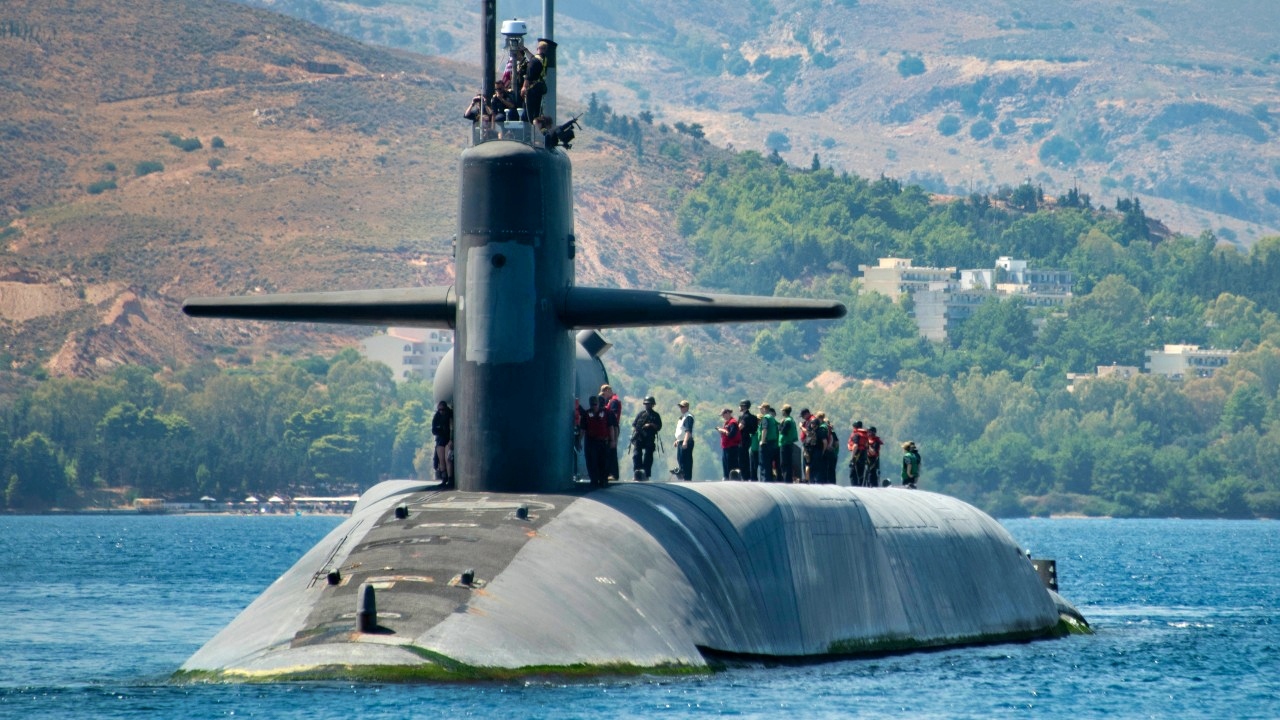
Summary and Key Points: Author and defense expert Harry J. Kazanis explains that the U.S. Navy’s Ohio-class submarines and surface warships burned through a significant portion of America’s Tomahawk cruise missile stockpile during Operation Epic Fury against Iran.
-Making Matters Worse – A Problem Compounds: The retirement of U.S. Navy submarines and warships means a Tomahawk crisis of thousands of lost cruise missiles America can’t easily replace.
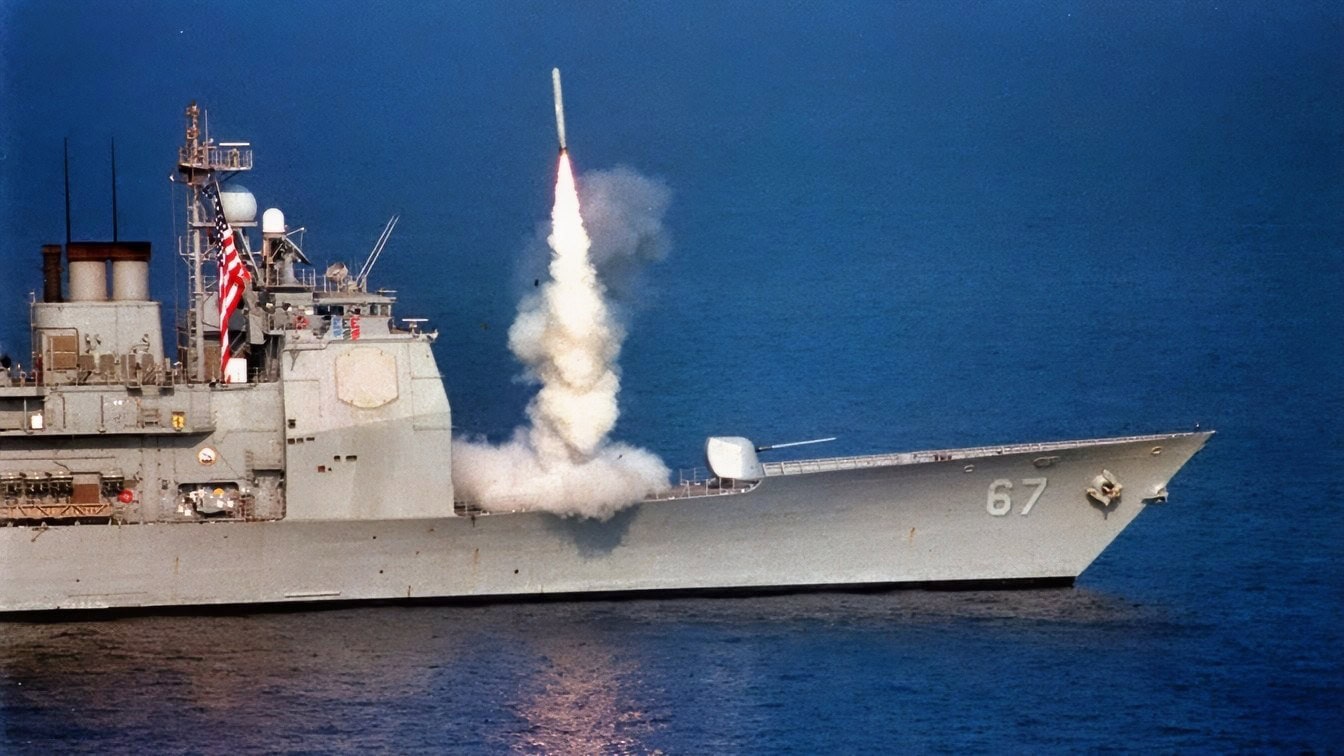
A Tomahawk cruise missile launches from the forward vertical launch system of the USS Shiloh (CG 67) to attack selected air defense targets south of the 33rd parallel in Iraq on Sept. 3, 1996, as part of Operation Desert Strike. The attacks are designed to reduce risks to the pilots who will enforce the expanded no-fly zone. President Clinton announced an expanded no-fly zone in response to an Iraqi attack against a Kurdish faction. The larger no-fly zone in Southern Iraq will make it easier for U.S. and coalition partners to contain Saddam Hussein’s aggression. The U.S. Navy Ticonderoga Class cruiser launched the missiles as it operated in the Persian Gulf.
-That depletion is now likely sending shockwaves through the Pentagon’s war planning for the Indo-Pacific.
-China’s People’s Liberation Army Navy is watching the inventory crisis unfold in real time.
-If Beijing decides to move on Taiwan before those magazines are refilled, the U.S. military could face a nightmare scenario it has war-gamed but never solved.
The Iran War’s Hidden Price Tag: America’s Tomahawk Shortage and China’s Taiwan Temptation
There is a number somewhere deep inside the Pentagon that many very senior officials do not want to talk about right now.
It is the number of Tomahawk cruise missiles remaining in the U.S. Navy’s operational inventory after Operation Epic Fury — the sustained air and sea campaign against Iran that has consumed American precision strike capacity at a rate that would have seemed almost unthinkable just a few years ago.
Nobody in official Washington will confirm exactly how many Tomahawks have been expended. That is classified, and it should be. Most estimates have the number at around 300-400.
But I have spent more than a decade talking to the people who plan these wars — the operators, the analysts, the retired four-stars who no longer have to watch their words — and what I am hearing right now is a level of quiet alarm that I have not encountered since the dark days of 2017, when North Korea was testing ICBMs and the world was genuinely wondering whether we were weeks away from a nuclear exchange on the Korean Peninsula.
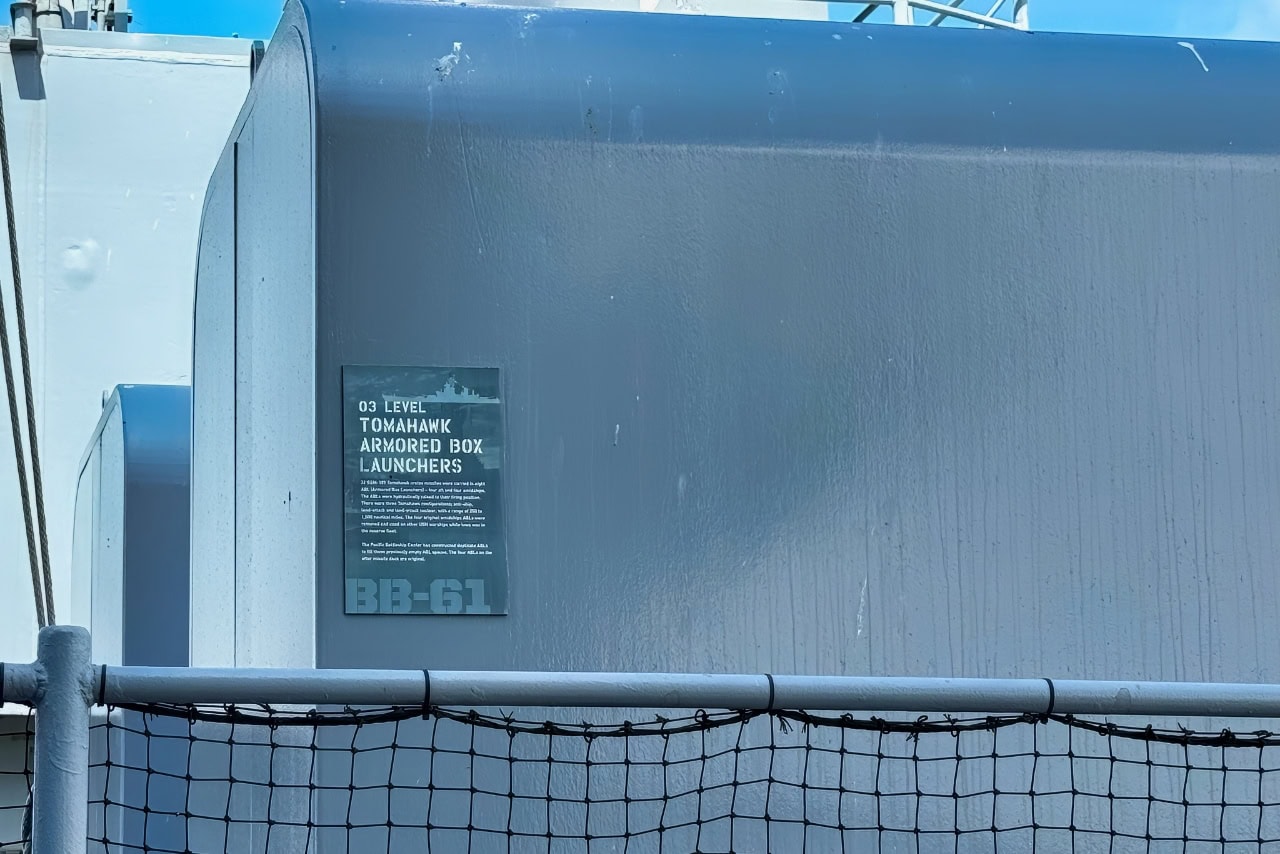
USS Iowa 19FortyFive image of Tomahawk Missiles on USS Iowa.
The problem is different, but the level of worry is heading back to those dark days.
We are learning a truly uncomfortable truth: The burn rate of precision munitions in a high-intensity conflict against even a mid-tier adversary like Iran puts enormous stress on stockpiles that were never sized for two simultaneous wars. And that stress is not going unnoticed in Beijing.
This is the hidden price tag of the Iran war. Not the dollar cost, though that is staggering. Not the diplomatic fallout, though that will take years to untangle.
The real cost — the one that keeps serious defense planners awake at three in the morning — is what the Tomahawk shortage means for deterring China from making a move on Taiwan.
And, we will soon lose many more Tomahawks due to warship retirements, only making things worse.
How We Got Here
The Tomahawk Land Attack Missile, or TLAM, is the backbone of American long-range precision strike.
It is what the U.S. military reaches for first when it needs to hit hardened targets, air defense nodes, command and control facilities, or weapons of mass destruction infrastructure from a safe standoff distance.
The Ohio-class guided missile submarines — the SSGNs converted from ballistic missile boats — can carry up to 154 Tomahawks each. Surface combatants carry additional rounds in vertical launch cells. Together, they form the deep magazine that underwrites American power projection across every theater on earth.
The problem is that Tomahawks are not easy to replace quickly. RTX — the defense contractor formerly known as Raytheon — produces them at a rate that has never been designed to keep pace with a sustained high-intensity conflict.
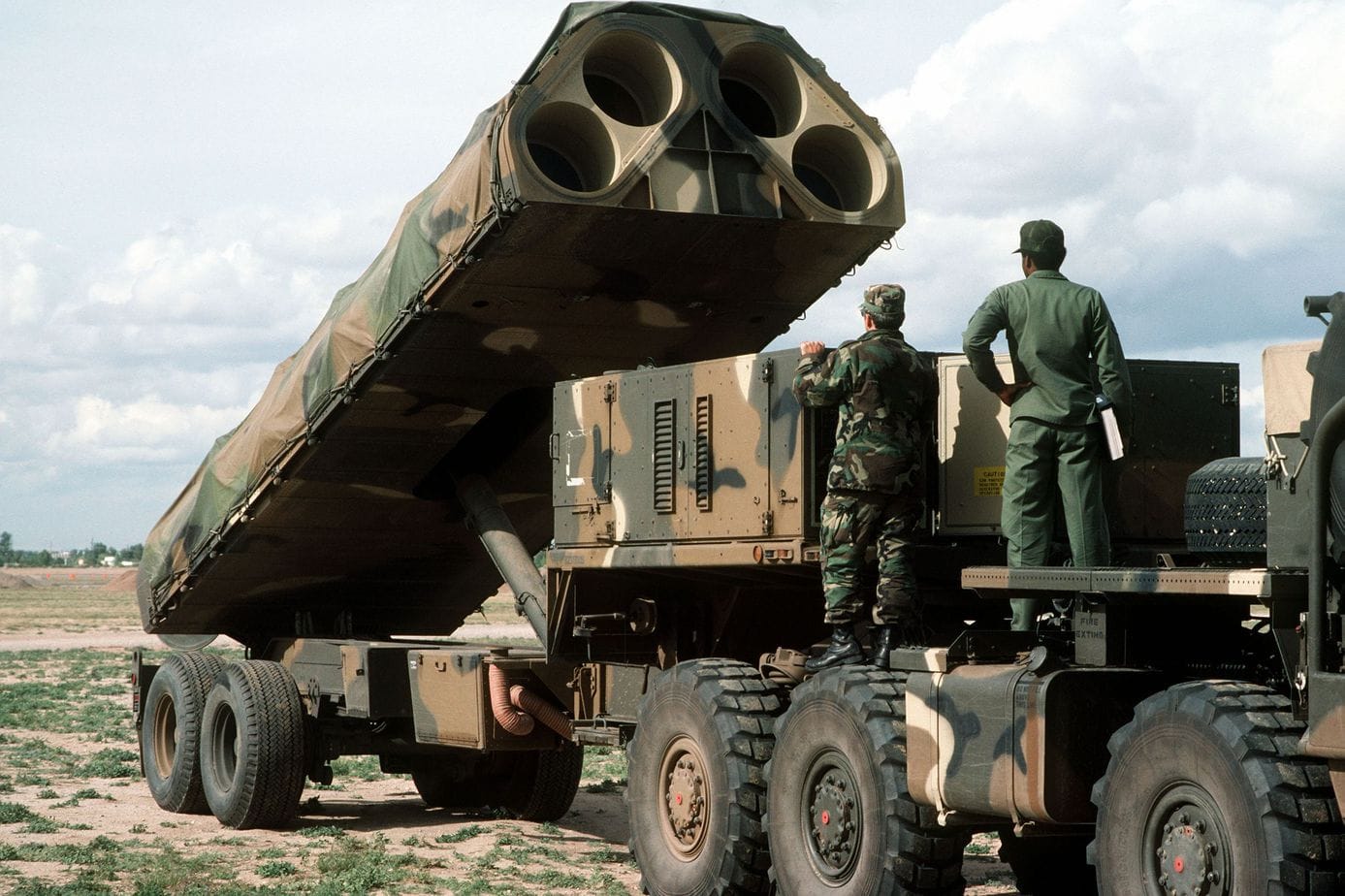
Image of land-based Tomahawk missile from the 1980s.
Production surges are possible, but they take months and years, not weeks. Every Tomahawk fired into an Iranian air defense radar site, a Revolutionary Guard Corps headquarters, or a ballistic missile production facility is a Tomahawk that is not sitting in a launcher pointed at a Chinese naval base, an amphibious staging area, or a PLA Air Force runway within striking distance of the Taiwan Strait.
Senior defense officials have known this vulnerability existed for years. I have participated in war games where this exact scenario — a Middle East contingency draining the precision strike inventory needed for the Pacific — played out in ways that made everyone in the room uncomfortable.
Multiple studies conducted at the RAND Corporation, the Center for Strategic and Budgetary Assessments, and within the Pentagon itself have reached the same conclusion: in a serious conflict in the Indo-Pacific, the United States runs out of precision long-range strike weapons uncomfortably fast.
Those studies were sobering even before a single Tomahawk was fired in anger against Iran. Now they read like prophecy.
China Is Watching — And Counting Tomahawks
Here is what concerns me most, and I say this as someone who has spent years studying how Beijing thinks about military force and strategic opportunity.
The People’s Liberation Army has highly sophisticated intelligence-collection capabilities. Chinese military analysts are not sitting in Beijing passively waiting for American press releases.
They are watching every sortie, tracking every launch signature, reading every procurement notice and congressional testimony they can get their hands on.
They have a reasonably good picture — probably better than most Americans realize — of exactly how much strain Operation Epic Fury has placed on U.S. precision strike inventory.
And what they are seeing is a window. Not necessarily a wide-open window — not yet. But a window that is cracking open in a way it has not cracked before.
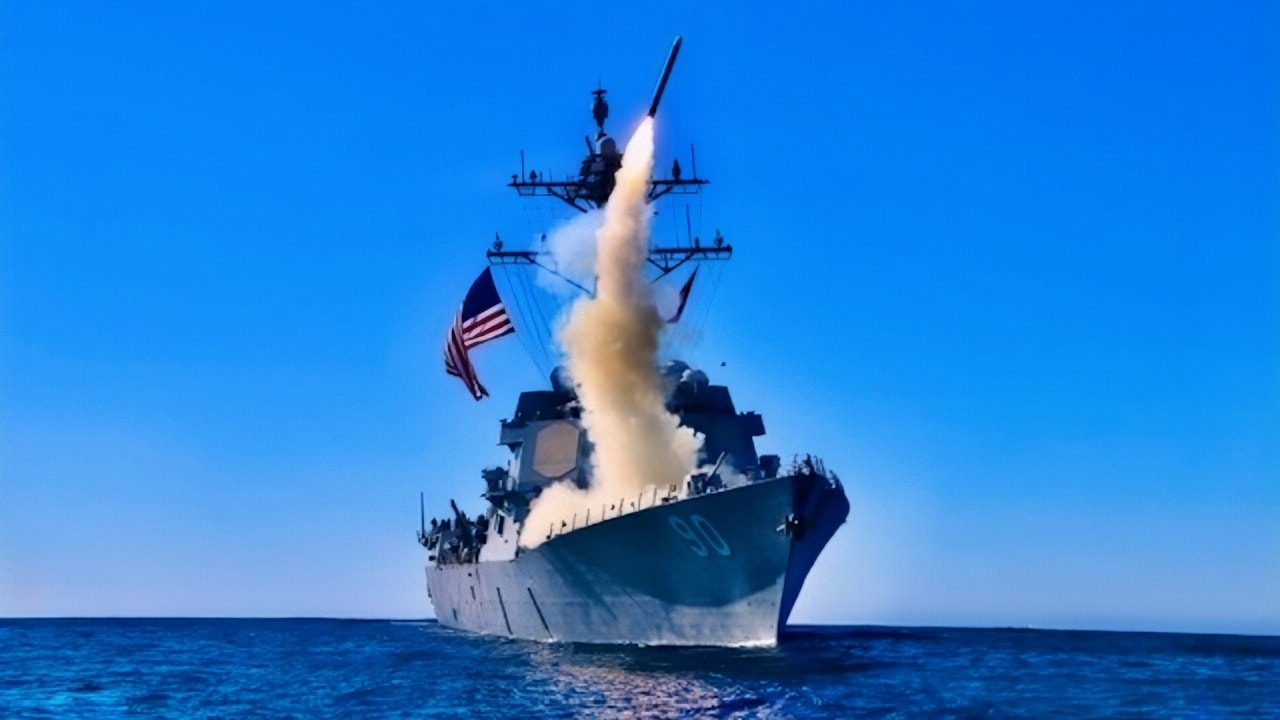
(Dec. 01, 2020) – The guided-missile destroyer USS Chafee (DDG 90) launches a Block V Tomahawk, the weapon’s newest variant, during a missile exercise. This event marked the first time a Block V Tomahawk missile was operationally tested, marking the Navy’s transition to a more advanced capability for the fleet. Block V includes an upgrade that will enhance navigation performance and provide robust and reliable communications. Chafee is currently assigned to Carrier Strike Group ONE and is homeported in Pearl Harbor. (U.S. Navy photo by Ens. Sean Ianno/Released)
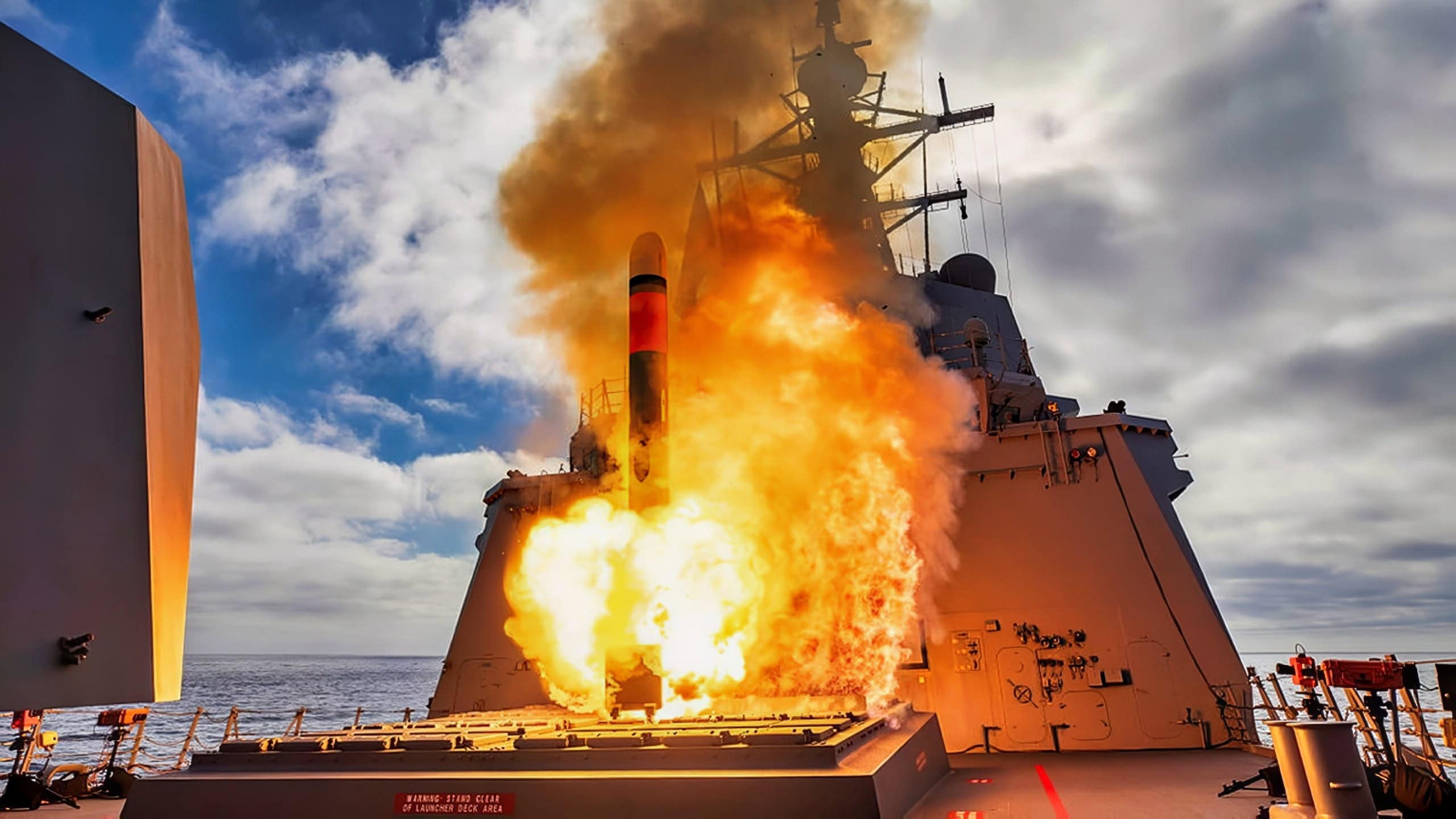
Tomahawk Missile Firing. Image Credit: Government of Australia.
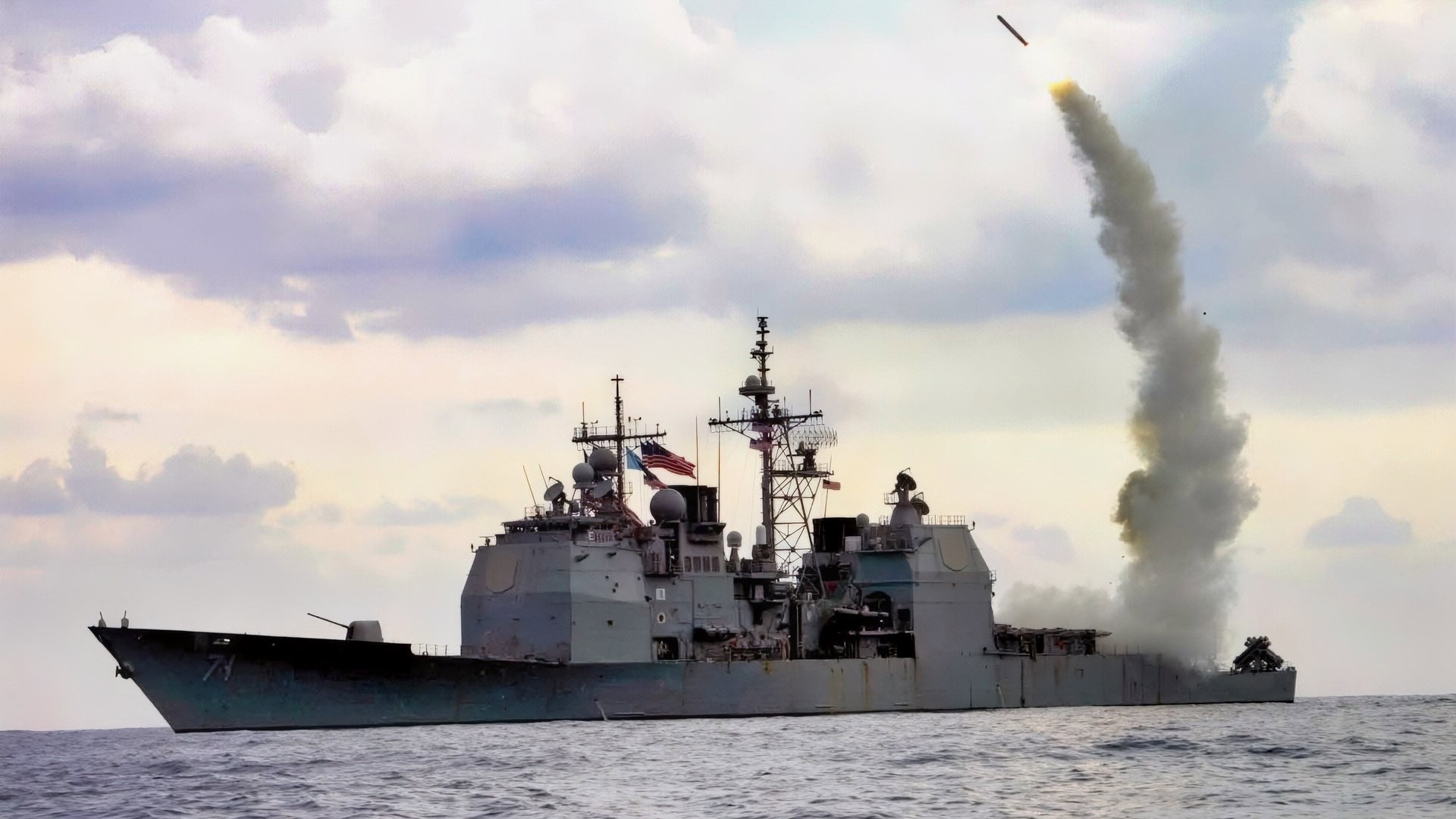
ABOARD USS CAPE ST. GEORGE (CG 71) AT SEA — A Tomahawk cruise missile launches from USS Cape St. George, operating in the eastern Mediterranean Sea in support of Operation Iraqi Freedom. (Photo by IS1 Kenneth Moll, USS Cape St. George) (Released by Sixth Fleet Public Affairs)
Xi Jinping has made the reunification of Taiwan with mainland China the central national project of his time in power. He has told the PLA explicitly to be capable of taking Taiwan by force. The question that drives Chinese strategic planning is not whether — it has always been when, and under what conditions. The conditions that matter most to Beijing are the ones that determine whether the United States can respond with enough force, fast enough, to make a Taiwan operation too costly to sustain.
A U.S. Navy with depleted Tomahawk magazines changes that calculus. Not decisively, not overnight — but at the margins, in the kind of cold-blooded arithmetic that authoritarian systems use when they are seriously weighing high-stakes military action.
I have watched Beijing play this kind of long game before. They are patient. They are methodical. And they do not miss signals.
The Ohio-Class Problem
The Ohio-class SSGNs deserve special attention here because they represent something truly irreplaceable in the near term, and I am not sure the American public fully understands just how thin that margin is.
The four boats — the USS Ohio, Michigan, Florida, and Georgia — were converted from Trident ballistic missile submarines in the early 2000s at enormous expense and effort. Each one is a floating arsenal of staggering capability. They can loiter in contested waters for weeks, launch massive Tomahawk salvos against hardened land targets, and simultaneously support special operations forces in ways that no other platform in the fleet can replicate.
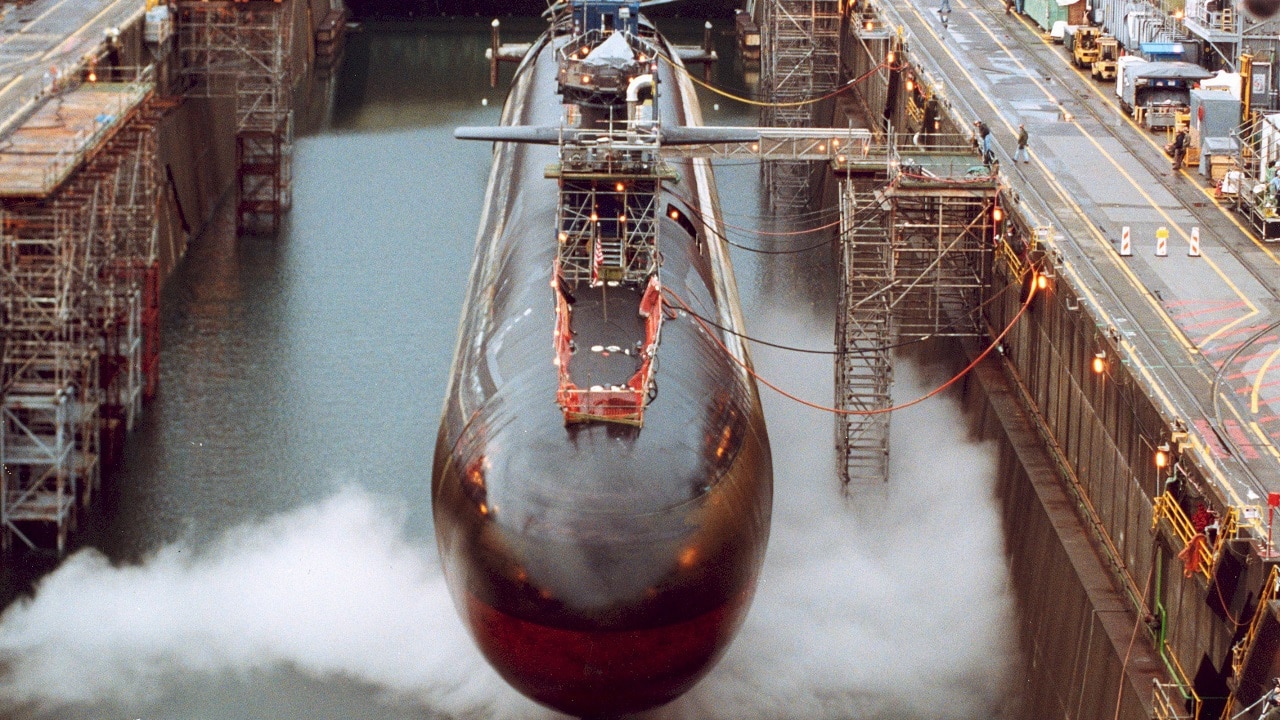
Puget Sound Naval Shipyard, Wash. (Aug. 14, 2003) — USS Ohio (SSGN 726) is in dry dock undergoing a conversion from a Ballistic Missile Submarine (SSBN) to a Guided Missile Submarine (SSGN) designation. Ohio has been out of service since Oct. 29, 2002 for conversion to SSGN at Puget Sound Naval Shipyard. Four Ohio-class strategic missile submarines, USS Ohio (SSBN 726), USS Michigan (SSBN 727) USS Florida (SSBN 728), and USS Georgia (SSBN 729) have been selected for transformation into a new platform, designated SSGN. The SSGNs will have the capability to support and launch up to 154 Tomahawk missiles, a significant increase in capacity compared to other platforms. The 22 missile tubes also will provide the capability to carry other payloads, such as unmanned underwater vehicles (UUVs), unmanned aerial vehicles (UAVs) and Special Forces equipment. This new platform will also have the capability to carry and support more than 66 Navy SEALs (Sea, Air and Land) and insert them clandestinely into potential conflict areas. U.S. Navy file photo. (RELEASED)
There is no replacement for them in the current inventory.
The Virginia-class attack submarines carry Tomahawks, but in far smaller numbers — a Virginia carries around twelve, compared to the Ohio SSGN’s 154. And the Navy has been struggling for years with a shipbuilding backlog so severe that 82 percent of new warships under construction are behind schedule.
That statistic should be treated as a national emergency.
It keeps getting discussed as a procurement management problem. It is not. It is a strategic crisis that is compounding in real time.
What that means in practice is that if an Ohio-class SSGN depletes its Tomahawk load during the Iran campaign and needs to rearm, it pulls out of the operational theater, transits to a reload facility, and sits off the board for weeks, but most likely months. During that window, its contribution to any contingency in the Pacific is zero.
Multiply that dynamic across the fleet, and the readiness picture becomes genuinely alarming — the kind of alarming that serious people discuss in hushed tones and then go home and hope they are wrong about.
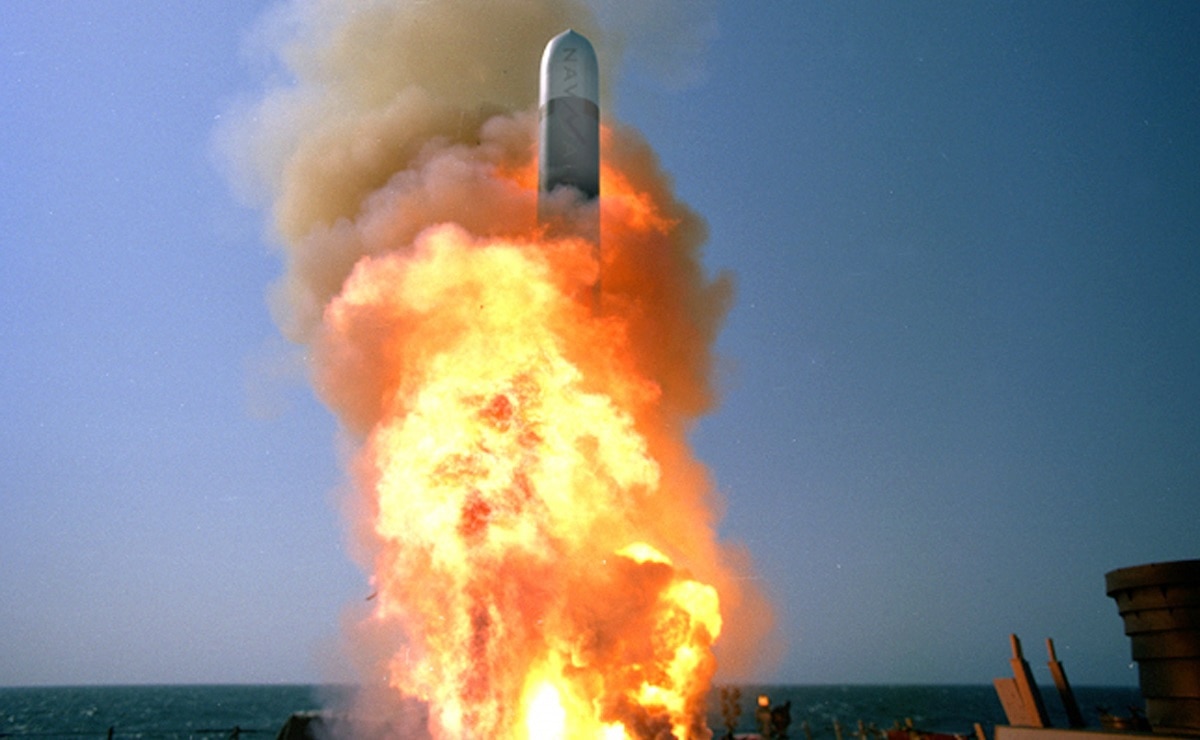
At sea aboard USS Stethem (DDG 63) Ð A Tactical Tomahawk Cruise Missile launches from the guided missile destroyer USS Stethem (DDG 63) during a live-warhead test. The missile traveled 760 nautical miles to successfully impact itÕs intended target on San Clemente Island, part of the Naval Air Systems Command (NAVAIR) test range in Southern California. The Tactical Tomahawk is the next generation of Tomahawk cruise missile, adds the capability to reprogram the missile while in-flight to strike any of 15 preprogrammed alternate targets, or redirect the missile to any Global Positioning System (GPS) target coordinates. It also will be able to loiter over a target area for some hours, and with its on-board TV camera, will allow the war fighting commanders to assess battle damage of the target, and, if necessary redirect the missile to any other target. Launched from the Navy’s forward-deployed ships and submarines, Tactical Tomahawk will provide a greater flexibility to the on-scene commander. Tactical Tomahawk is scheduled to join the fleet in 2004. U.S. Navy photo. (RELEASED)
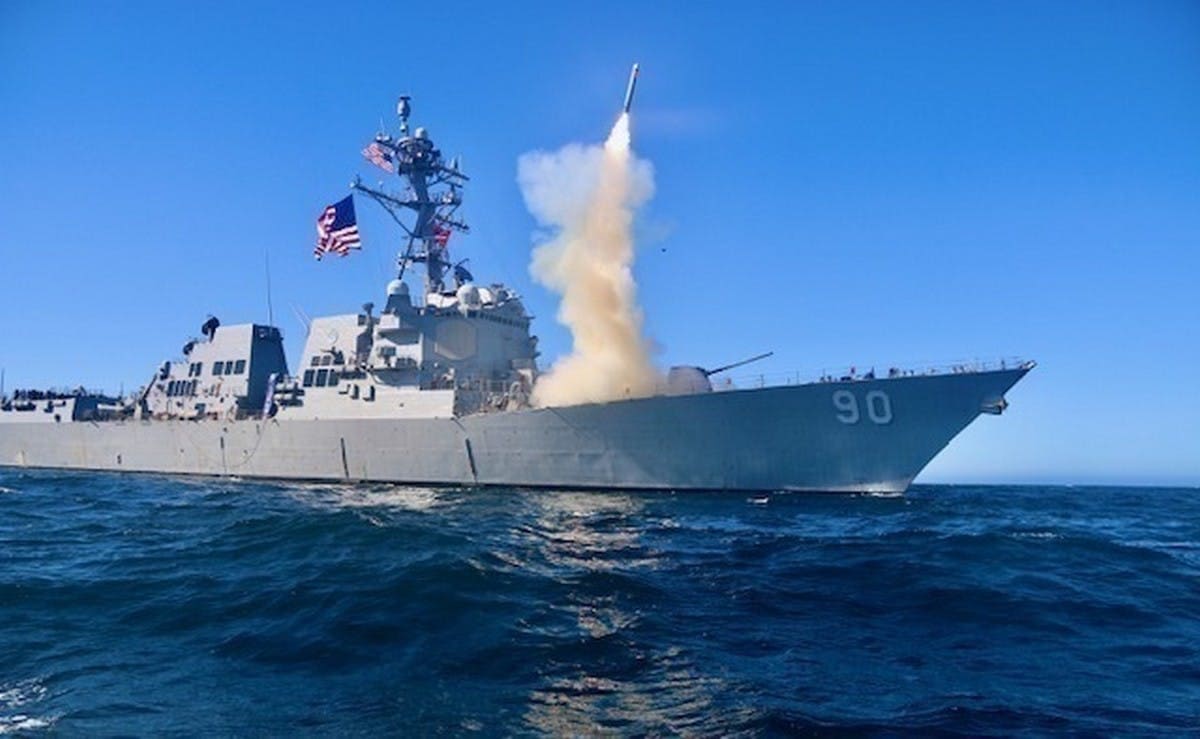
Tomahawk Missile. Image: Creative Commons.
The Retirement Problem
Oh, and by the way, these submarines will be retired in the next few years. Compound that with the retirement of Ticonderoga-class warships that had what seemed like limitless Tomahawks, and this all creates a perfect storm where the U.S. Navy is down thousands of cruise missiles it can’t easily replace – war and retirement will do that.
The Taiwan Strait Scenario
Let me walk through what a Taiwan contingency actually looks like with a constrained Tomahawk inventory, because I think most people — even engaged, informed people — do not fully appreciate how central those missiles are to the opening hours of any American military response.
If China launches an amphibious operation against Taiwan, the U.S. military’s immediate operational priority is to destroy the PLA’s ability to sustain and reinforce the crossing before it can consolidate a beachhead. That means hitting ports, airfields, amphibious staging areas, command and control nodes, and the surface fleet supporting the strait crossing — all of it defended by layers of Chinese integrated air defense that rival anything the United States has faced in the modern era. The S-400 batteries acquired from Russia, the indigenously developed HQ-9 systems, the naval air defense networks built specifically to deny American aircraft freedom of maneuver — these are not paper tigers. They are lethal, layered, and specifically designed to raise the cost of manned penetration to unacceptable levels in the opening hours of a conflict.
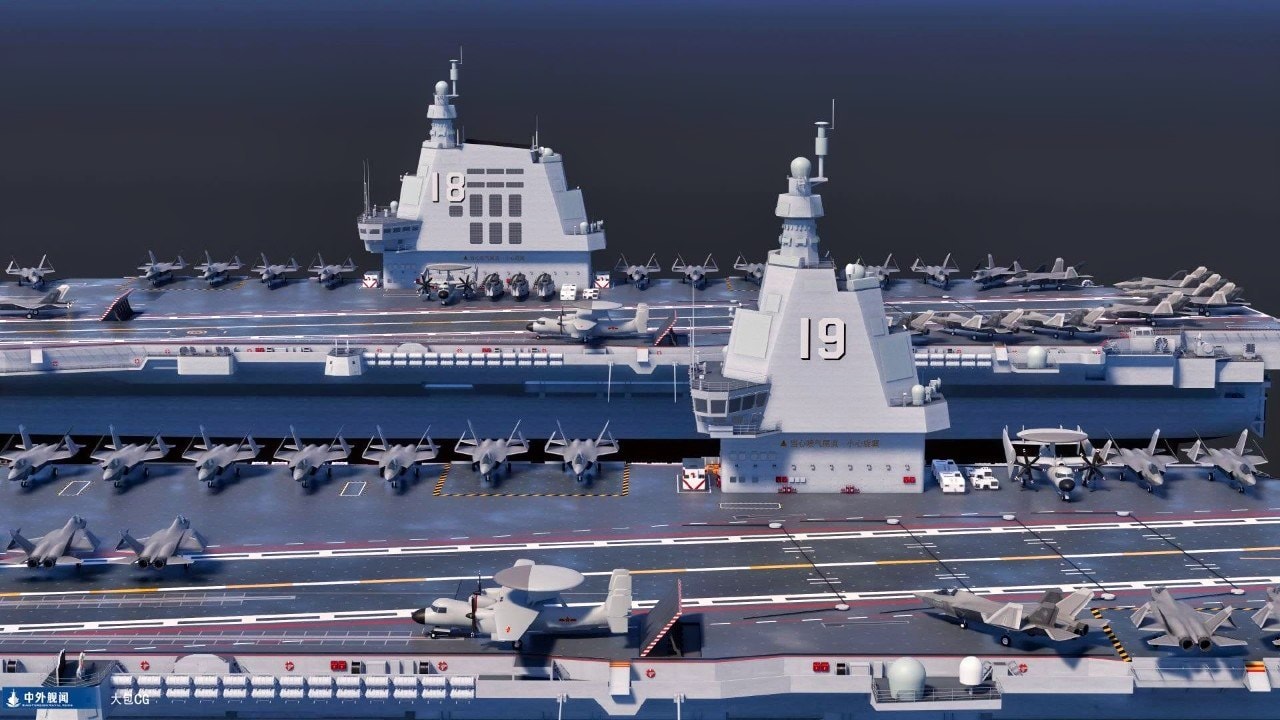
China Aircraft Carrier Models. Image Credit: Creative Commons.
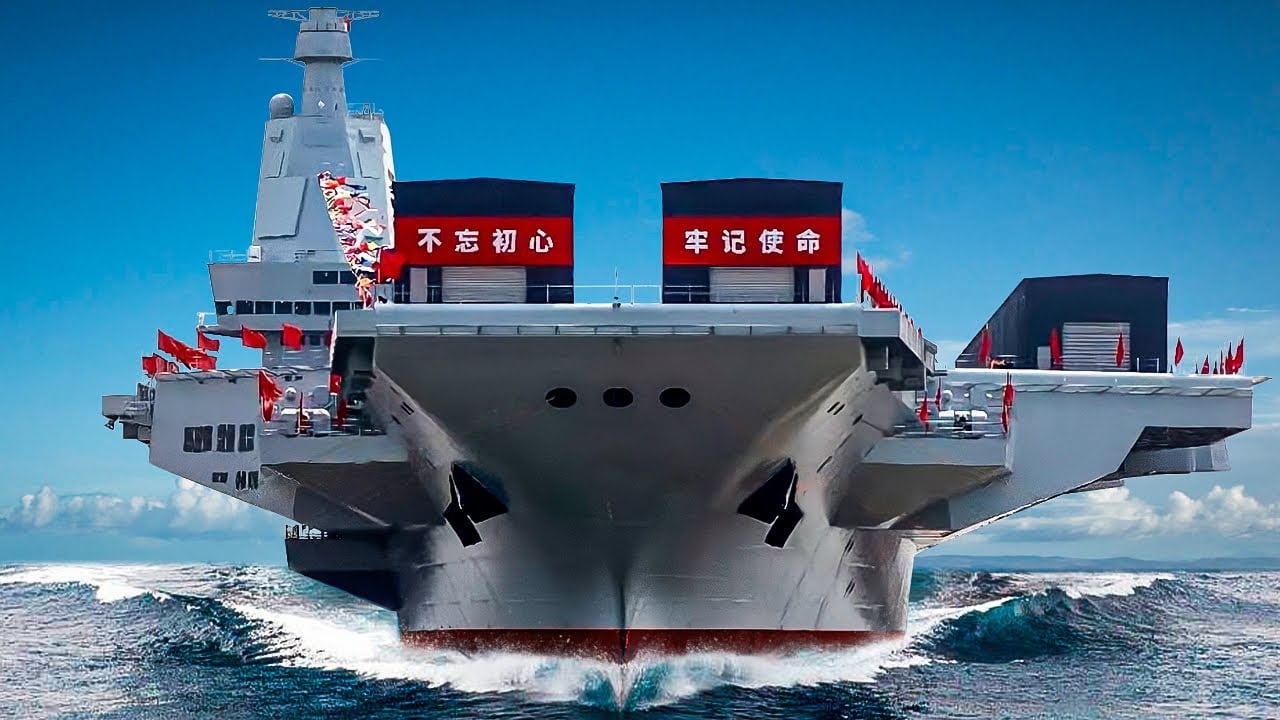
China Aircraft Carrier. Image Credit: YouTube Screenshot.
Tomahawks are how you kick in that door before you send the strike packages through. They are the suppression tool, the first wave, the thing that creates the conditions under which everything else becomes possible. Without a deep and ready magazine of them, the opening moves of a Taiwan contingency become significantly more expensive in blood and equipment and significantly less certain to achieve the operational objectives on which American war plans depend.
That is the scenario Chinese planners are gaming right now. That is why the burn rate in the Iran war matters far beyond the Persian Gulf.
What Washington Needs to Do — Now
Let me be clear about something before I lay out what I think needs to happen, because I anticipate the pushback. The answer is not to stop fighting in Iran. It is not to pull punches against a regime that has spent four decades funding terrorism, building nuclear weapons, deploying proxy militias across the Middle East, and threatening American personnel and allies at every turn. The Iran campaign is underway, and it must be seen through to a conclusion that actually degrades Tehran’s ability to reconstitute these threats. My hope is that we are almost at that point, maybe even days away
But the Iran campaign must be accompanied by an emergency-footing response to the Tomahawk shortage that goes well beyond anything currently on the table in Washington. Congress needs to authorize and fund a production surge at RTX that is sized for wartime, not peacetime budget cycles. The Navy needs to be honest with the American people — and with its own chain of command — about what the current depletion means for near-term Pacific readiness. And the Pentagon needs to be making direct, explicit, and credible signals to Beijing that America’s deterrent posture in the Indo-Pacific remains intact even as it fights in the Middle East.
That last piece is perhaps the most important thing I can say in this entire piece. Deterrence is not just about capabilities — it is about perceptions of capabilities. If Beijing comes to believe, even incorrectly, that American magazines are empty and that American will is exhausted by the Iran fight, the risk of a catastrophic miscalculation on Taiwan rises in ways very hard to walk back once they begin.
The Clock Is Ticking
I have spent enough time studying how great-power crises escalate to know that adversaries rarely issue formal announcements when they have decided that conditions are favorable.
They act.
The window between “we are considering our options” and “the fleet is underway” can close with terrifying speed, as anyone who has studied the opening moves of major conflicts in the modern era understands.
The United States cannot afford to allow the Iran war to hollow out its ability to deter the most consequential potential military action of the 21st century. The Tomahawk shortage is not a procurement footnote buried in a defense authorization bill. It is a strategic liability that is growing in real time, in full view of the one adversary that has both the declared intention and the rapidly growing capability to redraw Asia’s map by force.
Washington needs to treat it accordingly. The time to act is now — before Beijing finishes doing the math and decides the answer has finally come up in their favor.
About the Author: Harry J. Kazianis
Harry J. Kazianis (@Grecianformula) was the former Senior Director of National Security Affairs at the Center for the National Interest (CFTNI), a foreign policy think tank founded by Richard Nixon based in Washington, DC. Harry has over a decade of experience in think tanks and national security publishing. His ideas have been published in the NY Times, The Washington Post, The Wall Street Journal, CNN, and many other outlets worldwide. He has held positions at CSIS, the Heritage Foundation, the University of Nottingham, and several other institutions related to national security research and studies. He is the former Executive Editor of the National Interest and the Diplomat. He holds a Master’s degree focusing on international affairs from Harvard University. Kazianis is Editor-In-Chief of 19FortyFive.

