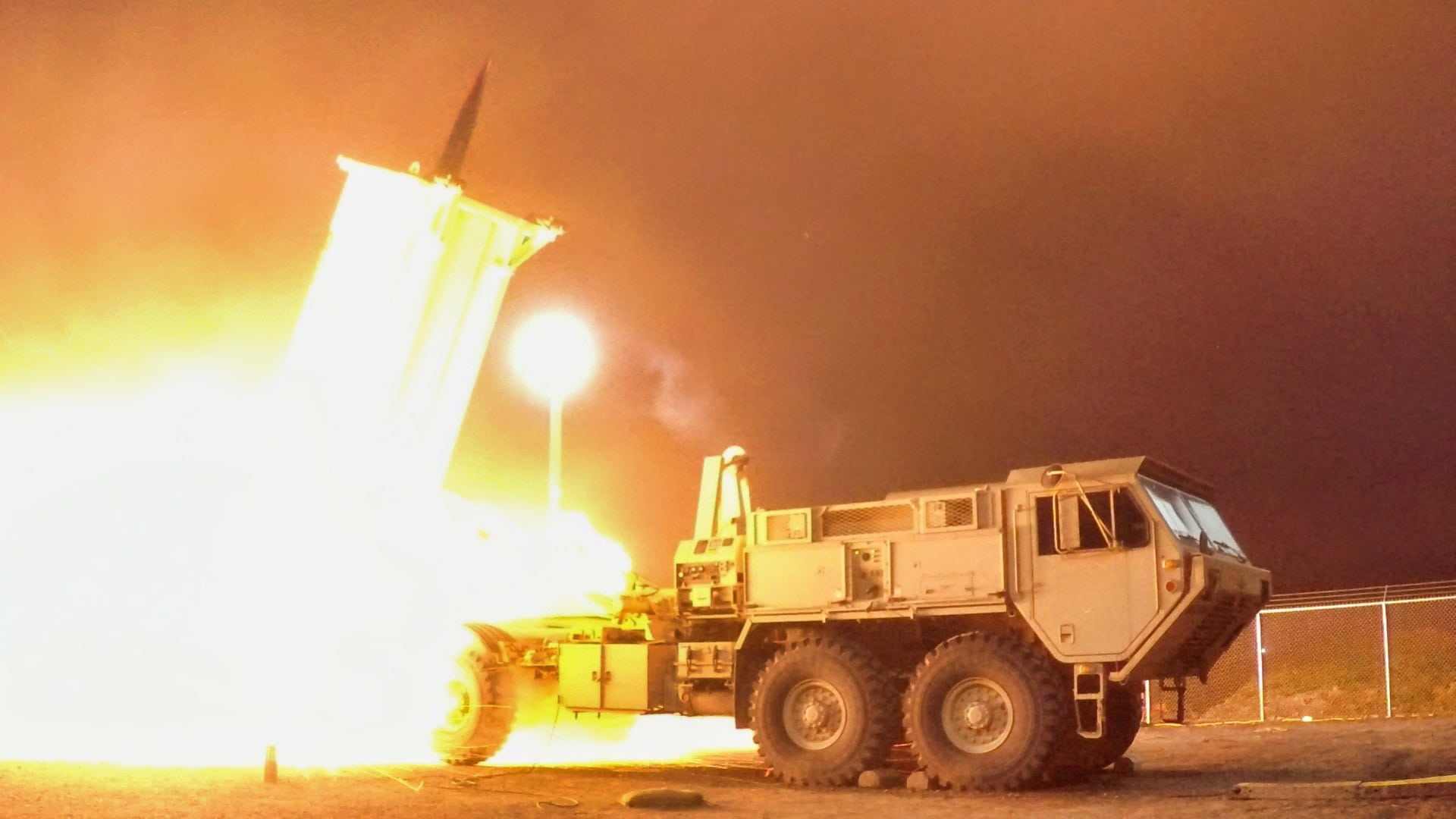
The Iran War Is Draining America and Allies Of Key Missile Platforms
The prestigious British Royal United Services Institute (RUSI) has released a damning report on the abysmal state of U.S. and Israeli stockpiles since the Iran war began on February 28.
According to a recent RUSI report, Israel is days away from running out of Arrow Interceptors, and the United States has burned through 40 percent of its available Terminal High Altitude Area Defense (THAAD) interceptors.
RUSI’s Warning: Interceptors are Running Dry
RUSI assesses that the Americans have around three weeks’ worth of THAAD interceptor supplies remaining, if the operational tempo of the Iran war persists (which it will).
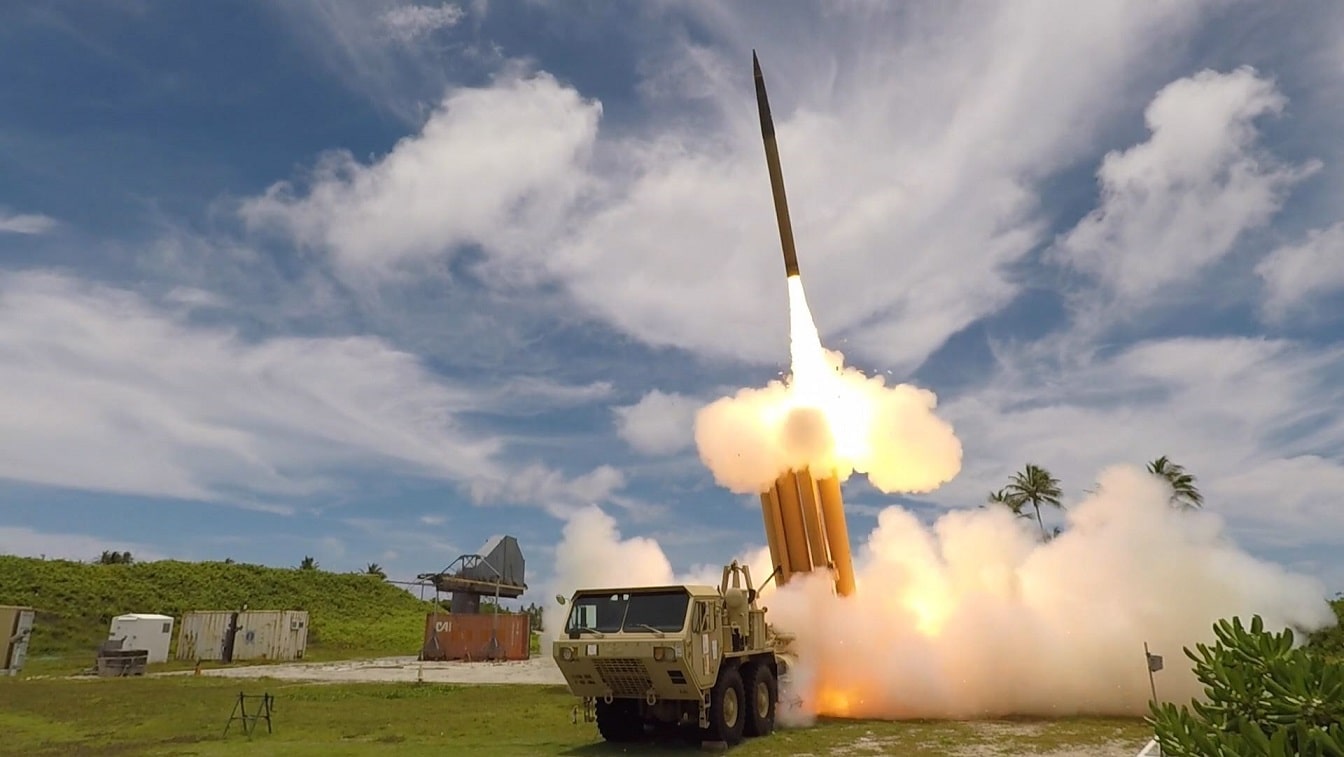
THAAD Missile Defense Battery Firing. Image Credit: Lockheed Martin.
Recently, the Foreign Policy Research Institute (FPRI), with which this author has had prior affiliation, released its own assessment of the horrid state of U.S. military stockpiles, finding that there were 14 critical weapons systems—mostly air defense and standoff munitions—that, even before the Iran war began, were dangerously low.
Now that the Iran war has commenced, those 14 systems are at risk of depleting within weeks or months (depending on the operational intensity of the war).
The weapons in question are high-end, seemingly irreplaceable systems (due to their complexity and cost). Notably, these include THAAD and Patriot missile batteries, as well as long-range strike weapons such as the iconic Tomahawk cruise missiles. In other words, the United States can sustain a major war, but its ability to defend and strike precisely degrades fast. Indeed, it already has.
As for the long-range precision strike capabilities, the primary weapon the military prefers for such missions, the Tomahawk, is at crisis levels. Hundreds of Tomahawks have already been expended in the Iran war. Each missile costs a staggering $1.3 million per unit and is frequently used in America’s global mission sets.
Considering how ubiquitous it is, one would assume that Congress has the Pentagon building hundreds of these systems per year. In fact, annual procurement for the Tomahawks before the war was shockingly low—at around 50-70 per year!
Precision Strike Crisis: The Tomahawk Problem
What’s more, like the other systems analyzed above, the Tomahawk procurement schedule is slow, even as the Pentagon has pressured defense contractors to ramp up production. That’s because, and this is true of all those 14 key weapons systems that are running low, there are serious bottlenecks in America’s sclerotic defense industrial base that cannot be easily overcome.
Further, production increases are always reactive rather than proactive.
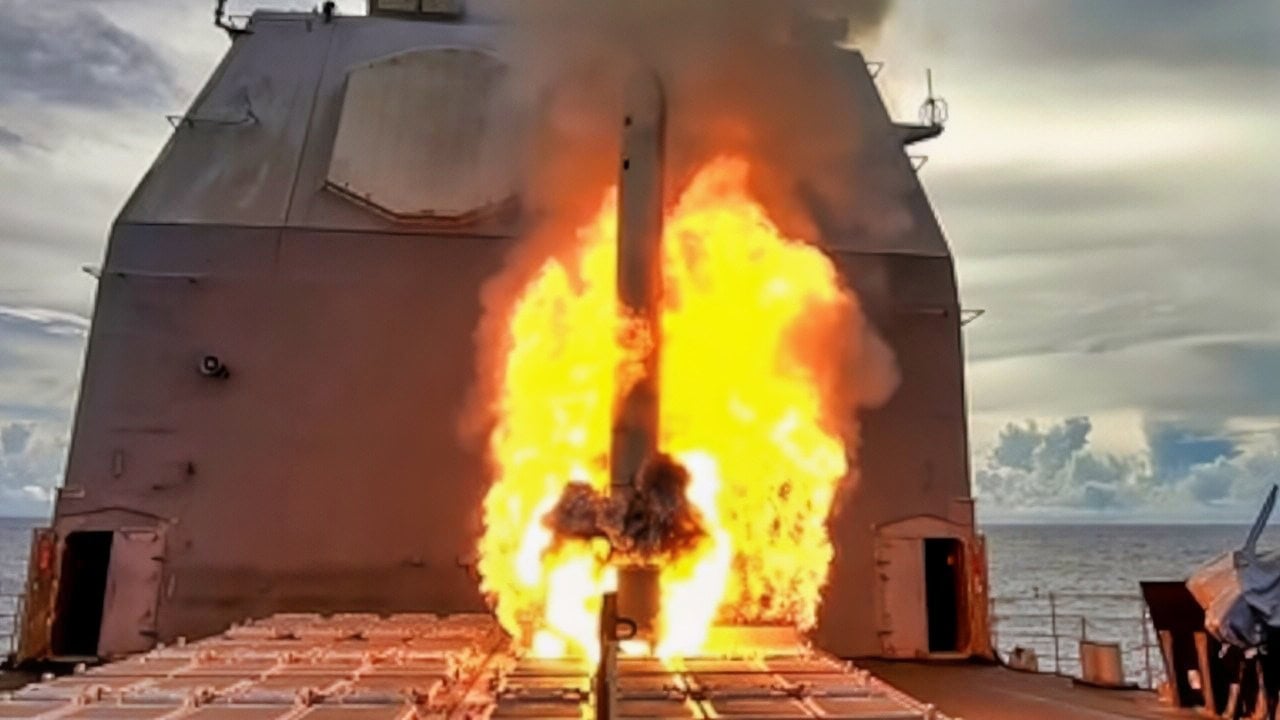
Tomahawk Missile Firing U.S. Navy Photo
According to a recent analysis by Business Insider, over 11,000 munitions were used in just 16 days of the Iran war. Replacing these key systems will likely take months rather than years. Due to these shortages and bottlenecks in the defense industrial base, U.S. war plans have been relegated to fighting a short, sharp, decisive war.
This was the plan initially for the Iran war. But if that war goes on longer, if it becomes a war of attrition, the military balance of the engagement shifts to an enemy, like Iran, which has prepared itself to fight a long-duration war of attrition that will bleed the American stockpiles, coffers, and eventually, troops dry.
Industrial Base Breakdown
Interestingly, Al Jazeera reported that Iran can produce over 100 offensive missiles per month. That exceeds the rate of production for any of those 14 critical systems in America’s arsenal that are depleting as a result of this war.
Further, Iran has maintained a diverse and massive inventory of missiles, notably those capable of speeds of Mach 3.7-7.5. That’s to say nothing of Iran’s more than 88,000 force of Shahed-type drones.
Given this tragic reality, Iran can produce missiles at a greater rate than the Americans and their allies can build interceptors to stop them.
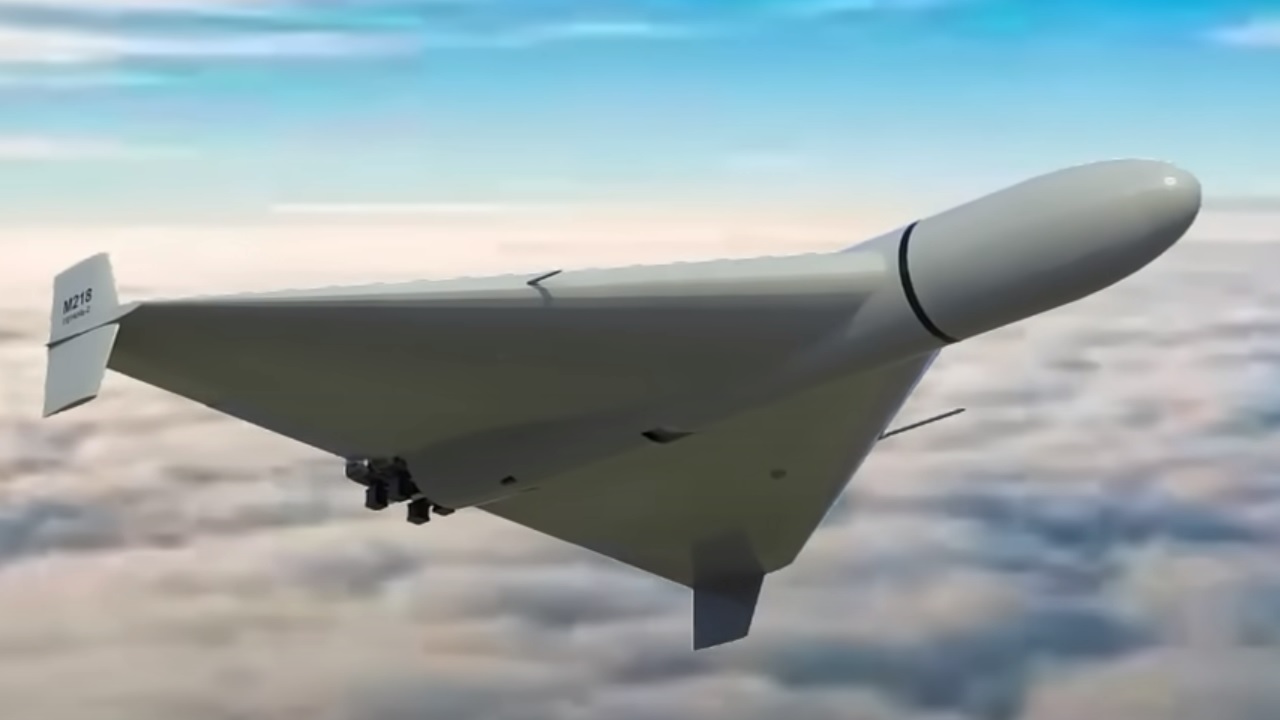
Shahed-136 Drone. Image Credit: YouTube Screenshot.
In other words, once those defensive missile systems are depleted (RUSI says it’ll happen in weeks, not months or years), the Iranians will run roughshod over the Arab states, the U.S. bases located there, and Israel itself.
Iran’s Advantage: Built for a War of Attrition
In short, the Iran war is exposing a brutal truth that Washington has spent decades avoiding: that America’s military is optimized for short bursts of overwhelming force rather than sustained industrial warfare against a determined, well-prepared adversary.
If current trends hold, this conflict will not be decided by battlefield brilliance or even technological superiority.
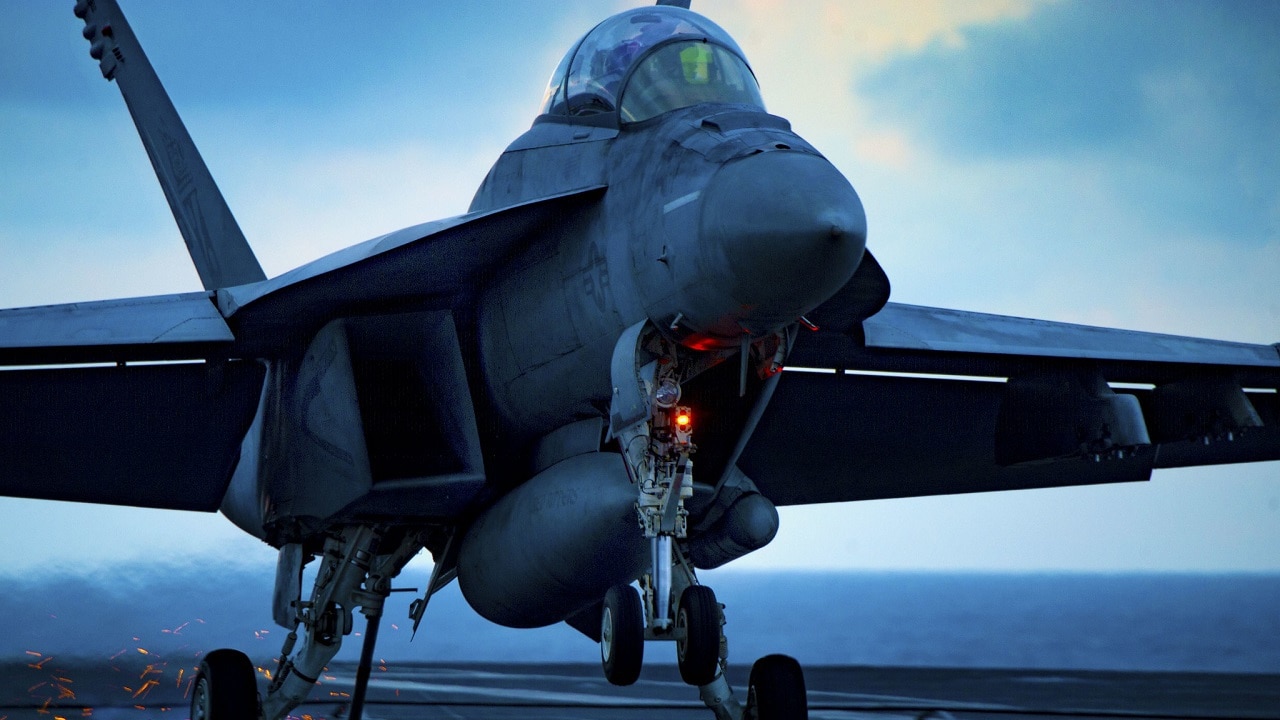
ATLANTIC OCEAN (July 4, 2018) An F/A-18F Super Hornet assigned to the “Red Rippers” of Strike Fighter Squadron (VFA) 11 sits on the flight deck of the Nimitz-class aircraft carrier USS Harry S. Truman (CVN 75). Harry S. Truman is deployed as part of an ongoing rotation of U.S. forces supporting maritime security operations in international waters around the globe. (U.S. Navy photo by Mass Communication Specialist 3rd Class Rebekah A. Watkins/Released) 180704-N-UJ486-0313
The war will be determined by whichever side can endure the longest.
And right now, the advantage belongs to Iran. Unless the United States can rapidly rebuild its industrial base, expand production at wartime speed, and rethink its entire approach to modern conflict, it risks stumbling into a strategic defeat not because it lost the fight—but because it ran out of the means to keep fighting.
About the Author: Brandon J. Weichert
Brandon J. Weichert is the Senior National Security Editor at 19FortyFive.com. Recently, Weichert became the editor of the “NatSec Guy” section at Emerald. TV. He was previously the senior national security editor at The National Interest. Weichert is the host of The National Security Hour on iHeartRadio, where he discusses national security policy every Wednesday at 8 pm Eastern. He hosts a companion show on Rumble entitled “National Security Talk.” Weichert consults regularly with various government institutions and private organizations on geopolitical issues. His writings have appeared in numerous publications, among them Popular Mechanics, National Review, MSN, and The American Spectator. And his books include Winning Space: How America Remains a Superpower, Biohacked: China’s Race to Control Life, and The Shadow War: Iran’s Quest for Supremacy. Weichert’s newest book, A Disaster of Our Own Making: How the West Lost Ukraine, is available for purchase wherever books are sold. He can be followed on Twitter/X at @WeTheBrandon.