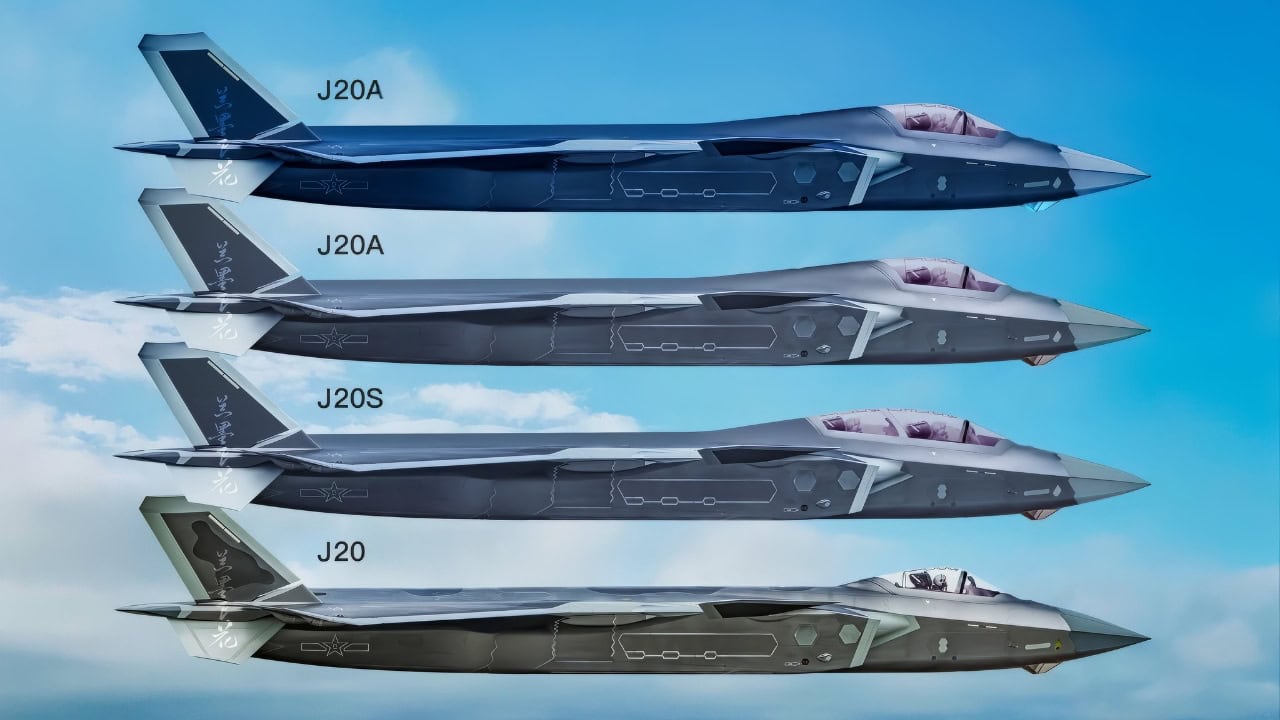
China’s J-20 Fighter Is a Powerful Stealth Warplane Thanks to Missiles and New Weapons It Carries That The U.S. Air Force Would Be Hard-pressed to Match
The People’s Liberation Army Air Force’s (PLAAF’s) Chengdu J-20 is the longest-range fifth-generation fighter aircraft in operation with any air force.
It is also armed with one of the longest-range air-to-air missiles (AAMs) in the world.
That AAM is the Leihua Electronic Research Institute’s “PiLi”, more commonly known as the PL-15.
This missile is rated as a highly sophisticated, long-range beyond-visual-range (BVR) missile with performance comparable to the U.S. AIM-120D advanced medium-range air-to-air missile (AMRAAM).
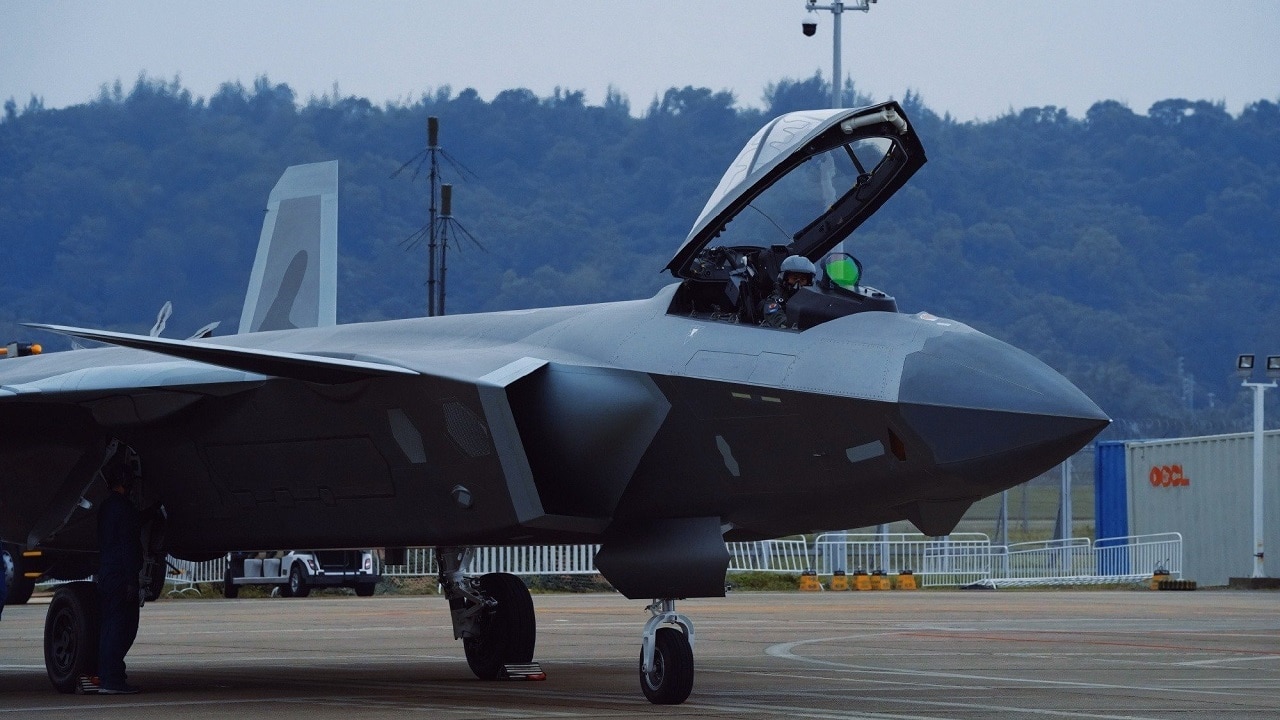
J-20 Fighter. Image Credit: Creative Commons.
The PL-15 has an estimated range of more than 125 miles, and some reports cite another model with a range of up to 200 miles.
It is considered the key weapon for supporting the J-20’s mission of engaging and taking out high-value targets, such as tankers and reconnaissance aircraft.
It is supposed to engage them at extreme distances beyond the range of any escort aircraft.
Designed and manufactured by the state-owned China Aerospace Science and Industry Corporation (CASIC), the PL-15 represents a significant leap in the PLAAF’s capability to engage aerial threats at extended ranges.
Key PL-15 Development and Capabilities
The PL-15 was designed at LETRI but is manufactured by CASIC, one of the country’s major defense industrial groups.
The missile represents a significant increase in the capability over the PL-12 that preceded it, though it draws heavily on that model’s design.
The PLAAF’s approach to developing systems is, in many ways, similar to the Russian approach of evolutionary improvements to a basic design.
The development of the PL-15 is believed to have begun late in the first decade of the 2000s.
Its existence was revealed publicly in 2015 during international air shows and defense trade expositions. After completing operational testing, the PL-15 entered service in the 2016-2018 timeframe with PLAAF frontline fighter aircraft, such as the J-10C, J-16, and J-20.
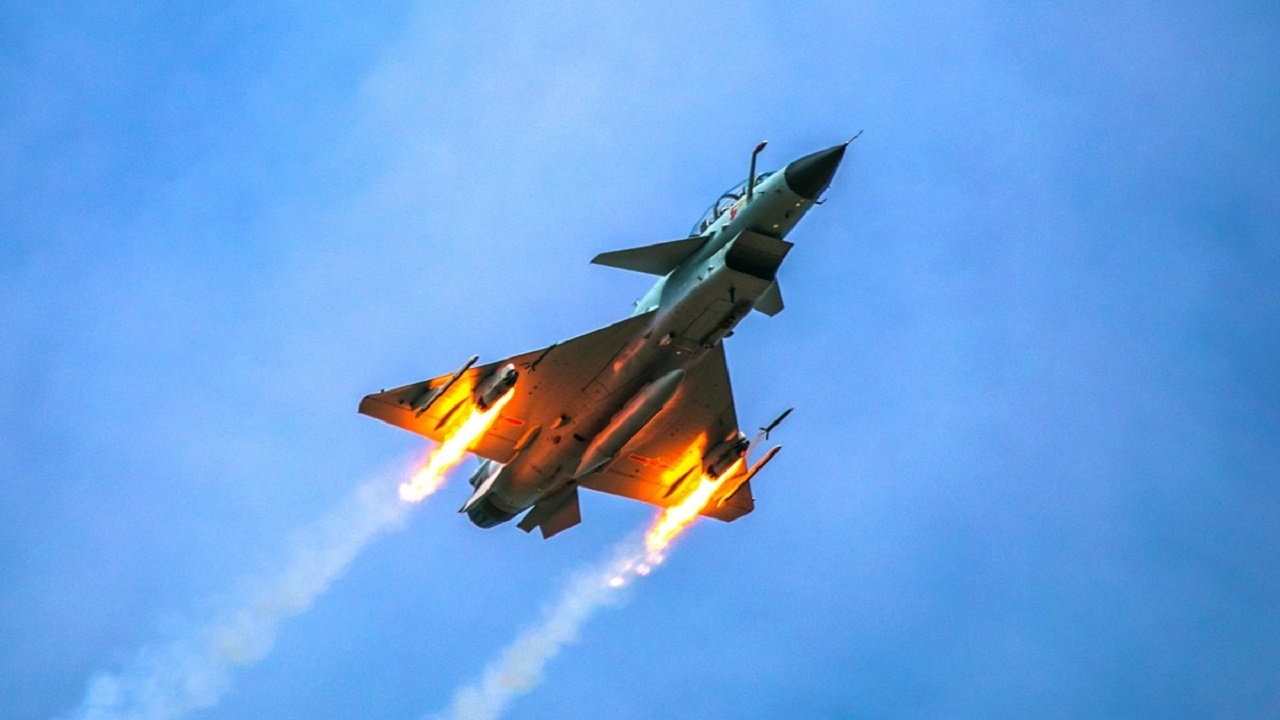
J-10 Fighter. Image Credit: Creative Commons.
The missile lagged slightly behind the introduction of the J-20 into active PLAAF service. However, its acceptance into inventory was the culmination of a long process that actually began in Russia in the 1990s.
In the 1990s, the PLAAF found itself in an awkward position: building fourth-generation aircraft while developing fifth-generation fighters. But at the same time, Chinese industry had not yet developed an active radar-homing AAM that met the standards of even the earliest variants of the AIM-120 AMRAAM.
Electronics and Propulsion
But in the 1990s, Beijing embarked on a course of extracting every bit of information possible out of Russia’s defense electronics sector.
The end result, as laid out in an exhaustive historical analysis of Russia’s cooperation with Chinese industry, is a long history of Russian seeker heads and other electronic systems being used in the design of Chinese missile systems.
In the case of the PL-15, the Russian Moscow Scientific Research Institute (AGAT) provided a seeker head design based on the 9B-1103M seeker, originally developed for an active-homing version of the Russian Vympel R-27 (AA-10).
This seeker was produced as a prototype for Chinese testing and was subsequently modified by LETRI.
The Vympel specialists I questioned about this issue when China first displayed the missile said they were not entirely certain of the details.
But they also said they had information that the Chinese design team had taken the AGAT design, swapped out some of the components in the seeker, and used other components from the R-77/RVV-AE (AA-12) Russian seeker. (Russia had sold China some of those missiles off-the-shelf.)
Chinese design teams performed an “A to B” comparison of the AGAT design with the R-77 seeker.
“We are not sure of how many other changes the Chinese made to the control authority of the missile’s seeker that was designed for them by AGAT,” said a Vympel design specialist. “But one of the very distinct differences is that while our AAMs, once they are fired, travel in an arc-like trajectory. But whatever adjustments have been made by the Chinese have made it so that their missile has a straight-on, ‘flat’ trajectory that adds to the range of the missile but reduces its speed in the terminal phase.”
The other major change in the PL-15, say the same Russian designers, is that it uses a dual-pulse motor, which extended the range of its later versions. The final design of the PL-15 is also fitted with jam-resistant datalinks for mid-course correction before it reaches the terminal phase.
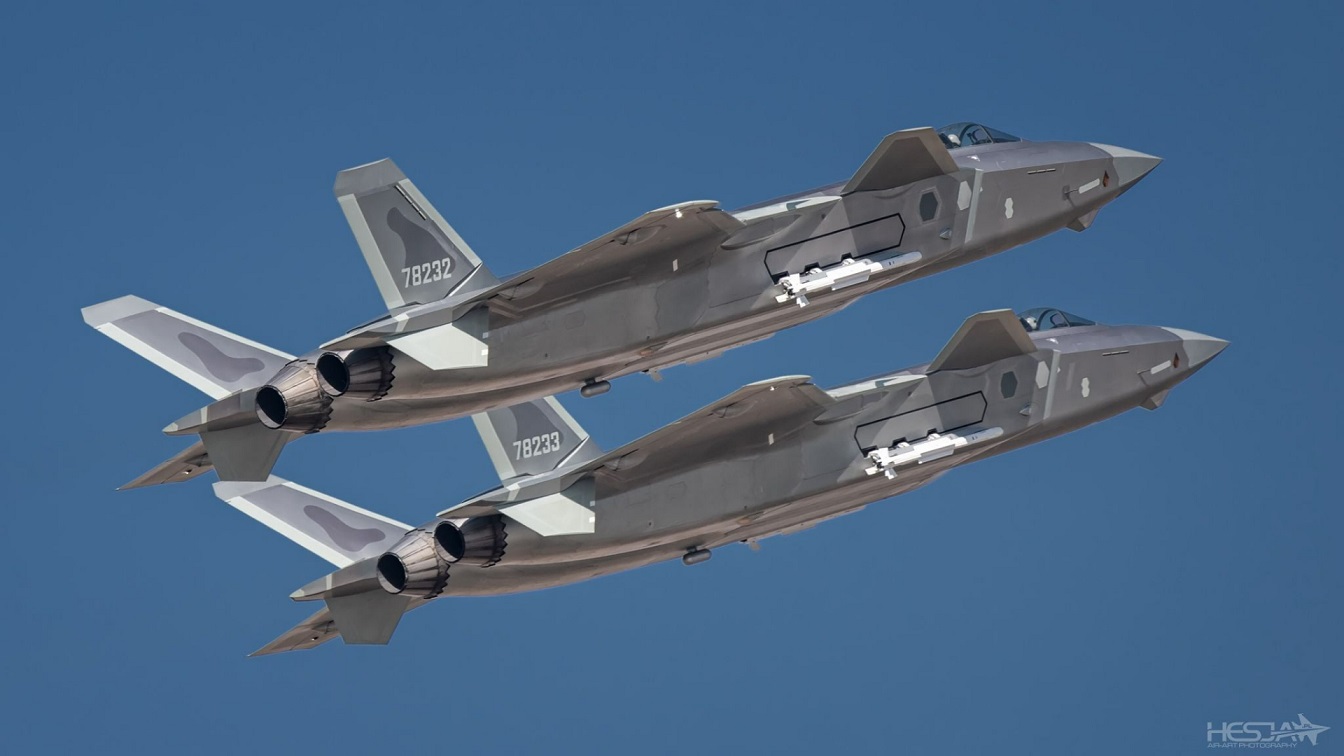
J-20 Stealth Fighter. Image Credit: Creative Commons.
In the opinion of the experts on Chinese air power we spoke to, the PL-15 missile is key to the J-20’s success, as the AIM-54 Phoenix was to the U.S. F-14. What Chinese AAM-program watchers wonder is when there will be, as one of them put it, a “true Chinese invention along these lines, and not another example of a missile that is a warmed-over version of something Russian.”
MORE – China’s J-35 Stealth Fighter Is So Great All Nations Avoid It Like the Plague
MORE – China’s New J-20S Stealth Fighter Is A Big Headache for U.S. Navy Aircraft Carriers
About the Author: Reuben F. Johnson
Reuben F. Johnson has thirty-six years of experience analyzing and reporting on foreign weapons systems, defense technologies, and international arms export policy. Johnson is the Director of Research at the Casimir Pulaski Foundation. He is also a survivor of the Russian invasion of Ukraine in February 2022. He worked for years in the American defense industry as a foreign technology analyst and later as a consultant for the U.S. Department of Defense, the Departments of the Navy and Air Force, and the governments of the United Kingdom and Australia. In 2022-2023, he won two consecutive awards for his defense reporting. He holds a bachelor’s degree from DePauw University and a master’s degree from Miami University in Ohio, specializing in Soviet and Russian studies. He lives in Warsaw.