
Air Campaign Over Iran To End In 2-3 Weeks? Only If Goals Are Met
President Donald Trump appeared on a national broadcast Wednesday night, outlining what he perceives as the end of the bombing in Iran in the ongoing Operation Epic Fury.
During his nearly 20-minute speech, he touted the success of U.S. air operations to weaken the Gulf country. He said U.S. forces will keep hitting Iran “very hard” in the next two or three weeks.
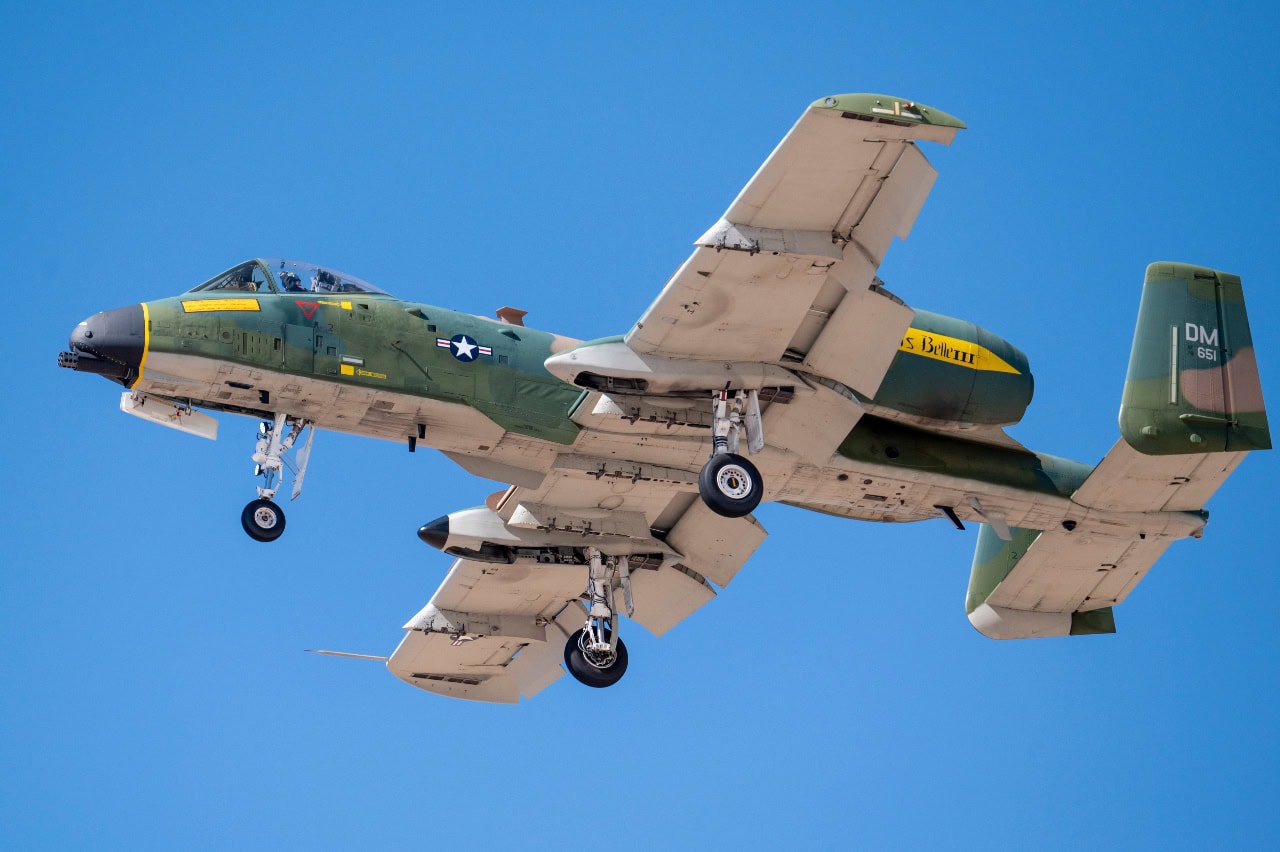
U.S. Air Force Maj. Lindsay “MAD” Johnson, A-10C Thunderbolt II Demonstration Team commander and pilot, signals to the audience from her A-10 aircraft during a Hawgsmoke 2024 practice demonstration at Davis-Monthan Air Force Base, Arizona, Sept. 12, 2024. The A-10’s ability to fly low and slow over the battlefield was one of the many attributes that made it an effective close air support airframe. (U.S. Air Force photo by Senior Airman Devlin Bishop)
The president did not mention the April 6 deadline he set for Iran to open the Strait of Hormuz, the international pathway for 20 percent of the global oil and gas transport. He had earlier threatened to target Iran’s energy infrastructure if the country did not loosen its stranglehold on the Strait.
But is that two- to three-week window enough to complete the objectives?
Objectives “Nearing Completion,” Militarily, Says President
During his address, President Trump insisted that the U.S.’s “core strategic objectives are nearing completion.” He added, “We’re going to finish it very fast. We’re getting very close.”
Over the next few weeks, the president said, the U.S. would intensify operations in Iran, permanently disabling its ability to project power outside its own borders and to keep it from ever having a nuclear weapon.
“I’ve made clear from the beginning of Operation Epic Fury that we will continue until our objectives are fully achieved,” he said. “I can say tonight that we are on track to complete all of America’s military objectives shortly, very shortly. We’re going to hit them extremely hard over the next two to three weeks — we’re going to bring them back to the Stone Age, where they belong.”
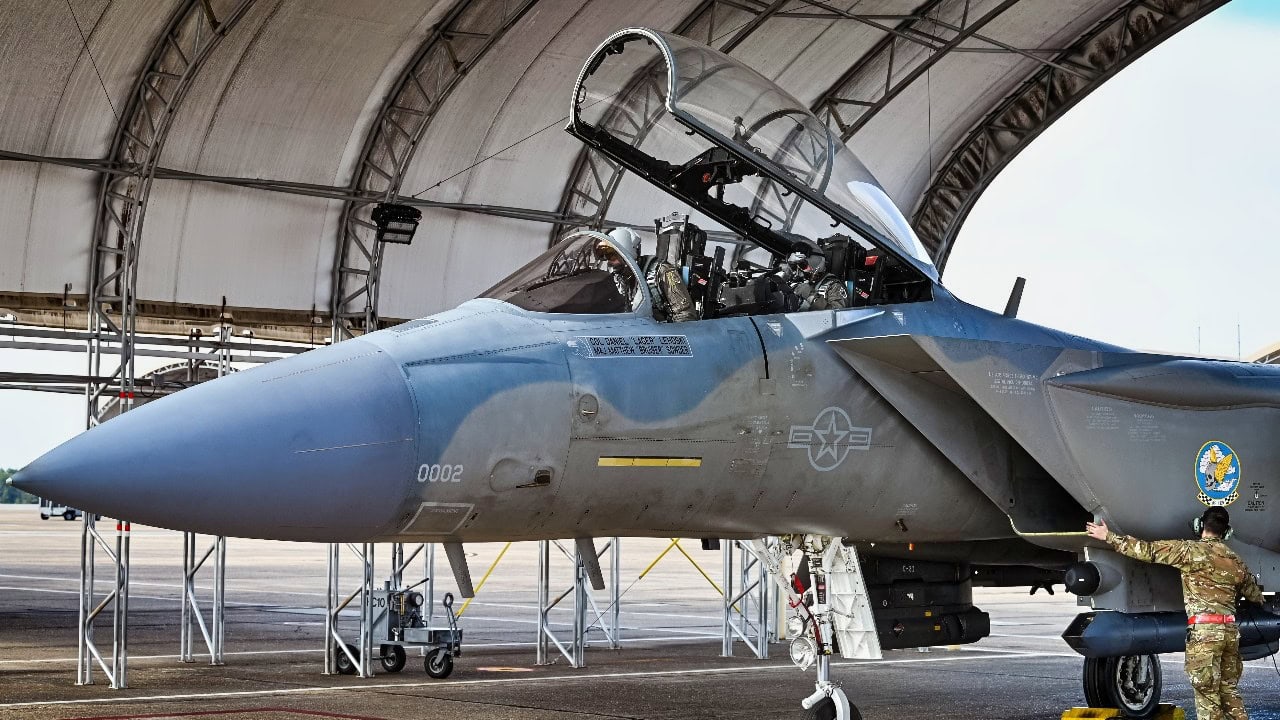
U.S. Air Force Maj. Aaron Eshkenazi, F-15EX Test Director for the 84th Test and Evaluation Squadron, performs preflight procedures for the F-15EX with Lt. Gen. Michael Koscheski, deputy commander of Air Combat Command, at Eglin Air Force Base, Florida, January 29, 2025. During his visit, Koscheski gained valuable insights from the 84th TES and 85th TES to help inform future decisions regarding the platform. The future F-15 fleet will complement 5th generation aircraft, bringing substantial additional capacity for over-sized long-range fires, sensors, and electronic warfare capabilities to defend critical locations in highly contested areas. (U.S. Air Force photo by 1st Lt. Rebecca Abordo)
But before the United States can cease combat air operations over Iran, what are the key U.S. objectives it is trying to achieve?
Preventing a Nuclear-Armed Iran
The primary goal is ensuring Iran never acquires a nuclear weapon, which U.S. officials fear would jeopardize regional security and American service members stationed in the Middle East.
The U.S. has continuously argued that Iran’s nuclear advancements are linked to its developing long-range ballistic missiles, which could reach Europe, American territory, and its support for armed proxy terrorist groups across the Middle East.
Both Washington and Tel Aviv have shown Iran’s consistent aims to produce a nuclear weapon despite denials about enriching uranium far beyond peaceful purposes.
Dismantling Iran’s Ballistic Missile and Drone Programs
The U.S. has focused on destroying Iran’s offensive missile arsenal, drone programs, and production capabilities.
While the primary concern is that Iran’s ballistic missiles can serve as delivery systems for nuclear weapons, the U.S. has argued that Iran planned to build an arsenal of thousands of ballistic missiles as a threat to the Middle East and Europe that would stop any attempts at curbing their nuclear ambitions.
Annihilating Naval and Military Capacity
A major goal is to eliminate the Iranian navy and defense industrial base to cripple their ability to act as a threat in the Gulf to stop shipping, especially the flow of oil.
The U.S. has sunk the majority of its surface warfare ships, severely curtailing Iran’s ability to attack shipping and plant mines in the Gulf.
Iran’s Air Force has been virtually wiped out; its few modern aircraft have been largely destroyed on the ground.
Tehran’s air defenses have also been virtually annihilated. American and Israeli aircraft were operating in broad daylight over Tehran. The use of B-52 and B-1 bombers shows the extent to which their air defenses have suffered. The Iranians still have access to numerous MANPADS, which can be effective against low-flying aircraft.
Ending Iran’s Support for Proxy Terrorist Groups
It isn’t a question of who is, and has been for nearly the past 50 years, the #1 sponsor of worldwide terrorism. Iran created Hezbollah in Lebanon and has funded it, Hamas, Houthis, and other proxy groups in the region. They have hidden in plain sight under a thin veneer of plausible deniability, but it is clear who sponsored it and where the orders came from.
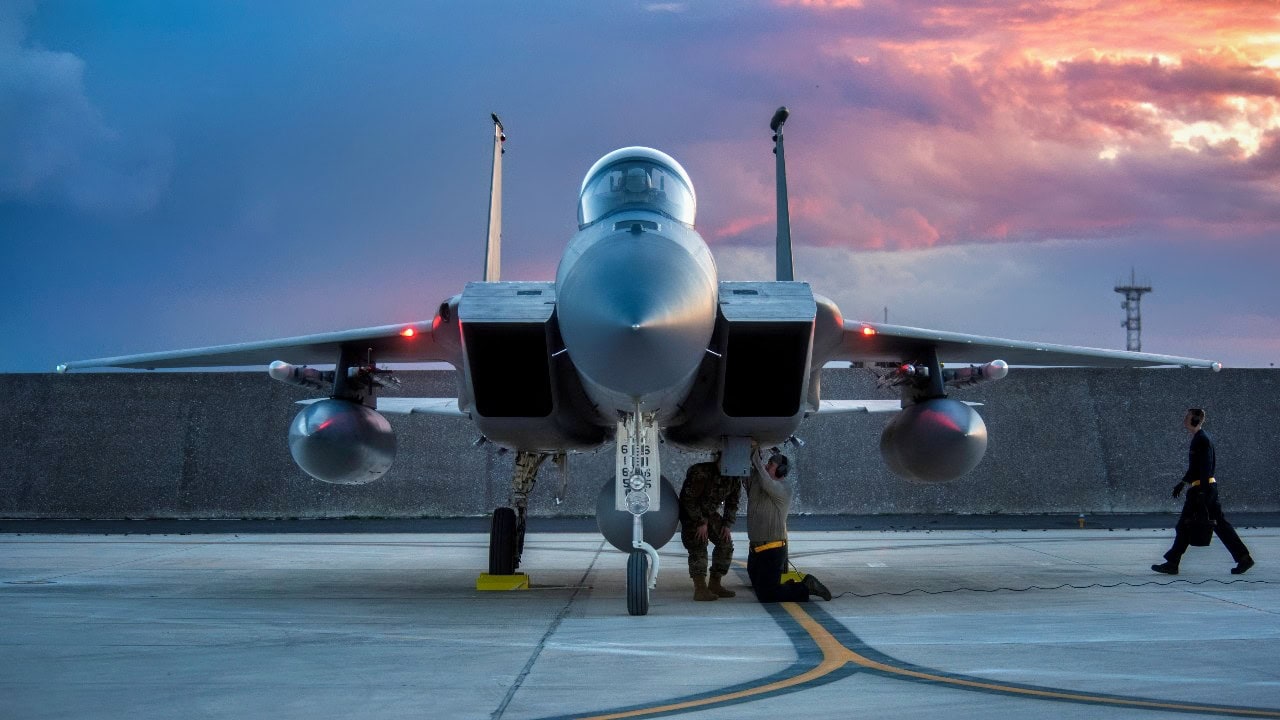
Airmen from the 48th Fighter Wing perform post flight checks on an F-15C Eagle at Amendola Air Base, Italy, Nov. 16, 2018. F-15C Eagles and an F-15D Eagle will be participating in the NATO Tactical Leadership Programme 18-4. TLP has prepared hundreds of NATO and allied forces’ flight leaders to be mission commanders. (U.S. Air Force photo/ Senior Airman Malcolm Mayfield)
The U.S. aims to halt Iran’s ability to arm, fund, and direct terrorist armies outside its borders.
Regional Stability and Economic Pressure
President Trump has indicated that the campaign aims to bring “peace throughout the Middle East” by weakening Iran’s military and has warned of targeting Iran’s power plants and oil business to compel a new, stricter nuclear deal.
The Objectives Are Being Met, But It Is Far From Finished
“We are systematically dismantling the regime’s ability to threaten America or project power outside of its borders,” the president said. “That means eliminating Iran’s navy, which is now absolutely destroyed, hurting their air force and their missile program at levels never seen before, and annihilating their defense industrial base. We’ve done it all; their navy is gone. Their air force is gone. Their missiles are just about used up or beaten.”
While top U.S. officials claim “undeniable progress” in degrading these capabilities, it is probably premature to set a two- to three-week window for finishing the campaign.
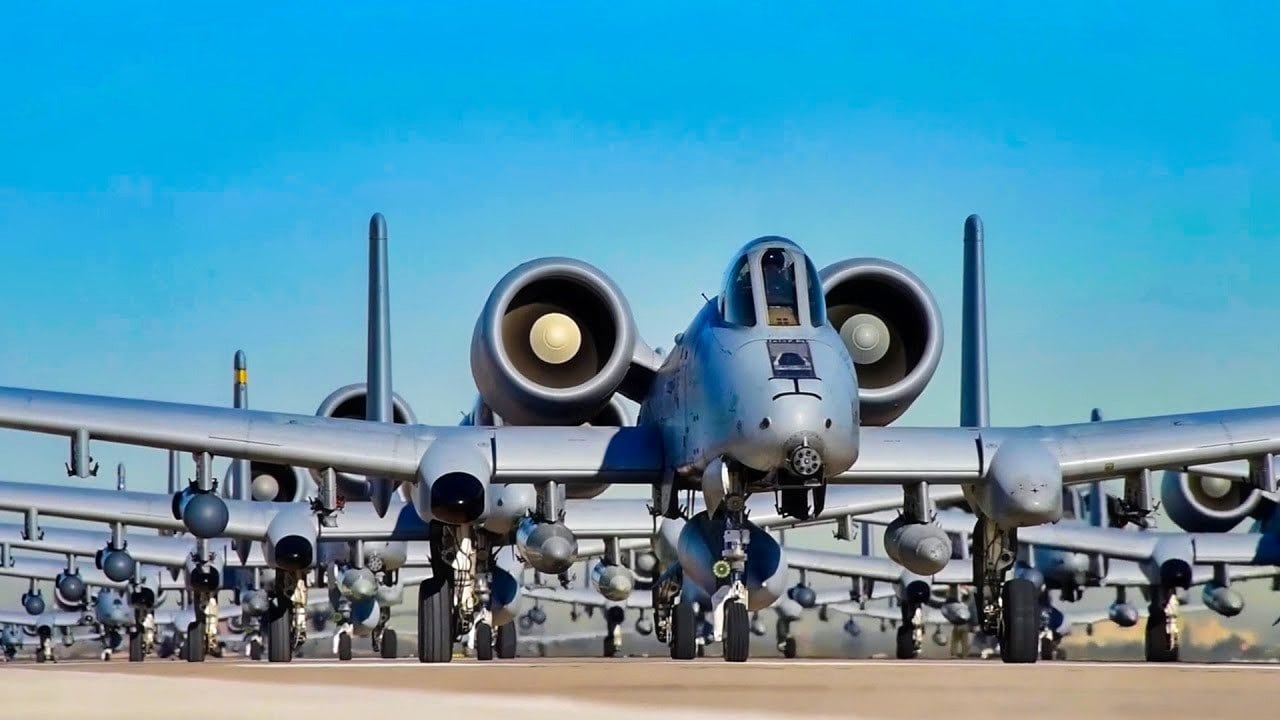
A-10 Warthog Elephant Walk.
NATO’s refusal to militarily support the United States in opening the Strait of Hormuz is a major sticking point between Washington and Europe. Trump called on the world’s countries to “build up some delayed courage” and “just take” the Strait of Hormuz on Wednesday night.
On Thursday, the UK announced that it would host 40 countries in a coalition to negotiate with Iran to open the Strait.
MORE – The New Boeing F-15EX Eagle II Isn’t Going to War in Iran Like the F-22 or F-35 Stealth Fighters
About the Author: Steve Balestrieri
Steve Balestrieri is a National Security Columnist. He served as a U.S. Army Special Forces NCO and Warrant Officer. In addition to writing on defense, he covers the NFL for PatsFans.com and is a member of the Pro Football Writers of America (PFWA). His work was regularly featured in many military publications.