Britain Plans to Stop Russia With 148 Challenger 3 Tanks — RUSI Says a Credible Armored Division Needs 170 to 300
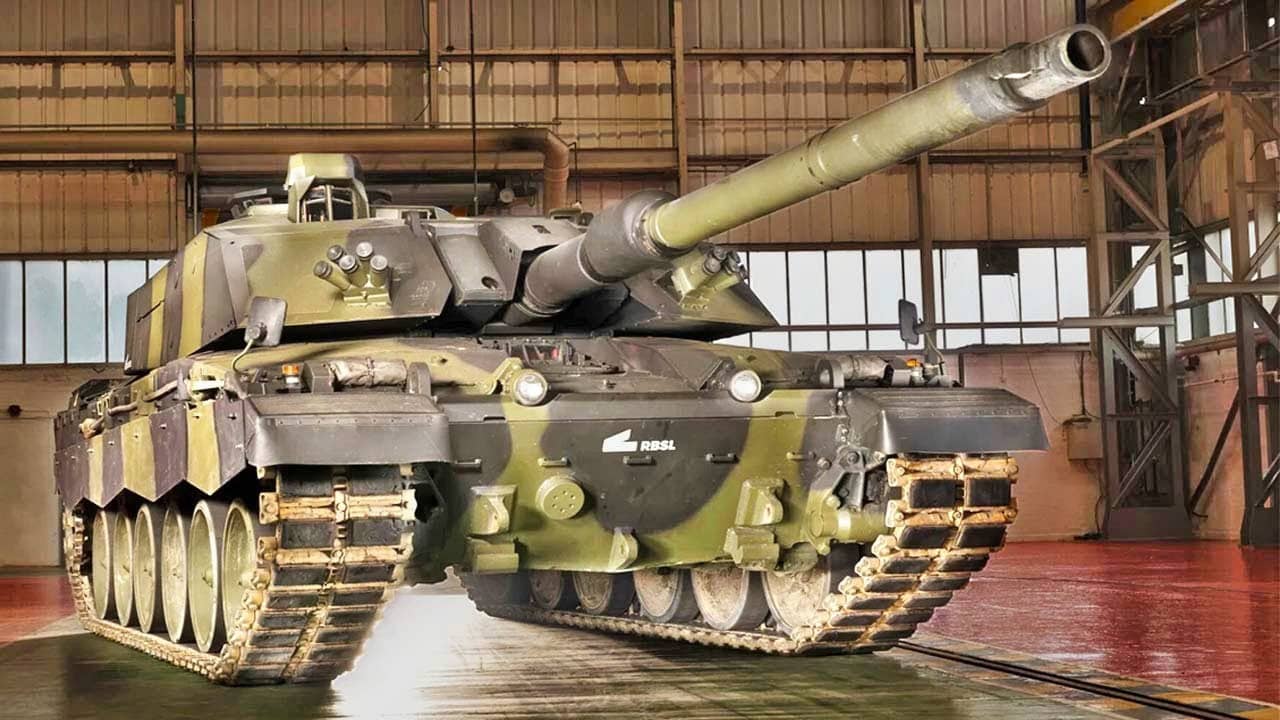
The British Army’s new Challenger 3 successfully began its first firing trials in January, part of the first live-fire exercise for the tank on British soil, the British Ministry of Defense announced.
It is the first time in more than three decades that the United Kingdom will field a new main battle tank — and this acquisition marks a massive departure from tradition for British tanker crews.
Rather than sticking with the smoothbore main guns that have armed British main battle tanks for decades — a singular departure from other NATO countries that have favored an alliance-standard 120mm rifled main gun — the Challenger 3 opts instead for the familiar rifled main gun.
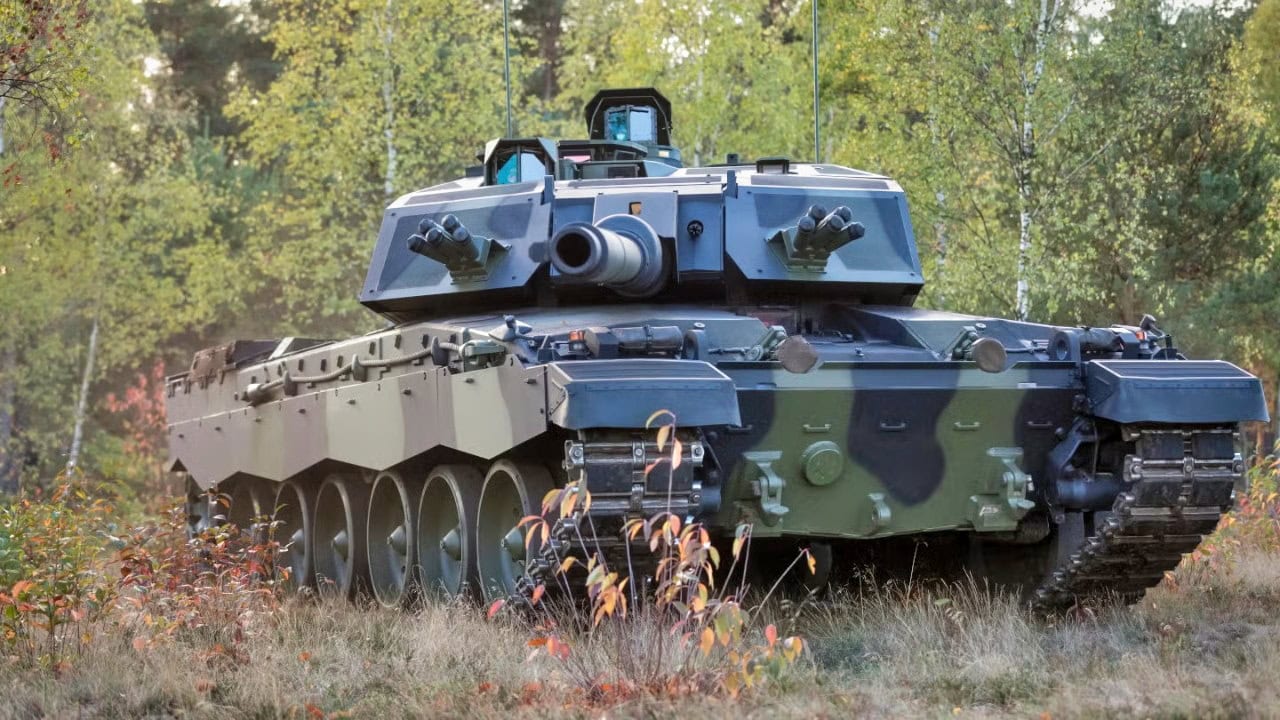
Challenger 3 Tank. Image Credit: Creative Commons.
Following the firing trials, the Challenger program will conduct “additional crewed firing activity and initial reliability growth trials.”
Though the Challenger 3’s choice of main gun is a boon for logistics and interpretability with NATO partners, that platform faces a significant challenge — and one that is internal.
Delay, Delay, Delay
Though that platform is certainly making progress forward, its beginning was less than auspicious. Luck Pollard, a Labour Party MP, shed some light on the Challenger 3 program’s status late last year.
“Challenger 3 is currently undergoing demonstration phase trials to prove the performance of the tanks,” Pollard explained. “Manufacturing will begin once the tank’s performance is proven, rather than being tied to a specific deadline.”
Pollard did add one caveat, explaining that “the project team will review the timeline regularly to ensure alignment with delivery milestones, operational needs, and emerging technical risks.”
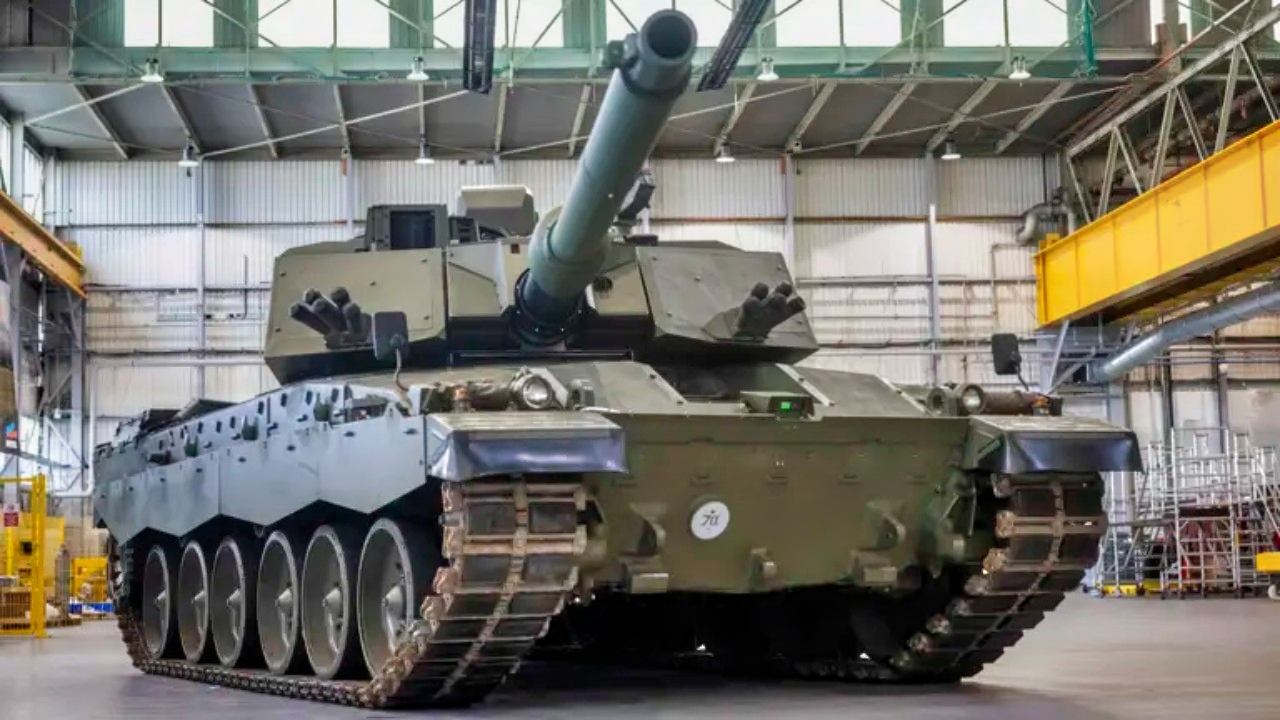
Challenger 3 Tank. Image Credit: Creative Commons.
Behind the legalism, however, is in essence an acknowledgment that the Challenger 3 program has slipped behind schedule.
Pointed Criticism
One of the United Kingdom’s leading think tanks, the Royal United Services Institute, took a clear-eyed look at the Challenger 3 program.
The paper examined the composition of the Challenger 3 force that the British Army would like to field, with consideration of the threat environment the modernized tank could be expected to encounter.
Their conclusion? Far from an ideal state.
“Similarly, when RUSI analysts last looked at the Army, and the combat division the UK claims to have, it measured the number of main battle tanks and self-propelled artillery in the UK’s inventory and found the numbers wanting when set against a ‘credible’ armoured division of anywhere from 170 to over 300 tanks and around 110 to 220 artillery pieces,” RUSI opined. Further more, the paper explained, “numbers have not improved in the subsequent four years: under the Challenger 3 programme the UK will have a total of 148 main battle tanks (in 2030).”
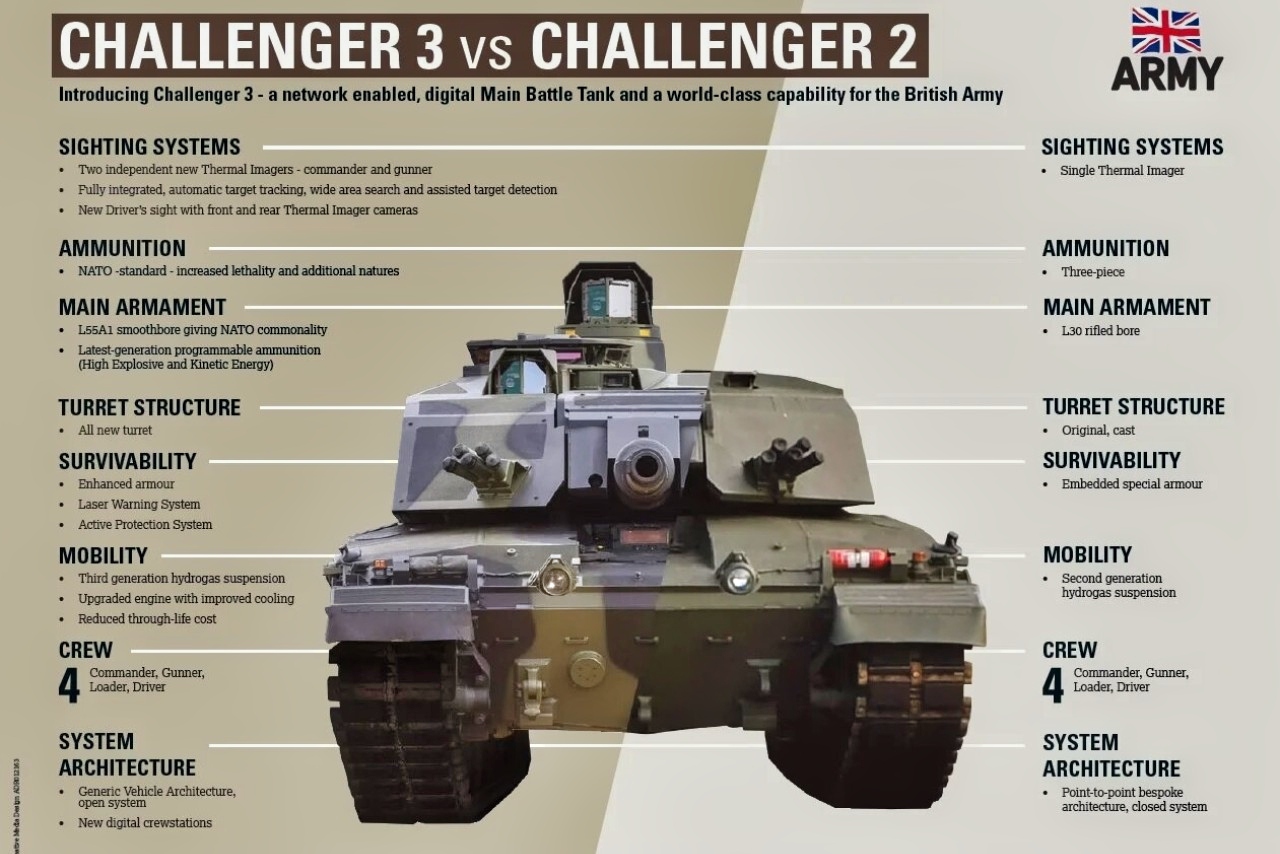
Challenger 3 Tank. Image Credit: Creative Commons.
“Meanwhile, the UK has essentially removed the AS90 artillery from service by donating 32 to Ukraine, replacing them with 14 Archer guns until such time as the ‘Mobile Fires Platform’ is procured (some time ‘this decade’).” But the most pointed criticism of the Challenger program was yet to come.
“The Challenger 3 may be the ‘most lethal tank’ ever fielded by the British Army, but it is going to be available in such limited numbers that it will have to perform heroically in the face of a notional foe in the form of Russian ground forces, such as a Combined Arms Army.”
A Numbers Game
The United Kingdom’s Challenger 3 fleet, compared to those of neighboring countries or the rest of NATO more broadly, is only described as tiny.
Compare, if you will, the M1 Abrams, the main battle tank of the United States, Australia, Poland, and several other countries. Just in the United States, the Abrams fleet numbers around 4,600.
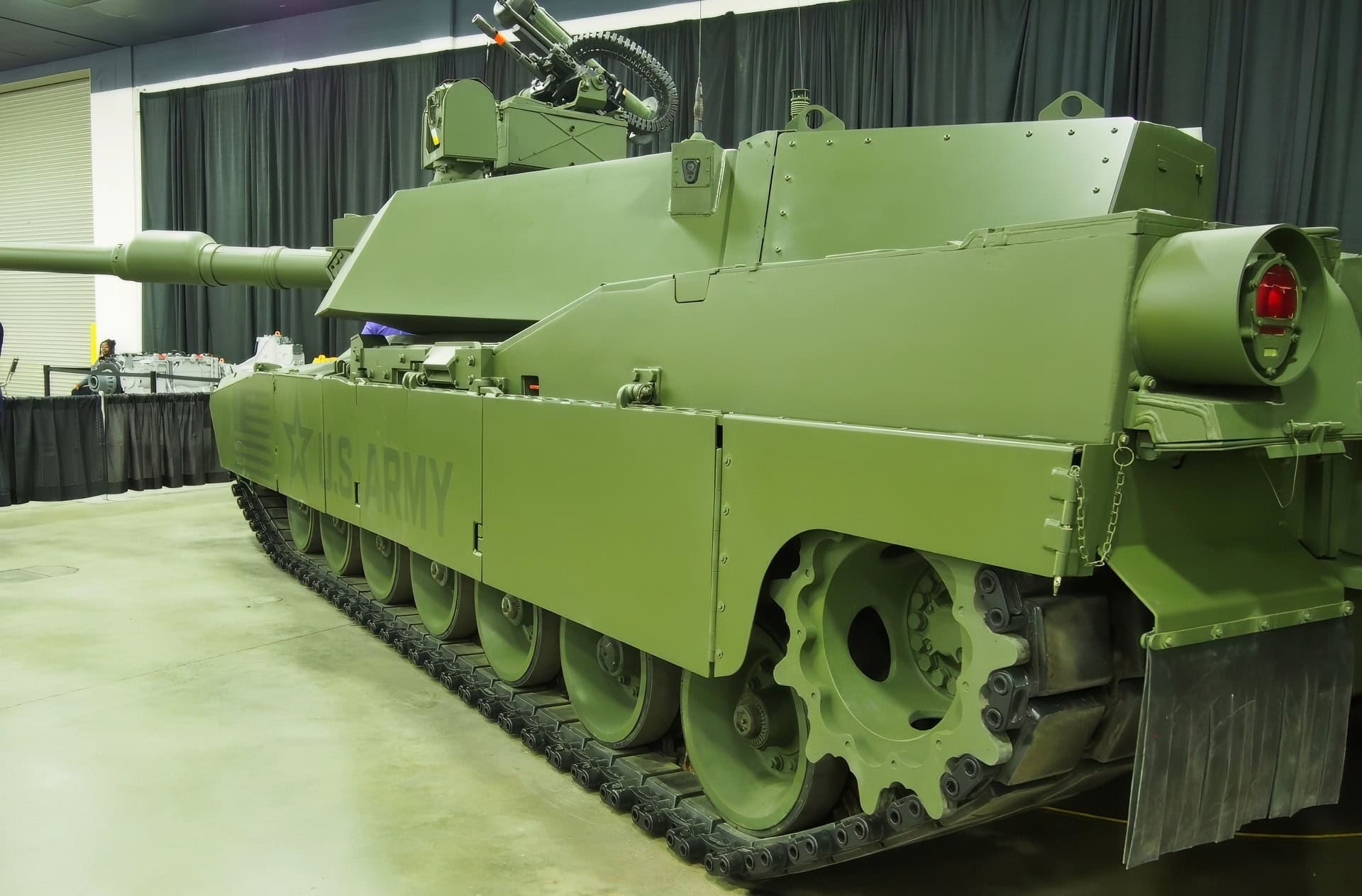
M1E3 from Detroit Auto Show. 19FortyFive.com Original Image.
The Leopard 2 main battle tank is a mother source for comparison.
Originally developed by West Germany during the Cold War, that tank is now in service in a united Germany, Ukraine, a few of the Nordic countries, and elsewhere.
In Germany, the number of Leopard 2s in service number 320 in total, numbering over twice the size of the projected Challenger 3 fleet that will be in service with the British Army.
A statistical analysis alone of the Challenger 3 fleet would be incomplete and would not account for other tangible factors, such as sustainment, logistics, or training, nor would it fully account for combat effectiveness, which is contingent on the aforementioned factors, terrain, and the state of the adversary.
Still, RUSI attempted to extrapolate a path forward for the force.
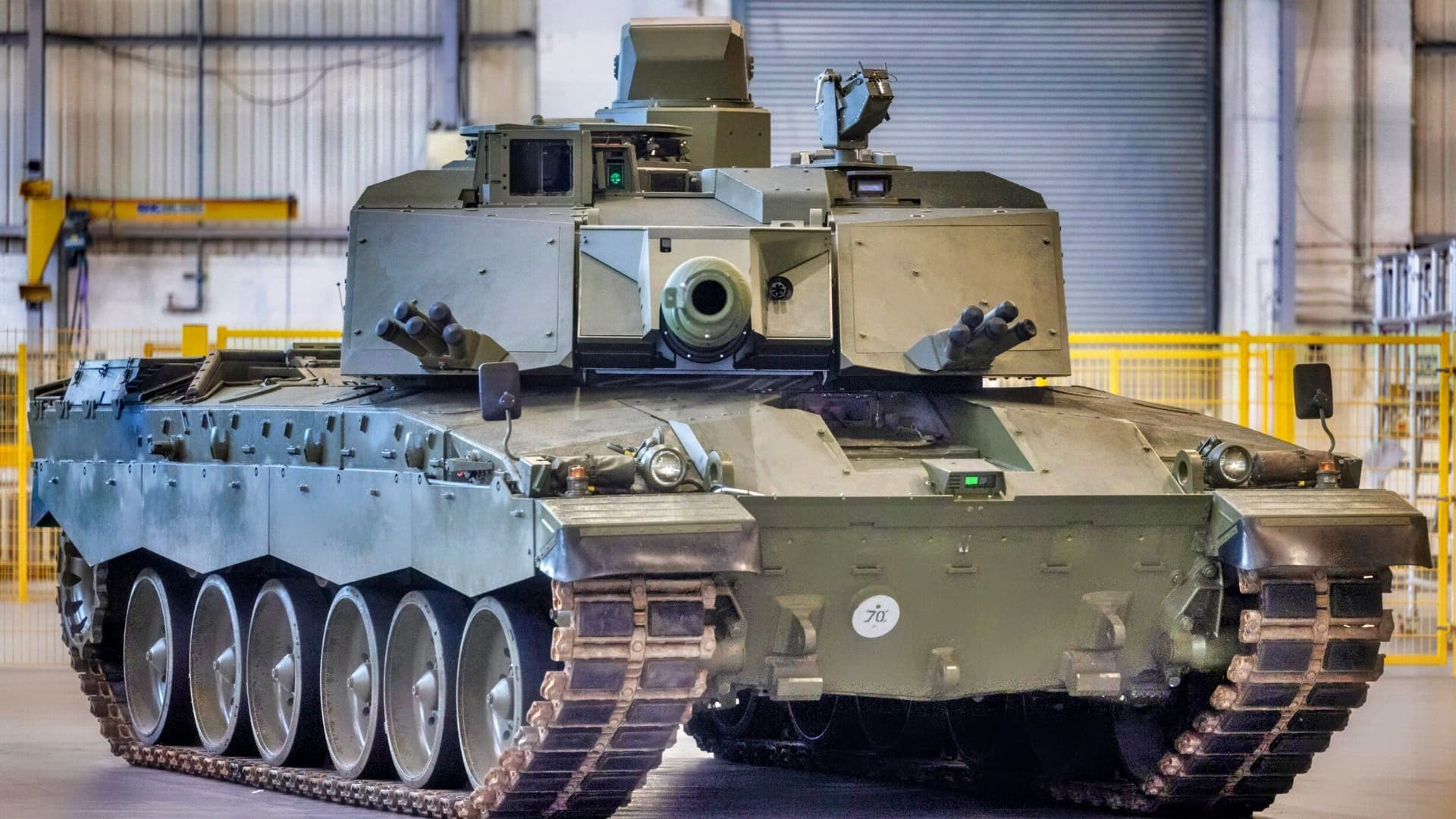
Challenger 3 Tank. Image Credit: British Government.
Forward March
RUSI wrote that while “solutions are available… they will require hard thinking and prioritisation. In some cases, increased firepower will be desirable. But it may be that the UK should be investing in sustainment and enablers like bridging equipment before purchasing a single additional tank or jet that it can’t, in any case, deploy and support.”
“Technology should play a key role – for example, learning the lessons about where drones can complement artillery and provide effective local surveillance,” RUSI added to its assessment.
“But it will take novel thinking and the development of doctrine and tactics, allied to new training, to achieve increased combat output – and effect – with forces that appear unlikely to increase in terms of personnel.”
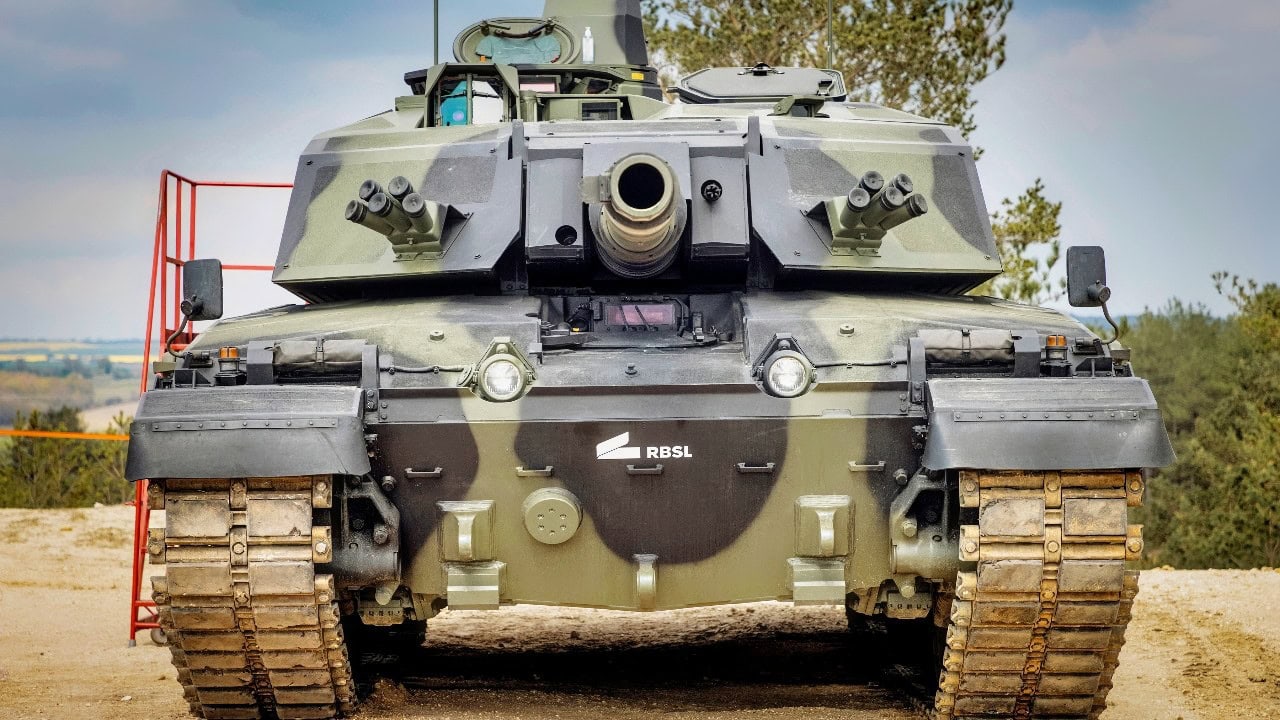
The Challenger 3 Main Battle tank. Image Credit: Creative Commons.
About the Author: Caleb Larson
Caleb Larson is an American multiformat journalist based in Berlin, Germany. His work covers the intersection of conflict and society, focusing on American foreign policy and European security. He has reported from Germany, Russia, and the United States. Most recently, he covered the war in Ukraine, reporting extensively on the war’s shifting battle lines from Donbas and writing on the war’s civilian and humanitarian toll. Previously, he worked as a Defense Reporter for POLITICO Europe. You can follow his latest work on X.