

‘The Soldier Is the Army’: George Patton Believed an Army’s Strength Is Determined Solely by the Discipline, Training, and Courage of Its Individual Soldiers
Army Quote of the Day by General George Patton: “The soldier is the Army. No army is better than its soldiers. The Soldier is also a citizen. In fact, the highest obligation and privilege of citizenship is that of bearing arms for one’s country.”
General George S. Patton Jr. was an outstanding combat leader, going from a lieutenant in Mexico during the Punitive Expedition chasing Pancho Villa, to commanding a battalion of the new armored forces in World War I, to commanding the Third Army in Europe during World War II.
Patton was arguably the finest combat commander that the United States ever produced. He was one of the most admired and most controversial generals ever to wear the uniform of the United States Army.

General Patton Portrait. Image Credit: Creative Commons.
The quote is often used in military leadership training, recruitment, and by veterans to honor the sacrifice of those who serve. It highlights the warrior ethos—the idea that the soldier is both a protector of our freedoms and a citizen-soldier.
What Does The Quote Signify?
Patton’s quote summarizes his belief in the supreme importance of the individual soldier over technology, strategy, or equipment. This is not an outdated philosophy. In fact, our troops of the US Special Operations Command (USSOCOM) follow the “truths,” which are five foundational principles guiding U.S. Special Operations Forces (SOF) established in 1987 by retired Army Col. John Collins and General David Barrato.
The first of SOF’s Truths is that “Humans are more important than hardware”: People—not equipment—make the critical difference; the right people, highly trained, will accomplish the mission. On the other hand, the best equipment in the world cannot compensate for a lack of the right people.
This was reiterated by Air Force General Dan Caine, after the rescue of the two F-15E pilots and weapons system officer. The F-15E was shot down over Iran, and the US military pulled out all stops to get them home.
Caine added, “That is the standard we live by.”
But Patton’s quote was broken down into several parts, and let’s look at each.
“The Soldier is the Army. No Army is Better Than its Soldiers:”
Patton believed that an army’s strength isn’t just in its tanks, planes, or generals. It is solely determined by the discipline, training, morale, and courage of the men on the ground.
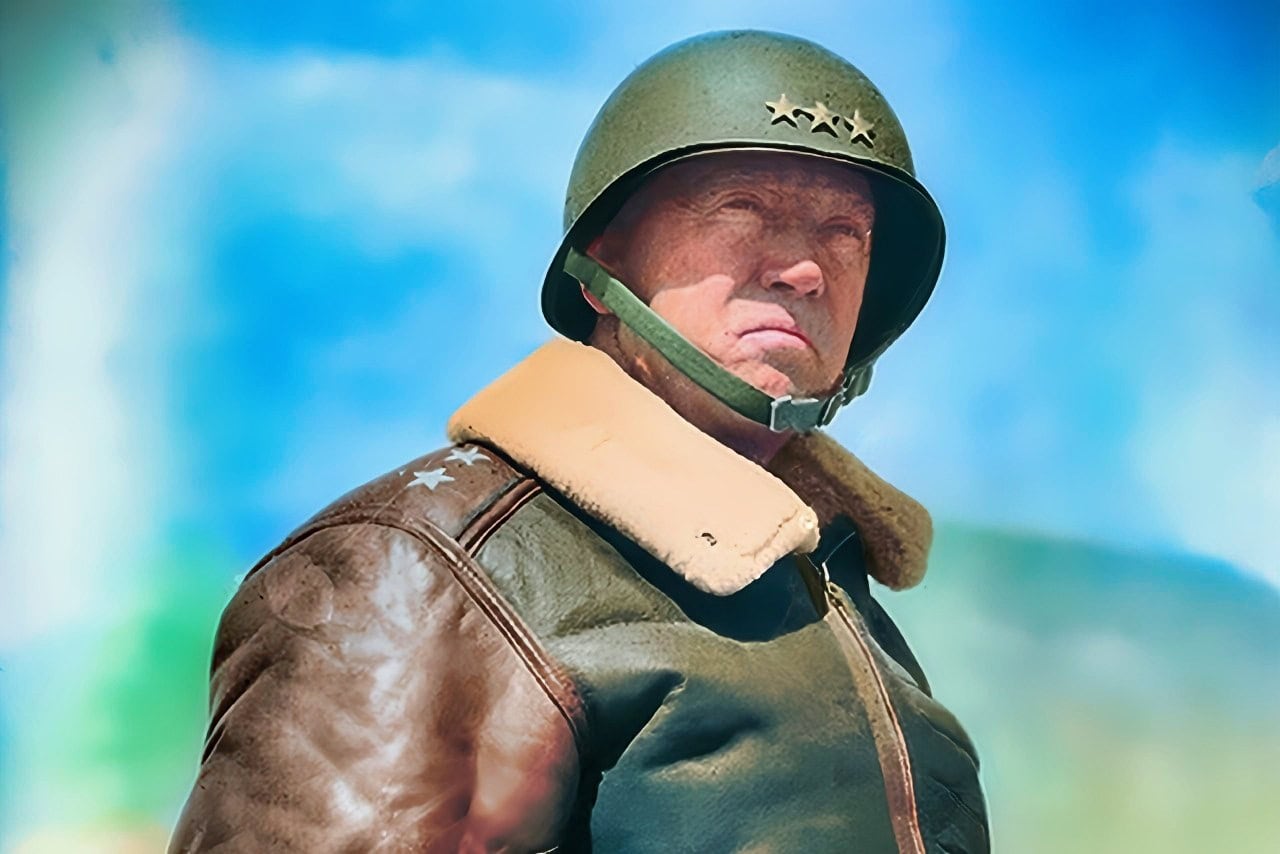
George Patton U.S. Army Photo
Patton believed that the army’s true strength, effectiveness, and character are determined solely by the quality, training, discipline, and morale of its individual soldiers, rather than its technology, equipment, or high-ranking leadership.
It emphasizes that the soldier is the heart of the institution, and the institution can never rise above the caliber of its human beings.
“The Soldier is Also a Citizen:”
This emphasizes that soldiers are not separate from society; they are members of the community they defend.
The Army is not a faceless institution; it is a collection of people. If the soldier lacks discipline, courage, or skill, the entire army fails.
“In fact, the Highest Obligation and Privilege of Citizenship is That of Bearing Arms for One’s Country:”
Patton saw military service not just as a duty, but as an honor. He believed the ultimate act of citizenship was to risk one’s life to protect our nation’s freedoms and safety.
Patton believed in the citizen-soldier, arguing that a citizen’s ultimate duty and honor is to actively defend their nation, even at the risk of their own life. It emphasizes that freedom is not passive, but maintained through personal sacrifice and military service.
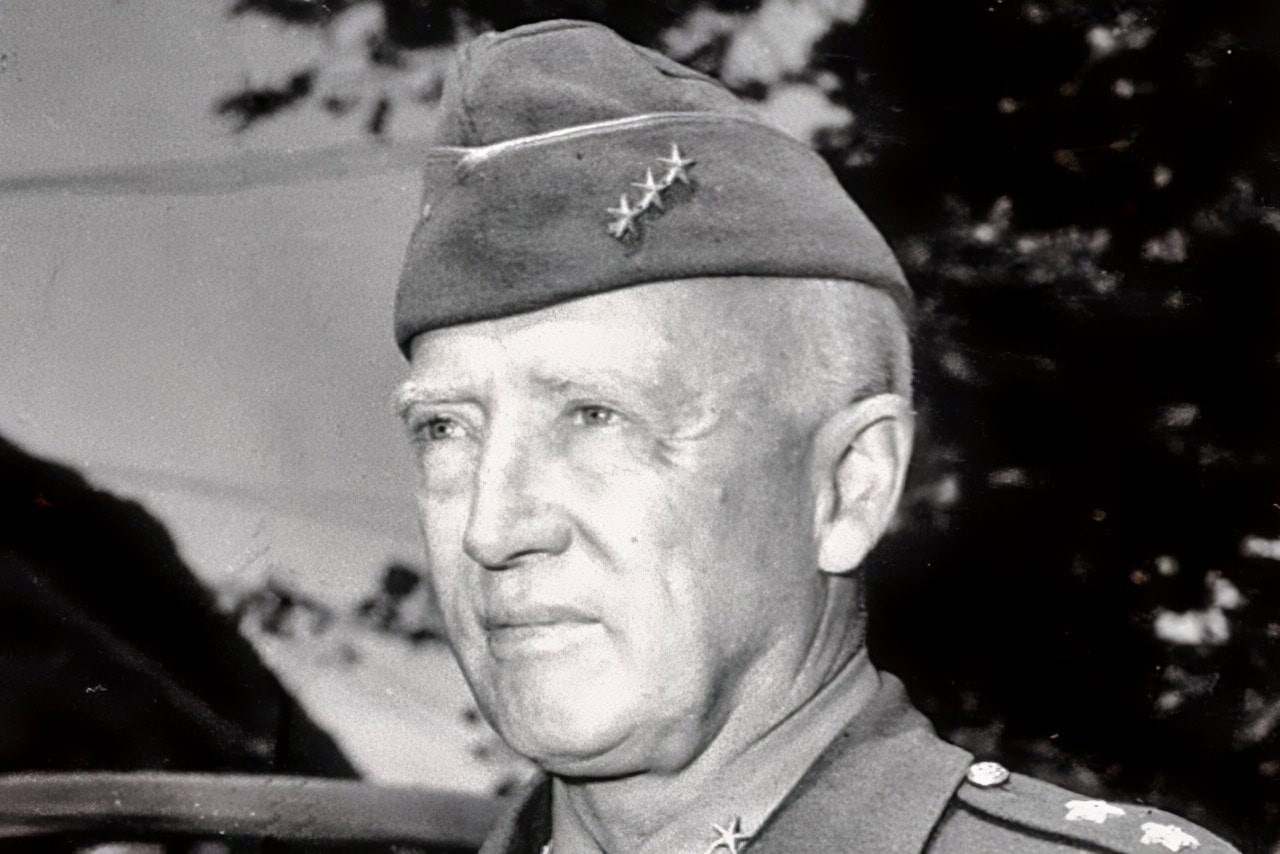
George S. Patton Quote of the Day. Creative Commons Image.
Patton’s belief, that while citizens have many duties—paying taxes, voting, obeying laws, etc., defending the country through military service is the most crucial responsibility. It is the action that secures all other rights.
Serving in the armed forces is framed not as a burden, but as a prestigious opportunity. It is viewed as a high honor to be entrusted with the safety of one’s compatriots and the defense of national liberty, taking up arms, serving in uniform, and protecting the nation from external threats.
Patton’s Ability To Inspire His Men Was Legendary:
Patton’s mastery of armored warfare, unparalleled speed in offensive operations, and ability to inspire troops were legendary. He led the Third Army to rapid victories across France and Germany, emphasizing aggressive, high-speed tactics and combined arms warfare.
He started the first US tank school during WWI and led it during the first American armored battles. In World War II, he was a field commander in the USA’s first offensive in the West against the Germans.
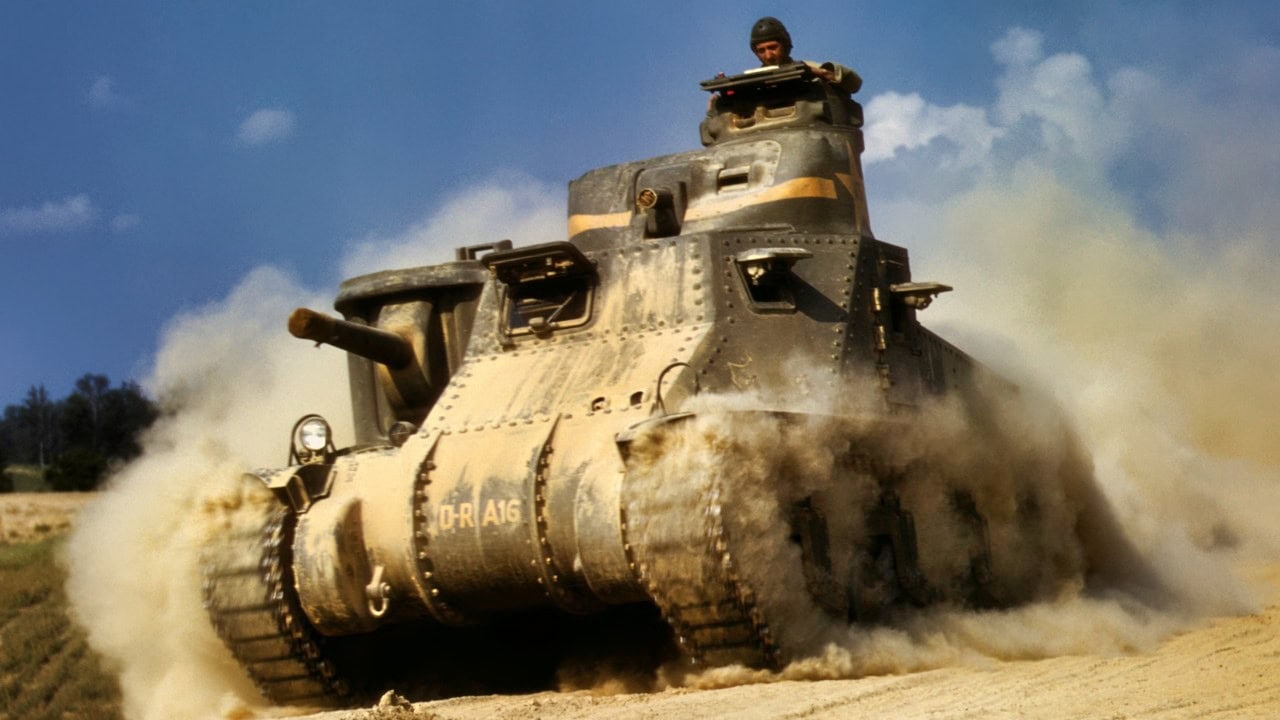
M3 Grant Lee Tank World War II.
Later, he took over a demoralized, badly beaten II Corps after the Germans routed the Americans at Kasserine Pass, and led them to a final victory in North Africa.
First Motorized Attack in US Military History:
During the Mexican Punitive Expedition of 1916-1917, Patton was a cavalry lieutenant, who was assigned to General Pershing’s command. He was an Olympic athlete and an expert swordsman.
In the spring of 1917, the Americans learned about the whereabouts of General Julio Cardenas, head of Villa’s personal bodyguard—the Dorados, or “Golden Ones.” Moving in automobiles instead of horses, Patton and a small detachment got into a shootout with Cardenas and his men.
In the end, Cardenas was killed, supposedly by Patton himself, and the brash young Lieutenant carved a notch in his famous ivory-handled Colt .45s. He lashed Cardenas to the hood of his car and returned it and the general’s body to Pershing’s headquarters. It was the first motorized attack in US military history.
Patton’s Seventh Army In Sicily, And Controversy:
The Allied invasion of Sicily, also known as the Battle of Sicily and Operation Husky, was a major campaign of World War II in which Allied forces invaded the Italian island of Sicily in July 1943 and took it from the Axis forces defended by the Italian 6th Army and the German XIV Panzer Corps.
Patton commanded the US Seventh Army, and British General Bernard Montgomery commanded the British Eighth Army.
The advance was slowed by narrow mountainous roads and flexible German defense. Patton, while supposedly protecting Montgomery’s left flank, disobeyed orders and swung westward and took the city of Palermo.

‘Cobra King’ on Rose Barracks in Vilseck, Germany, today. During the Battle of the Bulge the tank and its crew led an armor an infantry column that relieved the 101st Airborne Division at Bastogne.
It essentially split the island in two and set up a race between the two allied generals to Messina to cut off the retreating Germans. Patton’s troops entered the city first, followed closely by the British.
The Slapping Incident Was A Huge Blemish On Patton’s Career:
But the campaign was marred with controversy. Patton, while visiting wounded men in the hospital, encountered two soldiers in different incidents suffering from battle fatigue, today known as PTSD.
He slapped them with his gloves, and the second soldier, after he slapped him, Patton threatened to shoot him with his Ivory-handled Colt pistol. When the news broke, the reaction was divided between Congress and the Army, as, at that time, soldiers suffering from that were thought to be cowardly.
Eisenhower ordered him to apologize to the soldiers and the medical staff.
The D-Day Invasion, Subterfuge And Fame With The Third Army:
Eisenhower used Patton’s behavior to keep him on the sideline at first, as a decoy in Operation Fortitude, sending faulty intelligence to German agents that Patton was leading a fictitious Army Group during Operation Overlord, the Allied invasion of Europe.
The invasion was expected to take place in the Pas de Calais area. And the Germans bought it hook, line, and sinker. Even in the immediate aftermath of D-Day, the Germans initially believed it to be a diversionary attack.
It wasn’t until August 1 that the Third Army was activated, and together with the First Army, became the 12th Army Group under General Omar Bradley, who had always been a subordinate to Patton, did get a field command in France.
The Third Army under Patton’s leadership executed one of the most rapid and brilliant campaigns in modern history, advancing across France, moving farther and faster than any other army at the time. They traveled 150 miles in 19 hours at one point, leaving German defenders completely on their heels.
Using the Germans’ blitzkrieg tactics, his forces swept eastward to Le Mans, closed the Falaise Gap, where German forces in the West were encircled, and moved 475 miles to the Meuse River, where a lack of logistics and fuel slowed their advance before the fortified cities of Nancy and Metz. The weather also turned bad and slowed Allied advances across the Western Front.
The Battle Of The Bulge And Turning An Army 90 Degrees:
The Germans’ Ardennes Offensive, known as the Battle of the Bulge, was Patton’s finest hour. Well before other Allied leaders recognized it for what it was, (they thought it was merely a spoiling attack), Patton saw it and immediately had his staff begin planning for a pivot north.
Indeed, he was convinced the Germans would attack in the First Army area. On November 25 he wrote in his diary, “First Army is making a terrible mistake leaving the VIII Corps static, it is highly probable that the Germans are building up east of them.”
The day before the German attack on December 16th, he told his staff, “I want you, gentlemen, to start making plans for pulling the Third Army out of its eastward attack, change the direction ninety degrees, moving to Luxembourg and attacking north.”
When Allied Supreme Commander Dwight Eisenhower held a crisis meeting on December 19, 1944, Patton promised and then delivered decisive action, pivoting his entire Third Army of over 250,000 men and hundreds of tanks, in terrible weather conditions.
Patton stunned all in the room by announcing,“I can attack with three divisions in forty-eight hours.”
Pivoting The Third Army From The Saar To The Ardennes:
It was an outstanding example of operational control of an Army, pivoting Third Army from a campaign in the Saar on the German border, turning 90 degrees and attacking the German flank of the Bulge.
This attack occurred during the worst winter in over 50 years.
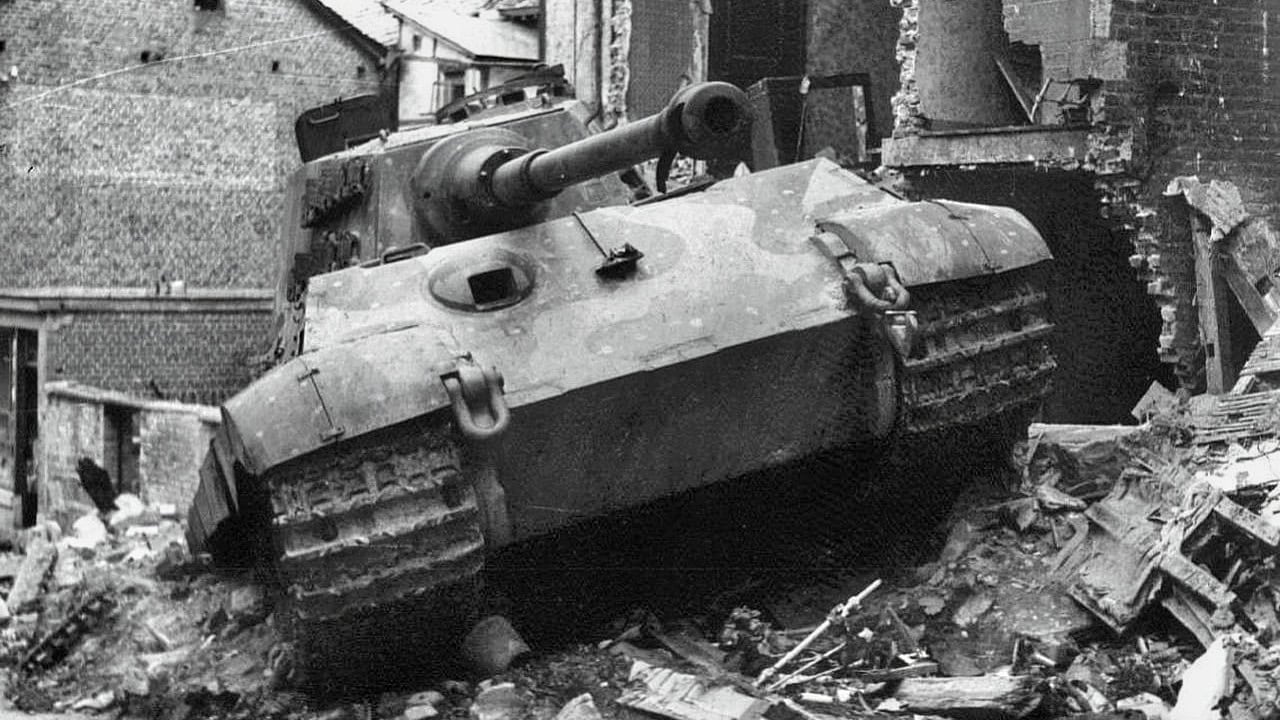
King Tiger Tank Battle of the Bulge.

Map showing the swelling of “the Bulge” as the German offensive progressed creating the nose-like salient during 16–25 December 1944.
His troops of the 4th Armored Division broke the siege of Bastogne, allowing vital supplies to reach the 101st Airborne and allowing the evacuation of the wounded. By January 16th, his troops took Houfalize and sealed off the Bulge.
It was his finest hour and showed the value of intelligence, prior planning, and superb operational control. No other US commander could have accomplished that in December 1944.
The Germans’ View Of Patton:
Of all the Allied commanders, German military leaders generally regarded General Patton as the most aggressive, skilled, and dangerous Allied armored commander.
They feared his rapid, “blitzkrieg” tactics and admired his ability to take risks and achieve large successes, often viewing him as the “American Guderian”. German general Günther Blumentritt called Patton the most aggressive Panzer general of the Allies, whose operations closely matched German concepts of classical command.
His aggressive armored tactics mostly mirrored their own. The Germans respected Patton because his use of armor and mastery of a combined-arms approach were similar to the German blitzkrieg.
General George S. Patton’s quote remains as relevant today as it was more than 80 years ago. And the new command of the US military has continued that philosophy of the citizen-soldier, and that soldier is the Army.
About the Author: Steve Balestrieri
Steve Balestrieri is a National Security Columnist. He served as a US Army Special Forces NCO and Warrant Officer. In addition to writing on defense, he covers the NFL for PatsFans.com and is a member of the Pro Football Writers of America (PFWA). His work has been regularly featured in many military publications.