
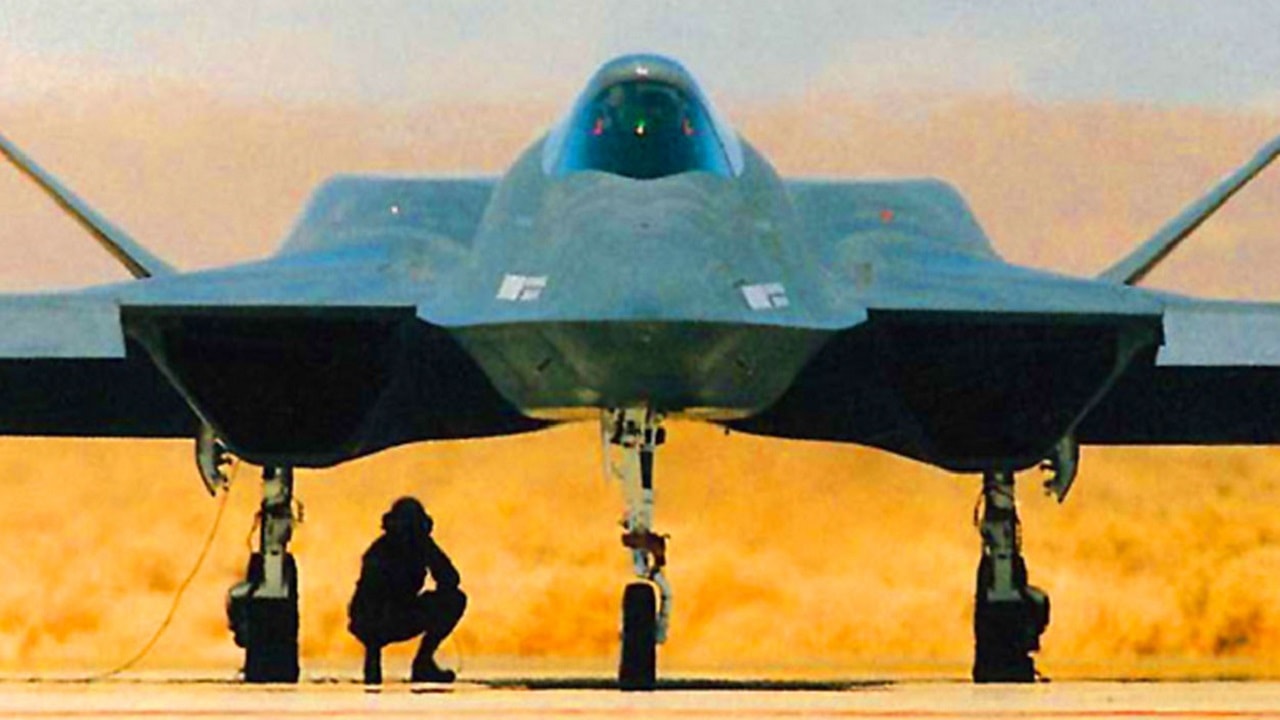
On April 23, 1991, Secretary of the Air Force Donald Rice announced that the Lockheed YF-22 had won the Advanced Tactical Fighter competition, and the Northrop YF-23 Black Widow II went from contender to museum piece in a single press conference. The flight tests had confirmed Northrop’s own predictions: the YF-23 was stealthier and faster, while the YF-22 was more agile, and the Air Force took the agile one. Thirty-five years later, with the F-22 fleet aging toward retirement, the Pentagon paying billions for the long-range stealth that the loser offered in 1991, and Northrop’s new F/A-XX concept drawing instant YF-23 comparisons, the counterfactual deserves a serious answer rather than a nostalgic one. If the Black Widow had won, the Air Force that exists today would be different in doctrine, in geography, and above all in its industrial base.
April 23, 1991: Donald Rice Picks The YF-22 Over The YF-23
The Advanced Tactical Fighter program began in 1981 as the answer to the MiG-29, the Su-27, and whatever the Soviets built next, demanding three things no fighter had combined: supercruise, stealth, and superior agility.
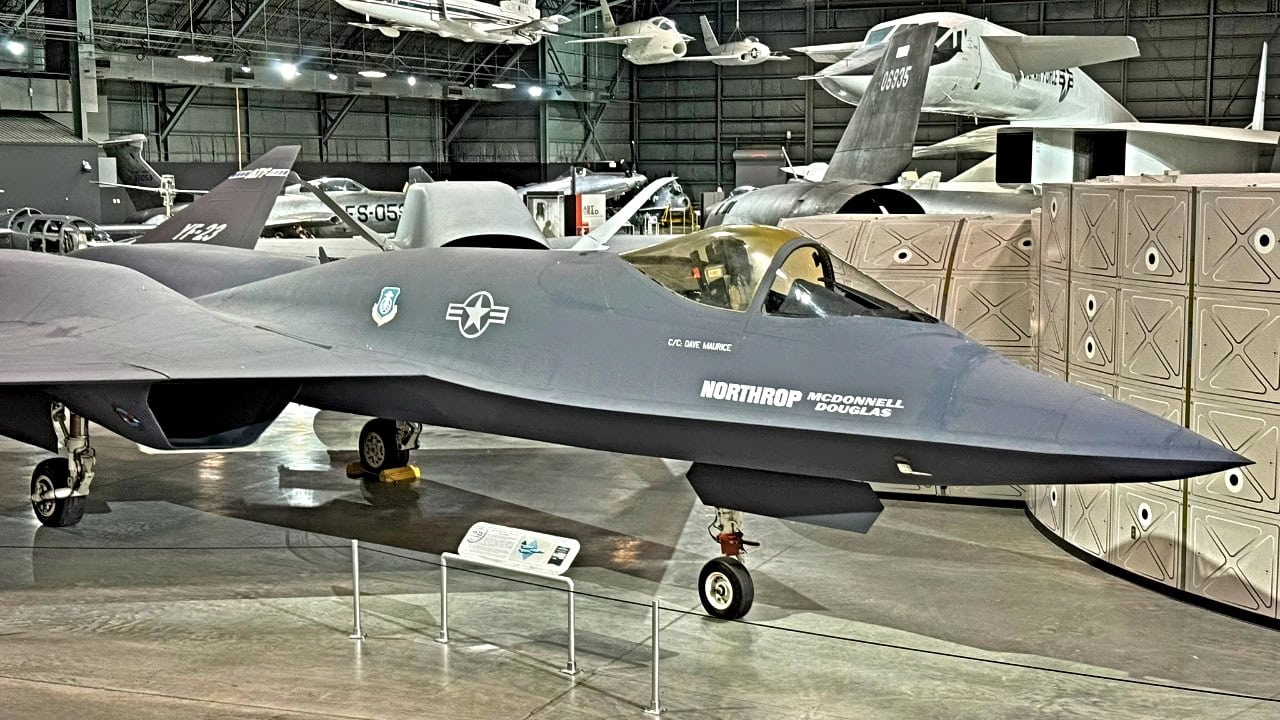
YF-23 Stealth Fighter. Image taken by Harry J. Kazianis for 19FortyFive.
Two teams reached the fly-off. Lockheed, with Boeing and General Dynamics, built the YF-22. Northrop, with McDonnell Douglas, built the YF-23 — two prototypes, the gray PAV-1 nicknamed Black Widow II and the darker PAV-2 known as Gray Ghost.
The contractor proposals were submitted by December 1990, and Rice’s April announcement selected the Lockheed airframe and Pratt & Whitney’s YF119 engine together, with the official record stating that the winners were rated higher on technical merits, judged to be lower risk, and credited with stronger program management.
However, the stated criteria carried an unstated context that has fueled the argument ever since.
Northrop was hauling the B-2 program’s reputation for secrecy and runaway cost. McDonnell Douglas was poisoned by the A-12 Avenger disaster, the Navy’s stealth program whose collapse became the defining procurement scandal of the era.
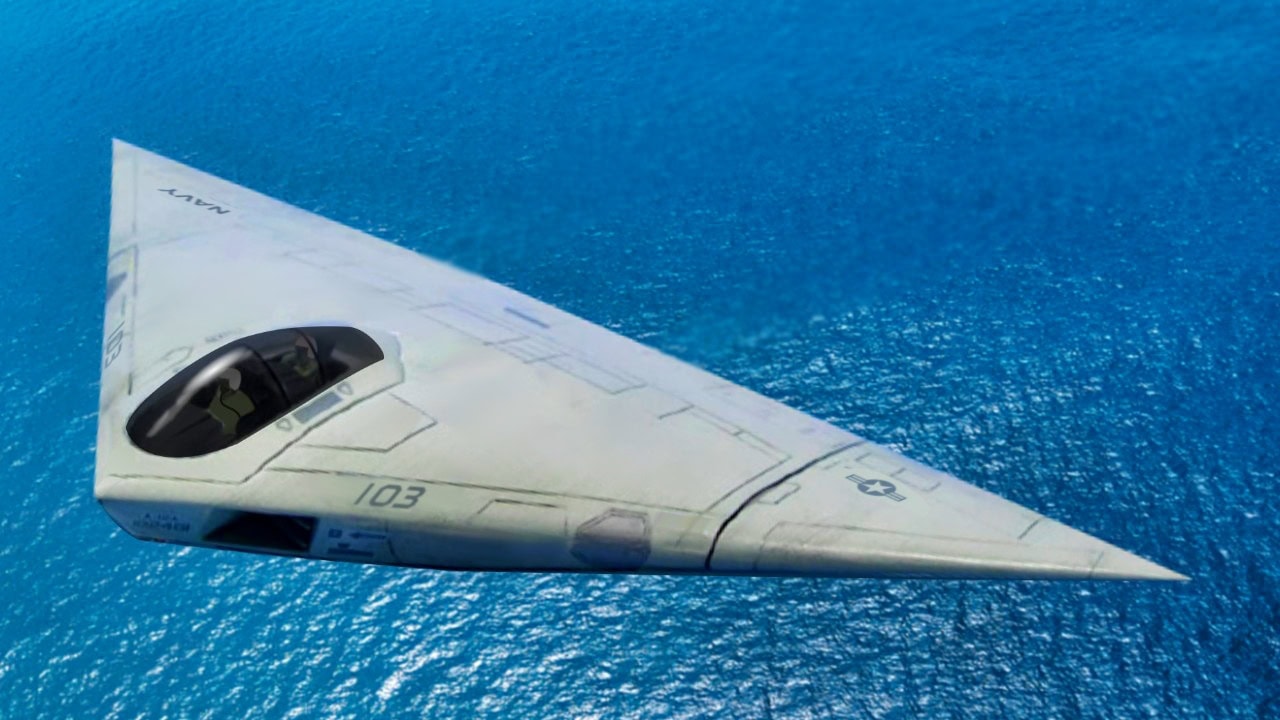
A-12 Avenger II. Image Credit: Creative Commons.
The Air Force was not only choosing an airframe; it was choosing which industrial team it trusted with a thirty-year program, and the Lockheed team looked like the safer marriage.
Black Widow II And Gray Ghost: The Stealthier, Faster Airplane That Lost
The airplane that was lost was extraordinary, and its numbers still read that way. The YF-23 demonstrated speeds of Mach 2.25 with a 1.36 thrust-to-weight ratio, and its supercruise — sustained supersonic flight without afterburner — edged the YF-22 at Mach 1.6-plus against Mach 1.58, with better range and a higher ceiling on top. The shape told the philosophy: a diamond wing, two splayed V-tails replacing four conventional surfaces, and no thrust-vectoring nozzles, because Northrop bet the future on never being seen rather than out-turning anyone who saw you.
The most revealing engineering choice sat at the back. Northrop buried the engine exhausts in deep troughs atop the aft deck, lined with transpiration-cooled tiles, a design that its own thermal engineers later explained shielded the aircraft from horizontal and look-up infrared threats by hiding the hot section entirely — stealth carried into the infrared spectrum at the cost of weight and complexity.
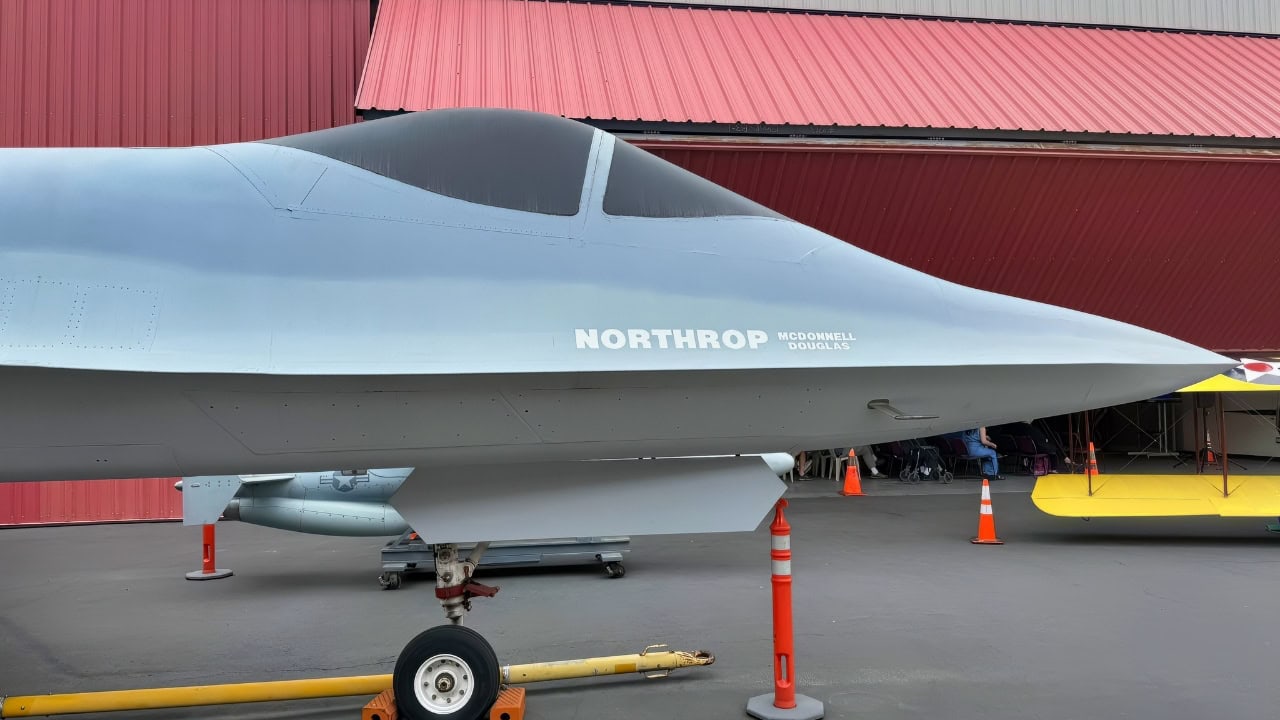
YF-23 Black Widow II 19FortyFive Image Taken By Harry J. Kazianis.
Lockheed made the opposite trade, accepting a hotter, more visible aft end in exchange for the vectoring nozzles that let the YF-22 dance at high angles of attack. Both teams understood the stakes the same way; a Northrop program manager briefed in 1986 that either ATF would hold the kind of advantage over the F-15 that the Eagle held over a blimp. The question was which advantage the Air Force wanted more.
Why The Air Force Chose The Raptor: Risk, Flight Hours, And The Dogfight
The Air Force wanted the dogfight. The YF-22 flew more hours and more sorties during the demonstration phase, performed its high-alpha thrust-vectoring displays for the cameras, and presented itself as the more complete, lower-risk package.
Northrop made a calculated decision not to demonstrate extreme agility, trusting the source selection to weigh stealth and speed as the specification implied, and the gamble failed. A fighter force raised on Vietnam’s lessons and the cult of the merge looked at two airplanes and picked the one that flew like a fighter pilot’s fighter.
Indeed, the choice was defensible on every ground available in 1991. The risk ratings were real, the program-management concerns were real, and nobody could yet prove that within-visual-range combat was dying. The Air Force chose with the evidence it had. The interesting question is what the evidence of the next thirty-five years says about the road not taken.
The F-23 Air Force: Beyond Visual Range Doctrine Thirty Years Early
Start with doctrine, because the verdict is in. In the decades since the decision, essentially every air-to-air kill by a modern Western air force has come beyond visual range, decided by sensors, stealth, and missile reach rather than turning circles.
The F-22’s celebrated thrust vectoring has never been needed in combat. The air war the ATF was built for turned out to be the YF-23’s war: detect first, shoot first, leave before the other side understands what happened.

YF-22. Image Credit: Creative Commons.
An F-23 Air Force would have institutionalized that philosophy a generation early. The training, the tactics, the weapons-development priorities that flow from an airframe optimized for stealth, speed, and standoff would have pointed the fighter force toward the future it eventually reached anyway, without the doctrinal detour through agility worship. Furthermore, the stealth-first bet would have compounded: a service flying the stealthiest possible fighter invests in the radars, missiles, and mission systems that exploit invisibility, the exact portfolio the Air Force now races to build for its sixth-generation programs.
The Pacific Problem: Range, Supercruise, And The China Fight
Geography delivers the second verdict. The F-22’s known limitations today are range and persistence — short legs that chain the Raptor to a tanker bridge across Pacific distances, the single deficiency that most shapes its marginal relevance to a Taiwan fight, and that drove the range requirements of the F-47 program. The Air Force keeps all 184 of its remaining Raptors precisely because nothing has replaced them, while conceding, in every next-generation requirements document, that the replacement must fly farther.
The YF-23 was the longer-ranged, faster, higher-flying competitor. A fleet of F-23s would still need tankers in the Pacific; no fighter of that era escapes the geography. Nonetheless, the margin matters: more internal fuel, more efficient supercruise, and a cooler, stealthier signature describe an aircraft that ages into the China problem more gracefully than the one the Air Force bought. The 1991 decision was optimized for a European knife fight that never came. The 2026 problem is an oceanic sniper duel, and the Air Force rejected the sniper.
Northrop, Lockheed Martin, And The Fighter Monopoly That Might Never Have Been
The deepest consequences were industrial, and they compound to this day. Lockheed’s ATF victory positioned it to win the Joint Strike Fighter a decade later, and the two wins together made Lockheed Martin the only American company building fighters at scale — a monopoly so complete that Washington now treats preserving a second fighter house as a matter of policy, a consideration that hovered over the F-47 award to Boeing. McDonnell Douglas, the loser’s partner, never recovered its combat-aircraft standing and was acquired by Boeing by 1997. Northrop exited the fighter business it had inhabited since the P-61 and survived as a bomber and systems house.
Flip the 1991 decision, and the entire structure shifts. Northrop enters the 1990s as the builder of America’s frontline fighter, with the production revenue, the engineering pipeline, and the political constituency that status confers. The JSF competition unfolds in a different field, and whatever its outcome, the consolidation that left one fighter prime will probably never reach its terminal state. The United States enters the 2020s with two or three living fighter houses, rather than spending F-47 money partly to resurrect one. However, the counterfactual branches, the industrial-base crisis that policymakers now treat as a national vulnerability, trace directly back to Rice’s podium.
The Honest Caveats: EMD Risk And The 187 Guillotine
The counterfactual has limits worth stating plainly. The YF-23 was the less mature prototype, and the risk ratings were not invented; a full F-23 engineering and manufacturing development program might have run longer and cost more than the F-22’s did, and the F-22’s own development was hardly smooth. The transpiration-cooled aft deck alone was a manufacturing gamble at production scale.
Moreover, the guillotine that fell on the Raptor would almost certainly have fallen on the Black Widow. The F-22’s production cap of 187 aircraft was a post-Cold War budget decision driven by the Soviet collapse and the wars America actually fought in the 2000s, none of which required a high-end air-superiority fighter. An F-23 fleet would have faced the same Secretary Gates, the same Iraq and Afghanistan bills, and most likely the same truncation.
The counterfactual buys a better 187 jets, not more of them. The difference is that those 187 would today be the faster, stealthier, longer-legged airframe as the Pacific competition peaks.
From The B-21 Raider To F/A-XX: The YF-23 Won The Argument
The final verdict belongs to the present, because Northrop lost the fighter and won the philosophy.
The B-21 Raider — Northrop’s aircraft, now in production and headed for service in 2027 — is the stealth-first, range-first, signature-management-above-all design language of the YF-23 carried to its logical scale. The requirements driving the F-47 and the Navy’s F/A-XX — range, persistence, all-aspect stealth, beyond-visual-range lethality — read like the YF-23’s specification sheet with better computers. And when Northrop unveiled its F/A-XX concept this spring, the aviation press drew YF-23 comparisons almost immediately, because the lineage is visible in the planform.
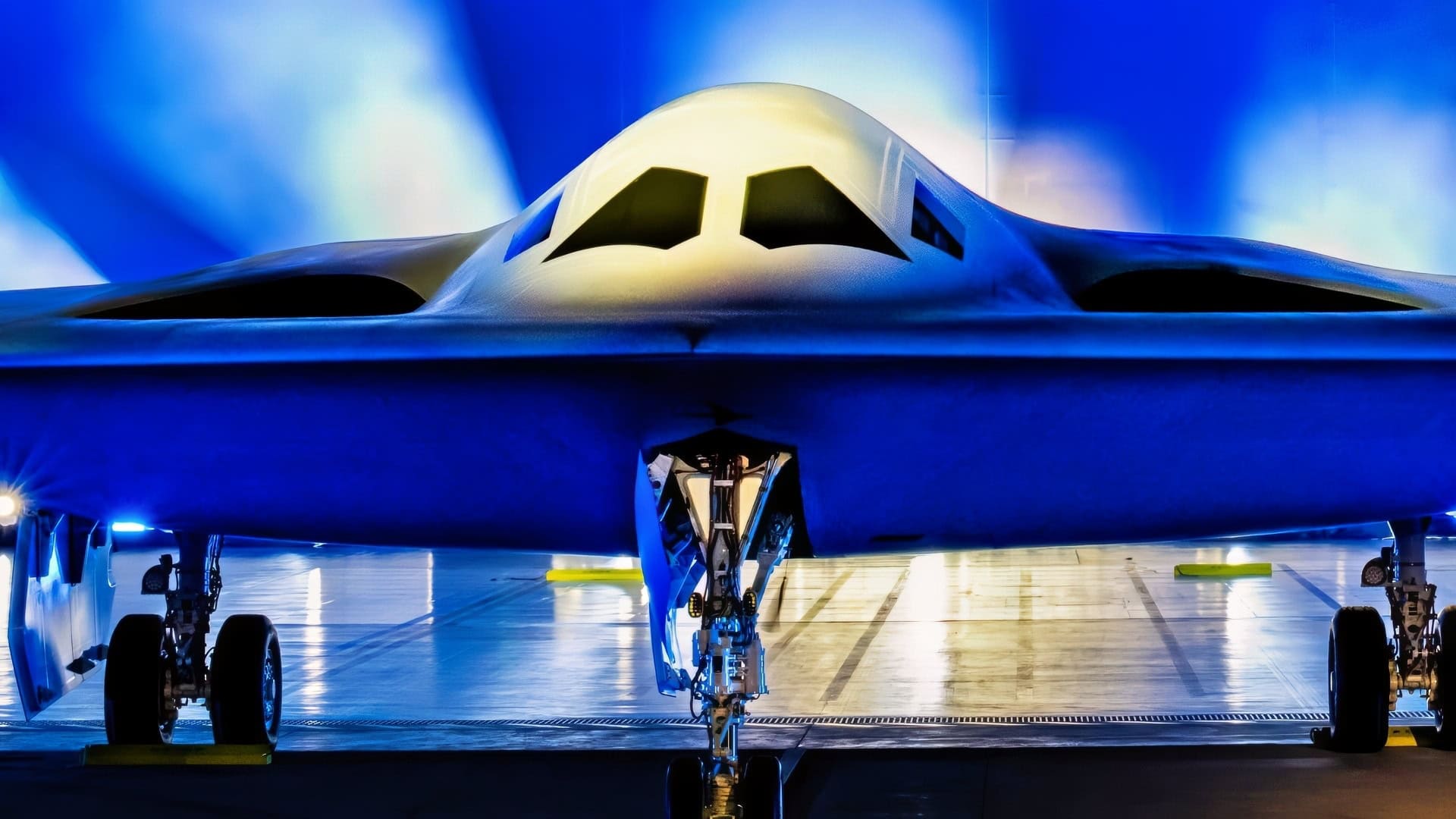
A B-21 Raider is unveiled at Northrop Grumman’s manufacturing facility on Air Force Plant 42 in Palmdale, California, Dec. 2, 2022. The B-21 will be a long-range, highly survivable, penetrating strike stealth bomber capable of delivering both conventional and nuclear munitions. (U.S. Air Force photo by Airman 1st Class Joshua M. Carroll)
The Air Force made a defensible choice in 1991 and got a magnificent airplane out of it; nothing here diminishes the Raptor, which remains the finest air superiority fighter ever fielded. The harder truth is that the service chose the last great fighter of the war that was ending over the first great fighter of the war that is coming, and it has spent the past decade paying premium prices to buy back the qualities it turned down.
Two YF-23 airframes sit in museums in Ohio and California, the only physical evidence of the other American air force. I went out to see them both last year, and some of the pictures in this essay are from those visits.
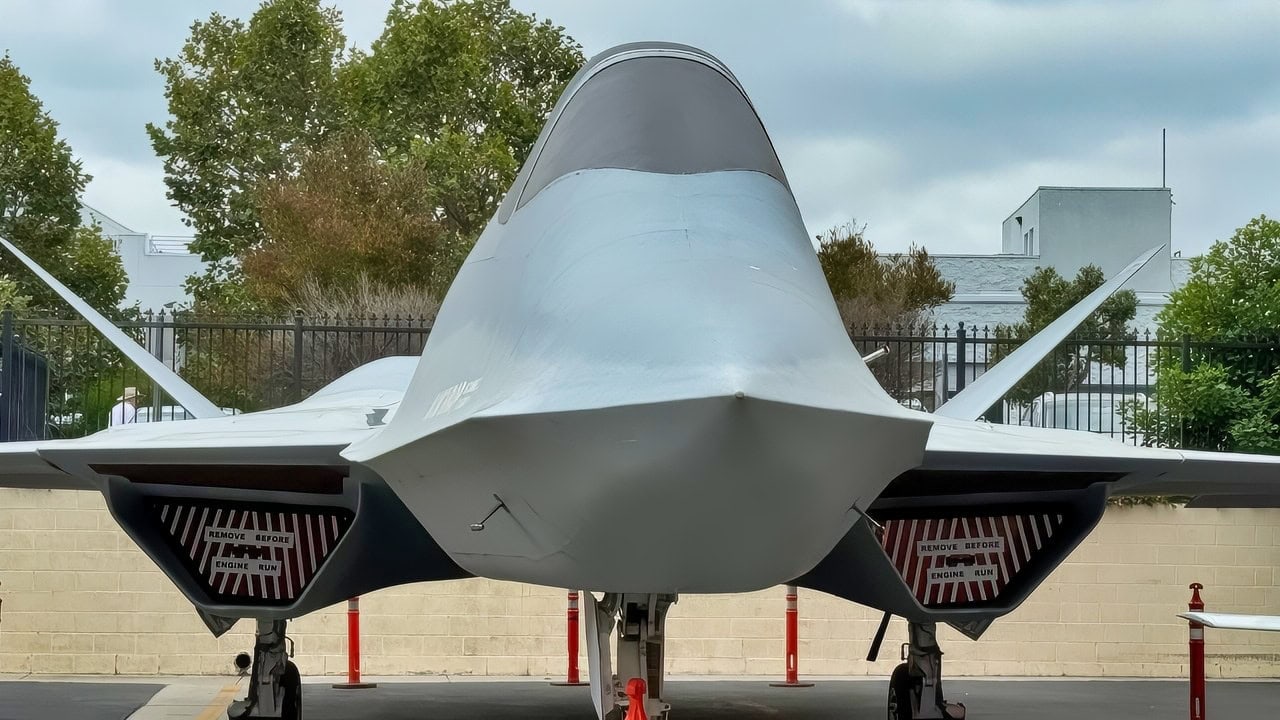
YF-23 at Western Museum of Flight. Image: 19FortyFive.com
The argument they embodied does not sit anywhere. It is flying off Northrop’s drawing boards right now, wearing a new designation, waiting to win the competition its grandfather lost.
About the Author: Harry J. Kazianis
Harry J. Kazianis (@Grecianformula) was the former Senior Director of National Security Affairs at the Center for the National Interest (CFTNI), a foreign policy think tank founded by Richard Nixon based in Washington, DC. Harry has over a decade of experience in think tanks and national security publishing. His ideas have been published in the NY Times, The Washington Post, The Wall Street Journal, CNN, and many other outlets worldwide. He has held positions at CSIS, the Heritage Foundation, the University of Nottingham, and several other institutions focused on national security research and analysis. He is the former Executive Editor of the National Interest and the Diplomat. He holds a Master’s degree focusing on international affairs from Harvard University.

