
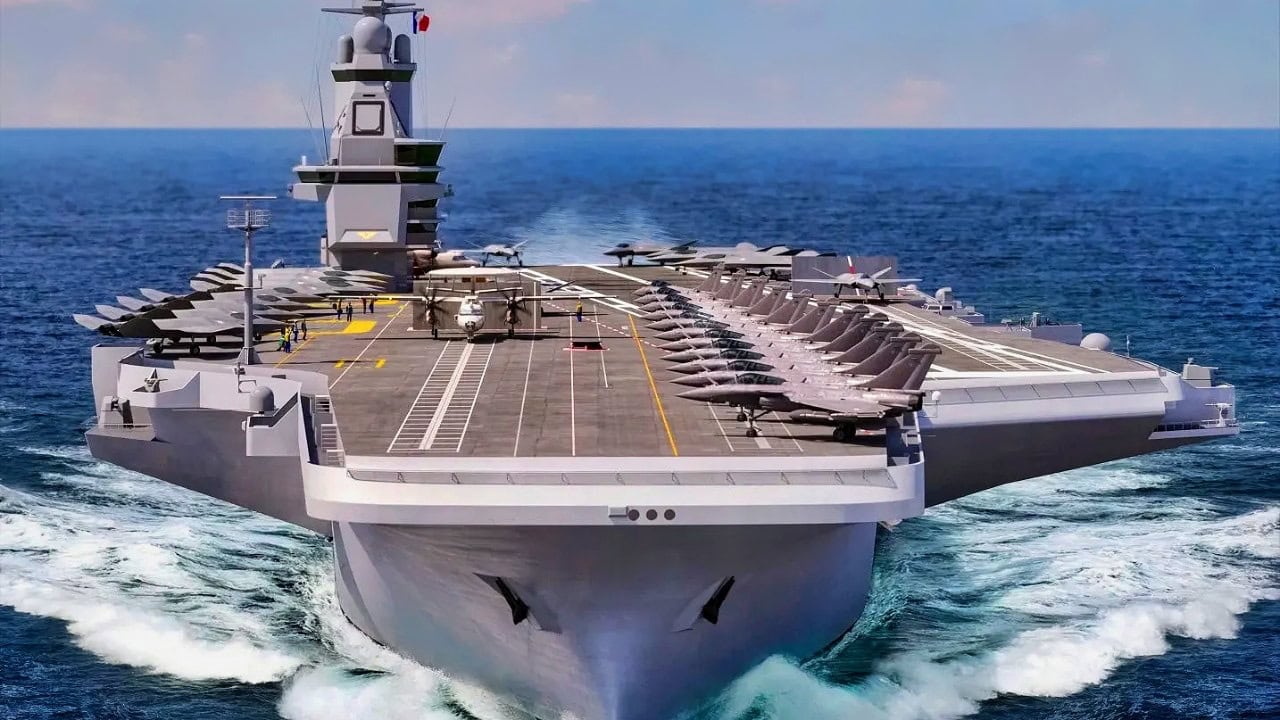
On March 18, President Emmanuel Macron stood beside a model of the largest warship Europe has ever attempted and gave it a name freighted with everything France believes about itself: France Libre, after the government-in-exile through which Charles de Gaulle refused the armistice of 1940. “I wished to place our future aircraft carrier in the lineage of General de Gaulle,” Macron said at the Naval Group yard near Nantes, invoking the spirit of resistance and a will that nothing can stop. The symbolism is doing real work, because the ship it decorates is the most expensive single military decision France has made in a generation — roughly €10 billion for one hull, approved while Europe rearms against Russia, a war burns in the Gulf, and every defense ministry on the continent pleads poverty on ammunition.
The fair question is the one Paris least wants asked: with limited resources, is this a good idea?
The honest answer runs in two directions, and both deserve their full weight.
What Macron Approved: 80,000 Tons, K22 Reactors, And A 2038 Arrival
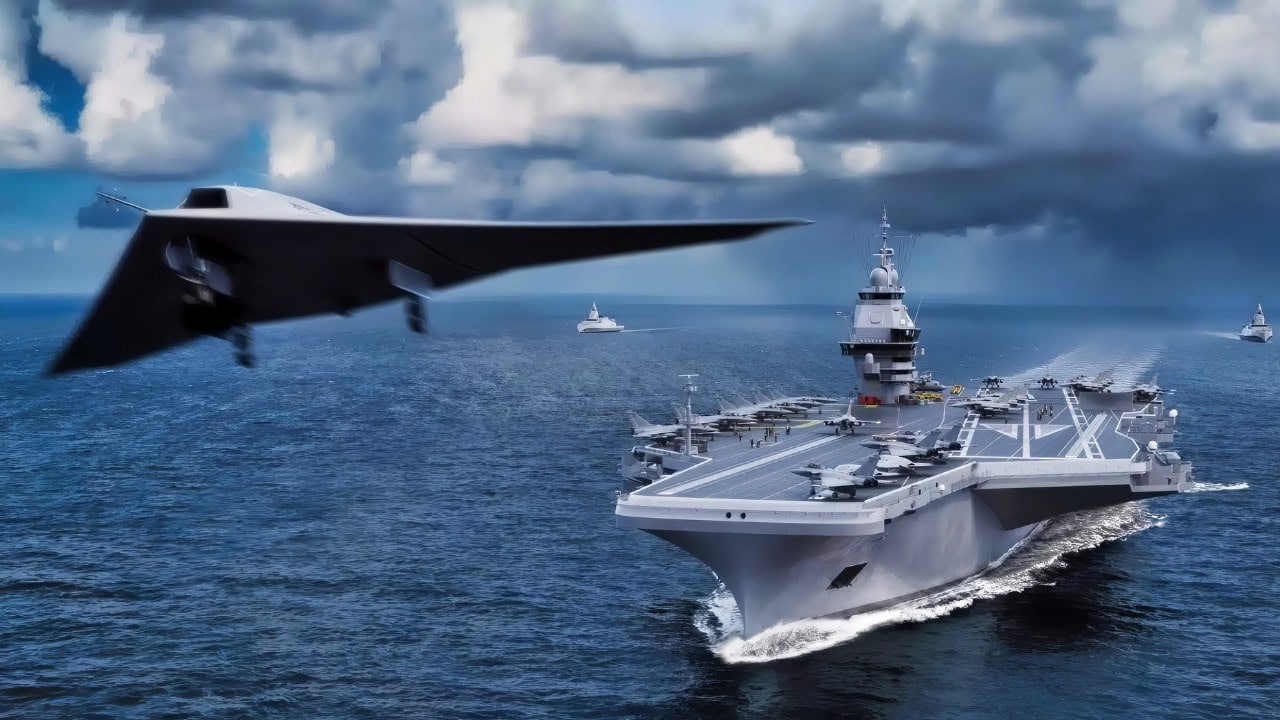
PANG France Nuclear Aircraft Carrier. Image Credit: French Government.
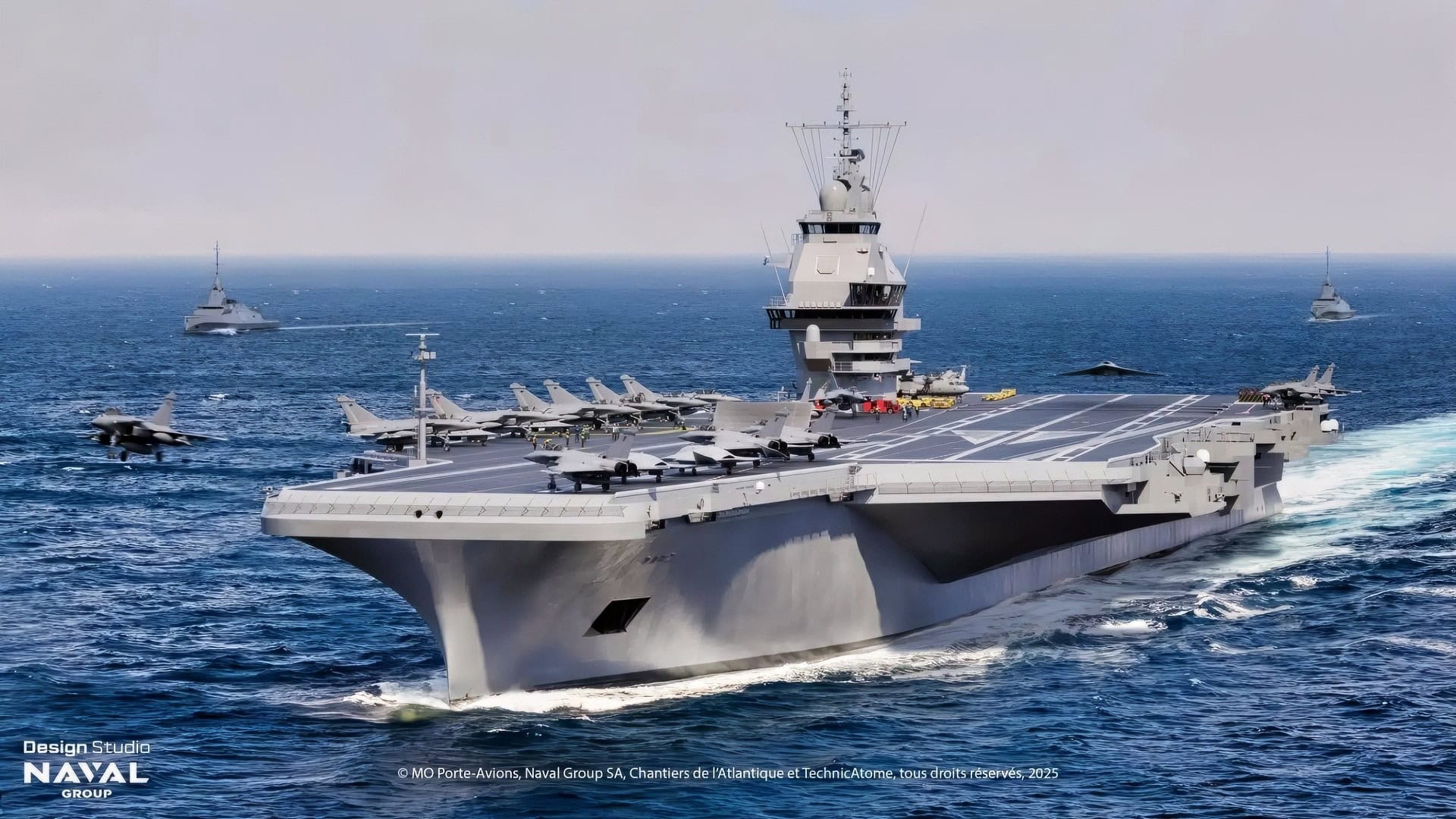
PANG Aircraft Carrier French Navy Photo.
The program Macron green-lit in December — announced, with deliberate theater, in a speech to French forces in the UAE near the Strait of Hormuz weeks before the Iran war began — replaces the Charles de Gaulle with a vessel of an entirely different scale.
The France Libre will displace around 78,000 tons across a 310-meter hull, nearly twice the tonnage of the ship she succeeds and physically larger than Britain’s Queen Elizabeth-class, making her the biggest warship in European history.
Two new-design K22 reactors will drive her; American-supplied electromagnetic catapults will launch her air wing; and the price sits at €10 to €10.25 billion. The schedule runs long: reactor components have been in production since 2025, hull assembly begins at Chantiers de l’Atlantique in 2032, nuclear fueling at Toulon follows in mid-2035, sea trials come in 2036, and commissioning in 2038 — the year the Charles de Gaulle retires — with a 45-year service life beyond that. The industrial machine behind her spans 800 companies and up to 14,000 jobs, with over 90 percent of procurement sourced domestically.
One line in the program documents matters more than any specification: she is planned as a single vessel, with no sister ships.
The Case For France’s Libre: Sovereignty, Deterrence, And A Carrier At War Right Now
The argument for the ship is stronger than its price tag suggests, because France is not really buying a warship; it is buying a position in the world.
France is the only European Union state with nuclear weapons and a nuclear-powered carrier, and the Libre extends that distinction another half century — Macron framed the vessel explicitly as a symbol of independence and military power, and in a decade when American reliability has become Europe’s central strategic anxiety, the autonomy argument has stopped sounding theoretical.
The deterrence layer is concrete rather than rhetorical: the Charles de Gaulle’s Rafales carry the ASMP-A nuclear missile, making the carrier an airborne component of French nuclear forces, and the Libre inherits that role. No other European platform replicates it.
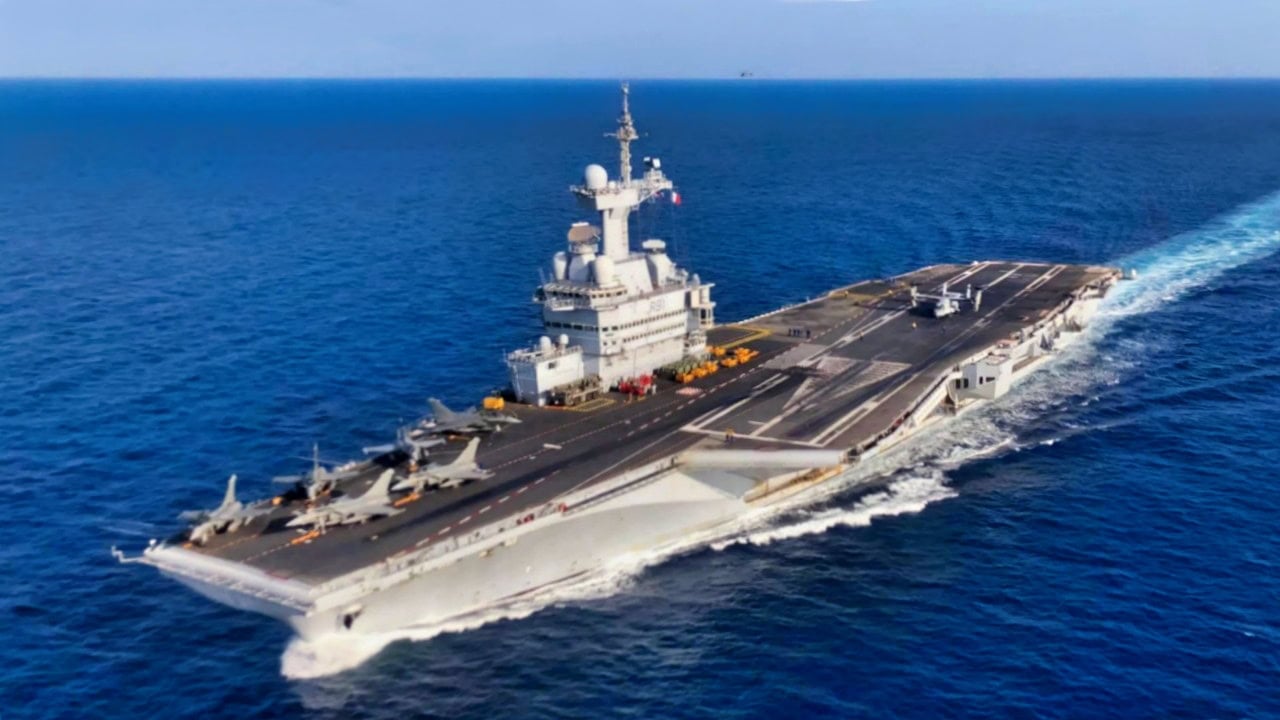
U.S. 5TH FLEET AREA OF OPERATIONS (April 24, 2019) A U.S. Marine MV-22 Osprey assigned to the 22nd Marine Expeditionary Unit sits on the flight deck of France’s Marine Nationale aircraft carrier FS Charles De Gaulle (R 91). This was the second time that Ospreys have landed aboard the French vessel. Marines and Sailors assigned to the 22nd MEU and Kearsarge Amphibious Ready Group are currently deployed to the U.S. 5th Fleet area of operations in support of naval operations to ensure maritime stability and security in the Central region, connecting the Mediterranean and the Pacific through the western Indian Ocean and three strategic choke points. (U.S. Marine Corps photo by Maj. Joshua Smith/Released)
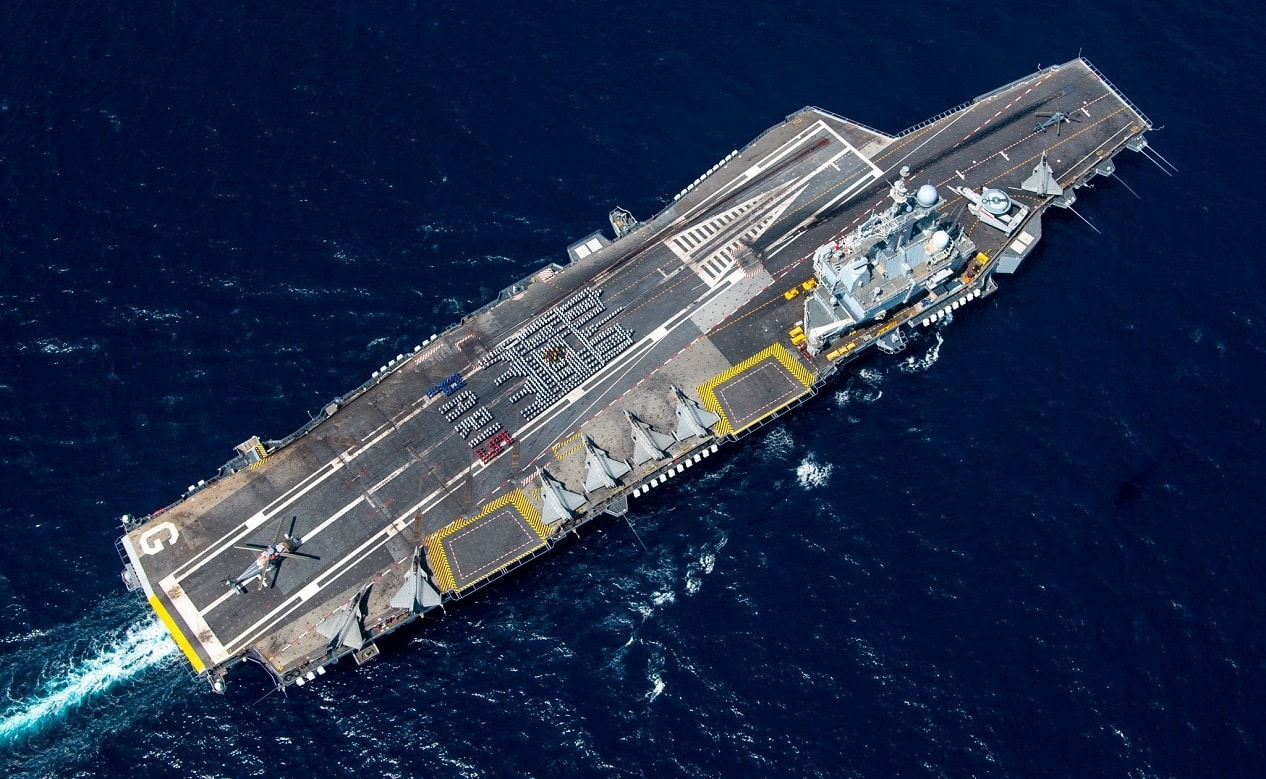
French Aircraft Carrier Charles de Gaulle.
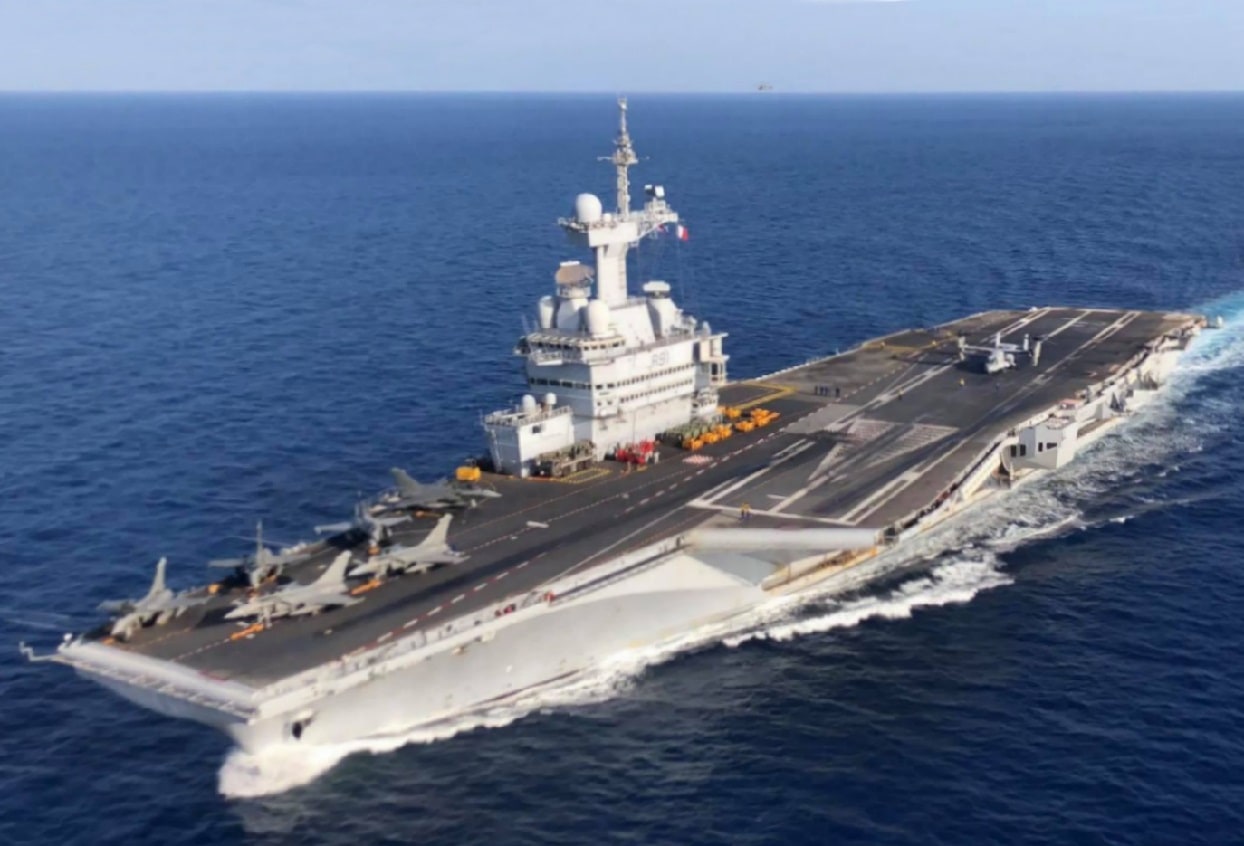
190424-M-BP588-1005 U.S. 5TH FLEET AREA OF OPERATIONS (April 24, 2019) A U.S. Marine MV-22 Osprey assigned to the 22nd Marine Expeditionary Unit sits on the flight deck of France’s Marine Nationale aircraft carrier FS Charles De Gaulle (R 91). This was the second time that Ospreys have landed aboard the French vessel. Marines and Sailors assigned to the 22nd MEU and Kearsarge Amphibious Ready Group are currently deployed to the U.S. 5th Fleet area of operations in support of naval operations to ensure maritime stability and security in the Central region, connecting the Mediterranean and the Pacific through the western Indian Ocean and three strategic choke points. (U.S. Marine Corps photo by Maj. Joshua Smith/Released)
The industrial mathematics also reads better than the headline number. Ten billion euros spread across twelve years of construction is roughly a billion a year — low single digits of the French defense budget — sustaining naval reactor design, catapult integration, and heavy shipbuilding skills that atrophy permanently if unexercised. Furthermore, the case is being argued by events in real time.
The Charles de Gaulle redeployed to the Eastern Mediterranean in March amid the Iran war and has been leading allied escort operations through contested waters since — the only non-American carrier doing genuine work in this conflict, defending allied interests while larger European navies watch from port.
A continent rediscovering hard power has exactly one nation capable of projecting it from the sea, and that nation has decided to keep the capability. On those terms, the decision is not vanity. It is the most coherent expression of French grand strategy in decades.
The Case Against: One Hull, Part-Time Capability, Full-Time Price
The case against begins with the line Paris treats as a footnote. A single carrier is an episodic capability, and France has spent twenty-five years demonstrating it. The Charles de Gaulle’s career has been punctuated by refits measured in years — her mid-life overhaul consumed eighteen months — and during every one of them, France’s carrier force has been zero.
The Libre, billed as a one-ship class, inherits that flaw whole: for roughly a third of any given decade, €10 billion of sovereignty will be sitting in a Toulon drydock while the crises continue on schedule. The United States solves this problem with eleven carriers. Britain solved it, imperfectly, with two. France is buying the world’s finest part-time capability at a full-time price, and the choice was deliberate — a second hull was studied and never funded.
The opportunity cost lands harder in 2026 than it did when the program began. The verdict on European defense from the Ukraine war is unambiguous: the continent’s binding shortages are munitions, ground-based air defense, drones, and the unglamorous enablers, not prestige platforms. Ten billion euros is five or six FDI frigates — and France’s escort fleet is already stretched thin around the carrier it has, or a national munitions stockpile sized for a real war, or the layered air defense the drone era demands.
However compelling the sovereignty argument, every euro in the Libre’s hull is a euro not spent on the deficits Europe’s actual war keeps identifying, and a navy whose single capital ship requires most of the fleet to escort her has structured itself around protecting the investment rather than employing it.
The SCAF (FCAS) Problem: A Carrier Built For An Airplane That Does Not Exist
The biggest risk in the program is parked on its future flight deck.
The France Libre is sized — her catapults, her elevators, her hangar — around the now canceled New Generation Fighter at the heart of SCAF or FCAS, the Franco-German-Spanish sixth-generation program that has spent its entire existence lurching between Dassault and Airbus in disputes over workshare and control. And right now that program has ended.
Rafales will fill the deck in the interim, and upgraded Rafales are formidable; nonetheless, France was committing €10 billion to a hull optimized for the output of Europe’s most troubled aircraft program, and if SCAF can’t be replaced, the largest warship in European history enters service carrying the previous generation’s jet for a meaningful fraction of her 45-year life.
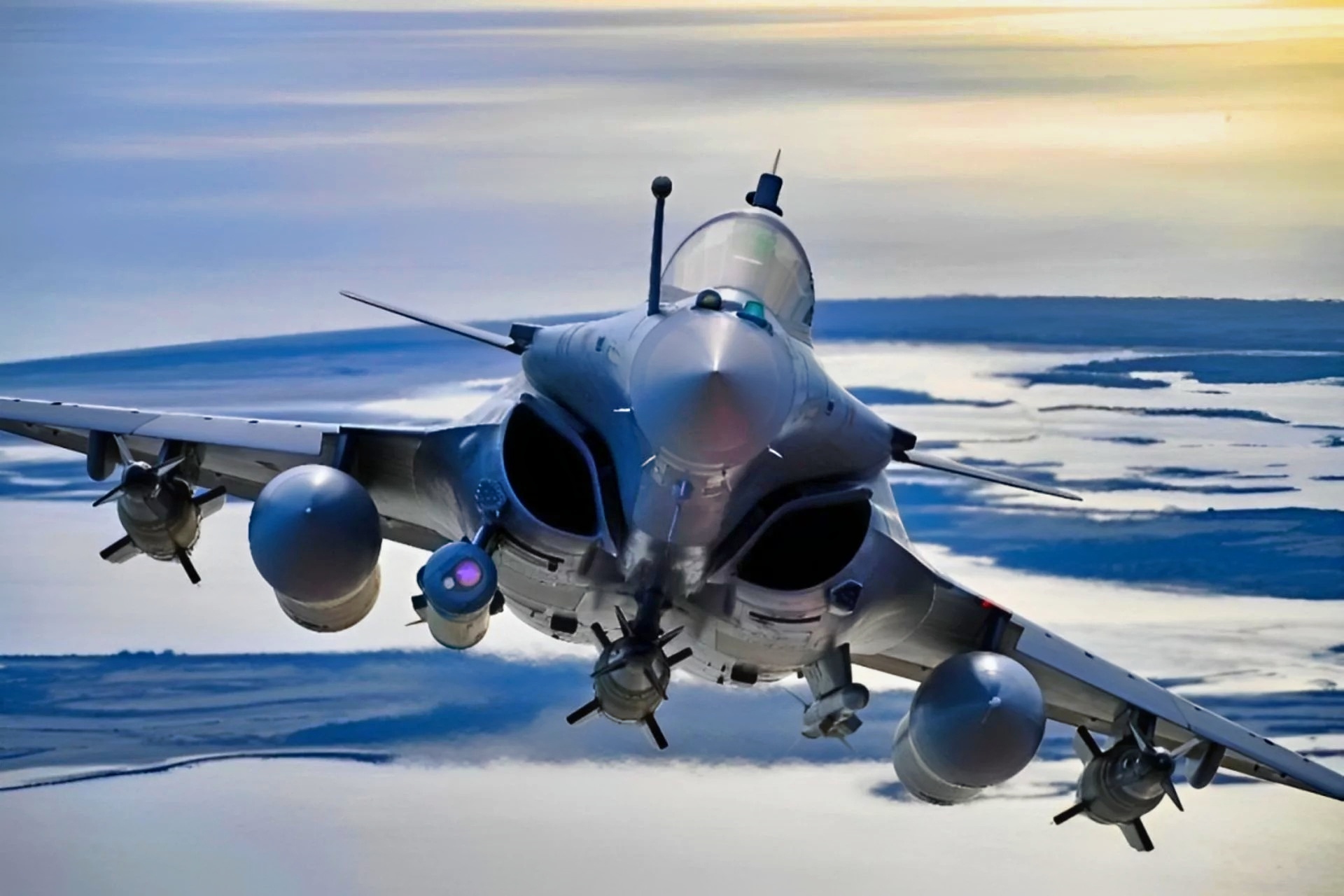
Dassault Rafale Fighter. Image Credit: Creative Commons.
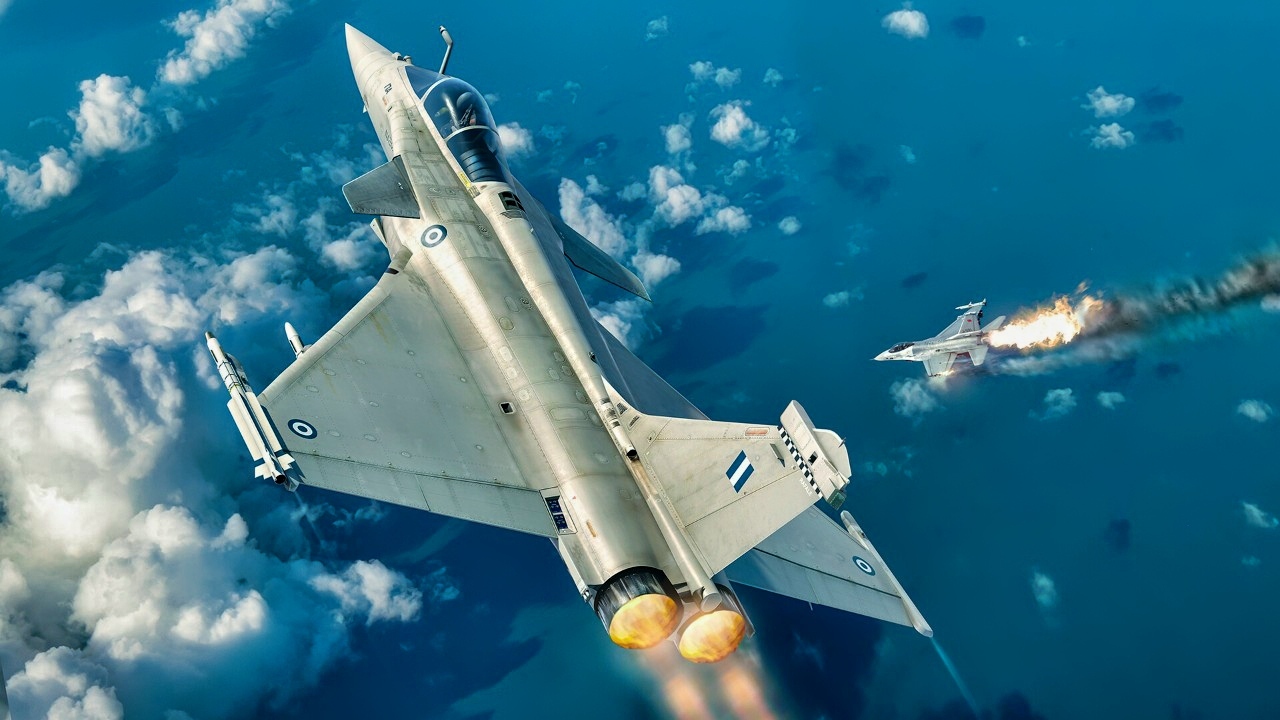
Dassault Rafale Fighter. Artist Created Image/Creative Commons.
The Ford-class, whatever its troubles, was at least built for aircraft that existed.
The Verdict: Build Her, and Admit What One Ship Cannot Do
Weigh both columns honestly, and the answer to the question is yes — conditionally, and for reasons that have little to do with cost-effectiveness. As a pure military investment, the France Libre loses the spreadsheet fight against frigates, missiles, and shells every time.
As a strategic investment — in nuclear deterrence, in industrial capability that cannot be repurchased once lost, in France’s claim to be the European power that still does hard things — she is defensible, and the Charles de Gaulle’s current war service off Iran is a live demonstration of why the capability matters.
The genuine error in the program is not the ship. It is the fleet design around her: one hull, no sister, the Charles de Gaulle’s central weakness, rebuilt at twice the size and triple the cost, guaranteeing that French naval power will keep taking multi-year vacations, announced years in advance, to every adversary with a calendar. France is right that Europe needs a carrier.
France has not yet accepted that a carrier is not a capability — a carrier force is — and that a force of one is a contradiction that France Libre’s magnificent tonnage cannot resolve.
The ship deserves to be built. The strategy deserves a second hull or an honest admission that prestige, not presence, is what €10 billion bought.
About the Author: Harry J. Kazianis
Harry J. Kazianis (@Grecianformula) was the former Senior Director of National Security Affairs at the Center for the National Interest (CFTNI), a foreign policy think tank founded by Richard Nixon based in Washington, DC. Harry has over a decade of experience in think tanks and national security publishing. His ideas have been published in the NY Times, The Washington Post, The Wall Street Journal, CNN, and many other outlets worldwide. He has held positions at CSIS, the Heritage Foundation, the University of Nottingham, and several other institutions related to national security research and studies. He is the former Executive Editor of the National Interest and the Diplomat. He holds a Master’s degree focusing on international affairs from Harvard University.

