
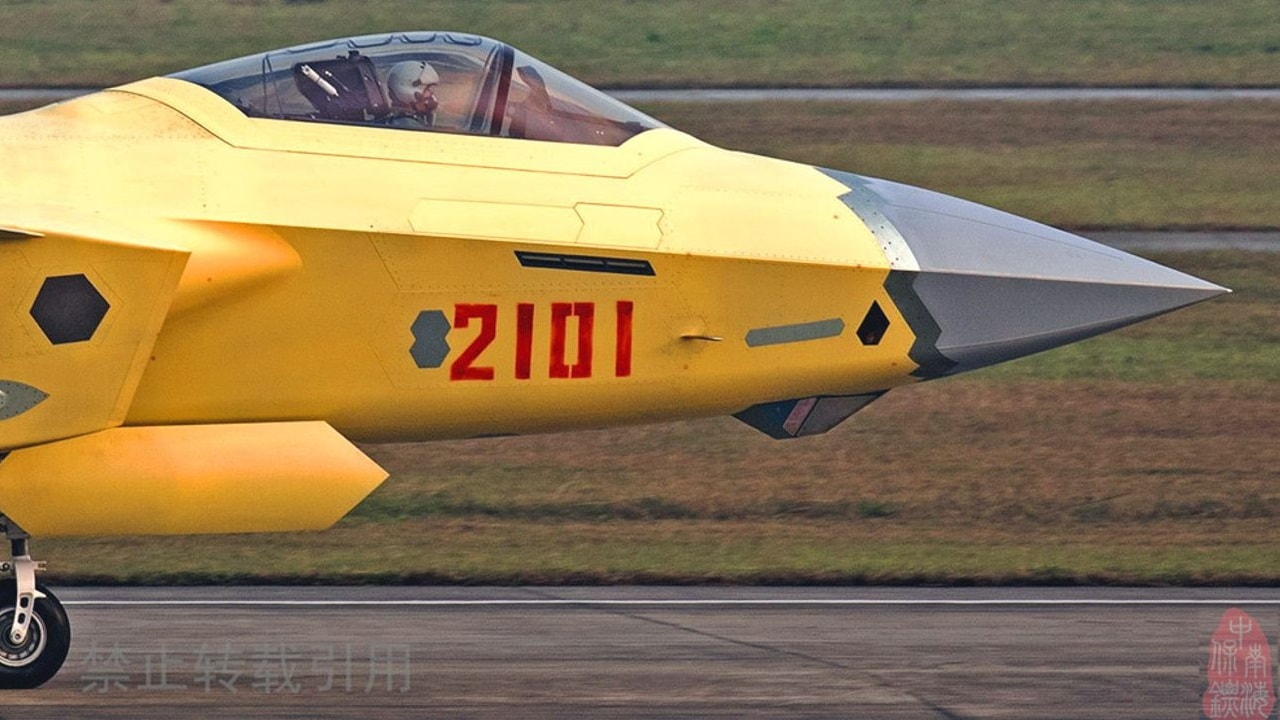
J-20S: Why Did China Build A Two-Seat Stealth Fighter When America Is Going Single-Seat? Both the United States and China have reached the same conclusion about the future of air combat: the fighter that matters most will not be the one firing the missiles, but the one directing a swarm of drones that do.
Where the two superpowers have split is on who sits in that command seat.
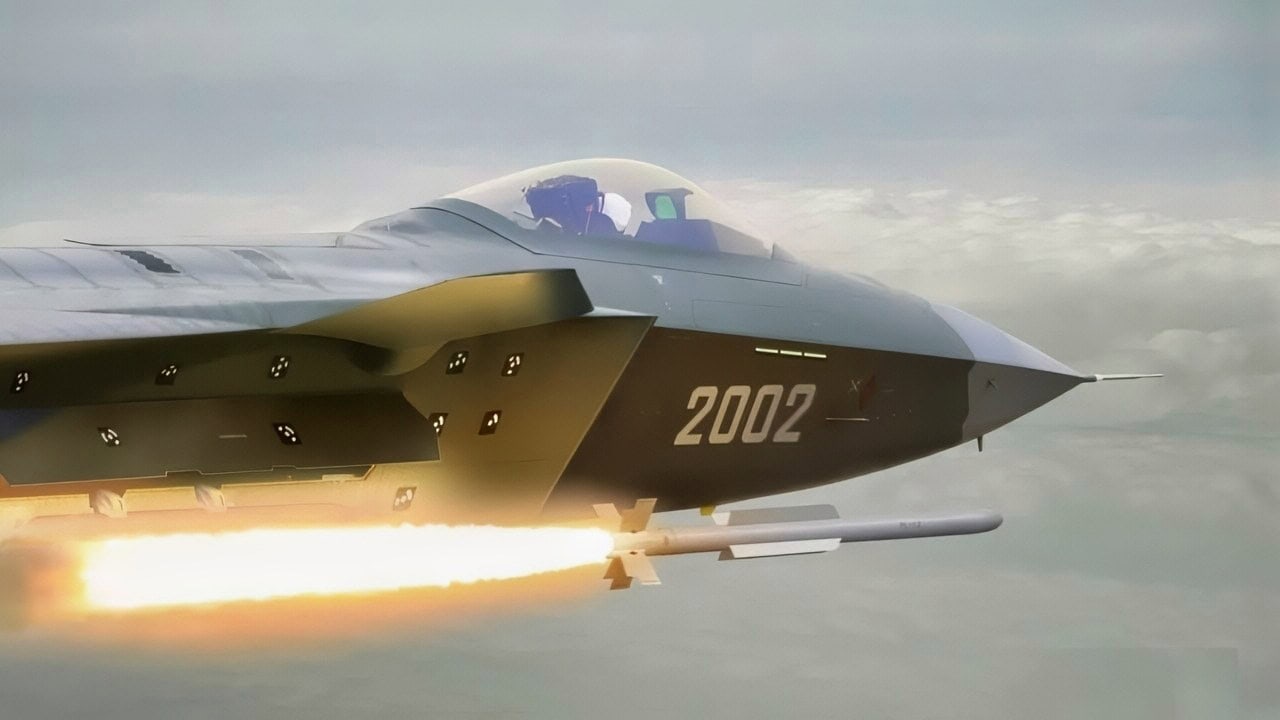
J-20 Mighty Dragon Stealth Fighter
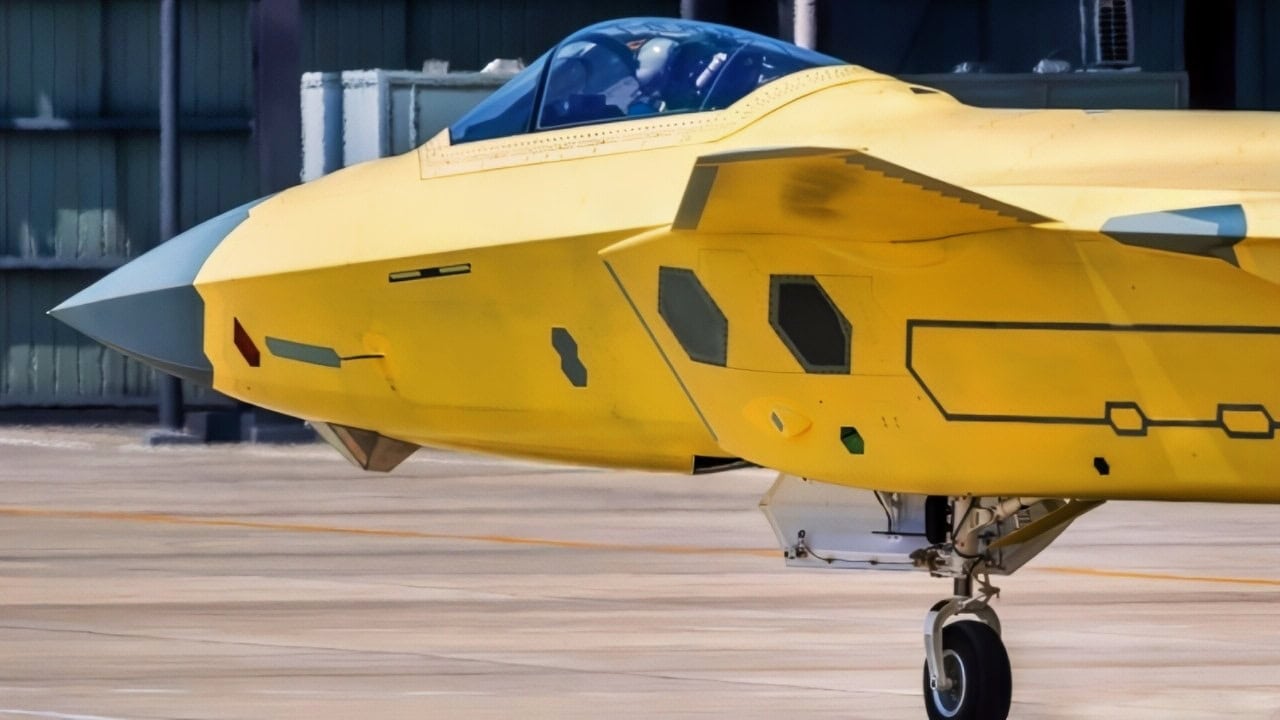
J-20 Fighter in Yellow Paint. Weibo Screenshot.
America is keeping its frontline stealth fighters single-seat and betting that artificial intelligence and sensor fusion can handle the work of managing a drone swarm.
China built the J-20S, the world’s first two-seat stealth fighter, and put a second human being in the back to do that job.
That divergence — not the extra seat itself — is the real story, because it is a live wager on whether a person or an algorithm makes the better swarm commander, and neither side yet knows the answer.
J-20S: What China Actually Built
The J-20S is a tandem-seat variant of Chengdu’s J-20 “Mighty Dragon,” and its significance is a matter of record rather than speculation.
In early July 2025, the PLAAF officially admitted the J-20S into operational service, making it the first fifth-generation stealth fighter anywhere to fly with a tandem crew, and its operational status was confirmed through observations tied to preparations for China’s September 2025 military parade. New images placed the aircraft with the 172nd Air Brigade at Cangzhou. The jet had been observed during test flights since 2021 and was publicly shown in 2024 before entering squadron service.
The detail that matters is what the second seat is for. According to the reporting, the rear cockpit on the J-20S is not intended for training but for advanced operational functions — electronic warfare, drone coordination, and complex tactical data processing.
Adding the second station required lengthening the airframe and rearranging internal systems, and the rear cockpit is fully digitized, giving its occupant access to radar feeds, electronic warfare data, and transmissions from connected drones. This is not a trainer that happens to have combat utility. It is a combat aircraft built from the outset around a two-person crew, which no other stealth fighter in service can claim.
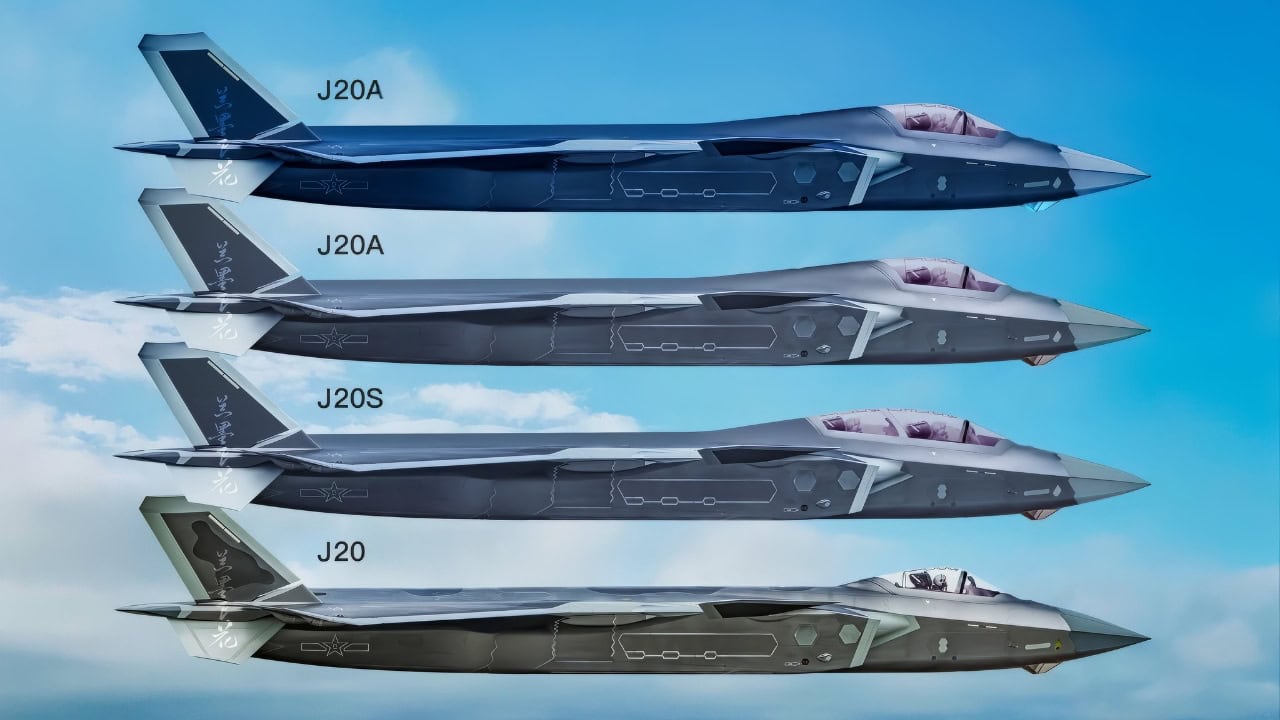
J-20 fighter diagram. Image Credit: Creative Commons.
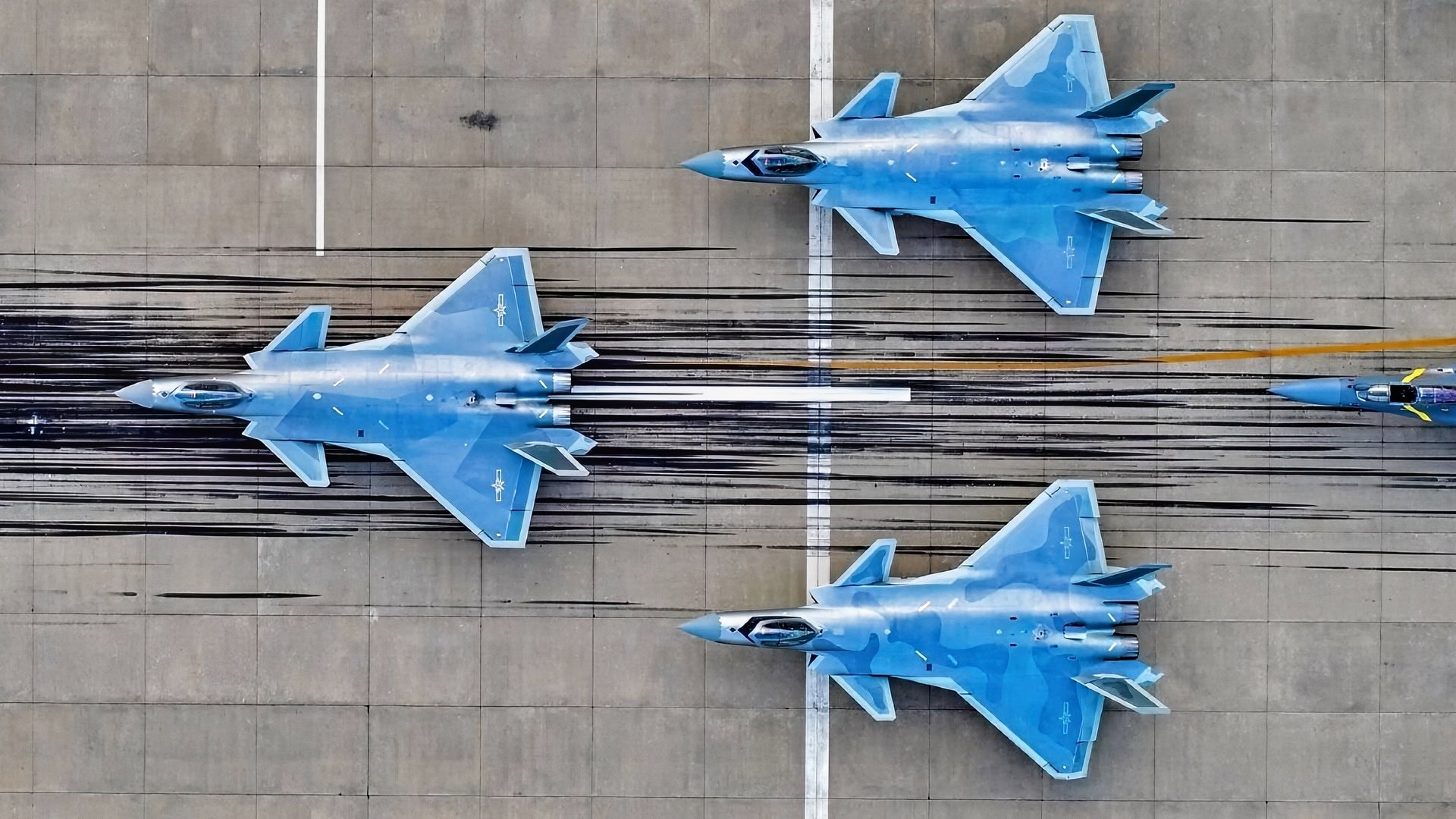
J-20S. Image Credit: Creative Commons.
One caveat belongs here, because it is the program’s persistent weakness. The J-20S is still powered by two WS-10C engines, with the more capable domestic WS-15 engine still in development rather than fully fielded.
Engine reliability and performance have dogged the J-20 line for years, and the two-seat variant inherits that question. A more powerful engine would matter for a heavier, longer airframe carrying a second crew member, and China is not there yet.
What The Backseater Does
The second crew member on the J-20S is a mission systems officer, and the role is the entire point of the aircraft. Chinese state media and affiliated commentators have described the division of labor plainly: the front-seat pilot focuses on flying the aircraft and making engagement decisions, while the rear operator manages electronic warfare, sensor coordination, and the control of uncrewed aircraft.
In that configuration, the J-20S becomes less a fighter than a forward command post in the sky, and Chinese state television has stated the aircraft can act as a forward tactical airborne command node.
The drones the backseater would direct are China’s growing family of “loyal wingman” combat aircraft. An operator could coordinate an estimated four to six drones simultaneously, managing their flight paths, identifying targets, and potentially directing weapons release, a task demanding enough in bandwidth and processing that it is the stated justification for splitting the work between two people.
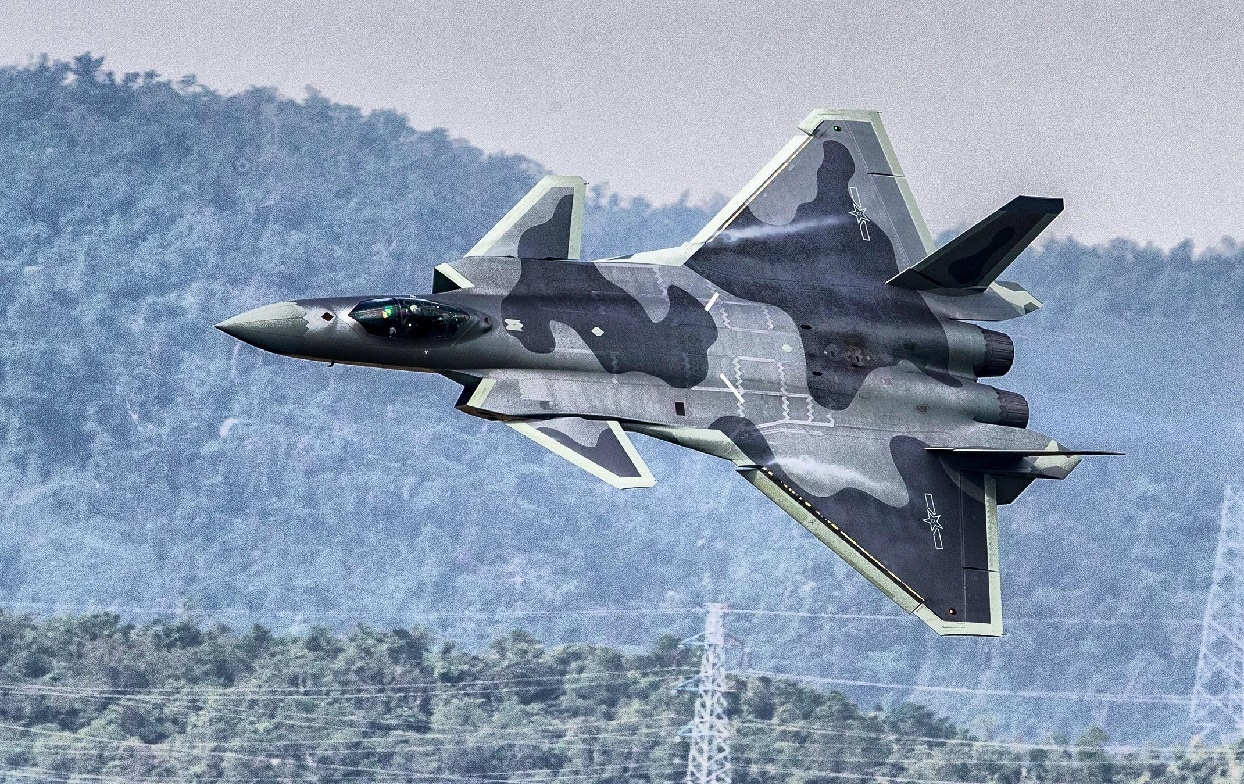
J-20 Image: Creative Commons.
An AVIC-linked commentator claimed the J-20S has strong situational awareness and could serve as a small early-warning platform, guiding drones to strike and extending the formation’s detection and engagement range. Those are Chinese claims about Chinese capability, and they should be read as the manufacturer’s framing rather than verified performance, but the doctrinal intent is clear: China is building toward manned-unmanned teaming with a human running the unmanned half.
The American Counter-Bet: Let The Algorithm Fly The Swarm
The United States is pursuing the identical doctrine and has made the opposite choice about the crew. The F-35 is single-seat, the F-22 is single-seat, and the future F-47, the crewed core of the Air Force’s Next Generation Air Dominance program, is also designed as a single-seat aircraft.
The drone management that China assigns to a second human, America intends to hand to software. The F-35’s sensor fusion already merges feeds from multiple sources into a single tactical picture, and the Air Force’s bet is that the same approach, scaled up and paired with mature autonomy, lets one pilot quarterback a swarm without a second crewman in the back.
The drones are the Collaborative Combat Aircraft program, and their scale is the measure of how seriously Washington takes the concept. The Air Force’s planning baseline calls for a fleet of roughly 1,000 Collaborative Combat Aircraft paired with about 500 crewed fighters, a ratio of two loyal wingmen per fighter, with two competing prototypes — the YFQ-42A and the YFQ-44A — already in testing and running onboard autonomy software for real-time mission execution alongside crewed jets.
The premise is that the drones carry enough artificial intelligence to handle their own flying, sensing, and coordination, so the human role is supervisory rather than hands-on. In the American concept, as one analysis frames it, the F-47 can perform target acquisition, verification, and sensor-to-shooter pairing faster than a human pilot could, letting the manned fighter stay at standoff distance while autonomous wingmen penetrate contested airspace. China keeps a person in the loop for that work. America is betting it can take the person out.
Doctrinal Insight Or A Crutch For Immature Automation
The honest question is whether China’s second seat reflects a genuine doctrinal insight or a workaround for technology it has not yet mastered, and the case runs both ways. The argument that it is insight is straightforward: swarm warfare in a contested environment will be chaotic, electronic warfare and drone control are cognitively demanding, and a dedicated human operator may simply manage that load better than current artificial intelligence can, especially when jamming and spoofing degrade the data links that autonomy depends on.
A human backseater can exercise judgment, adapt to the unexpected, and make calls in situations no algorithm was trained for. On this reading, China has recognized something the United States is underrating — that the fog of swarm combat is a job for a person, and the American faith in automation is a gamble that the technology will mature in time.
The argument that it is a crutch is equally serious, and one clean assessment of the J-20S makes it directly: the second operator illustrates a fundamental difference with US standards, a more human than software-based approach, an intermediate paradigm pending a transition to full automation, and a hybrid model that may prove less flexible at large scale in a high-intensity fight.
By that logic, China put a human in the back because its automation and sensor fusion are not yet good enough to go without one, and the two-seat J-20S is a stopgap that Beijing will abandon once its software catches up. A second crewman is also a cost: a second seat to train, a second life at risk, and an airframe stretched and complicated to accommodate the station. If AI can do the job, the single-seat approach is cheaper, lighter, and more scalable, and China’s choice is the mark of a follower compensating rather than a leader innovating.
Both cases are plausible, and that is precisely the point. The divergence is real, the stakes are high, and the evidence to settle it does not exist.
The Verdict: A Bet Neither Side Has Been Able To Test
The split between the J-20S and the F-47 is one of the clearest doctrinal disagreements between the world’s two leading air forces, and it will not be resolved by analysis. Whether a human backseater or an AI autonomy package makes a better swarm commander is a question that can only be answered in a peer conflict, and neither approach has faced one. China’s bet keeps a person where the judgment is hardest; America’s bet removes the person to gain cost, weight, and scale. One of those wagers will look prescient in hindsight, and the other will look like a misread, but there is no current war to reveal which is which.
The balance favoring the United States lies in what it has already demonstrated. American sensor fusion is mature and combat-tested on the F-35; the CCA program is fielding real prototypes at scale, and decades of operational experience back the American approach to networked warfare. China’s two-seat solution is operational and serious, but much of what its backseater is said to achieve remains a claim from Chinese state media rather than a proven capability, and its engine troubles signal a program still working through fundamentals.
The most likely truth is that both nations are hedging against the same uncertainty from opposite directions — China trusting the human until the machine is ready, America trusting the machine and accepting the risk that it is not.
Whoever guessed right gains a real edge in the most demanding form of air combat yet conceived. The world will find out only in a fight nobody wants, and until then, the second seat in the J-20S remains the most interesting unanswered question in military aviation.
About the Author: Harry J. Kazianis
Harry J. Kazianis (@Grecianformula) was the former Senior Director of National Security Affairs at the Center for the National Interest (CFTNI), a foreign policy think tank founded by Richard Nixon based in Washington, DC. Harry has over a decade of experience in think tanks and national security publishing. His ideas have been published in the NY Times, The Washington Post, The Wall Street Journal, CNN, and many other outlets worldwide. He has held positions at CSIS, the Heritage Foundation, the University of Nottingham, and several other institutions related to national security research and studies. He is the former Executive Editor of the National Interest and the Diplomat. He holds a Master’s degree focusing on international affairs from Harvard University.

