
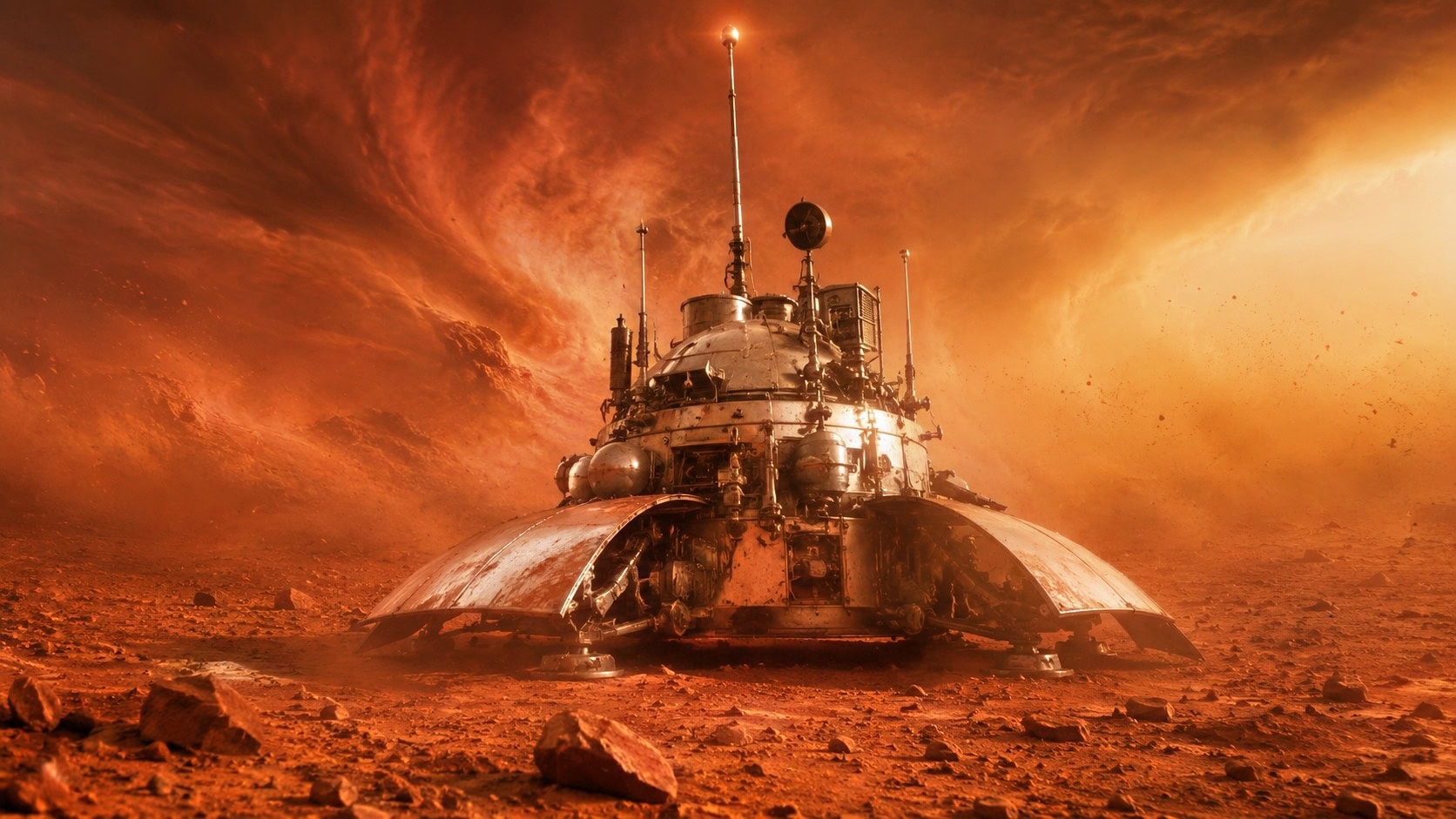
The first spacecraft to land safely on Mars was not American, and it did not survive. In December 1971, the Soviet Union set a lander called Mars 3 down on the Martian surface, the first soft landing on the planet in human history, beating NASA to the ground by five years. Then, about 14.5 seconds later, it stopped. It had opened its protective petals, switched on its cameras, and begun sending a single image, a blank, featureless grey frame with nothing visible in it, when the signal cut off and never came back. The greatest first in the history of Mars exploration lasted less time than it takes to read this paragraph, and produced one of the emptiest photographs ever sent from another world. The probable killer was a planet-wide dust storm, the largest astronomers had ever seen, raging across Mars at the exact moment the Soviets arrived. The mission was so brief, so blank, and so overshadowed that it slipped almost entirely out of public memory. Most people who know that Vikings and rovers have explored Mars have never heard that a Soviet probe got there first, and died in under twenty seconds.
The First Soft Landing On Mars
Mars 3 and its twin, Mars 2, were near-identical craft, each a combination of an orbiter and an attached lander, launched within days of each other in May 1971. Mars 2 arrived first and went badly.
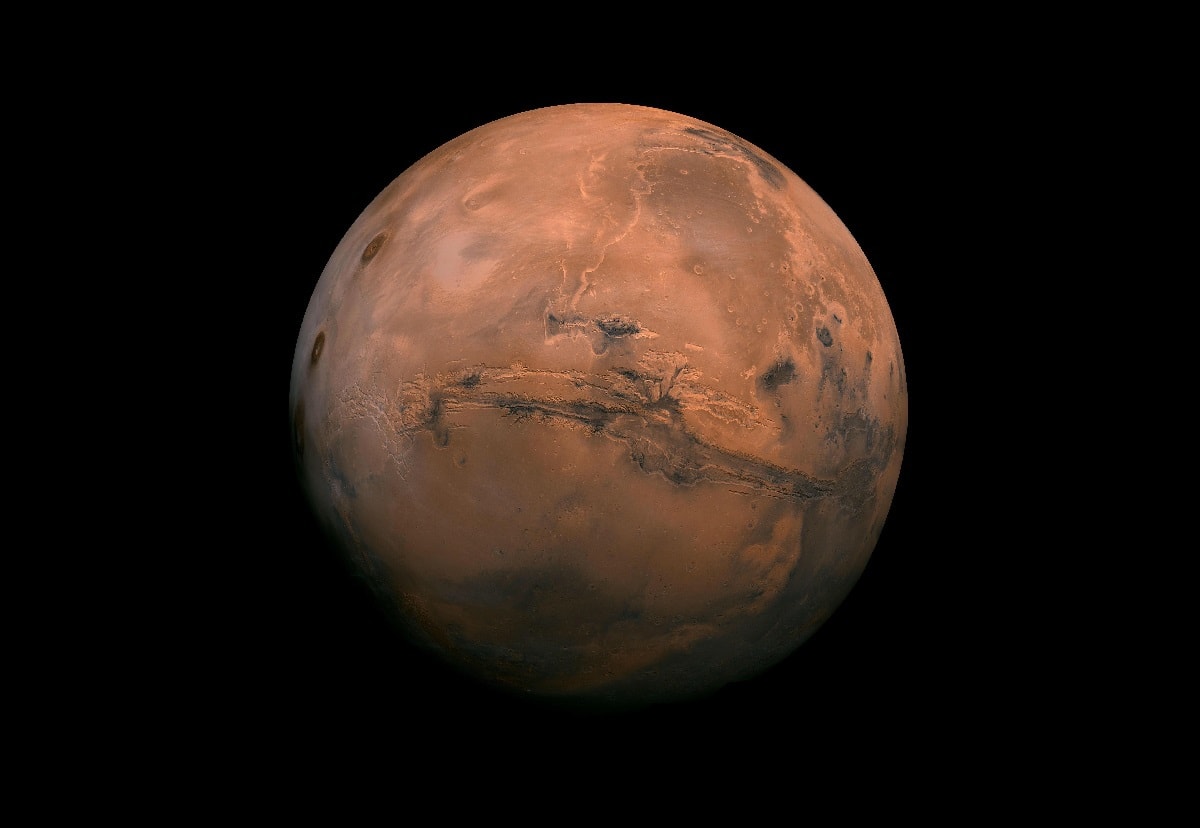
Mars. Creative Commons Image.
Its lander crashed into the surface on November 27, 1971, when its descent system malfunctioned, making it the first human-made object to reach the Martian surface, but it hit the surface rather than landing. Mars 3’s lander did better.
After separating from its orbiter, it deployed a heat shield, parachutes, and retrorockets in sequence to slow itself during atmospheric entry at around 5.7 kilometers per second, and touched down on December 2, 1971, the first spacecraft ever to achieve a soft landing on Mars. NASA’s first successful landing, Viking 1, would not follow for another five years.
The landing system Mars 3 used, aerodynamic braking followed by a parachute and terminal rockets, was a genuinely advanced design that did the hardest thing in planetary exploration, and it worked.
About 14.5 Seconds
After touchdown, the lander’s four triangular petals opened to right the craft and expose its instruments. The cameras came on, and it began transmitting a panoramic image to the Mars 3 orbiter overhead. The signal did not last.
The lander started sending data about 90 seconds after landing, and after roughly 14.5 seconds of transmission, it went silent, about 110 seconds after touchdown. In that brief window, it returned only part of a single image, a partial frame of about 70 lines that showed a grey background with no detail, the first image ever sent from the surface of Mars, and an almost completely empty one.
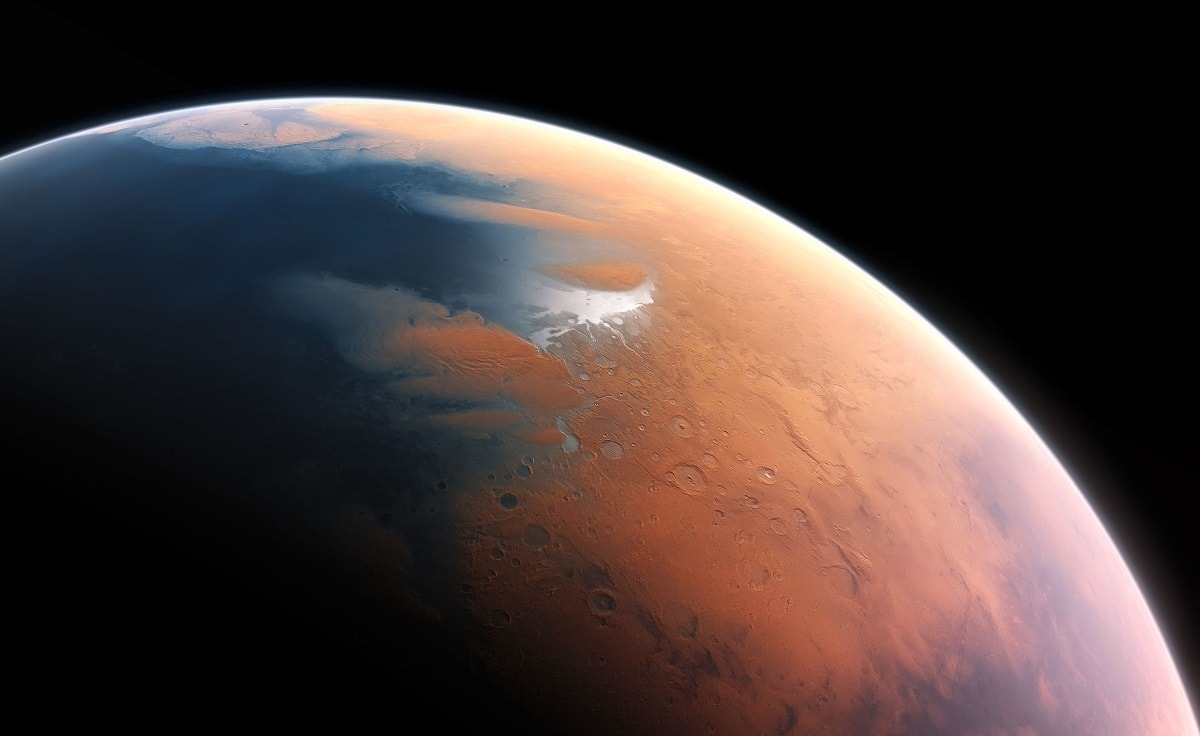
This artist’s impression shows how Mars may have looked about four billion years ago. The young planet Mars would have had enough water to cover its entire surface in a liquid layer about 140 meters deep, but it is more likely that the liquid would have pooled to form an ocean occupying almost half of Mars’s northern hemisphere, and in some regions reaching depths greater than 1.6 kilometers. Image Credit: Creative Commons.
The man who led the Soviet design effort left a first-hand account of the moment. V.G. Perminov, the lead designer of the Soviet Mars and Venus landers, later wrote that after the gray, featureless image came through, the signal vanished in 14.5 seconds, and that the same thing happened on the second imaging system within a hundredth of a second. Two independent channels had failed at almost the same instant, and his team never explained it. “We could not find an answer,” he wrote. The lander never transmitted again.
The Largest Dust Storm Ever Seen
The probable cause was the weather. When Mars 2 and Mars 3 arrived, Mars was in the grip of a planet-encircling dust storm, among the largest ever observed, one that had begun in September 1971 and spread until it covered the entire globe.
The storm was so total that it had already surprised the Americans. NASA’s Mariner 9 had slipped into orbit around Mars on November 13, two weeks before the Soviet craft, becoming the first spacecraft to orbit another planet, and found the surface almost entirely hidden, with only the south polar cap and the tops of a few tall volcanoes poking through the haze. Mariner 9 waited for the dust to settle, spending weeks photographing the moons Phobos and Deimos before it could begin mapping in January 1972.
The leading explanation for Mars 3’s death points straight at that storm. According to NASA, the failure may have been related to the powerful dust storm, which may have induced a coronal discharge, an electrical discharge that damaged the lander’s communications system seconds after it landed, and the same storm would explain why the one image came back so dim and featureless. Another possibility is that the orbiter relaying the signal was at fault. The cause has never been determined, and officially remains unknown. What is certain is that the lander reached the surface intact and then lost contact almost immediately, in the middle of the worst dust storm anyone had ever seen on Mars.
Forced Down Blind
The storm could have killed the lander. It also meant the Soviets landed in conditions they could neither see nor avoid, and the reason comes down to a difference in how the two countries built their spacecraft. Since 1969, NASA’s Mariner probes had been programmable, run by flight computers that could be reprogrammed from Earth, which is exactly what controllers did when they told Mariner 9 to wait out the storm.
The Soviet craft were controlled by fixed clocks and stored their pictures on photographic film, with no way to adapt once they were on their way. Unable to reprogram the mission, the Soviets sent both landers down on schedule into the storm, and the orbiters, locked into taking their images right after arrival, spent much of their capacity photographing nothing but dust clouds. Mariner 9 could pause and wait for a clear day. Mars 2 and Mars 3 had no such option and flew straight into the maelstrom.
The Secret Rover That Never Moved
The Mars 3 lander carried a piece of hardware almost no one knew about for decades. Tucked aboard was a tiny rover called PrOP-M, a roughly 4.5-kilogram box about the size of a large book, designed to walk on a pair of skis to the limit of a 15-meter cable that tethered it to the lander, stopping every 1.5 meters to take measurements and leaving tracks in the soil to record its properties.
It was meant to be lifted onto the surface by a robotic arm and then shuffle along, ski in front of ski, in view of the lander’s cameras. It had a simple kind of autonomy, with two impact bars on its front that would sense an obstacle and tell it to back up and turn, a necessity given the long radio delay between Earth and Mars.
PrOP-M would have been the first rover to operate on another planet, sent a quarter of a century earlier than NASA’s Sojourner, which in 1997 became the first rover to actually drive on Mars. It never got the chance. The Mars 3 lander died before it could deploy, and the rover on Mars 2 was lost in the crash. Because both missions failed, the Soviets kept the rovers’ very existence secret for nearly twenty years. The first Mars rover is a machine that reached the surface and never moved.
Found Again From Orbit, More Than 40 Years Later
The story has a strange final chapter. In 2013, NASA announced that its Mars Reconnaissance Orbiter might have photographed the Mars 3 hardware still sitting on the surface where it had died four decades earlier.
The find came from Russian citizen enthusiasts, led by Vitali Egorov of St. Petersburg, who runs a large Russian online community devoted to the Curiosity rover. Egorov modeled what the Mars 3 components should look like from orbit and challenged his followers to comb through a single enormous HiRISE image, covering the landing region and containing 1.8 billion pixels. They found four candidate features that matched the parachute, the heat shield, the terminal retrorocket, and the lander, arranged on the ground in a way consistent with a descent and landing.
A follow-up image taken in March 2013 corroborated the find, with the candidate parachute appearing as a bright spot the right size, and the imagery even appeared to show the chain that had connected the retrorocket to the lander.
The team’s caution was the right kind. HiRISE principal investigator Alfred McEwen called the set of features a remarkable match to what would be expected from the Mars 3 landing, while noting that alternative explanations could not be ruled out and that more analysis would be needed to confirm it. So the probe that lasted 14.5 seconds may still be visible from orbit, a scatter of tiny dots on a planet it reached first and never got to see.
A Forgotten First
Even the central claim has its doubters. NASA’s records credit Mars 3 with the first successful soft landing, and that is the standard account, but space historians continue to debate its ultimate fate, since the lander returned almost nothing, and some question how complete the landing really was.
The orbiter halves of the two missions fared better than the landers. Despite their dust-obscured start, the Mars 2 and Mars 3 orbiters operated for months and returned a combined 60 images along with real data on the planet’s temperature and atmosphere, even as the surface mission collapsed in seconds.
What the Soviet Union never managed was a working surface mission on Mars. The next attempt, Mars 6 in 1973, transmitted data during its descent but failed at or near landing, and the program eventually ceded the surface of Mars entirely to NASA.
The contrast with the Soviet record at Venus is striking, and one British account noted that the Russians had so little luck with Mars despite their repeated successes at Venus, a harder target in many ways, where their Venera landers returned the first images and data from that planet’s surface. Mars 3 was both a real triumph and a near-total loss, the first soft landing on a planet that has destroyed more landers than any other world, and the first proof of two things at once: that a spacecraft could be set down gently on Mars, and that surviving there is brutally hard.
The lander that opened the history of Mars exploration is the one almost no one remembers. It crossed tens of millions of kilometers, threaded an advanced descent through a planet-wide storm, touched down softly where nothing ever had, opened its petals, turned on its cameras, sent home one blank grey frame, and died, all in less time than it takes to read a few sentences.
The first spacecraft to land on Mars reached the surface first and saw none of it.
About the Author: Harry J. Kazianis
Harry J. Kazianis (@Grecianformula) was the former Senior Director of National Security Affairs at the Center for the National Interest (CFTNI), a foreign policy think tank founded by Richard Nixon based in Washington, DC. Harry has over a decade of experience in think tanks and national security publishing. His ideas have been published in the NY Times, The Washington Post, The Wall Street Journal, CNN, and many other outlets worldwide. He has held positions at CSIS, the Heritage Foundation, the University of Nottingham, and several other institutions related to national security research and studies. He is the former Executive Editor of the National Interest and the Diplomat. He holds a Master’s degree focusing on international affairs from Harvard University.

