If you’ve ever seen the 2015 film starring Matt Damon, The Martian, you’re familiar with NASA’s Mars Pathfinder mission.
In that film, Matt Damon’s stranded character must rebuild the (from his perspective, antique) Sojourner robot from the 1997 Mars Pathfinder mission.
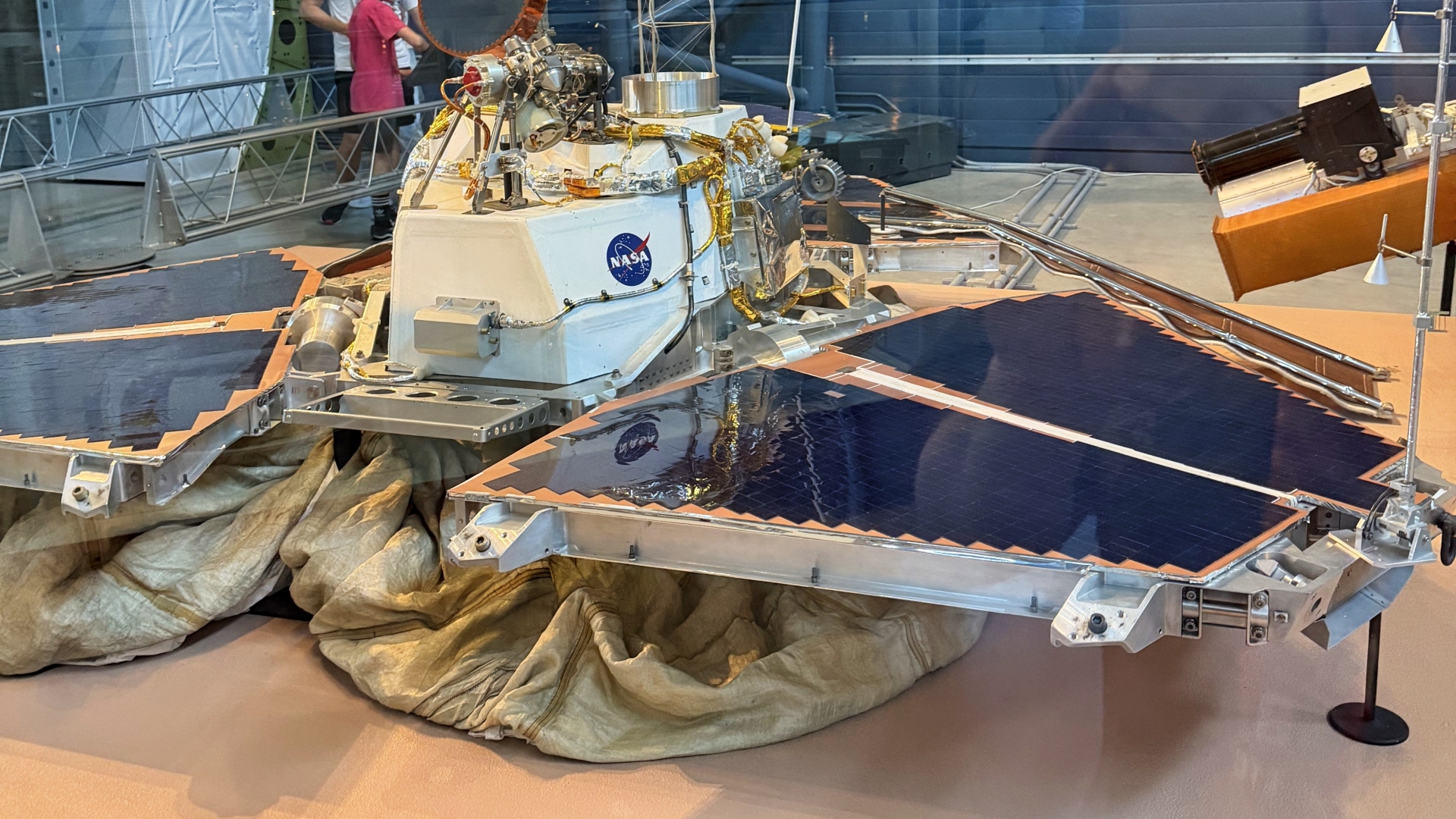
Mars Pathfinder at the Smithsonian. Image taken by 19FortyFive on 6/30/2026.
In reality, though, the Mars Pathfinder mission was one of the most important unmanned missions to the Red Planet in history.
Launched on July 4, 1997, NASA deployed the Pathfinder with the robotic Sojourner to begin a long-range planetary study of Mars.
Although small enough to fit on a coffee table, Sojourner proved that mobile exploration was vastly more valuable than simply landing a stationary spacecraft.
Virtually every successful Mars rover that followed owes its existence to Pathfinder.
Yesterday, 19FortyFive.com sent its own ‘pathfinders’ to the Smithsonian Institution to learn more about this pivotal mission to Mars. The photos from that visit are included in this article.
A New Philosophy After Years of Failure
Pathfinder arrived during a critical period for NASA. In the wake of the massively expensive Viking program landings on Mars in 1976, the United States largely abandoned surface exploration of Mars for 20 years.
Budget pressures and shifting priorities left the Red Planet untouched.
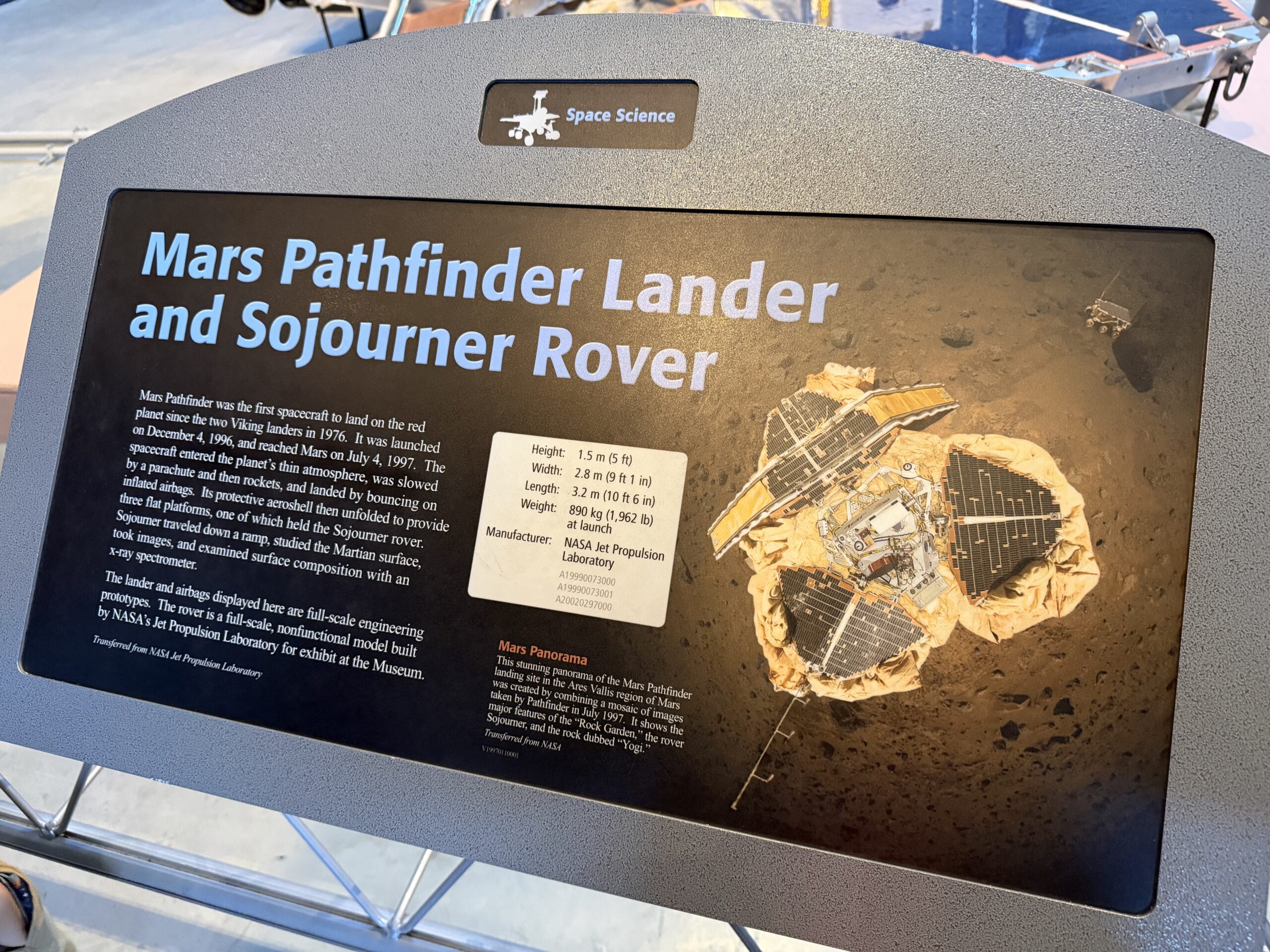
Mars Pathfinder at the Smithsonian. Image taken by 19FortyFive on 6/30/2026.
NASA needed a mission that could prove Mars exploration did not have to cost billions.
Pathfinder became one of the earliest missions under NASA’s Discovery Program–a “faster, better, cheaper” philosophy emphasizing smaller budgets, rapid development, and carefully focused scientific goals.
Built in only three years for roughly $485 million, Pathfinder demonstrated that ambitious planetary exploration could be accomplished without flagship-level spending.
An Ingenious Landing System
Perhaps Pathfinder’s greatest engineering achievement wasn’t the Sojourner rover. It was getting to Mars safely.
Landing on Mars is extraordinarily difficult. The atmosphere is thick enough to generate enormous heat during entry but too thin for parachutes alone to slow a spacecraft sufficiently.
Engineers designed an entirely new landing sequence for this pivotal mission.
NASA’s Pathfinder spacecraft entered the Martian atmosphere protected by a heat shield.
Then, the spacecraft deployed a supersonic parachute.
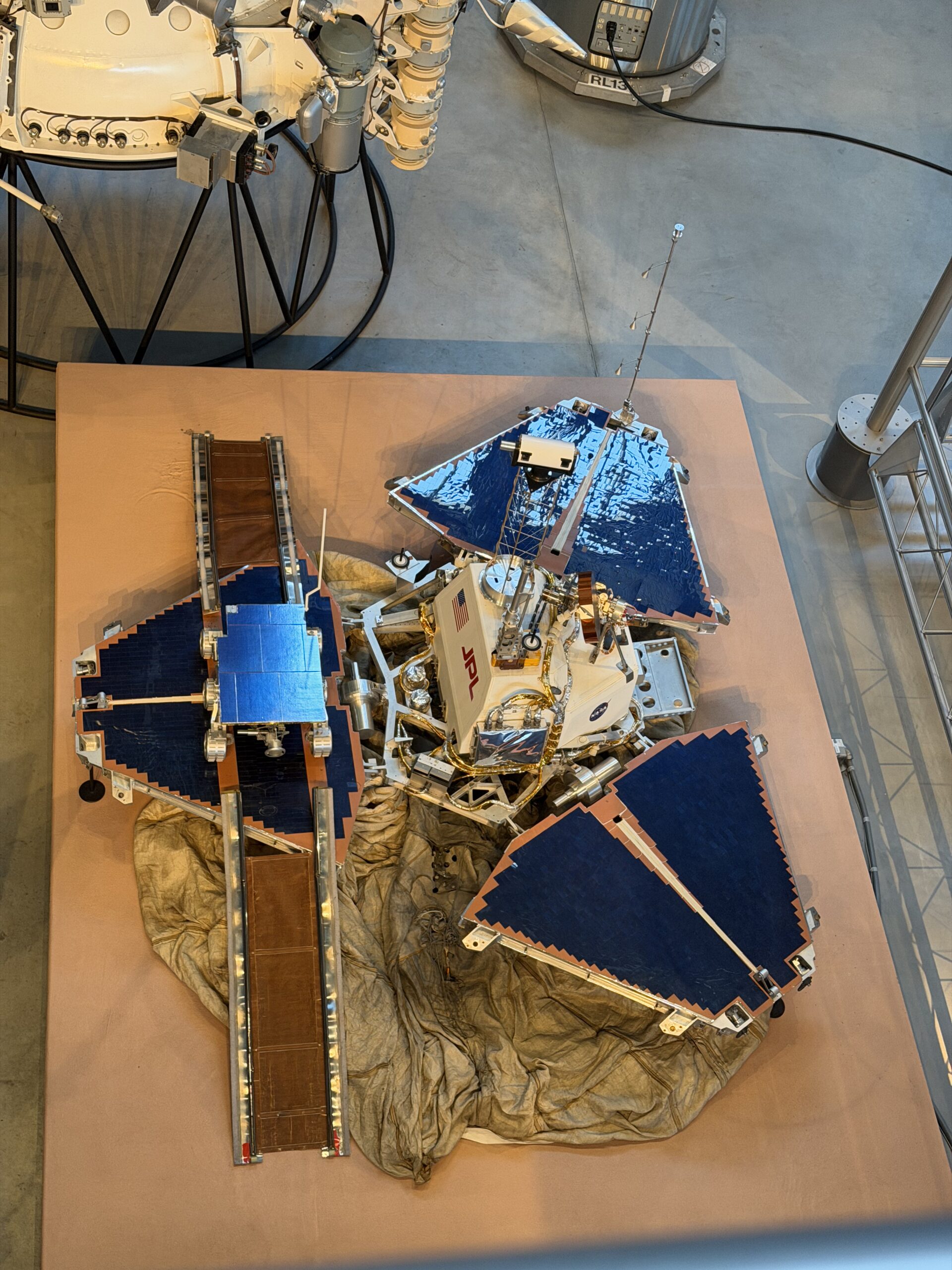
Mars Pathfinder at the Smithsonian. Image taken by 19FortyFive on 6/30/2026.
It fired retrorockets during the final descent, too. From there, the spacecraft inflated enormous airbags around the lander.
Once it landed, it was encapsulated by those giant airbags, allowing it to bounce repeatedly across the Martian surface before finally coming to rest.
Once stopped, the airbags around the spacecraft deflated, allowing for three triangular petals to unfold, revealing the rover inside.
That successful airbag concept would later be employed for the even more successful Spirit and Opportunity rovers that were sent to Mars in 2004.
Meet Sojourner
The rover, known as Sojourner, weighed only 23 pounds. Irrespective of its size, though, the system represented true technological innovation.
The rover carried stereo navigation cameras and an Alpha Proton X-ray Spectrometer (APXS) to determine rock chemistry.
In another first, Sojourner brought with it to Mars what we might today refer to as a “Blind Spot Monitor,” which one finds in almost any new car; Sojourner had a similar system for navigating the rocky, unexplored, and untamed surface of the Red Planet.
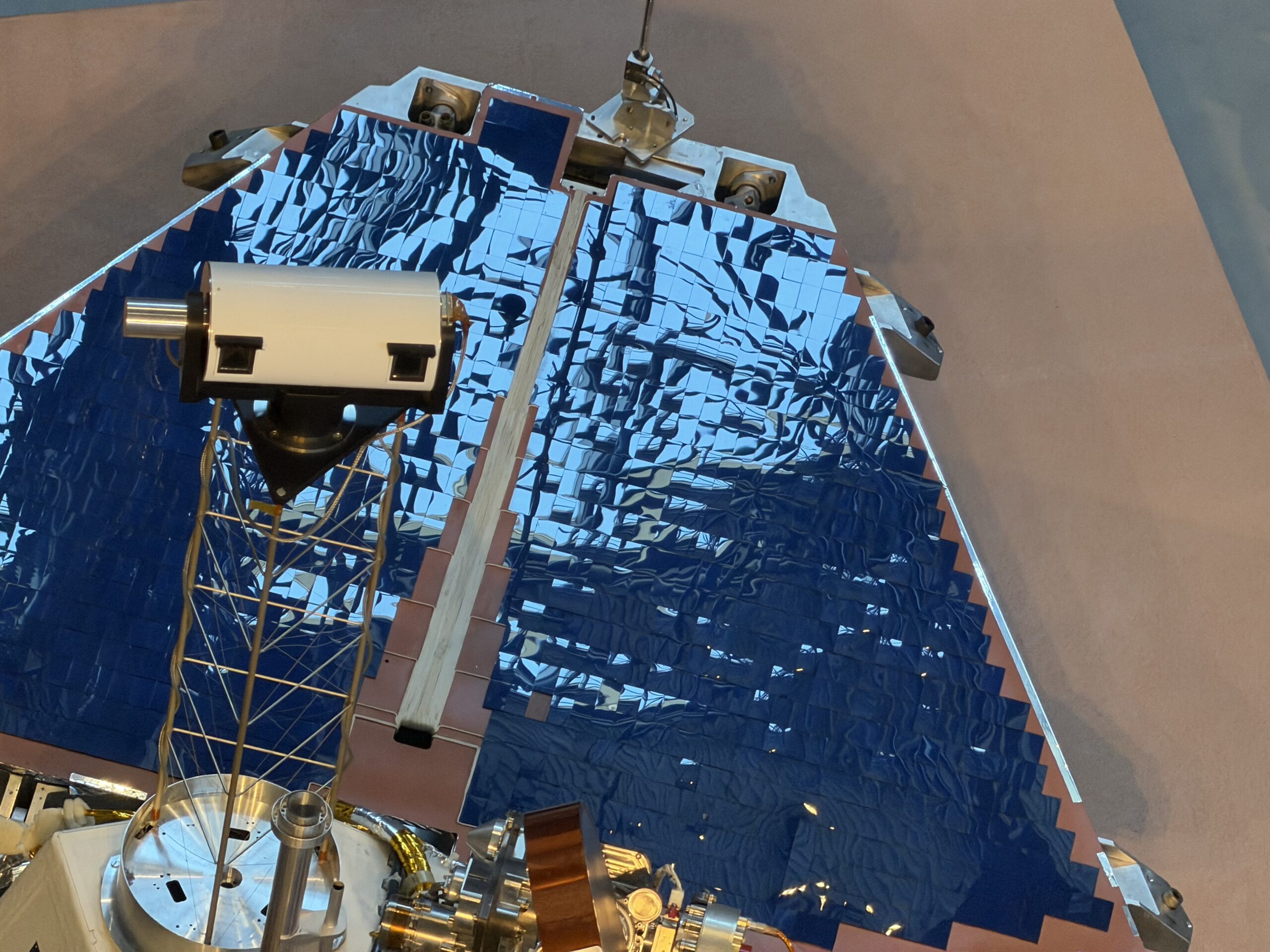
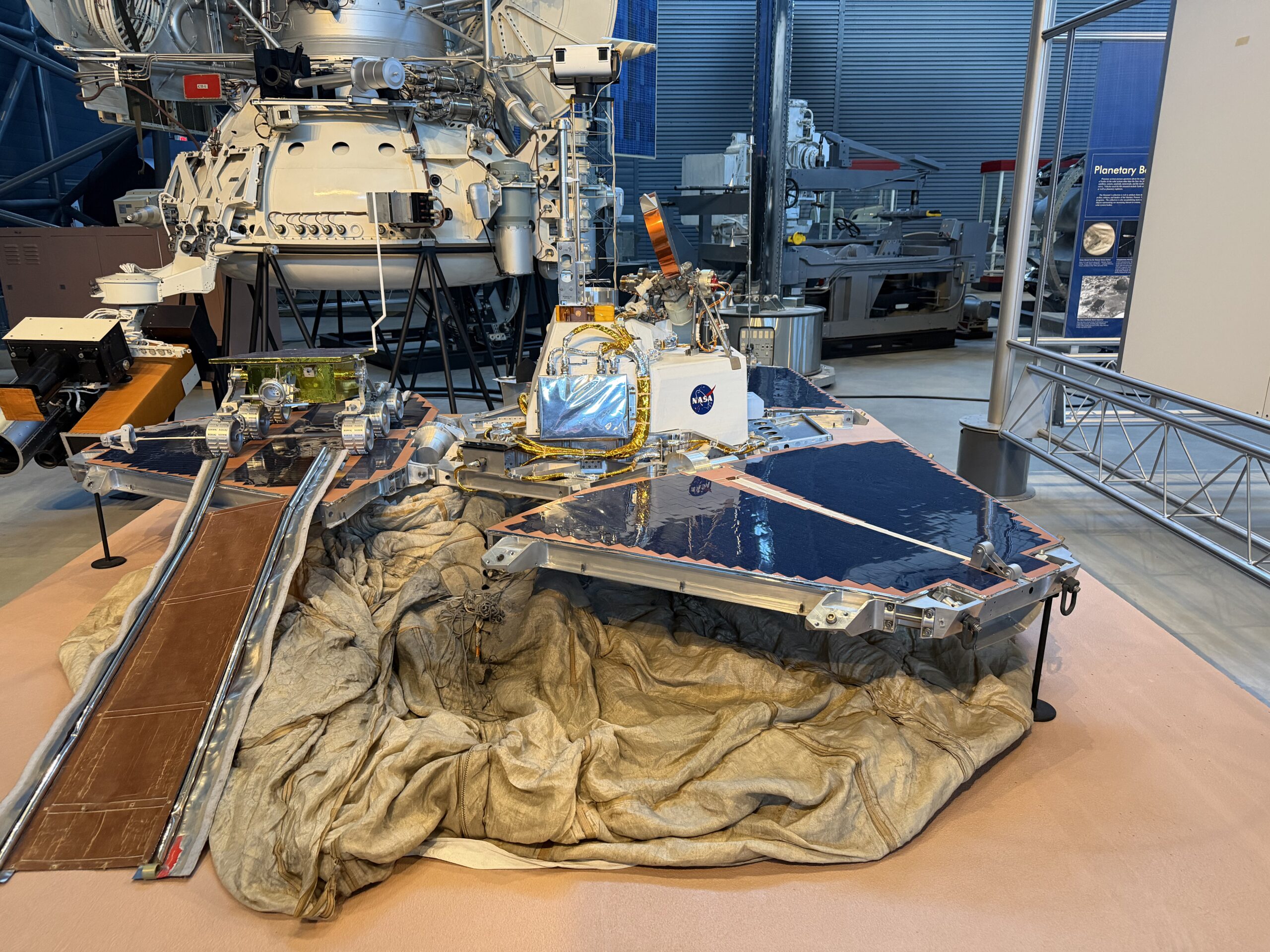
Mars Pathfinder at the Smithsonian. Image taken by 19FortyFive on 6/30/2026.
NASA imbued the Sojourner rover with a unique rocker-bogie suspension that allowed the vehicle to climb over rocks much larger than its wheels. Again, many of these concepts were used in later Mars rover missions.
Science at Ares Vallis
NASA selected the landing site in Ares Vallis because scientists believed it had once been a catastrophic floodplain.
If enormous quantities of water had flowed there billions of years ago, they would have deposited rocks from many different regions of Mars into one location.
That made Pathfinder essentially a natural geological museum.
Sojourner analyzed 16 rock and soil targets during its historic, successful mission. Scientists even found evidence that many rocks had indeed been shaped by ancient flowing water.
The lander continuously monitored temperature, atmospheric pressure, and wind. Meanwhile, cameras documented frequent Martian dust devils.
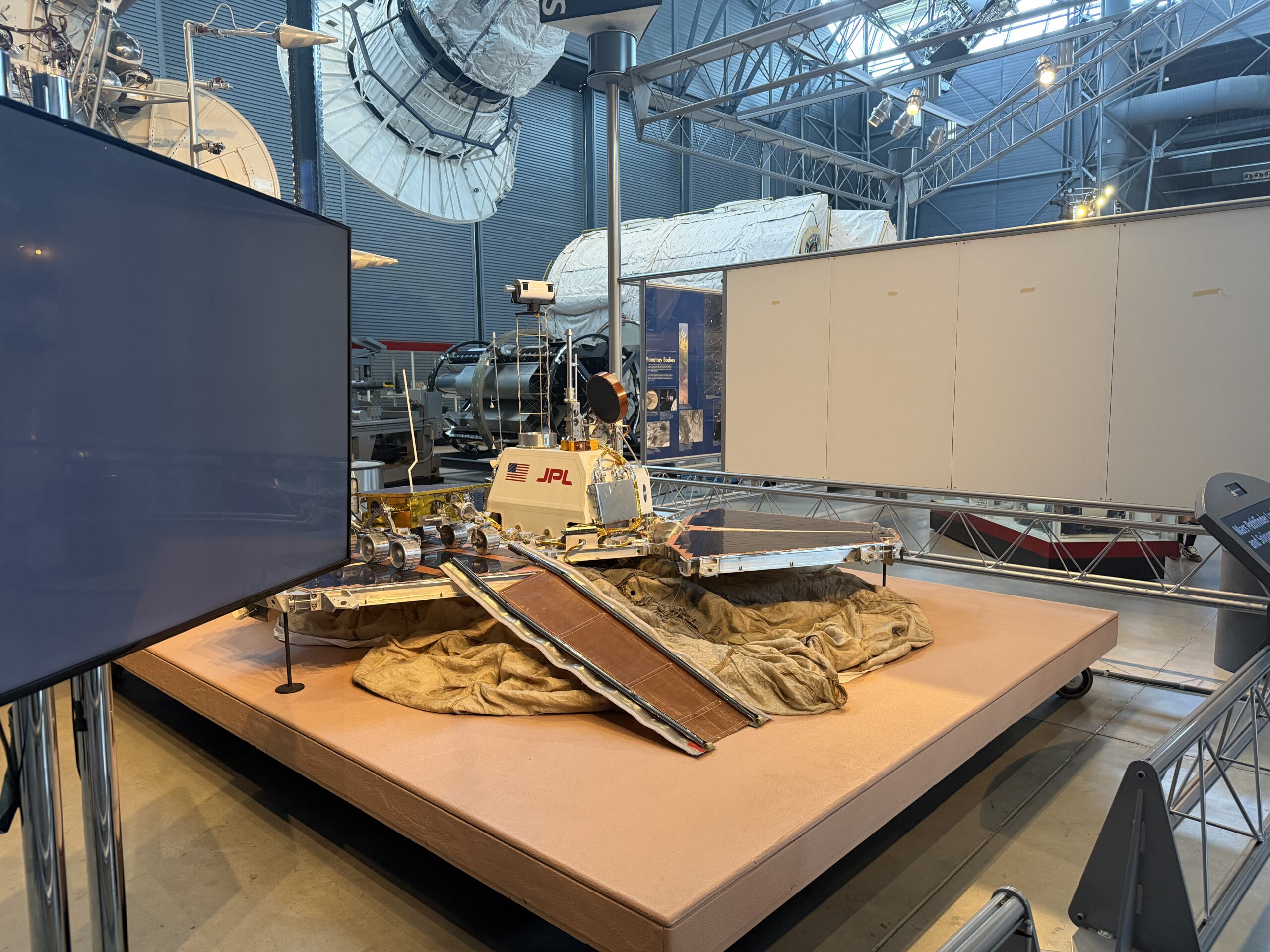
Mars Pathfinder at the Smithsonian. Image taken by 19FortyFive on 6/30/2026.
Sojourner conducted impressive magnetic experiments that showed Mars’ dust contained magnetic minerals associated with oxides.
These discoveries, made possible only by the ingenious Pathfinder mission, strengthened the growing scientific consensus that Mars had once possessed a significantly warmer and wetter climate than it does today.
A Mission That Refused to Quit
Sojourner was only designed to survive seven Martian days. Instead, the amazing machine operated for an astonishing 83 days.
The Pathfinder lander itself continued transmitting for over 90 days, returning more than 2.3 billion bits of data, approximately 16,500 images, and millions of weather measurements before communication was finally lost in September 1997.
After landing on the Red Planet, the Pathfinder base station was given a new name: the Carl Sagan Memorial Station.
Honoring one of America’s most legendary astronomers of the modern era, Sagan had died only months before the launch of the Pathfinder mission.
Since he had spent his career inspiring public enthusiasm about planetary exploration, NASA honored him with the name change of the Pathfinder’s base station.
The mission also carried a microchip containing the names of more than 100,000 supporters of The Planetary Society, symbolically allowing ordinary people to travel to Mars alongside the spacecraft.
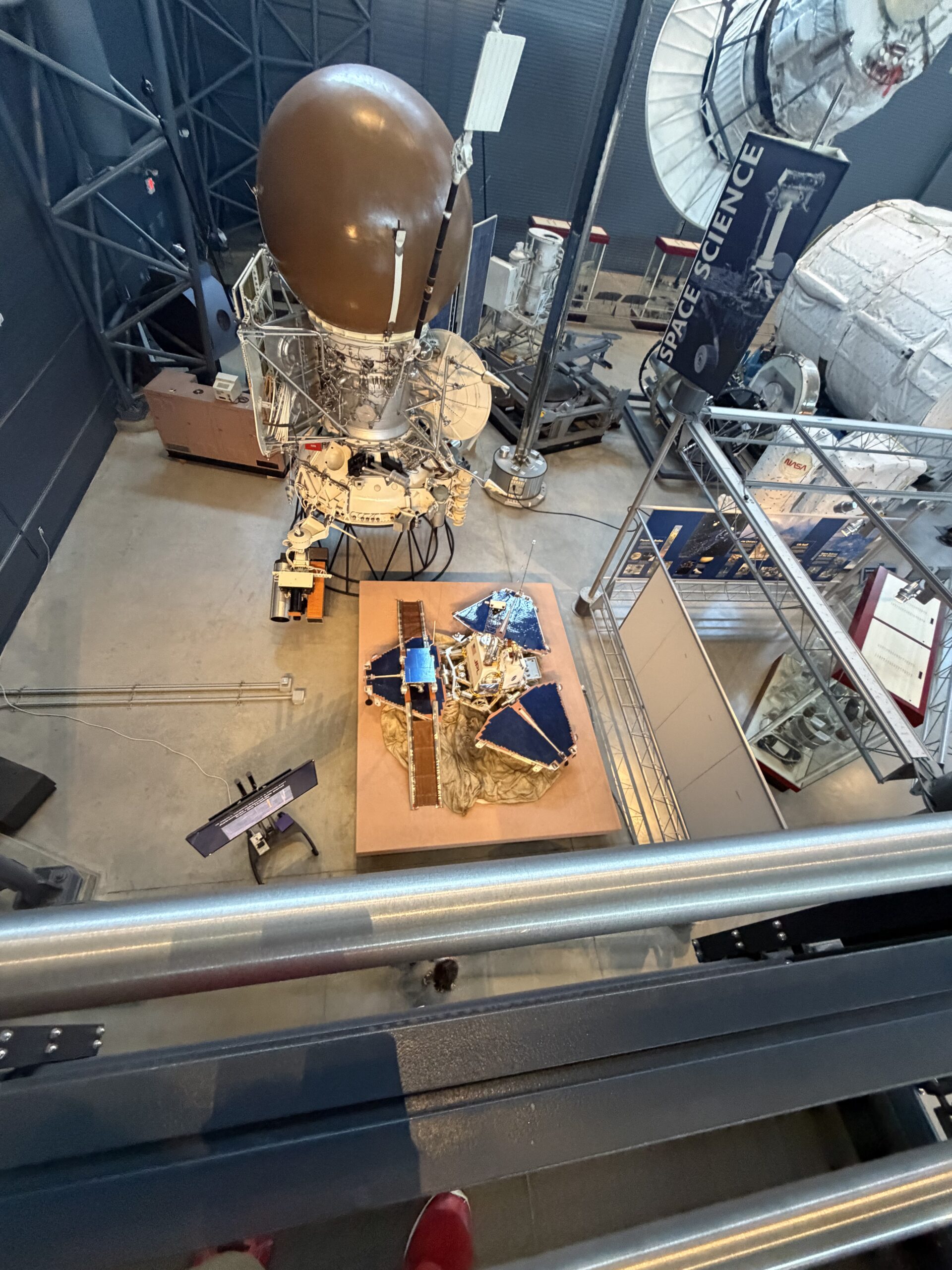
Mars Pathfinder at the Smithsonian. Image taken by 19FortyFive on 6/30/2026.
Pathfinder’s Greatest Legacy
Scientifically, Pathfinder was important as you’ve read in the preceding paragraphs. Yet, historically, its greatest contribution was proving that mobility transforms planetary science.
Rather than examining a single patch of ground, a rover could travel from rock to rock, compare geological formations, investigate different soil types, and dramatically expand the scientific return.
Every major NASA Mars rover since then has built upon lessons first demonstrated by Pathfinder.
Even the autonomy required because of Mars’ communication delays–allowing the rover to make limited decisions without waiting for Earth–became standard practice for every rover that followed.
Why Mars Pathfinder Still Matters
Pathfinder occupies the same place in Mars exploration that the Wright brothers’ first flight occupies in aviation history. It was not the most scientifically sophisticated mission. The mission was neither the biggest nor the longest. But it proved a concept that changed everything.
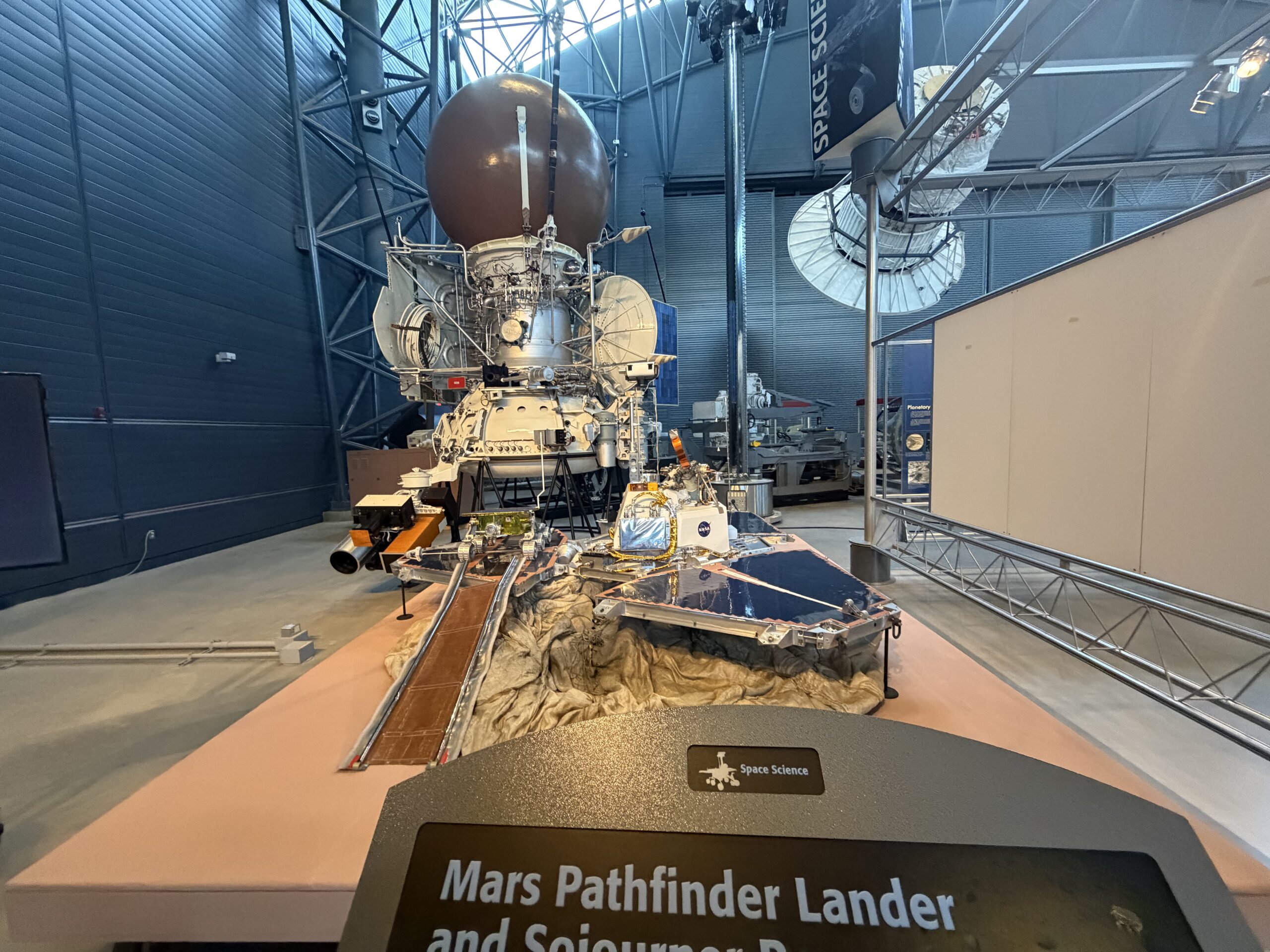
Mars Pathfinder at the Smithsonian. Image taken by 19FortyFive on 6/30/2026.
Before Pathfinder, Mars exploration largely meant stationary landers.
After Pathfinder, the future belonged to rovers.
Nearly three decades later, every major NASA surface mission on Mars still follows the trail first blazed by a rover scarcely larger than a microwave oven.
About the Author: Brandon J. Weichert
Brandon J. Weichert is the Senior National Security Editor at 19FortyFive.com. He also manages The Weichert Brief on Substack. Weichert also hosts “National Security Talk” on Rumble. He is the author of four bestselling national security books, the most recent of which is A Disaster of Our Own Making: How the West Lost Ukraine (Encounter Books). Follow him via Twitter/X @WeTheBrandon.