
Summary and Key Points: The United States Air Force has published the first official performance figures for the F-47, crediting the fighter with a combat radius above 1,000 nautical miles, the longest reach ever designed into an American fighter. Measured against Pacific geography, the record still falls short. Andersen Air Force Base on Guam sits roughly 1,500 nautical miles from the Taiwan Strait, farther than any American fighter can fly on internal fuel, while open reporting credits China’s J-36 demonstrator with the range to fly that distance. The aerial tankers that close the gap remain the force’s most exposed aircraft, and the Navy’s F/A-XX decision, expected around August, runs through the same arithmetic.
The F-47 Will Out-Range Every Fighter America Ever Built — and It Still Can’t Reach Taiwan From Guam Without the Tankers China Plans to Kill
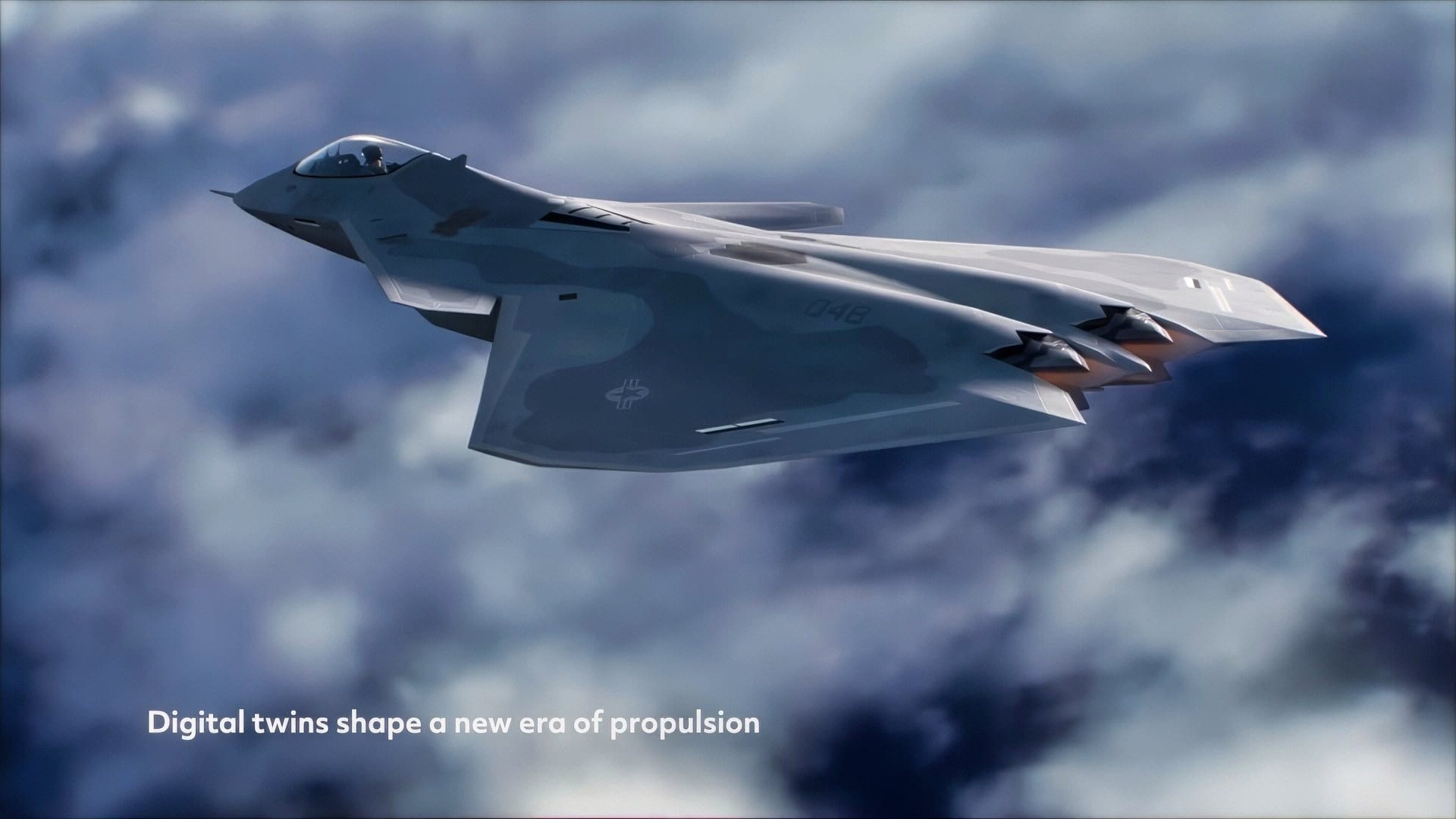
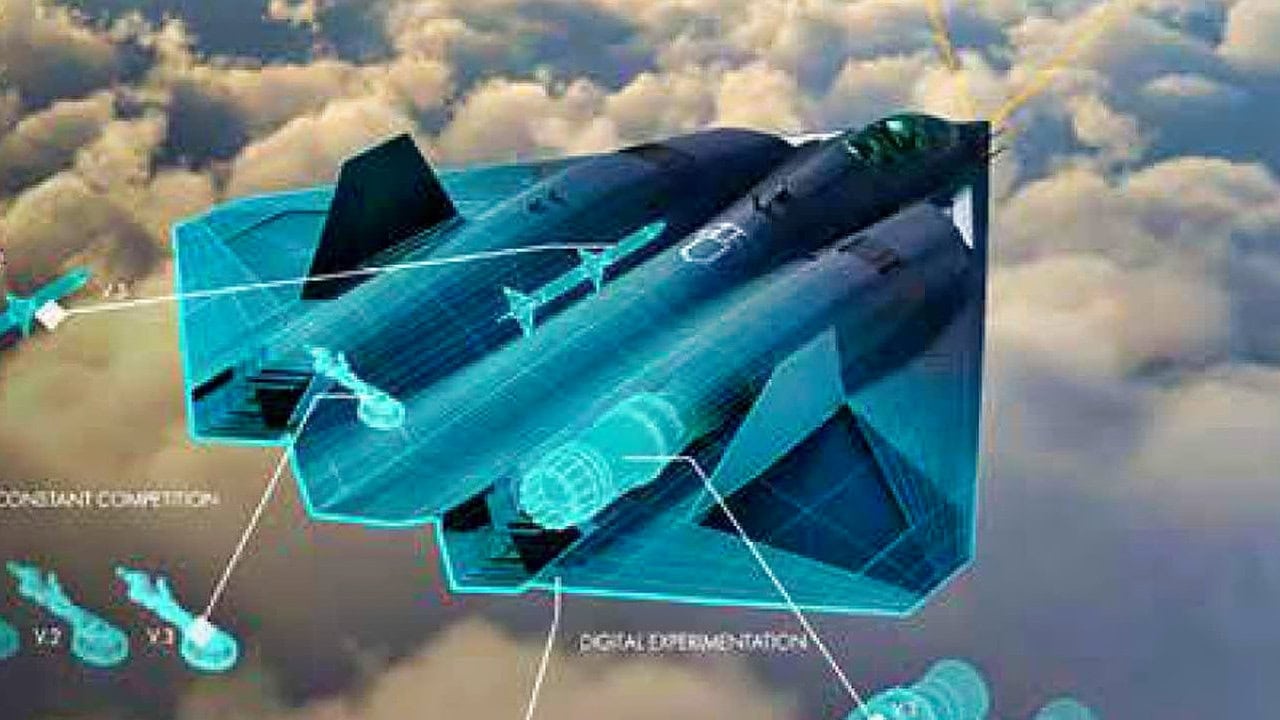
F-47 NGAD Fighter Possible Image. Image Credit: Screenshot.
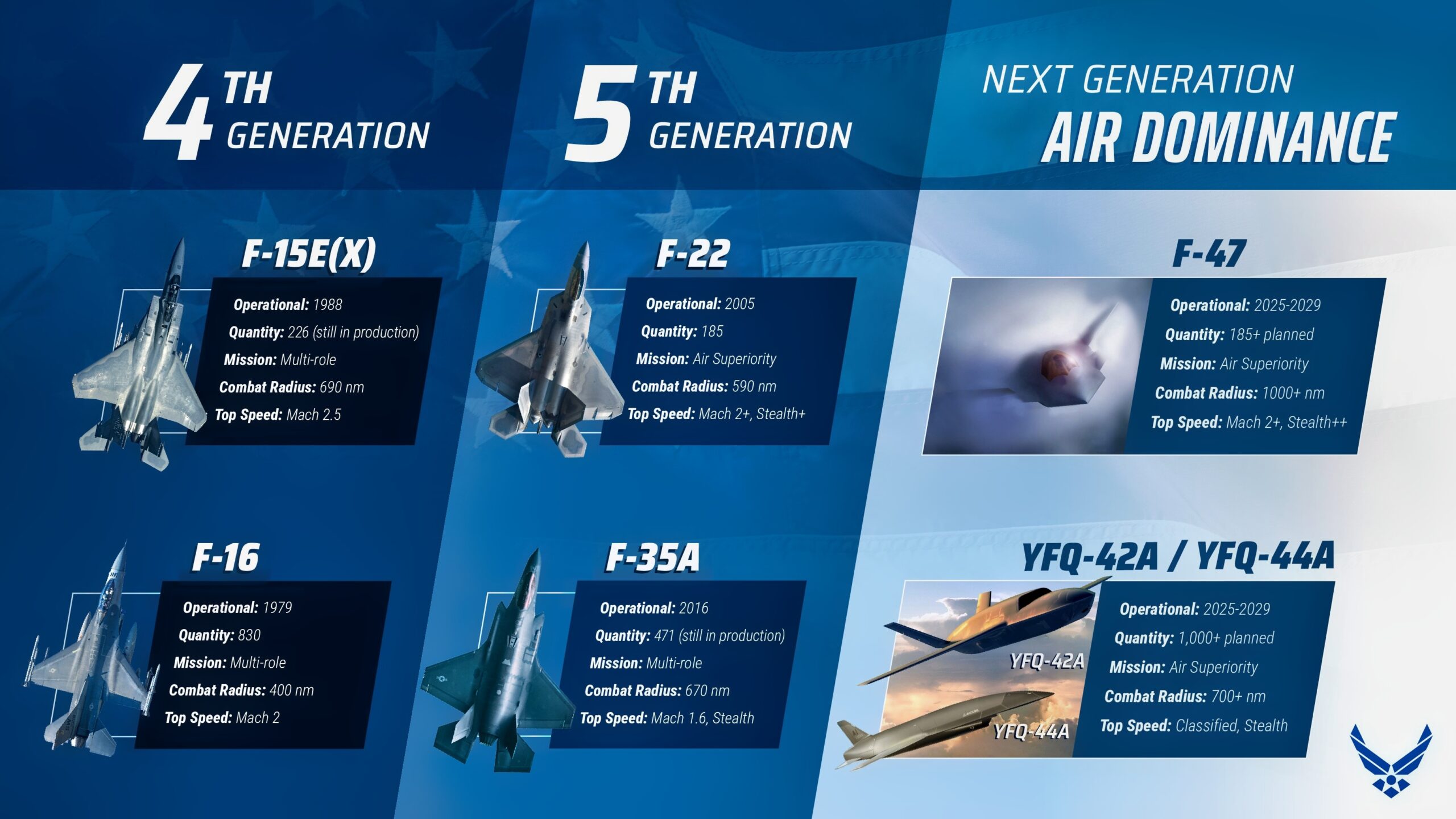
F-47 Infographic. Image Credit: U.S. Air Force
For the first time, the Air Force has put official numbers on its next fighter: a combat radius above 1,000 nautical miles, nearly double the F-22’s. It is the longest reach ever designed into an American fighter, and the math of the Pacific swallows it whole.
Guam sits roughly 1,500 nautical miles from the Taiwan Strait. The F-35A’s legs run 670. Every mile of shortfall becomes a tanker orbit inside the reach of missiles built specifically to kill tankers, while the bases close enough to matter sit under the largest land-based missile force on Earth. So far, the map is winning.
The most revealing document in American airpower lately is an infographic. In May 2025, Air Force Chief of Staff Gen. David Allvin posted the first official performance figures ever released for the F-47: combat radius “1,000+” nautical miles, speed above Mach 2, a “Stealth++” rating its predecessors don’t get, and a planned buy of 185-plus. For a program born in secrecy, publishing numbers was a statement of confidence.
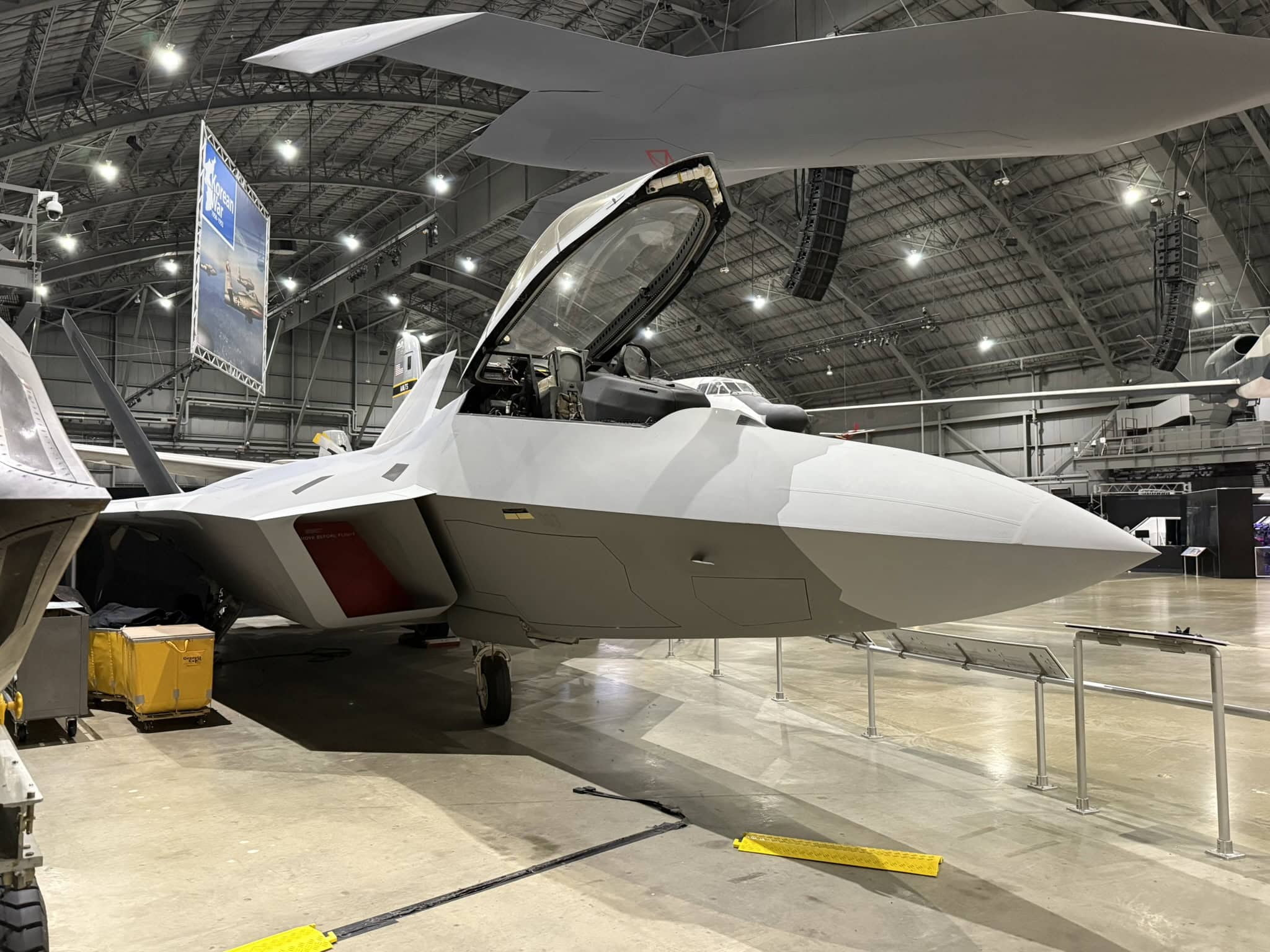
F-22 at the National Museum of the U.S. Air Force in July of 2025. Image Credit: Harry J. Kazianis.
It also handed the public everything needed to do the one calculation the graphic left out: measuring those numbers against the ocean they’re meant to cross.
Run that calculation with the services’ own figures, and the honest answer is uncomfortable.
The range problem that has quietly shaped every American airpower decision of the past decade survives even with the aircraft being bought to fix it.
Aerospace Ledger: What America’s Fighters Can Actually Reach
Start with what exists. The Allvin graphic credits the F-22 with a 590-nautical-mile combat radius, a figure Air & Space Forces Magazine noted runs well above the roughly 470 miles in typical descriptions and likely assumes external fuel tanks a Raptor would not carry into contested airspace.
The F-35A gets 670. Combat radius is a slippery number in any case; it depends on the flight profile, the payload, and how much fighting the jet does along the way. But the honest center of the estimates is this: America’s fifth-generation fighters were sized for the distances of Europe and the Middle East, where friendly runways sit hundreds of miles from the fight, not thousands.
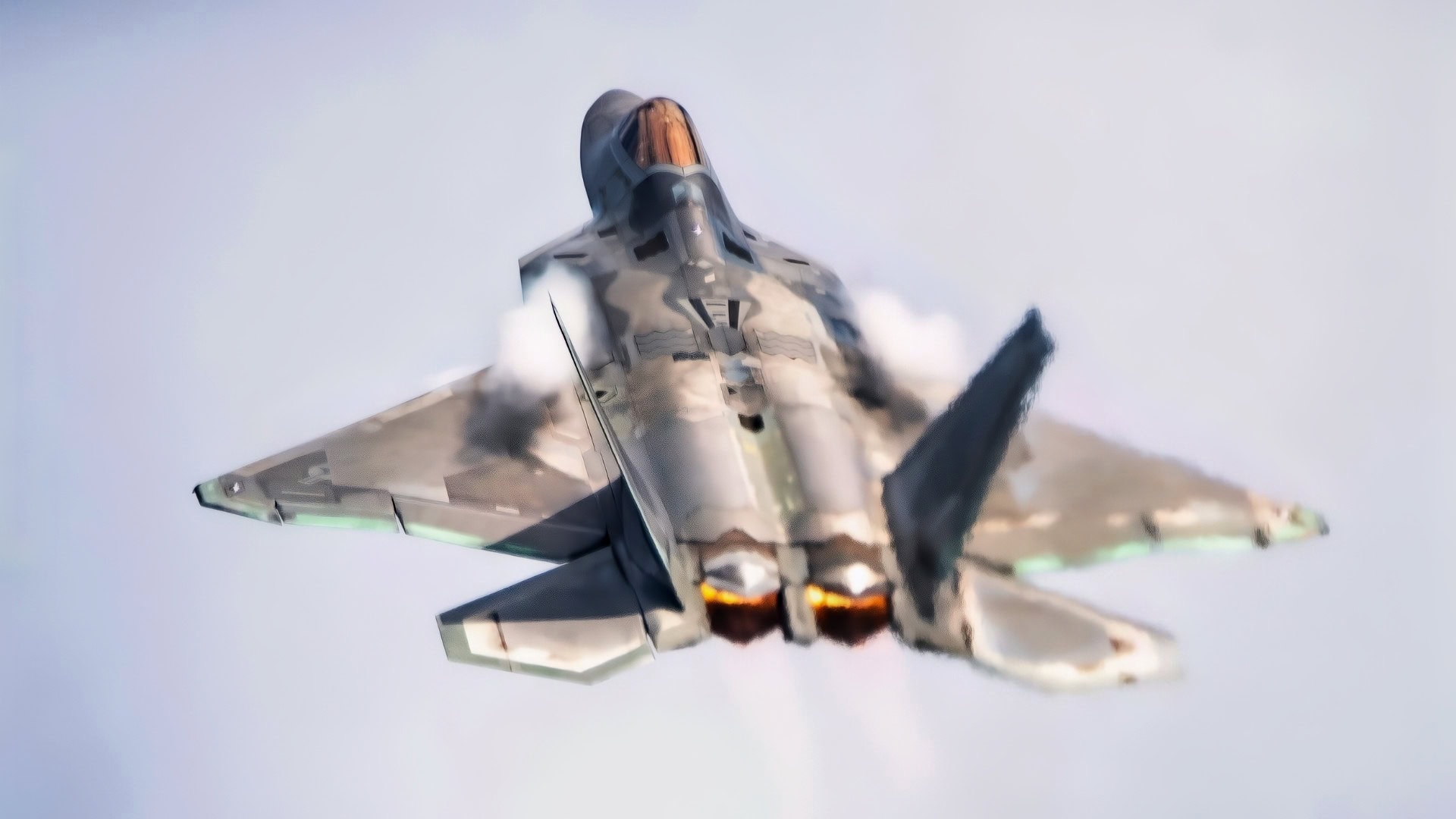
U.S. Air Force Maj. Paul Lopez, F-22 Demo Team commander, performs an aerial demonstration during the Thunder over Georgia Air Show at Robins Air Force Base, Sept. 28, 2019. Founded in 2007, the F-22 Raptor Demo Team showcases the unique capabilities of the world’s premier 5th-generation fighter aircraft. (U.S. Air Force photo by 2nd Lt. Sam Eckholm)
The next generation stretches the tape without changing its unit of measure. The F-47’s 1,000-plus figure roughly doubles the F-22’s realistic reach.
The Navy’s F/A-XX, per the service’s director of air warfare, Rear Adm. Michael Donnelly, is specified to have 25 percent greater range than the F-35C, which analysts translate to a combat radius of around 850 nautical miles. The Air Force’s first Collaborative Combat Aircraft drones are credited with having 700-plus more miles of range than the crewed fighters they’ll escort. Every one of those numbers represents a real engineering achievement.
None of them is the number the Pacific asks for.
The Pacific Map Problem: 1,500 Miles of Ocean the Missiles Made
The geography is fixed and unsentimental. Kadena Air Base on Okinawa sits roughly 400 nautical miles from Taiwan, close enough for every American fighter, and close enough that it is the most heavily targeted piece of concrete in any Chinese war plan. Andersen Air Force Base on Guam, the theater’s designated sanctuary, lies roughly 1,500 nautical miles from the Taiwan Strait.
Run the subtraction: an F-35A launching from Guam, on internal fuel, turns for home more than 800 nautical miles short of the fight. The F-47, the longest-legged fighter in American history, turns around some 500 miles short. And figures circulating in open-source reporting credit China’s J-36 sixth-generation demonstrator with a combat radius near 1,500 nautical miles, a number that would let it fly the very profile America’s fighters cannot.
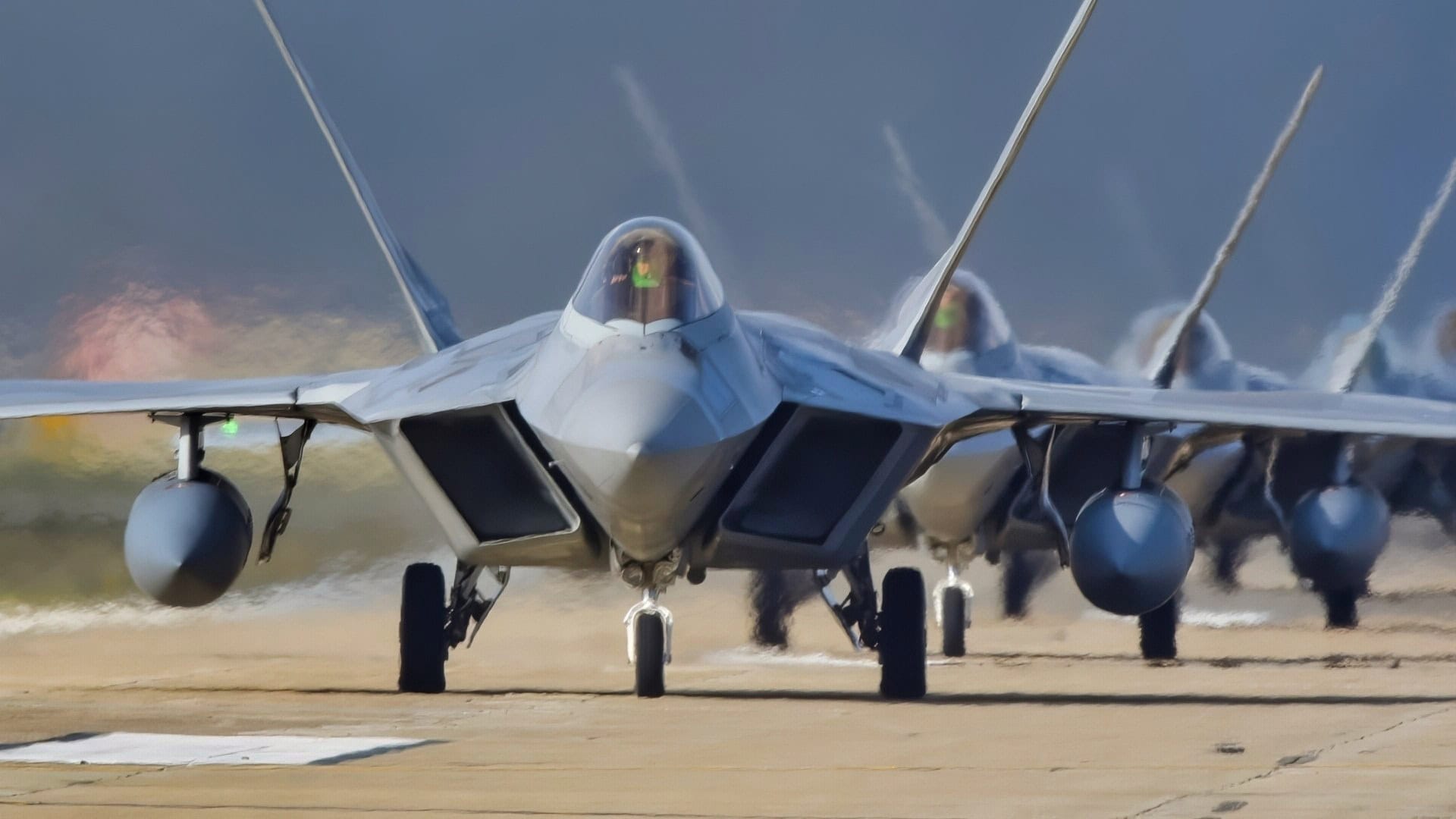
F-22 Raptors from the 1st Fighter Wing and 192nd Fighter Wing, participate in a total force exercise at Joint Base Langley-Eustis, Virginia, Feb. 28, 2019. Both wings partnered with the 633rd Air Base Wing during the Phase I exercise to showcase their readiness and deployability of the F-22s. (U.S. Air Force Photo by Tech Sgt. Carlin Leslie)
The war-gaming community reached this conclusion before the budget documents did. The Center for Strategic and International Studies ran its Taiwan invasion wargame 24 times and found the United States and its allies losing hundreds of aircraft in most iterations, with Naval News’s account of the project noting that some 90 percent of allied aircraft losses came on the ground, to missile attack, and that “the current range of allied warplanes was a severe limitation.” The jets died at their bases because the bases were close enough to be useful, and useful enough to be targeted.
Missile Wall: The Arsenal China Built to Hold Guam at Risk
The reason the map behaves this way is an arsenal built for exactly this purpose. The Pentagon’s December 2025 China Military Power Report documents a Rocket Force fielding more than 250 DF-26 launchers and an inventory of some 500 of the missiles, by the report’s accounting — the weapon nicknamed the “Guam killer” for its roughly 4,000-kilometer reach — alongside the newer DF-27, which US assessments credit with a range class of 5,000 to 8,000 kilometers, and thousands of shorter-ranged ballistic and cruise missiles that blanket Kadena’s neighborhood. Guam sits about 3,000 miles from the Chinese mainland, and Beijing built weapons specifically to close that distance.
America’s answer has been to armor the island rather than abandon it. The Missile Defense Agency conducted the first-ever ballistic missile intercept from Guam in December 2024, an SM-3 Block IIA fired under the new AN/TPY-6 radar, with CSIS missile-defense expert Tom Karako warning that a real Chinese attack would involve salvos an order of magnitude beyond Iran’s biggest barrages.
The buildout continues right now: Patriot and Marine Corps MRIC batteries ran live-fire evaluations on Guam during Exercise Valiant Shield 2026 in late June, with testing scheduled through August as the Guam Defense System works toward initial capability, an architecture of 16 planned sites not expected to reach full operation until the mid-2030s, and one the Government Accountability Office found last year was running at 45 percent of required program staffing with its schedule already slipped.
The multibillion-dollar question underneath all of it: hardening Guam is necessary precisely because everyone expects it to be hit, and no amount of hardening moves it one mile closer to Taiwan.
Tanker Trap: Every Missing Mile Becomes a KC-46 Orbit
Here is where fighter range stops being an aircraft statistic and becomes a system problem. Every nautical mile a fighter cannot fly on internal fuel must be bought from a tanker, and the tankers are the softest targets in the sky.
RUSI’s January 2026 assessment of Chinese and Russian air power documents very-long-range air-to-air missiles built to push exactly these aircraft back: weapons in the 1,000-kilometer threat class designed to hold tankers and radar planes at risk from distances no escort can screen, with China’s longest-legged stealth fighter existing in large part to deliver them. The scale of the dependency is easy to underestimate. The Congressional Research Service’s tanker backgrounder notes that a single B-2 strike mission from Missouri to Iran last year required dozens of tankers.
The planned fix keeps receding. The Next Generation Air-refueling System was conceived as a survivable and potentially stealthy tanker capable of accompanying fighters into contested airspace.
Then the 2026 budget documents dropped stealth from the program’s language entirely; the Air Force skipped a competition for replacing its 1950s-era KC-135s and simply ordered 75 more conventional KC-46s; and in April, the FY2027 request folded NGAS funding into a renamed “Advanced Tanker Systems” effort focused on mission systems rather than a new airframe, with CRS noting a purpose-built survivable tanker had been envisioned for roughly 2036 at the earliest. The retired head of Air Mobility Command, Gen. Mike Minihan, called the funding levels “a big fat insult to the mobility community.”
The result is a circular dependency that nobody has broken: the F-47 is being bought with longer legs partly because tankers are vulnerable; the survivable tanker keeps being deferred partly because the F-47 is consuming the budget; and the F-47 still cannot reach the strait from Guam without the tankers.
F-47 and F/A-XX: Longer Legs, Same Geometry
None of this makes the new fighters a mistake. A 1,000-mile radius genuinely transforms the problem at the margins: it roughly doubles the basing options that put a fighter within reach of a fight, cuts the number of tanker touches per sortie, and moves the refueling tracks hundreds of miles back from the threat.
But The War Zone’s assessment of the official figure was pointed: it “isn’t as drastic as some may think is necessary” against the air defenses coming over the next several decades, and the outlet has noted the original NGAD concept was envisioned as a far longer-endurance Pacific “cruiser” before the requirement settled where it did. The Navy’s answer runs through the same arithmetic with a carrier attached.
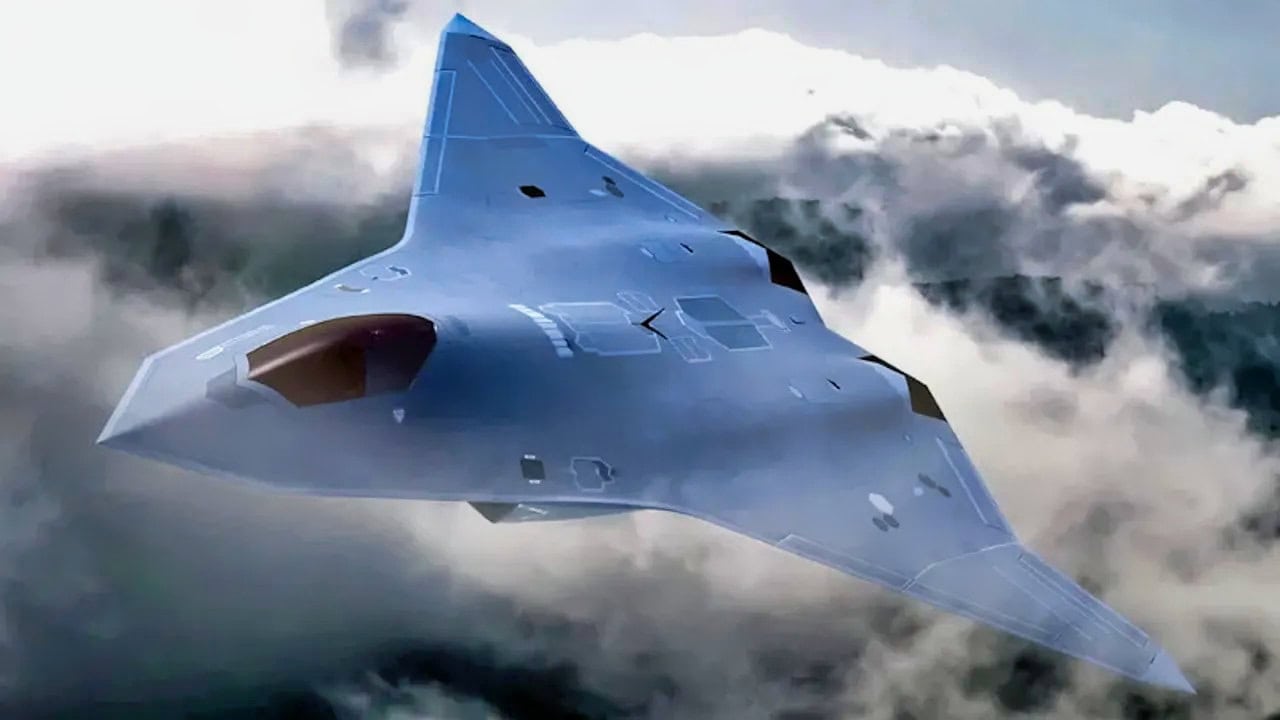
F/A-XX. Image Credit: Creative Commons.
The F/A-XX, frozen by the Pentagon in June 2025 to go “all in” on the F-47 and then revived by congressional appropriators with $897 million and bill language prohibiting the department from pausing or killing it, is now headed for a downselect between Boeing and Northrop Grumman that Defense Secretary Pete Hegseth told Congress in April to expect around August, per USNI News reporting. Even at roughly 850 nautical miles, though, the carrier fighter’s real range extension is the ship beneath it, and moving the carrier closer to China’s coast trades the fighter’s range problem for the fleet’s missile problem.
The Counterpoints: Drones, Standoff Missiles, and the Cost Curve
The case that range is no longer the binding constraint deserves its full hearing. The CCA drones’ 700-plus-mile legs put missile magazines ahead of the crewed force; the Air Force just issued requirements for a family of next-generation missiles reaching out 1,000 nautical miles, Naval News reported, and demonstrated a B-2 killing a ship with a stealthy LRASM off Guam during Valiant Shield — standoff weapons shrink how close any aircraft must get.
The B-21 exists precisely because some Pacific missions were never going to be fighter missions. Agile combat employment disperses aircraft across small fields to complicate targeting. And the official defense of the F-47’s range figure is Allvin’s own: fielding a mix of assets while “keeping us on the right side of the cost curve,” because a fighter with 1,500-mile legs would cost and weigh so much that America could afford too few to matter.
All of it is true as far as it goes, and each mitigation doubles as a confession.
Drones that fly ahead still launch from the same distant bases. Standoff missiles need something survivable to find the targets.
The bomber is not an air-superiority machine. Dispersal is a plan for absorbing the blow that geography guarantees.
The mitigations are what a force builds when it has accepted that its fighters will start the war 500 miles too far away.
The Air Force finally wrote its numbers down, and the numbers say the honest thing out loud: the F-47 will out-fly every fighter America has ever fielded, the Navy picks its own long-legged jet next month, and Andersen Air Force Base is still 1,500 nautical miles from the Taiwan Strait.
The services can buy one program at a time. Nobody sells distance.
About the Author: Harry J. Kazianis
Harry J. Kazianis (@Grecianformula) was the former Senior Director of National Security Affairs at the Center for the National Interest (CFTNI), a foreign policy think tank founded by Richard Nixon based in Washington, DC. Harry has over a decade of experience in think tanks and national security publishing. His ideas have been published in the NY Times, The Washington Post, The Wall Street Journal, CNN, and many other outlets worldwide. He has held positions at CSIS, the Heritage Foundation, the University of Nottingham, and several other institutions related to national security research and studies. He is the former Executive Editor of the National Interest and the Diplomat. He holds a Master’s degree focusing on international affairs from Harvard University.