
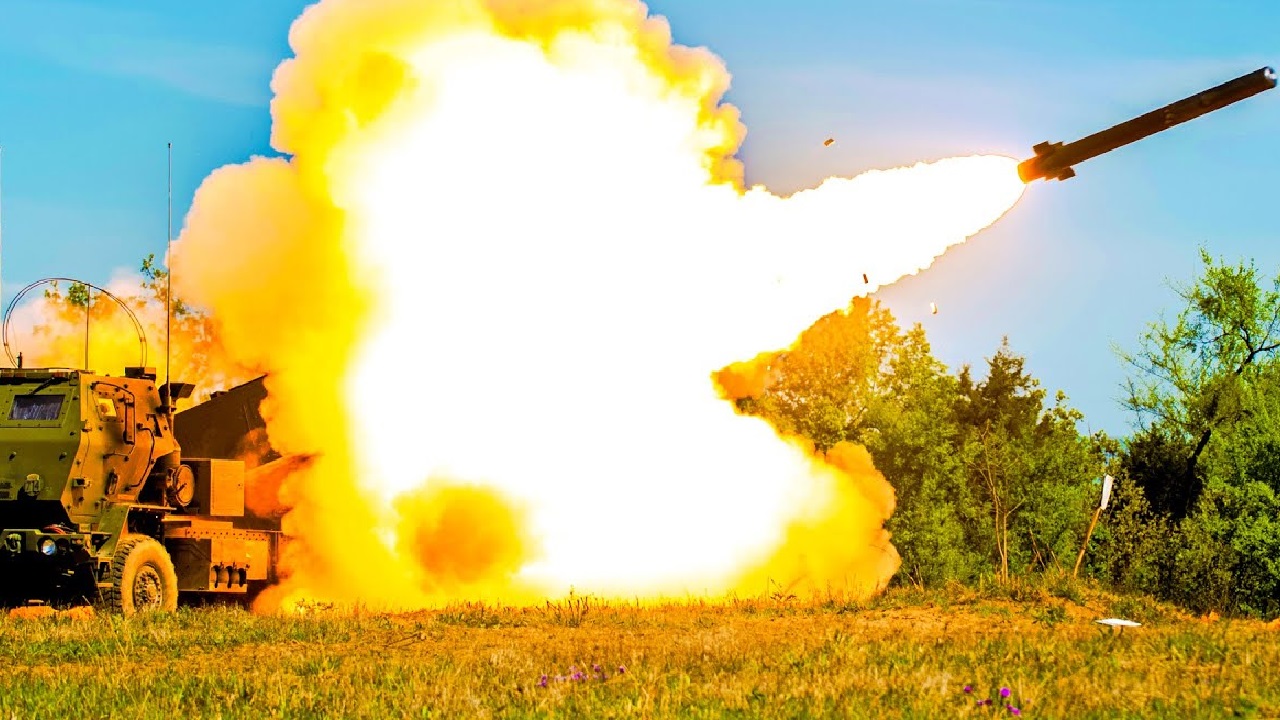
Every few weeks brings another Ukrainian strike on Russia’s premier air defense system, and every few weeks brings the same dismissal: it doesn’t matter, because Russia builds S-400s at a scale no strike campaign can outrun. The dismissal applies to exactly one part of the system — the launchers, which are trucks with tubes. Look at what Ukraine actually shoots, and a different war appears: a deliberate hunt for the handful of radars that let each battalion see, systems priced up to $60 million apiece, dependent on strained electronics lines, and so scarce that Russia’s own export customers have waited years while Moscow backfills its losses. Blind launchers are just parked missiles.
Russia’s S-400 Being Hunted by Ukraine: An Introduction
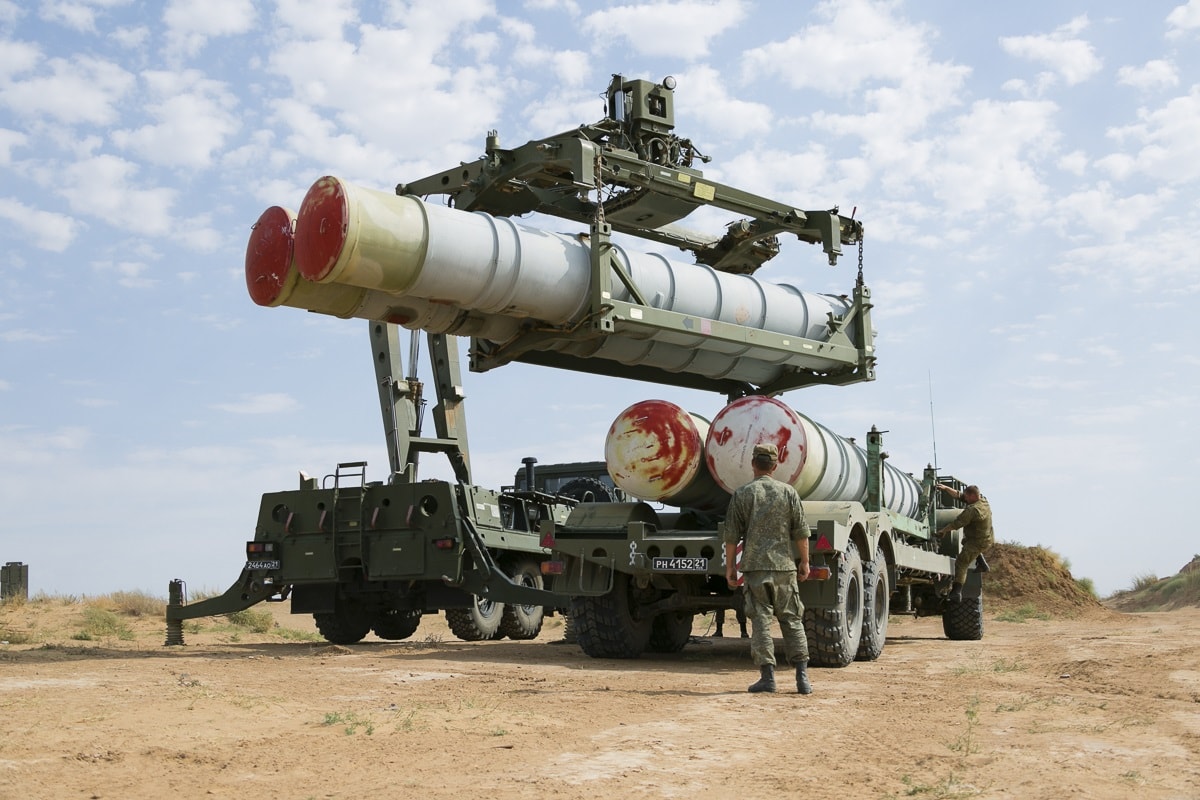
Russia’s S-400 Air Defense System. Image: Russian Military.
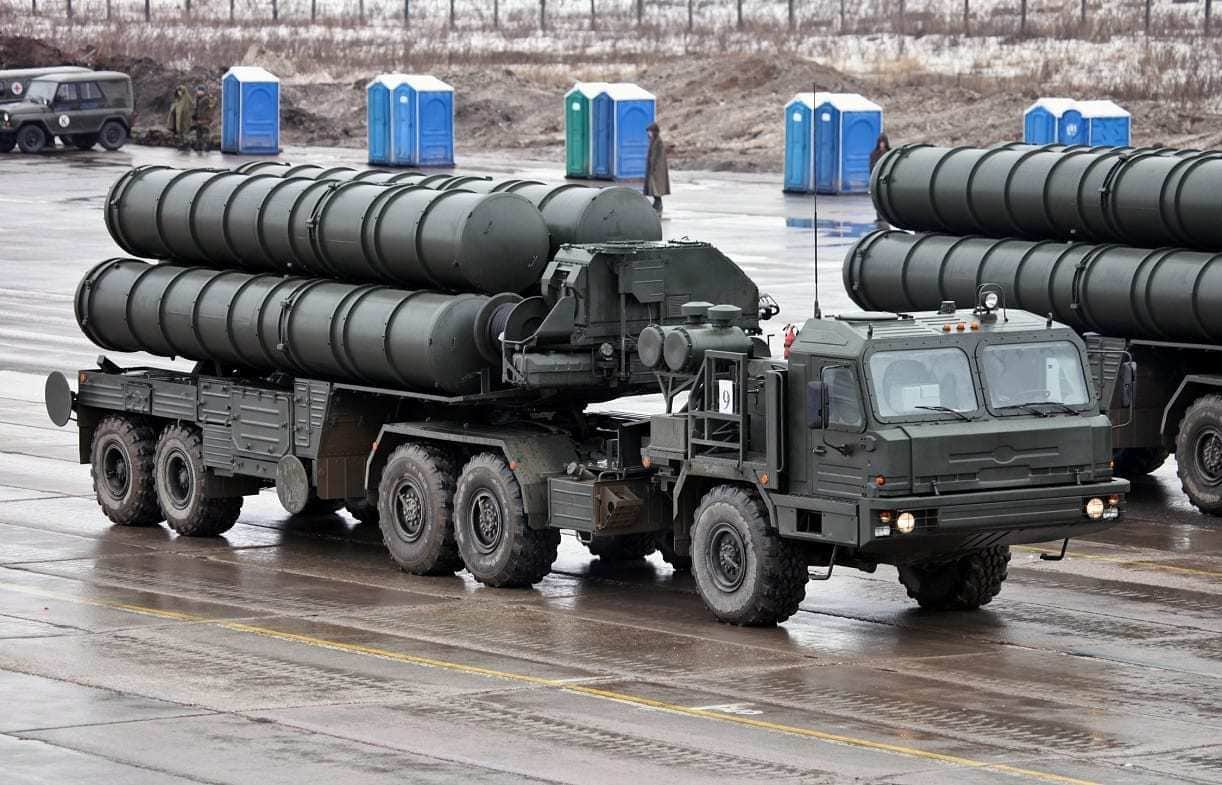
S-400. Image Credit: Creative Commons.
On the night of July 6, Ukraine’s Unmanned Systems Forces claimed one of their most significant strikes of recent months: 47 Russian military targets, including two S-400 launchers, one caught in a firing position in Bryansk and one destroyed inside a shelter in Crimea, both of which the force’s commander said had been lobbing ballistic missiles at Ukrainian ground targets. The common assessment followed within days, and it is the assessment that always follows: the losses are noise, because Russia’s production base, rebuilt under a Kremlin program dating to 2000 across plants in St. Petersburg, Kirov, and Nizhny Novgorod, turns out launchers by the regiment. As far as it goes, that account is right.
It also answers a question Ukraine stopped asking a long time ago, because the campaign against the S-400 was never really about the launchers.
Air Defense Anatomy: Launchers Are Trucks. Radars Are the System
An S-400 battalion is not a missile; it is an organism, one whose full architecture this site has mapped before. The standard formation pairs a command post with a layered radar suite: a 91N6 long-range acquisition radar, surveillance sets of the 96L6 family, and several 92N6 engagement radars, all feeding eight to twelve launchers that cannot guide a missile without them. The launchers are the most numerous and least sophisticated nodes in that chain.
The radars are the reverse: Ukrainian assessments describe the 92N6 as “the most valuable single component” of the whole system, because without it, the battery is blind.
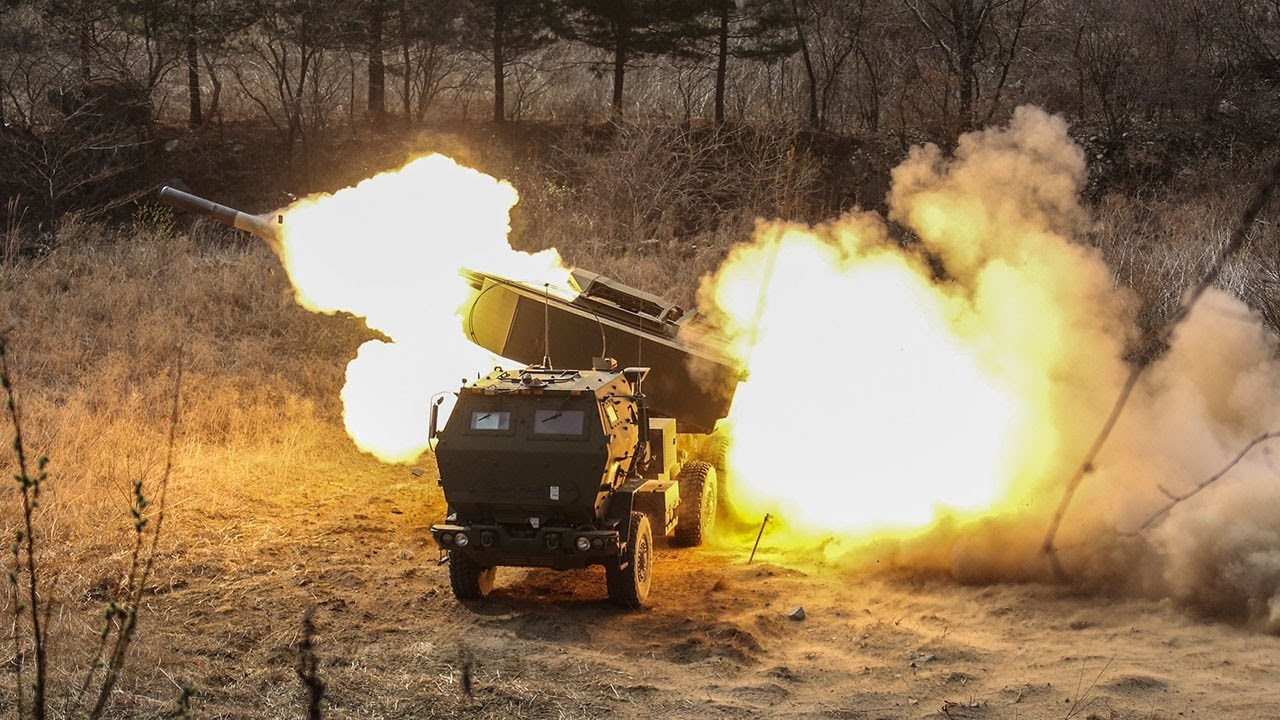
HIMARS attack. Image Credit: U.S. Military.
The November strike on an S-400 site in Crimea made the priority visible: four launchers confirmed destroyed, yes, but also both of the battery’s key sensors, a 96N6 early-warning radar and a 92N6 engagement radar, verified in post-strike imagery. This site has spent years debating the classic question of whether the S-400 can actually kill an F-22 or F-35; the Ukrainian campaign quietly replaced it with a cheaper one — whether the S-400 can keep its eyes on them.
Economics explains the targeting. December alone saw the Crimean grouping lose a dome-enclosed 64N6E detection radar, a Nebo-M valued above $100 million, a Kasta-2E2, a 96L6, and another 92N6, per Ukrainian reporting that prices a single 92N6 at roughly $30 million domestically and up to $60 million for export. A launcher is a fraction of that, and Russia can build launcher chassis the way it builds trucks. Precision radar arrays are a different industry.
The Ledger: A Campaign With a Name
None of this is inference; the Ukrainians describe the doctrine openly. The commander of the Unmanned Systems Forces, Robert Brovdi, calls it an “air defense reduction campaign” — destroying the systems that let Russia see and shoot before Ukrainian drones and missiles arrive — and the compiled records of the unit’s claimed strikes show what that means in practice: 54 air-defense assets over the winter (39 missile systems, 15 radar complexes), then 41 more in March and 38 in April.
An April analysis of the campaign found that radars were the most frequently struck category of Russian air-defense equipment in the first three months of this year, ahead of any missile system, and carried two arithmetic points: at the observed pace of roughly 40 systems a month, the attrition approaches 500 a year, and a Ukrainian intelligence source told the authors of a RUSI report that Russia is already consuming more interceptors than it can produce. The pattern predates this year. Ukraine’s GUR released footage last June of a single Crimea strike destroying two 92N2E fire-control radars, two 91N6E surveillance radars, and one missile battery, and it remains unclear whether the shooters are ATACMS, Neptunes, or the long-range drones that now do most of the work against batteries increasingly tasked with defending Russian airbases from exactly those weapons.
Production Reality: The Export Line Tells the Truth
The strongest version of the dismissal deserves its due: Russia’s launcher production genuinely is large, and the system’s reputation as one of the world’s premier air defenses was not invented. The tell is what happened to the customers. India signed a $5.43 billion deal in 2018 for five S-400 regiments; three arrived, and the final two, originally due by 2023, have slipped year after year, with Russia now committing to the fourth in 2026 and the fifth in 2027, and reporting across the delay consistently attributing the slippage to Moscow’s need to replace its own wartime losses and feed the front first.
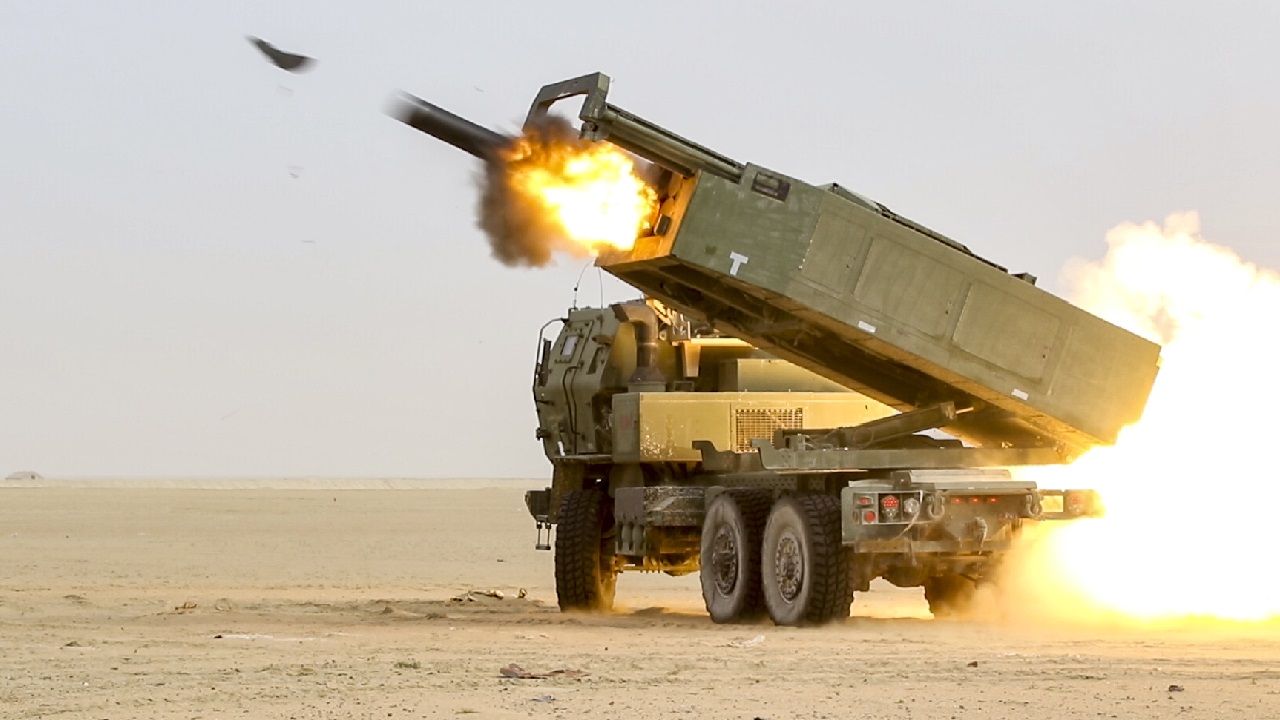
U.S. Soldiers assigned to the 65th Field Artillery Brigade fire a High Mobility Artillery Rocket System (HIMARS) during a joint live-fire exercise with the Kuwait Land Forces, Jan. 8, 2019, near Camp Buehring, Kuwait. The U.S. and Kuwaiti forces train together frequently to maintain a high level of combat readiness and to maintain effective communication between the two forces. (U.S. Army photo by Sgt. Bill Boecker)
A production base that could rapidly regenerate everything Ukraine destroys does not keep its most important arms customer waiting four extra years. Defense Express has reported a stranger detail underneath: Almaz-Antey sourcing components for the 96L6 radar from China, a hint of where the bottleneck actually lies. And Ukraine is bombing that bottleneck directly. In March, Storm Shadow missiles struck the Kremniy El plant in Bryansk, one of Russia’s largest military microelectronics producers, whose components feed the S-300 and S-400 families, among others, with more than 90 percent of its output going to the defense industry; strikes on Voronezh’s semiconductor plants followed in June. The campaign runs from the radar on the launch pad to the chips that would replace it.
The Counterpoints: What the Dismissal Gets Right
Honesty requires the other ledger. Launcher replacement is visibly working, which is the true core of the common assessment.
Russian electronic warfare has genuinely degraded Ukraine’s precision weapons, with assessments crediting it for blunting ATACMS in particular, which constrains how efficiently the radar hunt can run. Nearly every figure above is Ukrainian-sourced — General Staff statements, Brovdi’s tallies, GUR footage, SBU claims — and Kyiv has every incentive to count generously, though the highest-value kills come with imagery.
Russia’s deployed base is deep, by some counts more than 50 S-400 squadrons, and radar replacement is slow, not impossible; Almaz-Antey can build 92N6s, just not at drone-war pace while sanctioned and supplying a front.
All of that is true, and none of it answers the arithmetic.
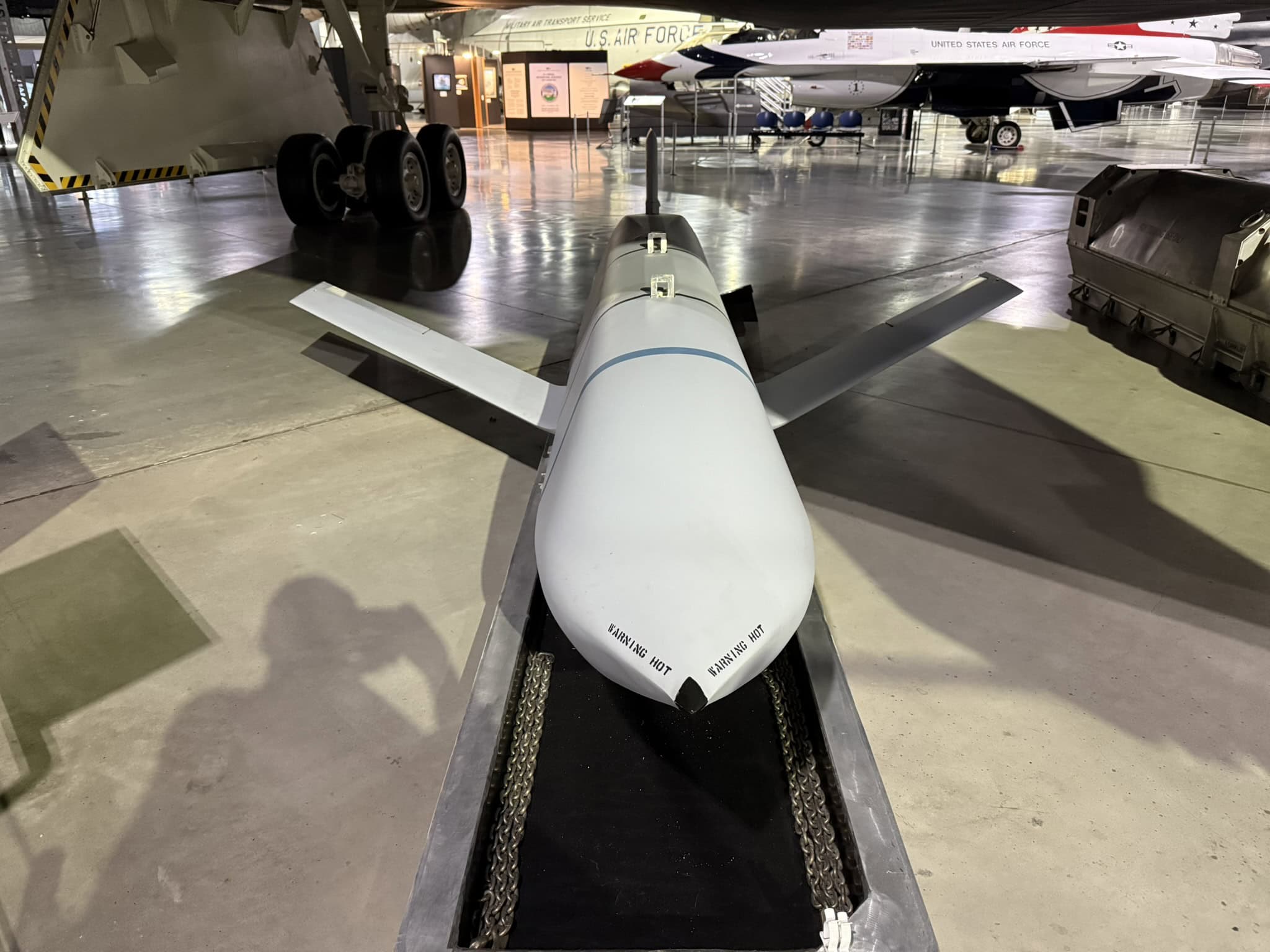
JASSM Missile. 19FortyFive Image.
A campaign striking dozens of air-defense assets a month, aimed at the two to four scarce sensors in each battalion rather than the twelve cheap trucks beside them, does not need to run Russia out of launchers. It needs to blind batteries faster than a strained electronics industry can restore their sight, and the export queue suggests that the race is already close.
Which is the answer to the dismissal, and the part the stealth-versus-S-400 debate never priced in.
That debate always assumed the system’s eyes would be intact for the duel. Ukraine’s contribution to it was to skip the duel and shoot the eyes.
However many launchers roll off the lines in St. Petersburg and Kirov, the contest over Russian airspace is being decided radar by radar — and radars are the one part of the Triumf that does not come off a truck assembly line.
About the Author: Harry J. Kazianis
Harry J. Kazianis (@Grecianformula) was the former Senior Director of National Security Affairs at the Center for the National Interest (CFTNI), a foreign policy think tank founded by Richard Nixon based in Washington, DC. Harry has over a decade of experience in think tanks and national security publishing. His ideas have been published in the NY Times, The Washington Post, The Wall Street Journal, CNN, and many other outlets worldwide. He has held positions at CSIS, the Heritage Foundation, the University of Nottingham, and several other institutions related to national security research and studies. He is the former Executive Editor of the National Interest and the Diplomat. He holds a Master’s degree focusing on international affairs from Harvard University.

