
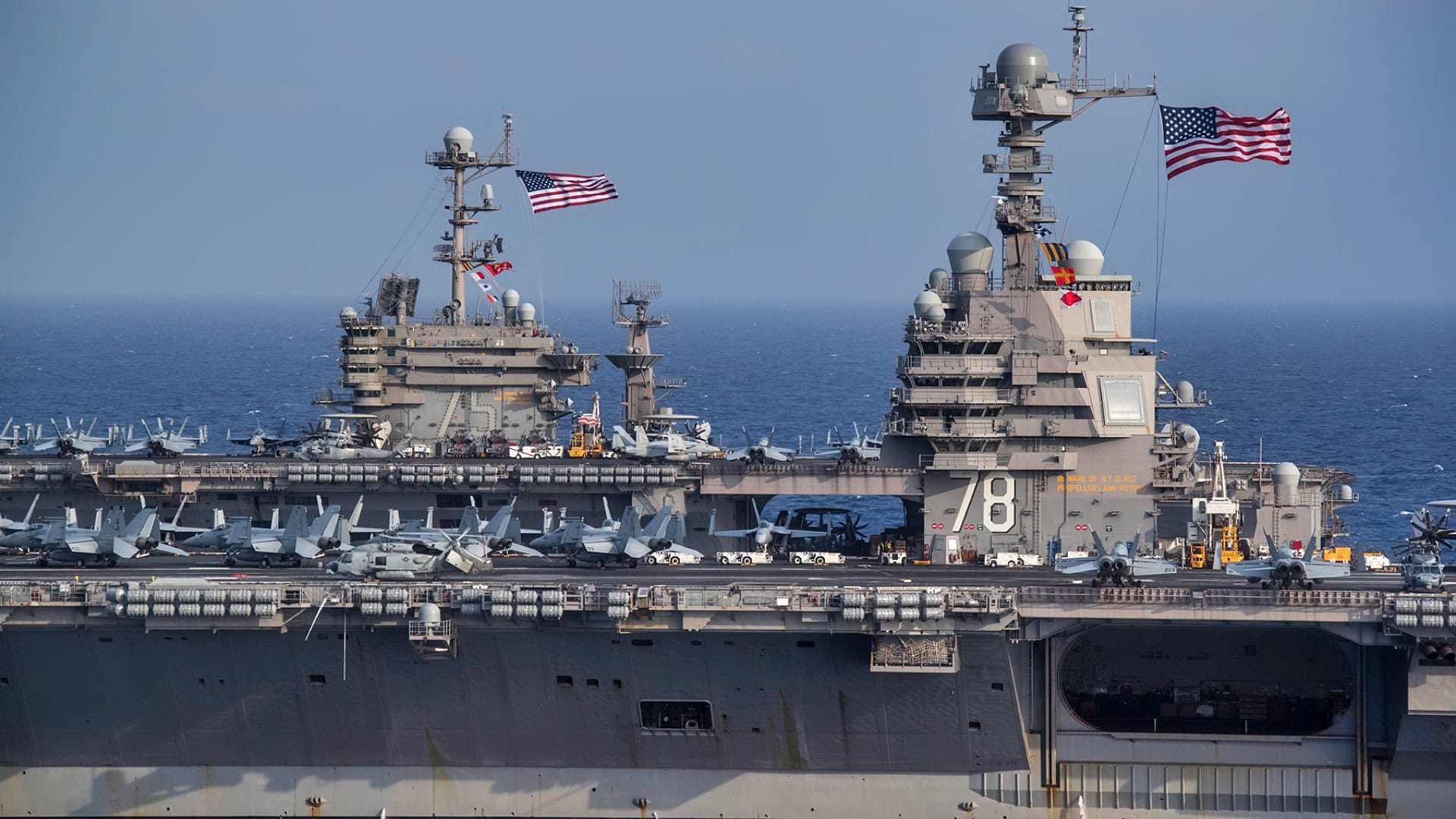
Gerald R. Ford Aircraft Carrier to Be Out of Action for 18 Months: The USS Gerald R. Ford supercarrier will be busy again. But this time, the “business” will be conducted with workers and technicians who will ensure the ship goes on active duty once more. The Gerald R. Ford has entered a maintenance period known as a planned incremental availability (PIA). This downtime usually lasts about six to eight months for most carriers.
Six, Six, and Six
Workers on the Ford will have their work cut out for them. It will likely be out of action for a total of 18 months due to problems caused by a fire on board during its last record-setting deployment. The sewage and toilet system also needs a complete set of repairs. So that adds up to a PIA for six months, the toilet fixes for six months, and the fire-damage overhaul for an additional half-year of work.
Can the PIA Be Finished in Six Months?
The Ford is currently berthed at the Norfolk Naval Shipyard in Portsmouth, Virginia. This will be its home for the next year and a half. This is the first time a Ford-class carrier has gone through a PIA at this facility.
PIA’s have been more difficult to accomplish since the pandemic. There is a shortage of qualified shipyard workers, and because the damage aboard the Gerald R. Ford is extensive, the PIA will take longer.
The PIA Process Is Extensive
Technicians will first inspect the carrier from bow to stern. Around four thousand workers will conduct maintenance operations. The workers will check the main seawater valve. They will need to perform nozzle block inspections on the main engine high-pressure turbines. The catapults will need help. Other structural repairs are necessary, including work to the arresting gear, weapons elevators, and propulsion systems. Employees will also repair hangar bays, catwalks, and berthing spaces.
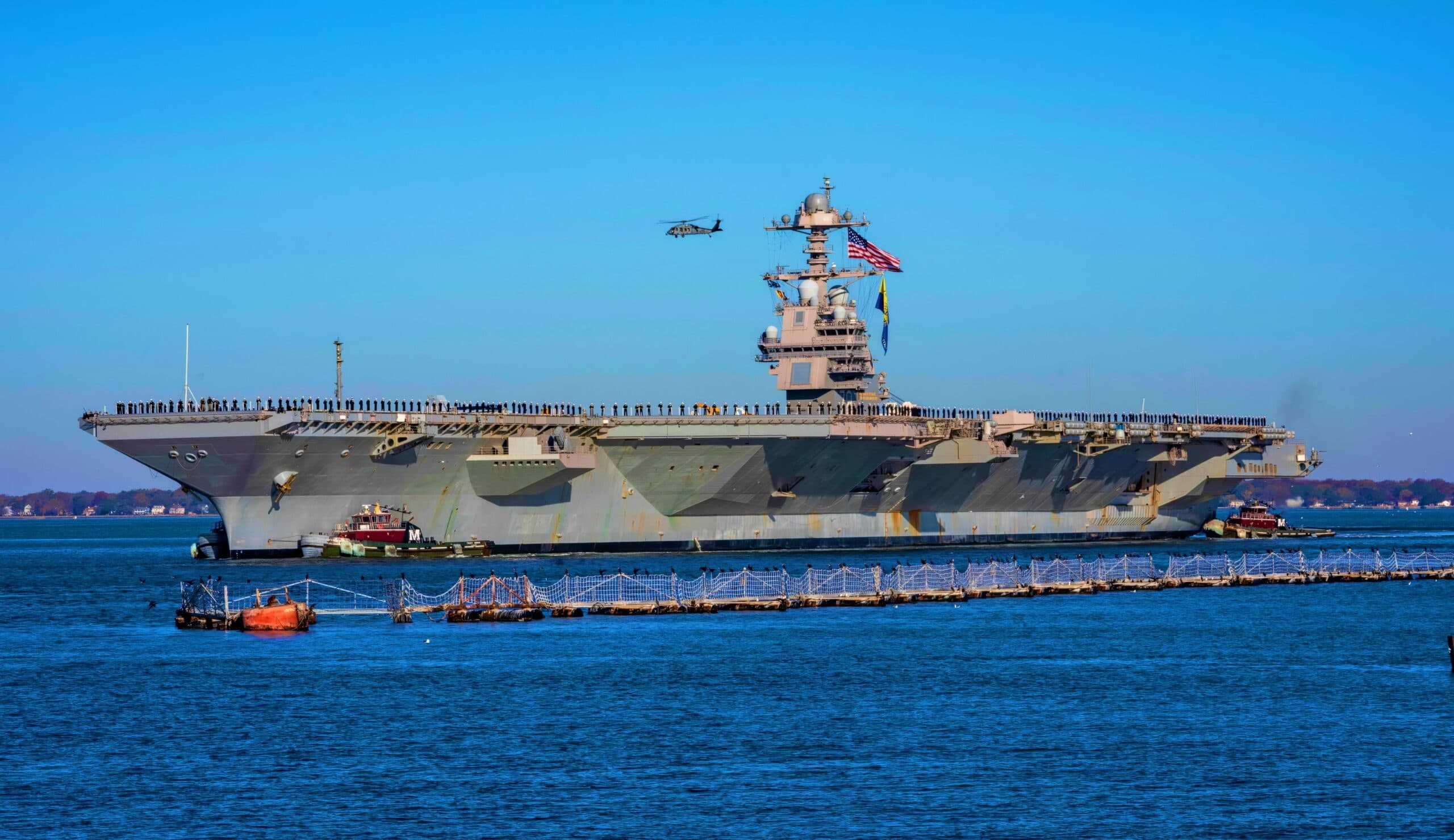
NORFOLK (Nov. 26, 2022) The USS Gerald R. Ford (CVN 78) returns to Naval Station Norfolk after completing their inaugural deployment to the Atlantic Ocean with the Gerald R. Ford Carrier Strike Group (GRFCSG), Nov. 26. The GRFCSG, returned to Naval Station Norfolk following a scheduled deployment with Allies and partners in an effort to build strategic relationships and contribute to a stable and conflict-free Atlantic region, while also showcasing the U.S. Navy’s most advanced class of aircraft carrier. (U.S. Navy Photo/Video by Mass Communication Specialist First Class Nathan T. Beard)
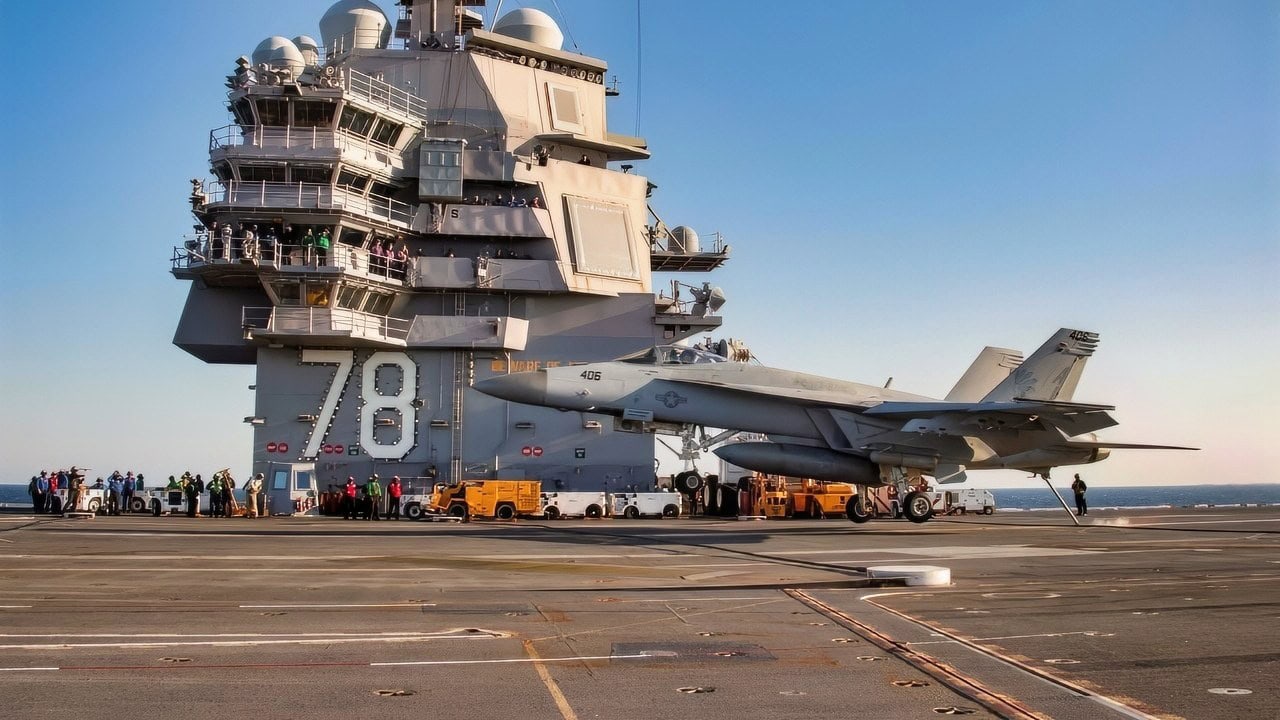
USS Gerald R. Ford Supercarrier Flight Deck. Image Credit: Creative Commons.
Toilets Are on the Fritz
Other priorities are the ship’s sewage system. There are 650 toilets on board, and they have not worked properly. There are sets of ten throughout the carrier. They depend upon a specialized vacuum-suction system, rather than traditional gravity plumbing. The toilets are similar to those on board a cruise ship. One single valve, known as the Vacuum Collection, Holding and Transfer (VCHT) system, must be overhauled. This is the main job, and it will be crucial to determine whether the workers can keep the system operating consistently.
While the ship was deployed, maintainers worked around the clock to keep the VCHT system from failing. Flushing was difficult, and many toilets were out of action for most of the deployment. This was frustrating for the crew and created messes that were constantly addressed by shipmates onboard.
A Cry for Help
Ford had called for help with the damaged toilets 42 times since 2023, with 32 declarations coming in 2025 alone. There were 205 toilet failures over four days that year, NPR reported.
Fire Damage Is Extensive
That’s not all. A fire on the ship caused extensive damage in March. Flames sparked in the main aft laundry room. This spread to 100 birthing spaces where the crew lives and sleeps. Two hundred sailors sustained breathing injuries. Six hundred sailors were unable to rest in their bunks and had to sleep on cots elsewhere on the ship. The Ford needed emergency repairs at Souda Bay, Crete.
Emergency Repairs Needed After the Fire
To temporarily address the fire damage, the Navy sent 43 employees from the Norfolk Naval Shipyard to assist with emergency repairs.
Rear Admiral Kavon Hakimzadeh, the commander of Norfolk Naval Shipyard, said that “they went through, they established temporary ventilation, temporary lighting,” Hakimzadeh told the Virginia Ship Repair Association in a recent podcast, USNI reported.
“We set up temporary power to the combat systems back aft where we were splicing 440 cable, and you know, and did kind of the fundamental getting ships’ crew back into, not the condemned spaces, but the affected spaces there,” he added. “And they did it over the course of five days, and they did it out at sea.”
The Ford completed its 326-day deployment, the longest since the Vietnam War. You can bet the sailors were glad to be home after they traversed the Atlantic four times.
What If the Repairs and PIA Only Took 12 Months?
The carrier will certainly need some tender loving care, and the entire repair process could be trimmed to 12 months instead of 18, but we’ll err on the side of caution and predict that everything will take 18 months.
The overall inspection for damage could take three months to determine what the damage is and how the systems will be fixed. Then the regular PIA commences while employees work on the plumbing and fire damage.
This will be slow and painstaking work, requiring the utmost attention to detail throughout the process. The Navy claims the PIA will be conducted on schedule and on budget, but it is not clear how long the sewage issues and fire damage will take to fully repair – we can only estimate.
What Happens Next?
The Navy will conduct an after-action review of the Ford to determine how the new carrier has performed in high-intensity warfare during Operation Epic Fury. The brass will file a report that determines how well the Ford-class can recover after a difficult, long-lasting deployment. Sailors’ morale will also be addressed while the ship is in PIA status.
We will keep you updated on the Ford’s repair period. Hopefully, the Navy can trim this process down to 12 to 14 months, but 18 months is more likely until the Ford is fully in shape. This will take another carrier out of action during a perilous time for the Navy, as more air strikes have recently been conducted against Iran. The Navy needs the Gerald R. Ford to return to action in a way that enables it to dominate the high seas and conduct its carrier aviation operations to the utmost.
About the Author: Dr. Brent M. Eastwood
Author of now over 3,500 articles on defense issues, Brent M. Eastwood, PhD, is the author of Don’t Turn Your Back On the World: A Conservative Foreign Policy and Humans, Machines, and Data: Future Trends in Warfare, plus two other books. Brent was the founder and CEO of a tech firm that predicted world events using artificial intelligence. He served as a legislative fellow for US Senator Tim Scott and advised the senator on defense and foreign policy issues. He has taught at American University, George Washington University, and George Mason University. Brent is a former US Army Infantry officer. He can be followed on X @BMEastwood.