
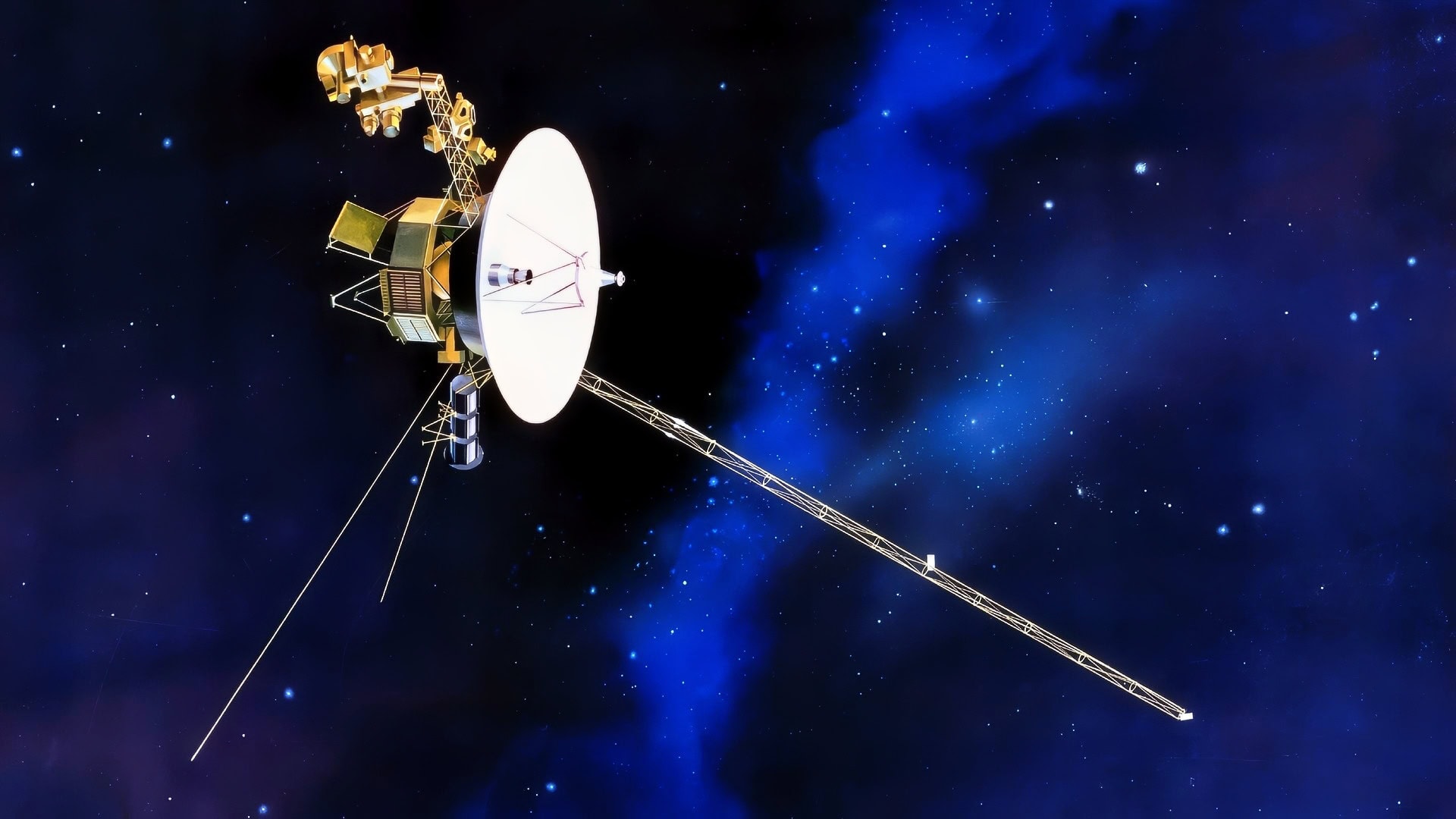
In 1977, NASA launched two spacecraft during an ultra-rare window of celestial mechanics that humanity would not experience again for roughly 175 years.
The window occurred when Jupiter, Saturn, Uranus, and Neptune entered an unusually favorable configuration, allowing a single spacecraft trajectory to visit each planet.
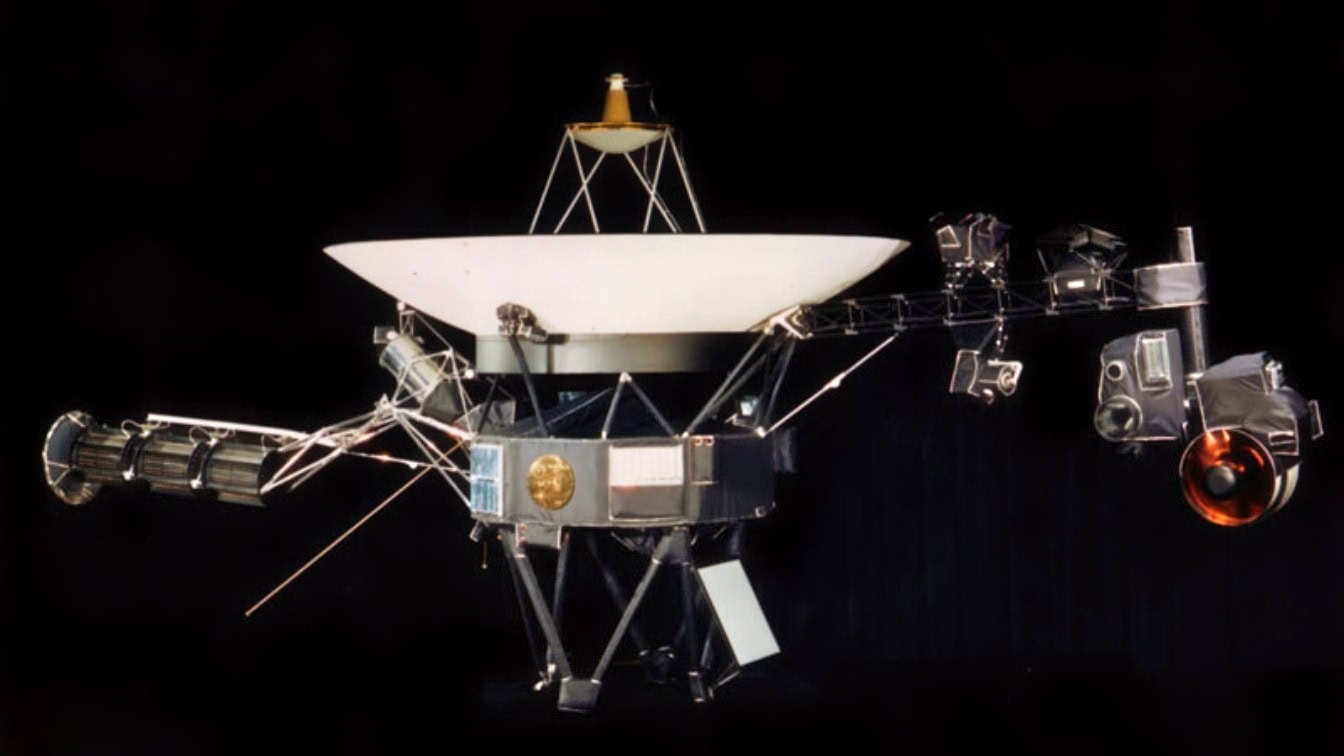
Voyager 1 NASA Image Creative Commons
Without such favorable geometry, visiting all four giant planets with the propulsion technology available in the 1970s would have been significantly more difficult, expensive, and time-consuming.
The spacecraft was Voyager, and it turned celestial mechanics into propulsion; rather than carrying enough fuel to accelerate across the outer solar system, Voyager repeatedly borrowed propulsive momentum from the planets themselves in what is arguably the most productive reconnaissance mission ever conducted in the field of interplanetary exploration.
The missions resulted in the first detailed surveys of the giant planets. Scientists were pleased to discover active worlds where they expected dead zones.
The reconnaissance would, in turn, shape the Galileo and Cassini programs. And years later, once the spacecraft had exited our solar system, they would send back the first direct measurements from interstellar space.
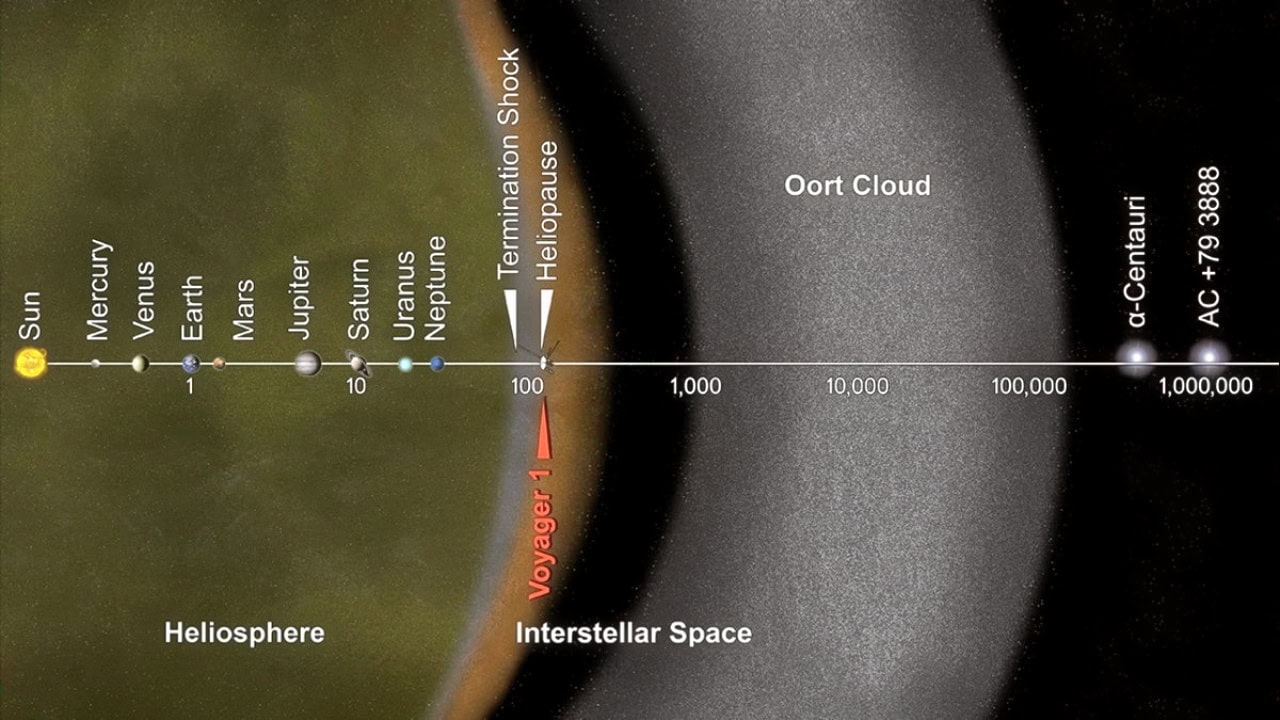
Voyager 1. Image Credit: NASA.
Once in 175-Year Opportunity
In the 1960s, JPL researchers studying outer-planet trajectories recognized an extraordinary opportunity developing for the late 1970s. Gary Flandro, a graduate student at JPL, was part of the team that recognized Jupiter, Saturn, Uranus, and Neptune would align in a way that let a spacecraft exploring one of the giant planets use the momentum of that planet to redirect toward the next giant planet—and so on.
It’s important to note, however, that the planets were not literally lined up in a straight line. Instead, their relative orbital positions provided the geometry needed for sequential gravity assists.
Without the favorable geometry, a conventional mission to Neptune, for example, using direct flight and the propulsion available in the 1970s, could have taken about three decades.
But the “Grand Tour” concept reduced the travel time to about 12 years, less than half. Originally, NASA contemplated a more elaborate Grand Tour program, but costs and politics forced the agency to adopt a cheaper mission outline, which would initially come to be known as Mariner Jupiter-Saturn 1977 before evolving into Voyager.
Although NASA didn’t ultimately fund the original Grand Tour idea, engineers preserved enough of the capability and trajectory that Voyager 2 effectively carried out the mission outline anyway.
Planetary Slingshot
The Voyager missions relied on gravity assists, which, of course, are much more sophisticated than simply falling toward a planet and then speeding up.
For a proper gravity assist, relative to the planet, the spacecraft falls into its gravity well, accelerates as it approaches, then loses that gravitationally acquired speed as it leaves.
But because the planet itself is traveling around the Sun at enormous velocity, the spacecraft can pass behind the planet relative to its orbital motion and exchange momentum with it.
From the Sun’s reference point, the spacecraft emerges traveling faster and on a different trajectory.
Perhaps more importantly, the encounter between spacecraft and planet changes the spacecraft’s direction. This is how one spacecraft ping-ponged from Jupiter to Saturn to Uranus to Neptune.
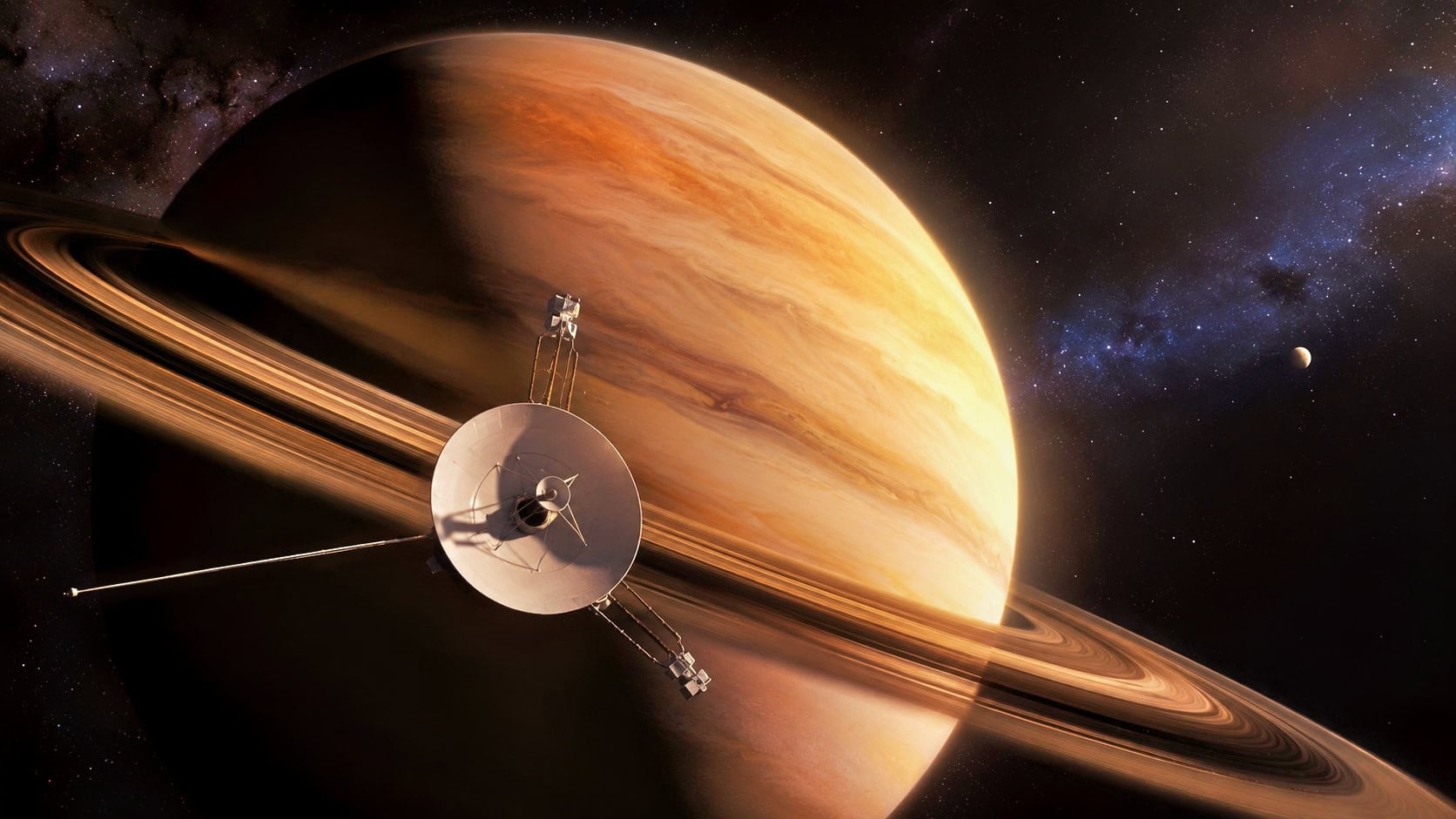
Pioneer 11 Probe NASA and Saturn Artist Rendering. Image Credit: Banana Nano.
Every planetary encounter had two jobs: first, conduct scientific exploration at the current planet, and second, hit a precise exit corridor and slingshot toward the next planet.
Of course, this was extraordinarily complex, and the navigation had to be fine-tuned and perfect, or small errors would compound into gigantic misses over interplanetary distances.
Two Voyagers, Two Missions
Voyager 2 actually launched first, on August 20, 1977. Voyager 1 followed on September 5, 1977, but followed a faster trajectory and reached Jupiter and Saturn first.
Voyager 1 was also deliberately routed close to Titan during its Saturn encounter.
This was significant because Titan was considered so scientifically important.
But by visiting Titan, the mission accepted a trade-off: the Titan flyby pulled Voyager 1 out of the planetary plane, eliminating any possibility of continuing to Uranus and Neptune. Still, Titan was deemed worthwhile enough to cut the tour short.
Besides, Voyager 2 followed behind with plans to retain the Grand Tour trajectory, which included the outermost planets.
So Voyager 1 explored Jupiter, then Saturn and Titan before entering an interstellar trajectory. Voyager 2 visited Jupiter, then Saturn, then Uranus, then Neptune before entering an interstellar trajectory.
To this day, Voyager 2 remains the only spacecraft ever to visit Uranus or Neptune. This fact alone demonstrates how difficult outer-solar-system exploration is, even today, almost 50 years after the Voyager missions launched.
Built to Last
Each Voyager spacecraft weighed about 1,820 pounds at launch, and its design centered on a large 12-foot high-gain antenna.
Communication between the spacecraft and Earth naturally became more difficult as radio signals spread over greater distances.
At today’s distances, Voyager’s transmitter is extraordinarily weak by terrestrial standards, yet NASA’s Deep Space Network can still extract its signal from background noise.
But the spacecraft is now so far away that commands and responses now involve many hours of one-way light travel, eliminating anything resembling real-time control.
To power spacecraft traveling such immense distances, the engineers had to get creative.
Solar power becomes increasingly impractical at giant-planet distances because sunlight obeys the inverse-square law.
So each Voyager was outfitted with three radioisotope thermoelectric generators (RTGs) fueled by plutonium-238.
RTGs don’t contain miniature turbines or conventional nuclear reactors. Instead, they generate heat from radioactive decay.
Thermocouples convert the temperature difference directly into electricity.
The advantage here is that there are no moving parts, and the system offers extreme reliability.
This has equated to continuous operation far beyond the practical solar range.
The downside is that radioactive decay and degradation gradually reduce available electrical power. This has forced NASA to switch off instruments and heaters one by one to preserve the highest priority science.
1970s Technology
The odd thing about Voyager is that the spacecraft relies on computer systems that are completely primitive—even relative to modern consumer standards.
Yet the computers were so well-designed and purpose-built that they continue to serve a valuable role today.
Instead of one general-purpose processor, Voyager relied on several specialized computer systems.
The memory capacity was measured in kilobytes, not gigabytes.
NASA logo at the Kennedy Space Center. Image by Harry J. Kazianis for 19FortyFive.
Yet these simple systems could control attitude, execute stored command sequences, manage instruments, encode telemetry, diagnose certain faults, and operate autonomously during long communication delays.
And during planetary encounters, images and data could be stored on a digital tape recorder and transmitted later.
Voyager showed that deep-space reliability often depends less on computer power than on simplicity, redundancy, and discipline.
Visiting the Giants
Voyager 1 reached Jupiter in March 1979 while Voyager 2 followed in July.
The visit yielded unprecedented detail of Jupiter’s atmosphere, the Great Red Spot, turbulent cloud bands, rings, magnetosphere, and the major moons.
The biggest revelation, however, was an active volcano—at the time, the first active volcano discovered beyond Earth —and it transformed thinking about planetary geology.
The Voyager mission also revealed fascinating terrain on Europa, one of Jupiter’s moons, including a comparatively smooth, fractured, icy surface. These discoveries would make Europa one of the most compelling targets in planetary science.
Voyager 1 reached Saturn in November 1980; Voyager 2 followed in August 1981.
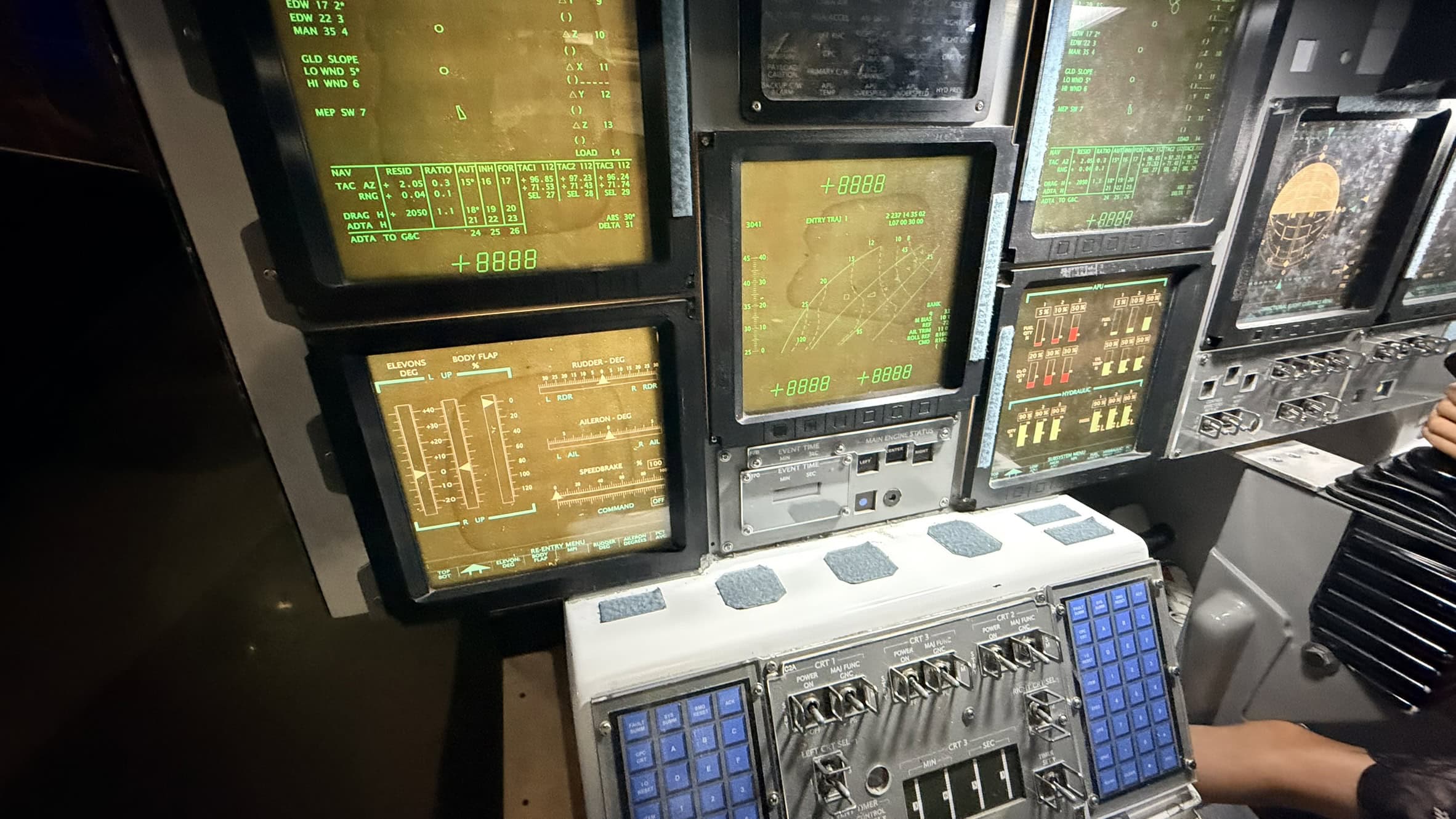
Space Shuttle Mock-up. Kennedy Space Center. Photo taken by Harry J. Kazianis for 19FortyFive.
The probes revealed Saturn’s rings as extraordinarily complicated structures rather than simple flat bands—thousands of ringlets and gravitational interactions showed the system was dynamic, while small moons helped shape ring edge structures.
But Titan became the crucial mystery. Voyager established that Titan possessed a remarkably dense atmosphere dominated by nitrogen and obscured by hydrocarbon haze.
Voyager’s camera couldn’t simply look through that orange atmospheric blanket and map the surface.
So instead of resolving questions about Titan, the Voyager 1 mission made the moon more interesting—an interest that continues today, as NASA plans the Dragonfly mission to explore Titan’s surface.
Voyager 2 reached Uranus in January 1986 and is still the only spacecraft ever to visit the planet.
Voyager found the world rotating on its side with an axial tilt of roughly 98° and contributed to the discovery of 10 new moons, revealing an extraordinarily unusual magnetic field that was substantially tilted relative to the rotational axis and displaced from the planet’s center.
Voyager photographed dense cliffs, grooves, fault systems, and bizarre patterned terrain, suggesting an unexpectedly complex geological history and undermining the assumption that distant giant planets were featureless.
Voyager 2 reached Neptune in August 1989, 12 years after launch, and it remains humanity’s only close reconnaissance of the planet.
The encounter revealed a surprisingly dynamic atmosphere, despite the planet receiving only a tiny fraction of our sunlight—extraordinarily powerful winds, among the fastest known in the solar system, reached roughly 1,200 mph.
What was particularly surprising about the wind is that it was able to occur despite Neptune receiving so little solar energy.
The moon Triton delivered another surprise because Voyager observed active geyser-like plumes, generally interpreted as nitrogen-driven, and Triton’s strange retrograde orbit suggested the moon was a captured object, probably originating in the Kuiper Belt.
The scientific contributions of the Voyager missions are hard to overstate. Similarly, the engineering accomplishment of using 1970s technology to explore the outer planets and interstellar space for the first (and in some instances, last) time is remarkable.
Voyager’s contributions remain relevant today, having informed subsequent interplanetary exploration efforts.
About the Author: Harrison Kass
Harrison Kass is a writer and attorney focused on national security, technology, and political culture. His work has appeared in Tablet, City Journal, The Hill, The Spectator, and The Cipher Brief. He holds a JD from the University of Oregon and a master’s in Global & Joint Program Studies from NYU. More at harrisonkass.com.