
Key Points and Summary – As drones proliferate, navies are revisiting an old idea with new technology: the aircraft-carrying submarine. Past concepts failed because manned aircraft were too large and launching them exposed submarines.
-Today’s smaller UAVs change the equation, enabling tube-launched or vertical-launch drones for surveillance, targeting, and strike support in contested waters.
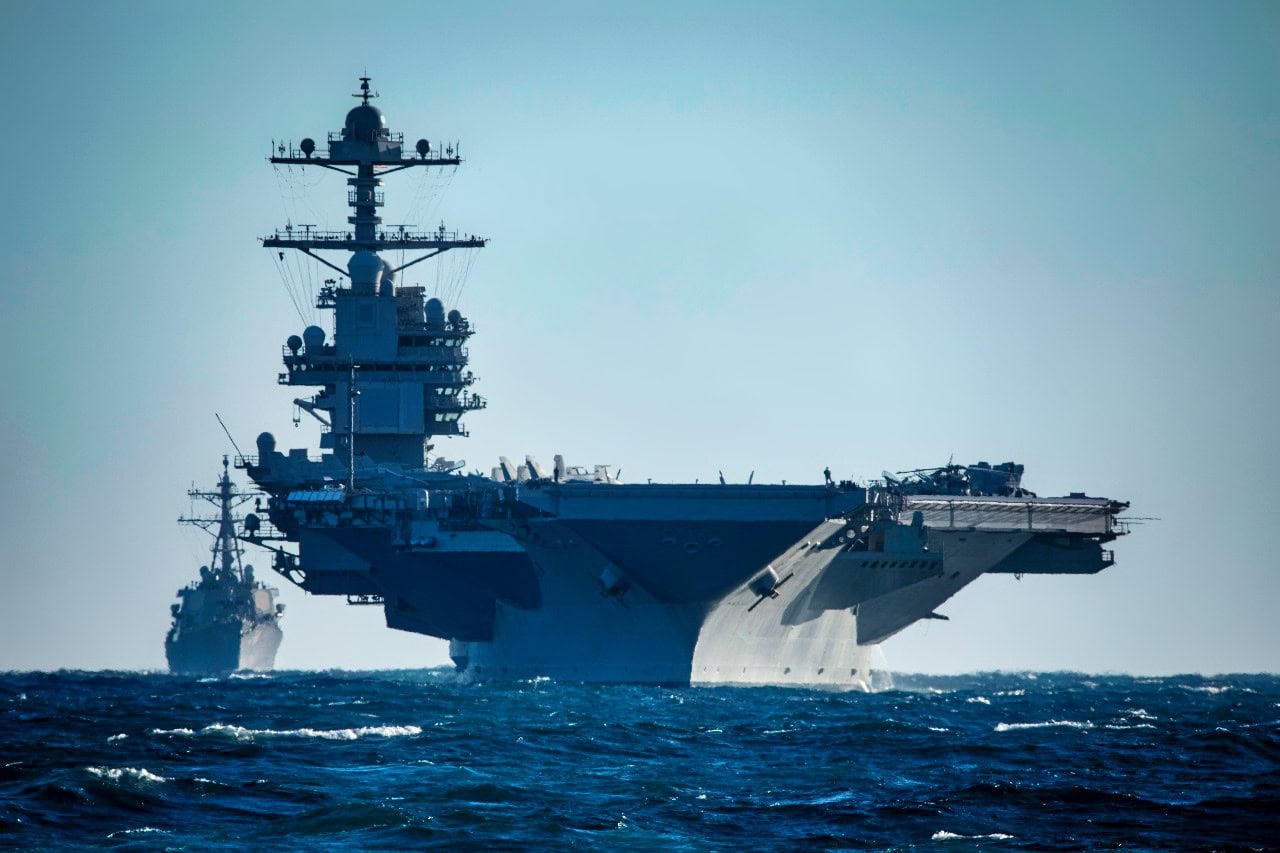
Ford-Class Aircraft Carrier U.S. Navy. Image Credit: Creative Commons.
-The U.S. has tested submarine-launched drones and explored systems like Blackwing, while China appears to be advancing unmanned surface and undersea platforms that could evolve into drone-carrying subs.
-The promise is modular reach and persistence; the challenge is power, communications, autonomy, and safe undersea integration.
The Next “Aircraft Carrier” Might Be a Submarine Full of Drones
The future of warfare is shifting fast toward drones and other autonomous systems. As Ukraine has shown, unmanned aerial vehicles and other strike systems are much easier to manufacture and field in large numbers than manned assets and high-cost missiles.
The infatuation with unmanned systems has also made its way to various navies around the world—future naval warfare may revolve largely around UAV aircraft carriers. Specifically, submarines with drone-carrying capabilities might slip past defenses and operate in environments where access to manned assets has been denied.
The Aircraft-Carrying Submarine Concept Throughout History
The concept of an aircraft-carrying submarine has been around for longer than some people might think. The first instance of a submarine launching an aircraft occurred during World War I, when a German U-boat launched a small reconnaissance plane armed with a few 12-kilogram bombs.
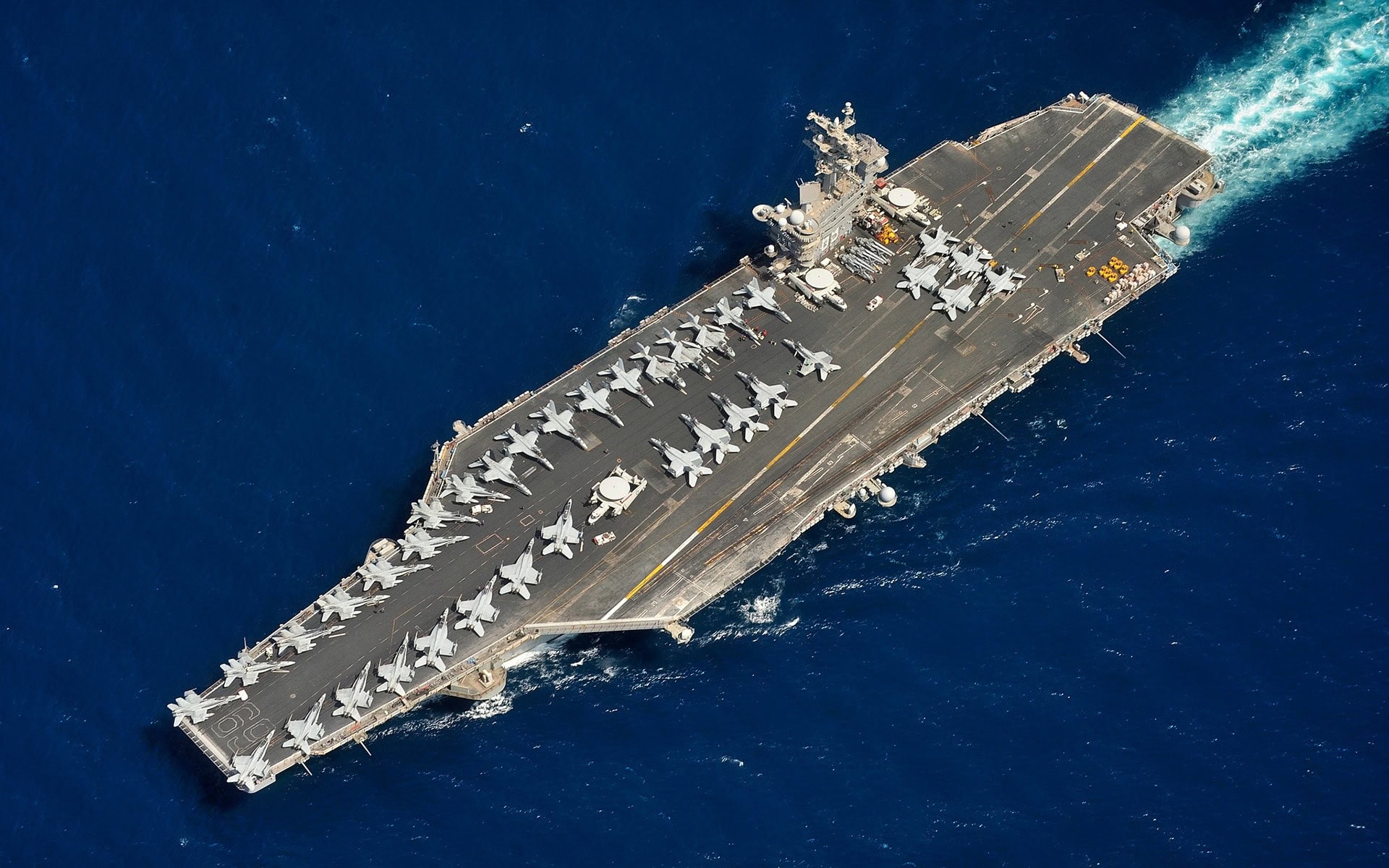
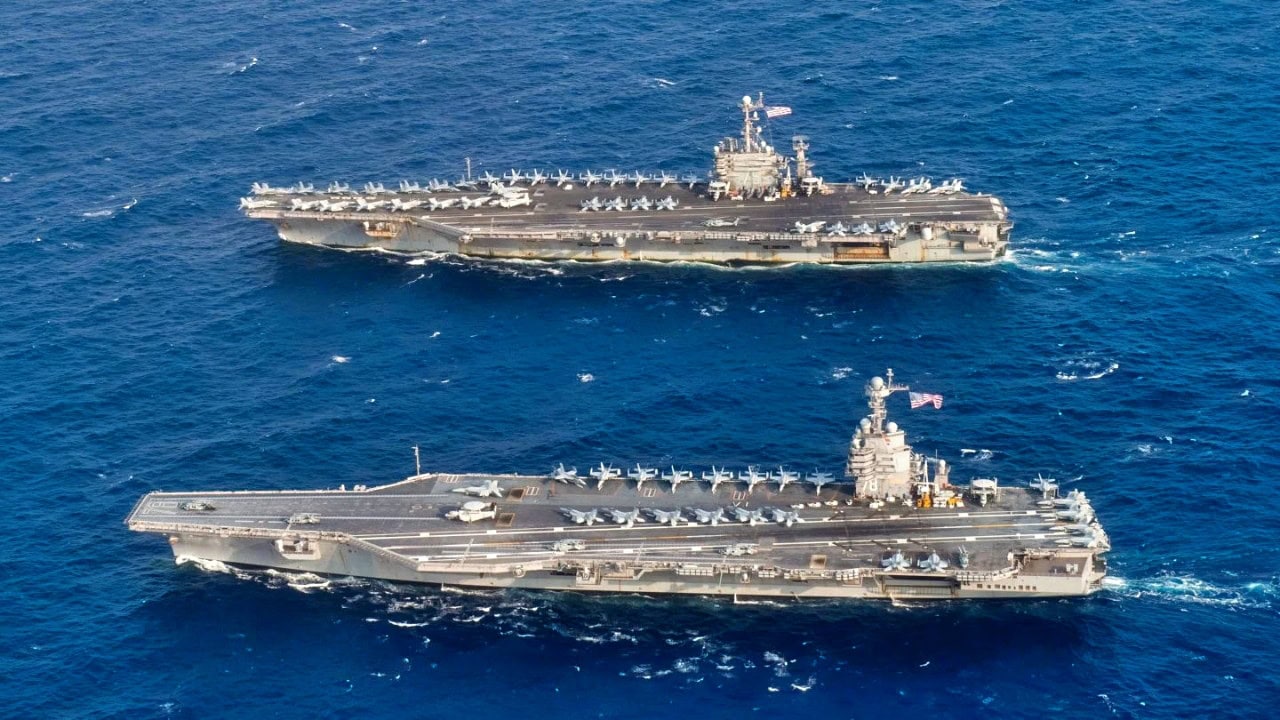
Nimitz-Class aircraft carrier. Image Credit: Creative Commons.
The plane managed to launch, drop a few bombs on London, and successfully return to its mothership. During World War II, Japan experimented heavily with the concept. The Imperial Japanese Navy constructed 47 submarines capable of carrying aircraft, although most could only carry one or two. The largest subs built by Japan, the I-400 class, could carry a maximum of three aircraft.
The U.S. and Soviet Union later experimented further with the aircraft-carrying submarine concept, but neither side took it very far. By that time, the limitations of aircraft-carrying submarines had become clear.
Aircraft were too big to transport and required much more deck space than any submarine could offer. Remaining surfaced to prepare and launch aircraft also posed significant risks to a submarine’s stealth and safety, especially as anti-submarine warfare tactics matured during the Cold War. Overall, the concept was impractical given the technological limitations of the time.
Recent Developments
Today, however, the aircraft-carrying submarine is making a comeback, but with a new twist: drones. UAVs are much easier to carry than manned aircraft and are much easier to launch, thanks to modern vertical-launch technology.
The U.S. Navy has been exploring the idea for some time. As far back as 2013, the USS Providence (SSN-719) demonstrated the ability to launch a drone from a Sea Robin launch system. In 2016, the Navy made plans to integrate “Blackwing” surveillance drones, which can be launched from a submarine’s torpedo tubes. The U.S. placed an order for 120 of these drones in 2021.
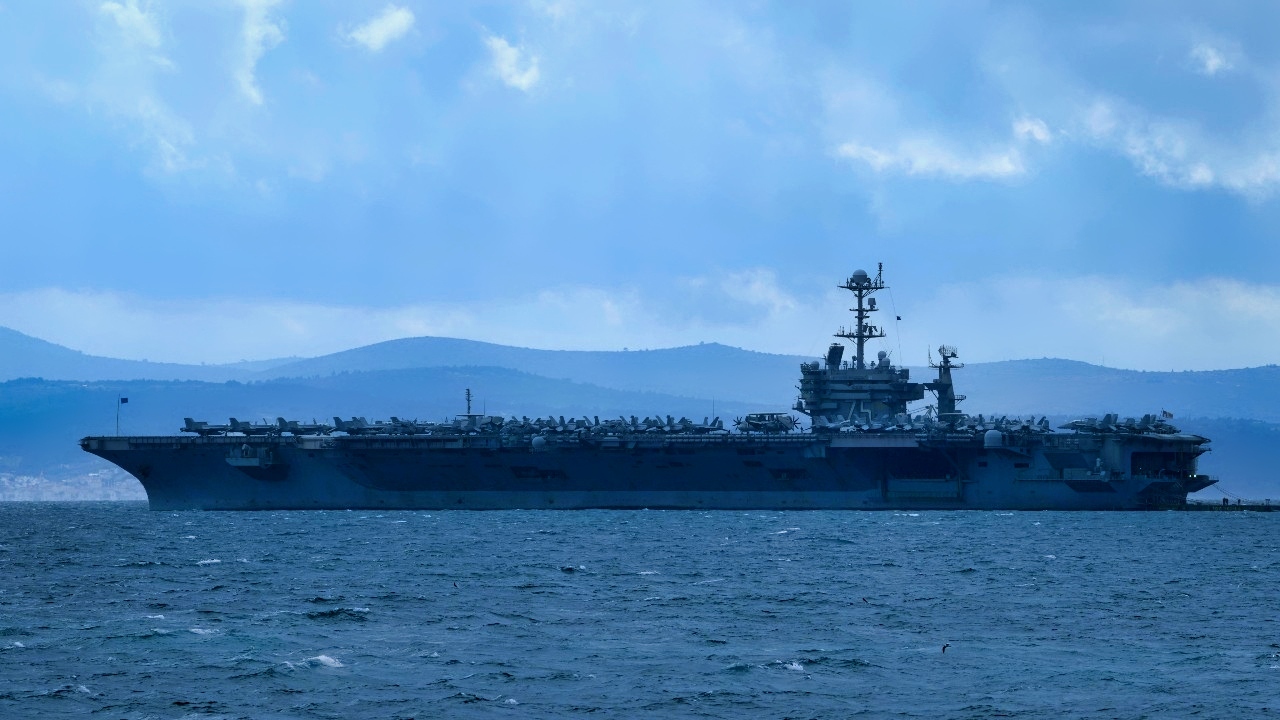
USS Harry S. Truman Aircraft Carrier. Image Credit: Creative Commons.
Obviously, the U.S. is not the only one pursuing UAVs. China has also been making significant progress toward naval-launched drones. Most recently, the People’s Liberation Army Navy (PLAN) has explored the use of “mini carriers” as dedicated drone carriers.
Initial analysis suggests these smaller vessels are mostly for testing purposes, but the military applications are more than apparent. The PLAN has also been constructing and testing what appear to be autonomous uncrewed submarines. This XXL submarine is the largest unmanned underwater vessel ever built and is made for targeting U.S. surface ships. While China has not yet revealed any drone-carrying submarines, such developments are likely only a matter of time. It would not be a surprise to anyone if China were already actively testing such vessels.
Drone-Carrying Submarines: Are They a Good Idea?
In today’s drone-centric environment, a submarine that can carry UAVs makes a lot of sense. It offers modularity and mission flexibility, allowing a single platform to carry multiple drones tailored for different tasks beyond simple military operations. It extends operational reach and persistence by enabling the submarine to loiter for long durations, recharge drones, and redeploy them sequentially, far beyond the endurance of a single drone.
It improves efficiency by reducing transit times to target areas and protecting sensitive equipment from surface conditions. In addition, it keeps humans out of hazardous environments—such as deep water, polar regions, or storm-prone seas—all while still performing complex tasks.

The Virginia-class submarine USS Vermont (SSN 792) makes her way up the Thames River and past Fort Trumble and the Coast Guard Cutter Borque Eagle as she returns home to Submarine Base New London on Thursday, December 24, 2020. The nineteenth and newest Virginia-class submarine she is the third U.S. Navy ship to be named for the Green Mountain State. (U.S. Navy Photo by John Narewski/Released)
But what might a dedicated drone-carrying submarine look like, and how would one design such a vessel? The hull and bay design must accommodate pressure differentials and hydrodynamic flow while providing a docking system for drones.
Energy systems need to include high-density batteries, fuel cells, or nuclear reactors to power both the submarine and onboard charging stations for drones. Autonomy and control systems must handle path planning, obstacle avoidance, mission scripting, and fault management, with redundancy and safe-mode behaviors to prevent cascading failures.
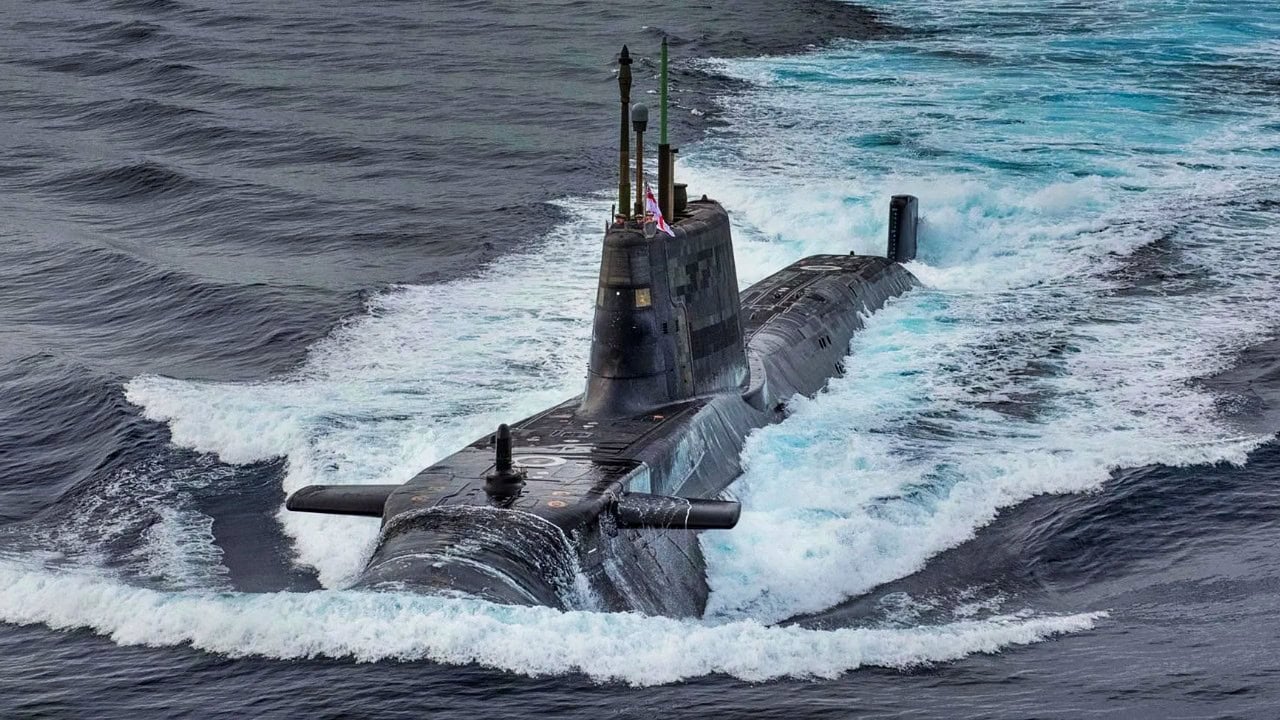
Astute-Class Submarine. Image Credit: Creative Commons.
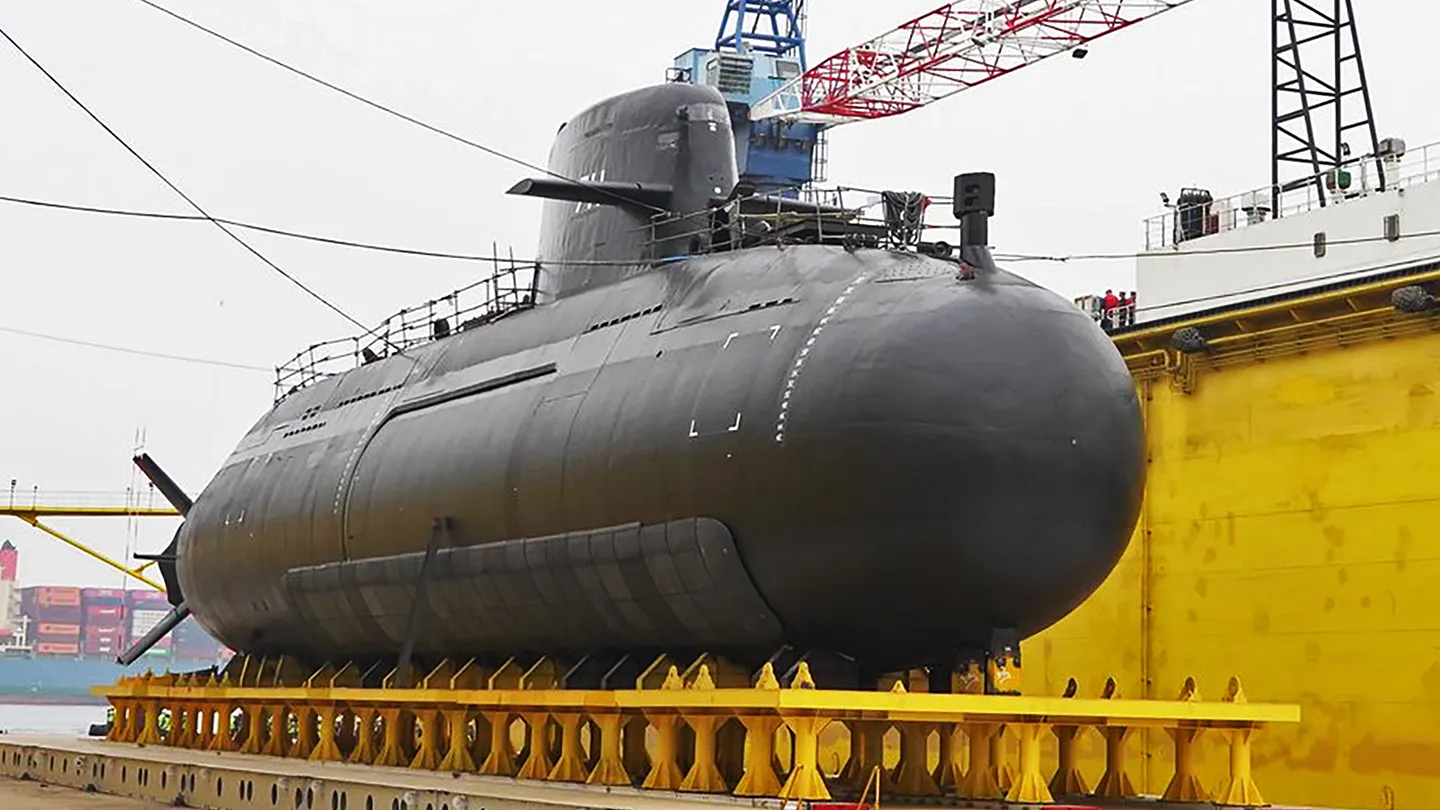
Hai Kun-Class Submarine. Image Credit: Taiwan Government.
Navigation without GPS requires inertial systems combined with Doppler velocity logs and acoustic ranging, supplemented by periodic surfacing for GPS fixes. Communication will rely on acoustic modems underwater, radio links at the surface, and satellite connections when surfaced—or via a companion surface drone.
It might be a while until such systems are operational. Drone integration with submarines will likely occur gradually before dedicated drone carriers are built.
About the Author: Isaac Seitz
Isaac Seitz, a Defense Columnist, graduated from Patrick Henry College’s Strategic Intelligence and National Security program. He has also studied Russian at Middlebury Language Schools and has worked as an intelligence Analyst in the private sector.