
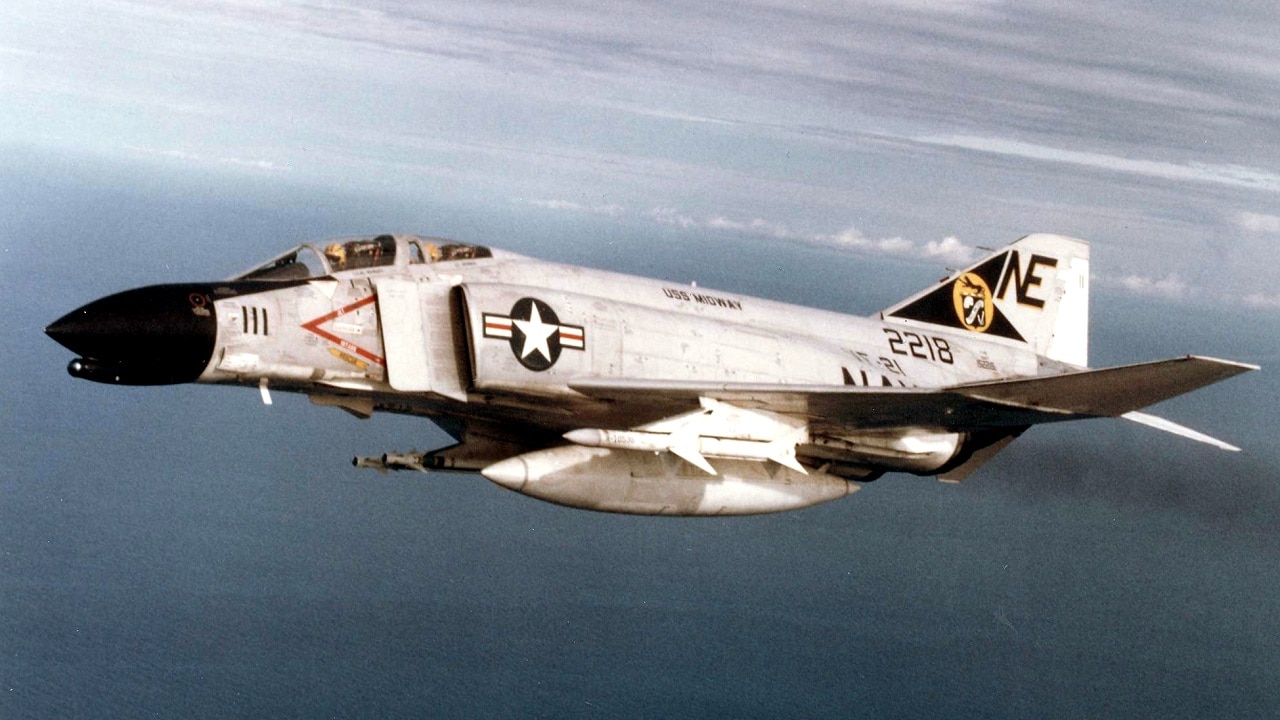
Synopsis: Lyndon B. Johnson’s 1965 “Peace Without Conquest” speech and quote at Johns Hopkins offered a haunting paradox: he framed guns, bombs, rockets, and warships as “symbols of human failure,” even as he argued for escalation in Vietnam.
-The address tried to balance moral language about diplomacy and negotiation with a blunt promise of endurance, resolve, and sustained military pressure.
-That tension became a defining feature of Johnson’s presidency—an ambitious Great Society agenda at home paired with a war that consumed his political capital and reshaped how history remembers him.
-The quote endures because it captures regret wrapped around power.
Lyndon Johnson’s “Guns And Bombs” Quote Summed Up in 1 Contradiction
“The Guns And The Bombs, The Rockets And The Warships, Are All Symbols of Human Failure,” — President Lyndon B. Johnson
The quote, “The guns and the bombs, the rockets and the warships, are all symbols of human failure,” is from President Lyndon B. Johnson’s speech at Johns Hopkins University in 1965 during his “Peace Without Conquest” speech.
Johnson stressed that while military power is necessary at times, it signifies a breakdown in diplomacy and reason, representing a sad witness to humanity’s follies rather than actual strength.
Johnson Was Arguing In Favor Of Vietnam Escalation
In his speech on April 7, 1965, Johnson delivered this address to justify escalation in Vietnam, arguing for peaceful negotiation while also asserting American commitment to defending South Vietnam, contrasting military means with the goal of lasting peace.
Johnson added, “We hope that peace will come swiftly. But that is in the hands of others besides ourselves. And we must be prepared for a protracted, continued conflict. It will require patience and bravery, the will to endure as well as the will to resist.
“I wish it were possible to convince others with words of what we now find it necessary to say with guns and planes: Armed hostility is futile. Our resources are equal to any challenge. Because we fight for values and we fight for principles, rather than territory or colonies, our patience and our determination are unending.”
Johnson’s quote reveals the difficult choices he faced as a leader, sending troops to war; he saw military might as a regrettable necessity, not a glorious achievement.
Johnson’s Meaning of the Quote
Lyndon Johnson suggested that the need for destructive weapons indicates a failure to resolve conflicts through wisdom, compromise, or peaceful means.
Johnson’s comments at Johns Hopkins included the following: “We often say how impressive power is. But I do not find it impressive at all. The guns and the bombs, the rockets and the warships, are all symbols of human failure. They are necessary symbols. They protect what we cherish. But they are witness to human folly.”
He acknowledged these symbols of power were vital for protecting our established values, but were ultimately evidence of human shortcomings, not triumphs. But yet, soon thereafter, he committed hundreds of thousands of US troops to Vietnam.
Lyndon Johnson, 36th President Of the United States
Despite his many achievements, President Johnson is most remembered, rightly or wrongly, for taking America to war in Vietnam. What ultimately became one of the costliest wars in United States history.
Many historians believe that President Kennedy was growing disillusioned with our backing of South Vietnam and was considering withdrawing US troops. However, after his assassination, the fear over the spread of communism won out, and Johnson committed the US to the war.
Early Career Success And The Presidency
Johnson was born on August 27, 1908, in central Texas, not far from Johnson City, where his family settled.
In 1937, he was elected to the House of Representatives and married Claudia “Lady Bird” Taylor the year before. During World War II, he was a Lieutenant Commander in the Navy and saw action in the South Pacific, and was awarded the Silver Star.
After serving for six terms in the House, Johnson was elected to the Senate in 1948. In 1953, he became the Senate minority leader, and in 1955, when the Democrats won control of the Senate, he became the Senate majority leader.
In the 1960 presidential campaign, Johnson’s candidacy fell short, but he was selected as John F. Kennedy’s running mate and was elected vice president.
On November 22, 1963, after Kennedy was assassinated, Johnson was sworn in as president.
Johnson’s “Great Society” Program
President Johnson followed through on some of President Kennedy’s goals for his administration, including a major civil rights bill and the creation of Medicare.
Johnson’s Great Society was an ambitious set of domestic programs launched in the 1960s to end poverty, reduce racial injustice, and improve education, healthcare, urban life, and the environment, representing the most significant expansion of the welfare state since the New Deal.
He outlined the key initiatives in a commencement speech at the University of Michigan on May 22, 1964.
His vision included Medicare and Medicaid, federal aid for education, the Civil Rights Act, and programs for urban renewal and conservation, aiming for a society with access to knowledge, beauty, and community for all.
To combat issues with urban areas, Johnson created the Department of Housing and Urban Development. For the elderly, Johnson helped create Medicare, a program that provides federal funding for many health care costs for seniors.
The “medically indigent” of any age who could not afford access to health care would be covered under a related “Medicaid” program funded in part by the national government and run by states under their welfare programs.
NASA’s Space Program
During the Johnson administration, NASA conducted the Gemini crewed space program, developed the Saturn V rocket and its launch facility, and prepared to make the first crewed Apollo program flights.
The first two missions, Apollo 7 and the first crewed flight to the Moon, Apollo 8, were completed by the end of Johnson’s term. He congratulated the Apollo 8 crew, saying, “You’ve taken … all of us, all over the world, into a new era.”
Lyndon Johnson’s Costly Vietnam Policy
President Johnson’s Vietnam policy was characterized by escalating U.S. involvement through increased troops and bombing (like Operation Rolling Thunder), driven by the Cold War policy of containment and belief in the Domino Theory.
After just committing to advisers in the early days of the war, Johnson committed over 500,000 troops at its peak, resulting in an Americanization of the war, which further hurt the South Vietnamese cause.
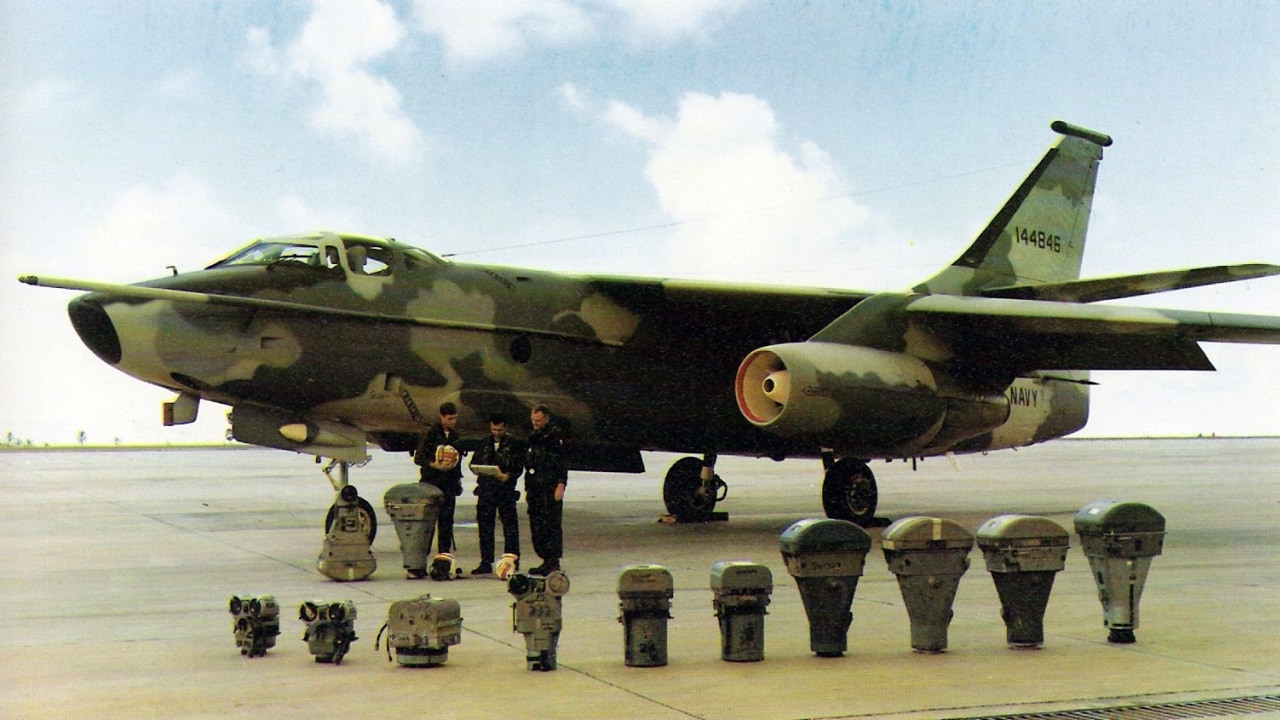
A camouflaged U.S. Navy Douglas RA-3B Skywarrior aircraft of reconnaissance squadron VAP-61 World Recorders (BuNo 144846) at Naval Air Station (NAS) Agana, Guam. Standing beside it are PH1c R. Laurie, LTJG D. Schwikert and LCDR Chas. D. Litford. On the ground in front of them are twelve cameras. VAP-61 was performed reconnaissance missions over Vietnam until it was disestablished on 1 July 1971. 144846 became an ERA-3B in 1982. It was later sold to Hughes Aircraft, inherited by Raytheon, (civil registration N547HA) and finally srcapped in 1999.
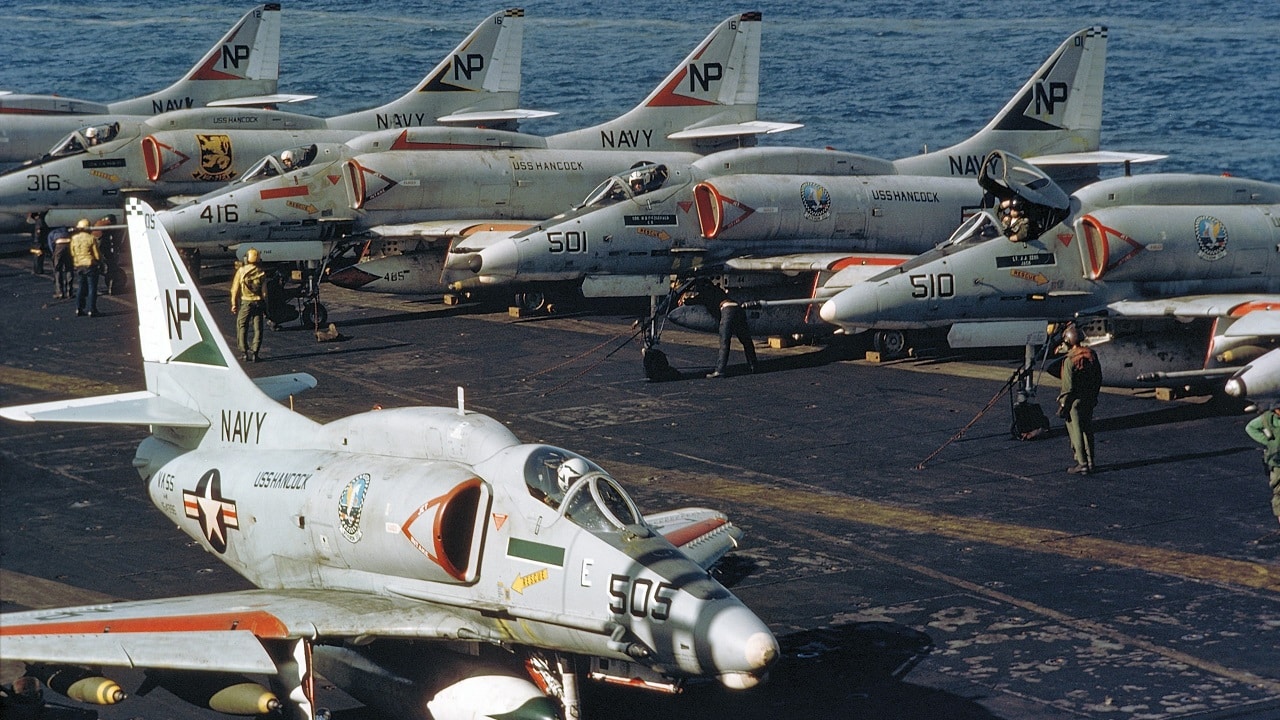
U.S. Navy Douglas A-4F Skyhawk of Attack Carrier Air Wing 21 (CVW-21) are parked on the flight deck of the attack aircraft carrier USS Hancock (CVA-19), armed for a mission over Vietnam on 25 May 1972. Skyhawks NP-501 (BuNo 155046), -505 (BuNo 154996), and -510 were assigned to Attack Squadron 55 (VA-55) “Warhorses”, NP-316 to VA-212 “Rampant Raiders”, NP-412 and NP-416 to VA-164 “Ghost Riders”. The aircraft are armed with Mk 82 (500 lb/227 kg) and Mk 83 (1000 lb/454 kg) bombs. CVW-21 was assigned to the Hancock for a deployment to Vietnam from 7 January to 3 October 1972.
Despite his desire to focus on his Great Society domestic agenda, he pursued a limited war strategy, trying to steer clear of Cambodia and Laos, and tried to avoid bombing Hanoi, which hurt the war effort.
Lyndon Johnson agonized over the conflict and eventually decided not to seek re-election because of the war’s growing unpopularity.
After President Nixon’s election, Johnson retired to his Texas ranch. He died on January 22, 1973, of a heart attack and was buried in the family’s private cemetery in Texas.
About the Author: Steve Balestrieri
Steve Balestrieri is a National Security Columnist. He served as a US Army Special Forces NCO and Warrant Officer. In addition to writing on defense, he covers the NFL for PatsFans.com and is a member of the Pro Football Writers of America (PFWA). His work was regularly featured in many military publications.