
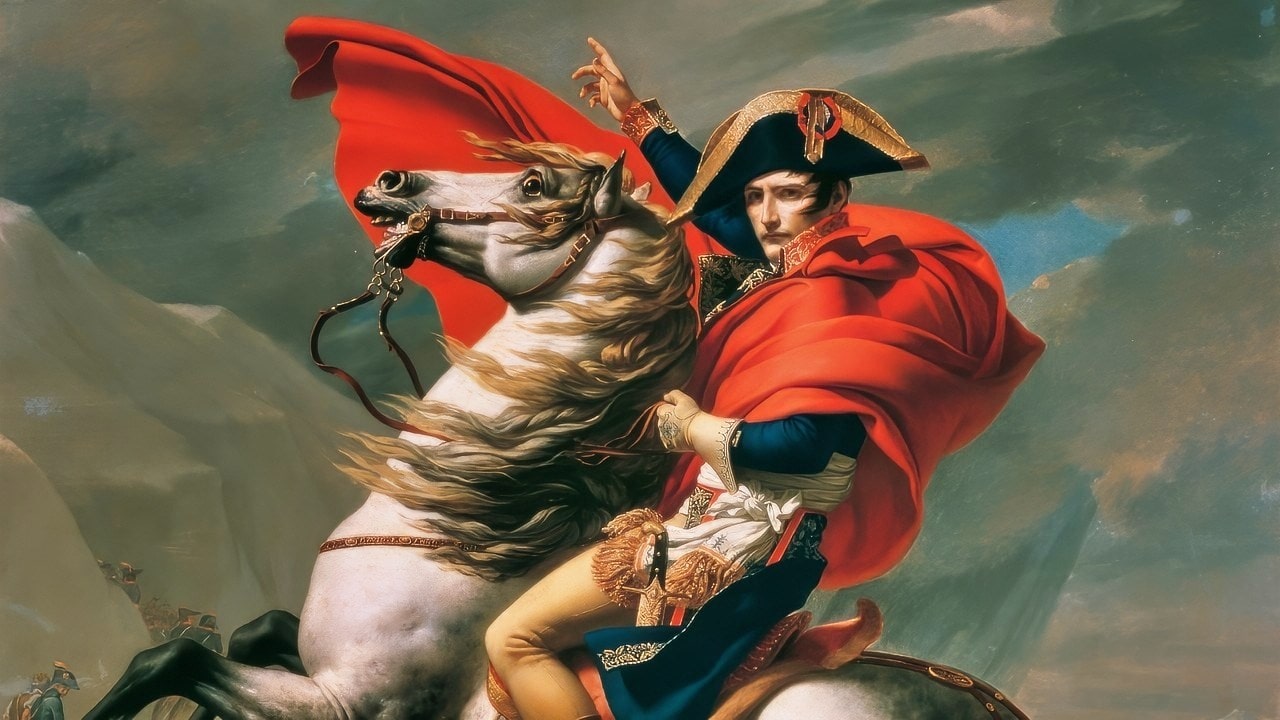
Synopsis: Napoleon understood that winning often means controlling chaos—but his career also shows how quickly control can slip.
-This piece tracks three campaigns where his operational brilliance ran into strategic limits: Egypt, where Nelson’s victory at the Nile stranded the expedition; Russia, where scorched earth, Borodino’s attrition, and a burned Moscow turned occupation into ruin; and Waterloo, where timing, weather, underestimating Wellington, and failing to neutralize Blücher converged into a final defeat.
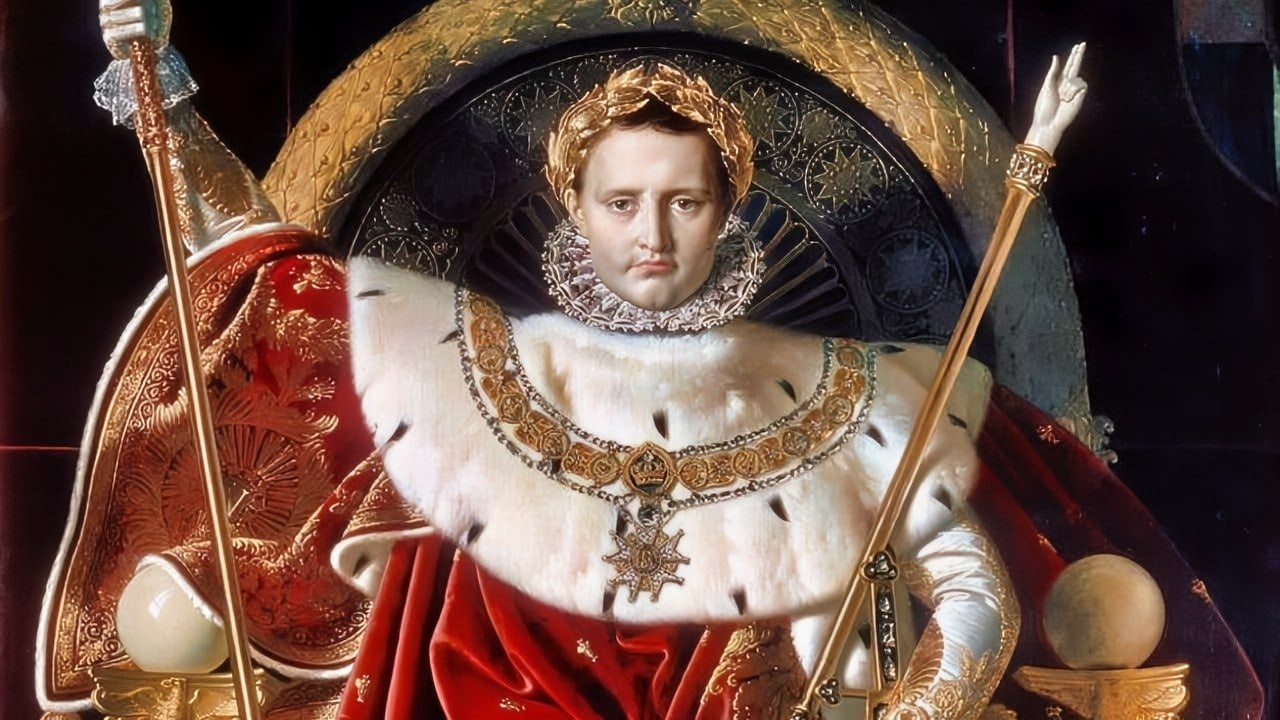
Napoleon the Emperor. Image Credit: Creative Commons.
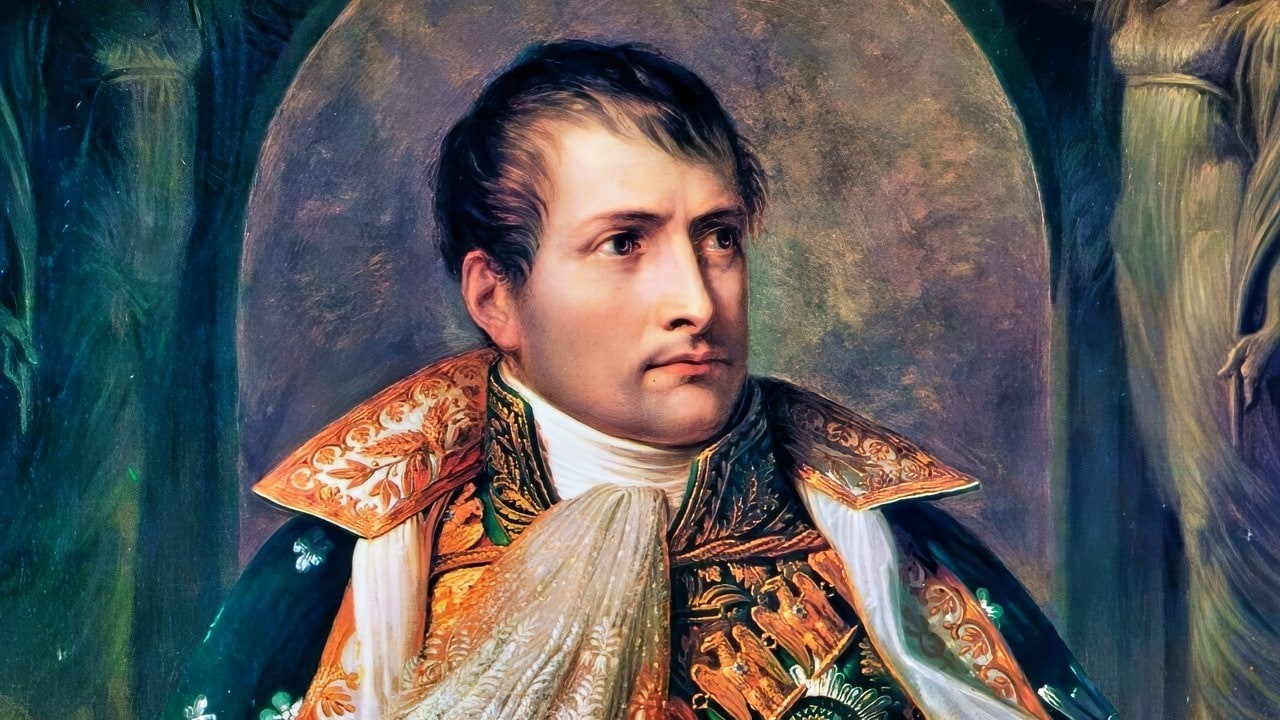
Napoleon Painting. Image Credit: Creative Commons.
-The throughline is not that Napoleon lacked talent, but that ambition and miscalculation compounded until external friction became decisive.
What Napoleon Missed in Russia—and Why Moscow Became a Trap
The great general and tactician Napoleon Bonaparte once said, “The battlefield is a scene of constant chaos. The winner will be the one who controls that chaos, both his own and the enemy’s.”
Bonaparte was a master at controlling the battlefield, allowing him to achieve near-total dominance over the European continent.
While he was a brilliant tactician and battlefield commander, he was far from infallible.
Curtailed by his immensely massive ambition and his equally massive ego, Napoleon made several mistakes during his many campaigns, which ultimately resulted in his downfall at the Battle of Waterloo.
The Egyptian Campaign
Napoleon’s first major blunders happened during the Egyptian campaign.
The goal of the campaign was to cut off Britain’s access to goods from India and establish a French presence in the Middle East.
Initially, the campaign started successfully, with his fleet sneaking past the British Royal Navy and taking the port at Alexandria and the capital, Cairo.
He annihilated his opponents at the Battle of Shubra Khit and the Battle of the Pyramids, all with only 29 Frenchmen killed.
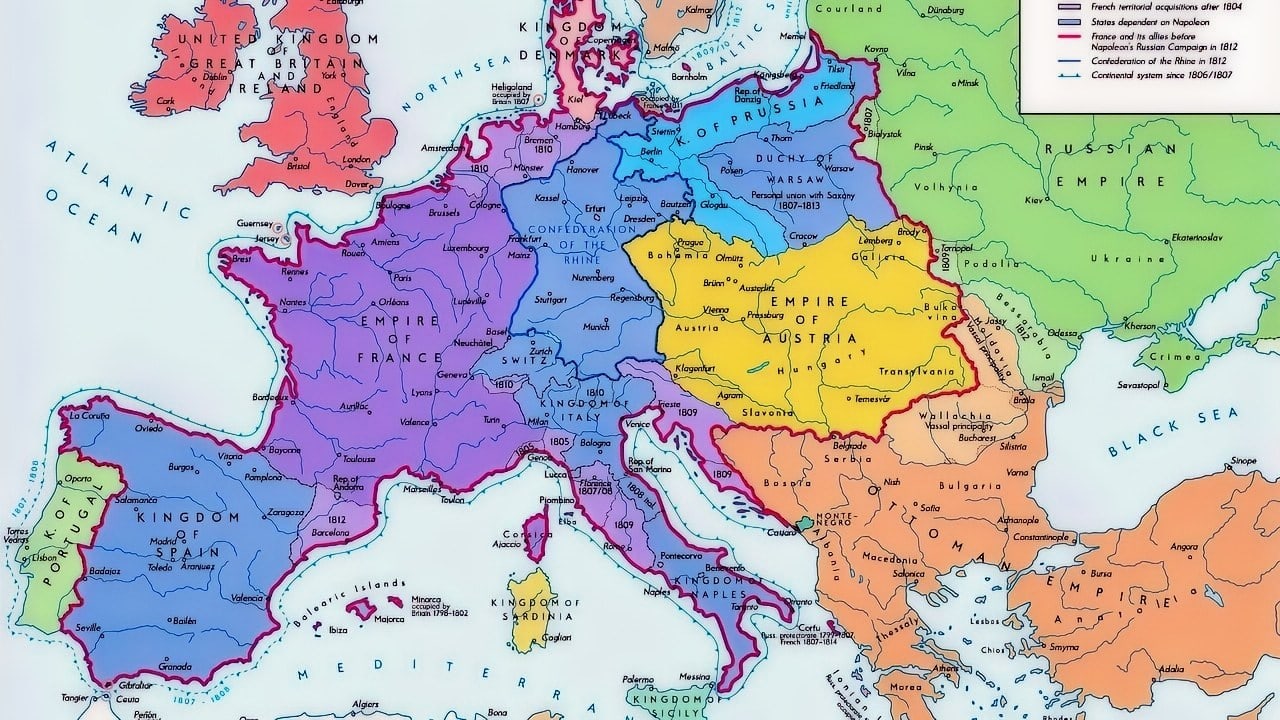
Map of Napoleon’s Empire. Image Credit: Creative Commons.
Bonaparte’s first defeat of the campaign came not by land but by sea during the Battle of the Nile.
The British fleet, under the command of Admiral Horatio Nelson, initially had no idea where the French fleet was as Napoleon’s forces snuck their way to Egypt. Nelson returned to Egypt only to find the French fleet anchored at bay in strong defensive lines.
The French fleet, under the command of Vice Admiral François-Paul Brueys, was also unaware of the British fleet. Despite being in strong defensive positions, the French were surprised, and in the ensuing battle, all but two of their ships were captured or destroyed.
This defeat prevented Napoleon from strengthening his position in the Mediterranean and left French forces to succumb to disease slowly. After the failed siege of Acre, he secretly abandoned his army and returned to Paris, as the government was on the verge of collapse.
Napoleon’s Invasion of Russia
Napoleon’s subsequent major defeat occurred during the infamous Russian campaign in 1812. Much ink has been spilled analyzing this disastrous campaign to determine precisely what went wrong. To be fair, not all of it was Napoleon’s fault. He entered Russia with a Grande Armée totaling around 450,000 troops, one of the largest armies ever assembled in Europe at the time. The Russians were pushed back time and time again, and Napoleon took the city of Smolensk with relatively few losses.
He intended to lure the Russians into a decisive battle and destroy the Russian army for good. Instead, the Russians kept retreating, implementing a scorched-earth policy that robbed the land of materials to plunder, hindering the French ability to resupply quickly.
Even before Napoleon took Moscow, the decisive battle happened at Borodino, on the outskirts of Moscow. Under the command of General Mikhail Kutuzov, Russia fielded an army of around 125,000 troops and met Napoleon in battle.
The battle resulted in a staggering 44,000 Russian and 35,000 French dead. France technically won the battle, but the losses practically halted the French advance.
In his book War and Peace, Leo Tolstoy wrote of the battle: “After the shock that had been received, the French army was still able to crawl to Moscow; but there, without any new efforts on the part of the Russian troops, it was doomed to perish, bleeding to death from the mortal wound received at Borodino.”
When Napoleon finally reached Moscow, he was not greeted with pleas of surrender as he expected; instead, he was welcomed with fire ash. The Russians had burned down Moscow after abandoning it, leaving nothing to the French.
Napoleon remained in Moscow for several months, expecting Tsar Alexander I to sue for peace, but no such letter ever arrived. Finally, the frustrated Frenchman decided to return, just as the temperatures began to drop.
Suffering from intense cold and pursuing Cossacks, Napoleon again abandoned his troops before arriving in Vilnius. The 250,000-strong army was reduced to 75,000, and the combined casualties on both sides reached around 1,000,000 during the campaign.
The Battle of Waterloo
Napoleon’s final defeat came at the Battle of Waterloo. After returning from exile on Elba Island, Bonaparte regained control of France to the outrage of the rest of Europe. Britain assembled a Seventh Coalition with the Netherlands, Belgium, Austria, Switzerland, Russia, and many more. The goal was to put a stop to Napoleon once and for all.
Napoleon wanted to drive a wedge and split apart the British, led by Arthur Duke of Wellington, and the German/Dutch army led by Gebhard Leberecht von Blücher.
The French confronted the British at Waterloo, expecting to defeat them easily. Instead, the British stood their ground and held off the French until Blücher arrived with reinforcements, decisively defeating Napoleon and leading to his final exile to Saint Helena.
Napoleon attributed his defeat at Waterloo to chance, poor weather, poor timing, etc. However, in reality, Napoleon made a number of mistakes that hindered his ability to read the battlefield effectively.
Firstly, he failed to account for Blücher and the arrival of the Germans, who attacked his flank and caught his forces off guard. Secondly, he underestimated the resilience of Wellington’s forces, whom he dismissed as led by a “bad general.” Third was Napoleon’s own overreactions. When Blücher arrived at the battlefield, he ordered his forces to intensify their attack on the British to annihilate Wellington as quickly as possible, leaving his flank exposed to the German attack.
Overall, it was a combination of bad weather, British resilience, Blücher’s reinforcements, and Napoleon’s miscalculations that led to his ultimate downfall.
About the Author: Isaac Seitz
Isaac Seitz, a Defense Columnist, graduated from Patrick Henry College’s Strategic Intelligence and National Security program. He has also studied Russian at Middlebury Language Schools and has worked as an intelligence Analyst in the private sector.