
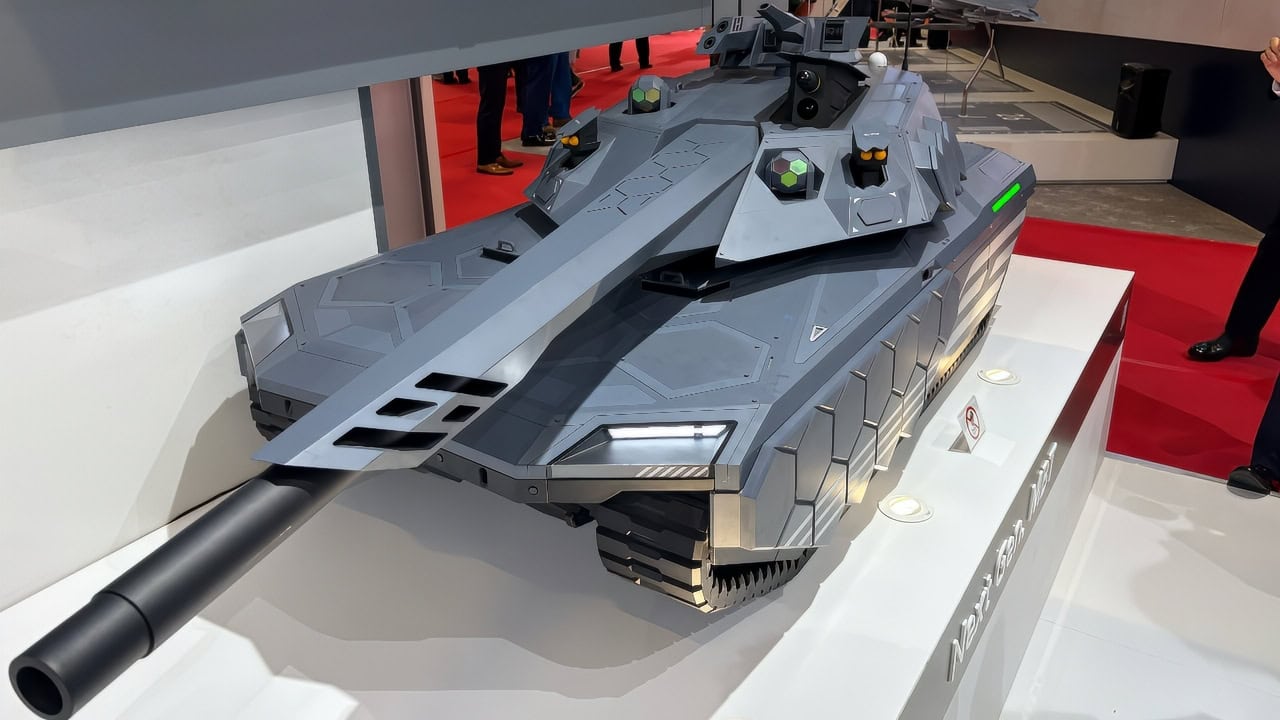
Summary and Key Points: South Korea’s Hyundai Rotem is developing the K3, a next-generation main battle tank concept that blends low-observable shaping with hydrogen power to cut heat, noise, and detectability.
-Planned features include a 130mm smoothbore main gun, a remote weapon station, 5-mile anti-tank missiles, and an AI-enabled fire-control system for faster target engagement.
-The design keeps a three-person crew in a protected hull capsule, backed by new composite/reactive armor, an active protection system, DIRCM to defeat heat-seekers, and drone-jamming defenses.
-Sensor fusion and reduced radar/IR signatures aim to make the K3 harder to spot and hit, with production hopes stretching toward 2040.
-BONUS: 19FortyFive has seen the demo model at a Polish defense forum late last year. The image of the K3 uptop comes from that expo.
K3: South Korea’s Hydrogen Stealth Tank Looks Like a B-21 Raider and Could Be a Big Deal
To adventure aficionados, “K2” is the name for the second-highest mountain in the world (superseded only by Mount Everest, of course).
In military parlance, “K2” refers to the current generation South Korean main battle tank (MBT), also known as the “Black Panther (Heukpyo).” (Not to be confused with the Black Panthers revolutionary group in the United States, of course.)
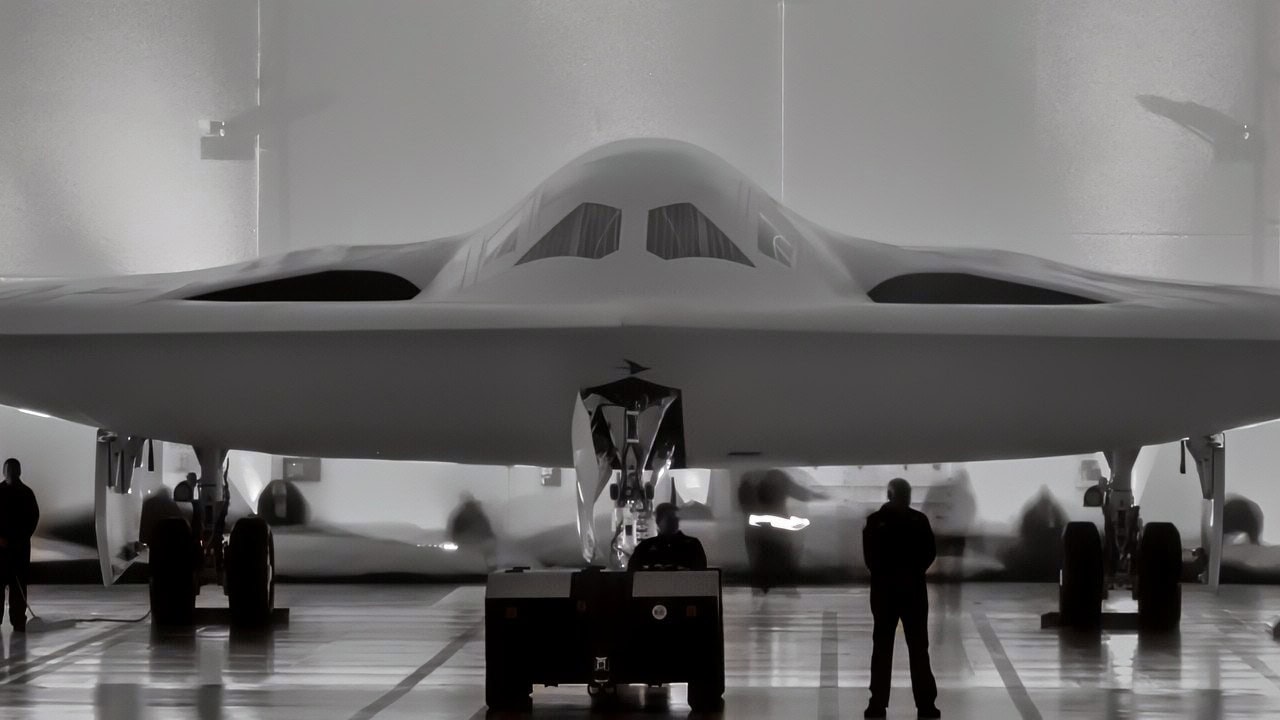
A B-21 Raider is unveiled at Northrop Grumman’s manufacturing facility on Air Force Plant 42 in Palmdale, California, Dec. 2, 2022. The B-21 will be a long-range, highly survivable, penetrating strike stealth bomber capable of delivering both conventional and nuclear munitions. (U.S. Air Force photo by Airman 1st Class Joshua M. Carroll)
Time marches on, and the South Korean defense industry is already developing its next-generation homegrown MBT, known as the K3. It’s a big deal for a couple of reasons: (1) it’ll have stealth features that some are analogizing with the B-21 Raider (you know, the up-and-coming 6th Generation stealth bomber); and (2) it’ll be hydrogen-powered to boot! Say “annyeonghaseyo (hello)” to this revolutionary tank concept.
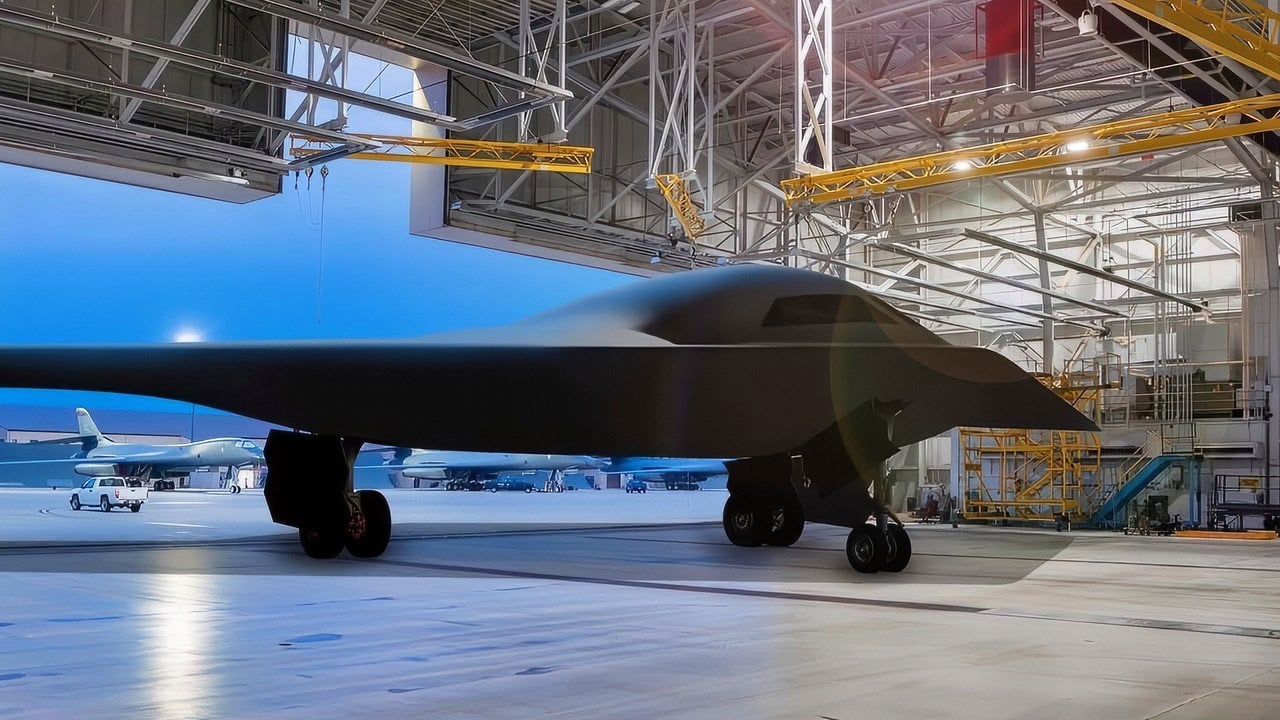
Artist rendering of a B-21 Raider in a hangar at Ellsworth Air Force Base, South Dakota, one of the future bases to host the new airframe. AFCEC is leading a $1 billion construction effort at Ellsworth to deliver sustainable infrastructure to meet warfighter demands for bomber airpower. (U.S. Air Force graphic)
K3 MBT Initial History and Concept
South Korean automotive conglomerate Hyundai’s Rotem subsidiary (headquartered in the city of Uiwang in Gyeonggi Province) unveiled the K3 back in October 2024.
Rotem is developing the tank in collaboration with South Korea’s Agency for Defense Development (ADD; Gukbang Gwahak Yeonguso) and other national technology research institutions.
(NOTE: Automakers have a long history of building tanks too, as can be seen with all-American Chrysler and the M1 Abrams.)
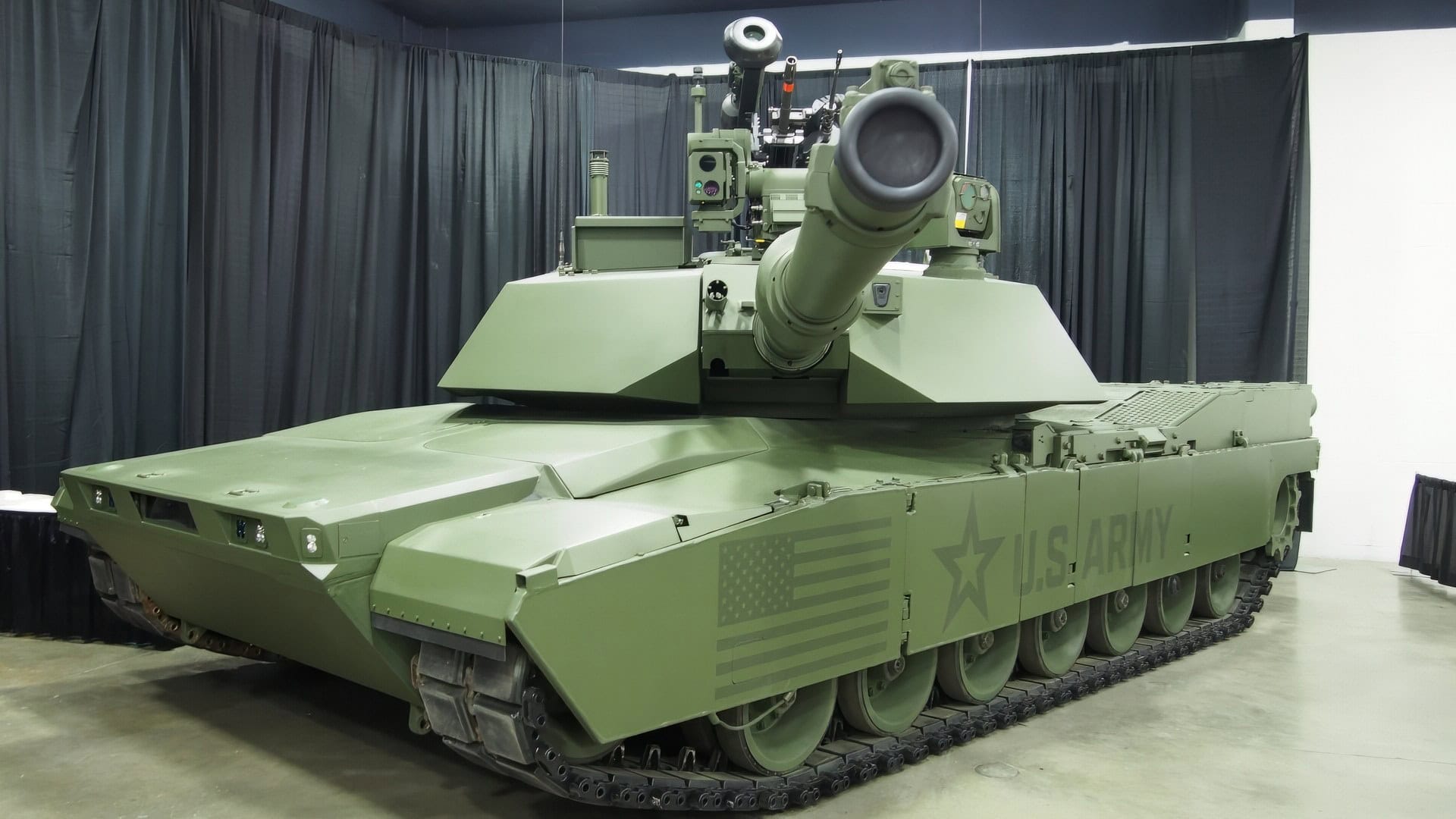
Photo taken on 1/17/2026 of the M1E3 Tank at the Detroit Auto Show. Image by 19FortyFive, All Rights Reserved.
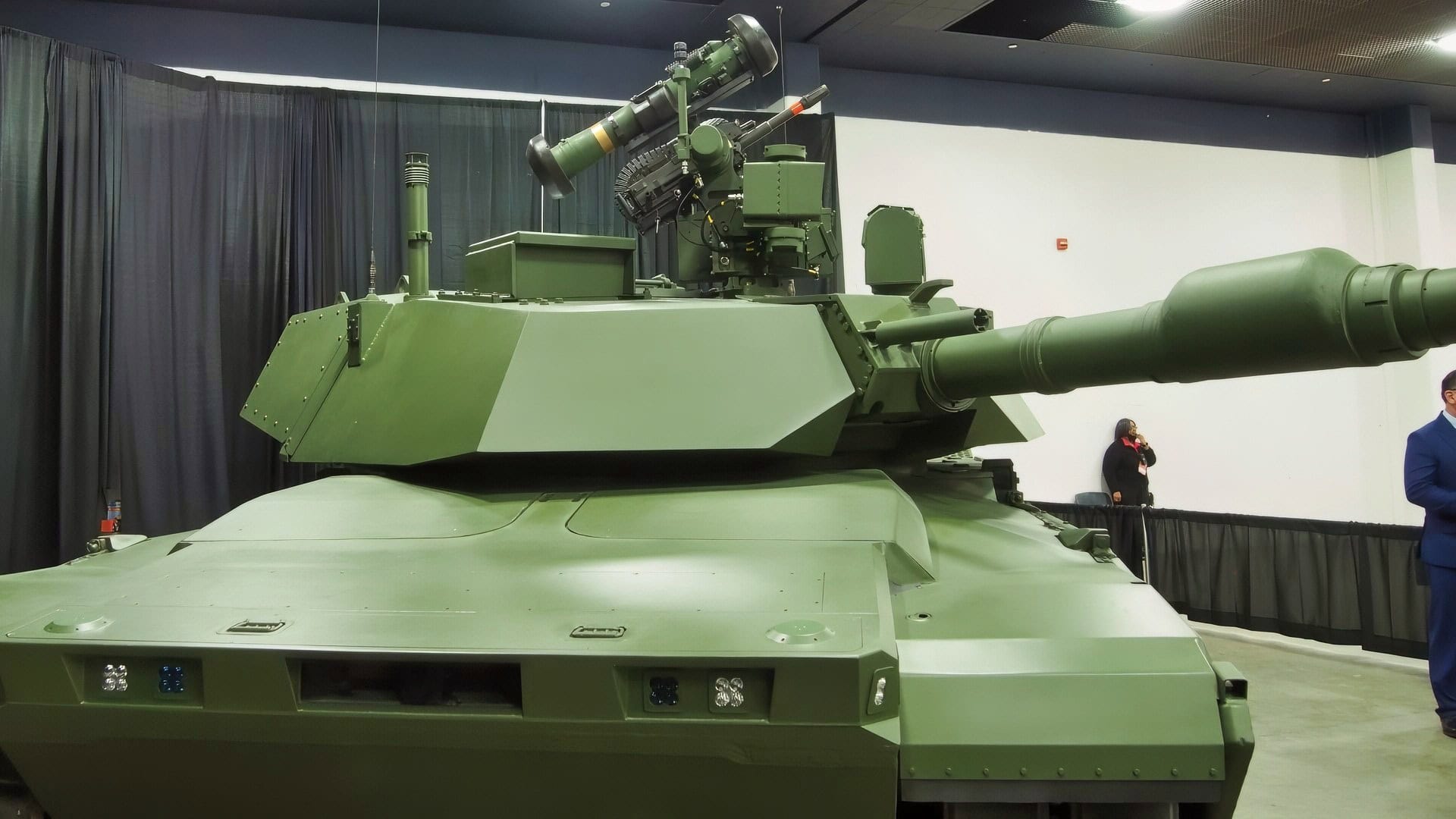
M1E3 Tank from the Detroit Auto Show. Photo Taken By 19FortyFive Staff on 1/17/2026.
According to Rotem (as cited by Christopher McFadden of Interesting Engineering), “Next-generation main battle tank surpasses all capabilities of today’s MBTs, providing more efficient mission employment with the latest technologies for future warfare. As battlefield conditions change, more adjustments are required to MBT’s firepower, command and control, and survivability to optimize them and create maximum combat synergy…Hyundai Rotem will proactively prepare for future warfare by developing next-generation main battle tanks capable of supplementing combatants’ capabilities and serving as functional replacements. Peacekeeping is our prioritized goal.”
What’s more, “The next-generation tank will have stronger preemptive strike capabilities using an artificial intelligence-based fire control system.”
K3 Technical Specifications and Vital Stats
Since the tank is still in prototype phase, a fair amount of the K3’s tech specs are still TBD. However, we can still ascertain the following (thanks in part to the ever-handy Army Recognition website):
-A 130mm (5.11-inch) smoothbore main gun, a significant upgrade from the K2’s 120mm gun bore, which “positions the K3 among the few tanks in the world designed to handle next-generation kinetic energy penetrators and high-explosive rounds” and “opens the possibility for Poongsan’s K279 series ammunition to be significantly enhanced; “this bigger gun should enable the K3 to engage targets up to 3 miles (5 kilometers) away
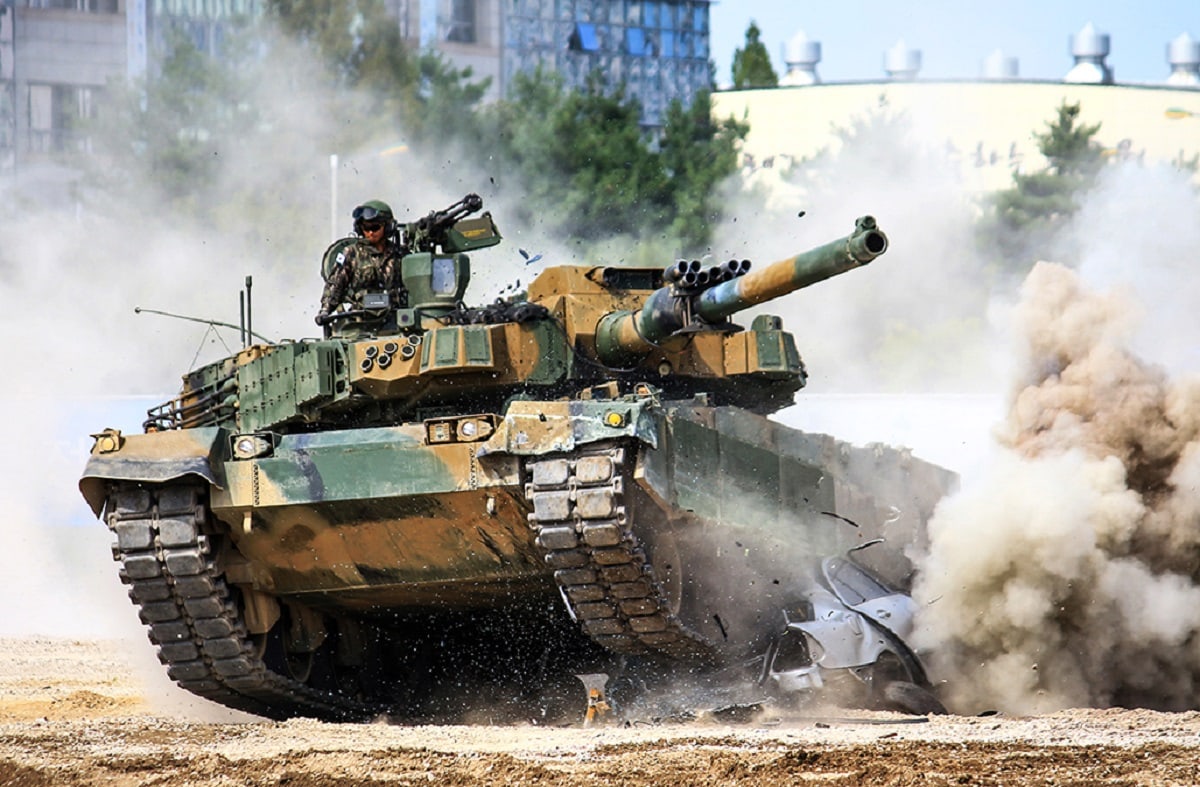
K2 Black Panther. Image: Creative Commons.
-A remote-controlled weapons station on the turret, which can accommodate weapons ranging from 12.7mm (.50 caliber) to 30mm (1.18 inches)
-Multi-purpose anti-tank guided missiles (ATGMs) with a range of 5 miles (8 kilometers), including advanced modes for both line-of-sight and beyond-line-of-sight engagements
-A three-person crew (one driver, a commander, and a gunner; housed in a heavily armored capsule near the hull’s front)
-Advanced defensive technologies to bolster crew survivability, including a Directional Infrared Countermeasures (DIRCM) system to counter heat-seeking missiles, an Active Protection System (APS) to protect against ATGMs and rocket-propelled grenades (RPGs), and a drone jamming device
-As additional boosts to crew survivability, new-generation composite and reactive armors to provide superior protection against modern anti-tank threats, including top-attack munitions and tandem warhead projectiles
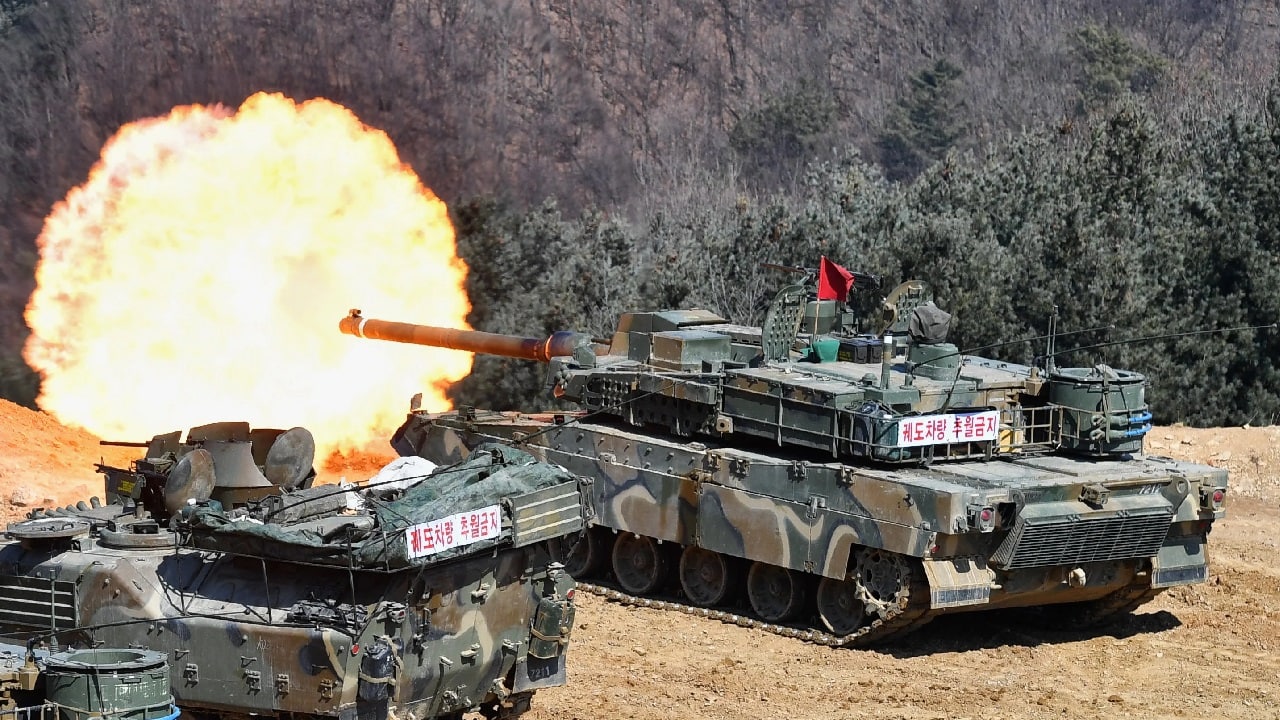
K2 Black Panther. Image Credit: Creative Commons.
-Low-profile design and reduced radar and infrared (IR) signatures, akin to the Polish PL-01 tank
-Sensor fusion for enhanced situational awareness (SA)
Regarding the reduced radar and IR signatures, more than one YouTube influencer, from Jones Castro to NeXt-GeN World, is calling the K3 the B-21 Raider of the MBT world.
Though the physical, cosmetic resemblance to the B-21 isn’t exactly a spitting image, it’s “close enough for government work” (if you’ll pardon the cliché).
Addressing Safety Concerns
“Whoa, whoa, whoa, wait a minute,” I can hear some of you saying, “isn’t hydrogen too dangerous?
What about the horrific history of hydrogen in the Hindenburg?!?!” Yes, the Hindenburg dirigible disaster of May 6, 1937 (as dramatized in the 1975 movie starring George C. Scott, in turn based upon the bestselling 1972 book by Michael Macdonald Mooney) was indeed a horrific human tragedy (“Oh, the humanity!”) that claimed the lives of 36 persons (13 passengers, 22 aircrew, 1 ground crew; though when you watch newsreel footage of the disaster, it seems like a minor miracle that the death toll amongst the 97 souls aboard wasn’t much higher).
However, you can rest assured that hydrogen, volatile though it is, is much more compatible from a safety standpoint with metallic armored vehicles than it is with thin-skinned lighter-than-air airships.
As I said before, “Time marches on,” and suffice it to say that safety standards in all sorts of vehicles (aircraft, trains, and automobiles alike) have been increased considerably since 1937. What’s more, jet and rocket fuels are both more volatile than hydrogen.
Yet, mankind has been safely using both of them since the 1940s (although, granted, the rocket fuel in the Messerschmitt Me-163 Komet fighter plane was a ghastly and noteworthy exception).
As noted by Harper Ellis in an August 20, 2025, article for DefenseFeeds, “The hydrogen fuel system of the K3 main battle tank offers a significant decrease in its battlefield signature…Unlike traditional diesel engines known for their heat and sound emissions, the hydrogen setup makes the K3 nearly silent and less detectable by enemy surveillance…This approach using clean energy produces only water as a byproduct, revolutionizing green military technology and enhancing stealth capabilities on the battlefield.”
The Way Forward for the K3
It is hoped that the K3 will enter the production phase by 2040.
Meanwhile, the Republic of Korea Army (ROKA; Daehanminguk Yukgun) will rely on its roughly 260 K2s, 1,511 K1 88s, and 600 M48 Pattons (yes, believe it or not, the ROKA still has these 1950s-vintage tanks in service with its reserve units) to hold the line in case the North Korean People’s Army (NKPA) were to reinvade the South and thereby reignite the currently dormant Korean War.
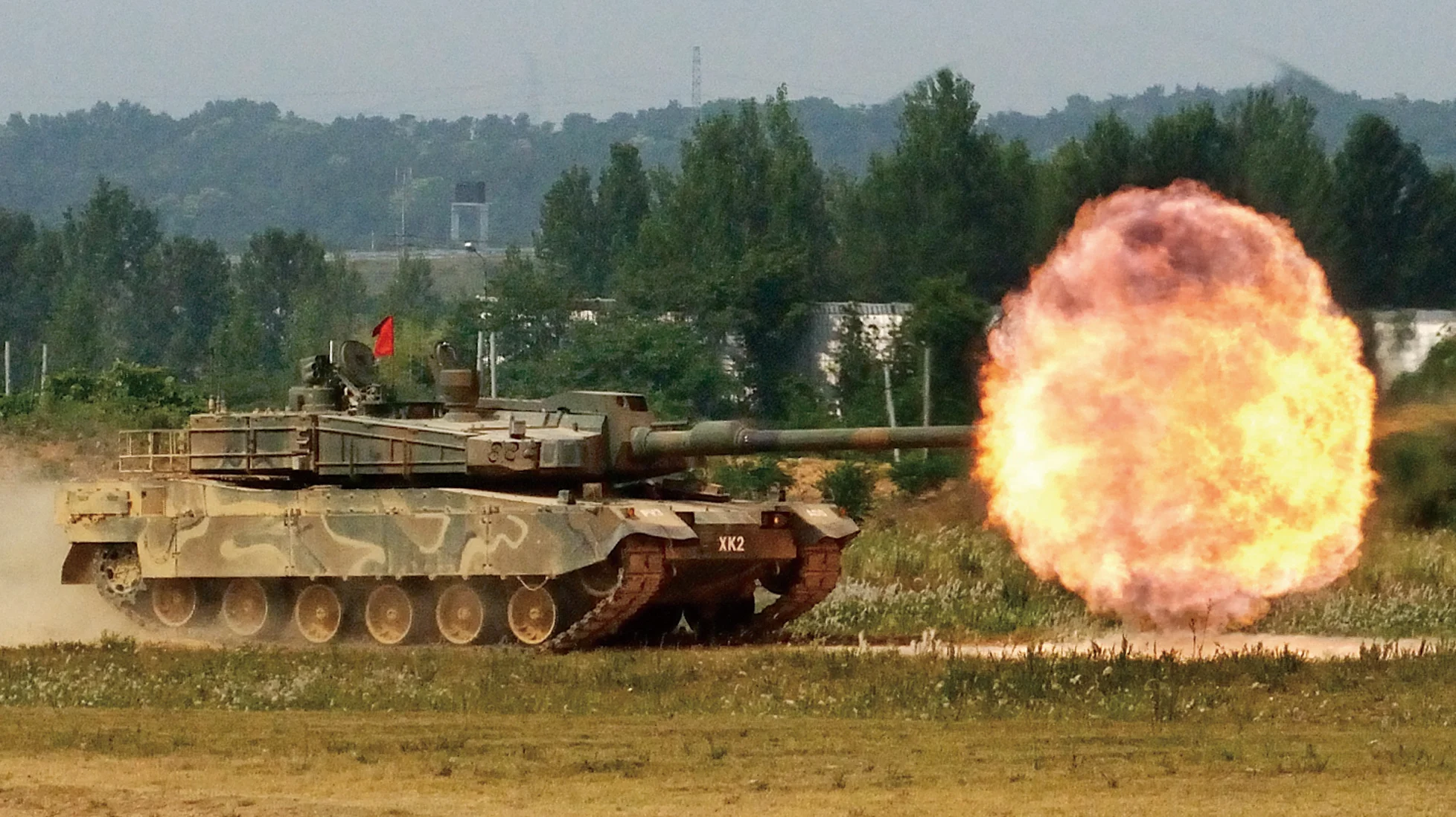
K2 Black Panther, the most expensive tank on Earth.
About the Author: Christian D. Orr, Defense Expert
Christian D. Orr is a Senior Defense Editor. He is a former Air Force Security Forces officer, Federal law enforcement officer, and private military contractor (with assignments worked in Iraq, the United Arab Emirates, Kosovo, Japan, Germany, and the Pentagon). Chris holds a B.A. in International Relations from the University of Southern California (USC) and an M.A. in Intelligence Studies (concentration in Terrorism Studies) from American Military University (AMU). He is also the author of the newly published book “Five Decades of a Fabulous Firearm: Celebrating the 50th Anniversary of the Beretta 92 Pistol Series.”