The space shuttle has long been a source of controversy among space policy experts, like myself. On the one hand, it ushered in an age of reusable flight in low-Earth orbit (LEO) that was an engineering and scientific marvel.
On the other hand, the space shuttle never quite lived up to its promise.
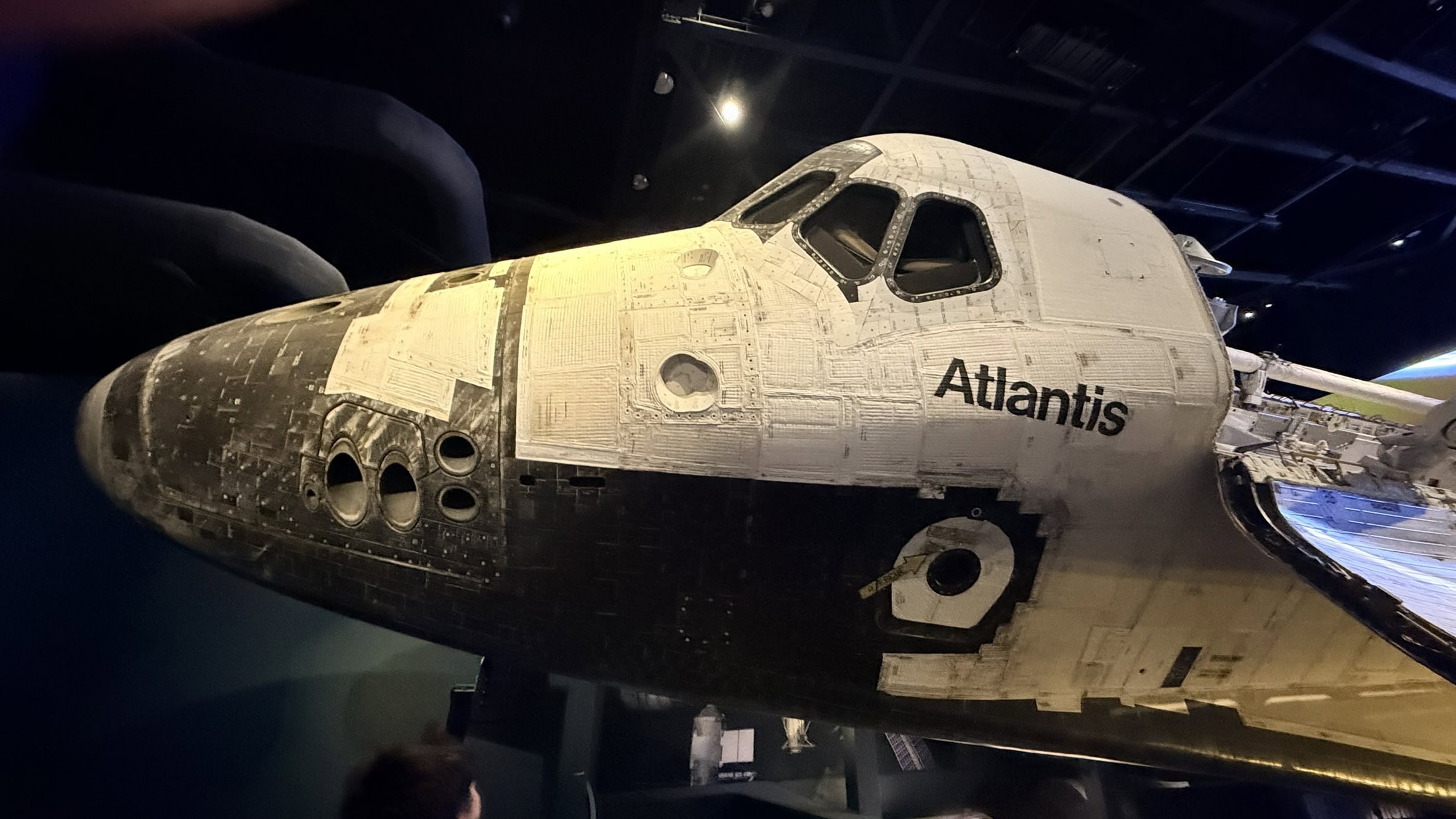
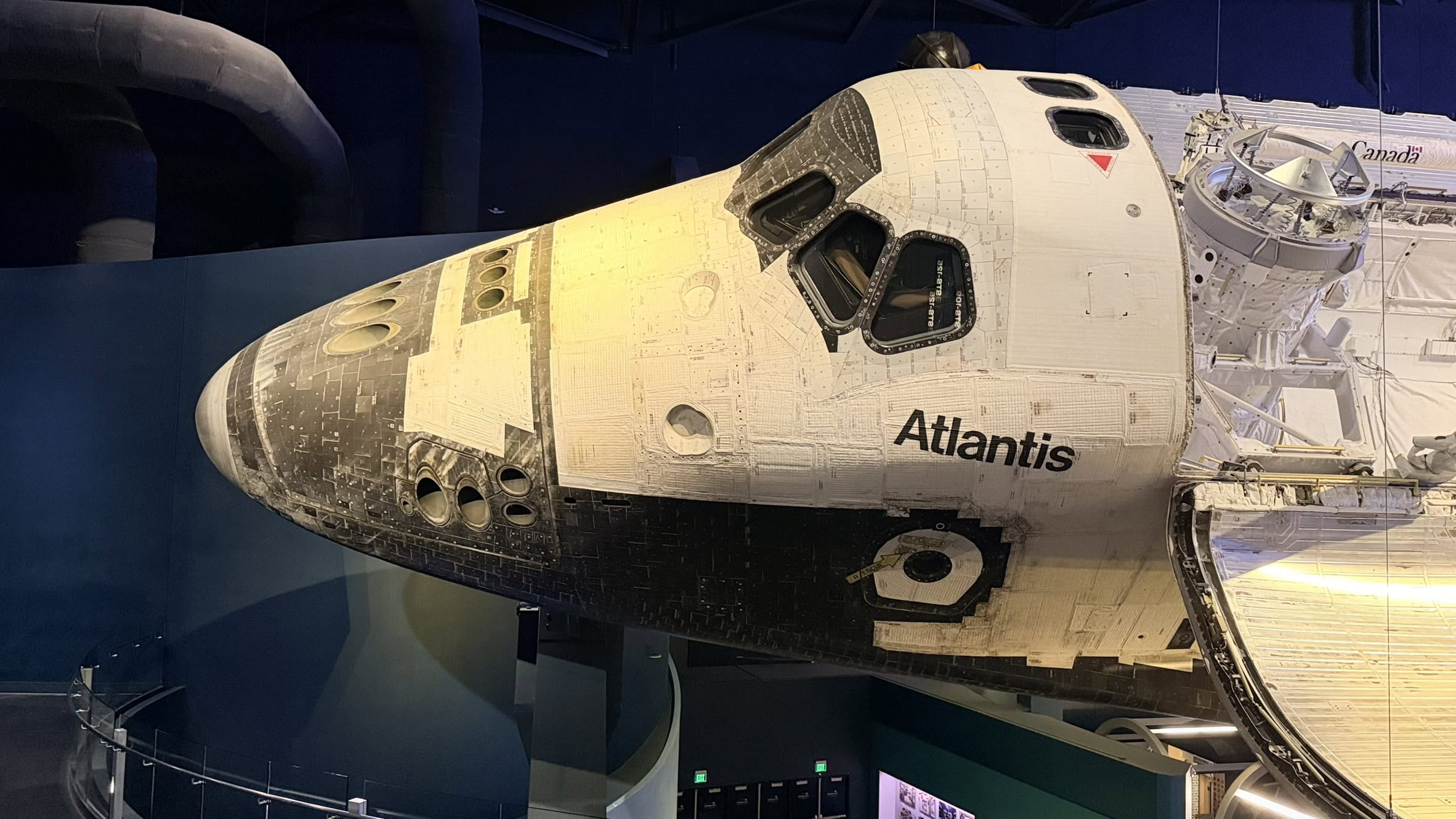
Space Shuttle Atlantis from NASA’s Kennedy Space Center. Image Taken by 19FortyFive.com on 6/28/2026.
Indeed, in many respects, the shuttle itself was the result of a series of false starts and political compromises during the uncomfortable era of transition for America’s manned spaceflight program, as it moved from the Apollo missions to LEO operations.
Nevertheless, the shuttle remains an iconic piece of critical American space technology. It defined NASA’s image for millions of people raised in the shadow of the space shuttle.
Growing up in Florida in the 1990s and 2000s, I saw the space shuttle as a constant presence in our skies.
The shuttle’s white and black airframe attached to that blazing orange fuel tank, with the white plumes of smoke trailing it as the shuttle routinely slipped the surly bonds of the Earth and headed into the great beyond, was a sight that every Floridian took in.
The sonic booms that reverberated over our homes whenever the shuttle returned to Earth were a perennial reminder that, in our minds, NASA had mastered spaceflight to the point where it was much like boarding an airplane and taking a long trip overseas.
19FortyFive.com was fortunate enough to make its way to the Kennedy Space Center in Cape Canaveral, Fla., to see just how marvelous a work of engineering America’s space shuttle really was.
Because, at its core, the space shuttle was less of a spaceplane and more of a glorified space glider.
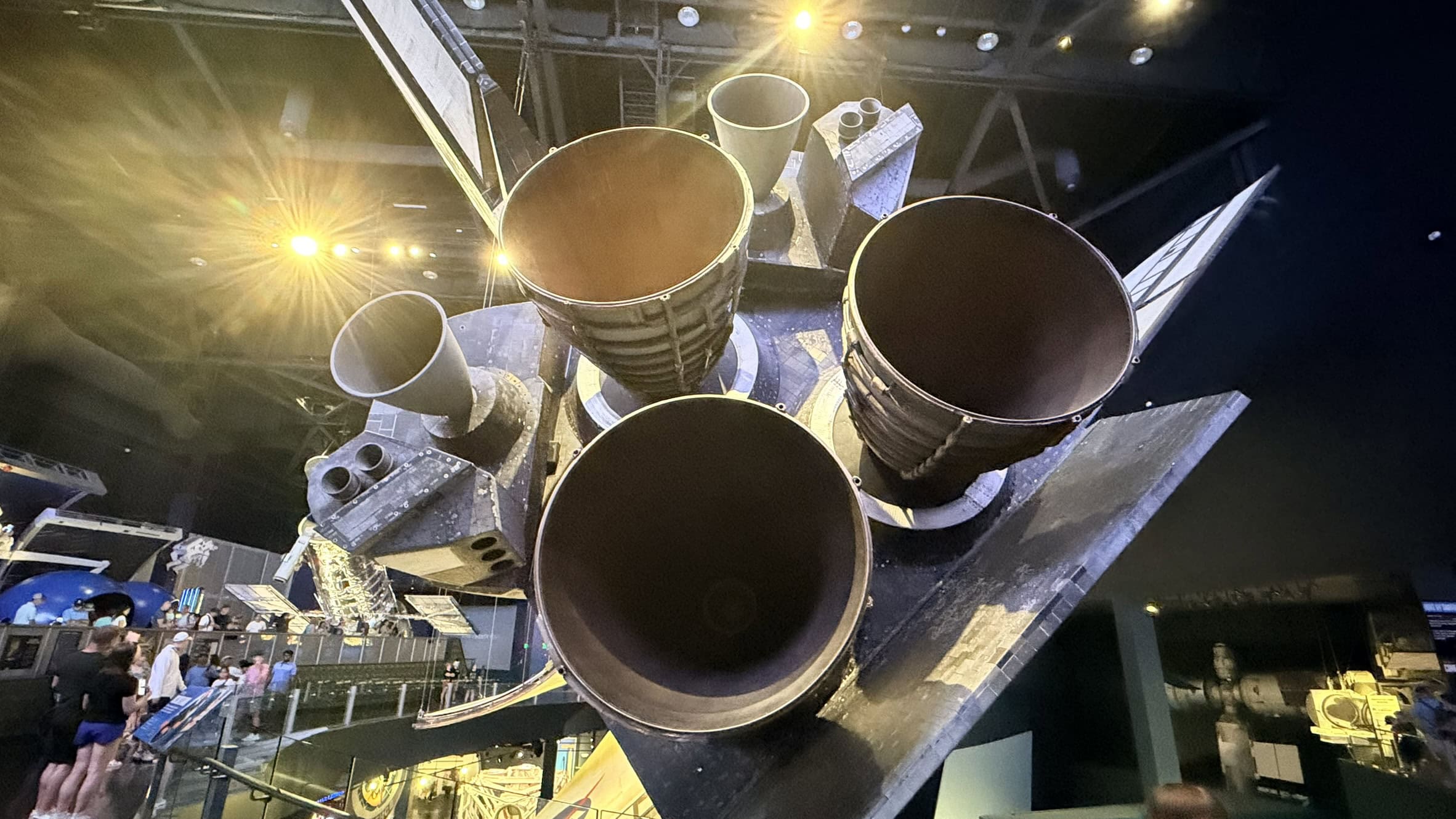
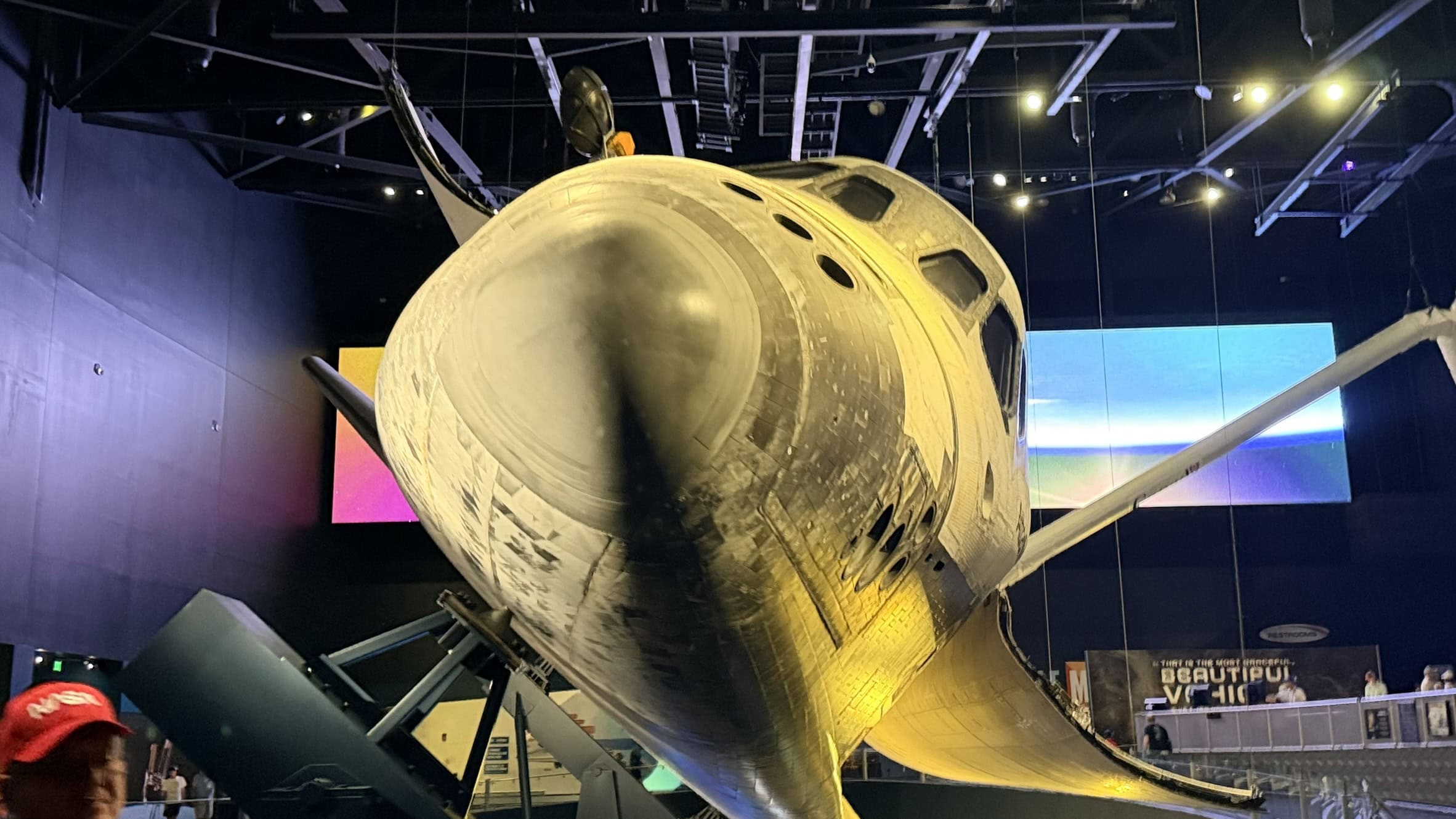
Space Shuttle Atlantis from NASA’s Kennedy Space Center. Image Taken by 19FortyFive.com on 6/28/2026.
Once its main engines shut down in orbit, it had no way to power itself during atmospheric reentry.
From the moment it began its descent, the shuttle was essentially an unpowered aircraft with only one chance to land–making a series of S-turns as it descended to the planet below, angling for a landing usually at Edwards Air Force Base in California.
Reentering the Atmosphere
The shuttle orbited Earth at roughly 17,500 miles per hour, or Mach 25. To return home, the craft first fired its twin Orbital Maneuvering System (OMS) engines for only a few minutes.
Ironically, those engines pointed forward, so they slowed the shuttle just enough for Earth’s gravity to pull the craft out of orbit.
That minuscule reduction in speed–only by about a few hundred miles per hour–was enough to begin the craft’s long plunge back to Earth.
The Heat Problem
Contrary to popular belief, the shuttle wasn’t heated because it was simply skimming through the atmosphere.
Instead, flying through the atmosphere at Mach 25 compressed the air in front of the vehicle into superheated plasma (a phenomenon modern hypersonic glide vehicles experience).
Space Shuttle Atlantis from NASA’s Kennedy Space Center. Image Taken by 19FortyFive.com on 6/28/2026.
Temperatures around the nose and wing leading edges reached approximately 3,000 degrees Fahrenheit (hot enough to melt steel).
Without protection, the shuttle, the glorified space glider, would have burned apart in minutes upon reentering the Earth’s atmosphere.
A Flying Blanket of Tiles
NASA’s solution was ingenious. They devised the Thermal Protection System (TPS). NASA assembled more than 24,000 individual silica heat-resistant tiles and wrapped them around the airframe of every shuttle.
The space agency used reinforced carbon-carbon fiber panels on the wing leading edges and the nose cap to strengthen the structure. Then, NASA placed flexible thermal blankets over the cooler portions of the vehicle.
Each tile was individually manufactured for its exact location. No two were exactly alike.
The truly remarkable thing about this system was how little of the heat from the atmosphere these tiles conducted. A tile could be glowing red-hot on one side while remaining cool enough to touch on the other side only moments later.
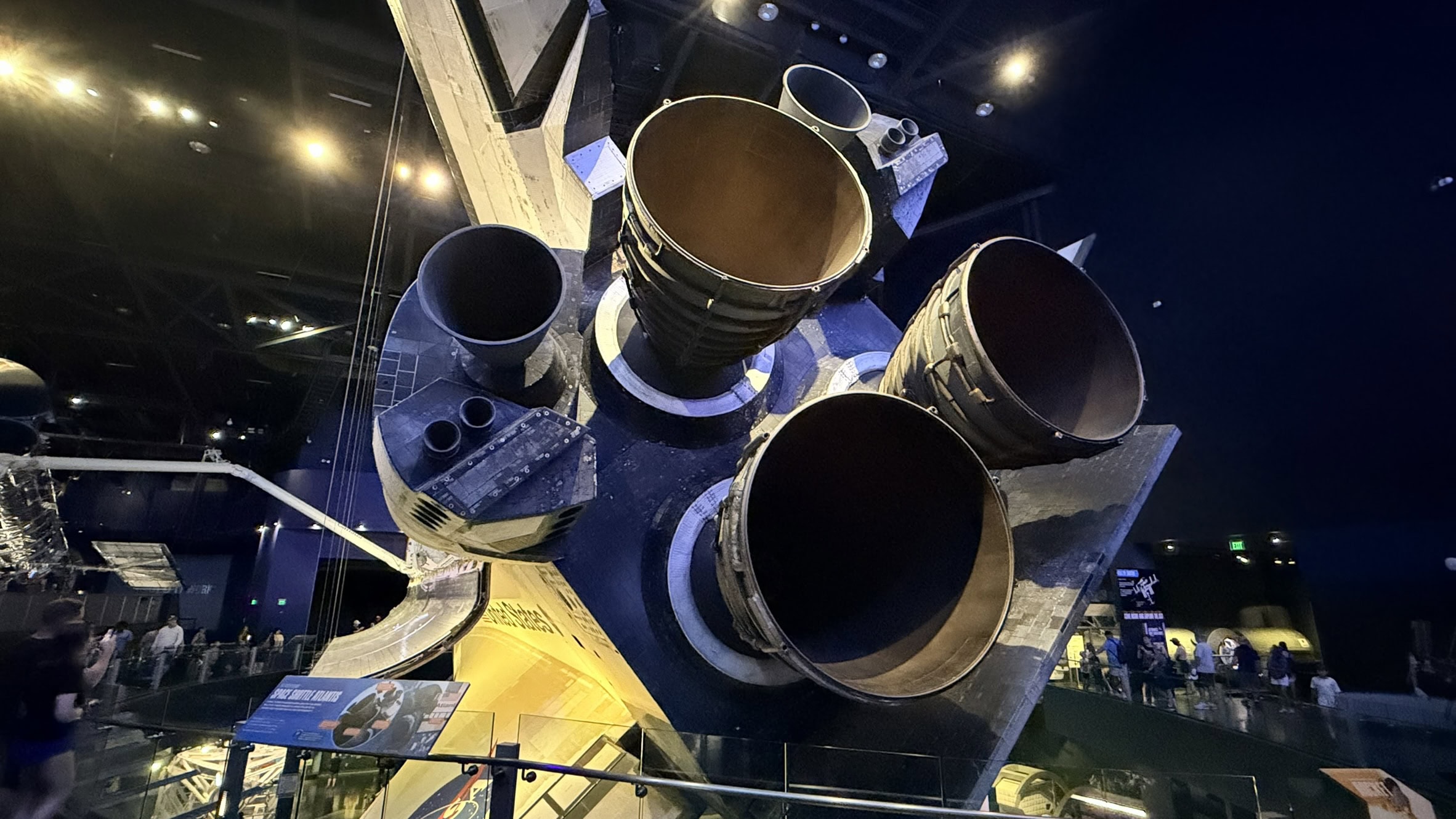
Space Shuttle Atlantis from NASA’s Kennedy Space Center. Image Taken by 19FortyFive.com on 6/28/2026.
That insulation protected the shuttle’s lightweight aluminum airframe, which would have begun losing structural strength at only a few hundred degrees Fahrenheit.
Why the Shuttle Zigzagged
If the shuttle simply pointed toward the runway, it would have arrived far too fast.
As noted above, the shuttle performed enormous S-turns across the upper atmosphere. These banking maneuvers dramatically increased drag, bleeding off speed while carefully managing heat buildup.
Every turn converted tremendous kinetic energy into heat in a controlled fashion.
The shuttle’s flight computers constantly adjusted its attitude to maintain the proper balance between slowing down and avoiding overheating.
A Brick That Flew
Astronauts often joked that the shuttle flew like a “brick.” A commercial airliner has a lift-to-drag ratio of roughly 17:1. The shuttle’s was only about 4.5:1. So, once it committed to a landing, there was no abandoning that course.
If the approach was even slightly off, there were no do-overs as there are when an airliner must abort a landing.
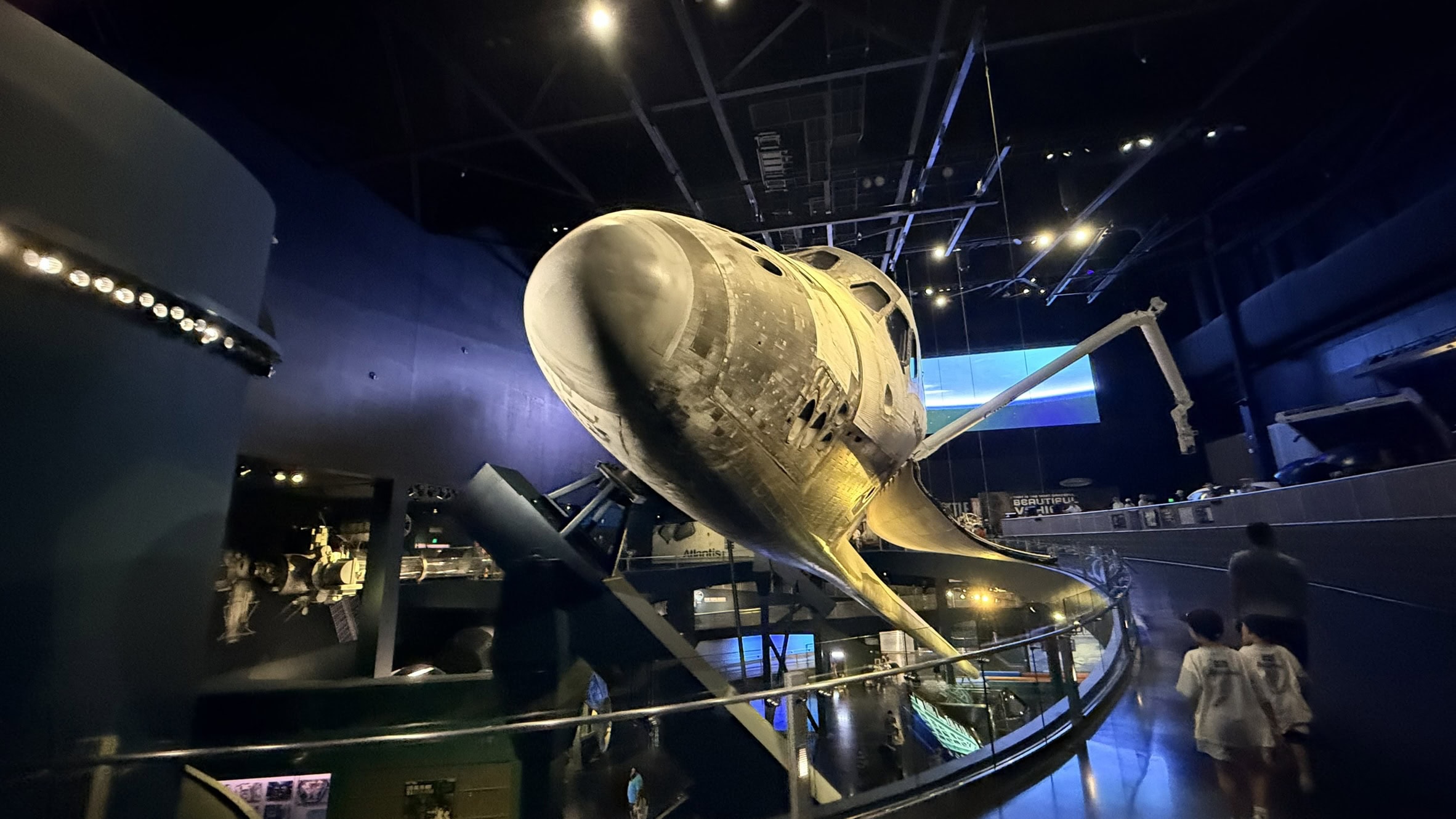
Space Shuttle Atlantis from NASA’s Kennedy Space Center. Image Taken by 19FortyFive.com on 6/28/2026.
The shuttle descended on a glide slope of around 20 degrees, roughly seven times steeper than that of a typical commercial jet.
Pilots often described the shuttle’s final approach as more akin to a controlled crash than to a real landing. It was, therefore, much more like a glider than an airplane.
Reusability was Revolutionary–and Tough
Making the shuttle reusable drastically reduced its cost, but it also exploded the system’s complexity (negating many of the cost-saving features of reusability).
Unlike disposable capsules protected by ablative heat shields that burned away during reentry, the shuttle had to survive the trip repeatedly.
Every tile had to survive repeated heating and cooling cycles. The reinforced carbon-carbon leading edges had to endure the highest temperatures on every mission.
Once on the ground, countless NASA engineers inspected and repaired thousands of tiles after nearly every flight.
NASA conducted months of painstaking inspections on each shuttle after it returned home, slowing operations of the manned spaceflight program.
The Weakness of Reusability
The very system that made the shuttle revolutionary made it very vulnerable. Because the shuttle’s heat shield consisted of thousands of individual components, even relatively small damage could become catastrophic.
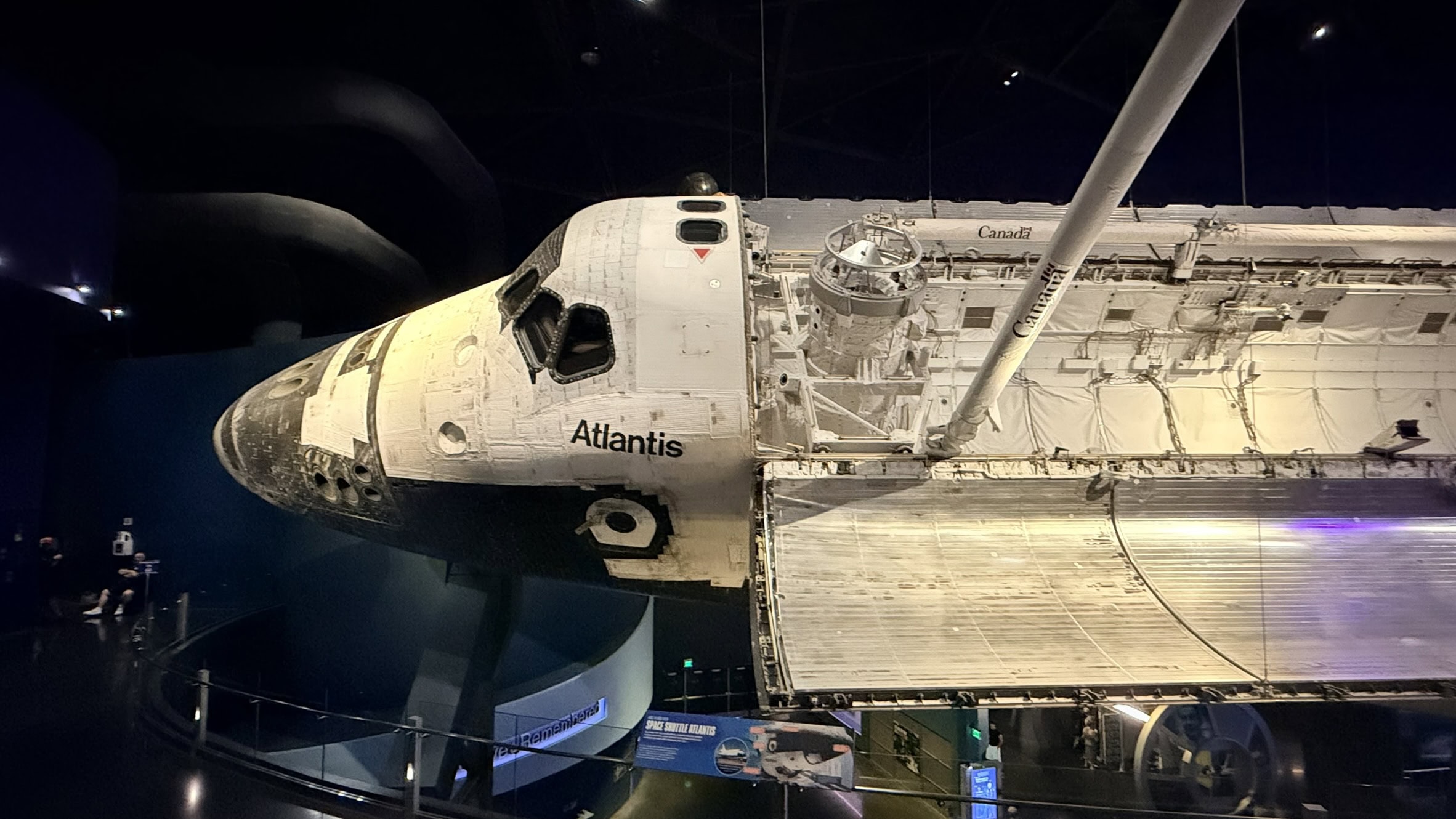
Space Shuttle Atlantis from NASA’s Kennedy Space Center. Image Taken by 19FortyFive.com on 6/28/2026.
This tragic reality became clear during the Space Shuttle Columbia disaster.
During that 2003 incident, foam shed from the external tank and struck the reinforced carbon-carbon panel on the left wing during launch.
During reentry, superheated plasma entered the wing through the breach, destroying the internal structure until the orbiter simply disintegrated mid-flight over Texas.
The accident underscored that reentry is one of the most unforgiving phases of any space mission.
An Extraordinary Engineering Achievement
Despite its flaws, the space shuttle remains one of the most sophisticated flying machines ever built.
Meant to normalize American presence in Earth’s orbit, the system launched like a rocket, maneuvered in orbit like a spacecraft, survived temperatures hotter than molten lava, and then landed as an unpowered aircraft on a conventional runway.
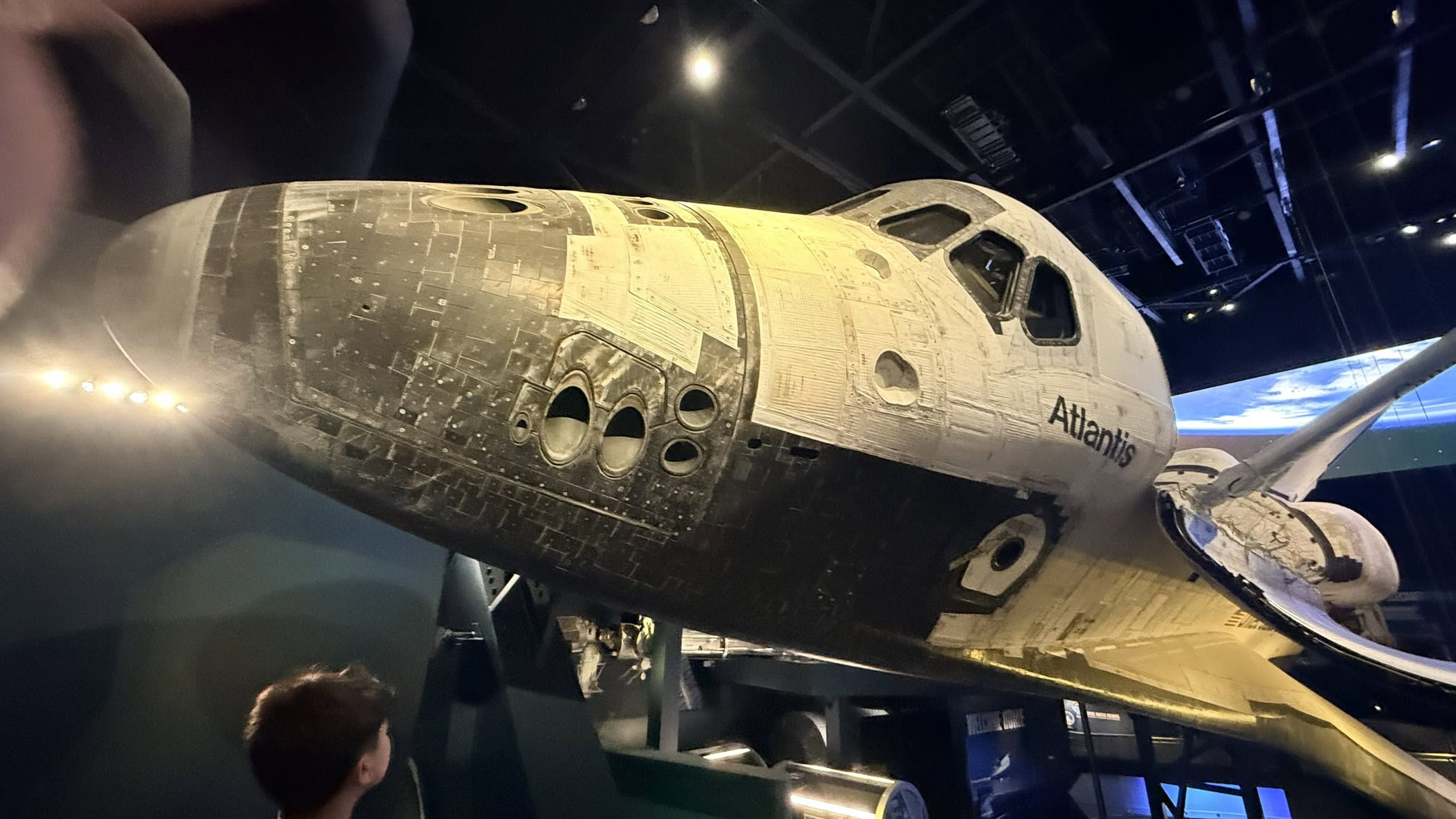
Space Shuttle Atlantis from NASA’s Kennedy Space Center. Image Taken by 19FortyFive.com on 6/28/2026.
No other operational spacecraft has routinely combined all of those capabilities.
Even today, modern reusable spacecraft such as SpaceX’s Starship use very different approaches to reentry, relying on stainless steel structures, advanced heat-shield materials, and powered landings rather than returning to Earth as a massive hypersonic glider.
In many ways, every successful shuttle landing represented one of the most difficult aerodynamic and thermal engineering feats ever accomplished.
About the author: Brandon J. Weichert
Brandon J. Weichert is the Senior National Security Editor at 19FortyFive.com. He also manages The Weichert Brief on Substack. Weichert also hosts “National Security Talk” on Rumble. He is the author of four bestselling national security books, the most recent of which is A Disaster of Our Own Making: How the West Lost Ukraine (Encounter Books). Follow him via Twitter/X @WeTheBrandon.